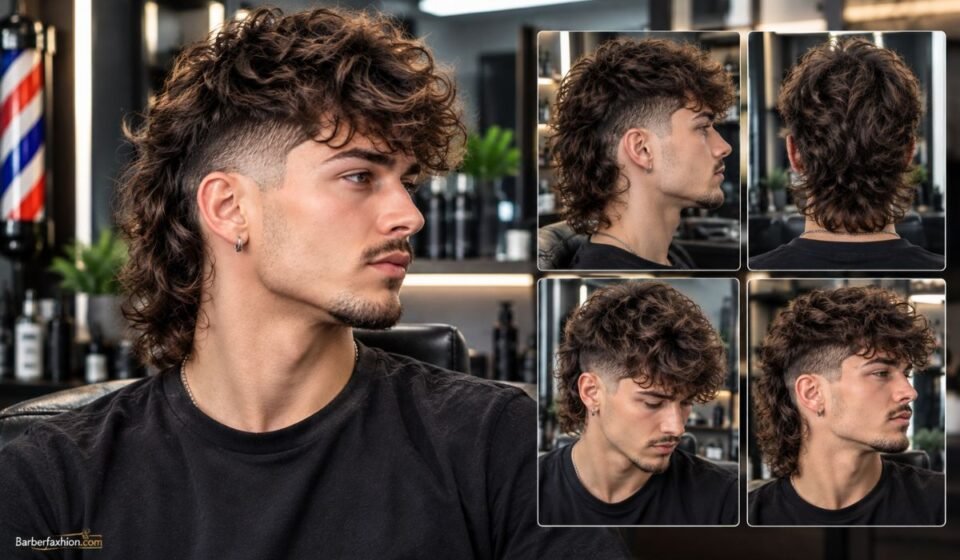

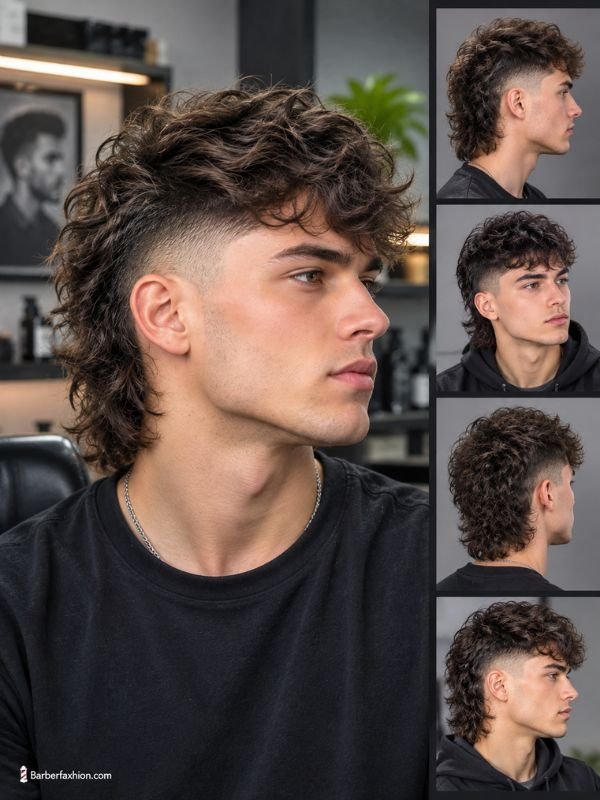
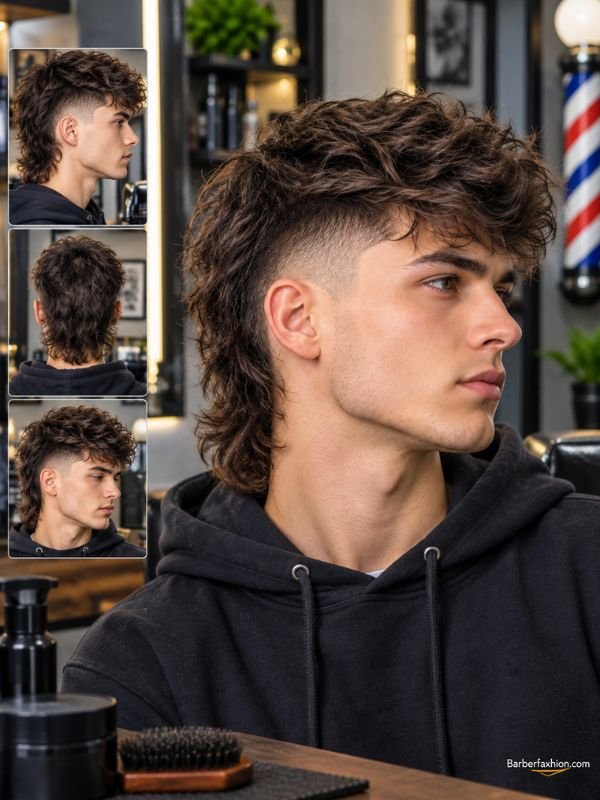
A mullet doesn’t have to look old-school or overly dramatic. With a clean mid fade on the sides, the longer back gets a sharper shape while the top can stay textured, curly, messy, or polished. That’s why the Mid Fade Mullet has become such a flexible option for men who want something noticeable without losing a clean finish.
The best version depends on more than the fade itself. Your hair texture, density, face shape, preferred back length, and daily styling routine all change how the finished cut looks. In this guide, you’ll find the most popular Mid Fade Mullet styles, options for different hair types and lengths, barber tips, styling advice, and maintenance ideas.
Quick answer: A Mid Fade Mullet combines a noticeable fade around the temple and sides with shorter-to-medium hair on top and a longer back. You can adapt it for straight, wavy, curly, thick, or fine hair, with modern, wolf, shag, short, long, and beard-paired versions offering different finishes.
What Is a Mid Fade Mullet?
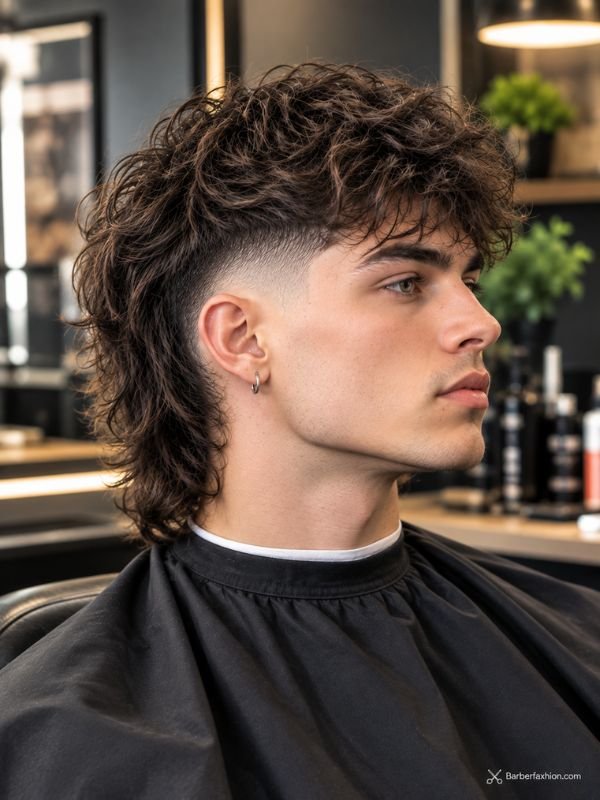
A Mid Fade Mullet combines two defining features: a mullet silhouette and a mid-positioned fade on the sides. The mullet keeps more length toward the back, while the fade creates a gradual transition from shorter hair into the longer sections.
The exact result can vary considerably. Some versions keep the top relatively controlled, while others use heavy layers and texture. The back can also range from moderately long to a more dramatic flowing length. Current barber guides describe the mid fade as sitting around the temple area, giving more contrast than a low fade without pushing as high as a high fade.
What Makes the Mid Fade Mullet Different?
The main difference is the relationship between the sides and the back. A traditional mullet can leave more weight around the sides, while a Mid Fade Mullet removes that side bulk and creates a cleaner transition.
That contrast makes the longer back stand out. You can then decide whether you want the top neat and controlled, heavily textured, curly, layered, or inspired by a wolf cut.
The fade also doesn’t determine the entire haircut. Your barber still needs to shape the crown, top, neckline, and back so the haircut reads as a deliberate mullet rather than simply a fade with extra hair behind it.
Mid Fade Mullet vs. Mid Taper Mullet
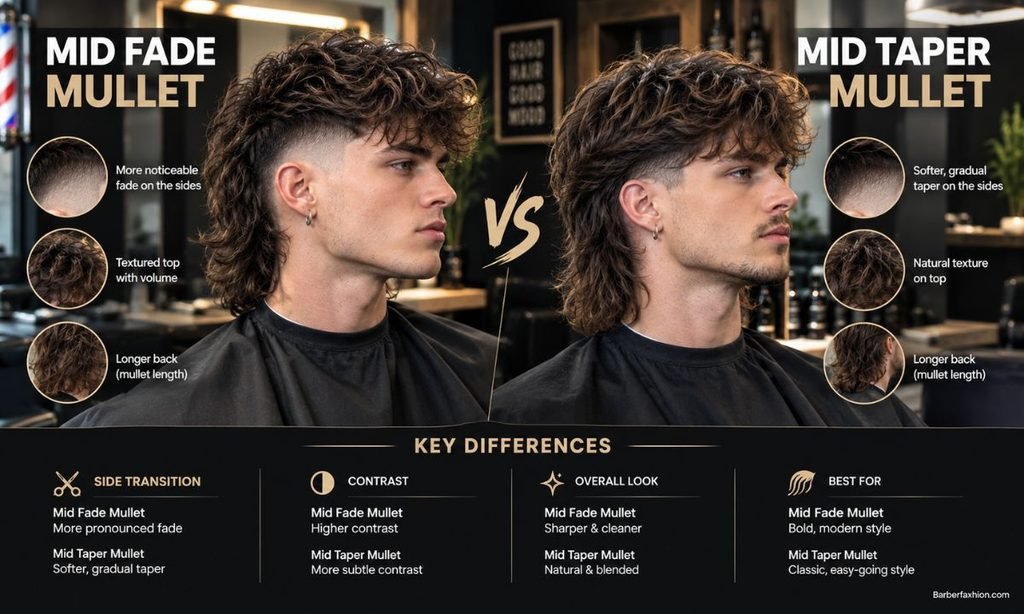
These terms are sometimes used interchangeably online, but they shouldn’t automatically be treated as identical.
A Mid Fade Mullet generally creates a more noticeable reduction in length through the sides, producing stronger contrast between the short sides and longer hair. A Mid Taper Mullet usually keeps more perimeter weight and uses a softer graduation around areas such as the temples, ears, and neckline.
| Feature | Mid Fade Mullet | Mid Taper Mullet |
| Side appearance | More noticeable reduction | Softer transition |
| Contrast | Usually stronger | Usually more subtle |
| Overall feel | Sharper and cleaner | Natural and blended |
| Mullet back | Long or moderate | Long or moderate |
| Styling flexibility | High | High |
The terminology can vary from barber to barber, so showing a reference photo is useful when the exact finish matters.
Top Mid Fade Mullet Styles for 2026
There isn’t just one way to wear this haircut. You can keep it clean and modern, lean into curls, build a shaggy silhouette, or go for a wolf-inspired finish.
Modern Mid Fade Mullet
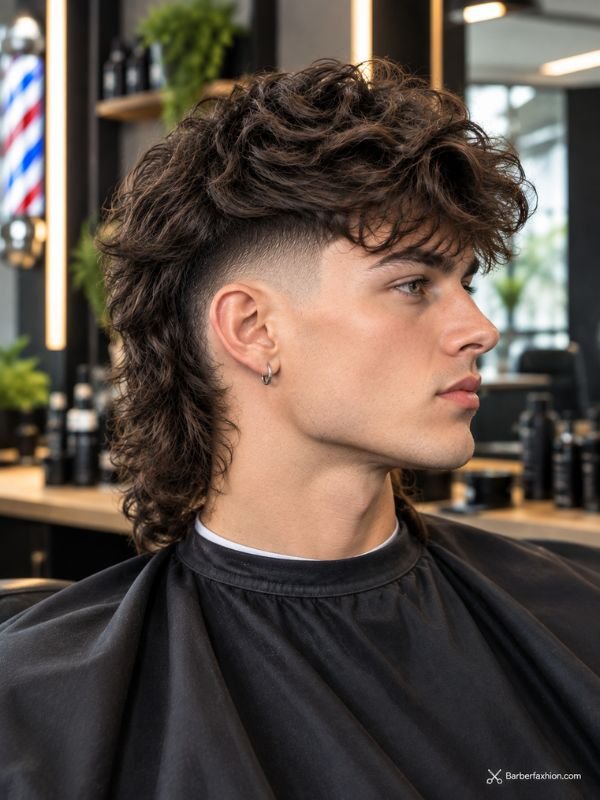
The Modern Mid Fade Mullet is the easiest place to start if you want the haircut to feel current without becoming too extreme. The sides stay clean, the top has controlled texture, and the back has enough length to create the recognizable mullet shape.
For a polished finish, ask your barber for soft layers rather than a completely blunt back. A small amount of matte paste or texture cream can then bring out movement without making the hair look stiff.
This version works particularly well when you want a haircut that can move between casual and more dressed-up settings.
Curly Mid Fade Mullet
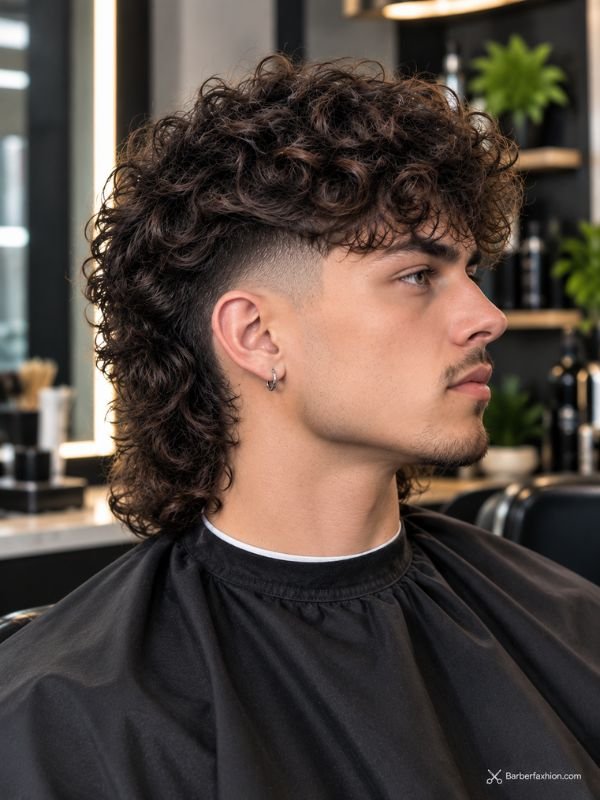
Curly hair gives the Mid Fade Mullet plenty of natural volume and movement. Instead of fighting the curl pattern, the haircut can use it to build the top and back.
The fade removes some of the visual weight around the sides while the curls remain fuller through the top and longer back. This creates a strong contrast without requiring excessive styling.
For curls, focus on moisture and definition. A lightweight leave-in or curl cream can help maintain shape, while diffusing can preserve volume without flattening the curls.
Straight Mid Fade Mullet
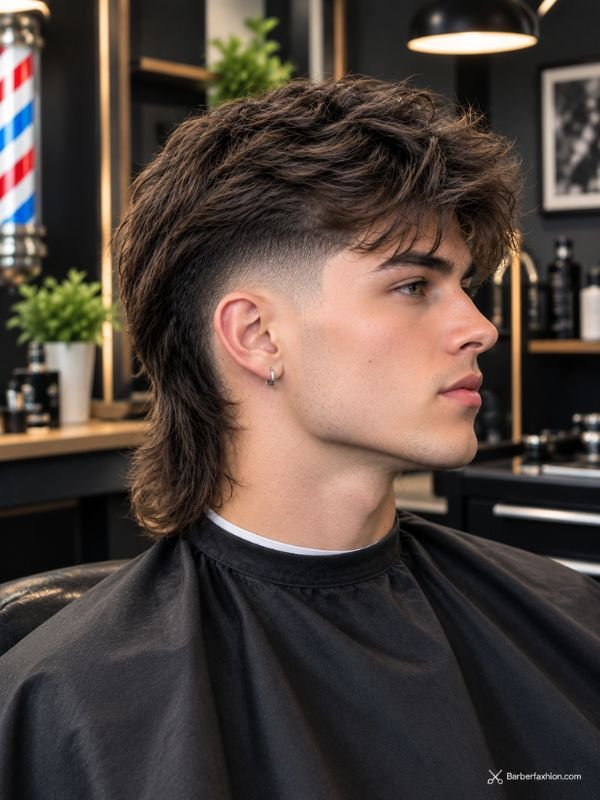
Straight hair creates a cleaner outline and makes the transition between the faded sides, top, and back easy to see. You can keep the top relatively smooth or add layers for movement.
If your hair is fine, avoid making the back excessively long because too much length can make it appear thinner. A controlled, textured back can give the haircut more body.
A lightweight texturizing spray or matte styling cream is usually enough for an everyday finish.
Wolf Cut Mid Fade Mullet
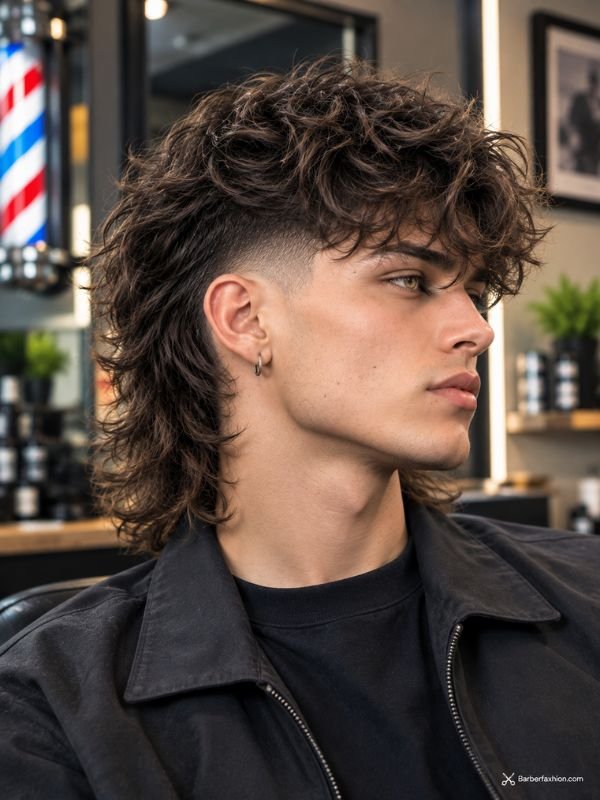
The Wolf Cut Mid Fade Mullet combines a heavily layered crown with the longer back associated with a mullet. The fade keeps the sides controlled while the top carries more volume and movement.
This is a stronger choice if you like messy, textured hairstyles. The difference between a wolf-inspired version and a basic modern mullet is mainly the amount and placement of layering.
For styling, work a lightweight texturizing product through the roots and crown. Let the longer back move naturally instead of forcing every strand into place.
Shag Mid Fade Mullet
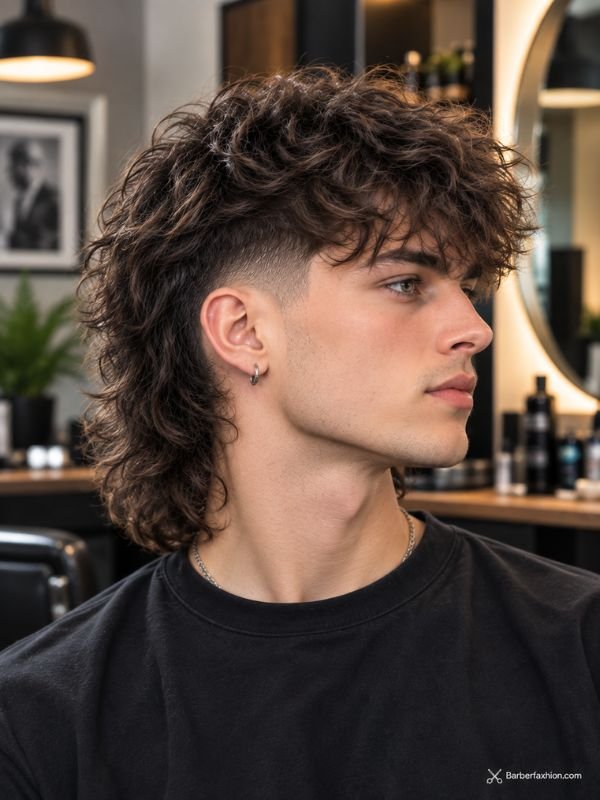
A Shag Mid Fade Mullet is softer and more relaxed than a heavily structured version. Feathered layers create movement around the crown and face, while the fade prevents the sides from becoming too bulky.
Straight and wavy hair can show the feathered texture particularly well, although the shape can be adjusted for curly hair too.
Use a light styling cream or texture spray and avoid products that make the layers look heavy or greasy.
Mid Fade Mullet With Beard
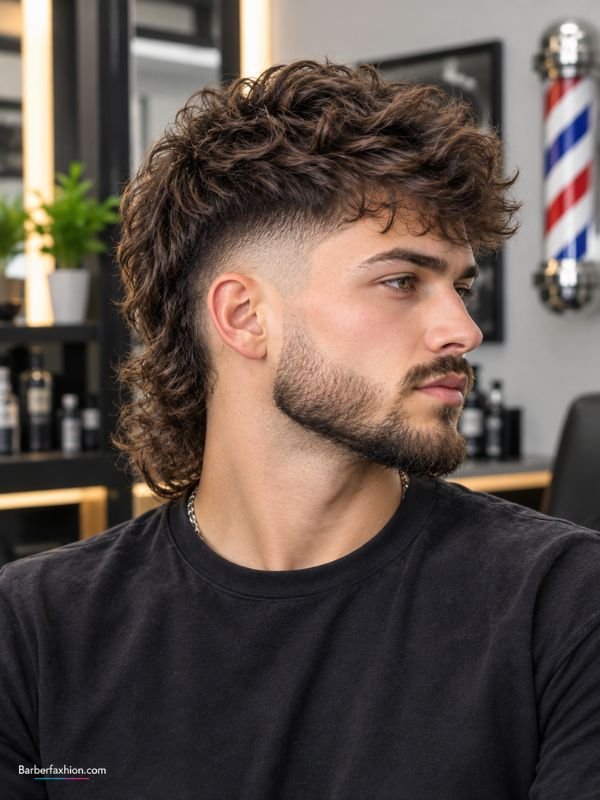
Adding a beard creates another visual connection between the haircut and the face. The clean sides can make a fuller beard look more intentional, while a shorter beard can keep the overall appearance lighter.
The key is balance. If the back is extremely long and the beard is very full, the overall silhouette can become heavy. A controlled top, clean fade, and well-shaped beard can create a more balanced result.
Mid Fade Mullet With Short Hair
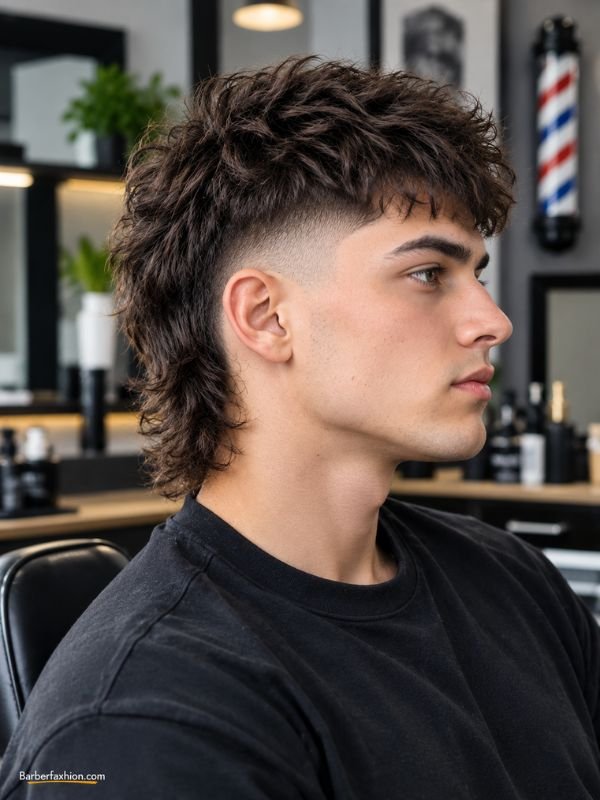
You don’t need a very long back to wear a mullet. A short version keeps the basic front-short/back-long concept while reducing the dramatic length difference.
It’s useful if you’re trying the style for the first time or don’t want to spend a lot of time managing long hair. Keep enough length at the back for the shape to remain recognizable.
Mid Fade Mullet With Long Hair
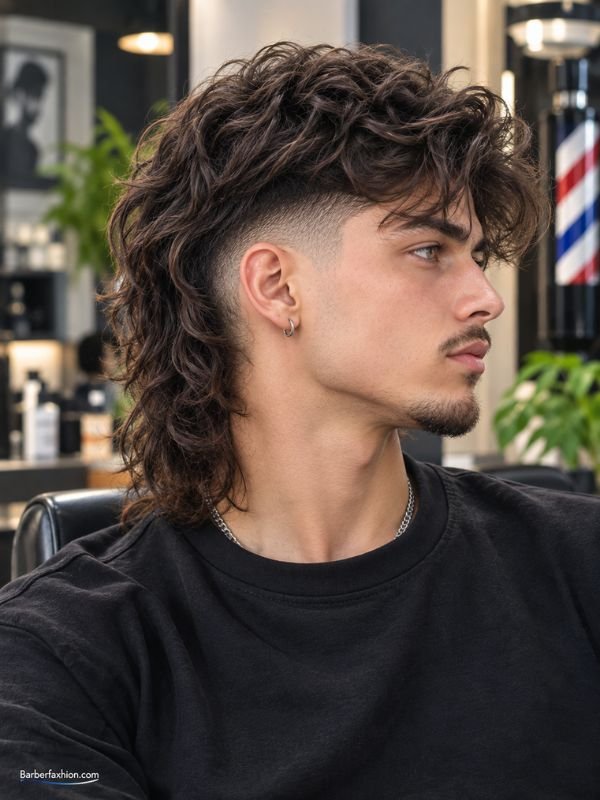
Longer hair creates a much stronger mullet silhouette. The back can flow naturally over the neckline, while the fade provides contrast around the sides.
Long hair also gives you more options for layers, waves, curls, and textured finishes. The trade-off is maintenance: split ends, uneven growth, and excess weight become more noticeable as the back grows.
Mid Fade Mullet for Different Hair Types
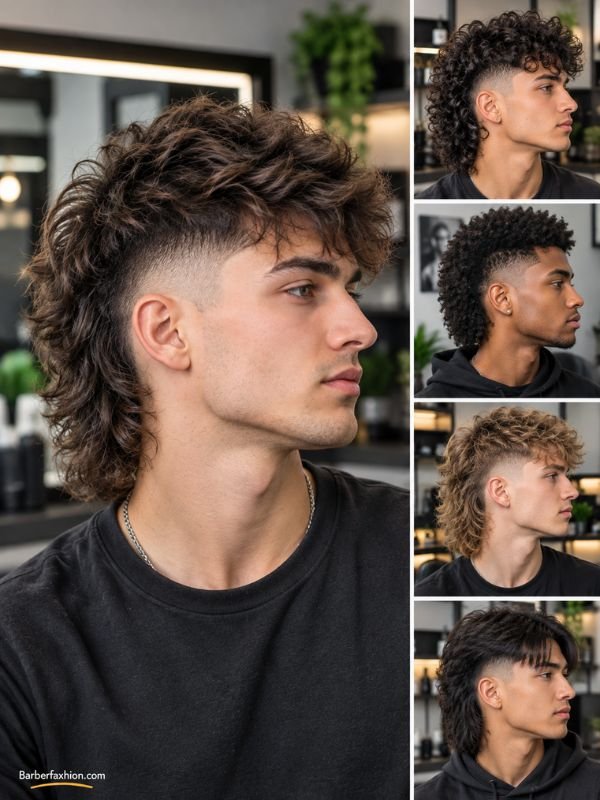
The same haircut can look completely different depending on your natural texture and density. Your barber should adjust the layering and retained weight rather than simply copying the same cut on every head.
Mid Fade Mullet for Straight Hair
Straight hair gives you a clean view of the haircut’s shape. It works well with structured layers, textured ends, or a smoother finish.
For fine straight hair, keeping some density through the crown and avoiding excessive thinning can help preserve fullness.
Mid Fade Mullet for Wavy Hair
Wavy hair adds natural movement, making it a strong match for modern, shag, and wolf-inspired variations.
The goal isn’t necessarily to straighten the hair. Letting the natural wave show through the top and back can make the cut look more relaxed and textured.
Mid Fade Mullet for Curly Hair
Curly hair can create a fuller and more expressive version of the style. The fade controls the sides while the curls provide volume above and behind the head.
Remember that curly hair can appear shorter when dry because of shrinkage. Tell your barber how you normally wear your curls so the final length is planned accordingly.
Mid Fade Mullet for Thick Hair
Thick hair can produce a bold silhouette, but too much weight can make the haircut look bulky. Strategic layering can remove excess weight while preserving the shape.
The fade is particularly useful for reducing visual heaviness around the sides.
Mid Fade Mullet for Fine Hair
Fine hair benefits from controlled length and texture. Keeping the back too long can make sparse areas more obvious.
A shorter or medium-length back with subtle layers can create a fuller-looking outline. Lightweight products are usually preferable to heavy waxes or gels that flatten the hair.
Mid Fade, Low Fade & Other Mullet Variations
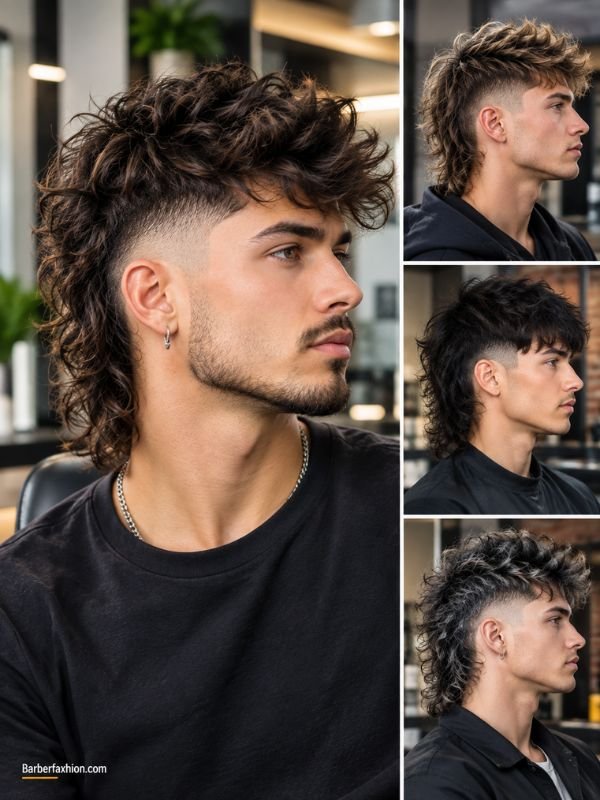
The fade height changes the personality of a mullet. A lower fade tends to leave more side weight, while a higher fade creates stronger contrast.
Low Fade Mullet
A Low Fade Mullet keeps the fade lower on the sides, creating a softer transition into the longer hair. It’s useful if you want the mullet shape without making the sides look extremely short.
A modern mullet low fade can also work well with longer or textured tops because the overall silhouette remains relatively connected.
High Fade Mullet
A High Fade Mullet takes the contrast further by moving the fade higher on the sides. The longer top and back become more visually dominant.
This version has a bolder appearance than a Mid Fade Mullet, so it’s worth considering how much contrast you actually want before asking your barber to go higher.
Mid Fade Haircut vs. Mullet Haircut
A mid fade is primarily about the side transition, while a mullet is primarily about the overall length distribution, especially the longer back.
That means you can combine a mid fade with a mullet. You can also have a mid fade with many other hairstyles that don’t have a long back.
Likewise, a mullet doesn’t require a mid fade. It can be paired with a low fade, high fade, taper, or even a softer scissor-cut finish.
Mid Fade Mullet for Different Face Shapes
Face shape shouldn’t be treated as a strict rule. The better approach is to adjust the haircut’s proportions to complement your features.
Oval Face
An oval face gives you plenty of flexibility. You can experiment with different top textures, back lengths, and fade heights without needing major proportion adjustments.
Round Face
If your face is rounder, additional height or texture through the top can create more vertical emphasis. Keeping excessive width off the sides can also help maintain a cleaner outline.
Square Face
A square face already has strong angles. A textured top and clean fade can emphasize that structure while the longer back adds contrast.
Oblong or Long Face
Avoid automatically adding excessive height on top if your face is already long. A controlled top with moderate back length can create a more balanced silhouette.
Diamond or Heart Face
For diamond or heart-shaped faces, the barber can use the fringe, crown layers, and back length to balance narrower areas around the forehead or jaw.
The most useful approach is to discuss your natural proportions with your barber rather than relying on a generic “best haircut for your face shape” list.
How to Choose the Right Mid Fade Mullet
The right version depends on the look you want and how much styling you’re willing to do.
| Your preference | Consider |
| Clean and modern | Modern Mid Fade Mullet |
| Natural texture | Wavy or curly version |
| Dramatic contrast | Higher fade or longer back |
| Heavy layering | Wolf-inspired version |
| Soft movement | Shag-inspired version |
| Easier daily styling | Shorter back |
| Strong statement | Longer, textured back |
| Facial-hair focus | Mid Fade Mullet with beard |
Your hair texture matters just as much. A style that looks heavily layered on straight hair may appear much fuller on curls.
How to Ask Your Barber for a Mid Fade Mullet
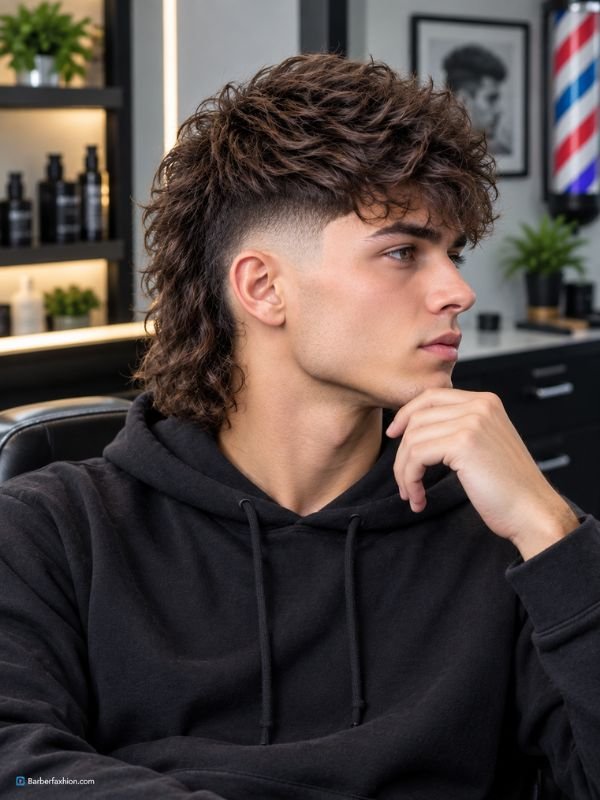
Good communication can make a huge difference. Instead of simply saying “give me a Mid Fade Mullet,” explain how you want the proportions to look.
What to Tell Your Barber
Tell your barber:
- You want a mid fade on the sides.
- Explain how short you want the sides.
- Tell them how much length you want to keep on top.
- Specify whether you want a short, medium, or long back.
- Mention whether you want layers, texture, or a cleaner finish.
- Explain how you normally style your hair.
- Show a reference photo from several angles if possible.
A current barber guide similarly recommends being specific about fade height, top texture, and back length because those choices significantly change the finished haircut.
Should You Bring a Reference Photo?
Yes. A reference photo can communicate proportions that are difficult to explain with words.
Ideally, show your barber a photo that resembles your own hair texture and desired length. If possible, use multiple angles so the barber can see the sides, top, and back.
Don’t assume the barber will reproduce every detail exactly. Your natural hair density, growth pattern, and texture may require small adjustments.
Best Way to Style a Mid Fade Mullet
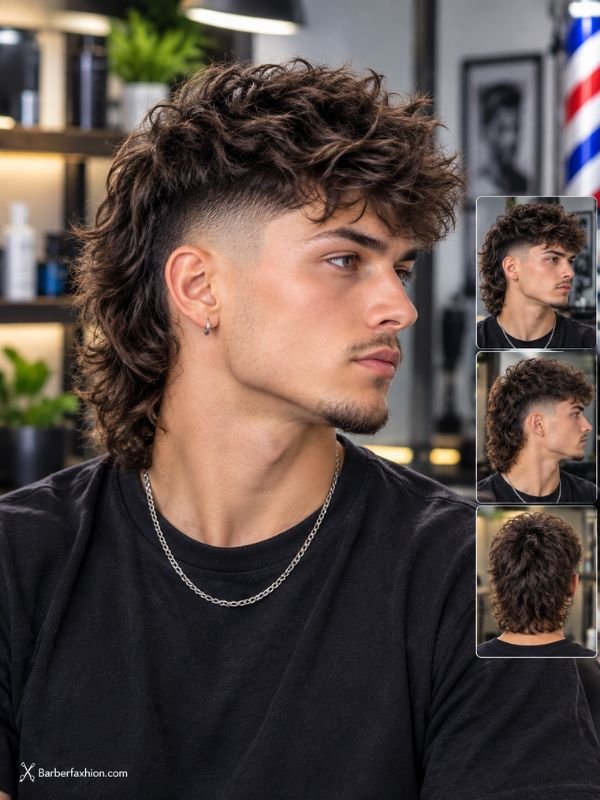
Styling should enhance the haircut rather than hide it under too much product.
Styling Straight and Wavy Hair
Start with slightly damp hair. Apply a lightweight texturizing spray, then blow-dry using your fingers to create the direction and volume you want.
Finish with a small amount of matte paste or clay if you need more separation. Avoid using too much product because it can make textured hair look flat.
Styling Curly Hair
Apply a curl-friendly cream or lightweight leave-in to damp hair. Scrunch the curls and allow them to dry naturally or use a diffuser.
The goal is definition without turning the curls stiff. Keep the longer back soft and mobile so the mullet retains its natural shape.
Creating a Messy or Textured Finish
For a wolf or shag-inspired look, concentrate texture around the crown and top. A texturizing spray can create separation, while a small amount of matte product can control flyaways.
Don’t overwork the back. A little natural movement is part of the appeal of this style.
Mid Fade Mullet Maintenance Guide
The fade usually needs attention before the longer back does. As the sides grow, the contrast becomes softer and the haircut loses some of its crisp appearance.
How often you need a refresh depends on your hair growth, fade finish, and how sharp you want the sides to remain. Some current guides suggest more frequent fade touch-ups for very short finishes, while longer versions can be allowed to grow out further before a full reshaping.
Keep the longer sections healthy by avoiding unnecessary heat and trimming damaged ends when needed. If you’re growing the back, tell your barber that you want to preserve length rather than repeatedly taking it short.
FAQs About Mid Fade Mullet
Is a Mid Fade Mullet easy to maintain?
It can be relatively manageable, but the fade needs regular attention if you want the sides to stay crisp. A shorter, less dramatic back can also reduce daily styling work.
Is a Mid Fade Mullet good for curly hair?
Yes. Curly hair can give the top and back natural volume and movement. The fade helps control the side bulk while leaving the curls visible through the longer sections.
What’s the difference between a Mid Fade and Mid Taper Mullet?
A Mid Fade Mullet generally creates more noticeable contrast through the sides, while a Mid Taper Mullet typically leaves more perimeter weight and uses a softer transition. Because barber terminology can vary, showing a reference photo is useful.
How do I ask my barber for a Mid Fade Mullet?
Tell your barber that you want a mid fade on the sides while keeping length at the back. Then specify your preferred top texture, back length, and how strong you want the contrast to be.
How long should the back of a Mid Fade Mullet be?
There isn’t one required length. A short back creates a subtle modern mullet, while a longer back produces a more dramatic silhouette. Choose the length based on your styling preference, hair density, and how much maintenance you’re willing to do.
Conclusion
The Mid Fade Mullet gives you plenty of room to personalize a classic silhouette. You can keep it clean and modern, add curls and natural movement, build a shaggy finish, or push the layers toward a bold wolf-inspired look. The fade height, top texture, back length, and hair type all influence the final result.
Before your appointment, decide how much contrast you want and how long you want the back to remain. Then show your barber a clear reference and explain how you normally style your hair. With the right proportions and a simple maintenance routine, you can create a Mid Fade Mullet that feels personal rather than like a copy of someone else’s haircut.