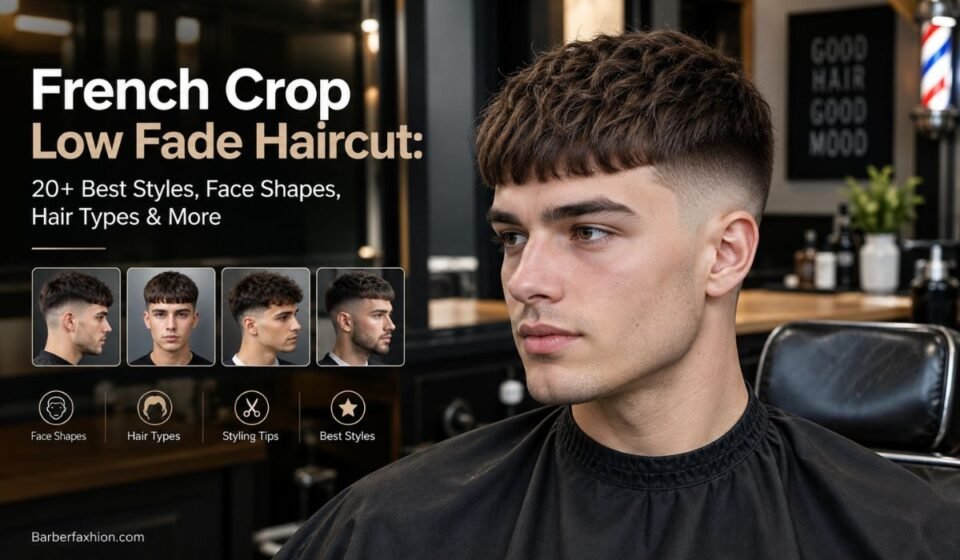

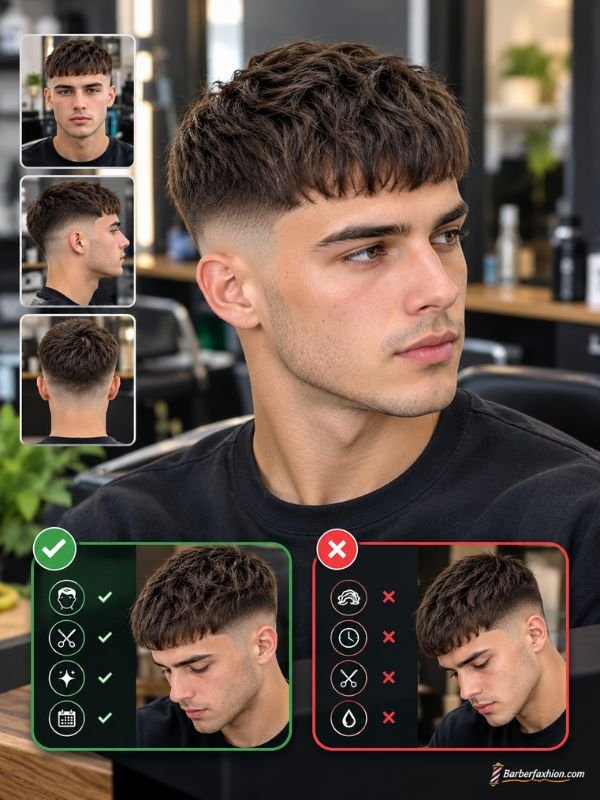
If you want a haircut that looks clean without requiring a complicated morning routine, the French crop low fade haircut is worth considering. It combines a short, textured top and forward fringe with a low fade around the sides and back, giving you a balanced style that can be neat, messy, modern, or more traditional depending on how it is cut.
The low fade is what gives this haircut its softer character. Instead of taking the fade high up the sides, the barber keeps the shortest section closer to the ears and neckline. That leaves more visual weight around the temples and sides while the cropped top and fringe remain the main focus.
The best part is how customizable the cut can be. Your barber can change the fringe length, amount of texture, top length, fade intensity, and side weight according to your hair type, face shape, and preferred level of maintenance.
In this guide, you’ll find 20+ ways to wear the French crop low fade, comparisons with mid, high, skin, drop, and taper fades, advice for different face shapes and hair types, barber instructions, styling steps, maintenance tips, and practical ways to choose the right version for you.
Quick Answer: What Is a French Crop Low Fade Haircut?
A French crop low fade haircut combines a short top with a forward fringe and a fade that begins low around the ears and neckline. The top can be blunt, textured, choppy, messy, or slightly longer, while the low fade keeps the sides clean without removing too much weight.
It is a particularly flexible choice if you want:
- A short, easy-to-manage haircut
- A modern but not overly aggressive fade
- A forward fringe
- Texture and movement on top
- A style that can work with straight, wavy, curly, thick, or fine hair
- A haircut that can look professional or casual
The exact result depends heavily on the relationship between the fringe, top length, fade height, hair density, and face shape.
What Is a French Crop Low Fade Haircut?
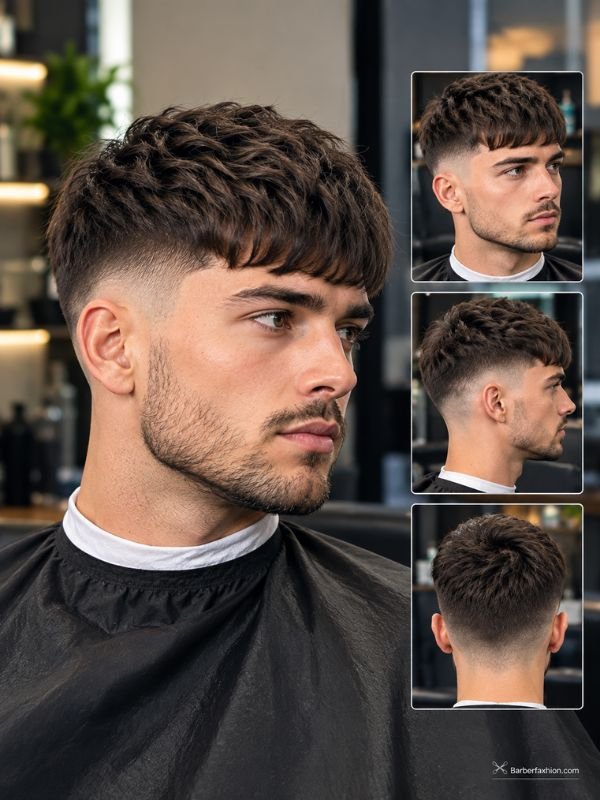
A French crop is defined primarily by what happens on top. The hair is kept relatively short and directed toward the forehead, creating the recognizable cropped fringe. The sides can then be tapered or faded in different ways.
A low fade changes the overall balance by keeping the fade close to the lower sides of the head.
The 3 Defining Features of the Cut
1. Forward fringe
The fringe is one of the most recognizable features. It can be straight and blunt, slightly uneven, choppy, textured, or softly separated. Its length makes a major difference to the final appearance.
2. Short textured top
The top is generally shorter than styles such as a quiff or pompadour. Texture can be added through point cutting, layering, or other barbering techniques to prevent the top from looking too flat.
3. Low fade
The fade starts relatively low around the ears and lower sides. Depending on the desired finish, it can remain slightly above skin level or become a skin fade at the very bottom.
How a Low Fade Changes the French Crop
A low fade creates a softer transition than a mid or high fade. More of the side remains visible, so the haircut does not feel as exposed or dramatic.
This can be useful if you want the haircut to retain some fullness around the temples or if you prefer a conservative look.
It also gives the barber more room to balance the haircut against the shape of your head. A low fade does not automatically mean the style will look soft; the fringe and texture can still make it sharp and contemporary.
Why Is the French Crop Low Fade Haircut So Popular?
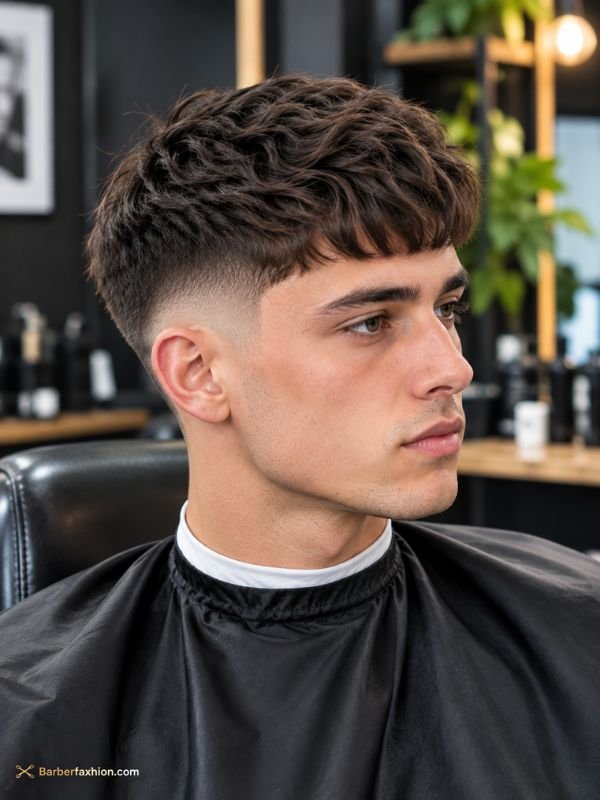
The appeal of the French crop comes from its combination of structure and simplicity. Current 2026 haircut guides continue to feature cropped styles with natural texture, customized fringes, and different fade placements, reflecting how easily the basic haircut can be personalized.
Low-Maintenance Everyday Style
You do not need to spend a long time creating a complicated hairstyle every morning.
After washing, drying, and adding a small amount of suitable styling product, you can usually push the top forward and use your fingers to create separation.
A textured version is especially forgiving because slight imperfections can actually become part of the style.
Professional Yet Modern Appearance
The low fade keeps the sides tidy without producing the strong contrast associated with some higher fades.
That makes the haircut adaptable to different environments. A clean, controlled French crop can work with smart clothing, while a messier textured version can easily fit a casual outfit.
Works Across Different Hair Textures
Straight hair can create a clean, defined fringe. Wavy hair naturally adds movement. Curly hair can make the crop more dimensional, while thick hair can benefit from strategic texturizing.
Fine hair can also work with the style when the barber avoids removing too much density from the top.
The important point is that the same haircut should not be cut identically on every person.
Easy to Customize at the Barbershop
You can adjust almost every major element:
- Fringe length
- Fringe shape
- Top length
- Texture
- Fade height
- Fade intensity
- Side weight
- Neckline
- Beard connection
- Overall finish
That flexibility is one reason the haircut can look completely different from one person to another.
20+ Best French Crop Low Fade Haircut Styles
The following variations give you different directions to take the basic haircut. Instead of choosing a style only because the name sounds good, think about the top texture, fringe, fade contrast, and amount of daily styling you actually want.
1. Textured French Crop Low Fade
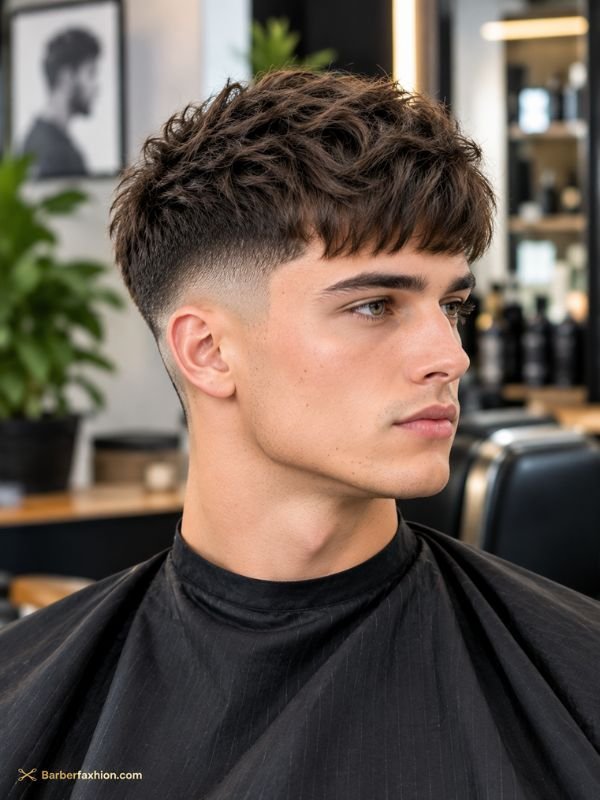
The textured French crop low fade is one of the easiest versions to personalize.
The top is cut with visible separation rather than being left as one smooth block. The fringe can be slightly choppy, while the low fade keeps the sides clean.
This version works especially well if you want a modern haircut that does not look overly polished.
Best for: Thick, medium, straight, or slightly wavy hair.
Styling: Use a small amount of matte clay or paste and work it through the top with your fingers.
2. Short French Crop Low Fade
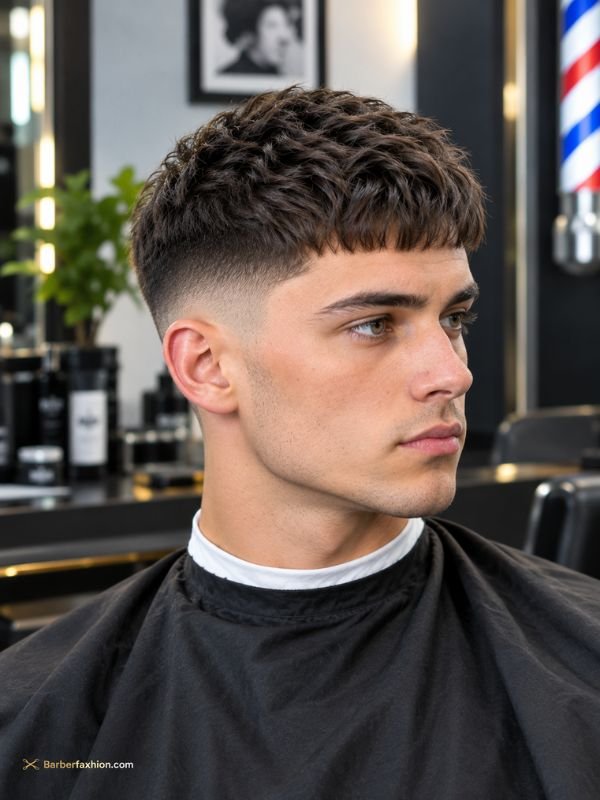
The short version keeps both the top and fringe relatively compact.
Because there is less length to control, styling becomes extremely simple. The haircut also creates a neat silhouette that works well for men who do not want to spend much time on their hair.
Keep some texture in the top if you want to avoid a flat appearance.
Best for: Men who prefer short hair and minimal styling.
3. Clean French Crop Low Fade
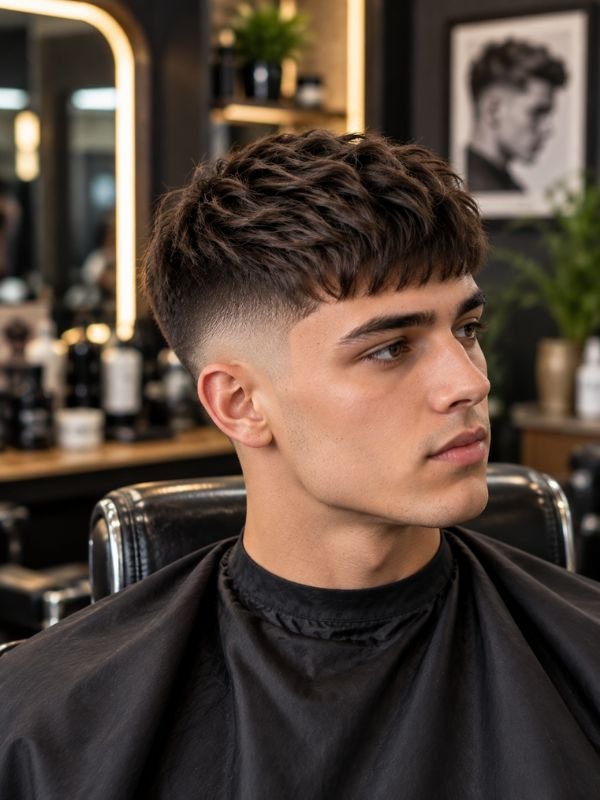
The clean French crop focuses on precision rather than messy texture.
The fringe is controlled, the top is neatly shaped, and the low fade creates a tidy finish around the sides.
It is a useful choice if you want something that looks polished without moving into a formal slicked-back hairstyle.
Best for: Professional settings, straight hair, and men who prefer a neat appearance.
4. Stylish French Crop Fade
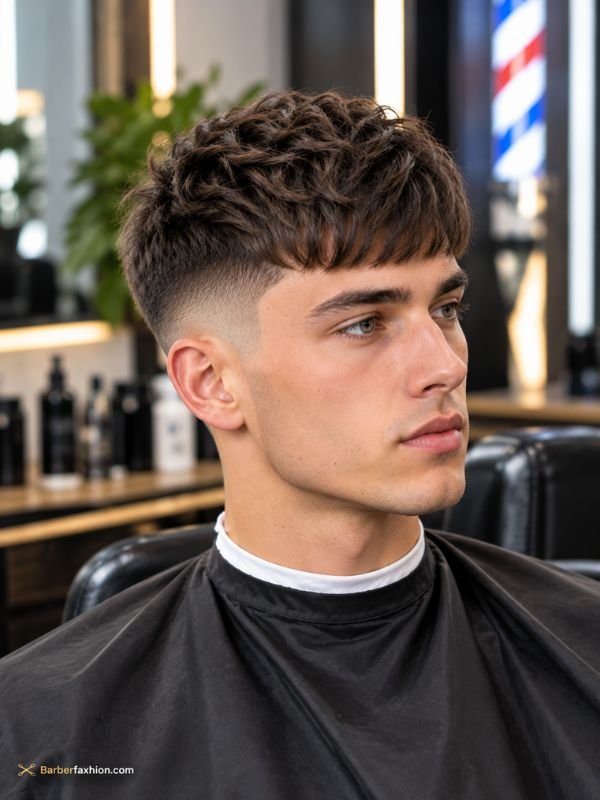
This variation gives you more room to play with texture and contrast.
The top can be slightly longer, the fringe can be customized, and the fade can be made more defined while still keeping its lower placement.
It is a good middle ground between a traditional crop and a more fashion-forward fade.
Best for: Men wanting a modern everyday haircut.
5. Messy French Crop Low Fade
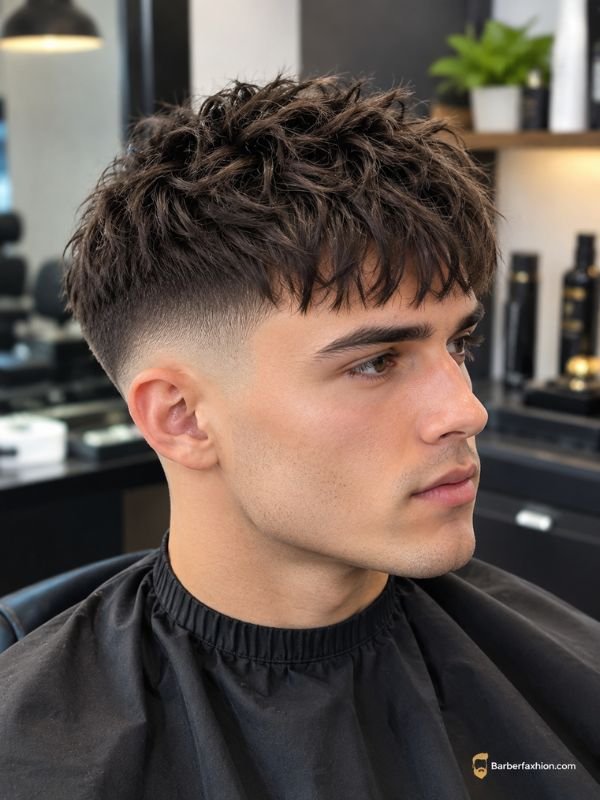
A messy crop deliberately avoids an overly perfect finish.
The top is textured and separated, with individual sections allowed to move naturally. The fringe can be slightly uneven rather than cut into a perfectly straight line.
The low fade provides structure underneath the intentionally messy top.
Best for: Thick or textured hair.
Styling: Apply a small amount of matte product and twist or separate sections with your fingertips.
6. Wavy French Crop Low Fade
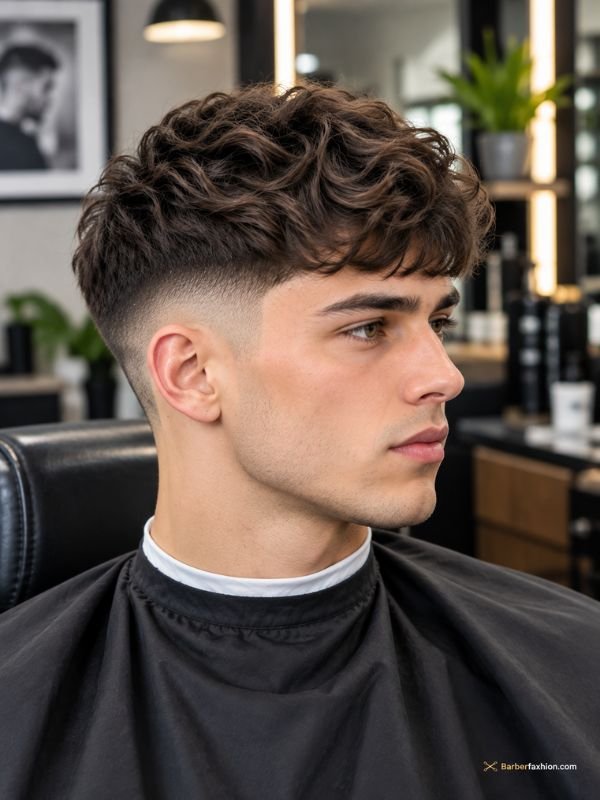
Wavy hair gives the French crop natural movement without requiring much manipulation.
Rather than fighting the waves, the barber can shape the top around the existing pattern. The fringe can be kept forward while allowing subtle bends through the top.
The low fade then creates a clean foundation underneath the natural texture.
Best for: Naturally wavy hair.
7. Curly French Crop Low Fade
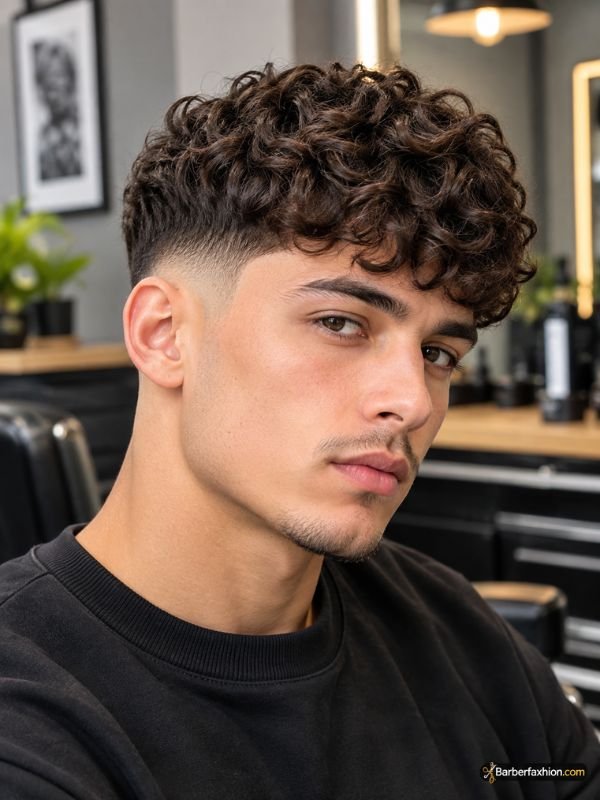
Curly hair can give the French crop a completely different character.
The curls provide volume and texture while the low fade controls the sides. The fringe does not necessarily have to be perfectly straight; it can follow the natural curl pattern.
Your barber should account for shrinkage when deciding the top and fringe length.
Best for: Curly and strongly textured hair.
8. Blunt Fringe French Crop Low Fade
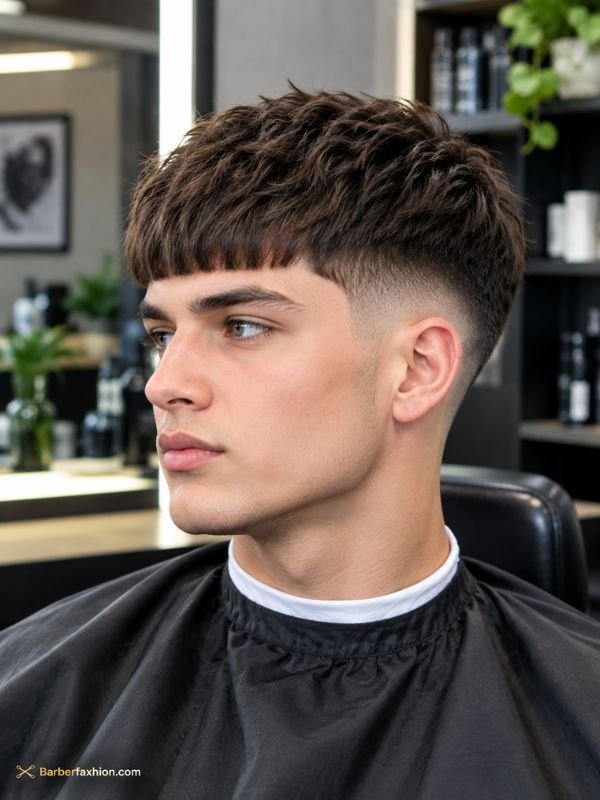
This version puts the fringe front and center.
The fringe is cut with a more defined horizontal shape, creating a strong visual line across the forehead. The low fade prevents the overall haircut from becoming too aggressive.
Because the fringe is so noticeable, small changes in length can significantly change the result.
Best for: Straight or controlled hair.
9. Tapered French Crop Low Fade
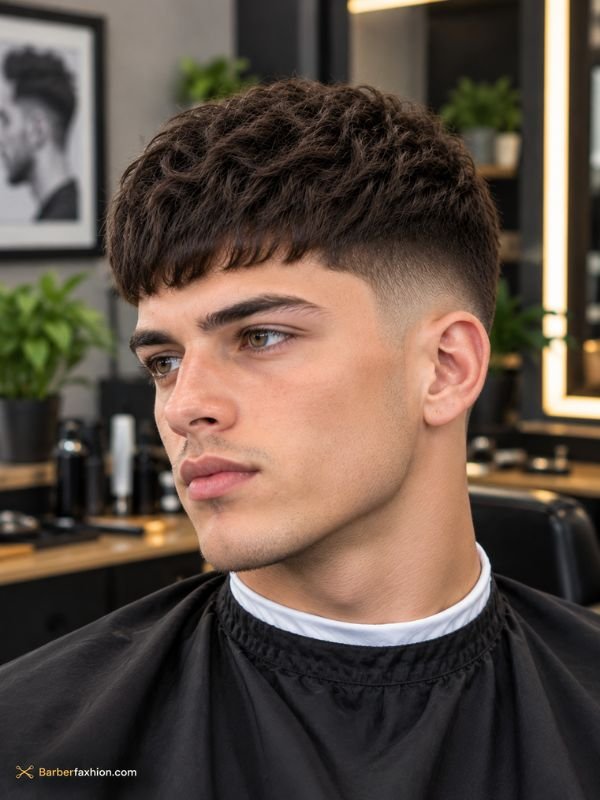
A tapered version uses a softer transition around the ears and neckline while retaining the overall crop shape.
This is particularly useful if you like the appearance of a fade but do not want the sides to look extremely exposed.
If you specifically want a French crop low taper rather than a traditional low fade, tell your barber that distinction before the haircut starts.
Best for: Conservative styles and men who want more side weight.
10. Skin Fade French Crop
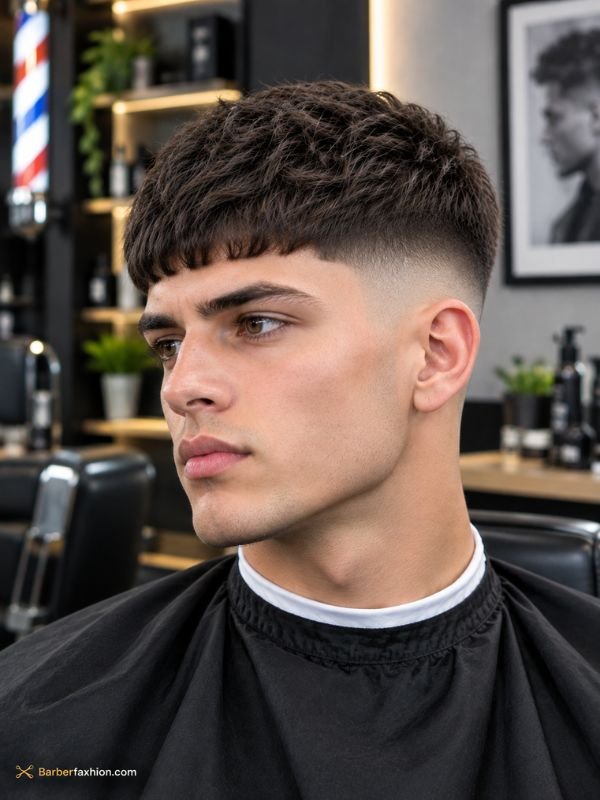
A skin fade French crop creates more contrast by taking the lowest section of the fade very close to the skin.
The top remains cropped and textured, but the clean sides make it look sharper.
This is noticeably more dramatic than a traditional low fade, even when the fade placement itself remains low.
Best for: Men who want a sharper, higher-contrast finish.
11. Low Drop Fade French Crop
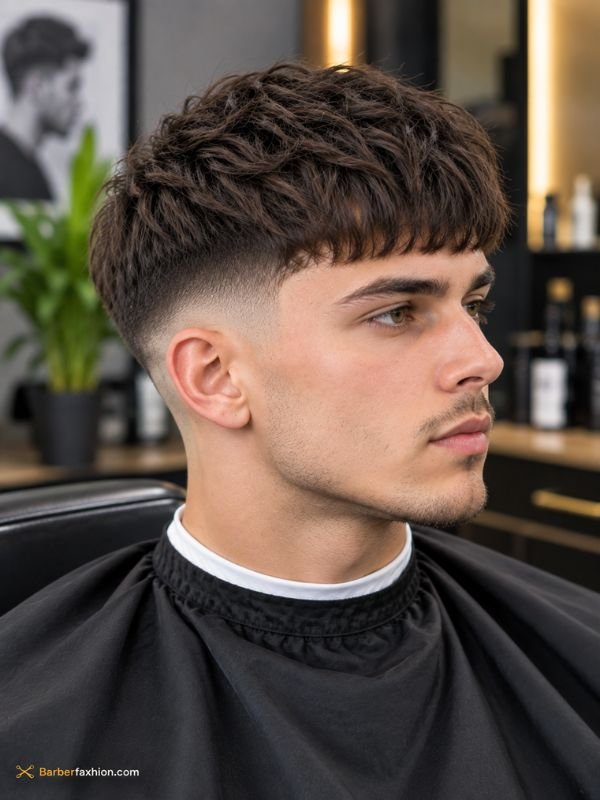
A low drop fade follows the shape of the head and drops lower toward the back.
This can create a more sculpted side profile while preserving the cropped top.
The drop should be discussed clearly with your barber because the shape of the fade can significantly change the back and side silhouette.
Best for: Men who want more shape than a standard low fade.
12. Voluminous French Crop Low Fade
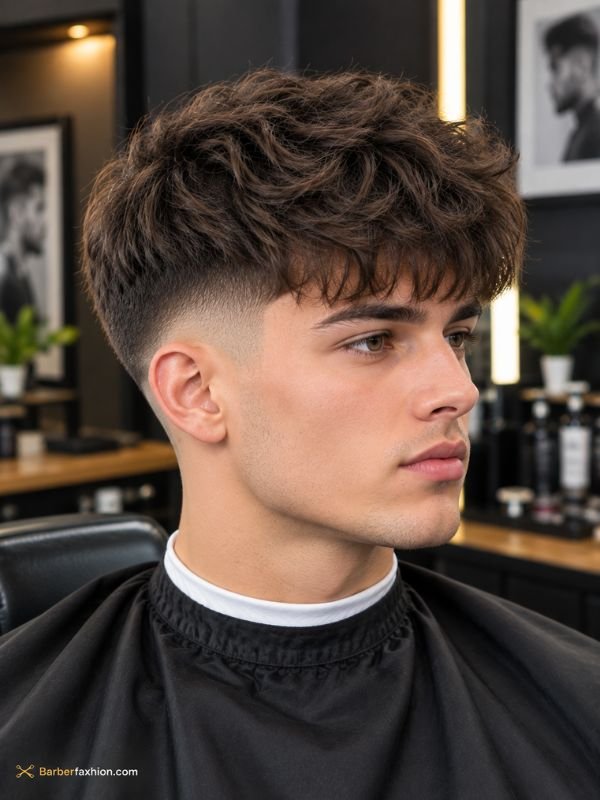
Although the French crop is normally a relatively short style, you can leave slightly more length on top for additional volume.
Instead of pressing the hair completely flat, the barber can build texture that allows the top to stand slightly away from the scalp.
This is particularly useful for men who want a crop but dislike extremely flat hairstyles.
Best for: Medium to thick hair.
13. Soft Layered French Crop Low Fade
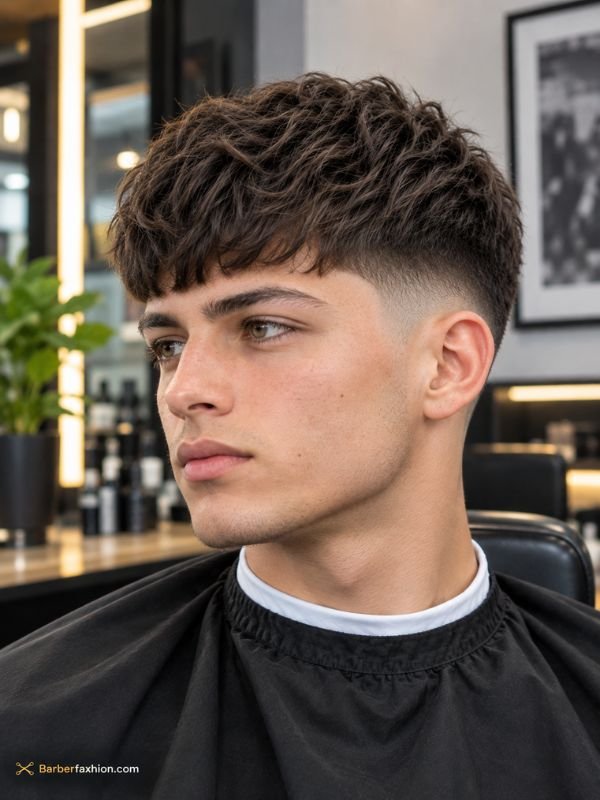
A softer layered crop avoids a heavily chopped appearance.
The top contains subtle layers that help the hair move naturally, while the low fade maintains a clean outline.
This version is useful when you want texture without making every strand look deliberately separated.
Best for: Straight, wavy, and medium-density hair.
14. Choppy French Crop Low Fade
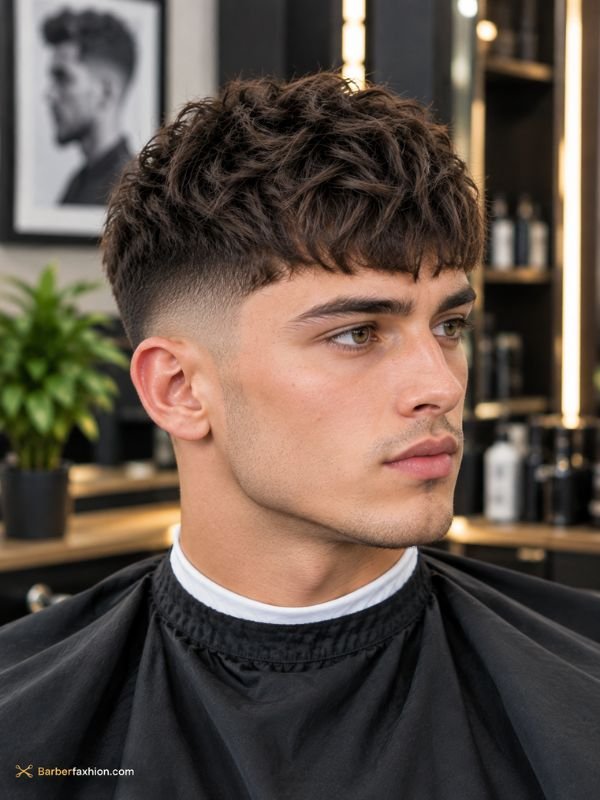
The choppy crop has more visible separation through the top.
Instead of a smooth surface, different sections of hair create small pieces and irregular movement.
It can make a short haircut feel more dynamic without adding much length.
Best for: Thick hair and men who like a relaxed, textured appearance.
15. Classic French Crop Low Fade
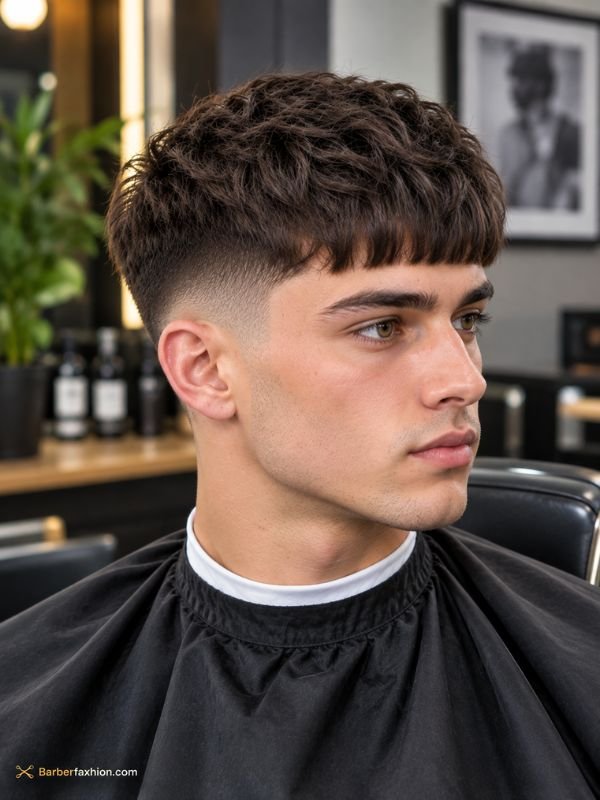
The classic approach keeps things simple: a short top, controlled forward fringe, and a low fade.
There is no need for extreme texture or dramatic contrast.
This is a strong starting point if you have never tried a French crop before because you can make adjustments later.
Best for: First-time French crop wearers and professional environments.
16. Mid Fade French Crop
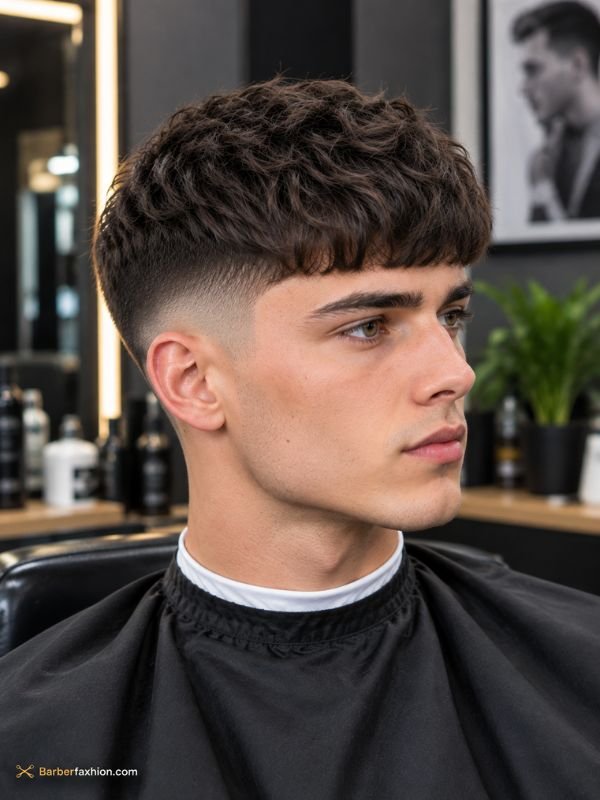
A French crop mid fade is different from the main low-fade style because the fade rises farther up the sides.
The result is more visible contrast and a cleaner, more exposed side profile.
If you are deciding between a French crop mid fade and a low fade, think about how much side weight you want to keep. The low fade maintains more fullness, while the mid fade makes the transition more noticeable.
Best for: Men who want more contrast without going as high as a high fade.
17. Disconnected French Crop Low Fade
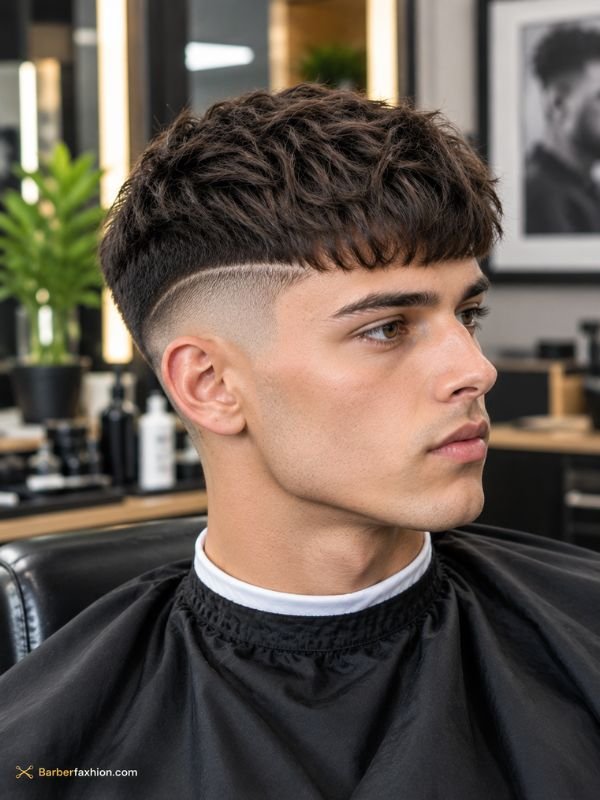
A disconnected version emphasizes the difference between the top and sides.
The top can remain heavier and more prominent while the faded sides create a strong separation.
This requires more deliberate barbering and is less subtle than the classic version.
Best for: Men looking for a bold, fashion-focused crop.
18. Fringe-Forward French Crop Low Fade
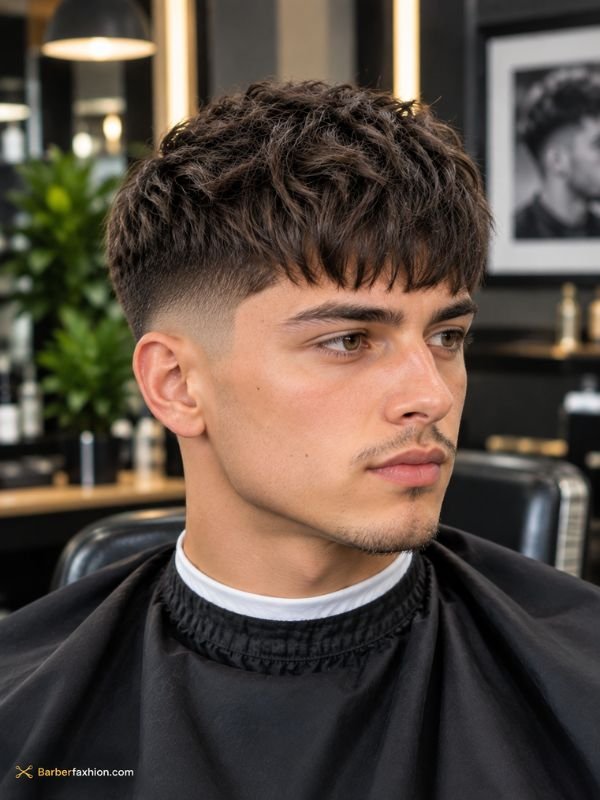
This version makes the forward direction of the fringe particularly obvious.
The top is styled toward the forehead, creating a clear front-focused shape. The sides remain controlled with the low fade.
It is a straightforward option if the fringe is your favorite part of the French crop.
Best for: Straight and slightly wavy hair.
19. Professional French Crop Low Fade
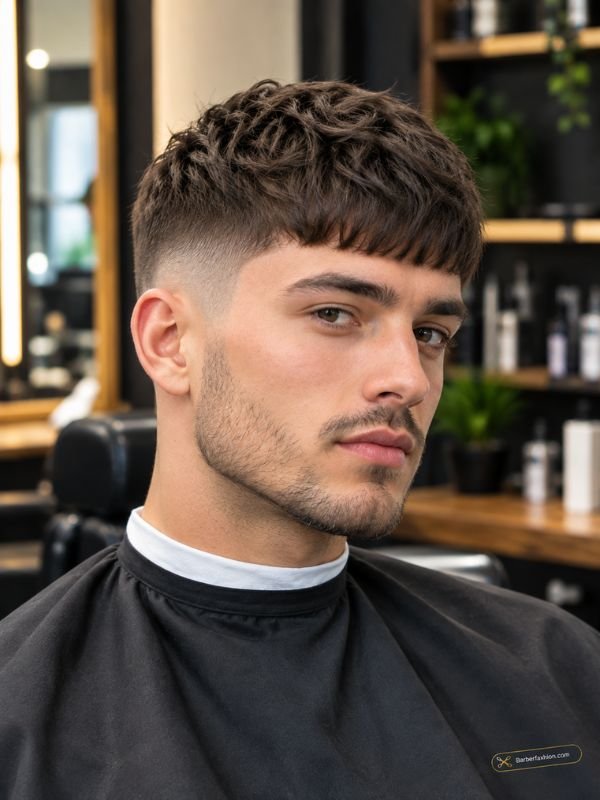
The professional version uses cleaner lines and moderate texture.
The fringe is generally controlled rather than extremely messy, while the fade remains low and blended.
Avoid excessive contrast if you want a conservative workplace appearance.
Best for: Office environments and men who want a polished haircut.
20. Modern Fade-Blend French Crop
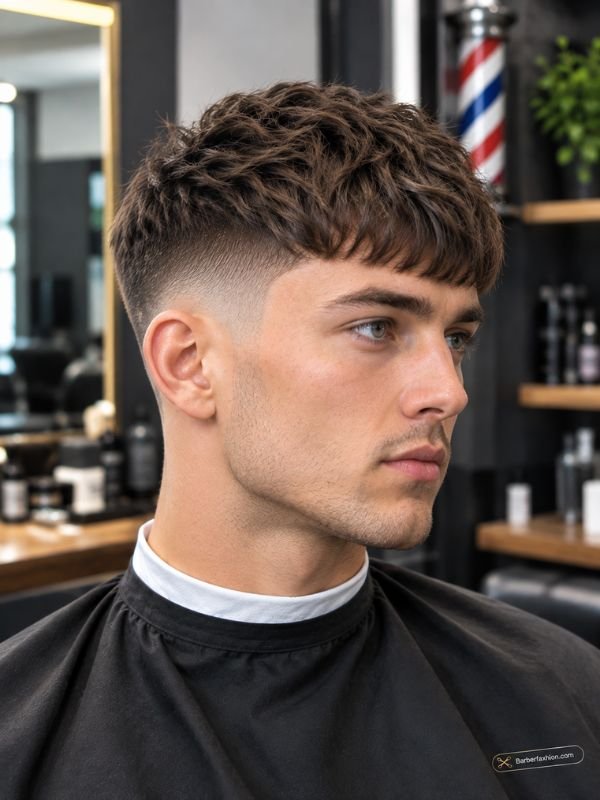
The modern French crop low fade can combine a textured top, natural fringe, and a carefully blended fade.
The goal is not to make one element overpower the others.
Instead, the haircut should look connected from the fringe through the top and into the sides.
Best for: Men who want a current, balanced crop.
21. French Crop Low Fade With Beard
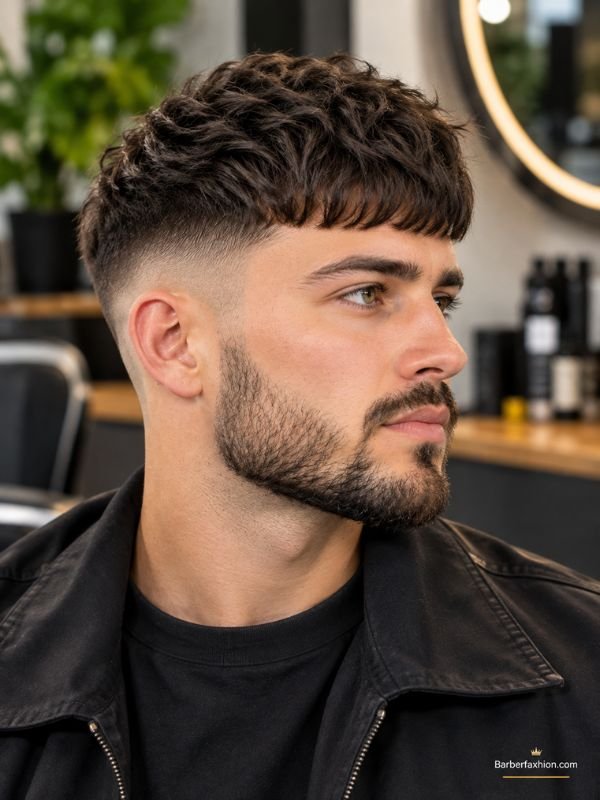
Adding facial hair can change the overall proportions of the haircut.
A short beard or stubble can create a stronger connection between the faded sides and the jawline. A fuller beard gives the style more visual weight and can balance a shorter top.
The beard does not have to match the fade perfectly. Your barber can create a gradual transition around the sideburn area.
Best for: Men who already wear stubble or a beard.
22. Fringe Crop Low Fade
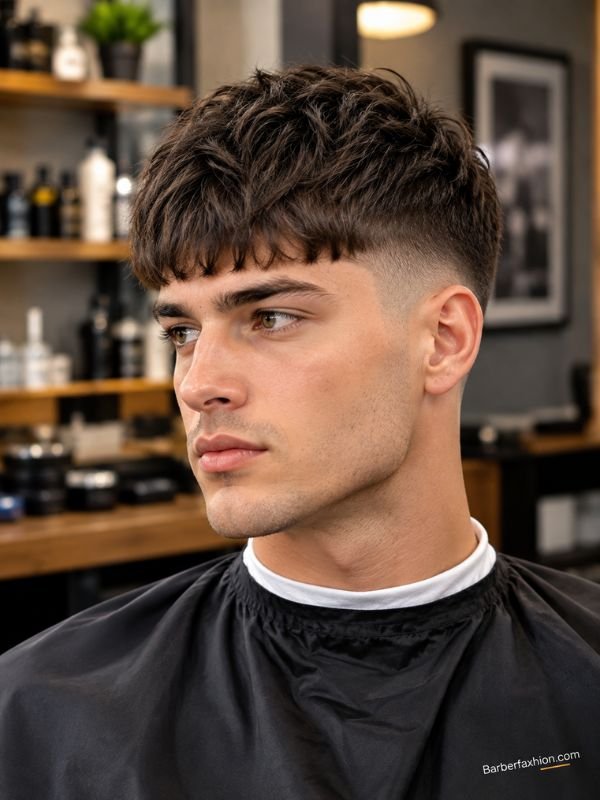
A fringe crop low fade places extra attention on the front section.
It is closely related to the French crop, but the exact fringe shape can be more flexible. You might choose a blunt, textured, uneven, or slightly separated fringe depending on your hair and preferred finish.
If you show your barber a reference image, point specifically to the fringe because “crop” can mean different things from one barber to another.
Best for: Men who want the fringe to be the defining feature.
Low Fade vs Other French Crop Fade Options
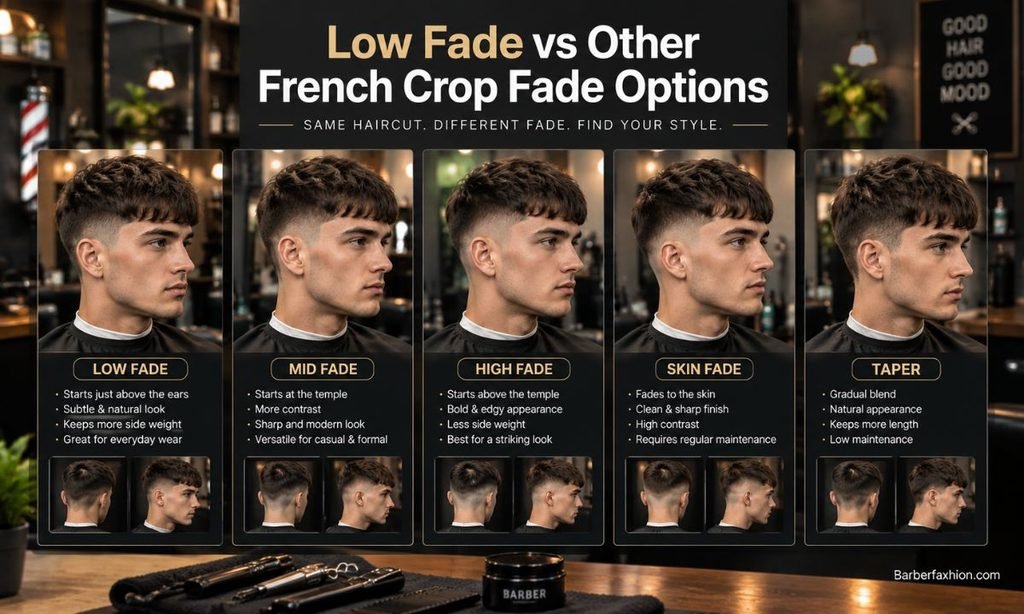
Choosing the right fade is just as important as choosing the top. The word “French crop” describes the main haircut structure, but the fade determines how much contrast and side exposure you get.
| Variation | Overall Look | Side Weight | Contrast | Maintenance |
| Low Fade | Soft and balanced | More | Low–medium | Moderate |
| Mid Fade | Sharper | Medium | Medium | Moderate |
| High Fade | Bold | Less | High | Higher |
| Skin Fade | Very clean and sharp | Less | Very high | Higher |
| Drop Fade | Sculpted | Depends on shape | Medium–high | Moderate |
| Taper | Natural and conservative | More | Low | Lower |
French Crop Low Fade vs Mid Fade
The low fade leaves more hair around the sides and temples. The mid fade rises higher, creating more visible contrast.
Choose the low fade if you want a softer profile. Choose the mid fade if you prefer a more noticeable transition.
French Crop Low Fade vs High Fade
A high fade removes significantly more side weight.
This makes the top appear more prominent and can produce a stronger, more dramatic haircut.
A low fade is generally the more understated option.
French Crop Low Fade vs Skin Fade
These are not necessarily opposites. A low fade can finish at skin level at the bottom.
The difference is primarily about the finish and contrast. A skin fade exposes the scalp in the shortest section, producing a cleaner and sharper appearance.
French Crop Low Fade vs Drop Fade
A drop fade changes the shape of the fade as it moves around the head.
Instead of maintaining a relatively consistent horizontal transition, it drops lower toward the back.
This can make the haircut look more sculpted from the side and rear.
French Crop Low Fade vs Taper
A taper generally keeps more hair and concentrates the shortening around specific areas such as the sideburns and neckline.
If you want the most natural-looking transition, a low taper can be a useful alternative.
If you want more visible fading along the sides, a low fade is the clearer choice.
French Crop Low Fade for Different Face Shapes
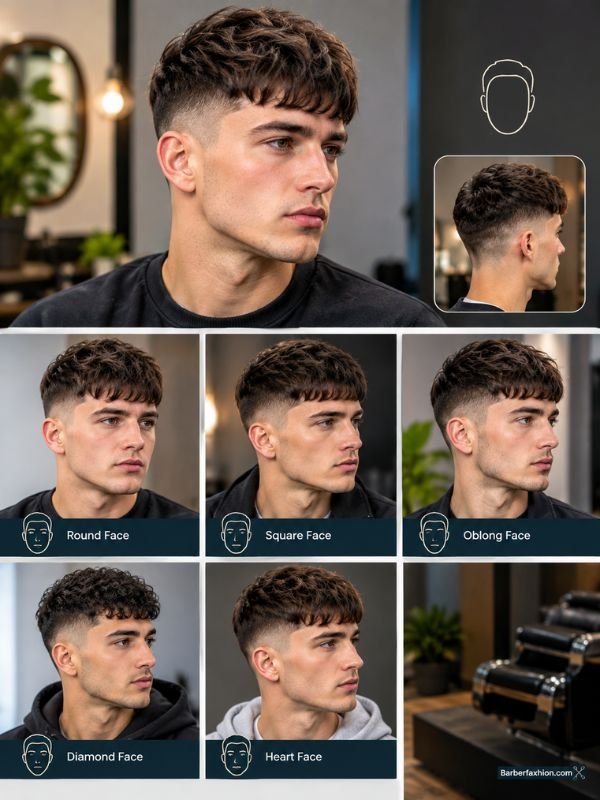
The best crop is not necessarily the one that looks best in a reference photo. Your facial proportions should influence the fringe length, top volume, and fade placement.
Oval Face
Oval faces are generally flexible because their proportions allow many different crop variations.
You can experiment with blunt, textured, messy, or slightly longer fringes.
A low fade can preserve a balanced silhouette without requiring major adjustments.
Try: Textured, classic, or modern French crop.
Round Face
If your face appears wider and softer around the cheeks, avoid creating excessive width at the sides.
A low fade can work well when the barber controls the side weight rather than leaving too much bulk.
Adding texture or a small amount of vertical movement on top can also give the haircut a more structured appearance.
Try: Textured, choppy, or slightly voluminous crop.
Square Face
A strong jawline can pair well with the structured nature of a French crop.
You can choose a blunt fringe for a more geometric appearance or textured fringe for a softer result.
A low fade maintains enough side presence to complement the natural structure of the face.
Try: Classic, blunt fringe, or textured crop.
Oblong or Long Face
If your face is longer than it is wide, be careful about adding excessive height on top.
A slightly longer or fuller fringe can help visually shorten the forehead area.
Keeping the top relatively flat can also maintain better overall proportions.
Try: Forward fringe, classic crop, or soft layered crop.
Diamond Face
Diamond-shaped faces often have more width around the cheekbones and a narrower forehead and jaw.
A textured fringe can help add visual balance around the upper face.
Avoid making the sides excessively tight if you want a softer appearance.
Try: Textured low fade or fringe-forward crop.
Heart-Shaped Face
A heart-shaped face usually has a wider upper face and a narrower lower jaw.
A softer fringe and moderate side weight can create a more balanced appearance.
Avoid making the top excessively bulky if it makes the forehead look significantly wider.
Try: Soft layered or classic French crop.
How to Adjust the Fringe for Your Face Shape
The fringe is one of your strongest customization tools.
A shorter fringe can expose more of the forehead, while a longer fringe creates more coverage.
A blunt fringe produces a stronger horizontal line. A choppy fringe breaks that line into smaller pieces.
If you are unsure, ask your barber to start slightly longer. Hair can always be shortened, but you cannot immediately add back length.
French Crop Low Fade for Different Hair Types
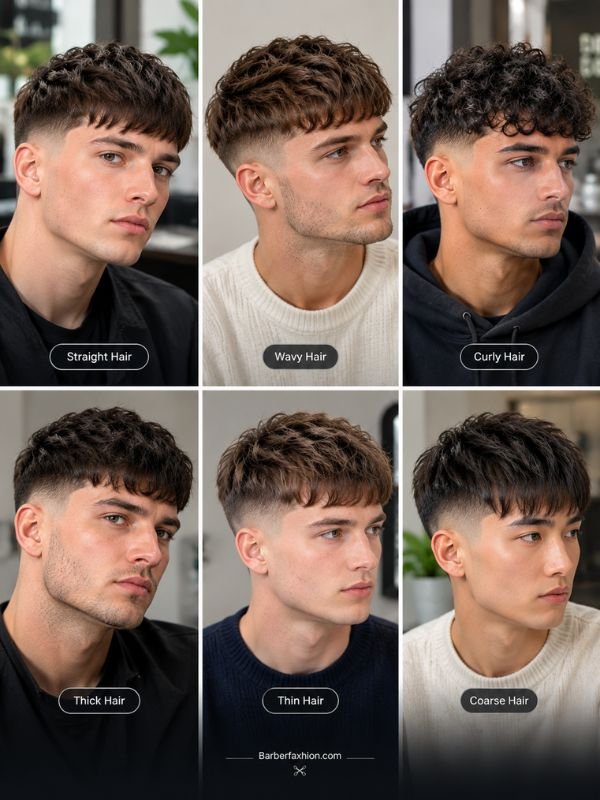
Your hair’s natural texture and density should influence how the haircut is cut.
Thick Hair
Thick hair is excellent for textured crops because there is enough density to create visible separation.
However, too much bulk can make the top look heavy.
Your barber may need to remove some weight strategically while keeping enough density for the fringe to look full.
Good choices: Textured, choppy, messy, or voluminous crop.
Thin or Fine Hair
Fine hair needs a different approach.
Removing too much density from the top can make it appear even thinner. Instead, the barber should focus on creating shape and controlled texture without aggressively thinning the hair.
A shorter textured fringe can sometimes make the front appear more structured.
Good choices: Short, clean, or classic crop.
Curly Hair
Curly hair should generally be cut according to its natural curl pattern.
The length should account for shrinkage, and the fringe should not be judged only while the hair is stretched.
A low fade keeps the sides controlled while the curls create texture on top.
Good choices: Curly crop, textured crop, or low drop fade crop.
Wavy Hair
Wavy hair is naturally suited to a relaxed French crop.
The waves provide movement without requiring aggressive styling.
Instead of forcing every strand forward, allow the natural pattern to remain visible.
Good choices: Wavy crop, messy crop, or soft layered crop.
Straight Hair
Straight hair gives you the clearest fringe definition.
If you want a sharp look, you can use a blunt fringe. If you prefer a more casual finish, ask for point-cut texture.
Straight hair can also make the fade transition look especially clean.
Good choices: Blunt, clean, classic, or textured crop.
Coarse or Textured Hair
Coarse hair can create excellent definition but may require careful control of bulk.
Your barber can shape the top so that the natural texture becomes part of the haircut instead of fighting against it.
A low fade can provide a clean foundation without making the entire haircut look overly tight.
Good choices: Textured, choppy, or curly-inspired crop.
How to Choose the Right French Crop Low Fade for You
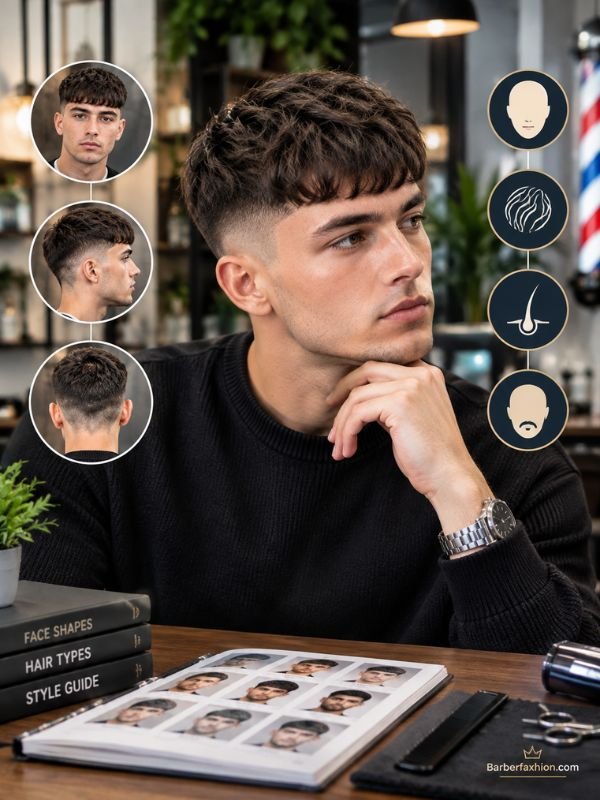
Instead of choosing a haircut only by its name, use a few practical questions.
Choose Based on Your Face Shape
Start with your overall facial proportions.
If your face is longer, consider a fringe that provides more forehead coverage. If your face is rounder, controlled side weight and texture can help create a more structured appearance.
Your barber can make the final adjustment once they see your actual hair growth and head shape.
Choose Based on Your Hair Texture and Density
Think about what your hair naturally does.
Straight hair can create precise fringe shapes. Wavy hair provides movement. Curly hair creates natural volume. Thick hair gives you more styling options, while fine hair needs careful handling to preserve density.
The best haircut works with your hair rather than requiring you to fight it every morning.
Choose Based on How Much You Style Your Hair
If you want almost no styling, keep the top short and the fringe simple.
If you enjoy using product, you can leave more texture and length on top.
A messy crop can actually be easier for some people because the finish does not require perfect placement.
Choose Based on the Amount of Fade Contrast You Want
| If you want… | Consider… |
| Minimal styling | Short French Crop |
| More texture | Textured or Choppy Crop |
| Softer contrast | Low Fade |
| Strong contrast | Skin Fade |
| Natural movement | Wavy or Curly Crop |
| Professional finish | Clean or Classic Crop |
| More styling flexibility | Longer or Voluminous Crop |
| Natural side weight | Low Taper |
| More side contrast | Mid Fade |
How to Ask Your Barber for a French Crop Low Fade Haircut
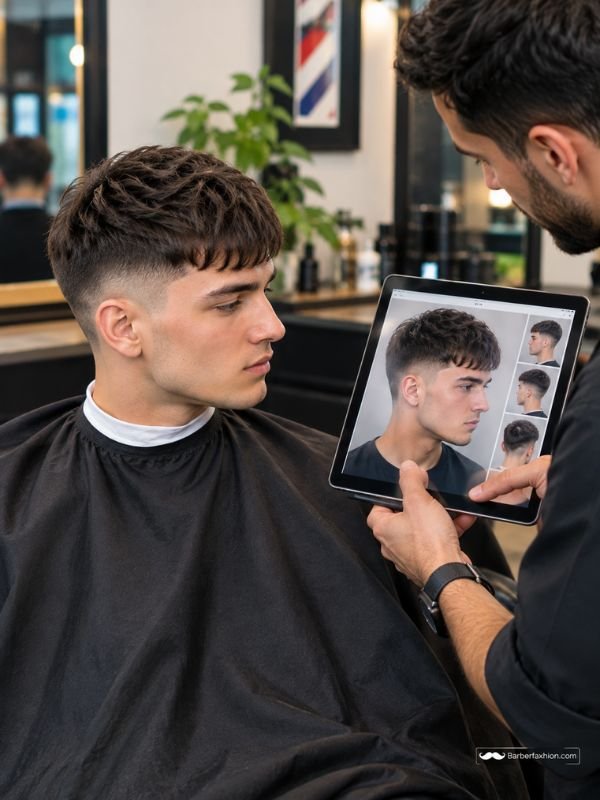
Showing a reference photo is helpful, but do not rely on the photo alone.
Explain the important measurements and preferences.
What to Tell Your Barber
Start with the basic structure:
“I want a French crop with a low fade.”
Then explain what you want on top.
For example:
“I want the top short but textured, with the fringe coming forward. Keep the fade low around the ears and neckline, and don’t take the fade too high into the temples.”
This gives your barber a much clearer starting point.
Decide Your Fade Height
Tell your barber whether you want:
- Very subtle low fade
- Standard low fade
- Low skin fade
- Low drop fade
- Low taper instead of a full fade
Do not assume every barber interprets “low fade” in exactly the same way.
Choose Your Fringe Length
Your fringe can be:
- Very short
- Above the eyebrows
- Around eyebrow level
- Slightly longer
- Blunt
- Choppy
- Textured
- Slightly uneven
If you have never had a French crop, leaving a little extra length gives you more room for adjustment.
Choose the Amount of Texture
Tell your barber whether you want the top:
- Clean and smooth
- Lightly textured
- Choppy
- Messy
- Heavily separated
- Naturally layered
This matters because “French crop” alone does not tell the barber how textured you want the top.
Bring a Reference Photo
A good reference photo should show the haircut from at least one useful angle.
Ideally, find an image where you can clearly see:
- Fringe
- Side fade
- Temple area
- Back
- Top texture
Remember that a photo is a reference, not a guarantee. Your barber needs to adapt the cut to your own hair and head shape.
Sample Barber Request
You can say:
“I want a French crop with a low fade. Keep the fade low around the ears and neckline, leave enough length on top for texture, and bring the fringe forward. I want a natural, slightly textured finish rather than a completely flat fringe.”
If you want a more conservative version, add:
“Please keep some weight around the temples and don’t take the fade too high.”
If you want more contrast, say:
“Keep the fade low in placement but make the bottom section tighter for a cleaner contrast.”
How to Style a French Crop Low Fade Haircut
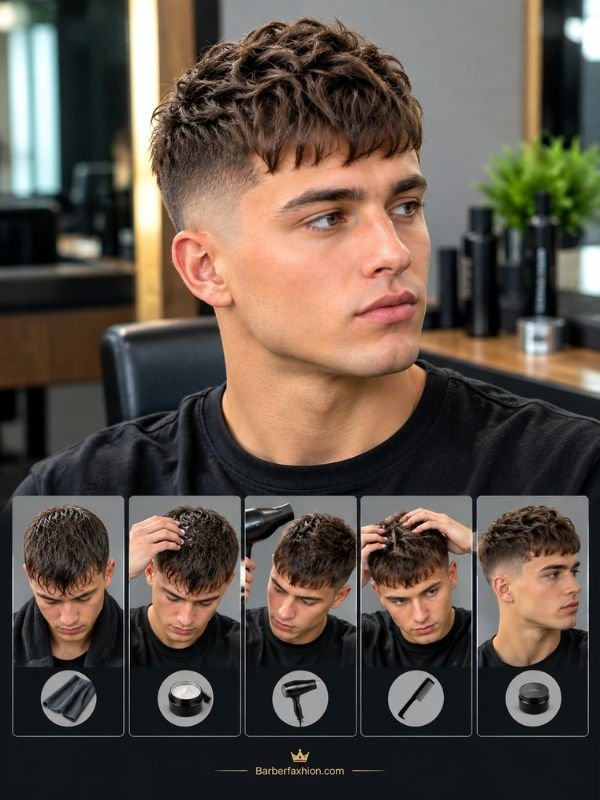
The styling routine can be simple, especially when the haircut has been cut correctly for your hair.
Step 1: Start With Clean, Slightly Damp Hair
After washing, gently towel-dry your hair.
You do not need the hair soaking wet. Slightly damp hair is easier to shape and allows styling product to distribute more evenly.
Step 2: Add a Lightweight Styling Product
Use a small amount of product.
For a matte, textured finish, a matte clay or paste can work well. For softer movement, a lightweight styling cream may be more appropriate.
Start with less than you think you need.
You can always add more.
Step 3: Blow-Dry the Hair Forward
Use your fingers to direct the top toward the forehead.
The goal is not necessarily to make every hair sit perfectly straight.
Instead, establish the overall forward direction of the French crop.
Step 4: Create Texture With Your Fingers
Once the hair is mostly dry, pinch small sections between your fingers.
Break up the top rather than combing it into one smooth surface if you want a textured appearance.
For a blunt crop, use less manipulation.
Step 5: Finish With Light Hold
If the hair loses its shape during the day, add a tiny amount of product.
Avoid repeatedly adding large amounts because this can make the top greasy or heavy.
Styling Tips for Straight, Wavy, and Curly Hair
Straight hair: Focus on direction and texture. Finger styling can prevent the fringe from looking too flat.
Wavy hair: Work with your natural wave instead of trying to completely straighten it.
Curly hair: Use a curl-friendly product and avoid brushing the curls excessively after they have formed.
French Crop Low Fade Maintenance Tips
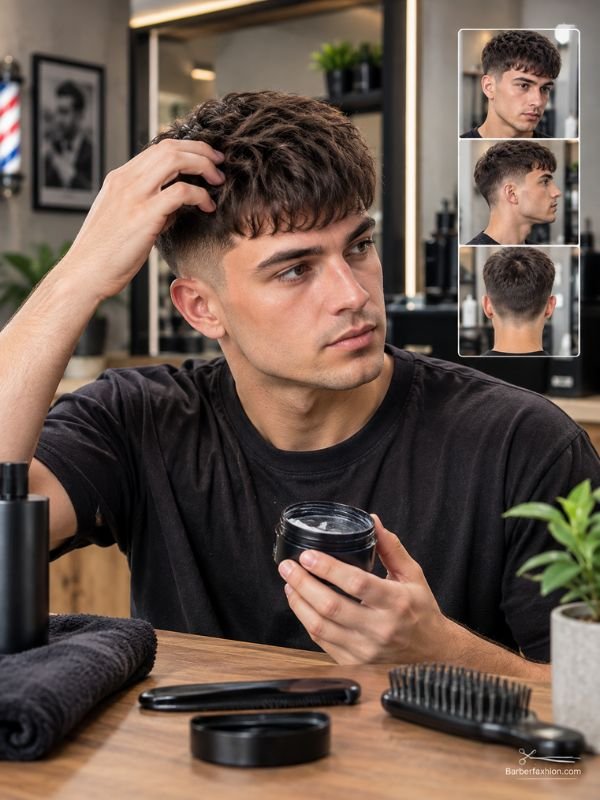
The haircut is relatively simple to style, but the fade and fringe still require regular maintenance.
How Often Should You Get a Fade Refresh?
A common practical schedule is around every few weeks, depending on how quickly your hair grows and how sharp you want the fade to remain.
If you prefer a softer grown-out appearance, you can wait longer.
If you want extremely crisp sides, you will probably want more frequent barber visits.
How to Maintain the Fringe and Top
The fringe is often the first part of the haircut that changes noticeably as it grows.
If it becomes too long, it may start sitting differently across the forehead.
Do not repeatedly cut it yourself unless you know exactly how you want the shape maintained.
Small mistakes in a short fringe can be surprisingly visible.
Washing and Product Use
Your washing schedule should depend on your scalp, hair type, activity level, and product use.
If you use heavy styling products every day, make sure you are cleansing your hair appropriately.
Do not overload the crop with product simply to make it look textured. A small amount is often enough.
What Happens as the Fade Grows Out?
A low fade usually becomes less defined as the hair grows.
Because the fade starts low, the grown-out stage can appear relatively natural compared with a very high skin fade.
The top may also begin to lose the original balance as it gets longer.
If you like the general haircut but want to experiment, you can use the growing-out period to decide whether your next cut should have a longer fringe, more texture, or a different fade.
When to Get a Full Haircut
Get a full haircut when the top and sides have lost their intended relationship.
Typical signs include:
- Fringe becoming difficult to control
- Side weight becoming too heavy
- Texture disappearing
- Fade becoming indistinguishable
- Top becoming too long
- Hair losing its original shape
A full reshaping is usually more effective than repeatedly cleaning only the edges once the overall structure has changed.
French Crop Low Fade Trends in 2026
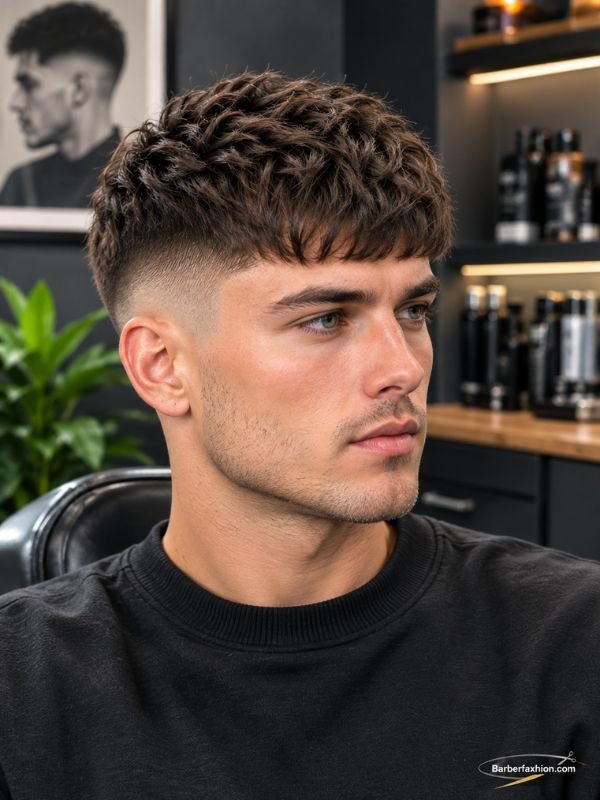
Current 2026 haircut coverage places considerable attention on natural texture, personalization, and modern cropped shapes rather than one rigid definition of a haircut.
Natural Texture and Softer Finishes
The ultra-perfect, heavily sculpted appearance is not the only way to wear a crop.
Natural separation, movement, and slightly imperfect texture can make the haircut feel more contemporary.
This works especially well with wavy and curly hair.
Personalized Fringe Shapes
The fringe does not have to be identical for everyone.
Blunt, choppy, short, uneven, and softer forward shapes can all change the personality of the haircut.
Your forehead height, hairline, texture, and styling habits should influence the choice.
Low-Contrast and Blended Fades
A softer low fade can create a more natural silhouette.
Rather than making the fade the most noticeable feature, the haircut can use the fade to support the textured top.
This is particularly useful if you want a haircut that works in both casual and professional settings.
French Crop With Beard Combinations
The beard can change the balance of the entire look.
A short crop with stubble creates a clean, simple appearance, while a fuller beard gives the style more weight around the lower face.
Your barber can blend the sideburn area so the haircut and facial hair do not look like two disconnected sections.
Low-Maintenance Styling
The continued appeal of cropped hairstyles comes partly from their practicality.
A good French crop should not require complicated styling every morning.
The modern approach is to choose a cut that already works with your natural hair pattern and then use product only to enhance it.
Pros and Cons of a French Crop Low Fade
| Pros | Cons |
| Low daily styling effort | Fade needs regular refreshing |
| Many variations | Fringe needs occasional shaping |
| Works with multiple hair textures | Very long-hair fans may prefer another style |
| Can look professional | Short fringe mistakes can be noticeable |
| Easy to personalize | Result depends on natural hair growth |
| Works with different fade types | Some versions require more frequent trims |
Pros
Low daily styling effort: Most versions can be styled quickly.
Many variations: You can change the fringe, texture, fade, and top length without abandoning the basic haircut.
Multiple hair textures: Straight, wavy, curly, thick, and fine hair can all be approached differently within the crop family.
Professional potential: A clean low fade and controlled fringe can produce a polished appearance.
Easy customization: Your barber can modify the haircut around your face shape and hair density.
Cons
The fade needs refreshing: If you want crisp sides, regular barber visits are necessary.
The fringe needs shaping: Because the fringe is a defining feature, unwanted growth can quickly change the haircut.
Not ideal for very long-hair preferences: If you love long flowing hairstyles, the French crop may feel restrictive.
Hair growth patterns matter: Cowlicks, curls, uneven density, and hairline shape can affect how the fringe sits.
Conclusion
The French crop low fade haircut is a practical choice if you want a short hairstyle with a defined fringe, textured top, and clean but relatively subtle sides.
Its biggest advantage is customization. You can keep the haircut classic and professional, make it messy and textured, add more contrast with a skin finish, work with natural curls, or change the fringe to suit your face.
Before your appointment, think about four things: your face shape, hair texture, desired fringe length, and preferred fade intensity.
If you want a softer appearance, keep the fade low and retain more side weight. If you want stronger contrast, discuss a tighter or skin-faded finish. If texture is your priority, ask for a choppy or layered top. And if you are unsure about the fringe, start slightly longer and let your barber adjust it.
Most importantly, do not simply tell your barber that you want a “French crop.” Explain the fade height, fringe shape, top texture, and overall finish you want. Bring a reference photo and let the barber adapt that inspiration to your actual hair.
That approach gives you a much better chance of leaving the chair with a French crop that fits your face, hair, lifestyle, and personal style rather than simply copying somebody else’s haircut.
FAQs About French Crop Low Fade Haircut
What Is a French Crop Low Fade Haircut?
It is a short haircut featuring a forward fringe and cropped top combined with a low fade around the sides and back. The fade remains relatively low, leaving more side weight than a mid or high fade.
Is a French Crop Low Fade Good for Thin Hair?
It can work with thin or fine hair when the top is cut carefully. The barber should avoid unnecessarily removing too much density and can use texture and fringe placement to create a stronger shape.
Does a French Crop Low Fade Suit All Face Shapes?
It can be adapted to many face shapes, but the exact fringe length, top volume, and side weight should change according to facial proportions.
For longer faces, a fuller forward fringe may help balance the appearance. For rounder faces, controlled side weight and texture can create a more structured silhouette.
How Often Should You Trim a French Crop Low Fade?
The answer depends on how quickly your hair grows and how sharp you want the fade to look.
If you prefer a crisp, freshly faded appearance, you may need more frequent visits. If you are comfortable with a softer grown-out appearance, you can stretch the time between appointments.
Can You Get a French Crop Low Fade With Curly Hair?
Yes. Curly hair can create excellent natural texture for the style.
The important thing is to account for curl shrinkage and natural growth patterns. Your barber should shape the fringe and top according to how your curls actually sit rather than treating curly hair like straight hair.
Is a French Crop the Same as a Fringe Crop?
They are closely related, but the terms can describe slightly different approaches.
A French crop traditionally emphasizes the short top and forward fringe, while “fringe crop” is a broader description that can include several cropped hairstyles with a prominent fringe.
Can I Get a French Crop Low Fade With Straight Hair?
Yes. Straight hair can make the fringe particularly defined and gives you plenty of options, from blunt and clean to heavily textured and choppy.
If your hair naturally falls very flat, ask your barber to add controlled texture rather than simply removing more length.
Is a French Crop Low Fade High Maintenance?
The styling itself is usually relatively simple, but the fade and fringe still need maintenance.
If you want the fade to stay sharp, regular barber visits are necessary. The exact schedule depends on your hair growth and how polished you want the haircut to remain.
Should the French Crop Fringe Be Blunt or Textured?
Either can work.
A blunt fringe creates a stronger, more geometric appearance. A textured or choppy fringe feels softer and more relaxed.
Your hair texture and face shape can help determine which option makes more sense.
Can I Turn a French Crop Low Fade Into a Mid Fade Later?
Yes. The fade height can be changed during a future haircut.
If you are unsure about going higher, starting with a low fade is useful because you can always ask your barber to raise the fade later. Once hair has been removed higher up, however, you have to wait for it to grow back before returning to a lower fade.
Can I Wear a French Crop Low Fade With a Beard?
Absolutely. Stubble, short beards, and fuller facial hair can all work with the haircut.
The sideburn and beard transition should be considered when the haircut is finished so the two sections look intentional together.
What Product Is Best for a French Crop Low Fade?
The best product depends on your hair and desired finish.
Matte clay or paste can provide texture and control without creating a shiny finish. A lighter styling cream may be better when you want natural movement.
Start with a small amount and add more only if necessary.
Is the French Crop Good for a Receding Hairline?
The forward fringe can provide coverage around the front hairline, but the result depends on the shape and progression of your hairline.
A skilled barber can adjust the fringe length and texture to work with your natural hairline rather than forcing an unnatural straight line.
What Should I Tell My Barber If I Want a Modern French Crop Low Fade?
Be specific.
You can say:
“I want a modern French crop with a low fade. Keep the fade low around the ears and neckline, leave enough length on top for texture, and keep the fringe forward. I want the finish natural and slightly textured rather than overly polished.”
Then show your barber a reference photo and ask them to adapt the shape to your hair.
Is a French Crop Low Fade Good for Everyday Wear?
Yes, particularly if you choose a version that matches your natural hair and lifestyle.
A clean crop can work in professional settings, while a textured or messy version can give the same basic haircut a more casual appearance.
The key is choosing a top length and fringe that you can realistically maintain.