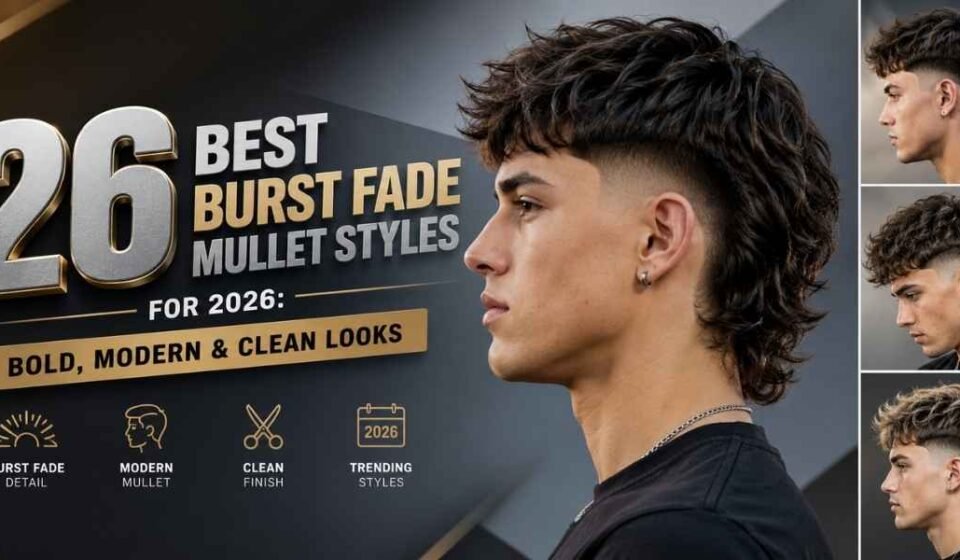

You’re scrolling your For You page at 11 p.m., and there it is again. Another guy with sharp, faded sides and a longer, textured back that somehow looks effortless and put-together at once. You screenshot it. Then you wonder if your hair could even pull that off. That’s this cut, and it’s probably why you clicked this article.
Good news: this cut works on more hair types and face shapes than Instagram makes it look. Below, you’ll find 26 variations, honest guidance on which one fits you, and styling and maintenance details nobody mentions until you’re already in the chair.
Quick answer: This style pairs a rounded, sunburst-shaped fade around the ear with longer hair left at the back. It’s bolder than a standard taper, easier to style than it looks, and it works on straight, curly, thick, and fine hair alike. Go low for something subtle, or push to skin-level for maximum contrast.
Not sure where to start? Quick cheat sheet:
- Neat and safe → Low fade or Taper Mullet Fade
- Bold contrast → Mullet Skin Fade or V Cut
- Straight hair → Straight Hair variant with soft layers
- Curly hair → Curly variant with shaping at the temples
- Low effort → Taper Short Mullet Fade
- Wider face → Temple Fade Mullet
What Is a Burst Fade Mullet
A burst fade mullet is a mullet with a fade that curves in a smooth arc around the ear instead of cutting straight down like a standard fade. That rounded “burst” shape is the detail that makes the whole thing look designed rather than just short on the sides.
The back keeps its length for the classic mullet silhouette, while the sides stay clean and tight. That combination pulls attention toward the top texture and back movement — modern, not messy, which is exactly why it’s everywhere right now.
Why Choose a Mullet Fade
A faded mullet strips away the bulk that made older mullet styles look unkempt. When the sides sit flat, your barber’s blend work actually shows, and the top and back become the whole point of the cut.
It’s also less work than it looks. With good layering and a little product, you’re out the door in minutes and still look like you tried. That’s the trade-off that makes it so popular right now: high payoff, low daily effort.
Burst Fade Mullet vs Drop Fade vs Taper Mullet Fade
| Style | Fade Shape | Contrast | Best For |
| Burst | Rounded arc curving outward around the ear | High | Sharp, sculpted side profile |
| Drop | Drops lower behind the ear, follows skull curve | Medium-high | Softer curve than a burst |
| Taper | Gradual, straight-line blend | Low-medium | Strict dress codes, easy grow-out |
Most guys land on burst because the side profile looks cleaner and blends into mullet length without an obvious step. Want bold? Go burst. Need something that stays neat longer and grows out without a hard line? Taper’s the safer call.
Face Shape Tips
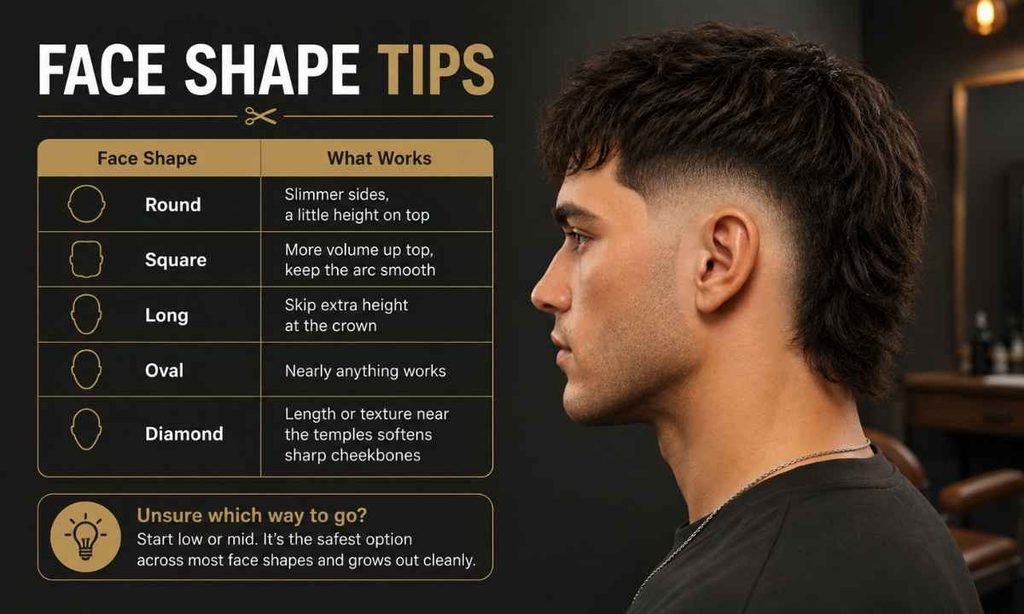
| Face Shape | What Works |
| Round | Slimmer sides, a little height on top |
| Square | More volume up top, keep the arc smooth |
| Long | Skip extra height at the crown |
| Oval | Nearly anything works |
| Diamond | Length or texture near the temples softens sharp cheekbones |
Unsure which way to go? Start low or mid. It’s the safest option across most face shapes and grows out cleanly.
Bangs, Hairline, and Sideburns
A light fringe softens the forehead for a relaxed feel. Want height without going full pompadour? A small quiff up front does it.
Sideburns need to stay tidy for the arc to read as clean. And don’t skip the nape — a crisp neckline is what separates a sharp fade from one that just looks grown out.
26 Burst Fade Mullet Variations
1. Classic Burst Mullet
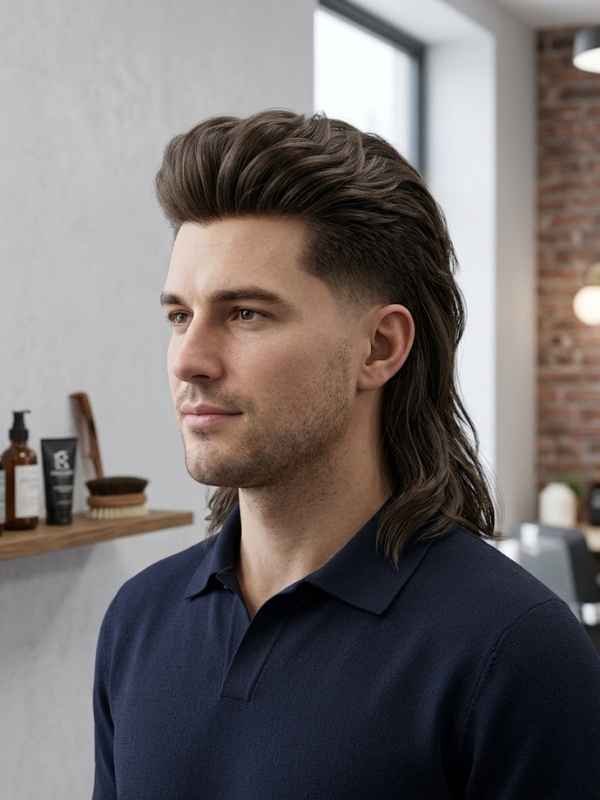
The safest entry point. A clean arc around the ear, back at collar length, light texture on top so it never goes flat. Grows out evenly — a smart first mullet.
2. Burst Fade Mullet Haircut
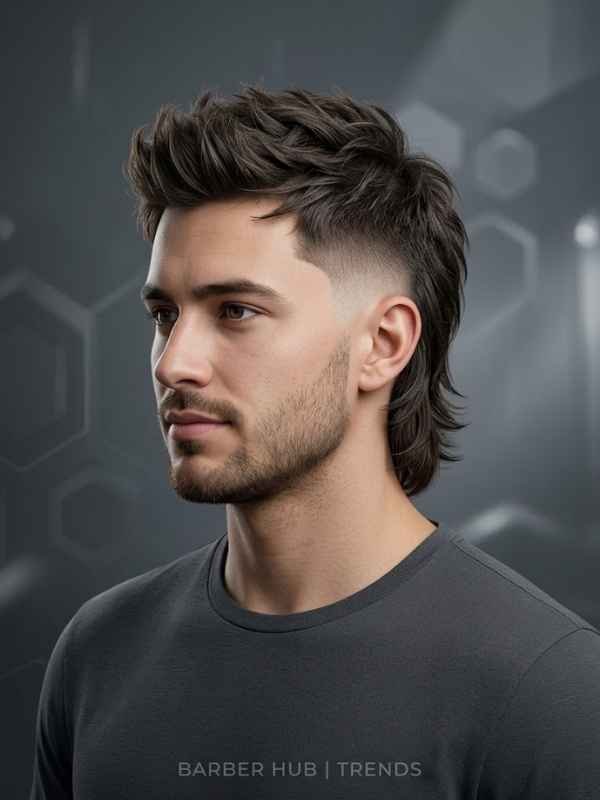
Sharpens everything: tighter arc, more defined top texture, a layered back that moves. A crisp neckline finishes it off.
3. Low Burst Fade Mullet
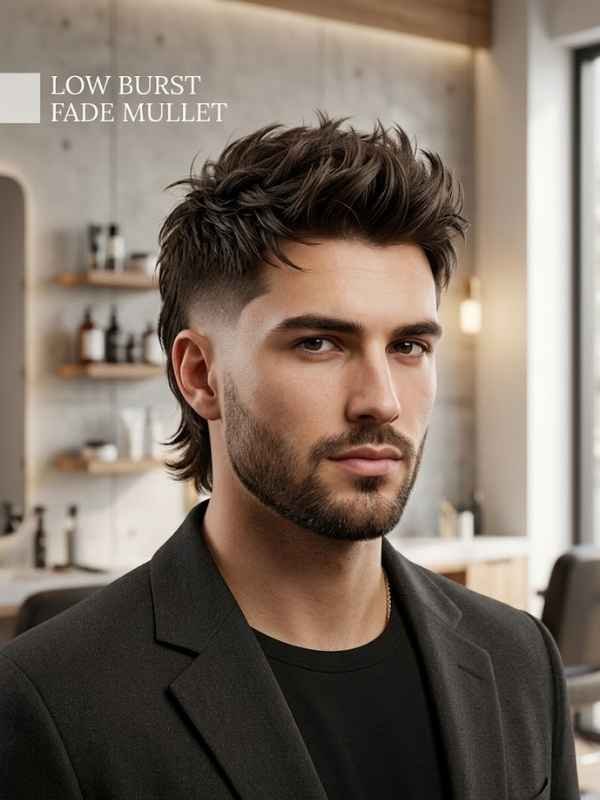
Fade stays close to the ear, so contrast stays subtle while the curve is still visible. Right for strict jobs, school, or anyone easing in.
4. Straight Hair Burst Fade Mullet
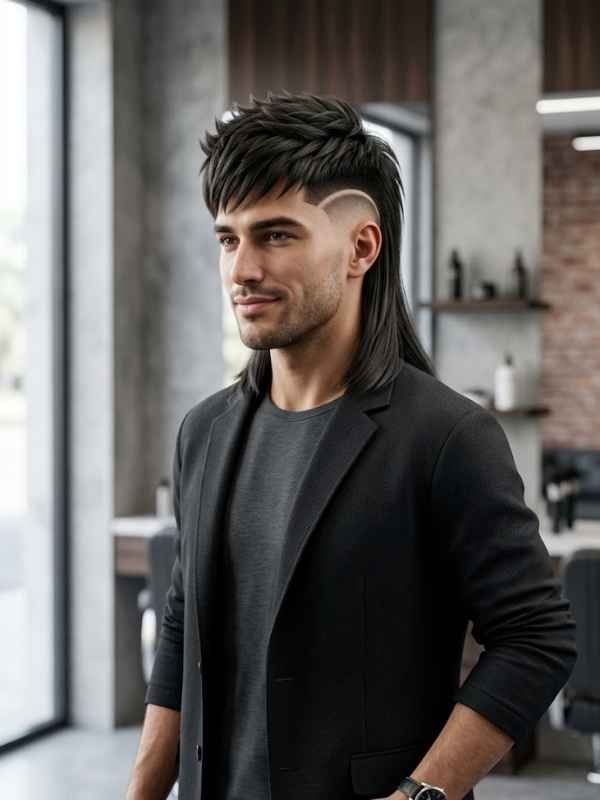
Without layers, straight hair sticks out at the back like a shelf. Ask for soft layers and lighter ends so it falls and flows, and keep two to four inches on top for room to style.
5. Burst Fade Mullet Curly Hair
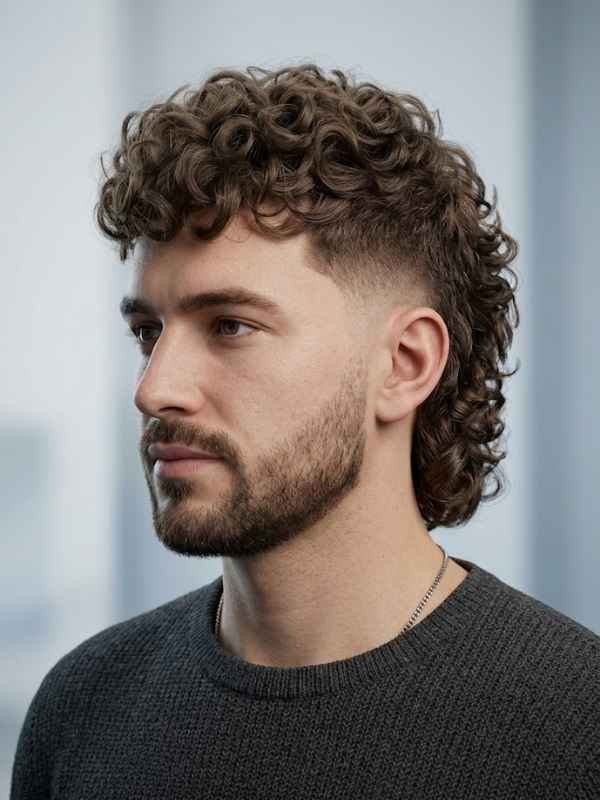
Clean sides frame the face while curls take over the back. Ask your barber to remove bulk near the temples so curls don’t puff too wide, with soft layers keeping the pattern defined.
6. Mullet Skin Fade
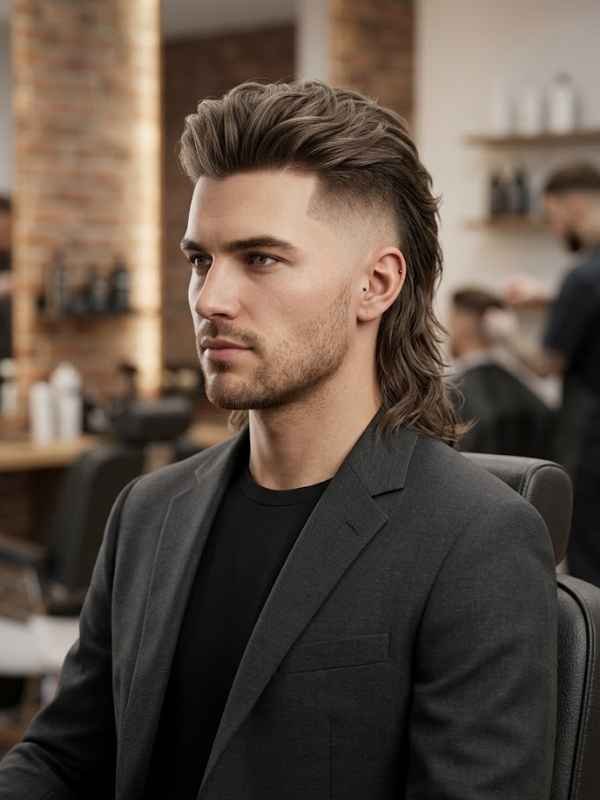
The highest-contrast option here. Sides fade to bare skin before blending into the crown. Loud and sharp, especially on thick hair — plan cleanups every three to four weeks.
7. Mullet Side Fade
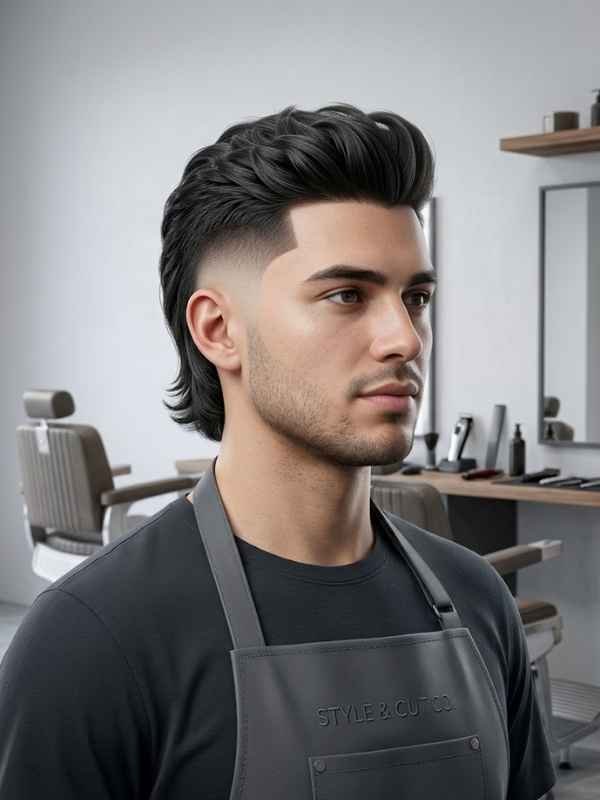
Sits a little higher on the side panel and blends fast toward the crown. Slims the head shape and recovers quickly under hats.
8. Modern Mullet Fade

Reads as a real haircut, not a throwback: clean top texture, layered back, crisp outline. Office-friendly but still stylish.
9. Taper Mullet Fade
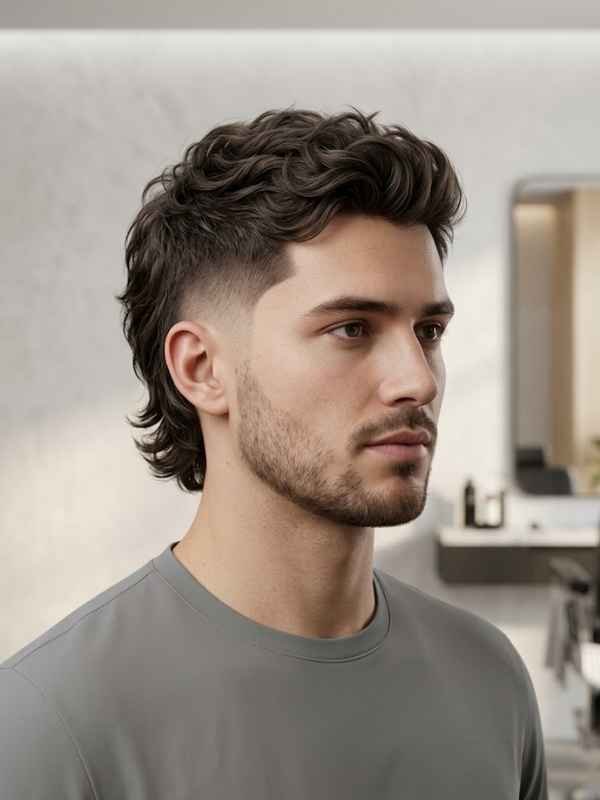
Soft, natural, and easy to keep up with. Gradual transition around the ear, no dramatic drop. Great for strict workplaces or sensitive skin.
10. Curly Mullet Fade
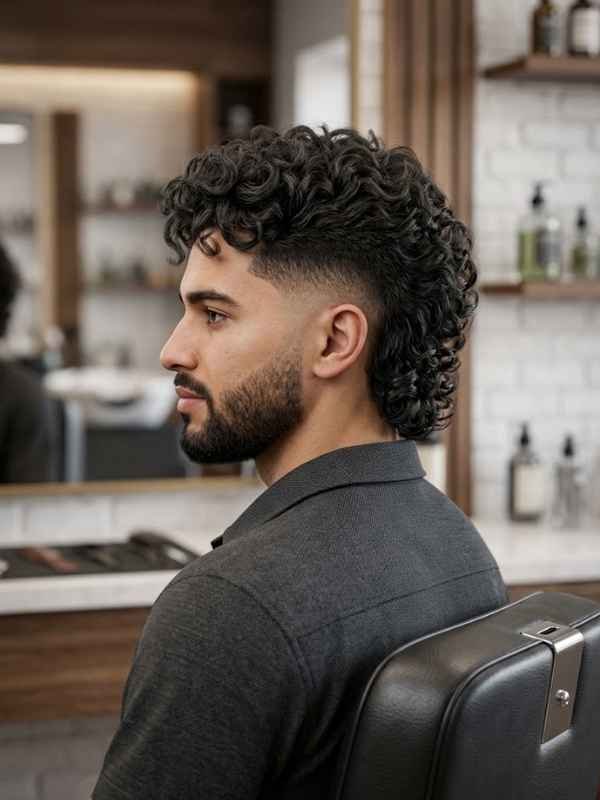
Tames side puff while letting curls flow at the back. Selective bulk removal keeps the natural pattern intact, and a tidy neckline keeps it fresh between cuts.
11. Short Mullet Fade
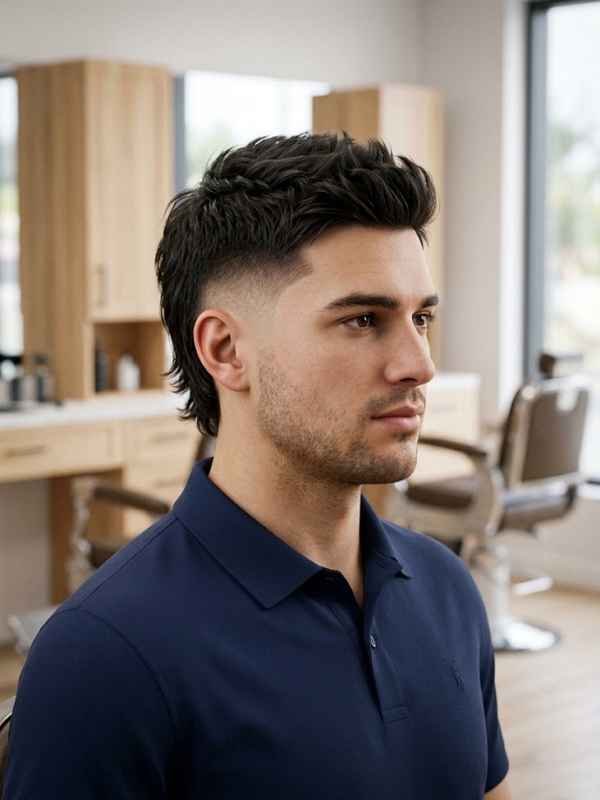
Back stays modest — two to three inches, not full collar-length flow. Light top movement, tapered or lightly faded sides. Mullet energy without full commitment.
12. Kids Mullet Fade
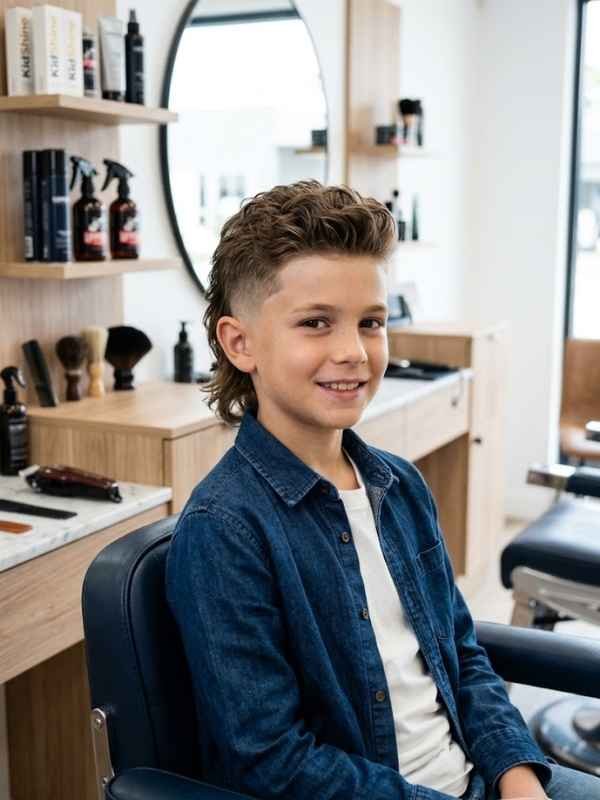
A low fade keeps the ear area tidy for active kids, light top texture, and a back short enough to survive sports. Low product, easy wash.
13. Taper Modern Mullet Fade
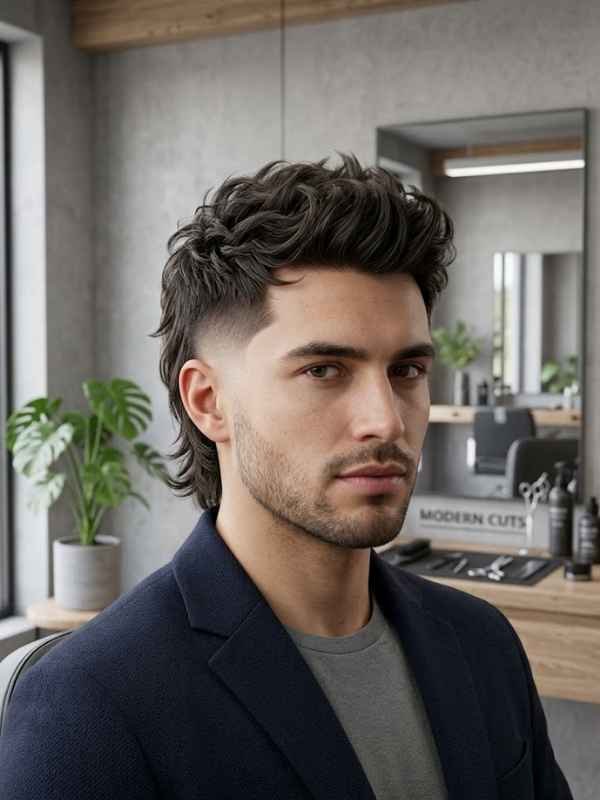
Blends a clean modern shape with a softer taper grow-out. Ask for a smooth bridge from the arc into the crown so there’s no visible step.
14. Taper Short Mullet Fade
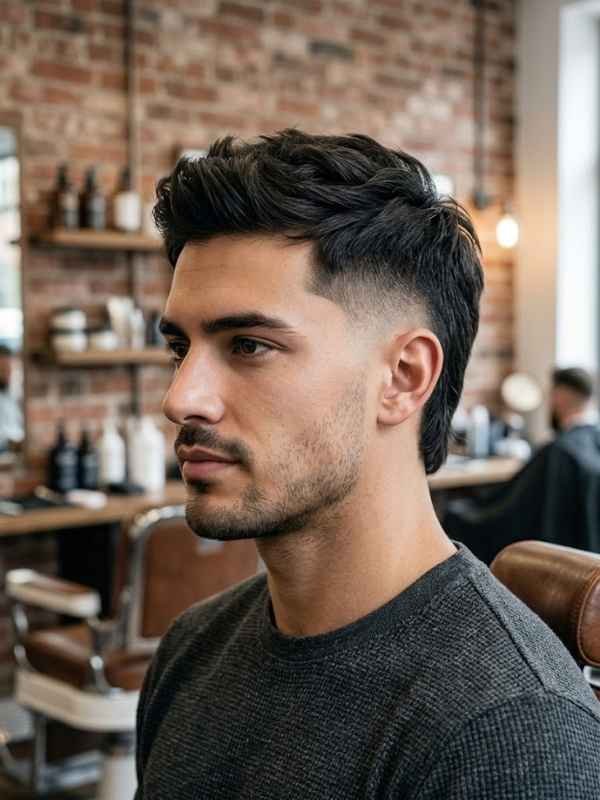
One of the lowest-effort picks. Short back, light top texture, clean outline without dramatic contrast. Works well for fine hair or an in-between growth stage.
15. Modern Mullet Fade Straight Hair
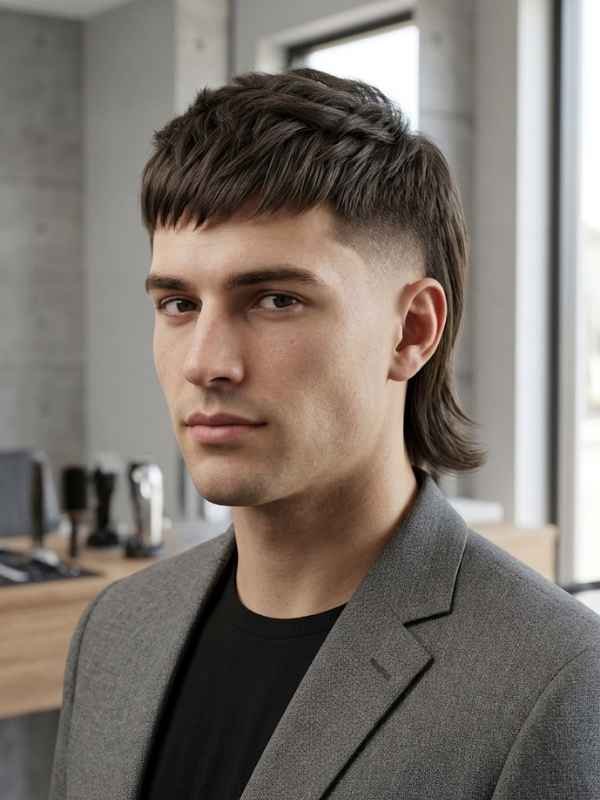
Straight hair needs back layers — no way around it. Ask for softened ends over blunt cuts so it moves naturally instead of hanging flat.
16. Burst Fade Mullet V Cut
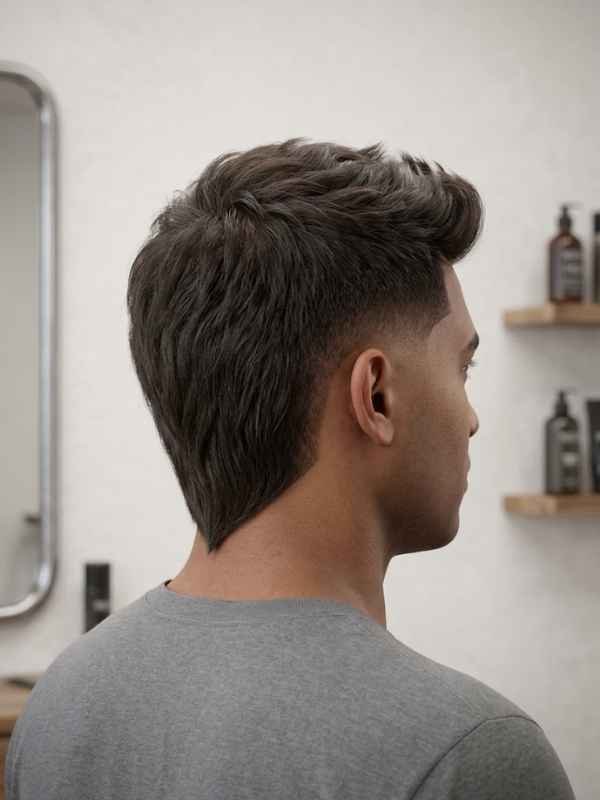
A shallow V at the nape sharpens the back and adds a second focal point. Keep it centered, and a layered back keeps it visible as it grows.
17. Mullet Burst Fade
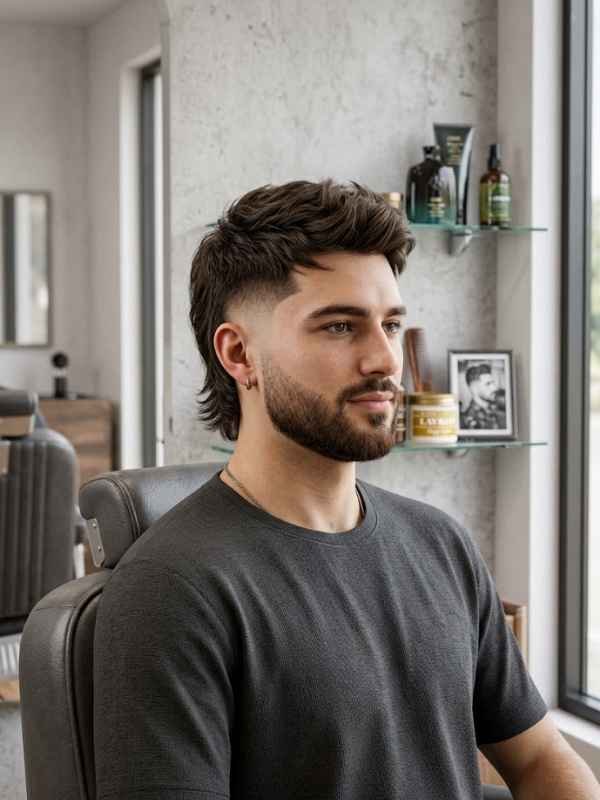
The general term your barber will understand instantly. Arc height, fade level, and back length all get customized to your face and hair.
18. Temple Fade Mullet
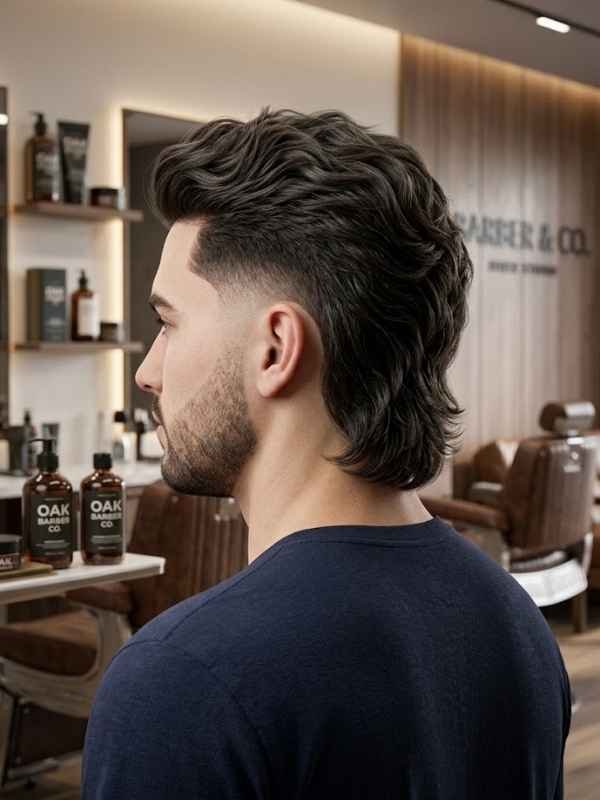
Focuses on the temples and sideburns rather than wrapping fully around the ear. Smart for wider faces, and works well with glasses too.
19. Burst Fade Mullet Straight Hair V Cut
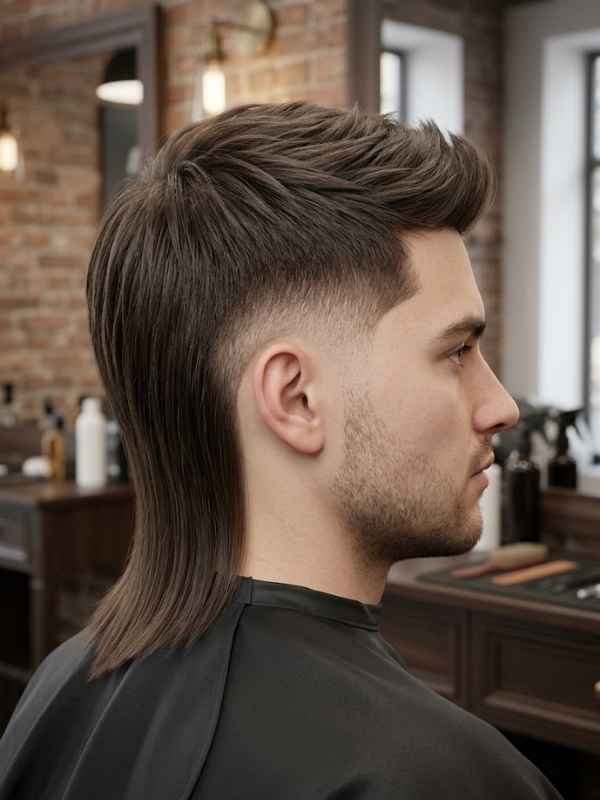
Combines the arc with a sharp nape V, both on straight hair. Ask for feathered ends so hair doesn’t stick out at odd angles.
20. Mid Burst Fade Mullet
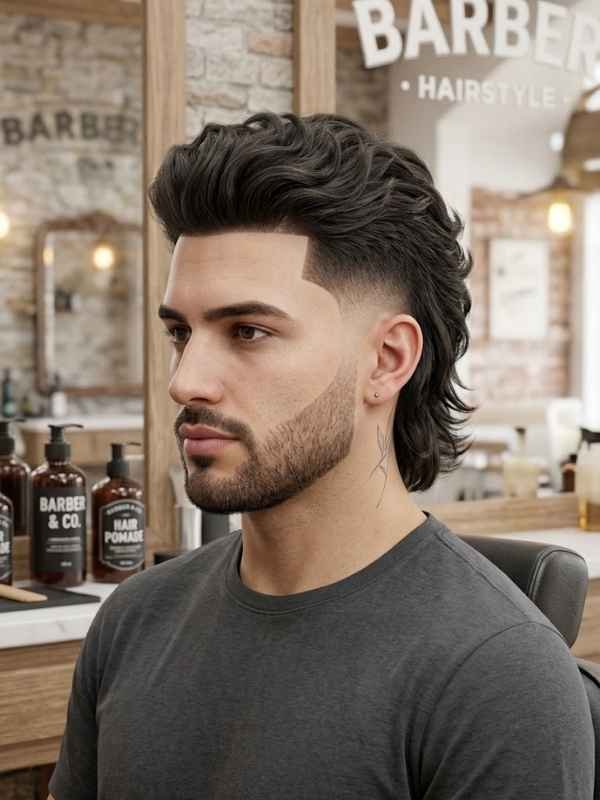
Stronger contrast than low, without committing to skin. The curve sits higher, making top and back stand out — a solid middle ground.
21. High Burst Fade Mullet
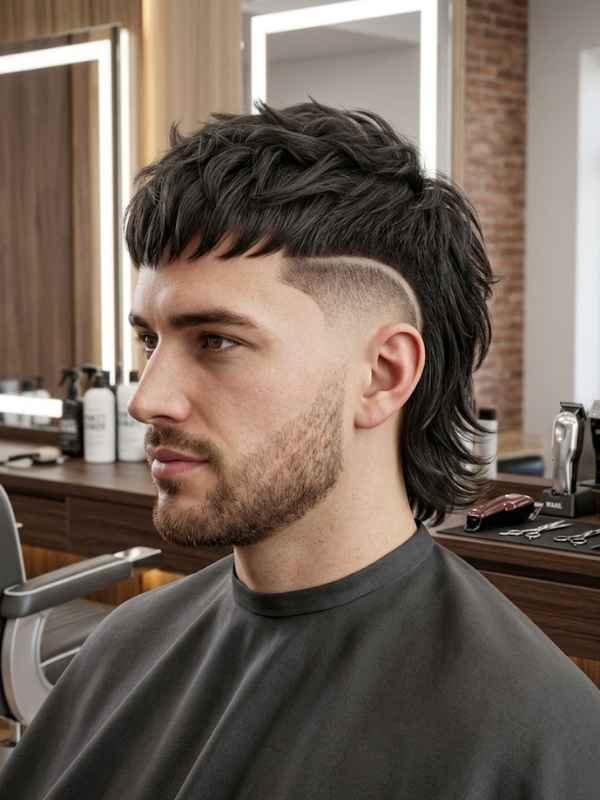
Pushes the fade high for maximum contrast, shifting focus entirely to top texture and back length. Works great on thick hair; expect visits every three to four weeks.
22. Burst Fade Mullet with Design
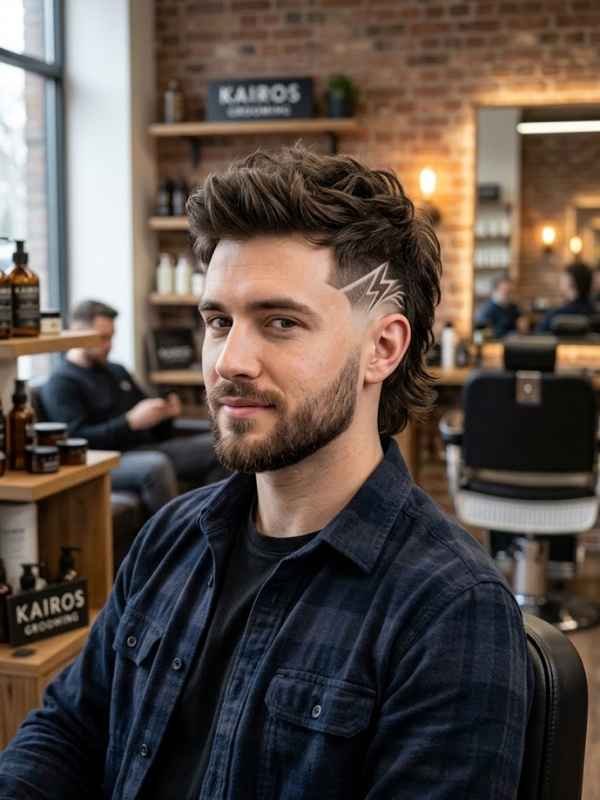
A razor line near the ear arc turns this into a statement. Keep the design simple — it holds up better as it grows out and needs trims every two to three weeks.
23. Taper Burst Fade Mullet
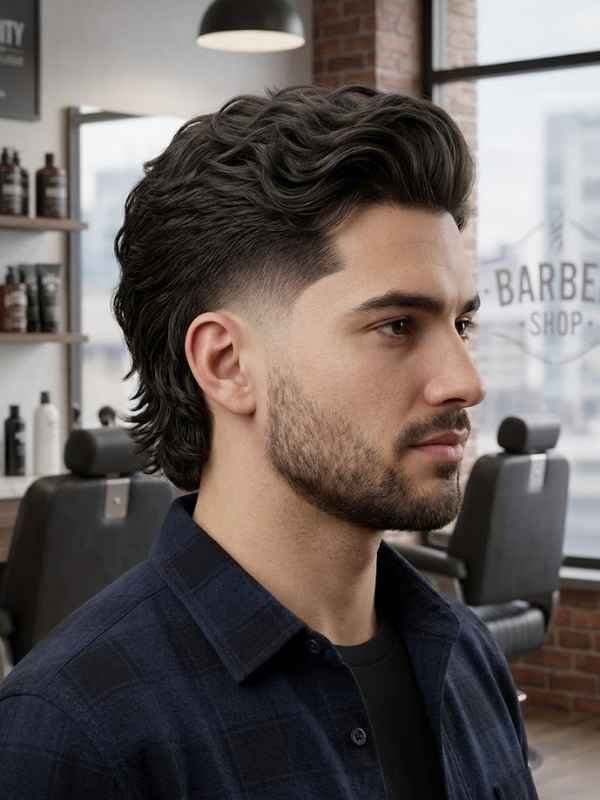
Softer than skin or mid, giving you the rounded arc without high contrast. Gradual fade, cleaner grow-out, comfortable in professional settings.
24. Burst Fade Mullet with Beard Blend
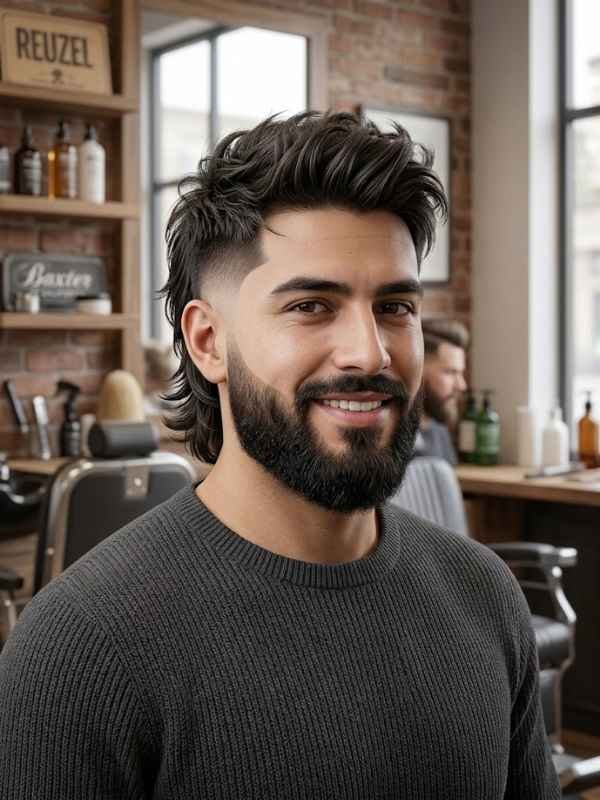
Ties the whole look together for guys with stubble or a fuller beard. The fade blends smoothly at the sideburn into the beard line — mature and sharp in any setting.
25. Burst Fade Mohawk Mullet
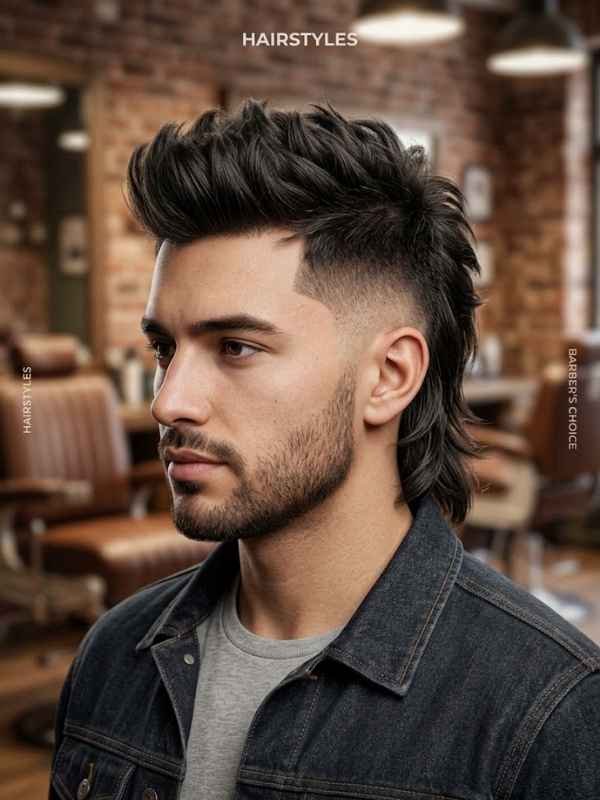
Bold and sporty. Tight sides, a textured strip down the center flowing into the longer back. Choose mid or high contrast so the mohawk really pops.
26. Burst Fade Mullet French Crop
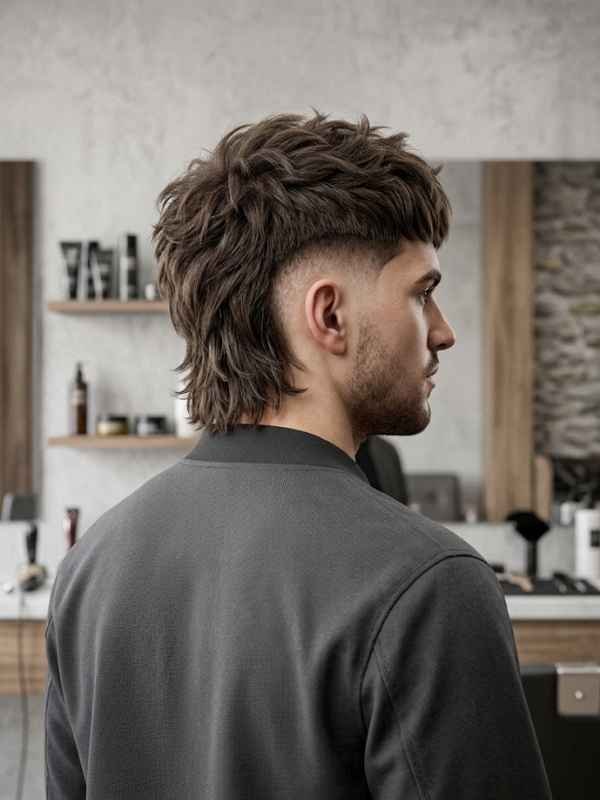
Pairs a short, blunt French crop fringe with the rounded side arc and a mullet-length back. A strong pick if you want a European-inspired front with a bold back section.
Quick Reference Table
| Hair Type or Goal | Best Option | Why It Works |
| Fine, straight hair | Straight Hair variant | Layers add shape and movement |
| Thick hair | Skin Fade or Side Fade | Cuts down on bulk fast |
| Curly hair | Curly variant | Frames the face, controls puff |
| Low effort | Taper Short Mullet Fade | Clean grow-out, minimal styling |
| Bold back shape | V Cut | Sharpens the silhouette |
| Office or school safe | Low Burst or Taper | Neat arc, soft contrast |
| Wider face | Temple Fade Mullet | Narrows the frame |
| Beard wearer | Beard Blend variant | Smooth sideburn connection |
| Front-heavy style | French Crop variant | Textured fringe balances length |
Best Styling Products
| Product | Hold | Finish | Best Hair Type |
| Matte clay | Strong | Textured, no shine | Thick, curly, wavy |
| Water-based pomade | Medium-strong | Polished, slight shine | Straight, thick |
| Sea salt spray | Light | Tousled, beachy | Wavy, curly |
| Texture powder | Light | Matte, volumized | Fine, thin |
| Light styling cream | Light-medium | Natural, flexible | Straight, fine |
A common mistake: heavy wax or pomade on fine hair. It flattens the exact volume you’re trying to build — texture powder or a light mousse does the job without the weight.
Easy Styling Routine
Start with towel-dried hair, working with your hands first. Straight hair likes a light grip cream; curly hair prefers a curl-defining cream through the back.
Blow-dry on low heat, shaping the top with your fingers and pushing the back slightly outward for movement. Stop before it looks too polished — soft movement beats a stiff, overworked finish every time.
What to Tell Your Barber
Keep it simple: “I want a burst fade mullet with a smooth blend from the ear arc into a layered back.”
Then add the details:
- Low, mid, or skin burst
- Back length
- Rounded nape or V cut
- Fringe or no fringe
- Beard blend or clean shave
Care and Upkeep
| Fade Height | Trim Frequency |
| Low | Every 4–5 weeks |
| Mid | Every 3–4 weeks |
| High or skin | Every 1–2 weeks |
| Back length | Every 8–12 weeks |
Wash two to three times a week with a gentle shampoo, and condition the mid-lengths and ends so the back doesn’t dry out. Keep the nape and sideburn area tidy between visits — that small habit keeps the whole cut looking fresh as it grows.
Common Mistakes to Avoid
Wrong fade height for your face shape. A high fade on a long face, or a low fade when chasing bold contrast, usually disappoints. Match your pick to the table above.
Skipping trims. The arc grows out faster than the rest of the cut, so falling behind changes the whole shape.
Overusing product. A dime-sized amount is almost always enough.
Unclear communication. Bring a reference photo and be specific about fade height and back length before the clippers come out.
Ignoring your natural texture. Curly and coily hair need different technique than straight hair. A barber unfamiliar with your texture can misjudge the finished length.
Where It Fits
Office and school: low burst or taper with a shorter back. Weekends and photos: mid burst with more back length. Fully fashion-forward: skin fade or a V cut nape.
Every version works as long as the outline stays clean and the back is layered with intention.
Frequently Asked Questions
Is a mullet a burst fade?
Not exactly. A mullet is a haircut structure — short sides, longer back — while a burst fade is a specific technique that curves around the ear. Combine both, and you get this style.
Is a burst fade mullet suitable for all hair types?
Yes. It works on straight, wavy, curly, thick, and fine hair, though styling changes for each. Curly and coily textures usually need extra top length for shrinkage.
How long does a burst fade mullet last before it needs a trim?
Most guys need a trim every three to five weeks, depending on fade height. High and skin fades grow out faster and may need attention every one to two weeks.
What’s the difference between a burst fade mullet and a wolf cut?
A wolf cut leans on heavy layering and volume, closer to a shag. This style has a defined side fade and sharp short-to-long contrast for a more barbered look.
Is a burst fade mullet appropriate for work or school?
A low or mid fade with moderate back length usually reads as professional. A high fade or shaved design leans more casual, so check your dress code first.
Can I grow it out of a shorter haircut?
Yes. Tell your barber you’re growing into a mullet so they shape the back and taper the sides to guide the transition instead of cutting it short.
What is the V burst fade?
It refers to this style finished with a V-shaped nape instead of a rounded or squared one, adding a second focal point at the back.
Is a burst fade mullet haram in Islam?
Views vary by scholar and school of thought, and opinions differ on styles resembling certain historical or cultural practices. If this matters to you, ask a trusted local religious scholar for guidance specific to your situation.
Conclusion
This cut gives you bold shape with everyday control. Keep the ear arc clean, add light top texture, and layer the back so it moves naturally instead of sitting flat.
Pick the version that matches your hair type and daily routine, whether that’s a low taper for the office or a skin fade with a V cut for something louder. Save a reference photo, use the barber language from this guide, and you’ll walk out with a cut that looks sharp and stays easy to manage every day.