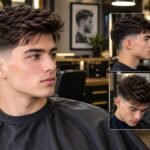
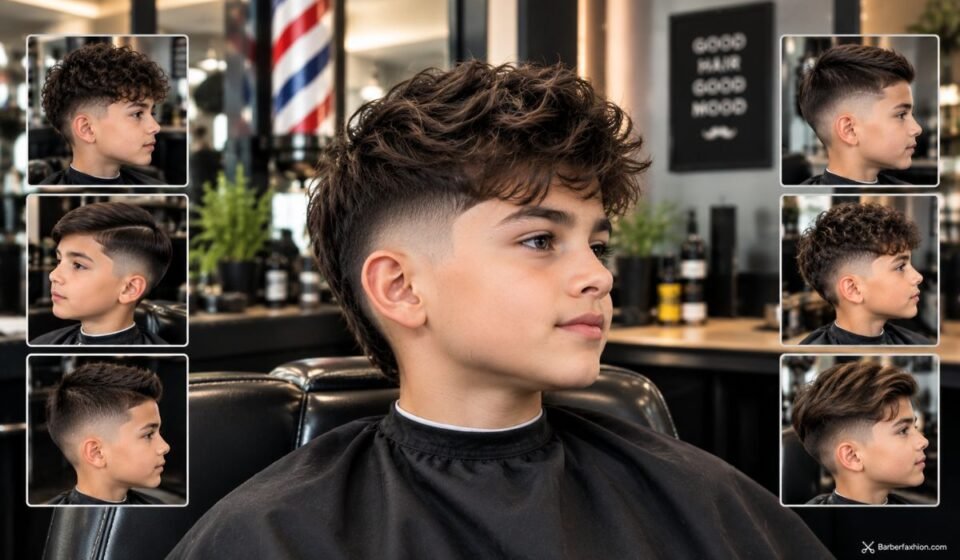

Choosing a haircut for a boy can be surprisingly difficult. You want something that looks modern, fits his personality, works with his natural hair, and still feels practical for school and everyday life. A low taper fade checks many of those boxes because it keeps the sides and neckline neat without making the haircut look too extreme.
The best part is that a low taper can be paired with almost any top style. From a short textured crop and curly top to a comb over, crew cut, modern mullet, or 360 waves, there are plenty of ways to customize it. In this guide, you’ll find the best styles, age-based ideas, hair-type recommendations, barber scripts, maintenance tips, school considerations, and everything else parents should know before booking the next haircut.
Quick Answer: A low taper fade for kids and boys gradually tapers the hair around the lower sides, temples, ears, and neckline while leaving more length higher up. It is a versatile option for toddlers, school-age boys, and teens because the taper can be subtle, short, textured, curly, or more fashion-forward depending on the child’s age and preferences.
What Is a Low Taper Fade for Kids & Boys?
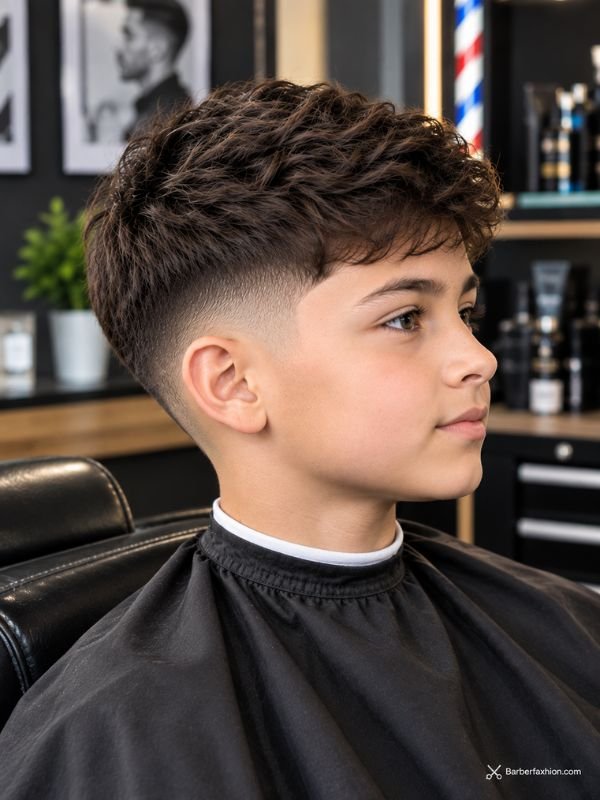
A low taper fade is a haircut where the shortest part of the hair stays relatively low around the ears, temples, and neckline. Instead of removing a large amount of hair from the sides, the barber gradually blends the shorter area into the longer hair above it.
For kids, this can create a clean appearance without changing the entire shape of the haircut. The top can remain short, medium, curly, wavy, textured, or longer depending on the style.
The phrase “low taper fade” is often used casually to describe several similar-looking cuts. However, the key idea is the same: the transition happens low on the sides rather than high toward the upper sides of the head.
How Does a Low Taper Fade Actually Work?
The barber starts with a shorter length around the lower sideburn area, temples, and neckline. The hair is then gradually blended into the longer hair above it.
The transition should look smooth rather than like a hard line between short and long hair. The amount removed depends on the child’s desired look and the barber’s technique.
For a younger boy, you can ask for a very subtle taper. An older boy may prefer a stronger contrast while still keeping the taper low.
The top is where most of the personality comes from. You can leave it textured, curly, straight, spiky, slicked back, or long enough for a side part.
What Is the Difference Between a Taper and a Fade?
A taper gradually reduces hair length around specific areas such as the temples and neckline. A fade generally involves a more noticeable transition across the sides and back.
In everyday barber conversations, the terms can overlap. That’s why showing a reference photo is often more useful than relying on the word “fade” or “taper” alone.
For a child, a low taper is usually a good choice when you want the sides cleaned up while preserving plenty of the haircut’s natural shape.
What Makes the Low Taper Fade Different From Mid and High Fades?
The biggest difference is where the transition begins.
| Haircut | Transition area | Overall appearance |
| Low taper fade | Lower sides, temples and neckline | Subtle and conservative |
| Mid fade | Around the middle of the sides | More noticeable contrast |
| High fade | Higher toward the upper sides | Stronger and bolder |
A low taper can therefore be easier to adapt to school environments and younger children. It also leaves more room to experiment with the top.
Why Is the Low Taper Fade So Popular for Boys Right Now?
The low taper has become especially visible in youth hairstyle trends because it works with many different top styles. A boy can have a relatively simple haircut while still getting the clean, blended finish associated with modern barbering.
It also photographs well and can be adjusted easily. A child with straight hair might wear a textured crop, while a boy with curls can keep the curls longer on top.
The TikTok Effect: How a Viral Meme Made Every Kid Want This Haircut
Social media has played a major role in making certain hairstyles recognizable to younger audiences. The low taper became particularly associated with online haircut culture and viral memes, which helped turn the style into something many boys recognize immediately.
However, copying a viral haircut isn’t always the best approach for every child. A style that looks great on one boy may behave completely differently on another because of hair texture, density, head shape, or maintenance needs.
The better approach is to take inspiration from the trend and adapt it to the child’s actual hair.
Why Parents Love This Haircut Too
Parents often want a haircut that looks neat without requiring complicated styling every morning.
A low taper can provide that balance. The lower sides and neckline stay tidy, while the top can be kept simple enough for everyday routines.
It can also grow out relatively naturally because the taper isn’t necessarily an extreme change to the overall haircut.
What Makes It Practical for Everyday School and Family Life?
A simple low taper can work well for busy mornings because the sides already have a clean shape. Depending on the top style, some boys may need little or no styling product.
For school-age children, parents can also ask for a conservative version with no shaved designs or dramatic contrast.
What Are the Best Low Taper Fade Styles for Kids & Boys in 2026?
There isn’t one perfect version for every boy. The best option depends on his hair, age, personality, school environment, and how much styling he actually enjoys.
Here are 15 versatile ideas to discuss with your barber.
1. Low Taper Fade With Textured Crop
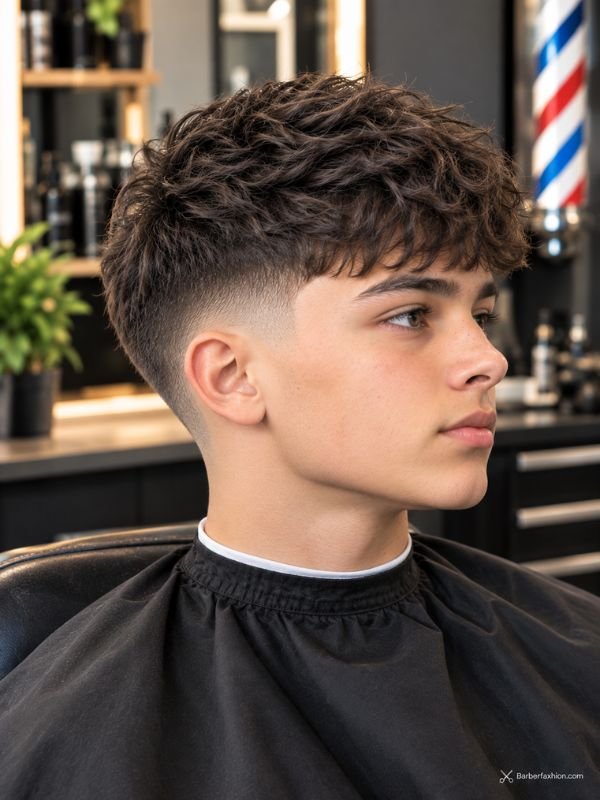
A textured crop keeps the top short enough to manage while adding movement through the hair. It is a practical option for boys who don’t want to spend much time styling.
Ask the barber to keep the top textured and create a subtle low taper around the sides and neckline.
Best for: Straight, wavy, or moderately thick hair
Maintenance: Low to medium
2. Low Taper Fade With Curly Top
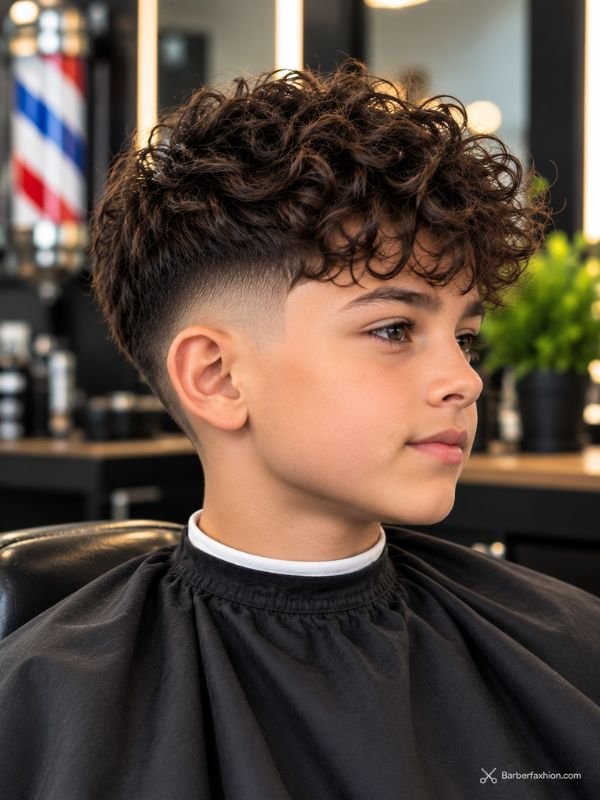
A curly top allows the child’s natural texture to become the main feature of the haircut. The low taper cleans the area around the ears and neckline while keeping the curls visible.
Don’t ask the barber to remove too much from the curly top if you want to preserve its shape.
Best for: Curly hair
Maintenance: Medium
3. Low Taper Fade With Comb Over
The comb over gives the haircut a neat and classic appearance. It works particularly well when the child has enough length on top to create a visible direction.
For younger boys, keep the top natural rather than overly slick.
Best for: Straight or slightly wavy hair
Maintenance: Low to medium
4. Low Taper Fade With Pompadour
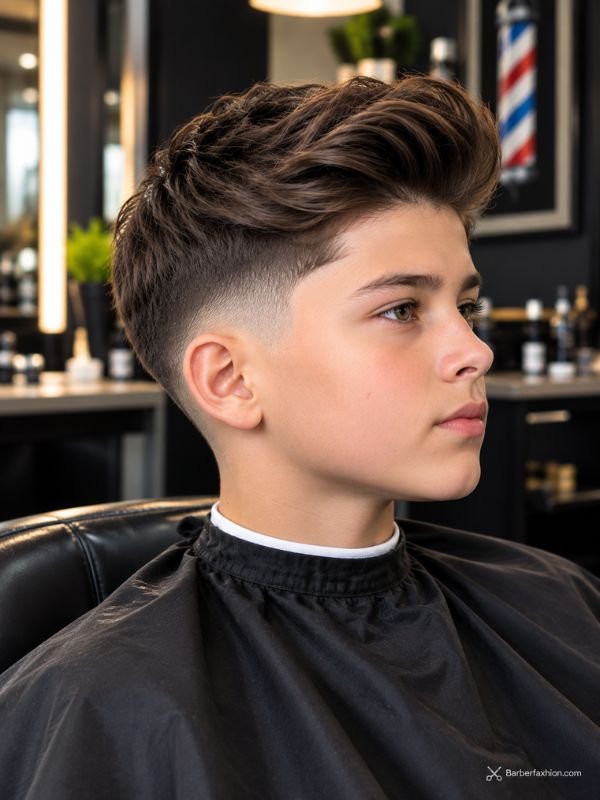
A pompadour keeps more volume toward the front and can create a more dressed-up appearance. For children, a softer and shorter version is usually easier to manage than a dramatic adult-style pompadour.
A small amount of lightweight styling product may help hold the shape when needed.
Best for: Thick or dense hair
Maintenance: Medium
5. Low Taper Fade With Buzz Cut
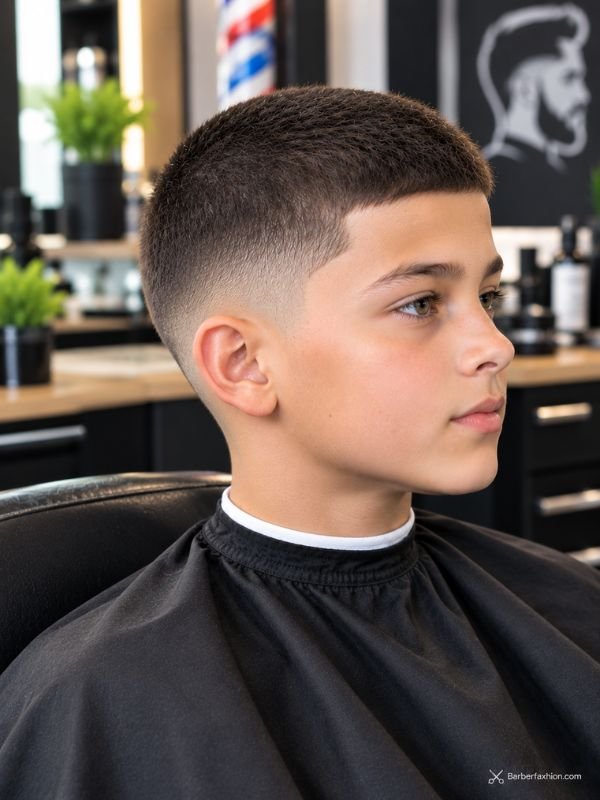
The buzz cut is one of the simplest combinations. The hair on top stays very short while the low taper gives the sides and neckline a cleaner transition.
It is particularly practical for active boys who don’t want daily styling.
Best for: Low-maintenance routines
Maintenance: Low
6. Low Taper Fade With French Crop
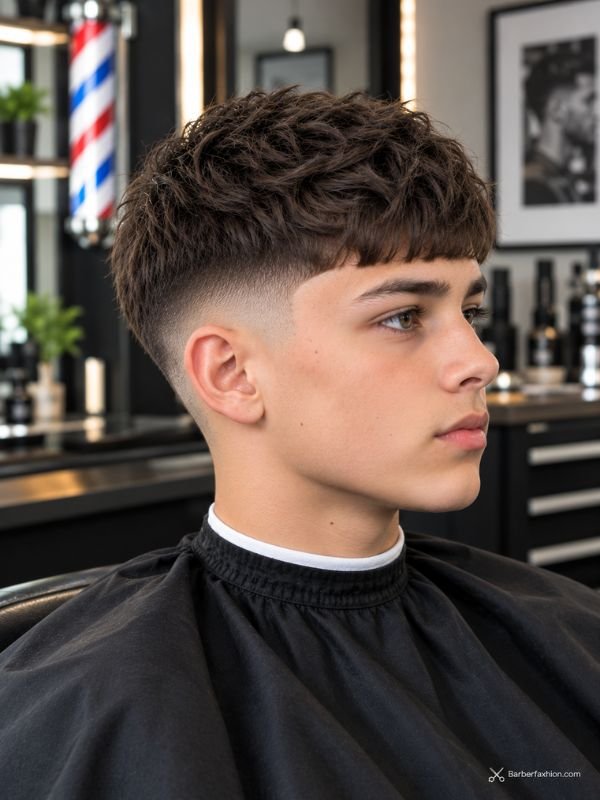
A French crop combines a short textured top with a forward fringe. Adding a low taper keeps the sides clean without taking attention away from the cropped top.
It is a useful option for boys who want something modern but not excessively complicated.
Best for: Straight, wavy, or thick hair
Maintenance: Low to medium
7. Low Taper Fade With Mohawk or Faux Hawk
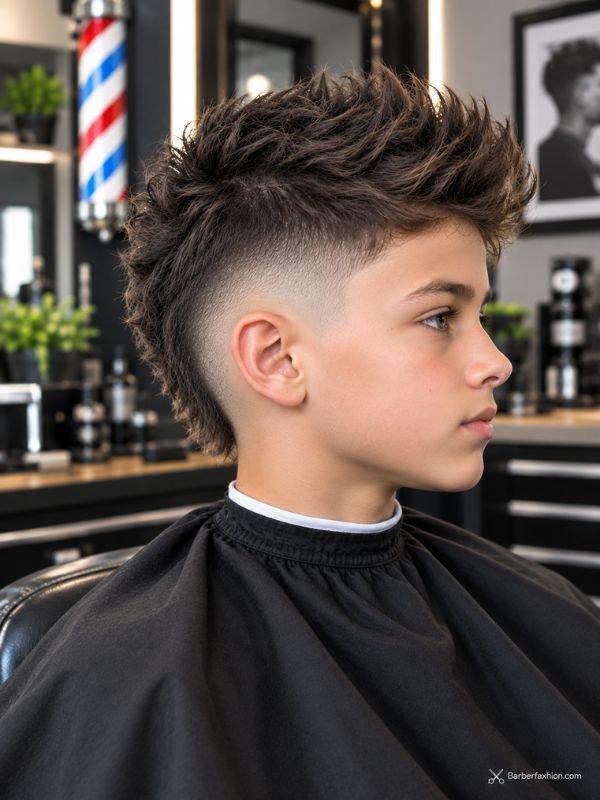
A faux hawk gives the top a more playful and adventurous shape without requiring the dramatic shaved sides of a traditional mohawk.
This can be a fun choice for older boys who want their haircut to stand out.
Best for: Thick or textured hair
Maintenance: Medium
8. Low Taper Fade With Side Part
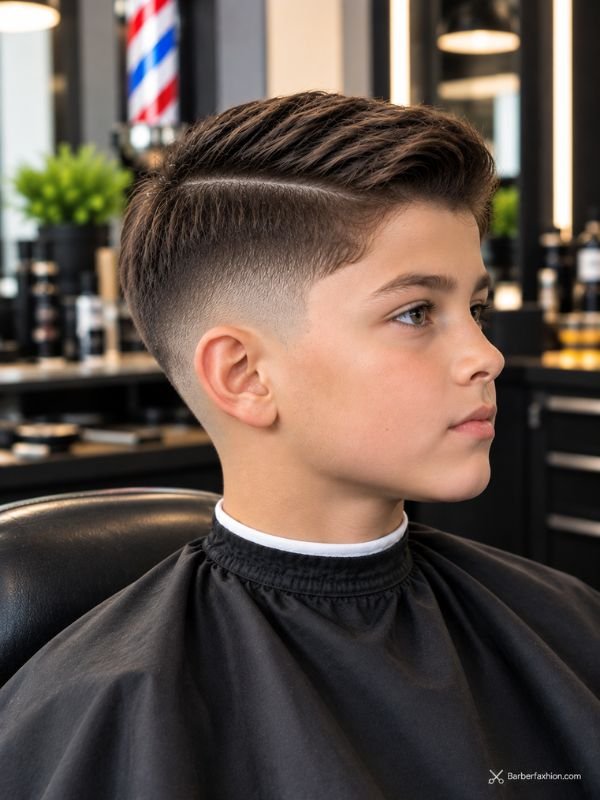
A side part is timeless and easy to recognize. The low taper modernizes the sides while the part gives the top a neat structure.
For school, this can be adapted into a particularly conservative version.
Best for: Straight and wavy hair
Maintenance: Low
9. Low Taper Fade With Afro Top for Black Kids
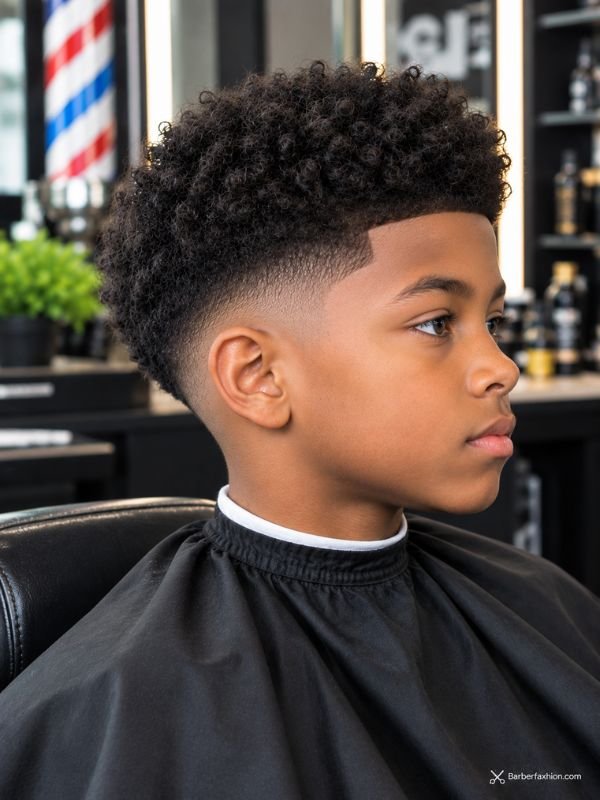
For Black boys with Afro-textured hair, the top can remain fuller while the low taper cleans up the perimeter.
The exact shape should be adapted to the child’s curl pattern and hair density. A barber experienced with Afro-textured hair can help maintain the natural texture while creating a clean taper.
Best for: Afro and 4C hair
Maintenance: Medium
10. Low Taper Fade With Broccoli Cut
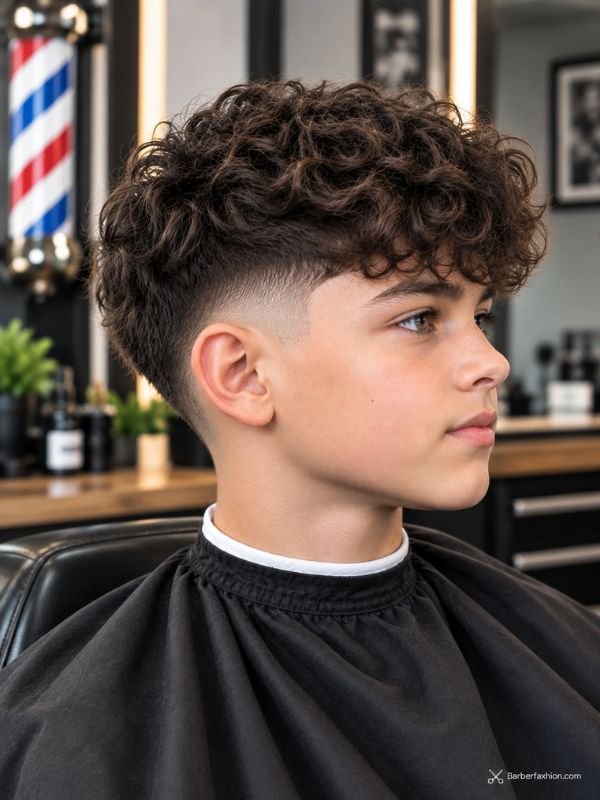
The broccoli cut usually features a fuller, rounded, textured top with shorter sides. Combining it with a low taper makes the overall shape cleaner around the ears and neckline.
This is particularly suitable for boys who already have naturally curly or wavy hair.
Best for: Curly and wavy hair
Maintenance: Medium
11. Low Taper Fade With Crew Cut
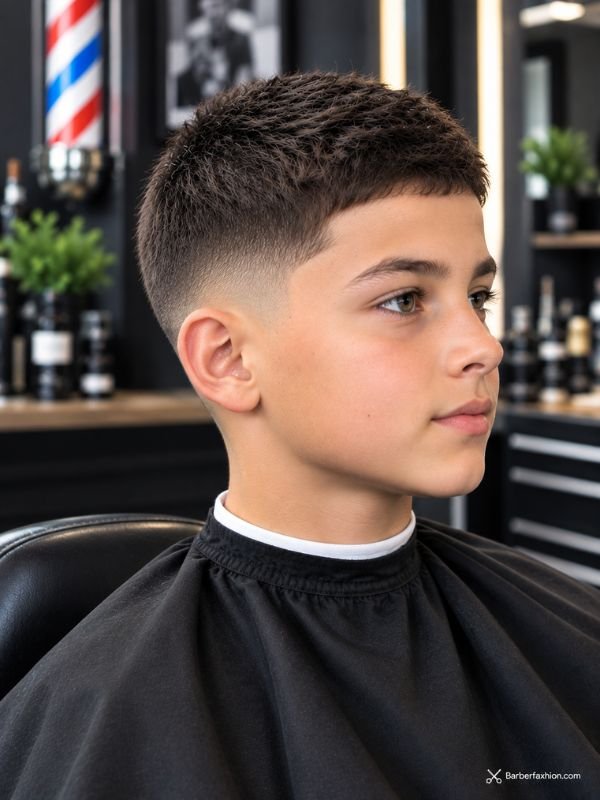
A crew cut keeps the top short and neat. It is an excellent choice when practicality matters more than elaborate styling.
The low taper adds a modern touch while maintaining the straightforward shape.
Best for: Active boys and school routines
Maintenance: Low
12. Low Taper Fade With Slicked-Back Top
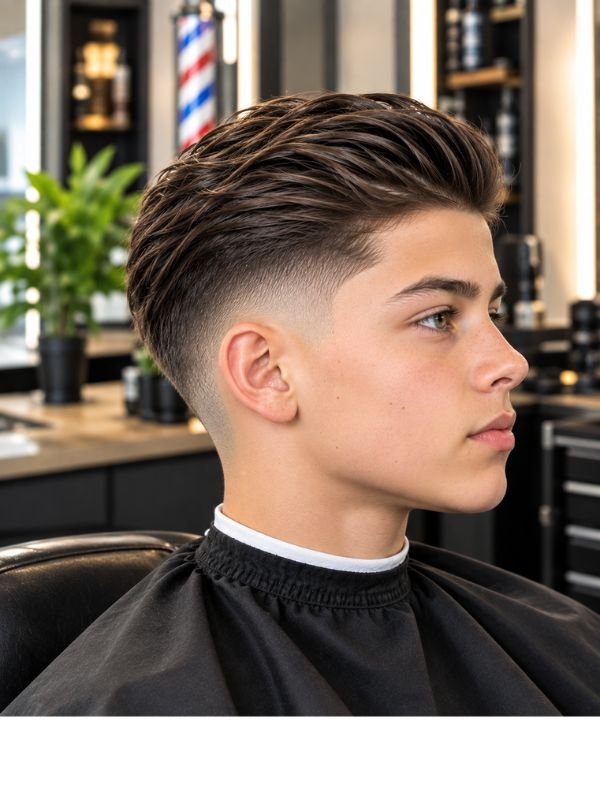
A slicked-back top leaves enough length to brush the hair away from the face. For children, a soft natural finish usually looks better than making the hair extremely stiff or shiny.
This works best when the child’s hair naturally has enough length and density.
Best for: Straight or thick hair
Maintenance: Medium
13. Low Taper Fade With Spiky Top
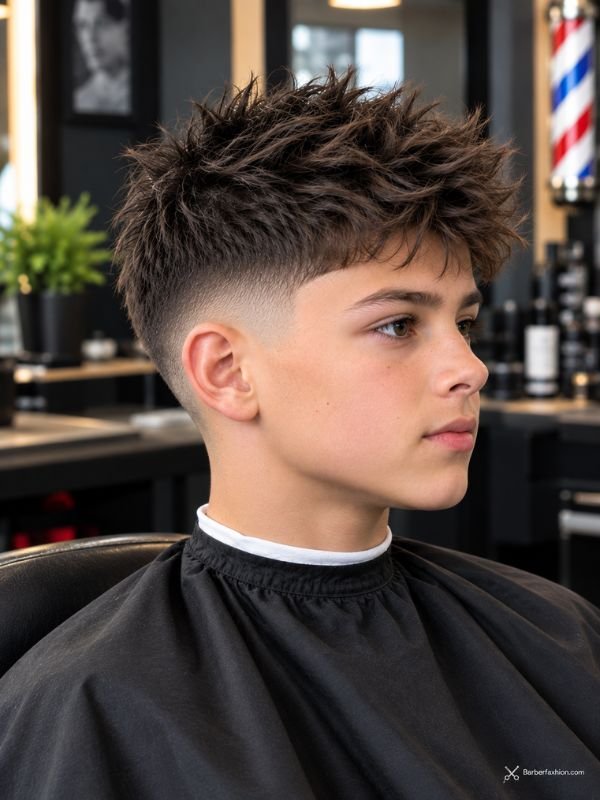
A spiky top gives a playful appearance without requiring a complicated haircut. The spikes can be subtle rather than sharply defined.
This can work particularly well for boys who enjoy a more energetic hairstyle.
Best for: Straight or thick hair
Maintenance: Low to medium
14. Low Taper Fade With Modern Mullet
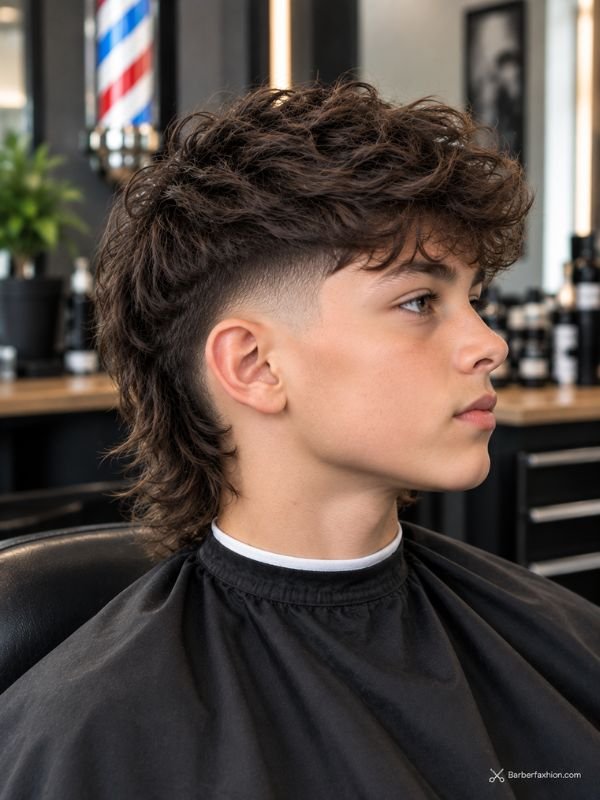
A modern mullet keeps extra length toward the back while the low taper cleans up the lower sides and neckline.
Because the style is more noticeable, it may be more appropriate for older boys or schools with flexible grooming rules.
Best for: Older boys and teens
Maintenance: Medium
15. Low Taper Fade With 360 Waves for Black Boys
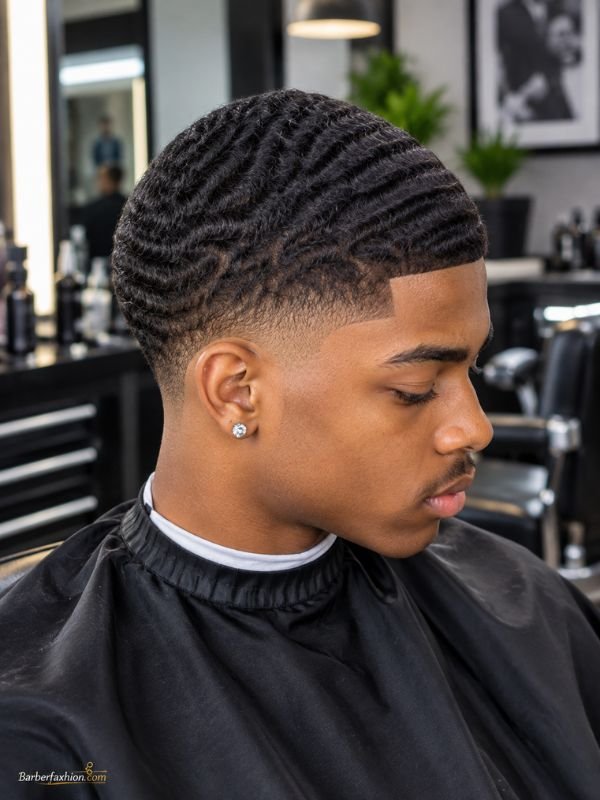
A low taper can complement 360 waves by cleaning the lower perimeter while keeping the wave pattern across the top.
This style requires more specialized hair care than a basic short haircut, so parents should understand the routine before choosing it.
Best for: Boys with suitable Afro-textured hair
Maintenance: High
Short Low Taper Fade for Kids & Boys
A short low taper fade keeps both the top and sides relatively close. It is a useful option for parents looking for a clean haircut that doesn’t require much daily work.
You can pair a short taper with a buzz cut, crew cut, French crop, or short textured top.
For younger boys, a short style can also make mornings easier because there is less hair to brush or style.
How to Choose Between These 15 Styles
Start with the child’s natural hair rather than choosing a haircut only because it looks good in a photo.
Then consider:
- Age: Younger boys may benefit from simpler styles.
- Hair texture: Work with the natural curl, wave, or straightness.
- Maintenance: Choose a style the family can realistically maintain.
- School: Check whether the school has grooming restrictions.
- Preference: Older boys should have more input into their hairstyle.
Which Low Taper Fade Works Best for Your Child’s Hair Type?
Hair texture can completely change how the same haircut looks. A style that requires almost no work on straight hair may need a different routine on curls.
Low Taper Fade for Curly Hair Boys
Curly hair gives the low taper a natural contrast. Keep enough length on top to let the curls form properly.
A curly top, French crop, broccoli cut, or textured style can all work well.
Ask the barber to consider the hair’s natural shrinkage rather than judging the required length only while the curls are stretched.
Low Taper Fade for Straight Hair Boys
Straight hair gives you plenty of flexibility. It can be styled into a crop, comb over, side part, crew cut, spiky top, or slicked-back look.
For a low taper fade for kids boys straight hair, the top length is especially important because straight hair tends to show the exact shape of the cut.
Low Taper Fade for Wavy Hair Boys
Wavy hair sits between straight and curly textures. Instead of fighting the waves, use them to create natural movement.
A textured crop, messy top, side part, or medium-length top can complement the low taper.
Low Taper Fade for Thick Hair Boys
Thick hair gives you plenty of volume but can become difficult to manage if too much weight is left on top.
Ask the barber whether some weight should be removed while keeping enough length for the chosen style.
Textured crops, crew cuts, faux hawks, and shorter curls can all work well.
Low Taper Fade for Fine Hair Boys
Fine hair generally benefits from texture and controlled length. Leaving some strategic length on top can help the hair look fuller.
A textured crop, side part, or short comb over may be easier to manage than a style that depends on extreme volume.
Avoid piling on heavy products simply to make fine hair look thicker.
Low Taper Fade for Black Kids With Afro or 4C Hair
Black boys with Afro or 4C hair have many styling options, including natural Afro tops, waves, curls, short crops, and other textured shapes.
The most important consideration is working with the child’s natural hair characteristics. A barber experienced with textured hair can determine how much length to preserve and how to shape the taper without unnecessarily disturbing the top.
How Hair Texture Changes the Final Look
| Hair type | Good options | Styling effort |
| Straight | Crop, comb over, side part | Low–medium |
| Wavy | Textured crop, side part | Low |
| Curly | Curly top, crop, broccoli cut | Medium |
| Thick | Crew cut, crop, faux hawk | Medium |
| Fine | Textured top, comb over | Low |
| Afro/4C | Afro top, waves, curls | Medium–high |
What Is the Best Low Taper Fade for Each Age Group?
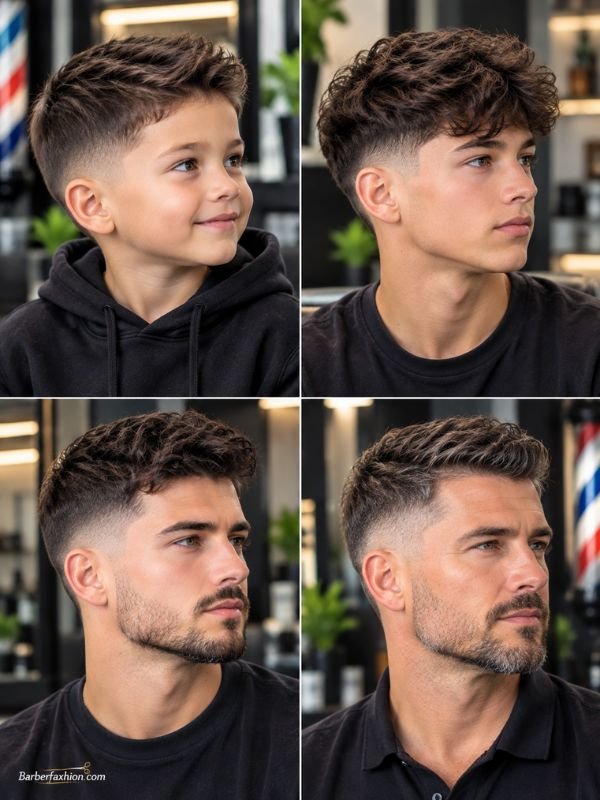
Age matters because a haircut that suits a teenager may be unnecessarily complicated for a toddler.
Baby Taper Fade — Is It Appropriate for Babies Under 2?
For babies under two, simplicity and comfort should come before following a hairstyle trend.
If parents choose a taper-style haircut, keeping it very subtle and short can make the process easier. The child may also have difficulty staying still for long periods.
There is no universal hairstyle requirement for this age. Consider the child’s comfort and whether the barber is experienced with very young children.
Toddler Taper Fade Ages 2–5 — What Works Best?
Toddlers often benefit from simple haircuts that don’t require much styling.
A soft low taper with a short crop, curls, crew cut, or natural top can work well. Avoid choosing a complicated style simply because it looks impressive in a photo.
The haircut experience matters as much as the final appearance.
Little Boy Taper Fade Ages 5–7 — Playful but Neat
Boys in this age group can handle more styling variety. Textured crops, curly tops, side parts, crew cuts, and short spiky styles are all possibilities.
The low taper can remain subtle while the top provides the personality.
School-Age Boys Taper Fade Ages 8–12 — The Core Audience
School-age boys often want hairstyles that look current while parents want something neat and manageable.
This is where the low taper becomes particularly flexible. A child can have a short haircut for convenience or leave more length on top for a fashionable appearance.
Always check the school’s grooming policy before choosing a more noticeable style.
Low Taper Fade Ideas for Boys Ages 8–12
Specific searches such as low taper fade for 8 year old boy, low taper fade for 10 year old boy, low taper fade for 11 year old boy, and low taper fade 12 year old boy can all be addressed by matching the haircut to the child’s needs rather than treating each age as a completely different haircut category.
| Age | Style direction |
| 8 | Short taper, crew cut, textured crop |
| 9 | Crop, curls, side part |
| 10 | Short taper, textured top, comb over |
| 11 | Textured crop, curly top, side part |
| 12 | School-safe taper or trendier top |
For a 10-year-old boy with straight hair, a low taper with a textured crop, side part, or short comb over can be especially easy to manage.
Teen Taper Fade Ages 13–17 — Style-Driven Choices
Teenagers generally have stronger opinions about their appearance. They may want a modern mullet, textured crop, faux hawk, waves, or a more defined top.
This is the age where it makes sense to involve the teenager directly in the barber conversation.
Quick Age Reference Guide
| Age | Main priority | Style direction |
| Under 2 | Comfort | Very simple taper |
| 2–5 | Comfort + maintenance | Soft low taper |
| 5–7 | Neat + playful | Crop, curls, crew cut |
| 8–12 | School + preference | Wide variety |
| 13–17 | Personal style | Trend-focused options |
Which Low Taper Fade Suits Your Child’s Face Shape?
Face shape shouldn’t be treated as a strict rule. Hair texture, head shape, and personal preference matter too.
Low Taper Fade for Round Faces
A little extra height or texture on top can visually elongate a rounder face. Textured crops, side parts, and slightly lifted styles may work well.
Keep the sides controlled with the low taper rather than adding unnecessary width.
Low Taper Fade for Oval Faces
Oval faces are versatile and can work with many top styles. Crops, curls, comb overs, crew cuts, and textured tops can all be considered.
The child’s natural hair should still guide the final choice.
Low Taper Fade for Square Faces
A square face often has a naturally defined jawline. Short crops and structured tops can complement that shape.
A low taper keeps the sides clean without taking too much attention away from the natural proportions.
Low Taper Fade for Heart-Shaped Faces
A slightly fuller top can help balance a narrower chin. Textured styles, side parts, and softer curls can be considered.
Avoid choosing a haircut solely from a face-shape chart. The final result depends heavily on hair density and texture.
How to Choose the Top Length for Your Child’s Face Shape
Think of face shape as one factor rather than a rulebook.
Rounder face: Consider texture or height.
Oval face: Most styles can work.
Square face: Structured and clean styles can complement it.
Heart-shaped face: Softer volume can create balance.
How Do You Tell the Barber What Low Taper Fade You Want?
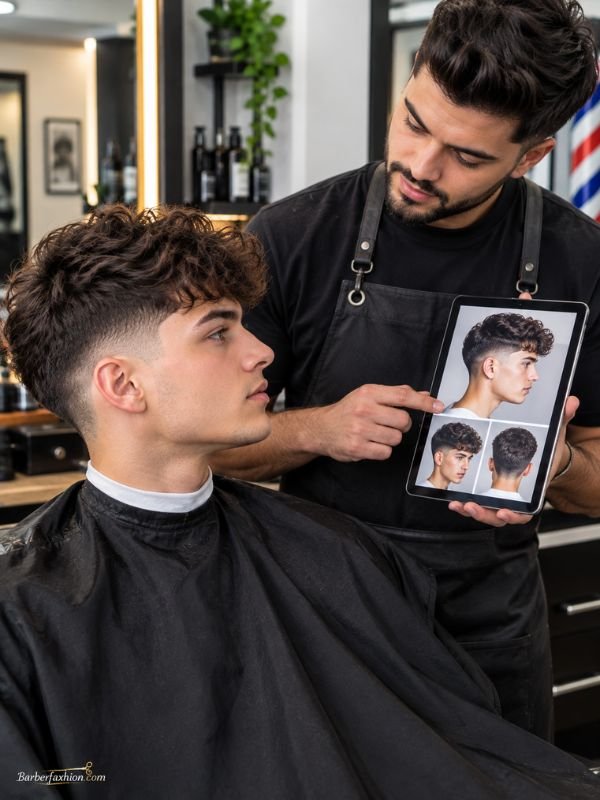
The easiest way to avoid confusion is to combine a reference photo with specific instructions.
Don’t simply say, “Give him a low fade.” Tell the barber how short you want the sides, how much length you want on top, and whether you want the neckline natural or sharply finished.
The Complete Parents’ Barber Scripts
Script for a Classic Low Taper
“I’d like a subtle low taper around the temples, sideburns, and neckline. Please keep the transition low and leave enough length on top for his natural style.”
Script for a Low Taper With Textured Crop
“Please keep the taper low and leave a short textured crop on top. I want the sides neat but not too high.”
Script for Curly Hair
“Please keep the curls on top and clean up the lower sides and neckline with a subtle low taper. Don’t remove too much length from the curls.”
Script for a School-Safe Low Taper
“I’d like a conservative low taper with no shaved designs and no dramatic contrast. Please keep the top neat enough for school.”
Script for a Toddler or First Haircut
“This is his first or early haircut, so please keep the taper very subtle and make the process as comfortable and simple as possible.”
Essential Questions to Ask the Barber Before the Cut
Ask:
- How high will the taper go?
- How short will the sides be?
- How much length will remain on top?
- Will the style work with his natural hair texture?
- How often will it need a touch-up?
- Can you keep the cut school-friendly?
- What should we do between appointments?
What NOT to Say at the Barbershop
Avoid vague instructions such as:
- “Make it look cool.”
- “Just do whatever.”
- “Give him the TikTok haircut.”
- “Make it like this guy.”
Instead, explain the desired length and show a photo.
Why You Should Show a Reference Photo
Two people can imagine completely different haircuts from the same phrase.
A photo gives the barber information about:
- Taper height
- Top length
- Fringe
- Texture
- Overall shape
- Neckline
- Styling direction
For a child’s first taper, showing two or three photos can also help you identify exactly which features you like.
How Do You Maintain a Low Taper Fade for Kids at Home?
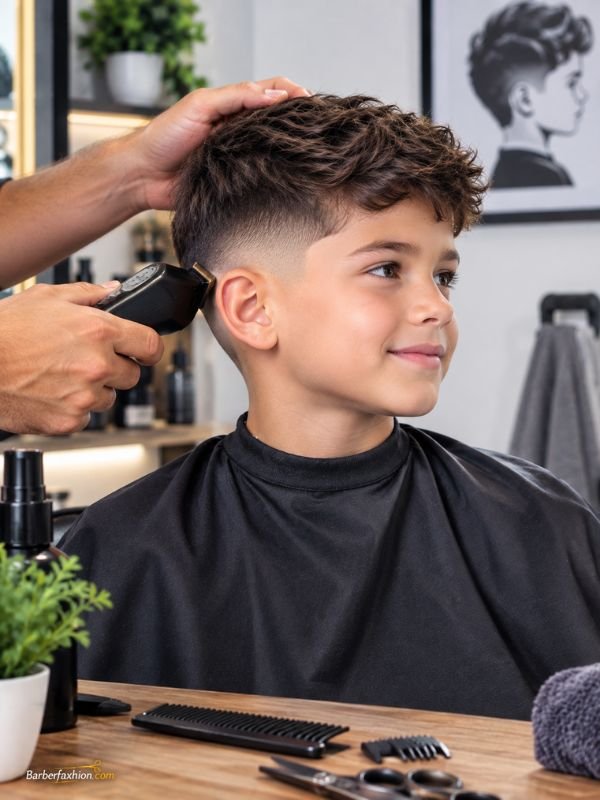
A good haircut can lose its shape if the hair isn’t cared for between appointments.
The good news is that most low tapers don’t require an elaborate routine.
The Complete Weekly Home Maintenance Routine
A simple routine can include:
- Wash the hair according to its texture and needs.
- Use a suitable conditioner when necessary.
- Gently dry instead of aggressively rubbing the hair.
- Brush or shape the top according to its style.
- Keep the neckline and around-ear area clean.
- Avoid unnecessary heavy styling products.
Curly hair may need a different routine from straight hair, so don’t use the same approach for every child.
How to Do a Quick At-Home Touch-Up Between Barber Visits
Parents should be cautious about attempting detailed fades at home.
Small cleanup tasks may be manageable if you’re experienced, but trying to recreate a professional taper with clippers can quickly create uneven lines.
If you don’t have proper experience, letting the barber handle the taper is usually the safer approach for maintaining the intended shape.
How to Keep Curly Hair Looking Fresh Between Trims
Don’t brush curls aggressively when they’re dry.
Instead, follow the child’s normal curl-care routine and avoid repeatedly disturbing the natural pattern.
The taper itself may remain neat while the curls grow. A light, appropriate styling product can be used when needed, but many children don’t need heavy products.
Signs It Is Time for a Barber Visit
Look for:
- The taper no longer looks blended.
- Hair around the ears becomes bulky.
- The neckline becomes untidy.
- The top loses its intended shape.
- The child starts needing more styling every morning.
- The haircut no longer meets school requirements.
What to Do If You Don’t Like the Haircut After the Appointment
First, don’t panic. Some haircuts look different immediately after the barber finishes because the hair has been brushed, dried, or styled differently.
Wash and style it normally before deciding whether the problem is the haircut itself.
If something is genuinely uneven or much shorter than requested, contact the barber and explain specifically what you expected. Avoid trying to fix a complicated taper immediately with home clippers because one correction can create another problem.
How Much Does a Kid’s Low Taper Fade Haircut Cost?
The cost of a kids’ taper fade varies depending on the barber, location, shop, haircut complexity, and whether additional services are included.
Kids Taper Fade Price Breakdown
Before booking, ask whether the quoted price includes:
- Haircut
- Taper/fade
- Shampoo
- Styling
- Line-up
- Beard service for older teens, if applicable
- Design work
A simple low taper will generally involve less work than a detailed design or highly styled cut.
What Can Make the Price Higher or Lower?
Prices can change based on:
- City and neighborhood
- Barber experience
- Shop type
- Hair length
- Hair density
- Additional designs
- Styling requirements
- Whether the child needs a complete restyle
Because pricing varies by location, parents should check their local barbershop rather than relying on a single internet price.
Smart Ways to Save Money on Kids’ Taper Fades
You don’t necessarily need the most complicated version.
A simple low taper with a manageable top can reduce styling requirements and make regular visits more straightforward.
You can also ask the barber how long the particular haircut should reasonably last before booking the next appointment.
Is a Low Taper Fade Haircut School-Appropriate for Boys?
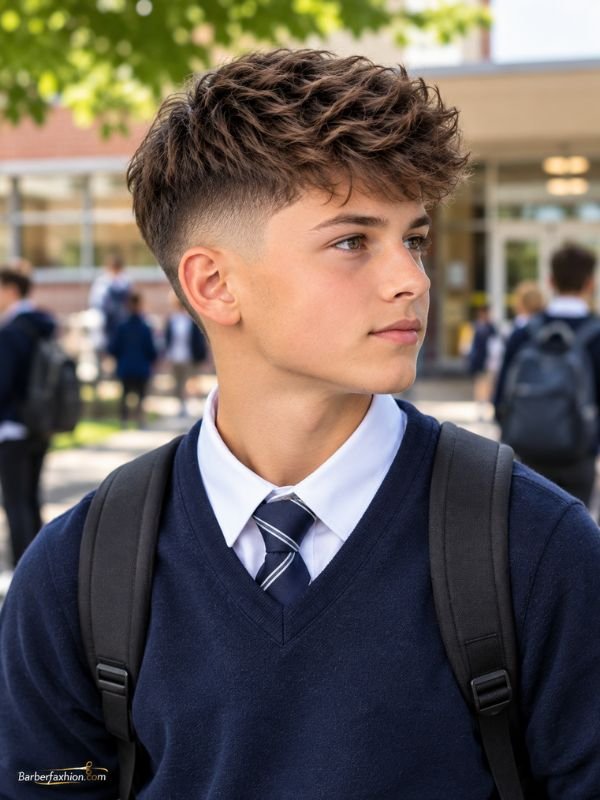
A low taper is often easier to adapt to conservative school environments than an extreme high fade, dramatic design, or highly unusual haircut.
However, school policies differ, so parents should check the actual student handbook or grooming policy.
What Most School Dress Codes Say About Fade Haircuts
There isn’t one universal school rule for fade haircuts.
Some schools may have specific restrictions on designs, extreme contrasts, excessive length, or unconventional styles. Others may have relatively flexible grooming policies.
The safest approach is to check the specific school rather than assuming a haircut is automatically permitted.
The Safest Low Taper Fade Choices for Strict Schools
If the school has strict grooming expectations, consider:
- Low taper
- Short textured crop
- Crew cut
- Short comb over
- Conservative side part
- Simple curly top
Avoid shaved designs or dramatic top-to-side contrasts if the school’s rules are unclear.
School-Safe Fade Checklist for Parents
Before the haircut, ask:
- Does the school allow fades?
- Are shaved designs prohibited?
- Is there a maximum hair length?
- Are unusual styles restricted?
- Does the school require a conservative appearance?
- Could the haircut create an issue during school activities.
How Do You Prepare Your Child for Their First Taper Fade Haircut?
A child’s first experience with clippers can determine how comfortable they feel about future haircuts.
Step-by-Step First Barbershop Visit Preparation
Before the appointment:
1. Show photos.
Let your child see what the finished haircut might look like.
2. Explain the process.
Tell him that the barber will use scissors and/or clippers around his hair.
3. Avoid surprises.
Don’t suddenly take a nervous child to a busy shop without preparation.
4. Choose a suitable appointment.
A tired or hungry child may be less cooperative.
5. Bring comfort items if appropriate.
A familiar toy or other comforting object can make the experience easier.
6. Tell the barber it’s the child’s first experience.
This allows the barber to adjust the pace and communication.
Low Taper Fade for Kids With Sensory Sensitivity
Some children are especially sensitive to the buzzing sound, vibration, touch, loose hair, or feeling of clippers near the ears and neck.
In that situation, communicate with the barber before starting.
You can ask for:
- Shorter sessions
- Breaks when necessary
- A quieter appointment
- A gradual introduction to the clippers
- Scissors where practical
- Extra time around sensitive areas
The goal should be a successful haircut experience rather than forcing the child through a stressful appointment.
What Parents Can Do If Their Child Becomes Nervous
Stay calm and avoid turning the haircut into a battle.
Give the child simple choices where possible, such as choosing between two approved hairstyles. Let the barber explain what they’re doing.
If the child becomes extremely distressed, pausing and trying again another day may be more productive than forcing the entire haircut.
What Are the Best Styling Products for a Kids’ Low Taper Fade?
Most kids don’t need a bathroom shelf full of styling products.
The product should match the hair type and the hairstyle.
Product Recommendations by Hair Type
| Hair type | Useful styling approach |
| Straight | Lightweight cream or minimal product |
| Wavy | Light cream or texture product |
| Curly | Child-appropriate curl moisturizer or cream |
| Thick | Lightweight cream or controlled-hold product |
| Fine | Very light product |
| Afro/4C | Suitable moisturizing and curl-care products |
Always follow the product label and consider the child’s scalp sensitivity.
Products to Always Avoid for Kids’ Hair
Avoid using extremely strong or unnecessarily harsh products simply to recreate an adult hairstyle.
Be especially cautious with products that cause irritation, have an overpowering fragrance, or leave the scalp uncomfortable.
If a child develops persistent scalp irritation after using a product, stop using it and seek appropriate professional advice.
When Your Child Doesn’t Need Styling Product at All
A short crew cut, buzz cut, simple taper, or naturally curly top may look perfectly good without styling product.
If the haircut holds its shape naturally, there’s no reason to add product just because the hairstyle appears on social media.
What Are the Best Father-Son Matching Low Taper Fade Ideas?
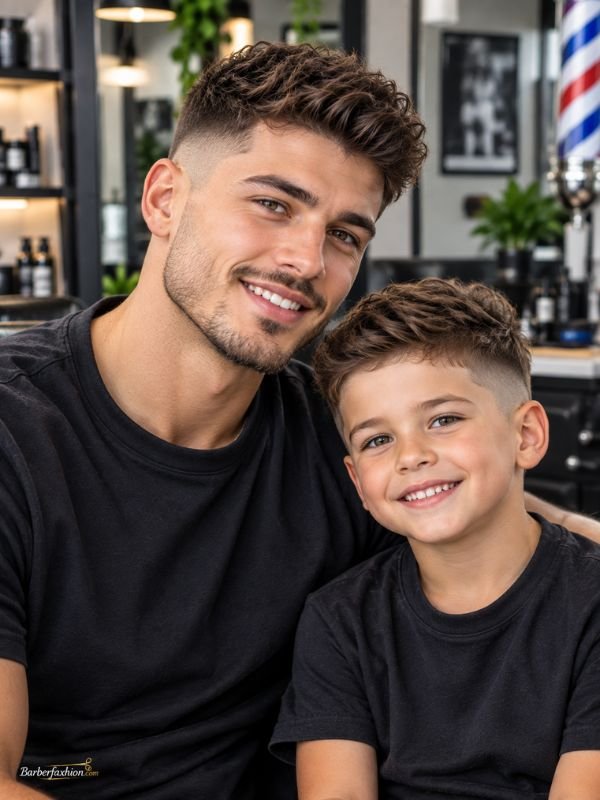
Matching haircuts don’t have to be identical.
A father and son can share the same low taper while choosing different top lengths.
For example:
- Dad: low taper with textured top
- Son: low taper with short crop
- Dad: low taper with side part
- Son: low taper with crew cut
- Dad: low taper with longer top
- Son: low taper with curly top
This creates a coordinated look without forcing both people
What Is the Best Low Taper Fade for Each Season?
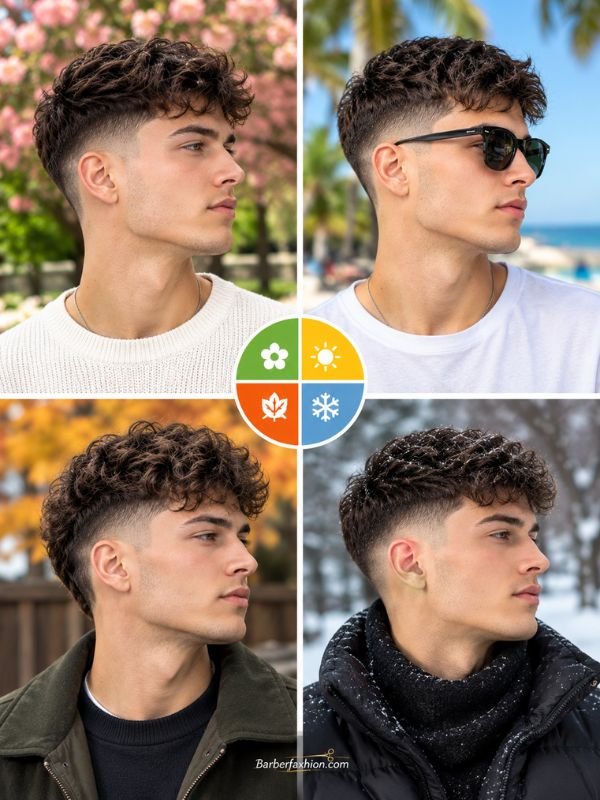
Best Low Taper Fade for Summer
Shorter tops and simple styles can be easier during hot weather. A buzz cut, crew cut, or short textured crop can reduce daily styling.
Best Low Taper Fade for Back-to-School
A conservative low taper with a crop, side part, comb over, or crew cut is a practical starting point.
Always check the school’s grooming rules first.
Best Low Taper Fade for Winter
Winter allows more flexibility with top length. Curly tops, textured styles, side parts, and slightly longer cuts can work well.
Best Low Taper Fade for Holidays and Special Events
For special occasions, a side part, comb over, textured crop, or softly styled top can give the low taper a more polished appearance.
Frequently Asked Questions
What age is appropriate for a kid’s low taper fade?
There isn’t one universal age that applies to every child. Younger children may need a simpler, more comfortable version, while school-age boys and teens can usually handle a wider range of styles.
How long does a kid’s taper fade last before needing a trim?
It depends on how quickly the child’s hair grows and how precise the family wants the taper to remain. Once the area around the ears, temples, or neckline becomes noticeably untidy, it may be time for a trim.
Does a low taper fade work for all hair types?
Yes, a low taper can be adapted to straight, wavy, curly, thick, fine, and Afro-textured hair. The top should be adjusted to work with the child’s natural texture.
Is a low taper fade allowed in schools?
It depends on the school’s grooming policy. A conservative low taper is generally easier to adapt to strict requirements, but parents should check the specific school’s rules.
What is the difference between a low taper fade and a skin fade for kids?
A low taper keeps the transition low and can preserve more hair around the sides. A skin fade removes the hair much closer to the skin in the faded area, creating a stronger contrast.
How do I ask the barber for a low taper fade for my son?
Tell the barber that you want the taper kept low around the temples, sideburns, and neckline, then explain how much length you want on top. Showing a reference photo makes the request even clearer.
Can I do a low taper fade at home on my child?
A simple haircut may be possible for someone experienced with clippers, but a clean low taper requires controlled blending. If you’re unfamiliar with fading techniques, a professional barber is a better option.
What styling products should I use on my child’s taper fade?
Choose products based on the child’s hair type and the desired style. Many short kids’ hairstyles need little or no product, while curls may benefit from an appropriate moisturizing or curl-focused product.
How much does a kids’ taper fade cost in the United States?
There is no single nationwide price. Cost varies by city, barber, shop, hair length, and additional services, so parents should check the local shop’s current pricing.
What is the best low taper fade for Black kids?
The best choice depends on the child’s natural texture, density, and preferred style. A low taper can work with an Afro top, curls, waves, short textured hair, and several other styles when the haircut is adapted to the child’s hair.
Conclusion
A low taper fade gives kids and boys plenty of room to personalize their haircut without completely changing the shape of their hair. The same low taper can look completely different when paired with a textured crop, curls, comb over, crew cut, French crop, Afro top, modern mullet, or another style.
The easiest way to choose the right one is to work from the child outward. Consider his age, natural hair type, face shape, school requirements, maintenance routine, and personal preference. Then show the barber a clear reference photo and explain exactly how subtle or noticeable you want the taper to be. A good kids’ haircut isn’t just about following a trend—it’s about finding a style the child can comfortably wear and the family can realistically maintain.