
You’ve probably seen the photo on Instagram or in your barber’s lookbook: buzzed on top, sides fading down clean and low, no fuss involved. Then you picture walking out of your own barbershop with the same haircut and wonder if it will actually look like that on you, or if you’ll end up with something a little off — too high on the sides, or too short on top for your face.
That gap between the photo and the result usually comes down to a handful of details most guys never think to mention. This guide breaks down exactly what a low taper fade buzz cut is, the style variations barbers actually cut, which guard lengths and face shapes pair well, and how to keep it looking sharp long after you leave the chair.
Quick Answer
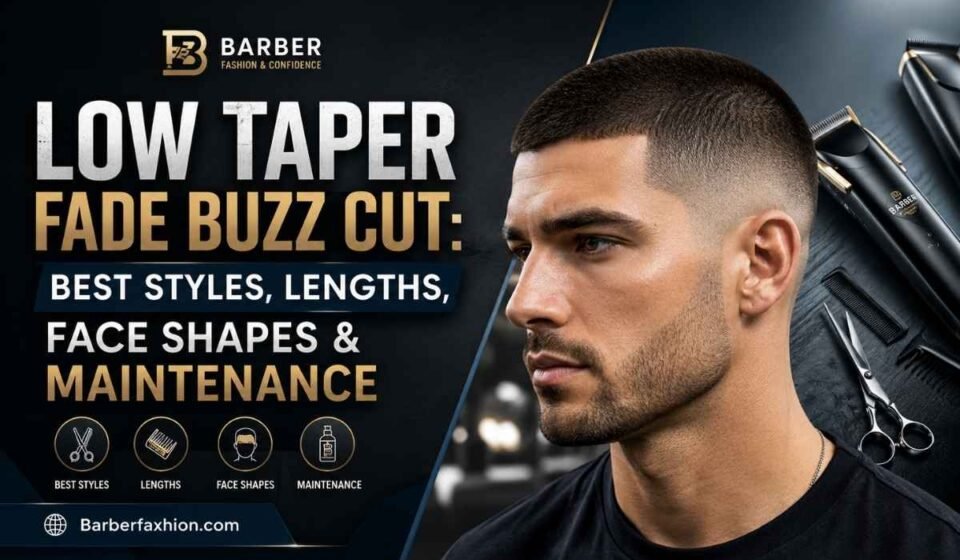
A low taper fade buzz cut pairs a short, even buzzed top (usually a #2 to #4 guard) with sides that fade gradually starting just above the ear, never dropping to bare skin. It’s one of the most low-maintenance, office-friendly fades around, and most guys stretch touch-ups to every two to three weeks since the blend grows out gradually instead of losing its shape overnight.
What Is a Low Taper Fade Buzz Cut?
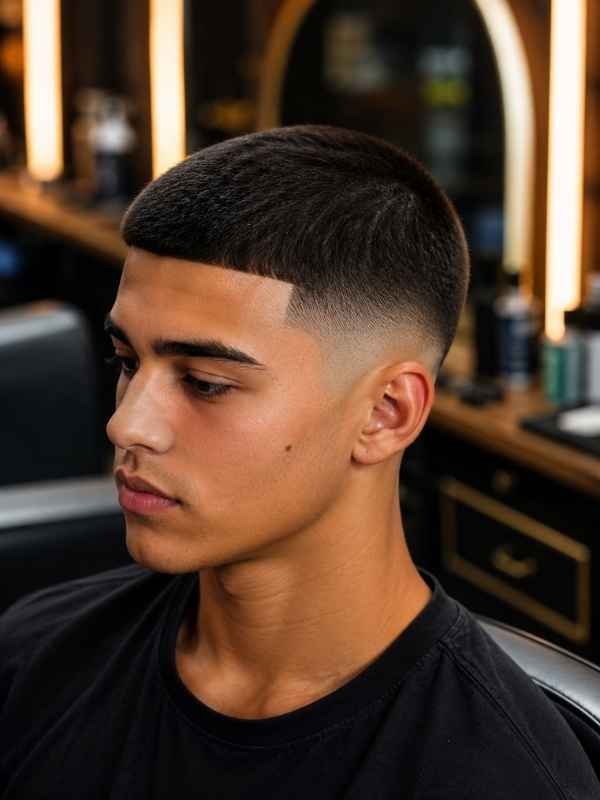
A low taper fade buzz cut combines two separate techniques. The buzz cut handles the top: hair clipped to one even length, typically a #2 to #4 guard, so it sits short and uniform rather than something you’d part or comb. The taper fade handles the sides and back, where hair gradually shortens as it moves down toward the neckline. “Low” tells you where that fade starts.
Placement changes everything about how the cut reads. A high fade starts near the temples and creates sharp contrast against a buzzed top. A mid fade sits around the top of the ear. A low taper holds back — the blend doesn’t kick in until just above the ear or around the neckline, so the sides stay fuller for most of their length before tapering right at the bottom edge. That’s what gives it a tidy, understated look instead of something loud.
Why the Starting Point Matters
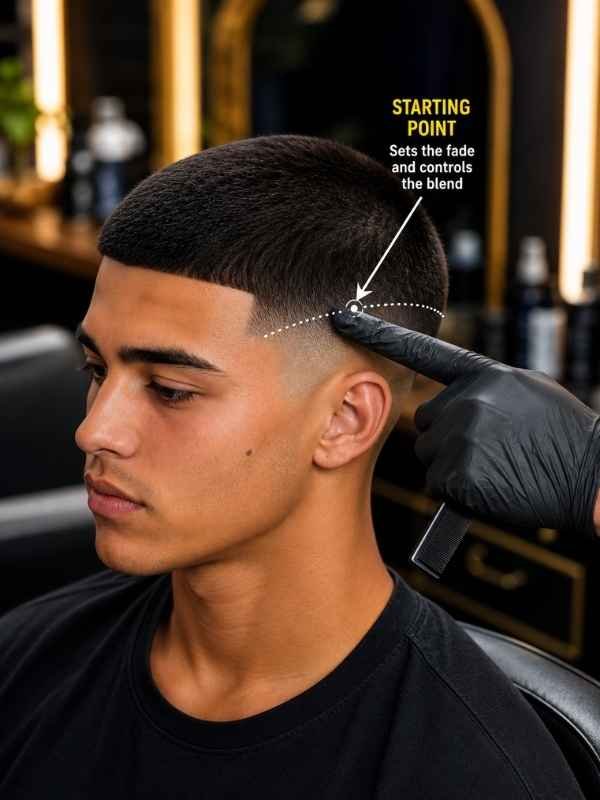
That single detail — where the fade begins — sets the whole personality of the haircut. A high fade next to a buzzed top makes a statement. A low taper fade buzz cut blends so gently that from a few feet away it can look like one uniform length, with the graduation only visible up close near the ears and nape. That’s exactly why it works for offices, interviews, and anyone who wants a cut that holds its shape between visits.
What a Taper Adds That a Plain Fade Doesn’t
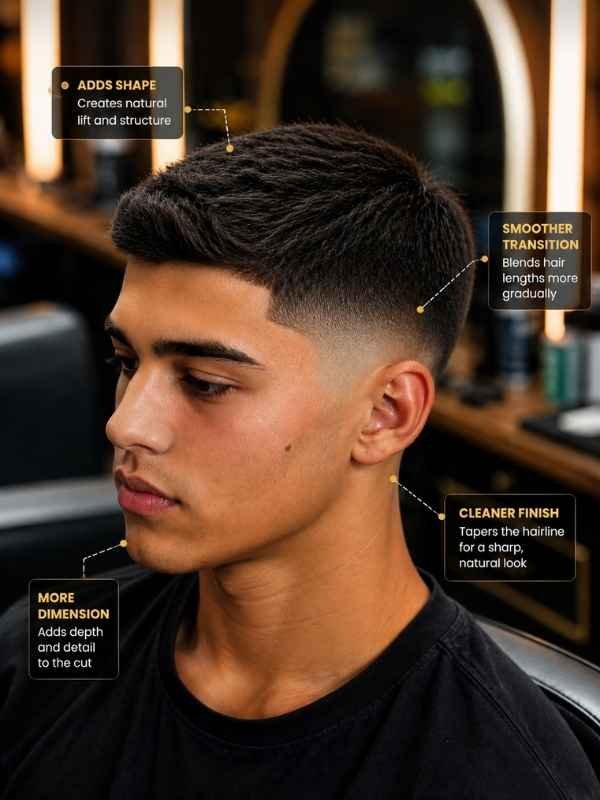
A taper never touches bare skin. Instead of running clippers down to zero, it leaves a small amount of length even at its shortest point — think a #1 or a light trim rather than a shaved edge. That’s a big part of the appeal: you get a structured, groomed outline without the stark skin line of a full skin fade. It matters even more for fine or thinning hair, since a skin fade can look patchy against a buzzed top, while a taper hides uneven density more forgivingly.
What It Looks Like From the Back
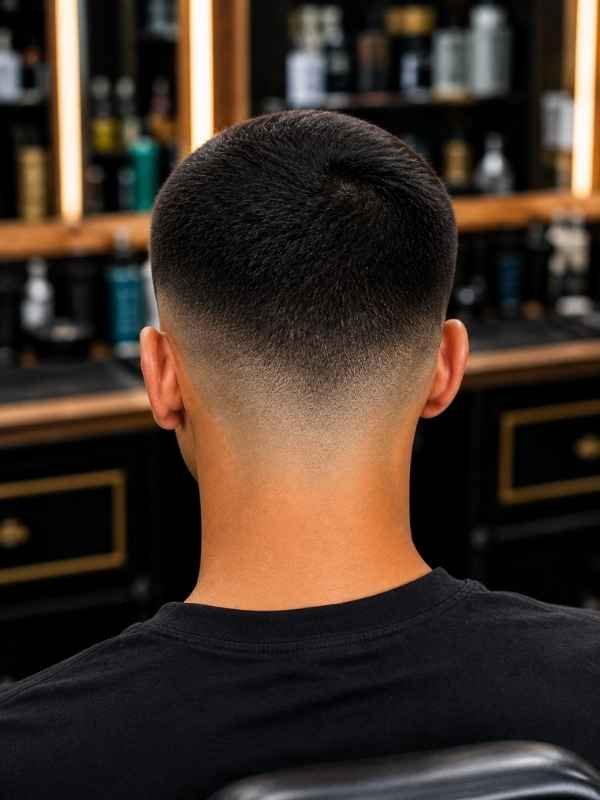
The back view is where a lot of guys get surprised by their own haircut, since you can’t see it in the mirror while you’re in the chair. On a proper low taper, the neckline should curve gently rather than end in a hard, squared-off line, and the fade should blend evenly from ear to ear without a visible seam at the center. Ask your barber to hold up a hand mirror before you leave, so you can check the back and confirm the taper doesn’t sit higher on one side than the other.
Best Low Taper Fade Buzz Cut Styles
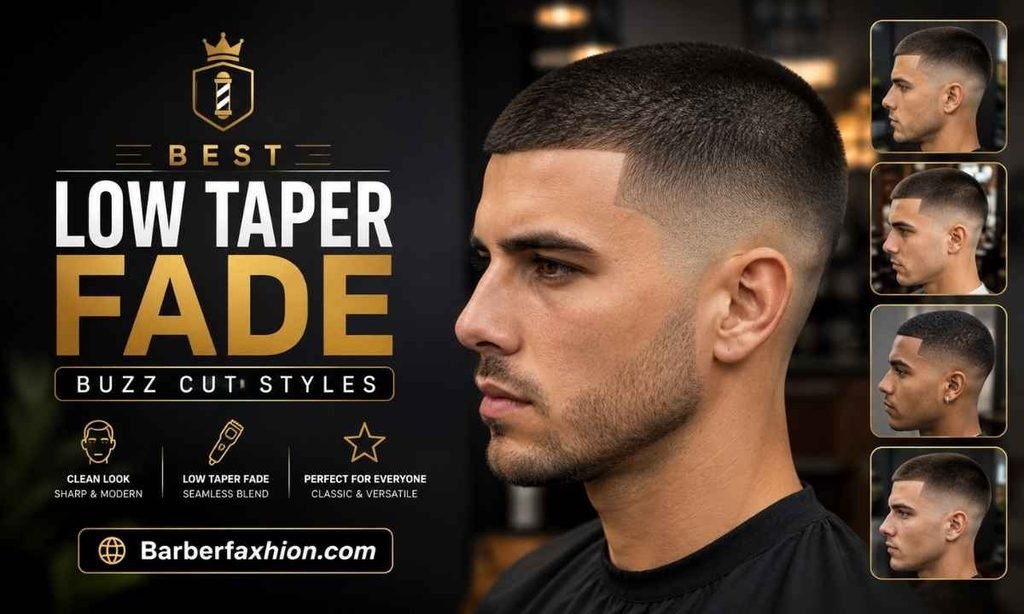
“Low taper fade buzz cut” isn’t one single haircut — it’s a category with plenty of room to make it your own. Here are the versions that come up most in the barber chair.
The classic uniform buzz is the baseline: one guard length on top, usually a #3 or #4, tapering low into a #1 near the ears. It needs almost no styling and grows out cleanly, which makes it a popular pick before a new job or a long trip. A line-up buzz adds a crisp, straight edge along the front hairline and temples, cut in with a razor or detail trimmer after the fade is blended — a common request from guys who pair the cut with a beard. A textured crop leaves the top a little longer, around a #4 to #5, sometimes finished with light texturizing for movement, so you get some personality without high contrast.
A curly or coily buzz keeps the top slightly longer, usually a #3 or #4, to preserve curl definition while the sides taper clipper-over-comb so the pattern doesn’t get scalped. A faux hawk leaves the center strip longer while the low sides keep everything grounded, so it reads as stylish rather than aggressive.
| Style variation | Top length | Best for |
| Classic uniform buzz | #3–#4 guard | First-time fade clients, low upkeep |
| Line-up buzz | #2–#3 guard plus razor edge | Pairing with a beard |
| Textured crop | #4–#5 with texturizing | Movement without heavy contrast |
| Curly or coily buzz | #3–#4 | Textured hair types |
| Faux hawk | Longer center, tapered sides | A bolder but still tidy look |
Long Buzz Cut Low Taper Fade
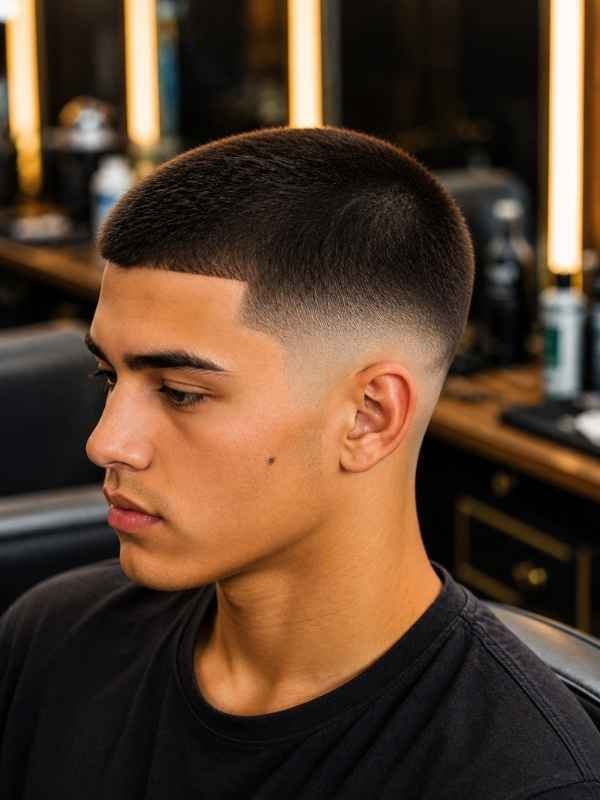
If a standard buzz feels a bit too close for your taste, a longer buzz cut with a low taper fade keeps the top at a #5 or #6 guard instead of the usual #2 to #4. You get enough length to run a comb through it or add a touch of product, while the sides still fade low and clean. It’s a good middle ground if you want a buzzed look without going as short as the classic version, and it holds up well on straight or slightly wavy hair.
Low Taper Fade Buzz Cut with Beard
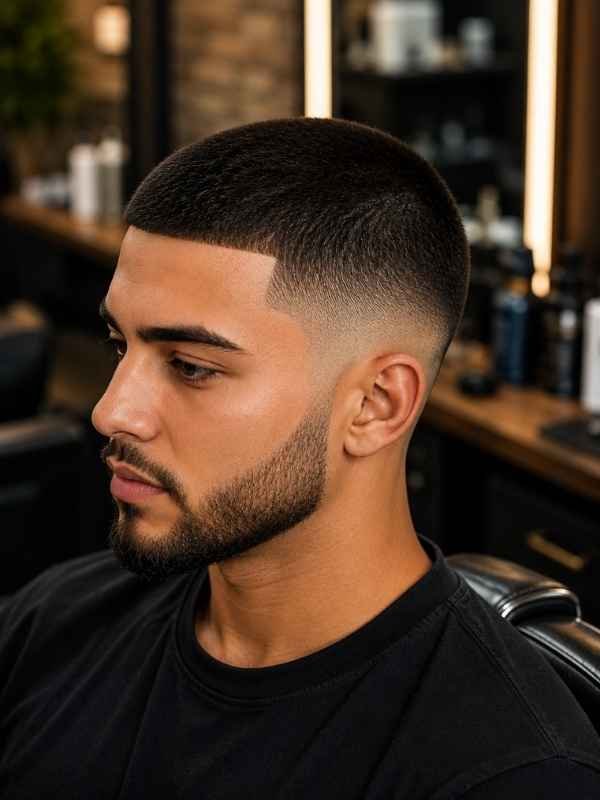
This variation connects the fade directly into a faded beard line along the jaw, so the hair and beard read as one deliberate look instead of two separate grooming choices. The barber blends the sideburn into the beard with the same taper technique used on the sides, keeping the transition soft rather than a hard line. It works especially well if your beard already has good density, since the connected fade highlights the jawline instead of competing with it.
Low Taper Fade Buzz Cut on Blonde Hair
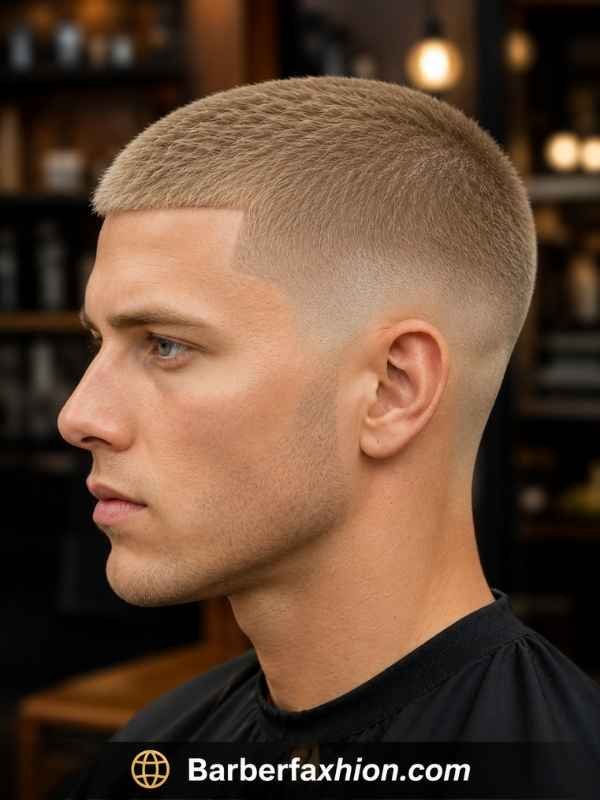
Lightened hair changes how much contrast the fade shows, since blonde strands read closer to skin tone than dark hair does. A low taper on blonde hair tends to look softer overall, which suits guys who want the shape of the cut without the sharp, high-contrast look a skin fade gives on darker hair. If you’ve bleached or highlighted your top, ask your barber to keep the fade a touch longer at the bottom than they normally would, since a too-short taper can look uneven against lightened color.
Choosing Your Buzz Length: A Clipper Guard Guide
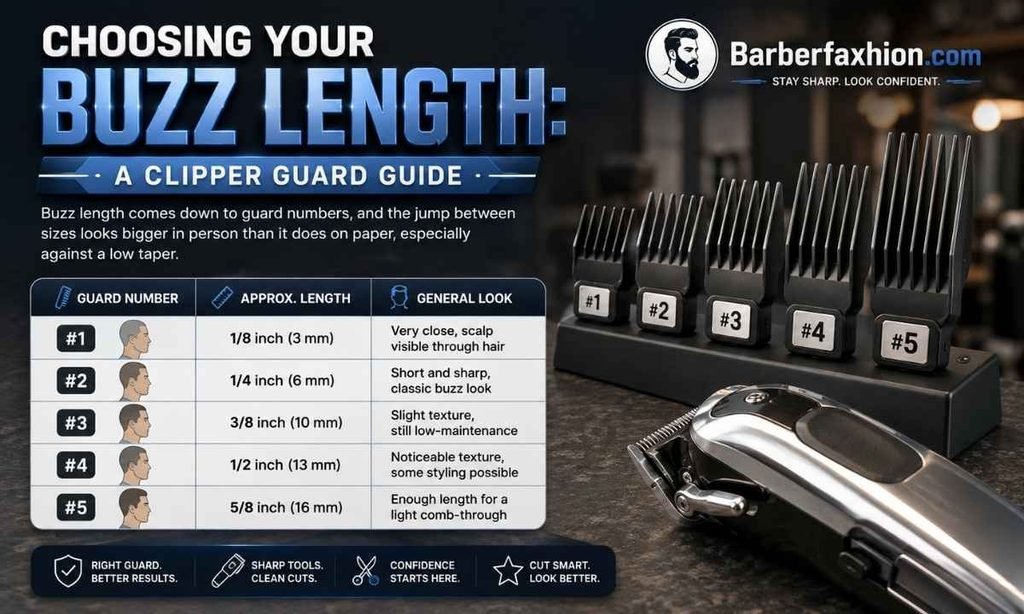
Buzz length comes down to guard numbers, and the jump between sizes looks bigger in person than it does on paper, especially against a low taper.
| Guard number | Approx. length | General look |
| #1 | 1/8 inch (3 mm) | Very close, scalp visible through hair |
| #2 | 1/4 inch (6 mm) | Short and sharp, classic buzz look |
| #3 | 3/8 inch (10 mm) | Slight texture, still low-maintenance |
| #4 | 1/2 inch (13 mm) | Noticeable texture, some styling possible |
| #5 | 5/8 inch (16 mm) | Enough length for a light comb-through |
A #1 or #2 gives the sharpest contrast against the fade, though it also shows more scalp — worth knowing if you’re conscious about thinning hair. A #3 is the most requested length overall, since it’s dense enough to look intentional while staying essentially maintenance-free. A #4 or #5 brings in real texture and pairs naturally with the textured crop, leaving enough length for a small amount of matte product.
Density plays a bigger role than most guys expect. Thick hair holds up fine at shorter guards, showing texture even at a #2, while fine or thinning hair looks fuller at a #3 or #4, since going too short can expose the scalp and highlight sparse spots. Lifestyle matters too — a #2 means zero drying or styling time, while a #4 gives you something to work with for a night out.
Low Taper Fade Buzz Cut for Straight, Wavy, Curly, and Coily Hair
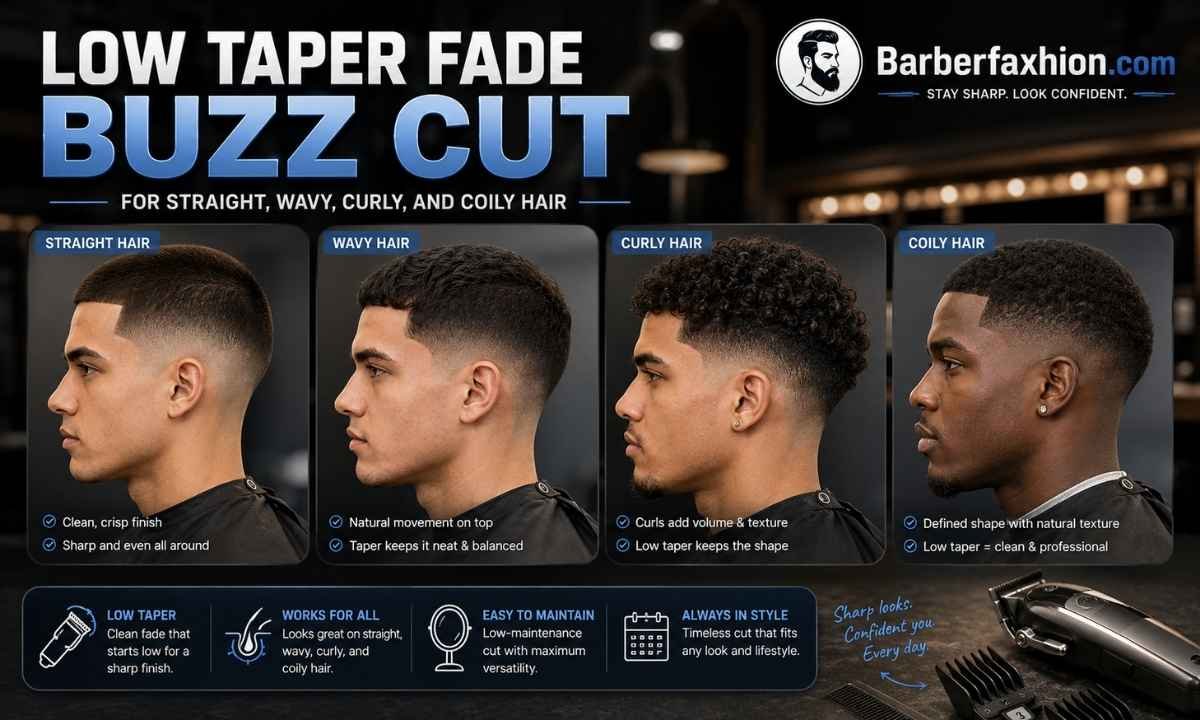
Hair type changes this cut more than most first-timers realize, which is why the same guard number can give two people completely different results.
Straight Hair
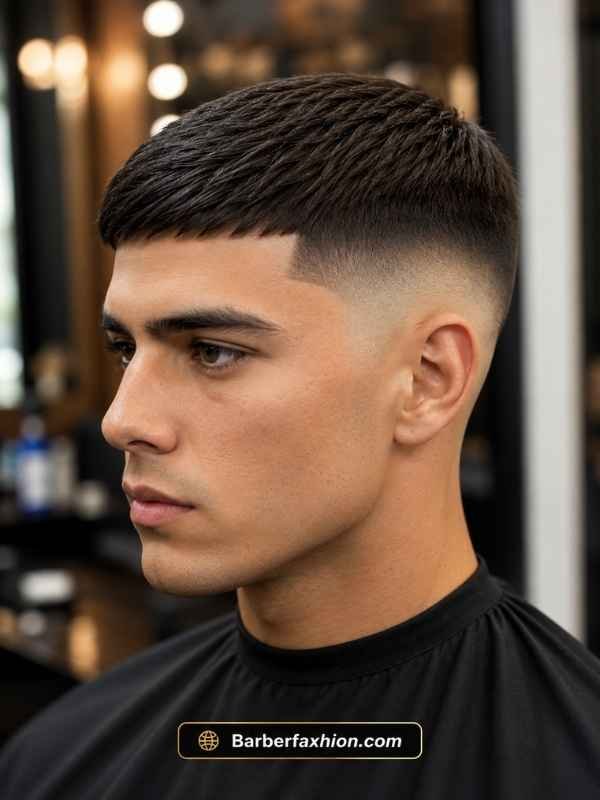
Straight hair is the most predictable texture to work with. The strands lie flat and grow in one direction, so clippers glide evenly and the line between the buzzed top and tapered sides comes out crisp. A #2 or #3 reads sharper on straight hair than it does on curlier textures, since there’s no shrinkage to factor in.
Wavy Hair
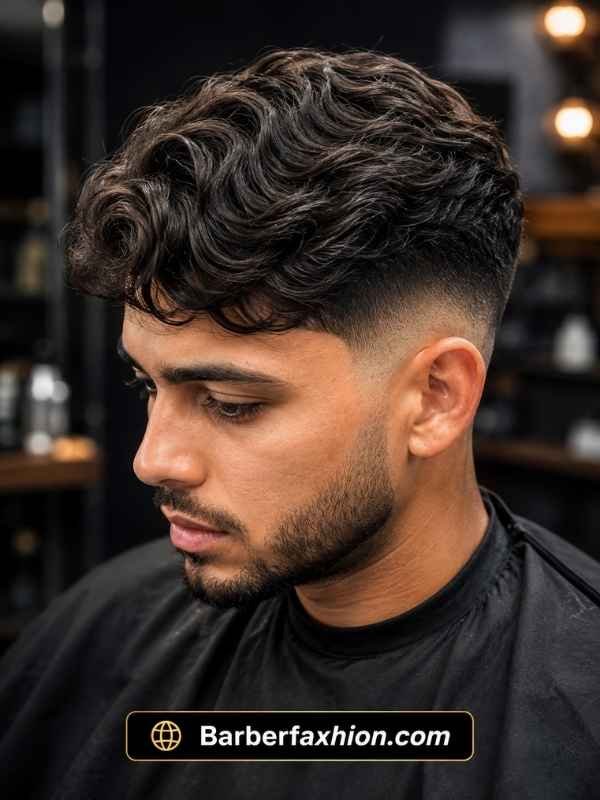
Wavy hair sits in the middle. It carries enough natural volume that the top doesn’t need much length for dimension, and a #2 can still show a subtle wave with zero product. Barbers sometimes spend a little extra time blending the crown on wavy hair, since the direction of growth can be less consistent than on straight hair.
Curly Hair
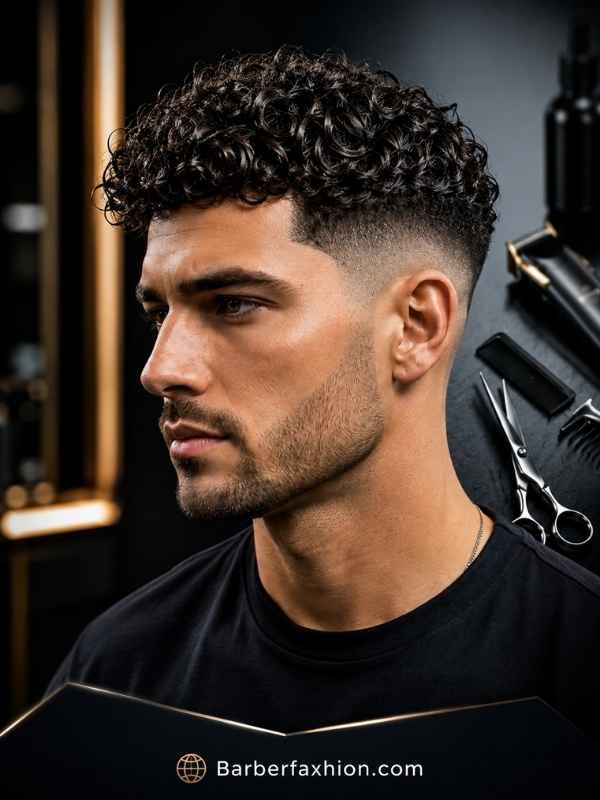
Curly hair brings shrinkage into the equation — curls spring up and look shorter once cut and dried than the guard number suggests. A #4 on tight curls can settle closer to a #2, which is why barbers often go a size or two longer than they would for a straight-haired client chasing the same look. Clipper-over-comb technique is common here for more control.
Coily Hair
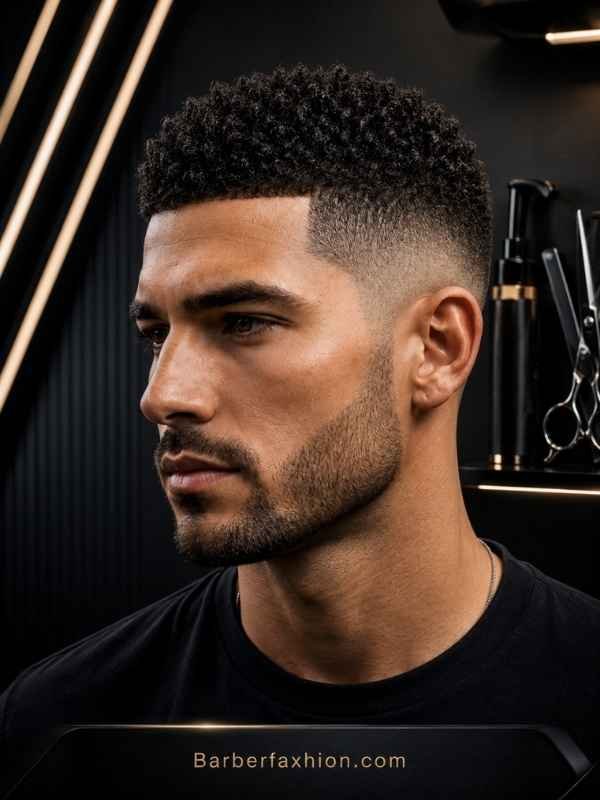
Coily or tightly textured hair benefits the most from keeping the taper rather than going for a full skin fade, since a hard skin line can look disconnected against a dense, coiled top. It’s worth leaving the top a little longer on a first visit — going shorter next time is easy, but fixing an overly aggressive first cut isn’t.
Best Low Taper Fade Buzz Cut for Your Face Shape
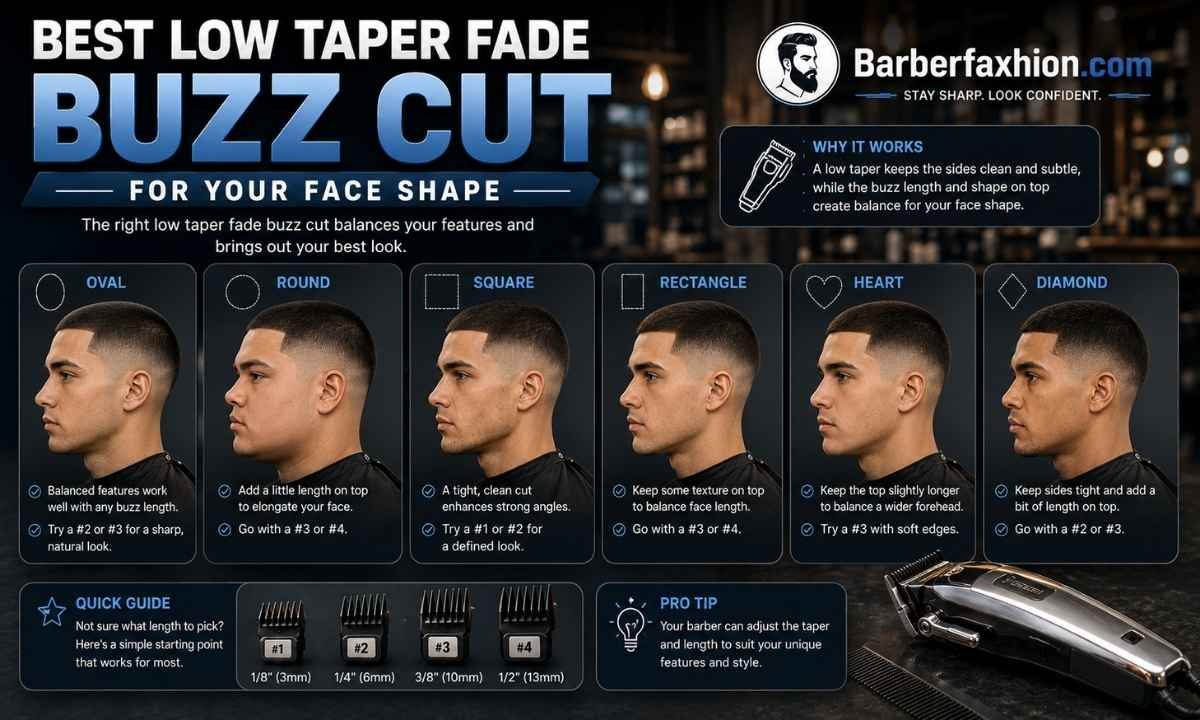
A cut can be technically flawless and still not suit the person wearing it, which is where face shape comes in. The low taper is more forgiving than a high fade, but top length still deserves a small adjustment based on your features.
Round faces do well with added height and less width, so leave more length on top — a #4 rather than a #2 — for vertical lift without harsh contrast. Square faces pair naturally with this cut, since a low taper doesn’t fight a strong jaw, and a defined line-up echoes the straight lines already there. Oval faces are the most flexible and work with nearly every variation covered here. Diamond faces, wider at the cheekbones, suit longer sides that soften that width, with a little texture on top balancing a narrower forehead. Heart-shaped faces do better avoiding extra width at the crown, so a textured crop with some length balances the proportions, while oblong or rectangular faces should keep height in check with a shorter, uniform top around a #2 or #3.
| Face shape | Recommended top length | Why it works |
| Round | #4 or longer | Adds vertical lift, avoids extra width |
| Square | #2–#3 with line-up | Complements a strong jawline |
| Oval | Flexible, most guards work | Naturally balanced proportions |
| Diamond | #3–#4 with texture | Softens cheekbone width |
| Heart | #3–#4, textured crop | Balances a wider forehead |
| Oblong | #2–#3, minimal height | Prevents further elongation |
Low Taper Fade Buzz Cut for a Receding Hairline
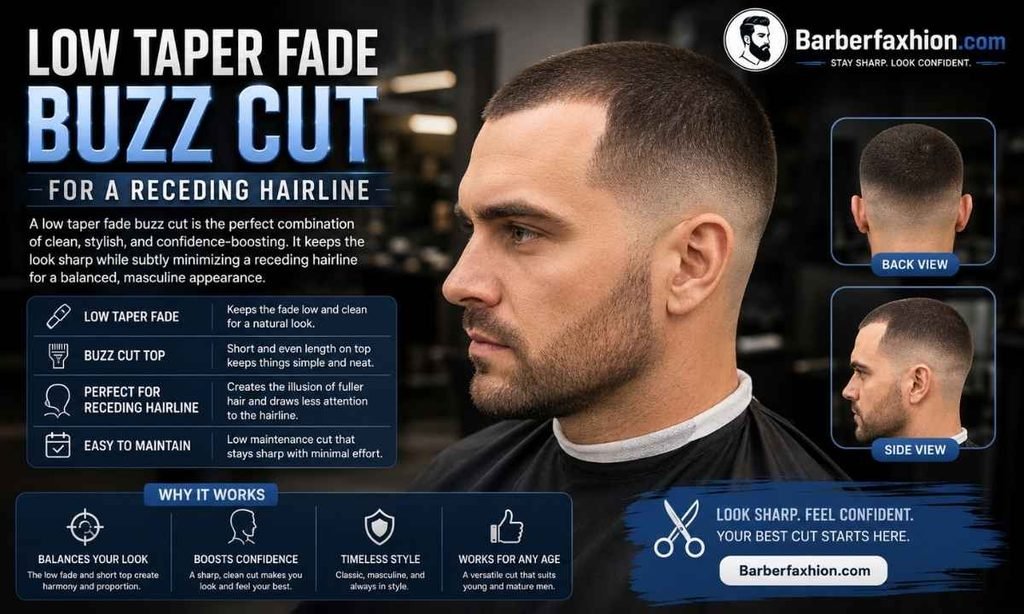
A receding hairline changes how a barber approaches the front and temples, even though the taper on the sides stays the same. Going short on top with a hard, straight line-up can actually draw more attention to a receding hairline, since a crisp edge highlights exactly where the hair stops. Many barbers soften this by rounding the corners slightly instead of squaring them off, or by skipping the razor line-up altogether in favor of a natural, blended edge.
If you’re dealing with thinning at the crown as well as the hairline, a slightly longer guard on top — a #3 or #4 instead of a #2 — helps create the illusion of fuller coverage, since longer strands can be brushed forward to soften the front edge. The low taper fade buzz cut works well here precisely because the fade itself stays low and subtle, keeping the focus off the hairline rather than framing it. Talk to your barber about where exactly your hairline sits before they start, since guessing at the front shape is a common way this cut goes wrong for guys with recession.
Line-Ups and Shape-Ups: Getting the Edges Right
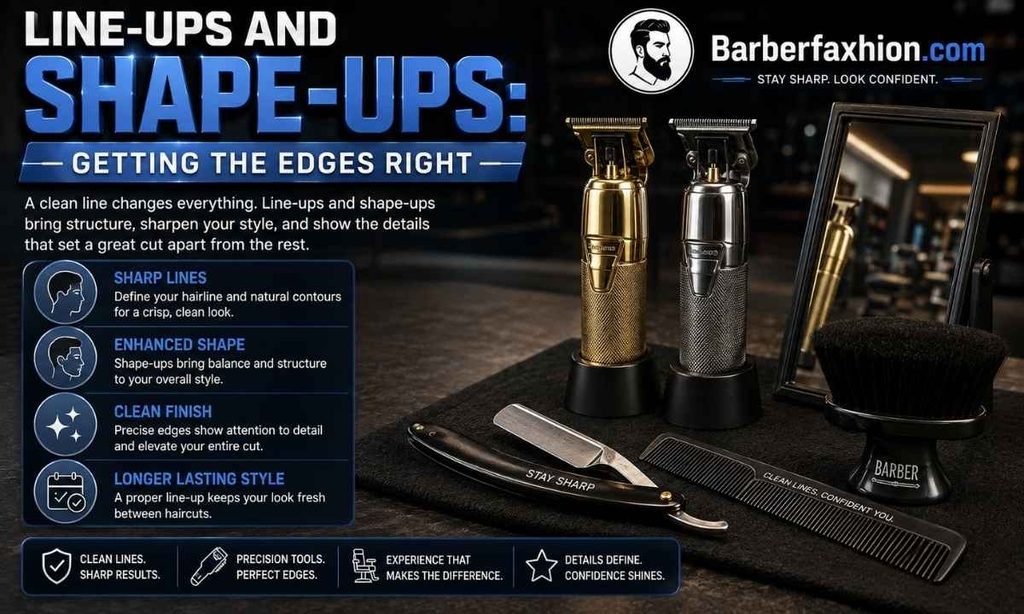
Once the fade is blended, a lot of the finished look comes down to the edges — the front hairline, temples, sideburns, and neckline. That’s where line-ups and shape-ups come in, and the two terms get used almost interchangeably even though they do slightly different jobs. A line-up sharpens the front hairline into a crisp border and squares the temple corners. A shape-up covers the whole outline — front, sides, sideburns, and the back of the neck — pulling every edge into one clean shape. Most barbers do both as a final step, switching from clippers to a straight razor or a fine T-blade for lines clippers alone can’t carve.
For a low taper, this step matters more than people expect. Since the fade itself is subtle, a crisp edge is often what gives the cut that just-left-the-shop look, and without it even a well-blended taper can look a little soft. Before a wedding or a headshot, a barber might square the corners slightly more than usual, since a camera tends to flatten subtle definition.
There’s a trade-off worth knowing. Hairlines grow back faster than fades, particularly at the temples, so a sharp line-up starts softening within a week to ten days — well before the taper itself needs attention. It’s also worth not over-shaping the same spot every single week, since repeatedly razoring the same hairline over months can, for some people, start to push the edge back over time. A softer, shadow-style shape-up is the safer long-term call if you’re in the chair often.
How to Ask Your Barber for a Low Taper Fade Buzz Cut
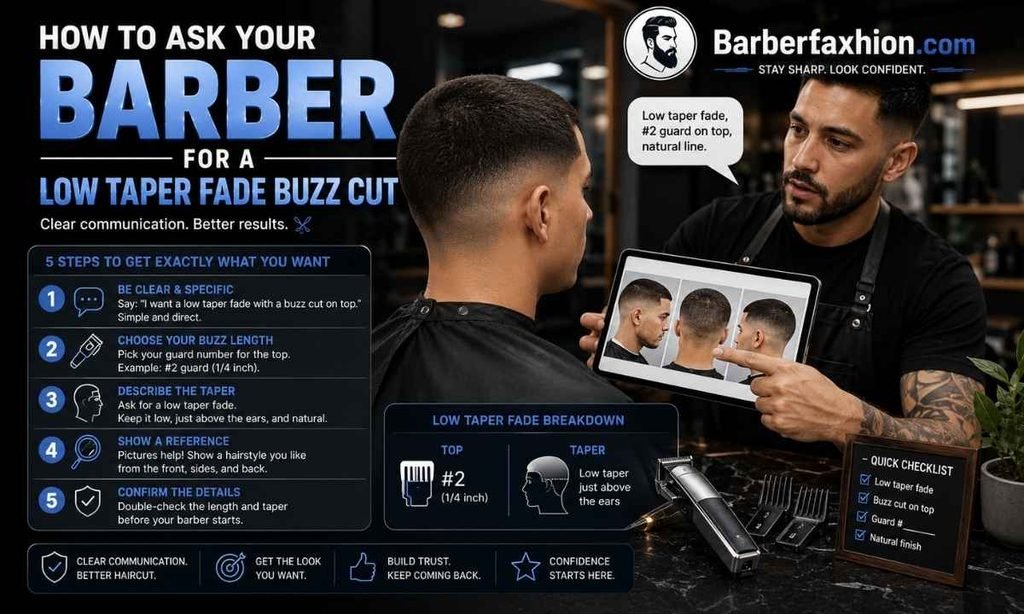
The gap between what you picture and what you get is almost always vocabulary, not skill. Barbers hear “low fade” dozens of times a week, and without more direction they default to whatever “low” meant in their own training, which varies from shop to shop.
Start with the top and give an actual guard number. “A 3 on top” is something a barber can execute exactly, while “not too short” is a guess dressed up as an instruction. Then be specific about the fade: “low taper, not a full fade” signals that you want length kept even at the shortest point, and telling them where it should begin gives them a physical reference instead of a vague concept. Say what you want at the edges too, and mention any scalp sensitivity or history of razor bumps, since that decides whether they razor the hairline or stick to trimmers.
“I’d like a 3 on top, low taper on the sides, start it just above my ear, not at the temple, and don’t take it to skin. A soft line-up at the front is fine, nothing too sharp.”
That single sentence covers length, placement, finish, and edges — more than a reference photo manages on its own, so bring both. Before you leave, check the cut from a few angles with a hand mirror near a window, since catching an uneven blend or a fade line sitting too high is far easier to fix now than the next morning.
Low Taper Fade vs Mid Taper vs Skin Fade
Most fade confusion comes from mixing up two separate decisions: where the fade starts, and how short it gets at the bottom. Low, mid, and high describe the starting position on the head. Taper and skin fade describe the finish. Separate those two decisions and the choice gets a lot simpler.
A mid taper fade starts higher than a low one, around the top of the ear instead of just above it, which creates more visible contrast between the top and sides. A skin fade isn’t really about starting height at all — it means the sides are taken all the way to bare skin at the shortest point instead of leaving a light dusting the way a taper does. That means you can have a low skin fade: one that starts low but still finishes at bare skin.
| Feature | Low taper fade | Mid taper fade | Skin fade |
| Starting point | Just above the ear or lower | Top of the ear | Varies (low, mid, or high) |
| Bottom finish | Light length kept, never bare skin | Light length kept | Cut down to bare skin |
| Contrast level | Subtle | Moderate | Sharp |
| Regrowth visibility | Gradual, forgiving | Noticeable within 2–3 weeks | Fastest to show |
| Best suited for | Office settings, low upkeep | A balance of clean and defined | Bold, high-definition looks |
Growth-out is often the deciding factor between them. A low taper never touches skin, so it blends gradually into the overall length as days pass and can go two to three weeks without looking unkempt. A skin fade loses its sharp line within a week to ten days as the shaved section grows back in. That’s why someone with regular client meetings tends to pick the low taper, while someone getting cut every ten days often prefers a skin fade for its crisp, camera-ready finish.
Common Mistakes to Avoid
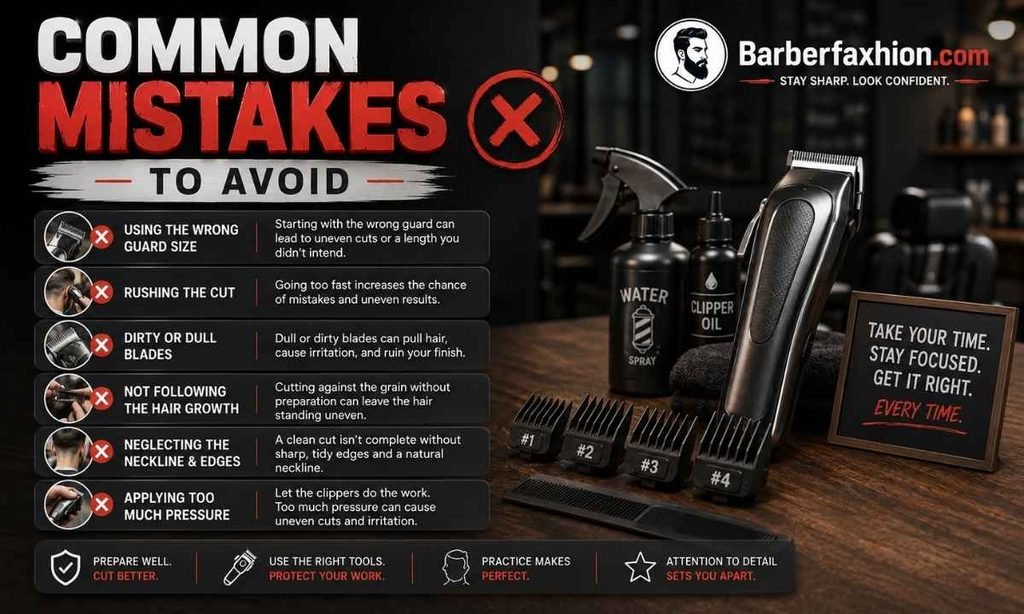
A few recurring mistakes turn an otherwise good haircut into a disappointing one, and most of them are easy to sidestep once you know to watch for them.
- Being vague with the barber. “Fade it however you want” hands over decisions you actually care about. Give a guard number and a starting point every time.
- Picking the wrong guard for your hair density. A #2 on fine hair can expose the scalp more than you’d like, while a #2 on thick hair might not remove enough bulk.
- Skipping neckline upkeep between visits. The neckline grows in fastest, and a fuzzy neckline makes even a fresh-looking top read as overdue for a cut.
- Over-razoring the same hairline every week. Repeated razor work on the same spot can wear on the hairline over time, so alternate with a softer trimmer finish when you can.
- Ignoring scalp care on short hair. More skin is exposed on a low taper fade buzz cut than on longer styles, so dryness, flaking, and sun exposure show up faster if you skip moisturizer or sunscreen.
- Going too short on a first visit with curly or coily hair. Shrinkage means the guard number you think you want often ends up shorter than expected once the curls dry.
How to Maintain a Low Taper Fade Buzz Cut at Home
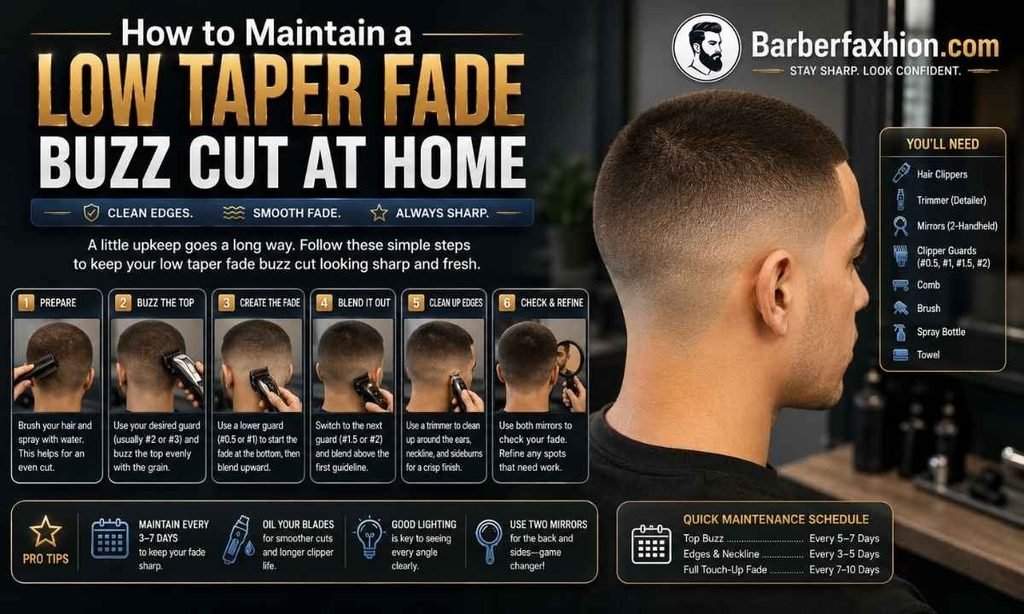
Fades grow out faster than most people expect, and the low taper is no exception, though its subtlety hides regrowth a little longer than a high fade would. Most barbers suggest a touch-up every two to three weeks, especially around the ears and neckline where hair returns first.
Step-by-Step Buzzing Technique
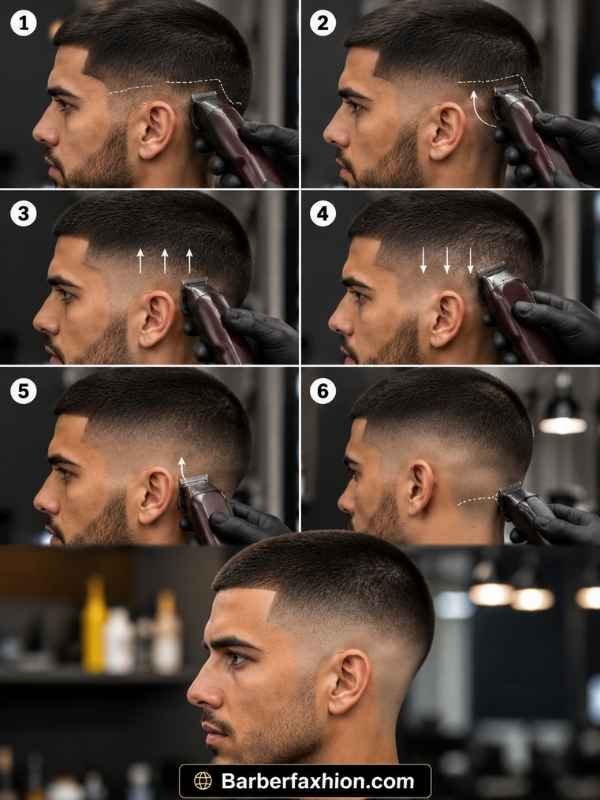
- Start on clean, fully dry hair. Wet hair clumps together and makes a guard read shorter than it will once it dries, so always buzz dry.
- Attach your usual top guard and run the clippers against the direction of hair growth in slow, overlapping sections.
- Work from the crown outward, using a handheld mirror to check sections you can’t see directly, especially the back of the head.
- Leave the tapered sides alone. Blending between guard lengths without leaving a visible line takes real practice, and a slip near the ear or nape shows far more than an uneven top ever would.
- Finish with a detail trimmer around the ears and neckline to clean up any stray hairs the clippers missed.
Tools Worth Having
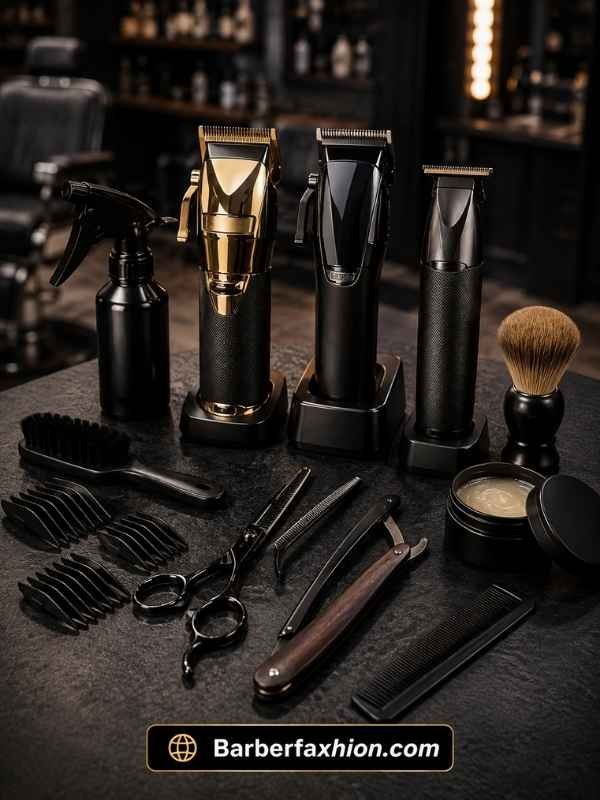
A decent clipper set with adjustable guards makes it realistic to keep the top maintained yourself between visits, especially if you run the same guard every time. Cheap clippers pull rather than cut once the blades dull, so this is one tool worth spending a bit more on. A detail trimmer handles the hairline and neckline, and a second handheld mirror makes checking the back of your head far less of a guessing game.
Scalp & Product Care
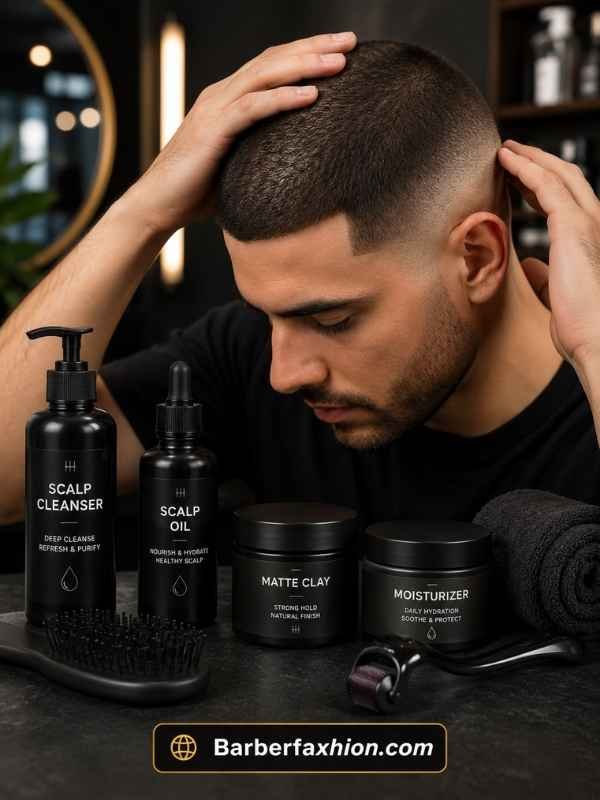
Products stay minimal on a cut this short. A little matte clay or light pomade adds texture if the top has enough length to work with, while heavier waxes and gels tend to look greasy and can clog the scalp. Scalp care matters more than most people assume, simply because so much skin is exposed. Wash regularly, use a light moisturizer or scalp oil to head off dryness and flaking, and if you get the edges razored, a gentle exfoliating scrub once or twice a week helps guard against ingrown hairs and razor bumps.
Frequently Asked Questions
What exactly is a low taper fade buzz cut?
It’s a buzzed top, usually a #2 to #4 guard, paired with sides that taper down gradually starting just above the ear rather than higher up the head. The taper keeps a little length at its shortest point instead of going to bare skin.
Is a low taper fade a buzz cut?
Not exactly — a low taper fade is a technique applied to the sides and back, while a buzz cut refers to the top being clipped to one uniform length. Together, they form the combined style covered in this guide, but a low taper fade can also pair with longer top styles that aren’t a buzz.
Which fade is best for a buzz cut?
It depends on what you want the cut to communicate. A low taper suits office settings and low-maintenance routines, a mid taper adds more visible contrast, and a skin fade gives the sharpest, most defined look but needs more frequent touch-ups.
What is a no. 1 haircut?
A “number 1” refers to a clipper guard length of about 1/8 inch (3 mm), which is one of the shortest guard sizes available before going to bare skin. It’s often used at the bottom of a fade or for an all-over ultra-short buzz.
How often does it need a touch-up?
Every two to three weeks keeps the blend sharp. Past that, the fade tends to grow into a more uniform length and gradually loses its shape.
Can I get a low taper fade with curly or coily hair?
Yes, and it often looks better than a skin fade on curly textures, since the retained length hides shrinkage and avoids a hard line against the curl pattern.
Is it appropriate for a professional office job?
It’s one of the most workplace-friendly fades available. The subtle blend and low contrast read as clean-cut rather than trend-chasing, which is a big part of why it’s such a popular request.
What guard number should I ask for on top?
A #3 is the most common starting point. Thinner hair often looks fuller at a #4, and thicker hair holds up well at a #2.
Is a buzz cut haram in Islam?
Islamic scholars hold differing views on this, and there isn’t one single ruling that applies universally across schools of thought. Some scholars permit short haircuts including buzz cuts, while others discourage certain styles based on specific hadith interpretations, so it’s worth asking a trusted local scholar if this matters to your practice.
Conclusion
A low taper fade buzz cut works because it solves one specific problem: looking deliberately groomed without constant upkeep or drawing attention for the wrong reasons. Where the taper starts, which guard sits on top, your hair type, and your face shape are the details that separate a forgettable cut from one that actually suits you.
The best version of this haircut is the one built around your hair, your face, and how much time you’ll realistically spend on it. Walk into your next appointment with the vocabulary — guard number, fade placement, and finish preference — and you’re in a far better spot than a photo alone.