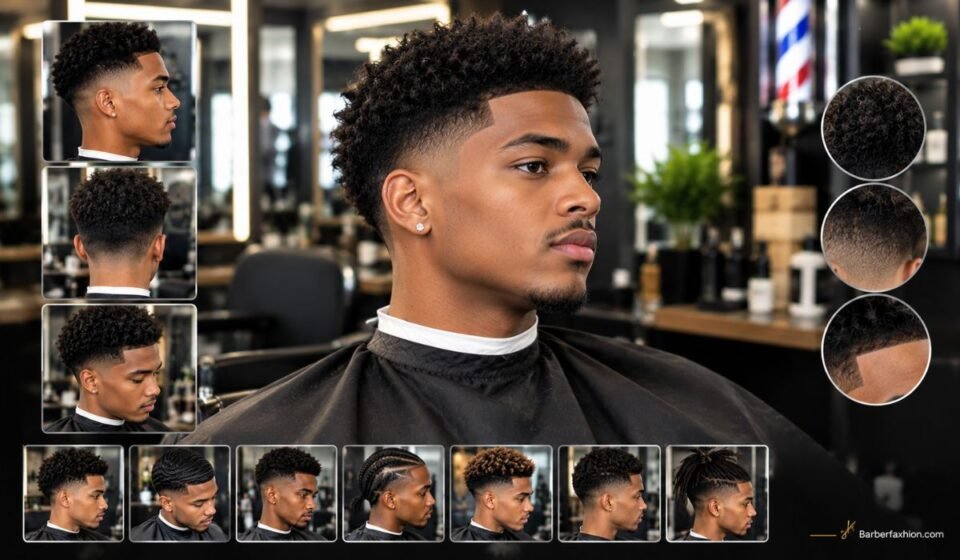

You know that feeling when you have a good haircut in mind, but you’re not quite sure how to explain it to your barber? You want the sides clean without losing too much hair, and you still want your natural texture to stand out. That’s where a mid taper can make a big difference.
A mid taper fade black male haircut gives you plenty of room to customize the top while keeping the temples, sideburns, and neckline neat. In this guide, you’ll find 15+ hairstyle ideas along with options for curls, waves, afros, twists, locs, long hair, beards, different face shapes, styling routines, and simple ways to explain exactly what you want at the barbershop.
Quick Answer: A mid taper fade keeps the hair gradually shorter around the temples and neckline while leaving more of the sides and top intact than a traditional mid fade. It works particularly well with waves, curls, coils, afros, twists, locs, braids, and short textured styles because you can customize the top without sacrificing its natural character.
What Is a Mid Taper Fade for Black Men?
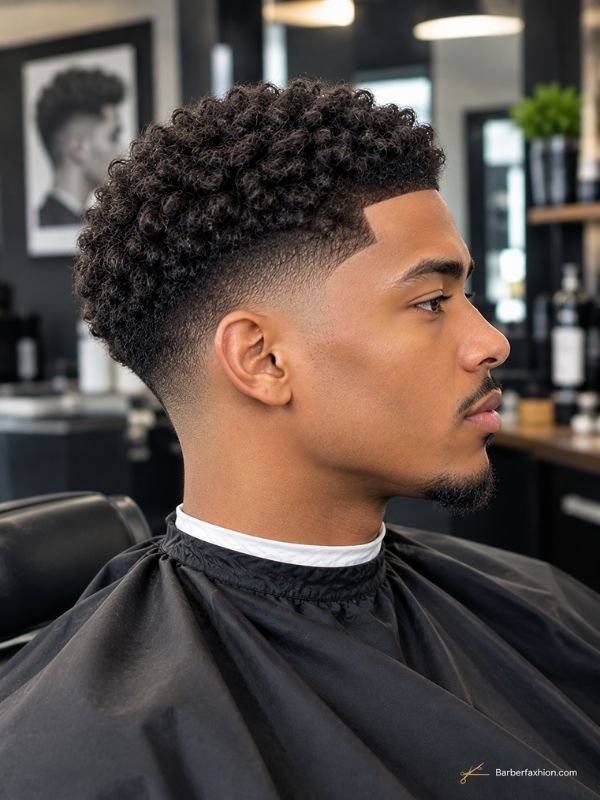
A mid taper fade gradually reduces the hair around the temple area, sideburns, and neckline. The transition usually sits around the middle of the sides rather than starting extremely low or extending very high toward the top of the head.
The main attraction is balance. You get a cleaner outline around the areas that grow out quickly while keeping enough hair on top and around the sides for your chosen hairstyle. That makes the cut flexible for everything from 360 waves to a full afro.
For Black men’s hair, the taper can work with tightly coiled, curly, wavy, or even straighter textures. The finished look depends less on having one particular curl pattern and more on how the barber blends the taper with your natural growth pattern.
A good taper should also follow your head shape instead of looking like a disconnected patch of short hair. Your temple shape, hairline, density, and desired top length all influence how the final haircut looks.
How a Mid Taper Fade Differs From a Mid Fade
The names sound similar, so it’s easy to confuse them. A mid taper focuses the shortening around specific areas such as the temples, sideburns, and neckline. A mid fade generally removes and blends more of the hair along the sides and back.
Think of it this way: a taper cleans up selected edges while preserving more of your overall shape. A fade creates a more extensive transition from shorter hair into longer hair.
This distinction matters when you’re showing your barber a reference photo. If you want to keep a large afro, long curls, waves, or locs around the sides, asking for a taper rather than a broader fade can help preserve more of that volume.
Of course, barbers use terminology somewhat differently. That’s why showing a photo and explaining how high or low you want the transition is often more reliable than relying on the haircut name alone.
Where the Taper Sits on the Head
A mid taper generally sits between a low taper and a high taper. The transition begins higher than a low taper but doesn’t climb as far up the sides as a high taper.
This middle position creates a noticeable clean-up without completely changing the silhouette of your hairstyle. It’s especially useful when you want the taper to be visible from the front while still keeping plenty of natural hair around the upper sides.
Your barber should also consider how your hair grows around the temples. One side may grow differently from the other, and a perfectly symmetrical reference photo may not translate exactly to your head.
Skin Taper vs Shadow Taper
A skin taper brings the shortest area down very close to the skin. It creates a sharper contrast and can make the temple and neckline look extremely clean.
A shadow taper leaves a small amount of hair in the shortest section. The transition looks softer and often grows out more gradually.
Neither option is automatically better. A skin taper suits someone who enjoys a crisp, high-contrast finish, while a shadow taper can work well if you prefer a more subtle transition.
If you’re unsure, ask your barber to show you the difference before the clippers go in. A small change in the shortest length can noticeably change the character of the haircut.
15+ Best Mid Taper Fade Hairstyles for Black Men
There isn’t one correct way to wear a taper. Your top can completely change the personality of the cut, even when the taper itself stays similar.
The following styles cover natural textures, protective styles, short cuts, longer looks, and beard combinations. Use them as inspiration rather than strict rules.
1.Mid Taper Fade With 360 Waves
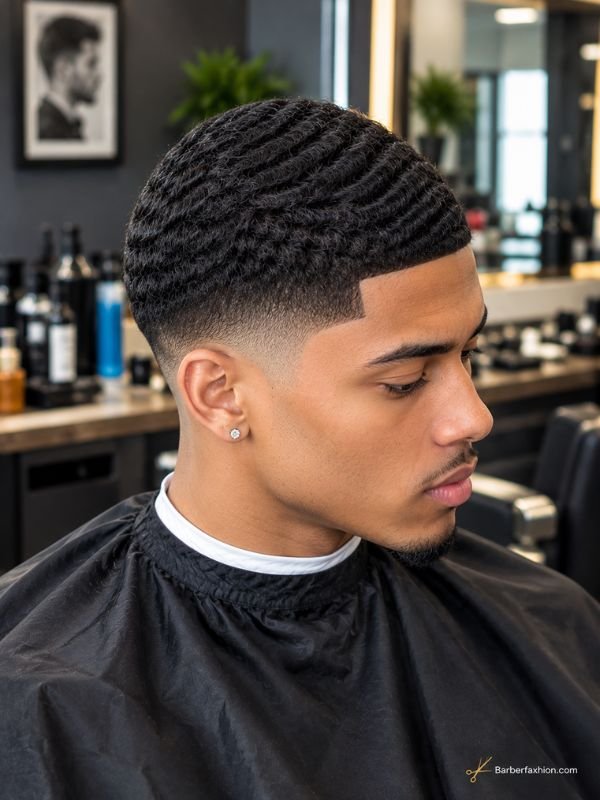
360 waves are one of the most recognizable combinations with a taper. The wave pattern creates movement across the top and sides while the taper keeps the temple and neckline looking sharp.
This style works particularly well if you already have a consistent wave routine. Brushing direction, hair length, moisture, and compression all affect the final pattern.
For a cleaner result, ask your barber to preserve enough length for your wave pattern. Taking too much off the top can interrupt the pattern you’re trying to build.
Best for: Wavy or tightly textured hair
Maintenance: High
Styling: Regular brushing and wave care
A useful barber request is: “Keep my wave pattern intact and give me a medium taper around the temples and neckline.” That gives the barber two important pieces of information instead of simply naming the haircut.
2. Mid Taper Fade With Short Curls
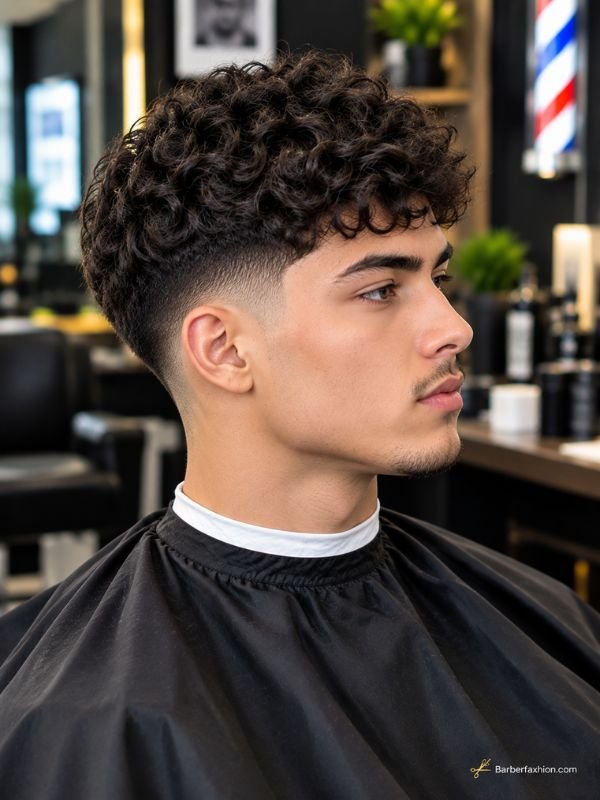
Short curls create a relaxed, textured appearance while the taper gives the edges more definition. This is a good choice if you want your natural curls to remain the main feature.
The top can be kept relatively short or left slightly longer for more curl definition. Your barber can shape the perimeter without flattening the natural texture.
For daily styling, a small amount of curl cream or leave-in conditioner can help keep the curls defined. Avoid piling on heavy product because it can make tightly packed curls look greasy or weighed down.
Best for: Curly and coily textures
Maintenance: Medium
Styling: Curl definition with light products
This is also a useful option for someone who wants a mid taper fade black male style that doesn’t require an elaborate daily routine.
3. Afro Mid Taper Fade
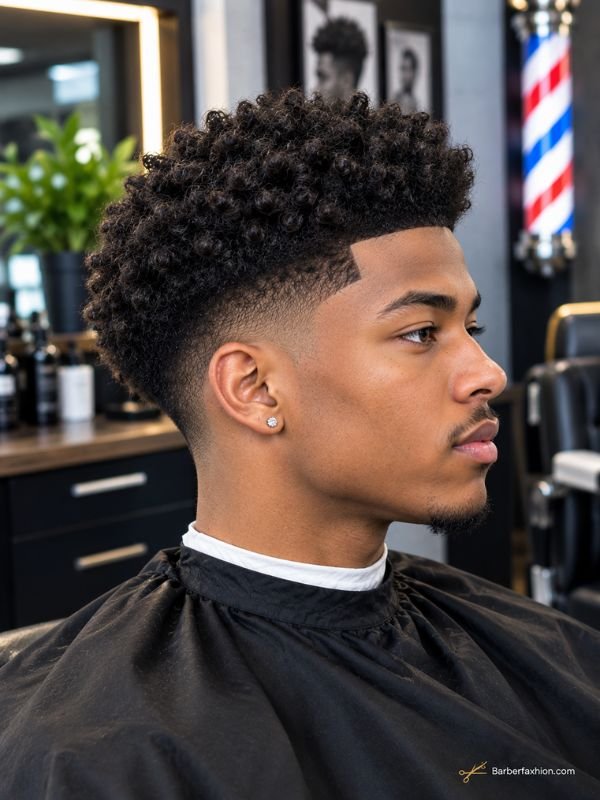
An afro paired with a taper creates a strong contrast between natural volume and clean edges. The taper removes some bulk around the temples and neckline while allowing the afro to keep its shape.
The amount of volume you keep is completely customizable. A compact afro gives a more controlled appearance, while a larger afro creates a bolder silhouette.
Don’t ask your barber to copy the exact shape of someone else’s afro without considering your own density. Your hair may grow differently, and shrinkage can make the same measured length look much shorter.
Best for: Coily and tightly textured hair
Maintenance: Medium
Styling: Moisturizing and shape maintenance
4. Mid Taper Fade With a Mini Afro
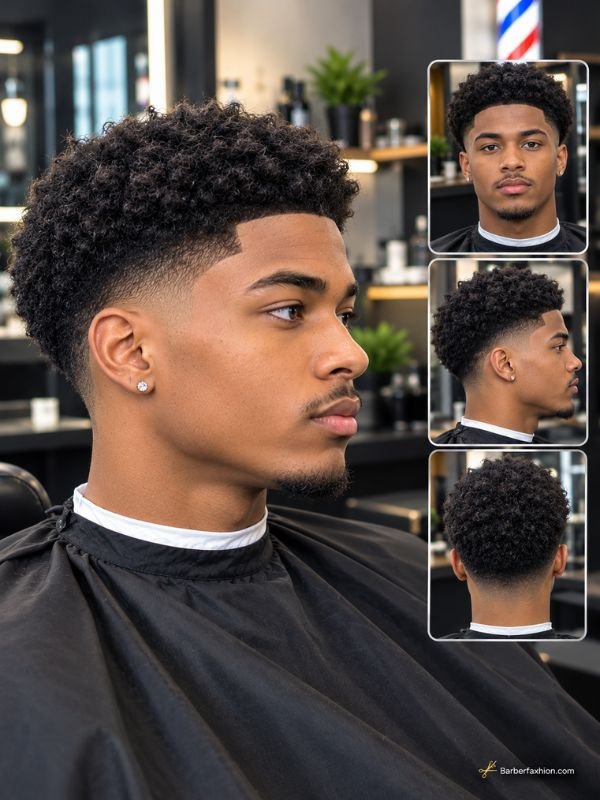
A mini afro is a practical middle ground between very short hair and a larger natural shape. Adding a taper around the temples gives it a cleaner outline without removing the character of the natural texture.
This option works well when you want a relatively low-maintenance haircut but don’t want a buzz cut. You can also pair it with a line-up if you prefer a sharper forehead and temple area.
Keep in mind that a line-up changes the appearance of the hairline. If you’re growing your natural hair out, tell your barber how much of the original hairline you want preserved.
5. Mid Taper Fade With Sponge Curls
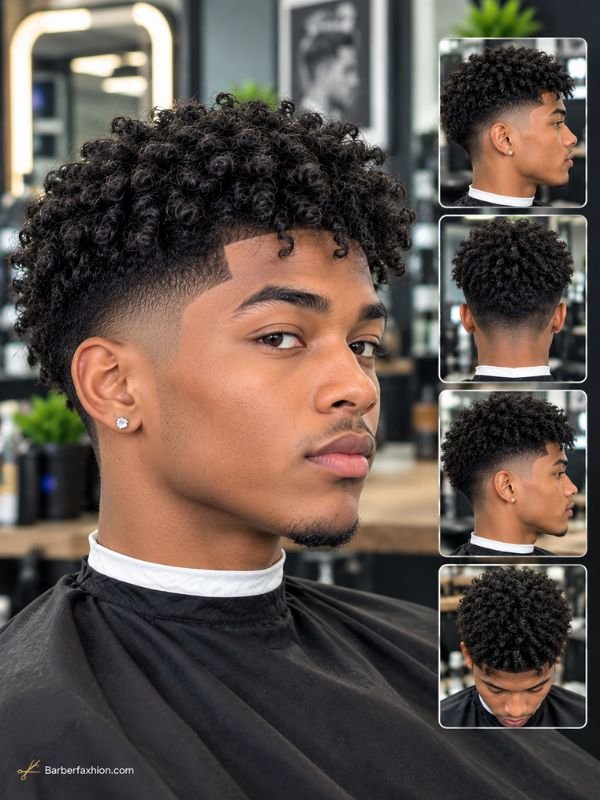
Sponge curls create small, defined twists or curls across the top. The textured finish contrasts nicely with a neat taper.
The technique works best when your hair has enough length to catch in the sponge. If the top is too short, you may get less definition and more of a fuzzy texture.
Use a damp or lightly moisturized base before styling. Work the sponge gently in a consistent direction rather than aggressively rubbing the hair, especially if your scalp or hair is prone to dryness.
Best for: Coily and curly hair
Maintenance: Medium
Styling: Sponge plus moisturizer or curl product
6. Mid Taper Fade With Finger Coils
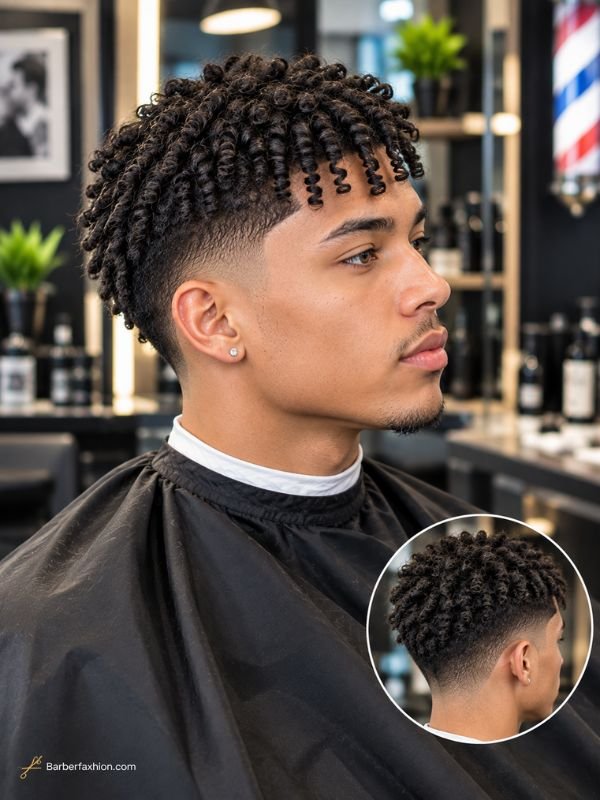
Finger coils offer a more deliberate version of natural curl definition. Individual sections are twisted around the fingers to create a consistent pattern.
A taper gives the style a polished perimeter while the coils provide texture on top. The result can look especially good when the top is long enough to show the individual coil shapes.
This style takes more time than a simple short haircut, so consider your routine before choosing it. If you like defined texture but don’t want to style every day, you may prefer a slightly less structured curl pattern.
7. Mid Taper Fade With Two-Strand Twists
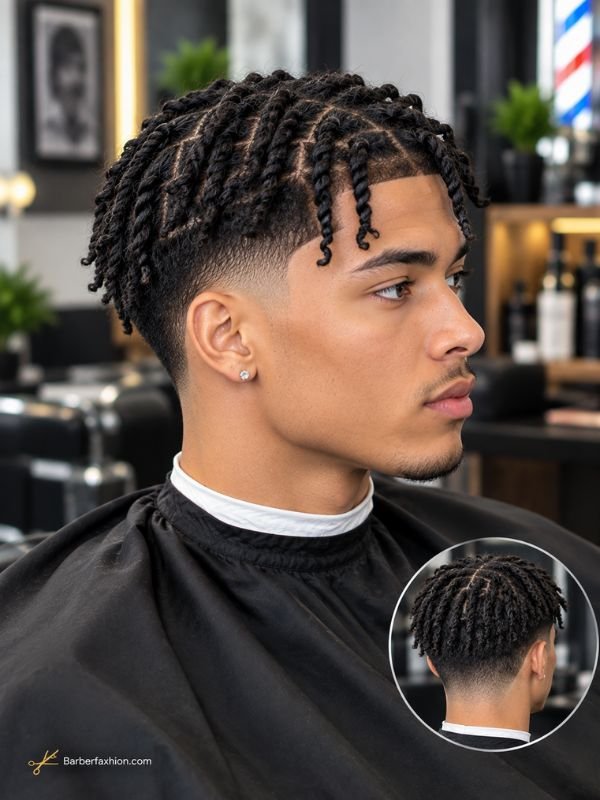
Two-strand twists bring length and texture into the haircut without requiring the entire head to remain the same length.
The taper can be kept relatively subtle around the temples so the twists remain the focus. Shorter twists create a neat everyday appearance, while longer twists produce more movement.
If you’re getting twists professionally, communicate whether you want the taper refreshed before or after the twists are installed. Your barber and stylist may need to coordinate the timing.
Best for: Medium-length natural hair
Maintenance: Medium to high
Styling: Low after installation, depending on the twist style
8. Mid Taper Fade With a Twist-Out
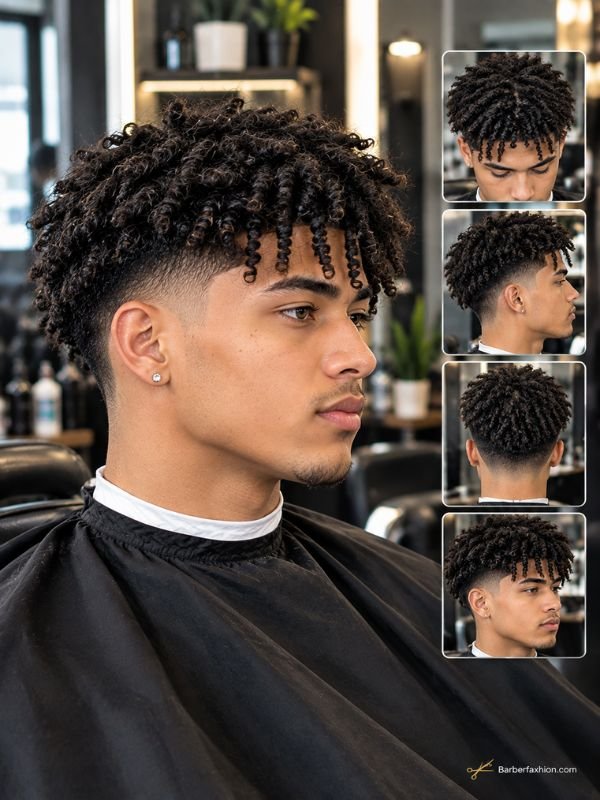
A twist-out gives you a fuller, softer textured appearance after taking down two-strand twists. The resulting curls can make the top look considerably larger than the same hair length when stretched.
That makes shrinkage especially important. Tell your barber whether you normally wear your hair stretched or in its natural shrunken state.
A moderate taper works nicely here because it cleans up the perimeter without taking away the volume that gives the twist-out its character.
9. Mid Taper Fade With Locs
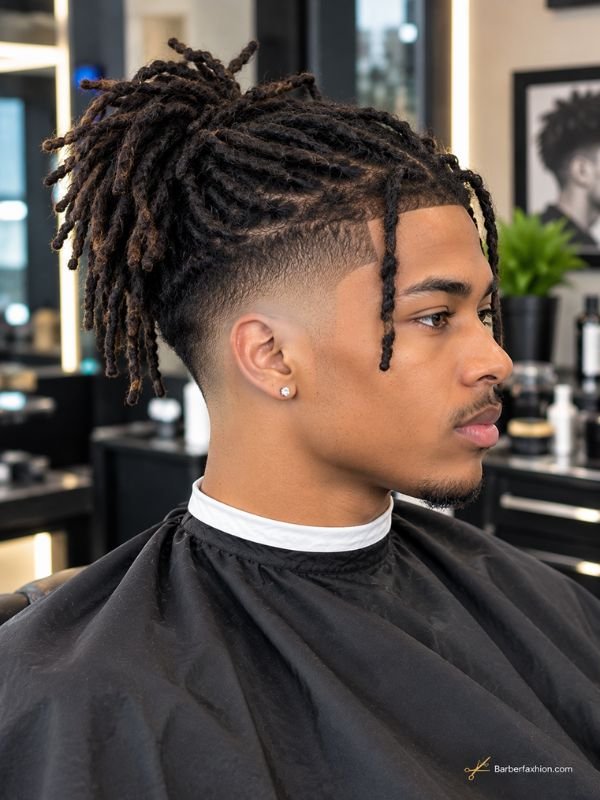
Locs and a taper can create a strong contrast between length and clean edges. The locs provide visual weight on top and around the sides while the taper keeps the temples and neckline controlled.
Short locs work particularly well when you want a compact hairstyle. Longer locs can be combined with a taper when you want to preserve length and still have a clean perimeter.
Tell your barber how your locs are usually worn. Pulling them back, leaving them loose, or styling them upward can change where the taper needs to sit.
10. Mid Taper Fade With Freeform Locs
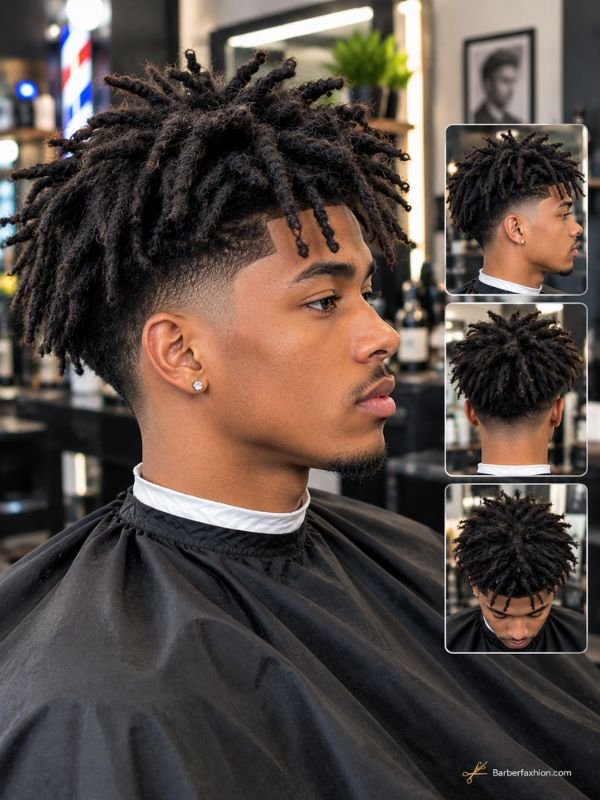
Freeform locs have a less uniform appearance than traditionally maintained locs. That natural irregularity can look great alongside a clean taper because the haircut creates structure around an otherwise organic top.
The key is not to make the taper too aggressive. Removing too much hair around the temples can create a visual contrast that overwhelms the freeform texture.
If you want a natural appearance, ask for a softer taper and a clean neckline rather than an extremely sharp transition.
11. Mid Taper Fade With Cornrows
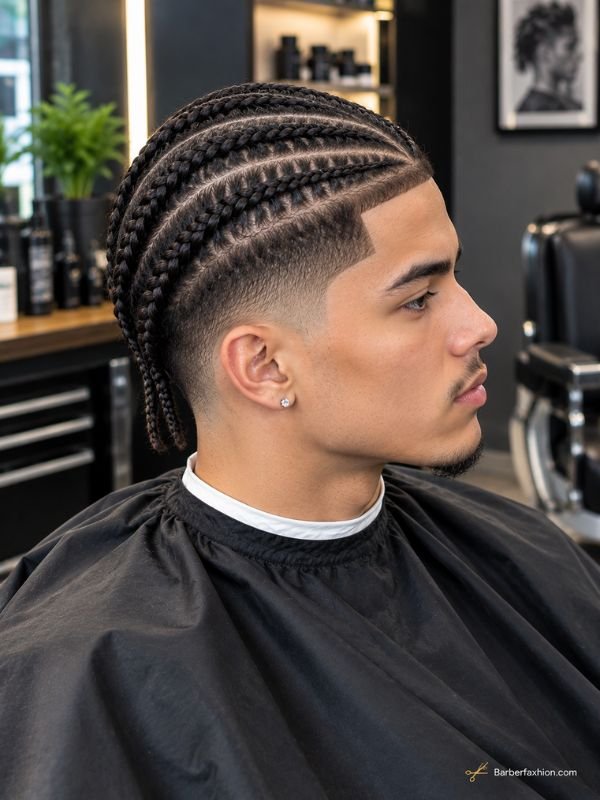
Cornrows create a defined pattern while the taper cleans up the exposed edges. This combination can look neat from every angle when the braid layout and taper are planned together.
The taper doesn’t need to be extremely short. A subtle transition can provide enough contrast without competing with the braid pattern.
Before getting cornrows, make sure the braiding style leaves enough room around the area where your taper sits. Your barber or braider can help coordinate the design.
12. Mid Taper Fade With a Buzz Cut
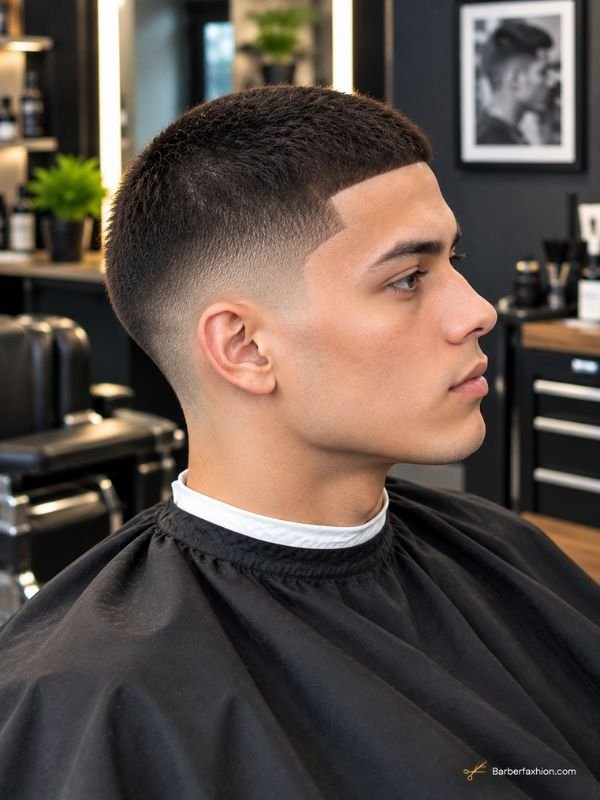
A buzz cut keeps things simple. The hair is cut close and relatively uniform while the taper adds extra definition around the temples and neckline.
This is one of the easiest options for someone who doesn’t want to spend much time styling their hair. The main maintenance issue is growth: because the overall hair is short, even a little growth can change the clean appearance quickly.
A natural line-up can make the cut sharper, but don’t feel pressured to create an extremely straight hairline if you prefer a softer look.
13. Mid Taper Fade With a Caesar Cut
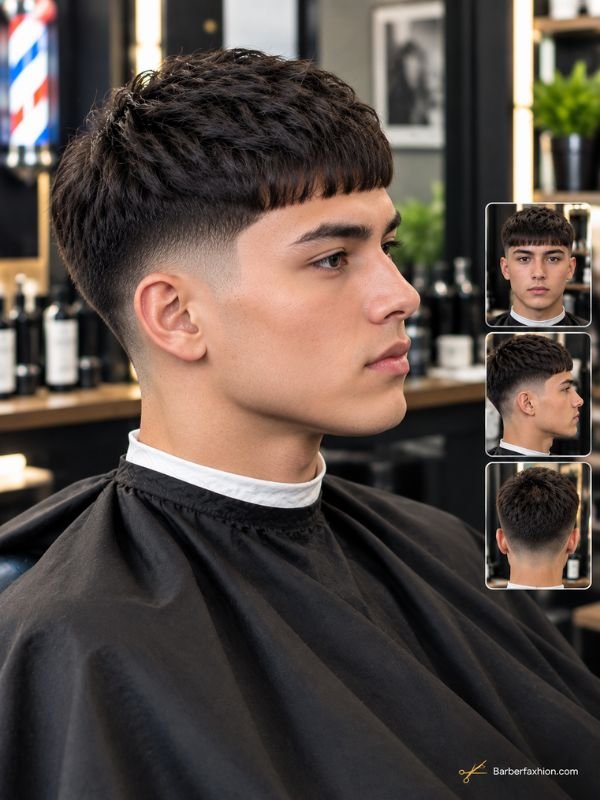
A Caesar keeps the top short with a forward direction and a compact fringe. Adding a taper around the temples and neckline gives the short style more structure.
This can work particularly well for someone who wants texture without managing a long top. Your natural curl or coil pattern can add subtle detail to the cropped surface.
Ask your barber how much length they recommend for your particular texture. Very tight curls can appear shorter after drying because of shrinkage.
14. Mid Taper Fade With a High Top
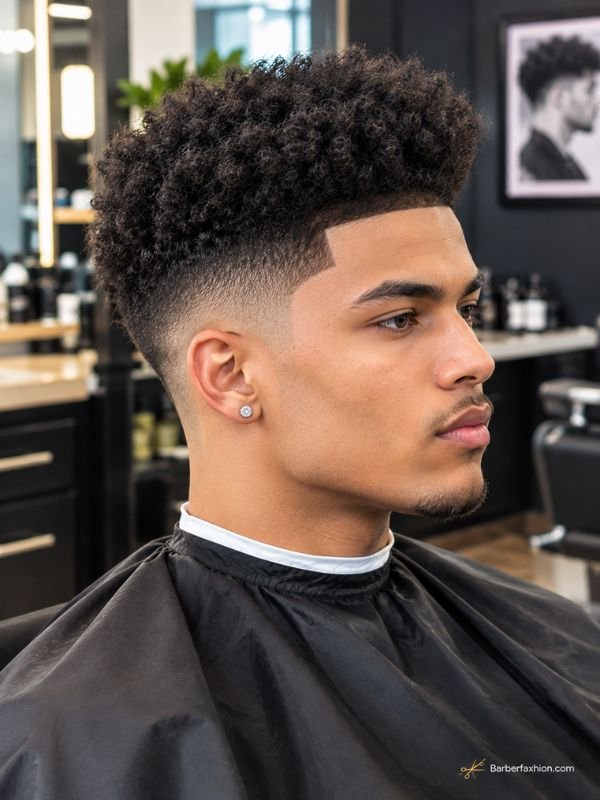
A high top creates height and makes the shape of the haircut the main attraction. A taper can keep the lower perimeter clean while the top remains noticeably taller.
This style requires more attention to shape than a short cut. If the top starts growing unevenly, the silhouette can change quickly.
Tell your barber whether you want a rounded, squared, or more natural high-top shape. That one detail can dramatically affect the final result.
15. Mid Taper Fade With a Curly Fringe
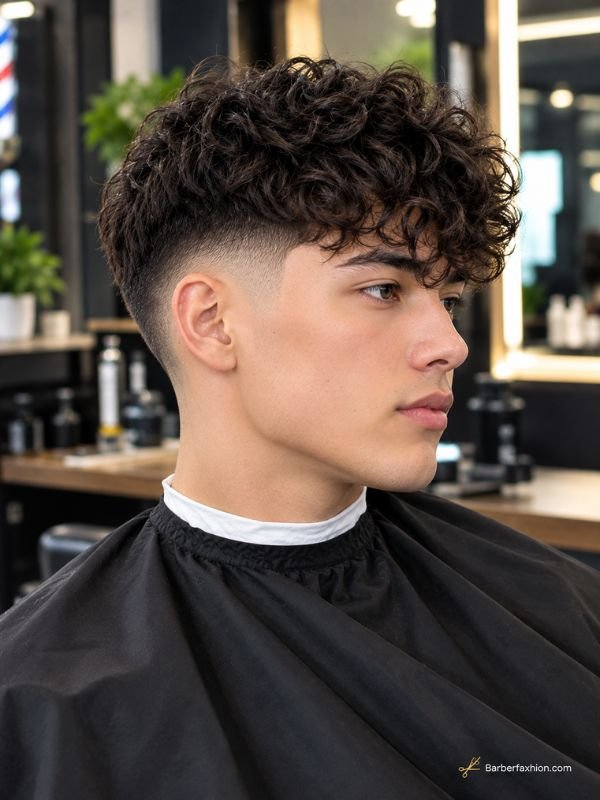
A curly fringe lets the curls fall forward rather than standing vertically. The taper provides a clean transition around the sides while the front remains textured.
This style is especially useful if you like a softer, more casual look. You can leave the curls naturally defined or use a light styling product to separate them.
Don’t make the fringe too short if you want visible curls. Remember that curly hair often appears significantly shorter when it dries.
16. Mid Taper Fade With a Blowout
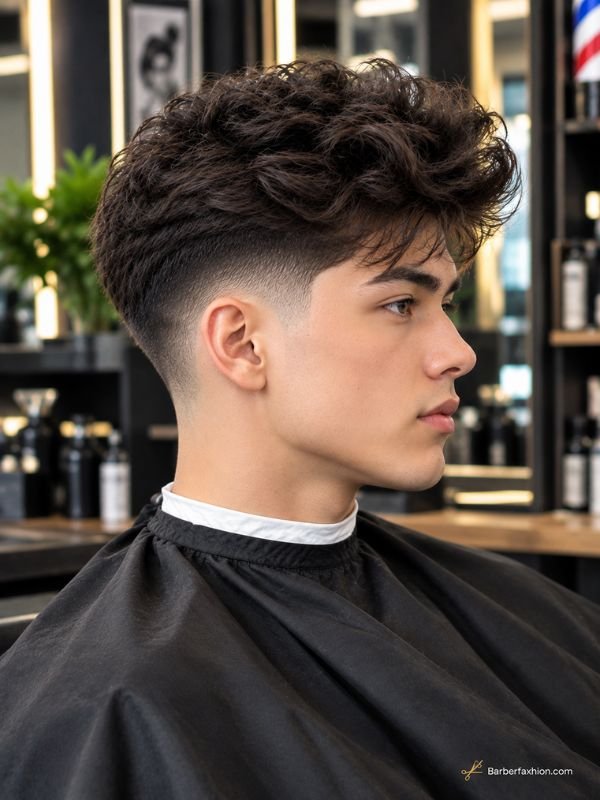
A blowout keeps volume around the top and sides while the taper provides cleaner edges. It can work with naturally curly or coily hair and can be shaped according to the amount of volume you want.
The key is controlling the silhouette. Too much bulk around the sides can hide the taper, while taking away too much can make the style lose its fuller character.
Ask your barber to preserve the volume you actually want to wear rather than simply matching the length of a reference photo.
17. Mid Taper Fade With a Beard
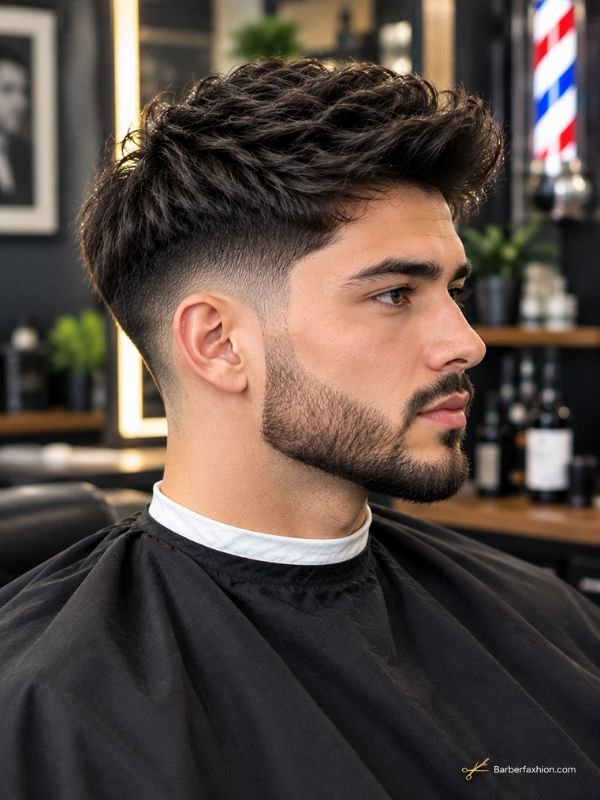
A beard can connect the haircut and facial hair into one continuous shape. The taper around the sideburn area gives your barber a transition point between the haircut and beard.
A short beard works with almost any variation. A fuller beard can create a stronger lower-half frame around the face.
If you want the beard blended into the taper, say so clearly. A disconnected beard and a blended beard create noticeably different results.
For a balanced mid taper fade black male look, ask for the beard transition to match the softness or sharpness of the taper rather than treating the beard as a completely separate haircut.
18. Mid Taper Fade With a Hair Design
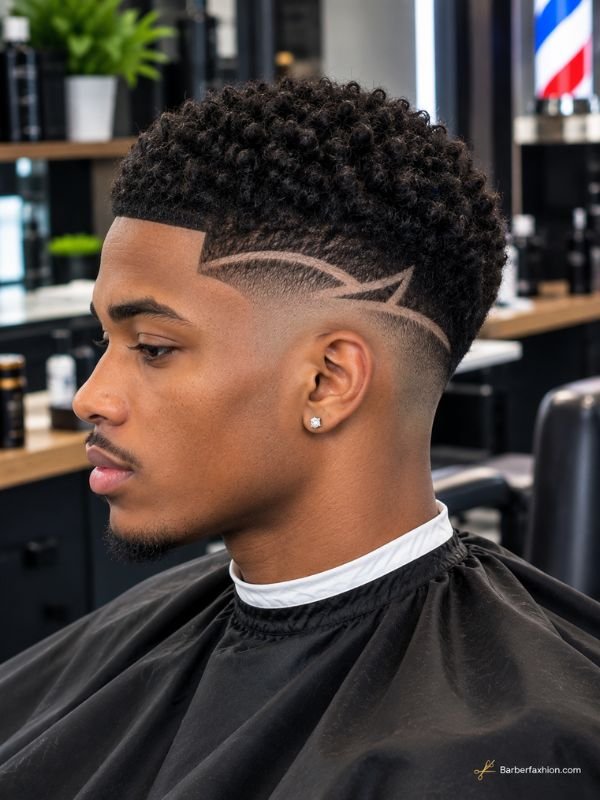
A small design around the temple can personalize an otherwise classic taper. Lines, curves, geometric details, and simple patterns can all work.
Keep the design proportional to the haircut. A complicated design can compete with an already detailed hairstyle such as waves, twists, or braids.
If you’re getting a design for the first time, start with something simple. It can be easier to maintain and less distracting as the hair grows.
Mid Taper Fade for Different Hair Types and Lengths
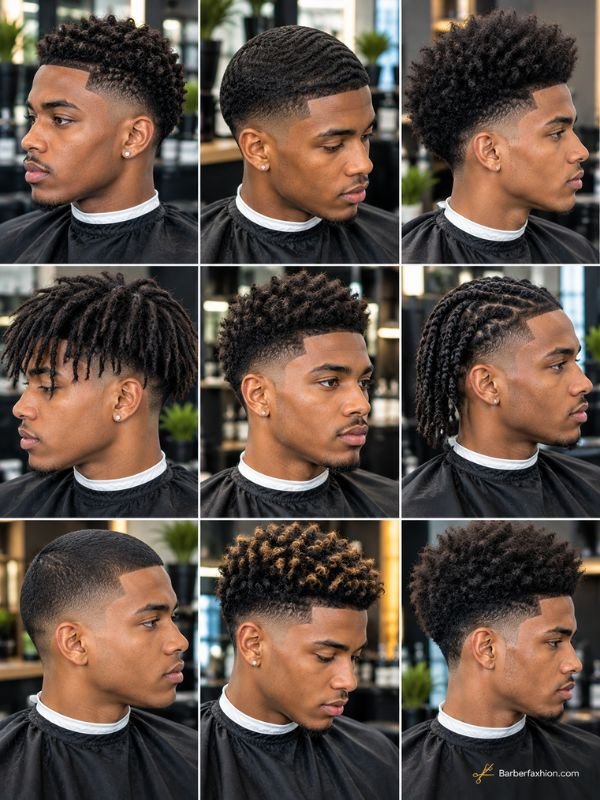
Your hair texture affects how a taper looks, but it doesn’t automatically determine which haircut you can wear. Density, shrinkage, length, growth direction, and styling habits matter too.
A good barber works with those characteristics rather than trying to force your hair to behave like someone else’s.
Mid Taper Fade for 3C and Curly Hair
3C-type curls can create clearly defined ringlets with plenty of texture. A taper can make those curls look more prominent by reducing the surrounding bulk.
A shorter top gives you a neat, controlled finish. Keeping more length allows larger curls and more movement.
Moisture is important because dry curls can lose definition and become harder to shape. A leave-in conditioner or lightweight curl product can help, depending on your hair’s needs.
Mid Taper Fade for 4A Hair
4A hair typically forms tight coils that can create excellent definition when properly moisturized. A taper can sharpen the edges while allowing those coils to remain visible.
The top length is important. A very short cut gives a compact texture, while a longer top gives you more styling possibilities such as sponge curls, coils, or twists.
Don’t judge the required length only when your hair is wet. Once it dries, shrinkage can make it look considerably shorter.
Mid Taper Fade for 4B Hair
4B hair has a tighter, less uniform pattern that can produce a dense textured appearance. The taper can provide contrast around the temples and neckline.
A short natural top is easy to manage, while a longer top can support twists, sponge styling, or a fuller natural shape.
Because density can vary across the head, tell your barber if certain areas are thinner or grow differently. A good taper should work with those differences rather than exposing them unnecessarily.
Mid Taper Fade for 4C Hair
4C hair can have significant shrinkage and a tightly coiled appearance. A taper works well when the barber understands how the hair behaves both in its natural and stretched states.
For a short haircut, a clean taper can create a crisp frame around the natural texture. With more length, you can experiment with afros, twists, coils, sponge curls, and other styles.
Moisture and gentle handling matter for your everyday routine. Avoid treating a tight coil pattern as if it needs the same products or brushing technique as loose curls.
Mid Taper Fade for Straight Hair
Although natural Black hair is often discussed in terms of curls and coils, some Black men have straight or straighter hair textures. A taper can still work because the haircut depends on placement and blending rather than ethnicity alone.
Straight hair may show the transition differently because individual strands don’t form the same curl pattern. The top can be worn textured, slicked back, parted, or kept short.
If your hair is straight but thick, ask your barber to account for the extra density when creating the blend.
Mid Taper Fade for Long Hair
Long hair gives you more freedom on top. You can wear curls, twists, locs, braids, or simply keep the length loose while using the taper to clean up the perimeter.
The main decision is how much hair you want removed around the temples. A narrow taper preserves more of your original silhouette, while a stronger taper creates greater contrast.
If you’re growing your hair, tell your barber. A haircut designed for someone maintaining a short style may remove more length than you actually want.
Mid Taper Fade for Thick Hair
Thick hair can make a taper look bold because the contrast between the shortened edges and fuller top is more obvious.
The barber may need to manage bulk rather than simply removing length. Your desired hairstyle should determine where that bulk is reduced.
For example, someone wearing waves may want a different top length from someone maintaining a rounded afro. Don’t assume “thick hair” automatically means “cut it shorter.”
Mid Taper Fade for Fine or Thinner Hair
A taper can still work with fine or thinner hair, but placement becomes more important. Removing too much hair from an already sparse area can make the difference more noticeable.
A softer taper may be preferable if you want to maintain the appearance of density around the temples. The top can also be shaped to create a fuller visual effect.
Tell your barber which areas you’re trying to preserve. This is especially important around the temples and front hairline.
Which Face Shapes Suit a Mid Taper Fade?
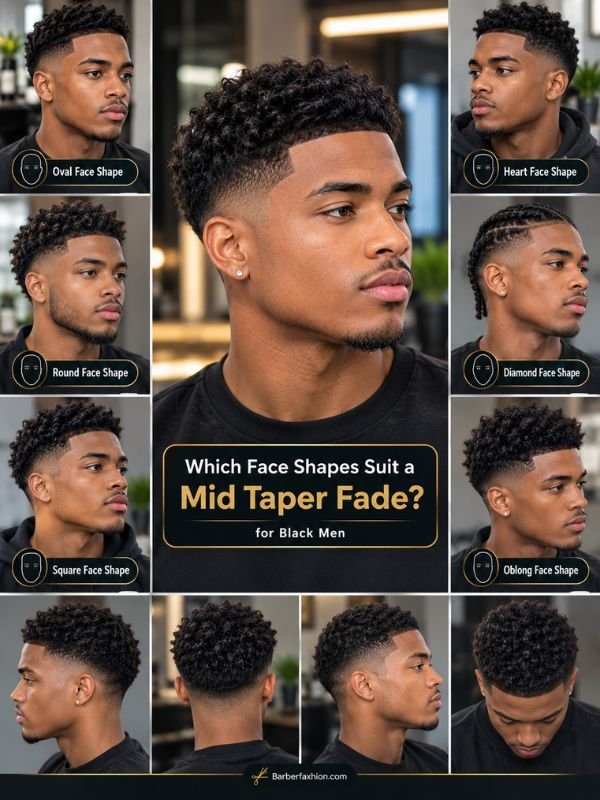
Face shape can help guide your haircut, but it shouldn’t be treated as a strict rulebook. Hair texture, personal style, beard shape, and head proportions can change the result.
The goal is balance. You want the haircut to work with your natural proportions rather than trying to completely disguise them.
Mid Taper Fade for Round Faces
Round faces often benefit from some visual height on top. A curly top, high top, textured crop, or controlled afro can add vertical emphasis.
Avoid assuming that you must remove all side volume. A moderate taper can clean up the sides without making the face appear unnecessarily wider or narrower.
A beard can also change the overall facial outline. If you have a fuller beard, consider how its shape interacts with the haircut.
Mid Taper Fade for Oval Faces
Oval faces are relatively flexible because their proportions allow many different hairstyles to work.
You can experiment with waves, curls, afros, short crops, twists, or longer styles. The taper height can be selected mainly according to your preferred appearance and hair growth pattern.
This is a good situation for using your hairstyle choice rather than face shape as the primary deciding factor.
Mid Taper Fade for Square Faces
Square faces have a stronger jawline and broader facial structure. Structured hairstyles can complement that appearance.
A Caesar, buzz cut, short curls, waves, or textured top can all create a clean result. If you have a beard, keeping its shape intentional can reinforce the overall structure.
Mid Taper Fade for Oblong Faces
For longer face shapes, excessive height isn’t always necessary. A moderate amount of top volume can create a more balanced appearance.
Curly fringes, textured crops, waves, and controlled natural styles can work well when the top isn’t pushed dramatically upward.
The beard can also add visual width to the lower portion of the face if that’s part of your preferred look.
Mid Taper Fade for Diamond and Heart-Shaped Faces
Diamond and heart-shaped faces often have more noticeable differences between the forehead, cheekbones, and jaw.
A taper gives you room to experiment with top volume without creating a heavy block of hair around the sides. Curls, textured tops, twists, and moderate afros can all be adapted.
Rather than following a rigid “best haircut” rule, ask your barber to assess your actual proportions and hair growth pattern.
Mid Taper Fade vs Low and High Taper Fades
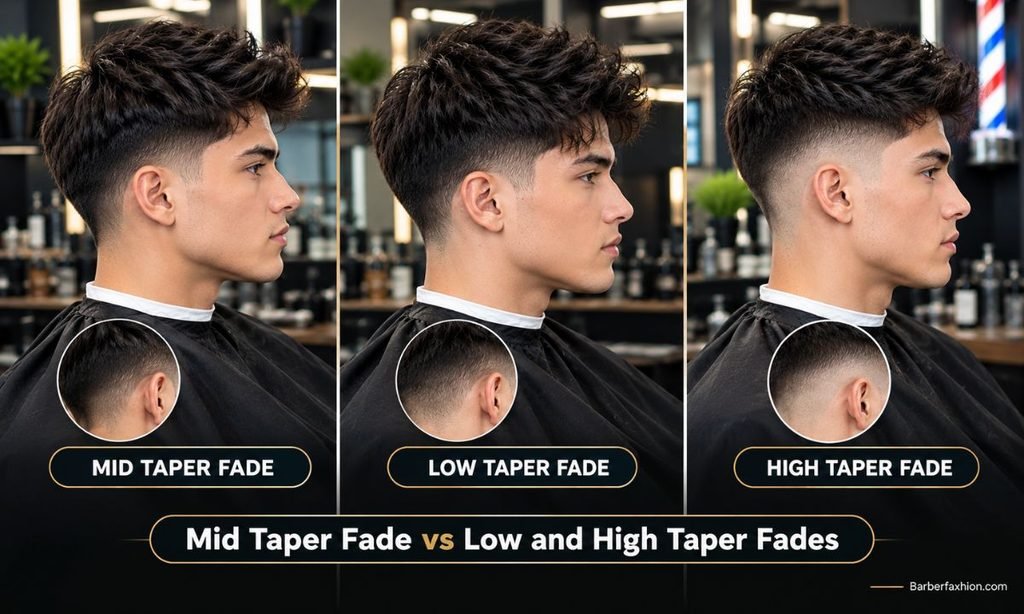
Low, mid, and high tapers are mainly different in where the transition begins and how much visual area it affects.
The right choice depends on how much of your natural side profile you want to preserve.
Mid Taper Fade vs Low Taper Fade
A low taper keeps the transition closer to the bottom of the sideburns and neckline. It tends to preserve more of the side area.
A mid taper moves that transition higher. It becomes more visible from the front and side while still preserving more of the overall hairstyle than a broad fade.
If you want your afro, curls, twists, or waves to remain prominent around the sides, compare both options with your barber before deciding.
Mid Taper Fade vs High Taper Fade
A high taper begins higher around the sides and creates a stronger visual change. It can make the haircut look more dramatic.
A mid taper sits between the two extremes. It gives you a noticeable clean-up without necessarily taking the transition as high.
If your goal is to preserve substantial side volume, tell your barber not to let the taper climb beyond your preferred point.
What Is a Low Mid Taper Fade?
A low-mid taper can be thought of as a transition that sits between the traditional low and mid positions. The exact terminology can vary between barbers.
The practical issue is more important than the label. Point to the approximate height you want and use a reference photo showing the side profile.
This is particularly useful if you’re worried that a standard mid taper may be taken higher than expected.
How to Choose Between Low, Mid and High Tapers
Ask yourself three questions:
- How much hair do I want to preserve around the temples?
- How noticeable do I want the transition to be?
- How does my hairstyle look from the front and side?
A low taper generally preserves more side area. A mid taper provides a balanced transition. A high taper creates a more noticeable change higher on the sides.
Your hairline and growth pattern should also influence the decision. If your temples have uneven density, a slightly different taper position may produce a cleaner result.
The best haircut isn’t necessarily the one that looks best in a photograph. It’s the one that translates well to your hair, head shape, routine, and styling habits.
Before your appointment, decide which parts of the haircut matter most to you.
How to Choose the Right Mid Taper Fade
Choose the Taper Height
Decide whether you want a subtle, medium, or more dramatic transition.
Don’t simply tell the barber “mid” and assume you’ll get the exact look from a photo. Point out where you want the shortest section to finish.
A visual reference is particularly helpful when you’re trying to preserve a certain amount of temple or side hair.
Decide How Much Length to Keep on Top
The top determines much of the haircut’s personality.
Short hair supports buzz cuts, Caesars, short curls, and compact textured styles. Medium length gives you more options for waves, coils, sponge curls, and twists. Longer hair opens the door to locs, braids, larger curls, and fuller natural shapes.
Tell your barber what you want to do with the top after the haircut. “Leave it long” means something different for someone planning twists than for someone wanting an afro.
Consider Your Hairline and Temple Shape
Your hairline is one of the most visible parts of the haircut. A sharp line-up can make the result look extremely crisp, while a natural edge can create a softer finish.
Don’t automatically ask for the sharpest possible line. If you’re trying to preserve a natural hairline, tell your barber.
The same applies to your temples. A taper should work with your existing growth pattern rather than forcing both sides into an unrealistic shape.
Match the Taper With Your Beard
Your beard should complement the haircut.
A short beard can be blended smoothly into the sideburn. A fuller beard can create a stronger transition from the haircut into the face.
If you want the beard disconnected, say so. If you want a continuous blend, explain that clearly.
Consider Your Everyday Styling Routine
A hairstyle that looks great in a photograph may not fit your lifestyle.
If you don’t want to brush every day, a simple short textured style may suit you better than 360 waves. If you enjoy styling your curls, a longer textured top gives you more freedom.
Think about the time you realistically want to spend on your hair. Your haircut should make your routine easier, not turn every morning into a project.
How to Ask Your Barber for a Mid Taper Fade
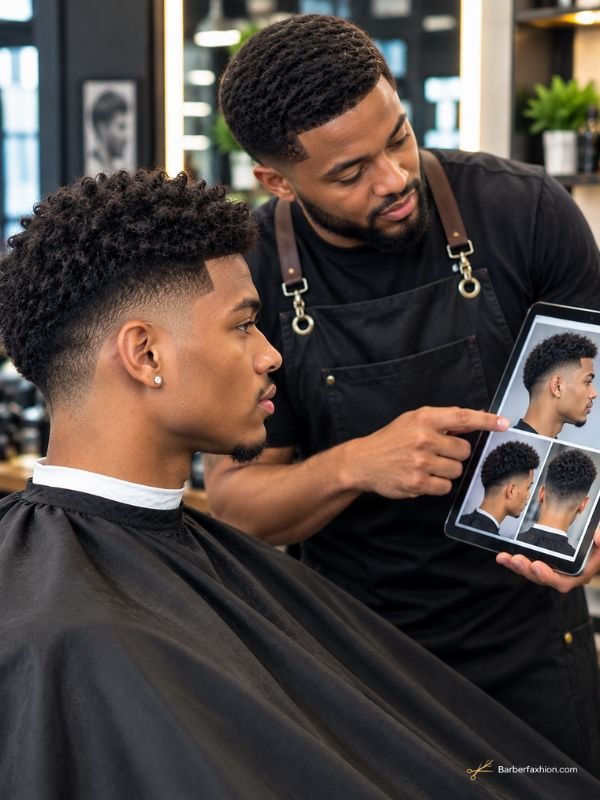
Knowing the haircut name is only the beginning. The most useful barber conversation explains the height, top, edges, neckline, and overall finish.
What to Tell Your Barber
A simple request can be:
“I want a mid taper around the temples and neckline. Keep the top at this length and preserve my natural texture. I want the transition clean but not taken too high.”
Then show your reference photo.
If you have waves, curls, twists, or locs, mention how you normally wear them. Your barber needs to know what the finished hairstyle should look like, not just what your hair looks like before the cut.
How to Explain the Taper Height
Use your fingers to point to the approximate height if necessary.
You can say:
“I want the taper around this area. Please don’t take it higher than this.”
That sentence can prevent a common misunderstanding. Haircut terminology isn’t always interpreted identically by every barber.
How to Specify Your Top Length and Hairstyle
Don’t stop at “leave the top long.”
Say what you’re going to do with it.
For example:
- “I’m keeping enough length for waves.”
- “I want enough length for sponge curls.”
- “I’m growing it for twists.”
- “Keep the afro full.”
- “I want the curls to fall forward.”
- “Don’t remove too much from the locs.”
This gives your barber a practical target.
Why You Should Bring a Reference Photo
A reference photo communicates details that words may miss.
Ideally, choose a photo showing the front, side, and back. Also look for someone whose hair texture and approximate length are reasonably similar to yours.
Don’t expect an exact copy. Your hairline, density, curl pattern, head shape, and growth direction may produce a different result.
The photo should communicate the shape and finish, not promise an identical haircut.
How to Style and Maintain a Mid Taper Fade
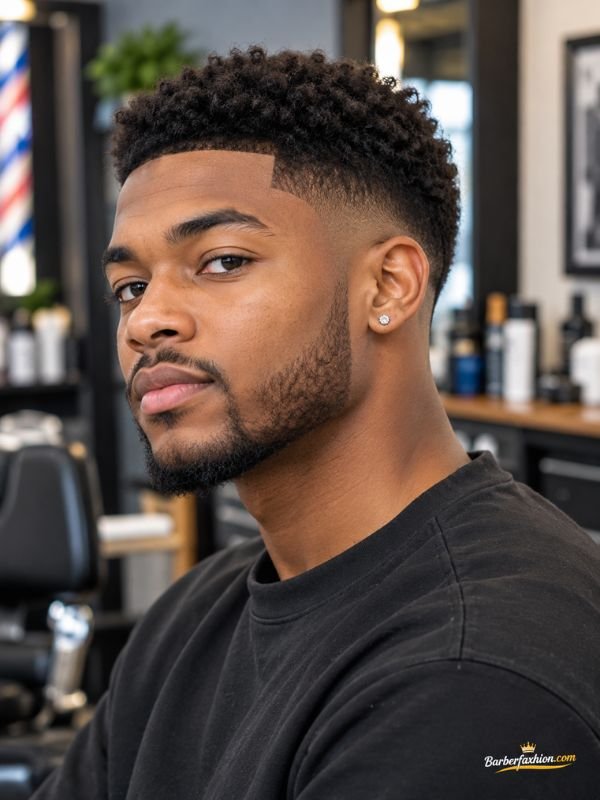
A fresh taper looks sharp immediately after the appointment, but maintenance determines how long that clean appearance lasts.
Your routine should match the hairstyle on top. Waves need a different approach from curls, twists, locs, or an afro.
Styling Waves, Curls and Coils
For waves, consistency matters more than using a huge collection of products. Brush in your established pattern and keep the hair moisturized.
For curls and coils, focus on hydration and definition. A lightweight leave-in product or curl cream can be enough for many routines.
If you use a sponge, don’t aggressively rub the hair for long periods. Excessive friction can make the hair feel rough and may cause unnecessary breakage.
Maintaining Afros, Twists and Locs
Afros need shape and moisture. A wide-tooth comb, pick, or your preferred detangling method can help maintain the form without unnecessary pulling.
Twists usually need less daily styling once installed, but the scalp and surrounding hair still need appropriate care.
Locs require their own maintenance routine. If you regularly retwist or style them, coordinate the taper with that schedule so the haircut complements the locs rather than fighting their growth.
Products for Natural Black Hair
You don’t need a shelf full of products.
Depending on your texture and hairstyle, useful categories may include:
- Leave-in conditioner
- Lightweight moisturizer
- Curl cream
- Styling cream
- Wave brush
- Durag or wave cap
- Wide-tooth comb
- Hair pick
- Light oil, when appropriate for your routine
The right product depends on your hair and scalp. More product doesn’t automatically mean more definition.
If your hair becomes greasy, coated, or difficult to wash, reduce the amount and simplify your routine.
How Often Should You Refresh the Taper?
The answer depends on how sharp you want the haircut to remain.
Someone who wants a very crisp taper and line-up may choose more frequent barber visits. Someone who prefers a softer, grown-out appearance can wait longer.
Your top hairstyle also matters. A wave or short buzz cut can make growth more obvious because the entire haircut is compact. Longer curls or locs may hide some growth around the perimeter.
Instead of following an exact calendar, check your temples, sideburns, and neckline. When those areas no longer look intentional, it’s probably time for a cleanup.
Keeping the Line-Up and Neckline Clean
The line-up and neckline are often the first areas to show growth.
Avoid constantly shaving or reshaping the hairline yourself if you’re not confident with clippers. A small mistake can change the shape of the haircut.
If you prefer a natural hairline, don’t let every cleanup gradually push it backward. Tell your barber to preserve your existing shape.
Common Mid Taper Fade Mistakes to Avoid
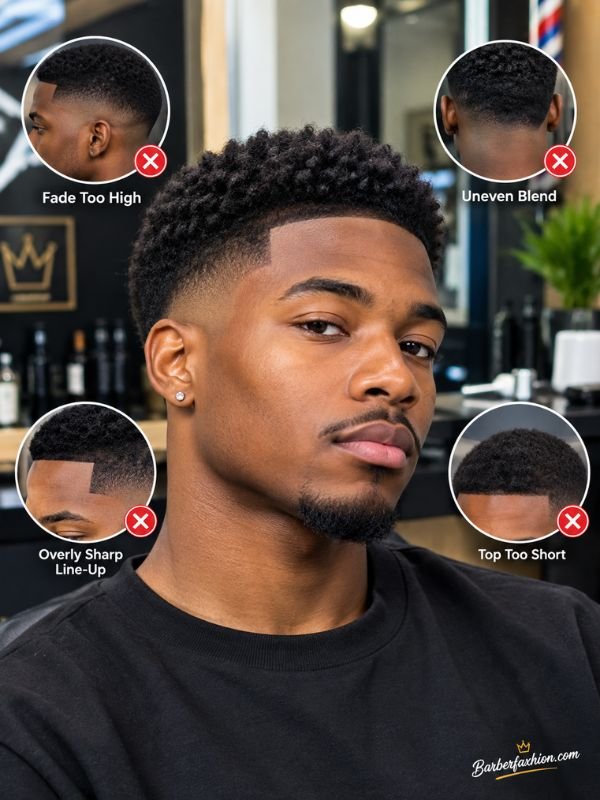
A great haircut can be ruined by a small misunderstanding. Most problems come from choosing the wrong height, ignoring natural texture, or failing to communicate what should stay untouched.
Taking the Taper Too High
This is one of the biggest concerns when asking for a taper.
If the taper climbs higher than you expected, you may lose more side volume than intended.
Point out the maximum height before the haircut starts. A reference photo showing the side profile can help.
Choosing the Wrong Taper for Your Hairline
Your temples aren’t necessarily symmetrical. One side may be fuller, more recessed, or grow at a different angle.
A good barber should adapt the cut rather than blindly copying a symmetrical photograph.
If you have an area you’re trying to preserve, mention it before the clippers come out.
Ignoring Hair Shrinkage
Curly and coily hair can look dramatically shorter after it dries.
If your barber cuts the hair based only on its stretched appearance, you may end up with less visible length than expected.
Tell your barber how you normally wear your hair. Natural, stretched, picked-out, and twisted hair can all give different visual measurements.
Choosing a Reference Photo With Different Hair
A photo can show a beautiful haircut while still being a poor reference for your own hair.
Look for similarities in:
- Hair texture
- Hair density
- Top length
- Hairline
- Face shape
- Beard length
The closer those factors are, the easier it is for your barber to adapt the idea.
Using Too Much Styling Product
Heavy products can make curls, coils, waves, and natural styles look dull or greasy.
Start with a small amount and add more only when necessary. Product should support the hairstyle rather than cover it.
Also pay attention to buildup. If you’re repeatedly adding product without properly cleansing your hair, the texture can become harder to manage.
FAQs About Mid Taper Fade Black Male
Is a mid taper fade good for Black men?
Yes. A mid taper can work with many Black hair textures and hairstyles, including waves, curls, coils, afros, twists, locs, braids, and short cuts. The key is adjusting the taper to your hair density, growth pattern, and desired top style.
What hair type is best for a mid taper fade?
There isn’t one required hair type. Curly, coily, wavy, thick, fine, and even straight textures can work with a taper when the cut is adapted to the hair’s characteristics.
Is a mid taper fade the same as a mid fade?
No. A taper usually concentrates the shortening around the temples, sideburns, and neckline, while a mid fade generally creates a broader transition across the sides and back. Your barber may use the terms differently, so a reference photo is useful.
How long does a mid taper fade last?
The clean appearance depends on your hair growth and how precise you want the haircut to remain. A sharp line-up and tight taper will show growth sooner than a softer, more natural finish.
What should I tell my barber for a mid taper fade?
Tell your barber the taper height, how short you want the temples and neckline, how much length you want on top, and how you style your hair. Bring front, side, and back reference photos whenever possible.
Conclusion
A mid taper gives you a clean perimeter without forcing you to give up the texture or length that makes your hairstyle yours. Whether you’re wearing waves, curls, an afro, twists, locs, braids, a buzz cut, or a beard, the taper can be adjusted around your natural hair and personal style.
The most important thing is communication. Before your appointment, decide how high you want the taper, how much length you want to keep, and how you normally style your hair. Then show your barber a clear reference photo and explain what you want preserved. When those details line up, a mid taper fade black male haircut can become a flexible base for plenty of different looks.