
Finding a haircut that looks sharp without needing a complicated morning routine can be harder than it sounds. You want something modern, but not a style that grows out awkwardly after two weeks. You also want your barber to understand exactly what you mean when you say “French crop.”
A French crop low taper gives you a practical middle ground. It combines a short, textured top and forward fringe with a subtle taper around the sideburns and neckline. Below, you’ll find 20+ style ideas, plus advice for different hair types, face shapes, styling routines, and exactly what to tell your barber.
Quick Answer: A French crop low taper combines a cropped, usually textured top and forward fringe with a low taper around the sideburns and neckline. It’s a versatile men’s haircut that can be adapted for straight, wavy, curly, thick, fine, or thinning hair.
What Is a French Crop Low Taper?
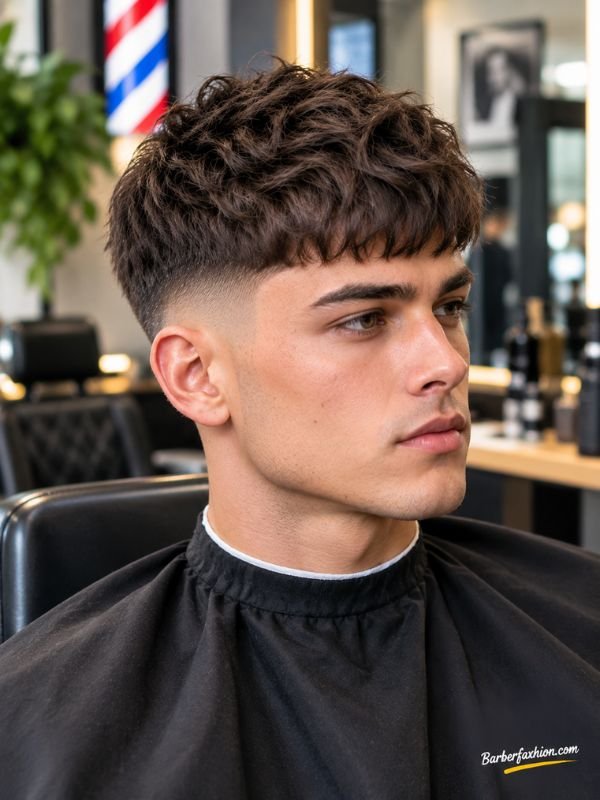
A French crop is known for its short top and fringe that is usually styled forward toward the forehead. The top can be blunt, textured, messy, or slightly longer depending on the look you want.
The low taper changes the sides and back. Instead of removing a large amount of hair high up the sides, the taper gradually gets shorter around the ears, sideburns, and lower neckline. This keeps more natural weight on the sides while giving the haircut a clean finish.
The result is a haircut that feels structured without looking overly aggressive. You can keep the top neat, add texture for a messier finish, or work with your natural waves and curls.
French Crop vs. Low Taper: What Each Part Does
Think of the haircut as two separate elements.
The French crop controls the top. It gives you the cropped shape, forward fringe, and textured appearance associated with the style.
The low taper controls the edges. It gradually reduces the hair around the sideburns and neckline without pushing the transition too far up the head.
A low taper fade is often searched alongside this haircut because the terms are frequently used interchangeably online. However, a traditional taper can leave more weight around the sides, while a stronger fade creates a more obvious change in length.
How a French Crop Low Taper Looks From the Front, Sides and Back
From the front, the fringe is the main feature. It can sit straight across the forehead or have a broken, textured edge.
From the sides, the taper keeps the area around the ears tidy while allowing the upper sides to retain some fullness. From the back, the taper creates a cleaner neckline without necessarily exposing as much skin as a high fade or skin fade.
That balance is what makes the haircut easy to customize.
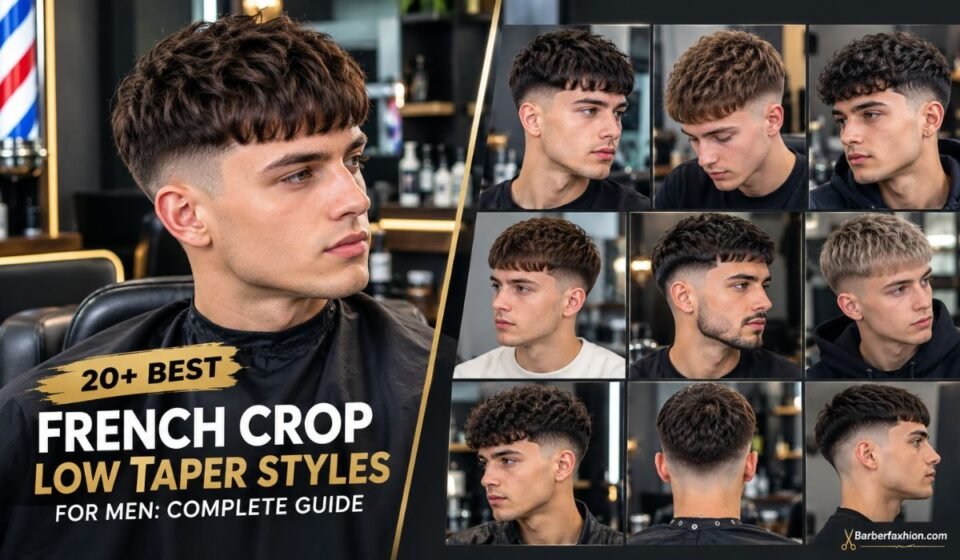
20+ Best French Crop Low Taper Styles for Men
The same basic haircut can look completely different depending on your fringe, texture, hair density, and taper. Here are 20 variations worth showing your barber.
1. Classic French Crop Low Taper
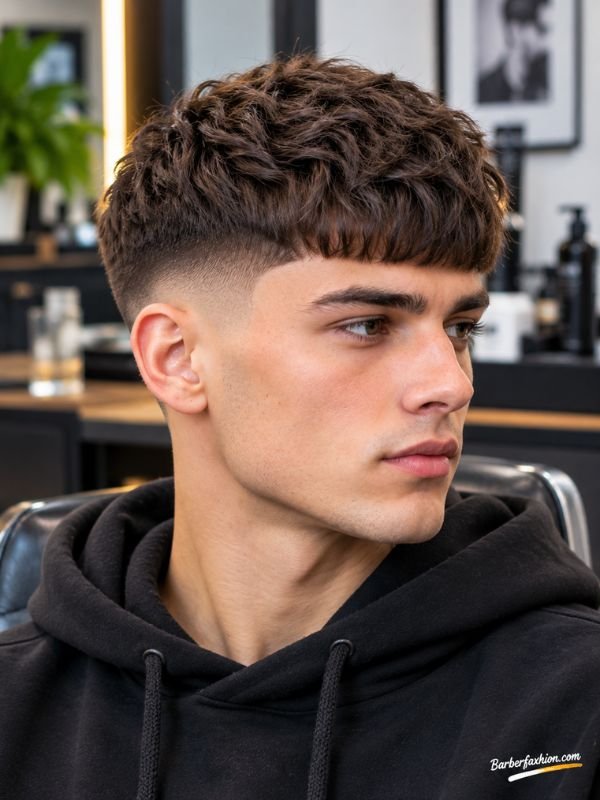
The classic version keeps the top relatively short with a controlled forward fringe and a subtle taper around the edges. There’s enough texture to stop the haircut from looking flat, but it doesn’t need an exaggerated messy finish.
This is a strong choice if you want something simple for school, work, or everyday wear. Use a small amount of matte styling product and push the top forward with your fingers.
Best for: Straight, slightly wavy, or medium-textured hair.
Maintenance: Ask for a regular cleanup around the ears and neckline while keeping the top at your preferred length.
2. Textured French Crop Low Taper
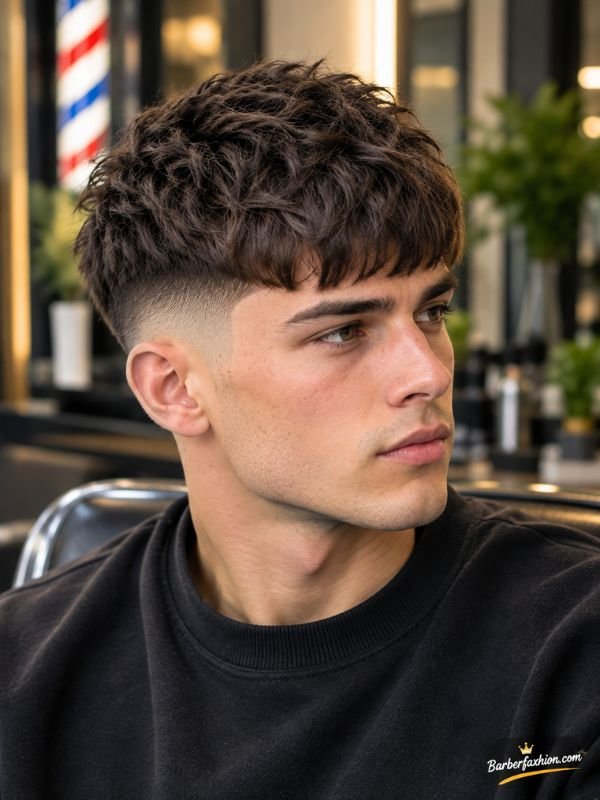
The textured version gives the top more separation. Instead of every strand lying in one direction, the barber creates different lengths and points through the hair.
This makes the haircut look fuller and more dynamic. A matte clay or texture paste works well because you want definition without making the hair look greasy.
Best for: Medium to thick hair.
Style tip: Apply product to dry or slightly damp hair, then pinch small sections with your fingers.
3. Messy French Crop Low Taper
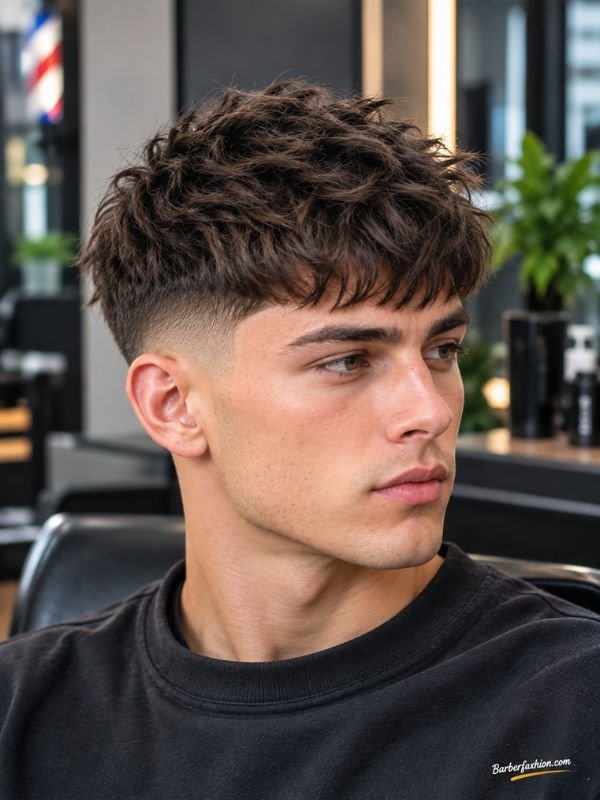
A messy finish makes the French crop feel more relaxed. The fringe remains cropped, but the top has deliberately uneven movement rather than a perfectly controlled shape.
The messy French crop low taper fade is particularly useful if you don’t want your haircut to look too polished. You can simply work a small amount of matte product through the top and let your natural texture do most of the work.
Best for: Straight, wavy, and slightly curly hair.
Style tip: Don’t over-comb it. Finger styling creates a more natural finish.
4. Short French Crop Low Taper
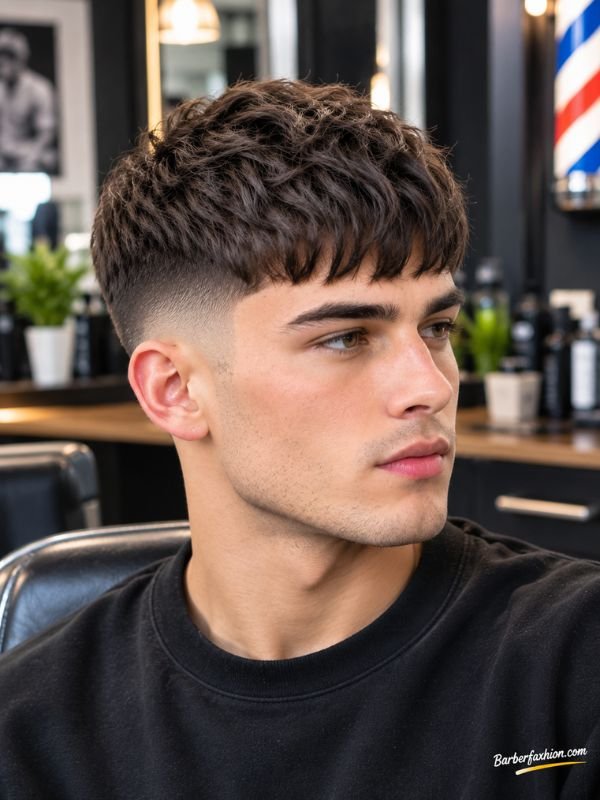
If you prefer a low-maintenance haircut, go shorter on top and keep the fringe compact. The low taper provides enough contrast around the edges without turning the haircut into a dramatic fade.
The short French crop low taper fade is practical for active lifestyles because there’s less hair to style every morning.
Best for: Most hair types, especially thick hair.
Maintenance: The shorter fringe needs regular shaping to keep its original proportions.
5. French Crop Low Taper for Straight Hair
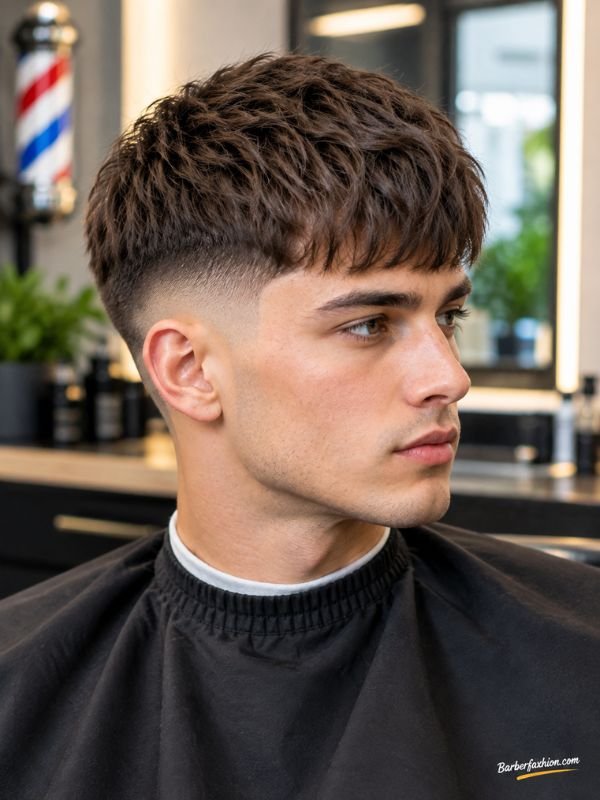
Straight hair makes the cropped shape particularly visible. The fringe can be cut straight, slightly uneven, or textured depending on how much movement you want.
For a French crop low taper fade straight hair style, avoid making the top completely flat. A little texture through the front prevents the haircut from looking like a simple bowl-shaped crop.
Best for: Fine, medium, or thick straight hair.
Style tip: Blow-dry the hair forward and slightly downward before applying a lightweight matte product.
6. French Crop Low Taper for Wavy Hair
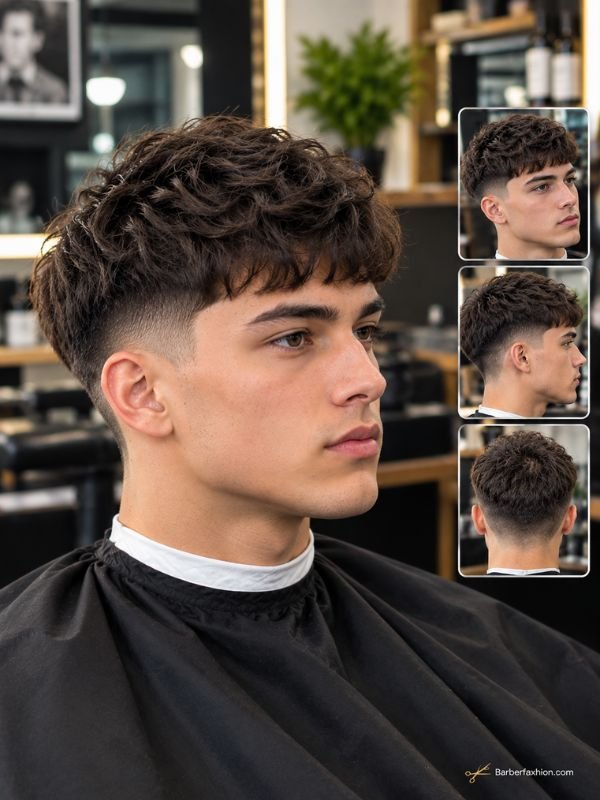
Natural waves can add character to a French crop without requiring much styling. Instead of fighting the wave pattern, ask your barber to preserve enough length on top for the texture to show.
The fringe can remain slightly irregular, which works nicely with the natural movement. Keep the taper subtle so the wavy top remains the main focus.
Best for: Naturally wavy or slightly coarse hair.
Style tip: Use a lightweight styling cream and let the hair air-dry when possible.
7. French Crop Low Taper for Curly Hair
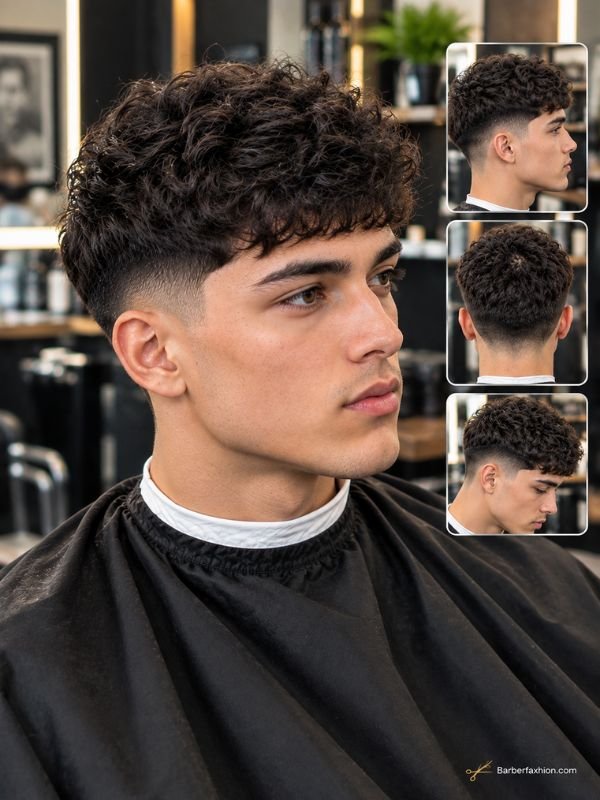
Curly hair gives the French crop a softer and more dimensional appearance. The key is maintaining enough length for the curls to form instead of cutting the top so short that the curl pattern disappears.
A French crop low taper curly hair style can have a compact fringe, rounded curl texture, or slightly longer curls pushed toward the forehead.
The French crop low taper fade curly hair variation also works when you want a stronger contrast around the sides.
Best for: Loose, medium, and tighter curls.
Style tip: Use a curl-enhancing cream or light leave-in product rather than heavy wax.
8. French Crop Low Taper for Thick Hair
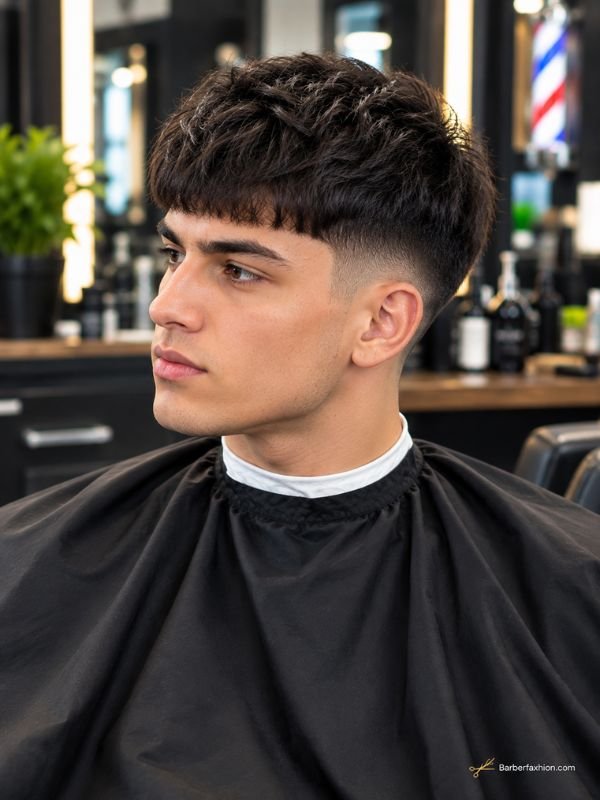
Thick hair can make the French crop look full and substantial. However, too much bulk can make the top appear heavy.
Your barber can remove some internal weight while keeping enough density around the fringe. The taper then cleans up the lower sides without unnecessarily thinning the entire haircut.
Best for: Dense, coarse, or naturally full hair.
Maintenance: Ask your barber to control bulk rather than simply taking everything very short.
9. French Crop Low Taper for Fine or Thin Hair
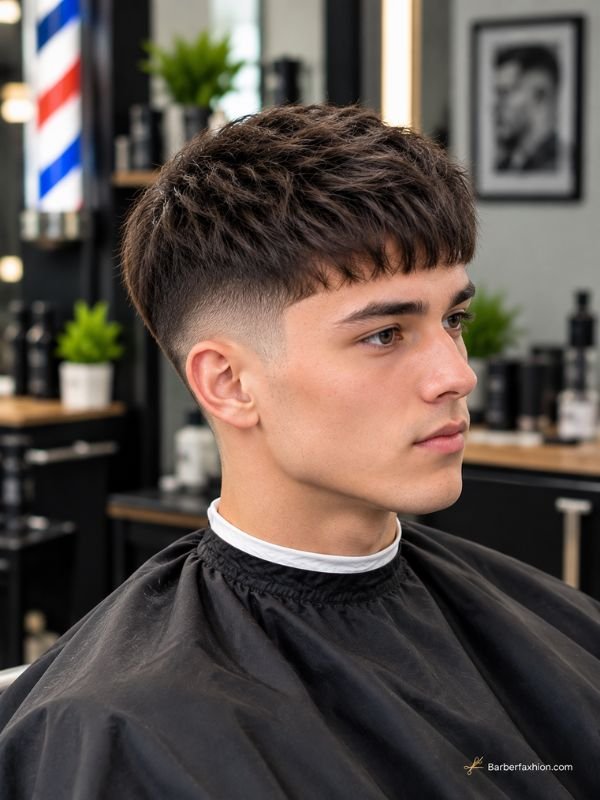
A French crop can be useful for fine hair because the shorter top reduces the appearance of long, separated strands. However, excessive texturizing can have the opposite effect by removing too much density.
Keep some weight through the top and use a lightweight matte product. Avoid soaking the hair in shiny or heavy products because they can separate fine strands.
Best for: Fine or lower-density straight hair.
Style tip: Blow-dry forward at the roots before applying a small amount of matte paste.
10. French Crop With Textured Fringe
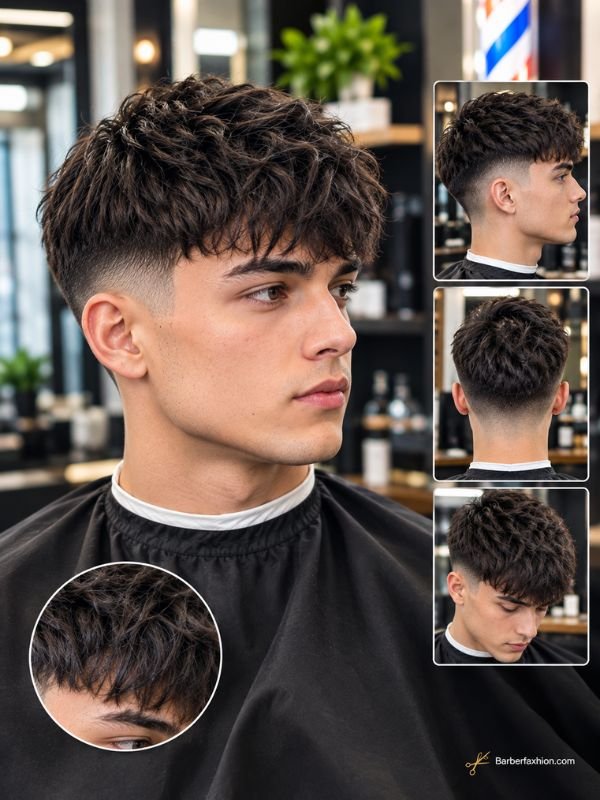
Here the fringe becomes the main feature. Instead of a perfectly straight line, the ends are cut with visible separation and small variations in length.
The French crop low taper textured fringe gives you a modern appearance while retaining the recognizable cropped shape. It also makes the style easier to personalize.
Best for: Straight and wavy hair.
Ask your barber for: A textured fringe with enough weight to avoid looking overly thin.
11. Longer French Crop Low Taper
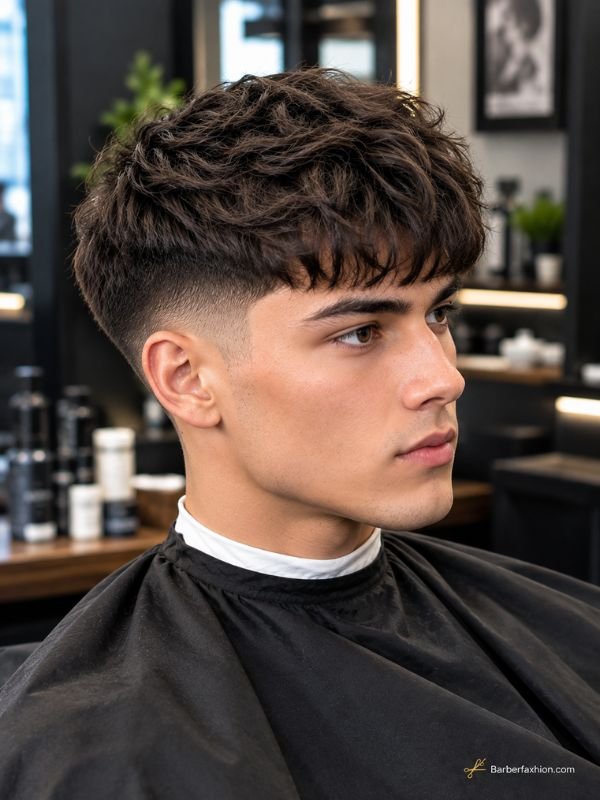
A longer crop gives you more styling flexibility. The top can extend farther forward, creating a softer fringe and allowing more texture.
This option is useful if you don’t want the very short military-style appearance of a traditional crop. The taper keeps the edges clean while the longer top adds versatility.
Best for: Medium to thick hair.
Style tip: Use your fingers rather than a fine-tooth comb to maintain natural texture.
12. Modern French Crop Low Taper
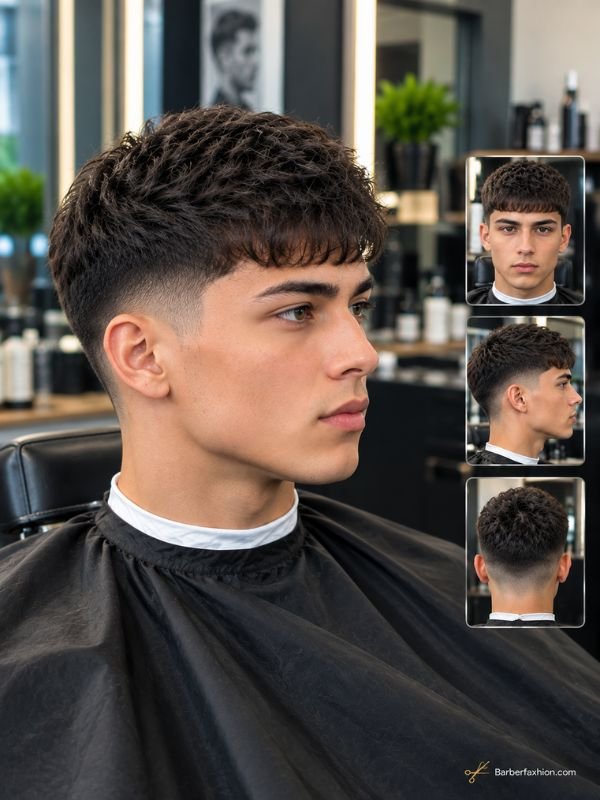
The modern version mixes the traditional crop with contemporary texture. You might see a slightly longer top, choppy fringe, sharper edges, or a more noticeable taper.
There’s no single formula. The goal is to keep the recognizable crop silhouette while adapting it to your personal style.
Best for: Anyone wanting a current, customizable finish.
Maintenance: The cleaner the edges, the more frequently you’ll need a barber cleanup.
13. French Crop Low Taper With Beard
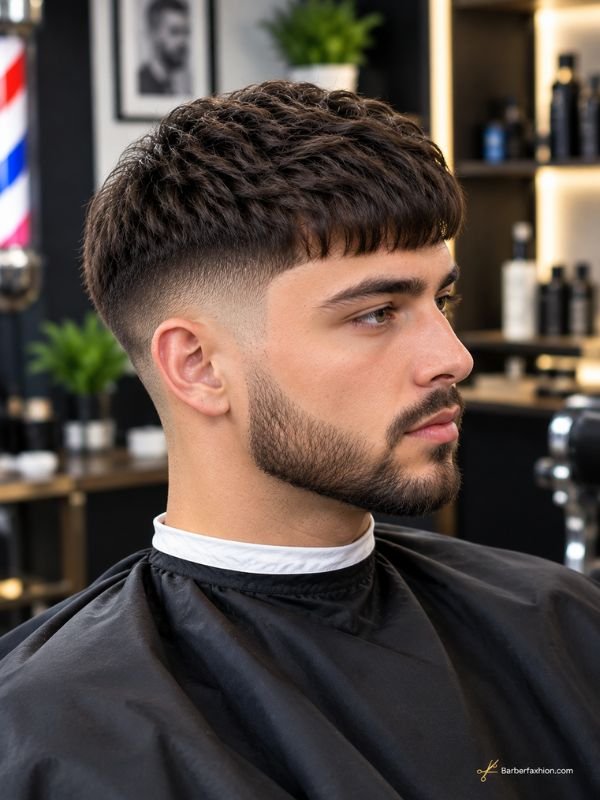
Adding a beard creates a stronger connection between the haircut and facial hair. A subtle taper around the sideburns can help the transition into the beard look cleaner.
You don’t need a large beard. Even short stubble can add definition to the lower half of your face.
Best for: Oval, square, and round faces, depending on beard length and shape.
Style tip: Keep the beard neckline and sideburn transition tidy so the haircut doesn’t look disconnected.
14. French Crop Low Taper With Line-Up
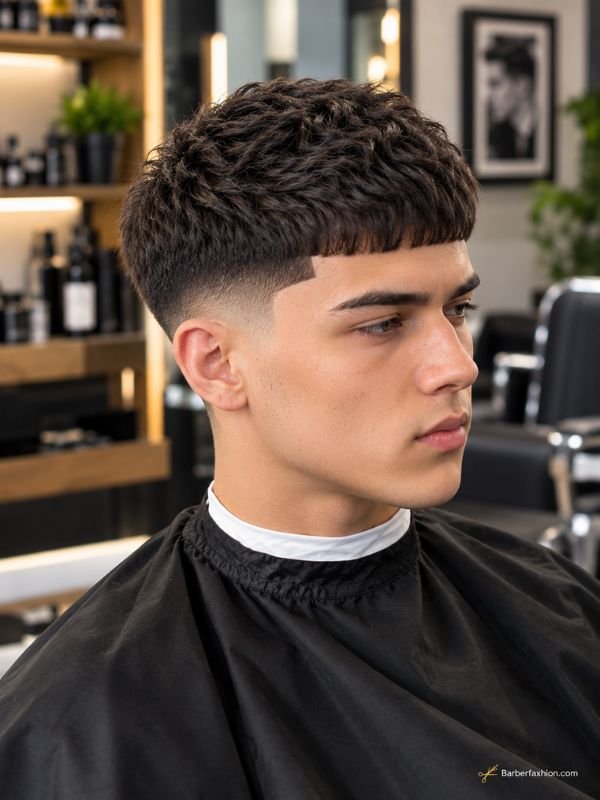
A line-up adds sharper definition around the forehead and temples. It can make the cropped fringe appear more deliberate, especially when combined with clean edges around the sides.
However, don’t automatically request an extremely sharp hairline. Your natural hairline should guide the shape.
Best for: Straight, wavy, and curly hair with a defined natural hairline.
Maintenance: Line-ups usually need more frequent touch-ups than the basic haircut.
15. French Crop Low Taper With Hair Design
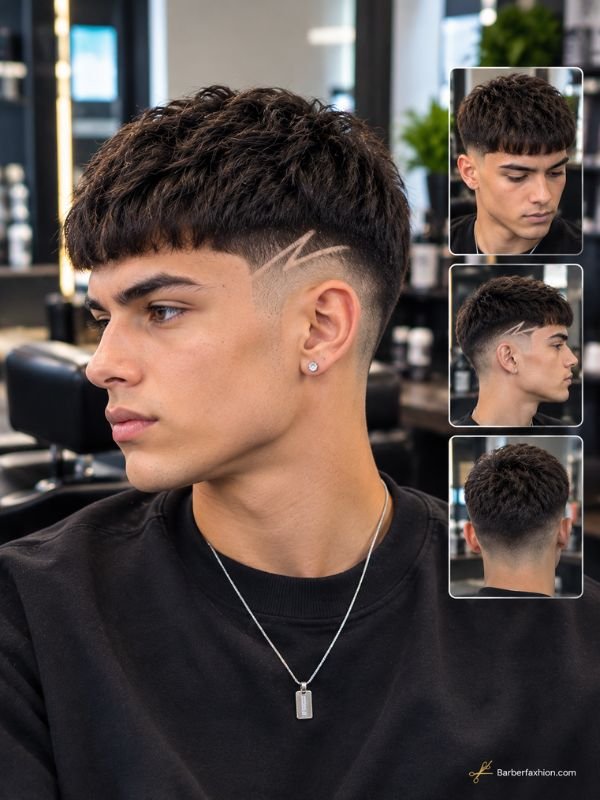
A small design can personalize an otherwise classic haircut. A simple line near the taper can add visual interest without changing the entire shape.
Keep the design minimal if you want something suitable for professional environments. Remember that designs grow out faster than the rest of the haircut and may need extra cleanup.
Best for: Anyone who wants a more expressive variation.
Style tip: Choose a design that follows the natural shape of the taper rather than competing with the fringe.
16. French Crop Low Taper With Skin Fade
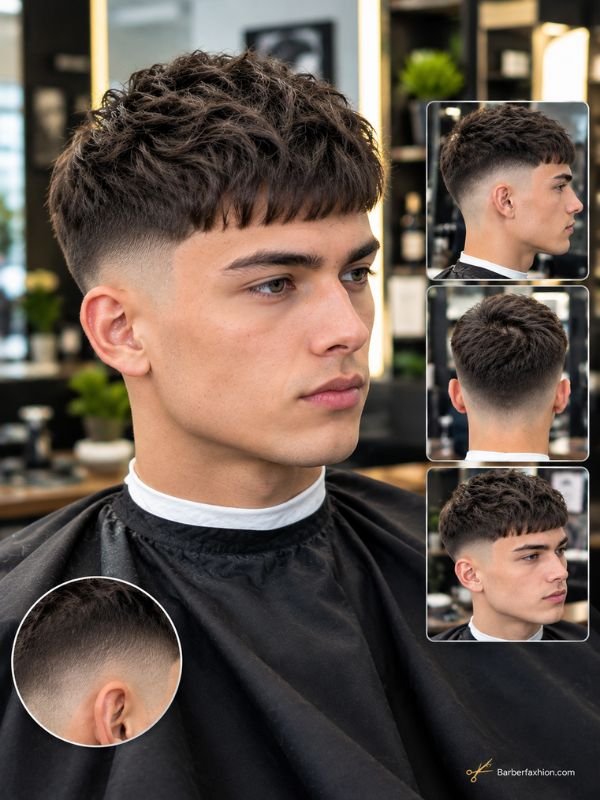
This variation creates more contrast by taking the lowest part of the sides down to the skin. The top still follows the French crop shape, but the sides look significantly cleaner.
It’s worth clarifying the difference with your barber because a skin fade is much more exposed than a subtle taper.
Best for: Anyone who wants a crisp, high-contrast appearance.
Keep in mind: The skin-faded area will show regrowth more quickly, so frequent maintenance may be needed.
17. French Crop Low Taper Mullet
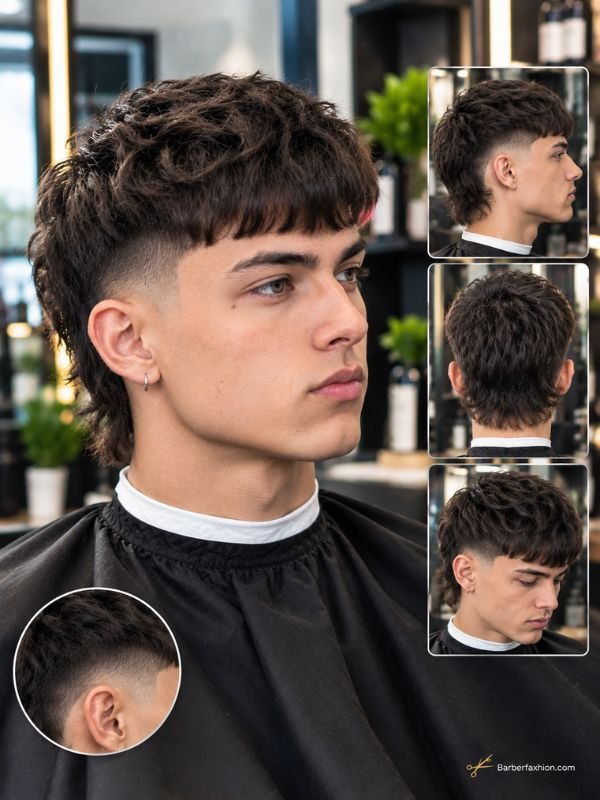
A crop-mullet combination brings a shorter, textured front together with more length toward the back. The taper keeps the area around the ears controlled.
This is more experimental than the classic crop, so it’s best to bring a reference photo. The amount of length left at the back can dramatically change the final result.
Best for: Wavy, curly, and thick hair, although straight hair can work too.
Style tip: Keep the fringe textured so the front and longer back feel connected.
18. French Crop Low Taper for Round Face
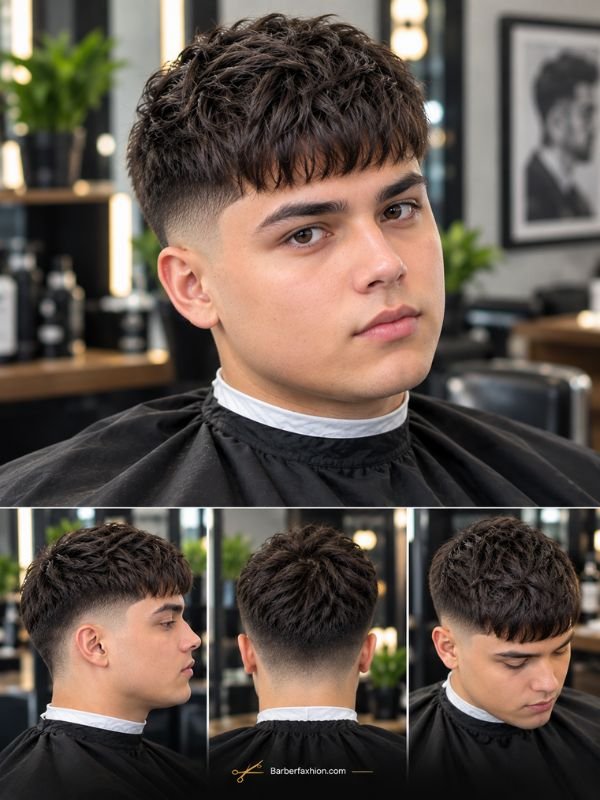
For a round face, you can use the top to create a little more visual height and structure. Avoid making the fringe extremely wide and heavy if it makes the face appear shorter.
A textured top with a controlled fringe can add definition without requiring a tall hairstyle.
Best approach: Keep some vertical texture while maintaining a relatively neat taper.
19. French Crop Low Taper for Receding Hairline
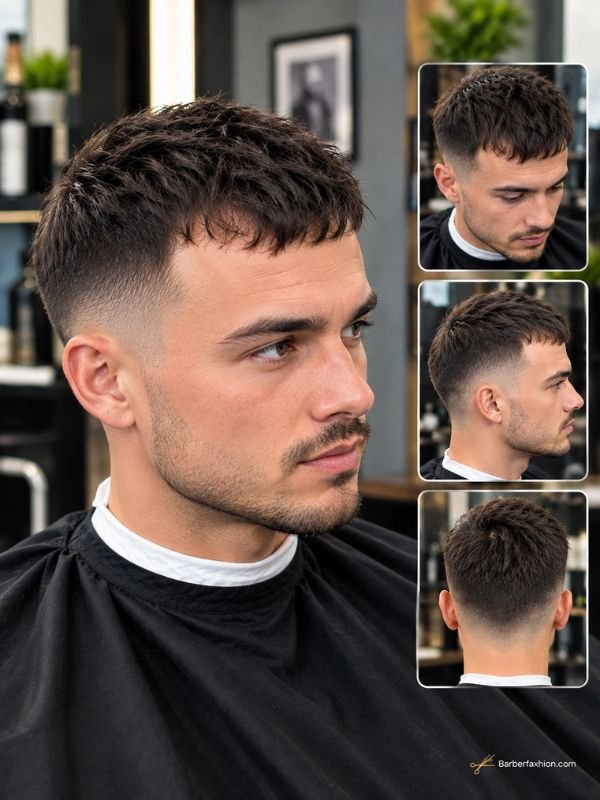
The cropped fringe can be adapted to work with a changing hairline. Rather than forcing the fringe into a perfectly straight line, a textured or slightly irregular edge can look more natural.
Don’t ask the barber to remove excessive hair from the front just to create a sharper shape. The goal is to work with your existing hairline.
Best for: Mild recession where there is still enough front density for a crop.
Style tip: A matte finish generally looks more natural than a wet or high-shine finish.
20. French Crop Low Taper With Natural Fringe
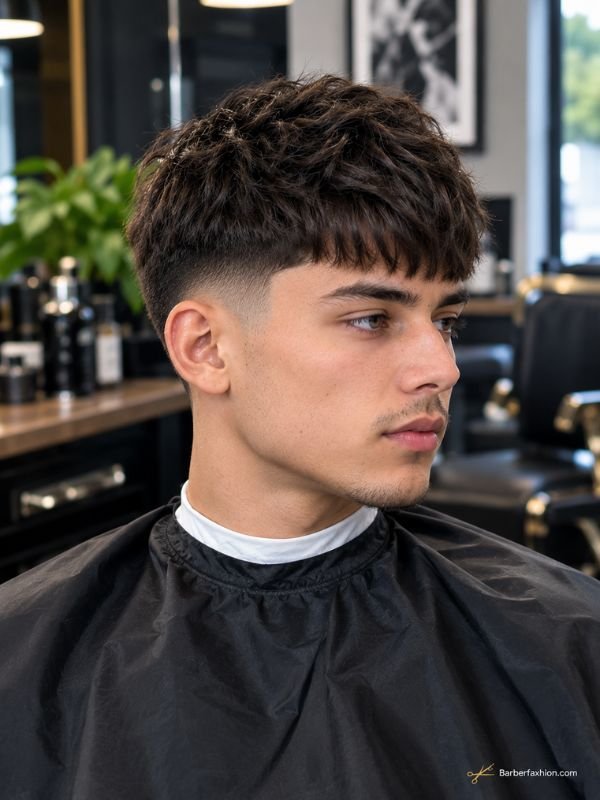
This version keeps the fringe looking less manufactured. Instead of creating a perfectly horizontal line, the barber follows the natural direction and texture of the hair.
It’s especially attractive on wavy or curly hair because the natural pattern creates small variations along the fringe.
Best for: Men who prefer a relaxed, low-effort appearance.
Style tip: Use your fingers to arrange the fringe rather than trying to make every strand identical.
Which French Crop Low Taper Should You Choose?
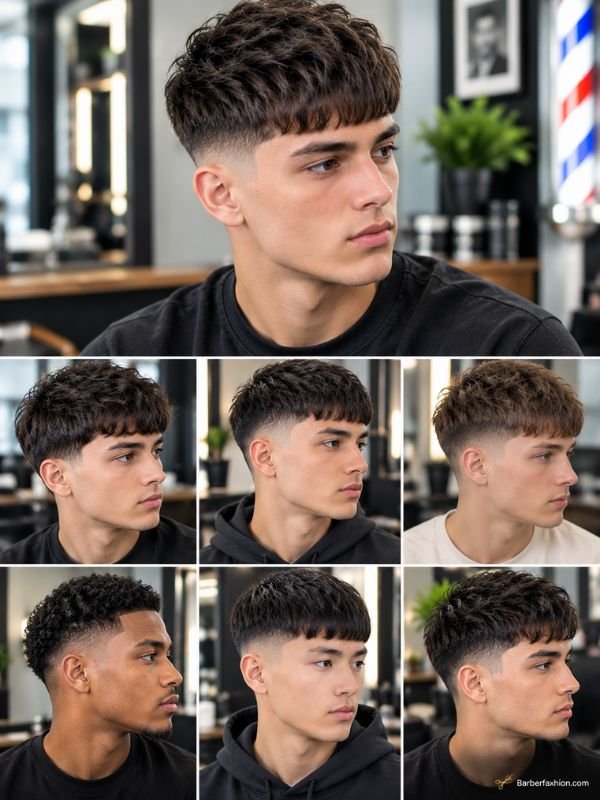
Choosing the right variation comes down to more than the photo you like. Your hair’s thickness, texture, growth pattern, face shape, and willingness to style it every morning all matter.
A haircut that looks effortless on someone with naturally wavy hair may require considerably more work on very straight hair.
Best Options for Different Hair Types
| Hair type | Recommended variation | Why it works |
| Straight | Textured or classic crop | Shows the shape clearly |
| Wavy | Natural or messy crop | Uses natural movement |
| Curly | Curly textured crop | Preserves curl pattern |
| Thick | Textured or short crop | Controls excess bulk |
| Fine | Classic or lightly textured crop | Keeps useful density |
| Coarse | Short or textured crop | Makes the hair easier to control |
Your barber should adjust the cut rather than blindly copying a picture. Hair density and growth direction can make the same haircut look different from person to person.
Best Options for Different Face Shapes
For an oval face, you have considerable flexibility. A classic fringe, messy texture, or longer crop can all be adjusted to your proportions.
Round faces can benefit from some texture and subtle height through the top. Long faces may work better with a slightly fuller fringe and less height. Square faces can handle a more structured crop, while diamond and heart-shaped faces often benefit from balanced texture rather than extreme volume.
The goal isn’t to follow rigid rules. Use face shape as a starting point and then adjust the haircut around your actual hairline and features.
Choosing Between a Short, Textured or Longer Fringe
A short fringe is clean and low maintenance but gives you less room to experiment.
A textured fringe adds movement and makes the haircut look less uniform.
A longer fringe provides more styling options and can create a softer appearance, although it may need more daily adjustment.
If you’re unsure, show your barber two or three reference pictures and explain what you like about each one.
French Crop Low Taper vs. Low Fade vs. Skin Fade
These terms can sound interchangeable, but the amount of hair removed from the sides makes a noticeable difference.
Low Taper vs. Low Fade
A low taper usually focuses on the areas around the sideburns and neckline. More of the natural side hair remains above that transition.
A low fade generally spreads the fading effect farther into the sides, creating a more visible gradient. Both can work with a French crop, but they produce different levels of contrast.
Low Taper vs. Skin Fade
A skin fade takes the shortest section down to the skin. This creates a very clean, high-contrast finish.
A traditional low taper is more subtle. If you want the sides to look neat while still retaining some natural weight, tell your barber that you want a taper rather than automatically asking for a skin fade.
Which One Gives a More Natural Finish?
The low taper generally creates the most understated transition because it preserves more of the hair around the sides.
A low fade creates more visible contrast, while a skin fade creates the strongest difference between the cropped top and the sides.
Your choice should depend on how much contrast you want and how often you’re willing to maintain the edges.
French Crop Low Taper vs. French Crop Mid Taper Fade
A mid taper moves the transition higher than a low taper. This exposes more of the sides and creates a stronger visual separation from the top.
The low taper keeps the overall silhouette softer. A mid taper can make the crop appear sharper and more noticeable, especially from the sides.
If you prefer a subtle everyday haircut, explain that you want the taper to stay low. If you want more visible contrast, discuss a mid taper with your barber.
How to Ask Your Barber for a French Crop Low Taper
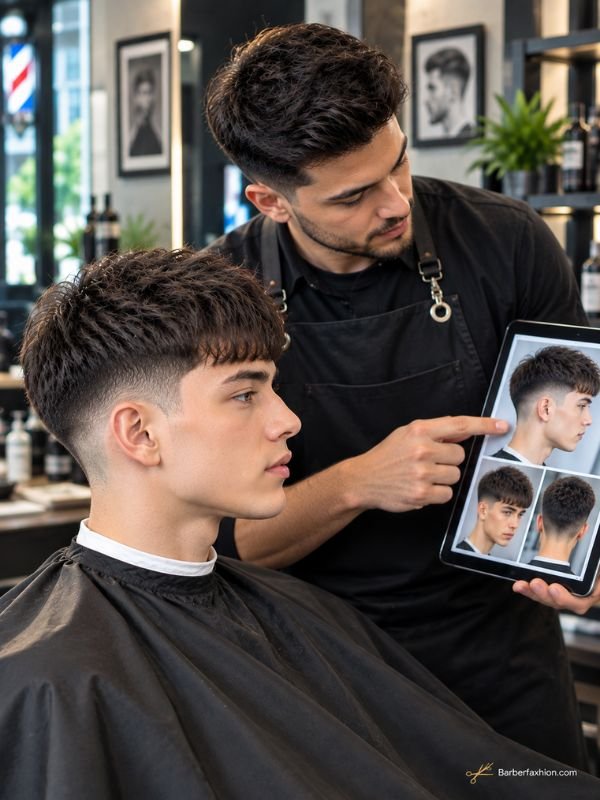
Don’t just say “give me a French crop” and hope for the exact result you’re imagining. The term covers several variations.
Bring a reference picture and explain four things: the top length, fringe shape, taper height, and how much skin you want showing.
What to Tell Your Barber About the Top
Tell your barber whether you want the top:
- Short and compact
- Textured and choppy
- Messy
- Longer and more flexible
- Natural with your existing waves or curls
Also explain whether you want the fringe straight, broken, rounded, or naturally textured.
What to Ask for Around the Sides and Neckline
Be specific about the taper.
You can say:
“Keep the taper low around the sideburns and neckline. I want the sides to retain some weight rather than fading high up.”
If you want a skin finish, say so clearly. If you don’t want visible skin, tell your barber that you prefer a softer taper.
Why You Should Bring a Reference Photo
A photo removes much of the guesswork. Two people can say “textured French crop” while imagining completely different lengths and fringe shapes.
Ideally, bring a front and side reference. Your barber can then adjust the shape to your own hairline, density, and head shape.
How to Style a French Crop Low Taper
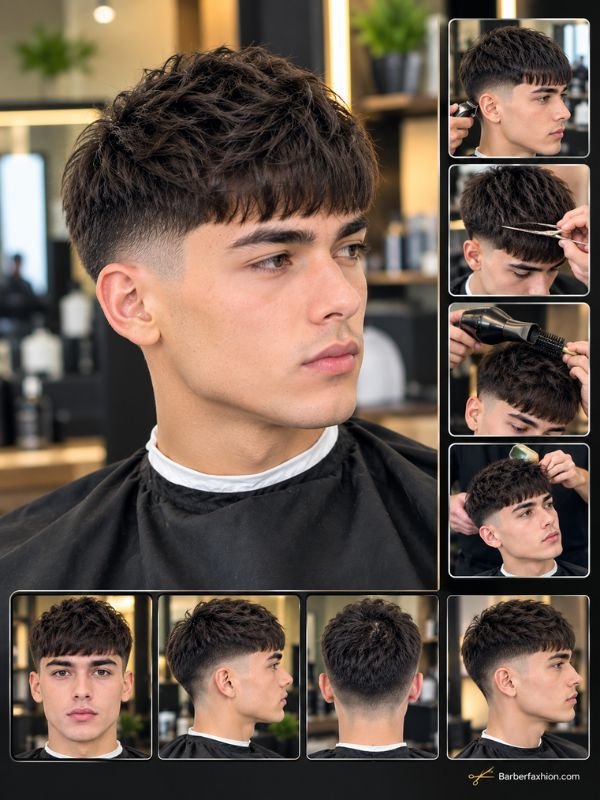
The good thing about a crop is that you don’t need a complicated styling routine. Most versions look better when you avoid overworking them.
Start with clean, towel-dried hair. Apply a small amount of product and distribute it through the top. Then direct the fringe forward using your fingers or a brush.
Styling Straight Hair
Blow-dry the top forward while using your fingers to create a little separation. Don’t press the hair completely flat against your forehead.
Once dry, use a small amount of matte clay or paste. Start with less than you think you need. You can always add more.
Styling Wavy or Curly Hair
Let your natural texture do most of the work. Apply a lightweight cream or curl-enhancing product while the hair is damp.
Avoid repeatedly brushing curly hair after it dries because that can disturb the curl pattern and create unnecessary frizz.
Best Products for a Natural Textured Finish
For most crop variations, a matte finish works well.
- Matte clay: Stronger control and texture
- Matte paste: Medium control with a softer finish
- Styling cream: Better for natural movement and softer hair
- Curl cream: Useful for curly or wavy textures
- Light styling powder: Can add texture and root lift to suitable hair
Use the product that matches your hair rather than buying the strongest hold available.
How to Maintain a French Crop Low Taper
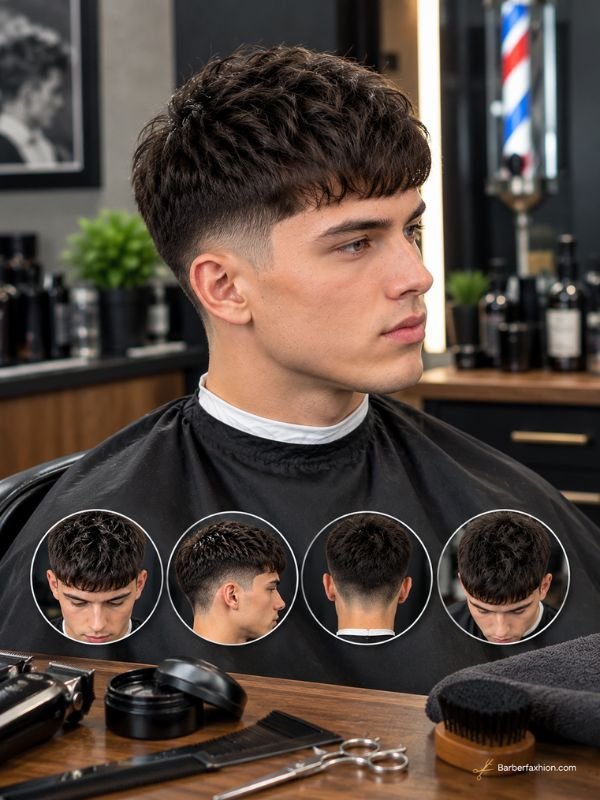
The top doesn’t necessarily need constant cutting. The taper and neckline usually make the haircut look grown out first.
How Often Should You Get It Trimmed?
A general cleanup every few weeks can keep the edges looking fresh. The exact timing depends on how quickly your hair grows and how sharp you want the taper to remain.
If you prefer a softer, more natural look, you can allow more time between appointments.
What Happens as the Taper Grows Out?
The area around the ears and neckline starts losing its clean transition first. The fringe then becomes longer and may begin falling differently.
Instead of automatically cutting the entire haircut shorter, ask your barber whether a simple taper cleanup is enough. This can help you preserve the top length you like.
How to Keep the Fringe and Texture Looking Sharp
Wash your hair according to your hair type and avoid piling on heavy styling products every day.
When the fringe starts separating awkwardly or the texture disappears, that’s usually a sign that the top needs reshaping rather than simply adding more product.
Common French Crop Low Taper Mistakes to Avoid
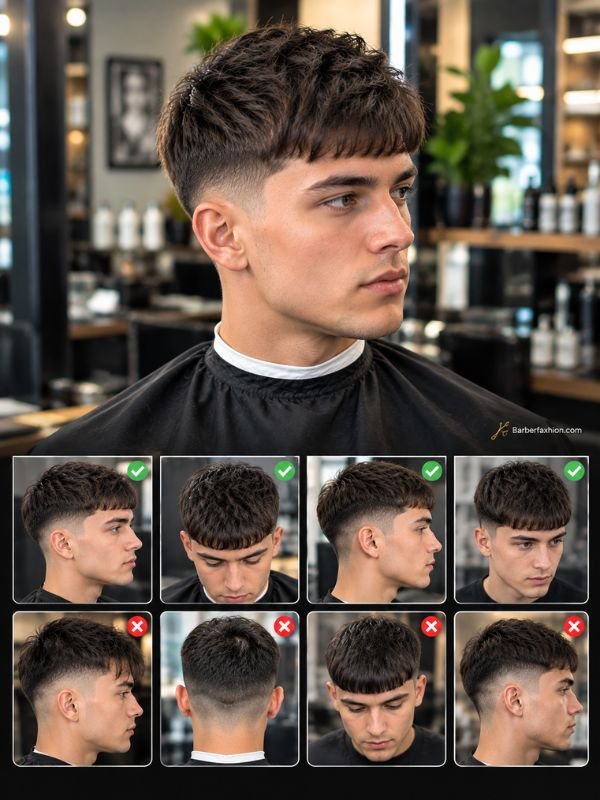
Taking the Taper Too High
If you want a subtle taper but your barber takes it high, the entire silhouette changes.
Be clear that you want the taper concentrated around the lower sides, sideburns, and neckline.
Removing Too Much Weight From the Top
Thick hair sometimes needs weight removal, but taking away too much can destroy the crop’s shape.
The top should still have enough density to create a defined fringe and textured appearance.
Making the Fringe Too Short
A fringe that’s cut extremely short gives you little room to change the look.
If you’re getting a crop for the first time, consider leaving slightly more length. You can always go shorter at the next appointment.
Over-Texturizing Fine or Thin Hair
Fine hair doesn’t automatically need lots of thinning or texturizing. Removing too much density can make the top appear sparse.
Instead, keep useful weight and create subtle texture around the surface.
FAQs About French Crop Low Taper
Is a French crop low taper good for straight hair?
Yes. Straight hair makes the cropped shape and fringe easy to see. Adding some texture prevents the top from appearing overly flat.
What face shape suits a French crop low taper?
It can be adapted to many face shapes. The main adjustment is usually the fringe and top volume, which can be changed to balance your proportions.
How long does a French crop low taper last?
The haircut can continue looking good as it grows, but the taper and neckline gradually lose their sharpness. Many people choose to get an edge cleanup every few weeks depending on their preferred finish.
Is a French crop low taper easy to maintain?
Yes, especially when you choose a short or natural-textured version. Most styles only require a small amount of matte product and a few minutes of styling.
What is the difference between a French crop and a French crop low taper?
A French crop describes the top and fringe, while the low taper describes how the sides, sideburns, and neckline are gradually shortened. Combining them gives you the complete haircut.
Conclusion
A French crop is more than one fixed haircut. You can change the fringe, texture, top length, taper height, and styling approach to create something that actually fits your hair and lifestyle.
Whether you prefer a messy finish, textured fringe, curly top, short crop, beard combination, or a sharper fade, start with the same basic idea: keep the cropped top intentional and make the taper match the level of contrast you want. Before sitting in the barber’s chair, bring a clear reference photo and explain the top length, fringe, taper height, and neckline. That small amount of detail can make a big difference in getting the result you pictured.