
A good haircut can look completely different once you sit in the barber’s chair. You might show a picture of an Edgar you like, only to realize the fringe, taper height, or top length doesn’t quite work with your hair. That’s why choosing the right version matters before you ask for the cut.
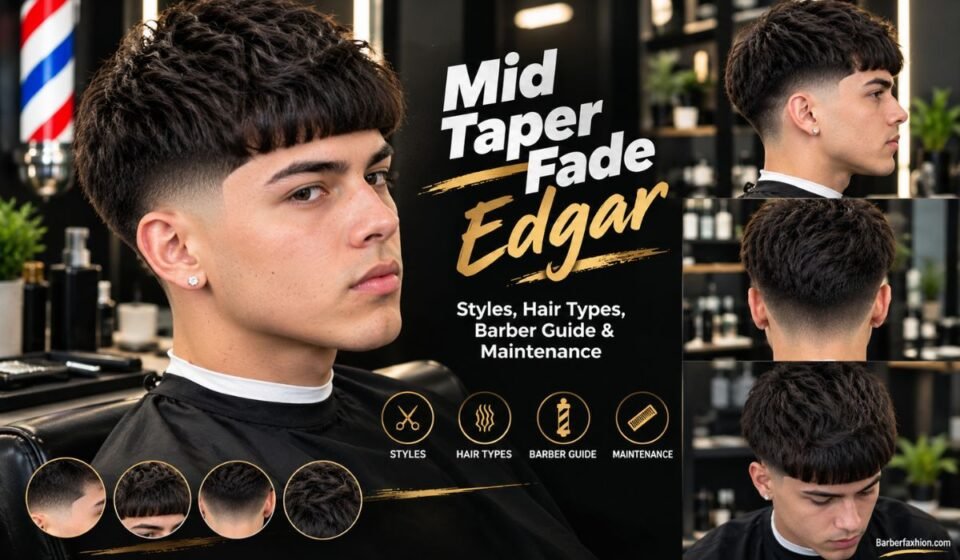
The Mid Taper Fade Edgar gives you the sharp, forward Edgar fringe with a cleaner taper around the sides and temples. In this guide, you’ll learn which variations work with different hair types and face shapes, what to tell your barber, how to style the cut, and how to keep it looking fresh.
Quick Answer: A Mid Taper Fade Edgar combines the signature forward or blunt Edgar fringe with a taper that sits around the middle of the sides and temples. It’s a versatile option for straight, wavy, curly, and textured hair, although the fringe and top should be adjusted to your natural texture and density.
What Is a Mid Taper Fade Edgar?
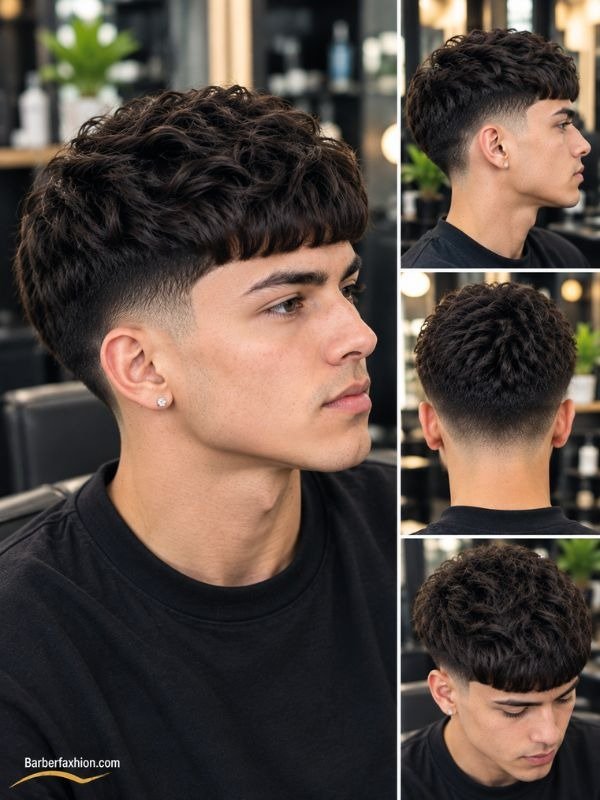
A Mid Taper Fade Edgar combines two recognizable haircut elements. The first is the Edgar haircut, known for its forward fringe that usually has a defined, straight, or slightly textured edge. The second is the mid taper, which gradually shortens the hair around the temples and sides while leaving more hair toward the lower sides and back.
The result is a haircut with a noticeable contrast between the structured top and cleaner sides. Unlike a full fade that can take the sides very short across a larger area, a taper focuses the transition around specific areas such as the temples and neckline.
The top can be kept short and compact or slightly longer for texture. Your barber can also make the fringe completely straight, subtly broken up, or softer depending on your hair.
The Edgar Fringe vs. the Mid Taper
The fringe is what gives the haircut its Edgar identity. It normally sits forward across the forehead and creates the recognizable horizontal shape associated with the style.
The taper controls the sides. A mid taper places the transition higher than a low taper but generally keeps the look more controlled than a high taper. This combination gives you a structured front without necessarily making the entire side of the head extremely short.
How Long Should the Top and Fringe Be?
There’s no universal length that works for everyone. Straight hair can support a shorter, sharper fringe, while curly or wavy hair may need additional length because the hair naturally contracts or moves.
If your hair is thick, your barber may remove some bulk from the top while preserving enough density for the fringe. Fine hair usually benefits from keeping enough length and avoiding excessive thinning.
The important thing is the shape you want, not simply asking for a particular number of inches.
What Makes a Mid Taper Edgar Different?
The combination of a structured front and gradual taper makes this haircut stand out. You get the visual impact of an Edgar without necessarily committing to an extremely aggressive fade.
It’s also easy to customize. A softer taper, textured fringe, or less dramatic line-up can make the haircut more wearable for everyday settings.
Popular Mid Taper Edgar Styles
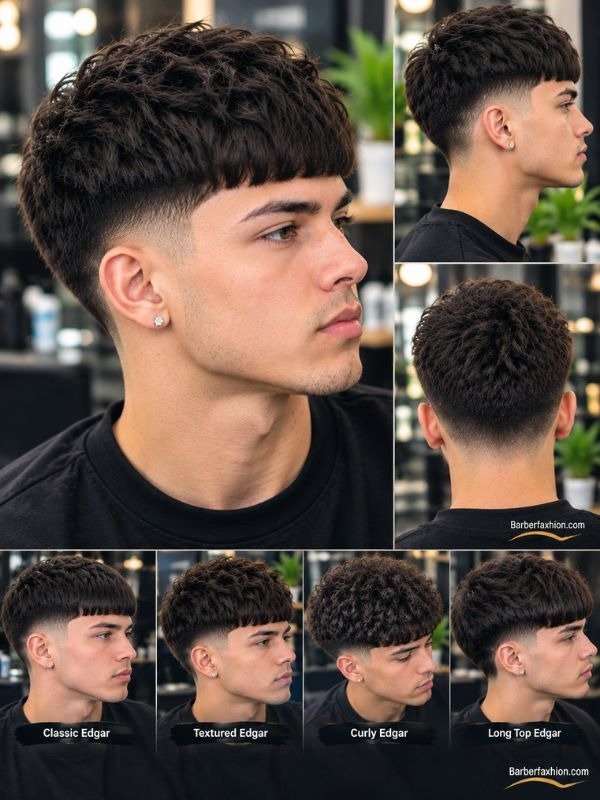
The basic haircut can be customized in several ways. Your choice should depend on your hair texture, density, preferred level of contrast, and how much styling you’re willing to do.
Classic Mid Taper Edgar
The classic version keeps the top relatively compact with a clean, defined fringe. The taper gradually reduces the hair around the temples and sides while maintaining a balanced shape.
It’s a straightforward choice if you want the recognizable Edgar appearance without too much texture or extra styling.
Textured Mid Taper Edgar
A textured version breaks up the uniform appearance of the fringe and top. Instead of making every strand sit perfectly flat, the barber uses controlled texture to create separation.
This works especially well when you want the haircut to look modern rather than overly rigid. A small amount of matte styling product can enhance the texture without making the hair greasy.
Mid Taper Edgar With Straight Hair
Straight hair naturally makes the fringe look cleaner and more defined. This makes it easier to create the strong horizontal shape associated with the Edgar.
For a sharper appearance, ask your barber to keep the front controlled and clearly defined. If you prefer a relaxed finish, subtle texture can prevent the fringe from looking too severe.
Mid Taper Edgar With Curly Hair
Curly hair can give the Edgar a completely different personality. Rather than forcing the fringe into a perfectly straight line, the barber can work with the natural curl pattern and create a shorter, controlled front.
The taper helps clean up the sides while the curls provide texture on top. The final result can look less geometric but still retain the essential Edgar shape.
Low Mid Taper Edgar
A low mid taper sits closer to the lower portion of the mid-taper range. It gives you some of the subtlety associated with a lower taper while keeping the transition slightly more noticeable.
This can be useful if you want a cleaner appearance without creating too much contrast between the sides and top.
High Taper Edgar
A high taper pushes the transition farther upward toward the upper sides. This creates more visible contrast and makes the top appear more prominent.
It’s worth discussing the exact placement with your barber because “high taper” can be interpreted differently depending on the barber and reference photo.
Sharp Line-Up Mid Taper Edgar
A sharp line-up emphasizes the forehead and temple areas. It works particularly well with a clearly defined Edgar fringe because both elements create clean geometry.
However, a very sharp line-up isn’t essential. Your natural hairline can be followed for a softer appearance.
Soft Mid Taper Edgar
A softer version uses less aggressive contrast and a more natural transition. The fringe may also be slightly textured rather than perfectly blunt.
This is a practical choice if you like the Edgar shape but don’t want the haircut to look overly dramatic.
Mid Taper Edgar for Different Hair Types
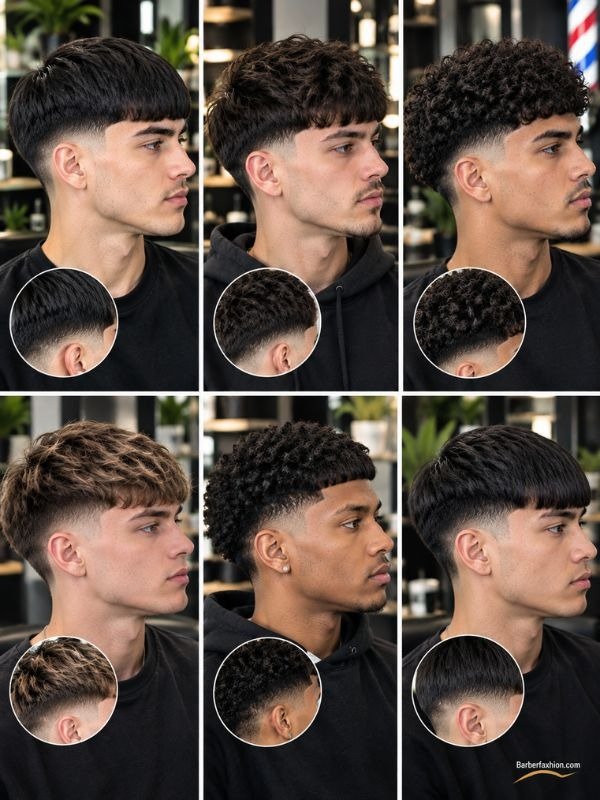
Your hair type changes how the haircut behaves after you leave the barber shop. That’s why the same reference photo won’t necessarily produce the same result on every head of hair.
Styling a Mid Taper Edgar on Straight Hair
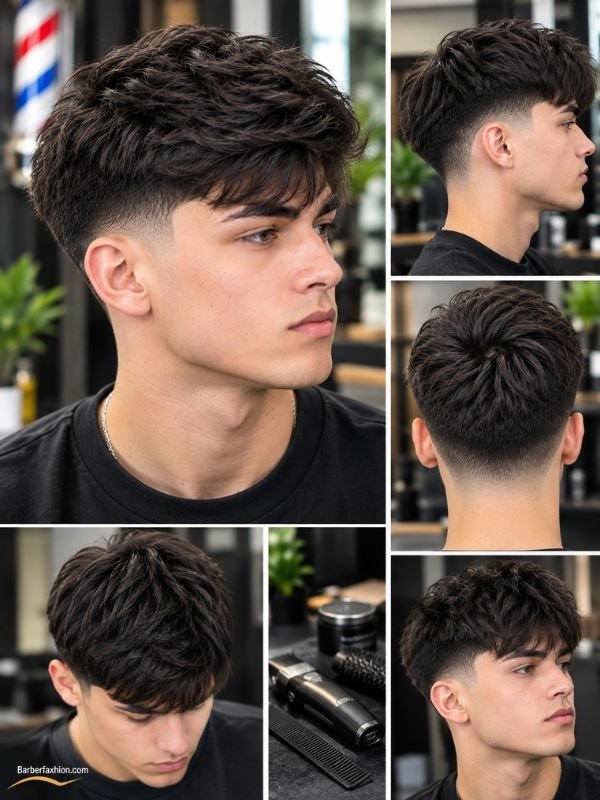
Straight hair makes it easier to control the fringe and maintain a defined front. You can use a blow dryer to direct the top forward and then apply a small amount of matte paste or clay.
If your hair becomes flat easily, avoid applying too much product. A lightweight amount can provide control without weighing the top down.
Working With Wavy Hair
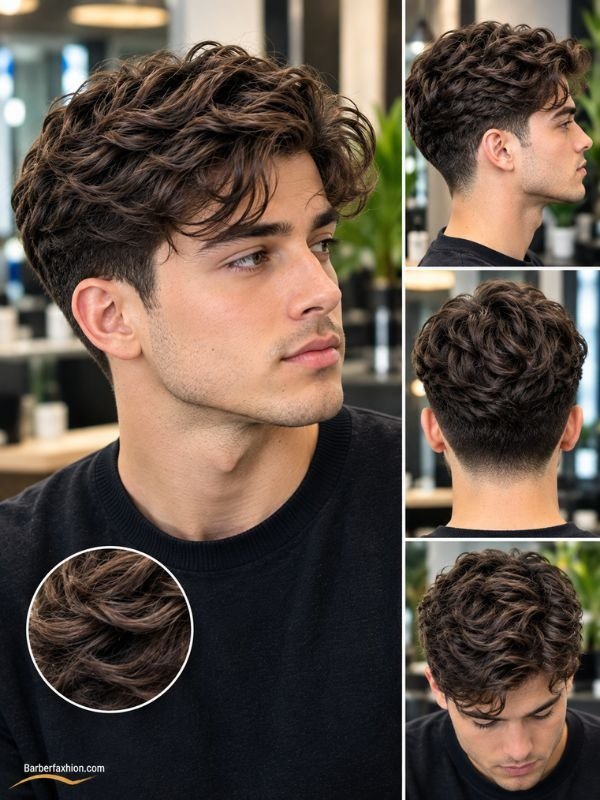
Wavy hair adds natural movement to the top. Instead of fighting that texture, ask your barber to leave enough length for the waves to sit naturally.
A lightweight styling cream or matte product can control flyaways while keeping some of the natural movement visible.
Managing Curly Hair
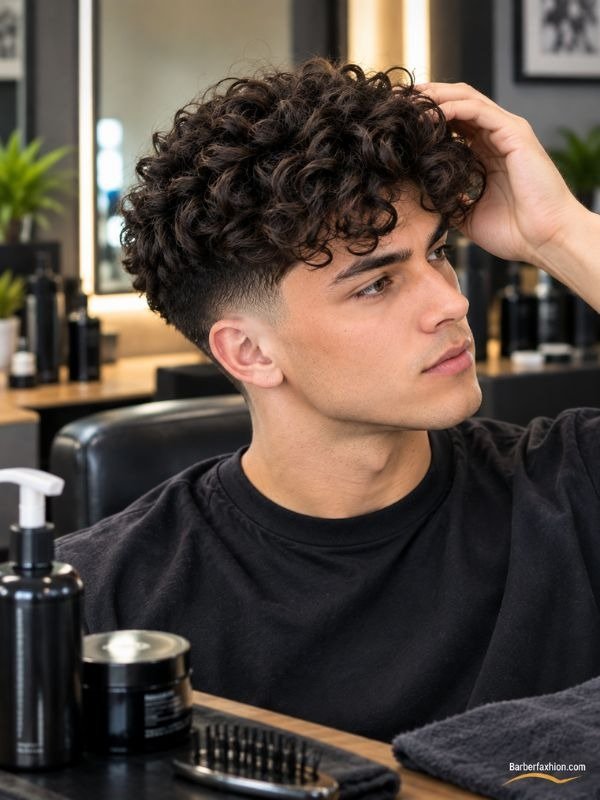
Curly hair needs a slightly different approach. The fringe can appear shorter once the curls dry, so your barber should consider shrinkage before cutting the front.
A defined curl pattern can actually make the style more interesting. The goal is to control the shape rather than flatten every curl.
Coily or Very Textured Hair
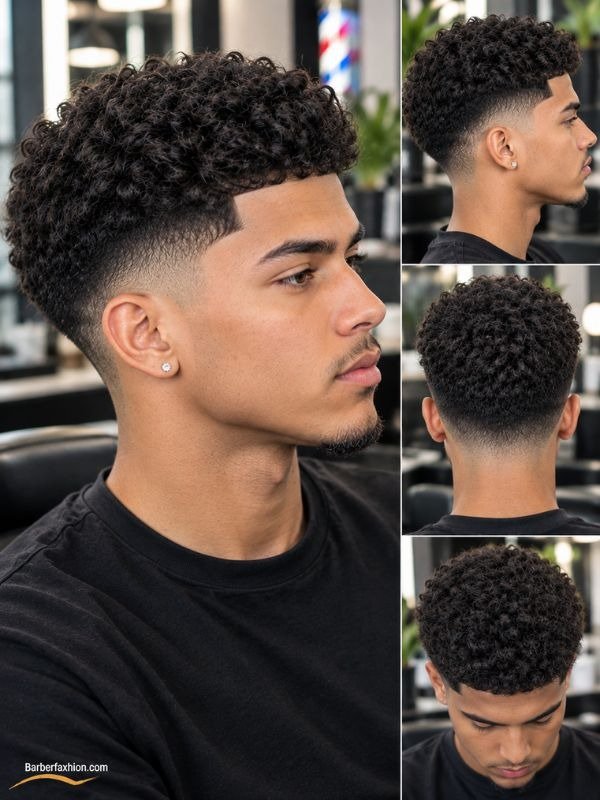
Very textured hair can create a strong, distinctive version of the haircut. The barber needs to consider density, shrinkage, and the natural direction of growth when shaping the top.
A clean taper around the temples and neckline can provide structure while allowing the natural texture to remain the main feature.
Thick Hair
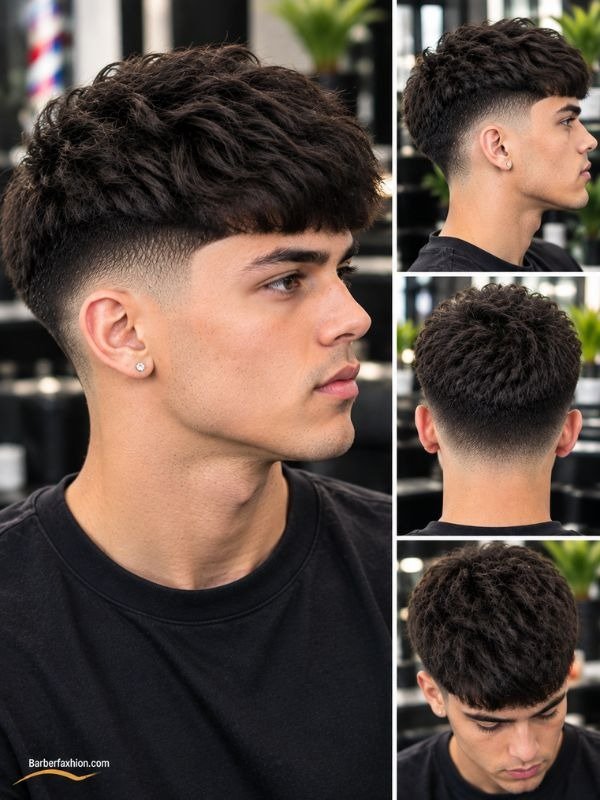
Thick hair gives you plenty of volume but can also create unwanted bulk. Your barber may remove some weight from the top while keeping sufficient density around the fringe.
Avoid excessive thinning simply to make the hair easier to manage. Too much removal can make the front look uneven or reduce the fullness you need for the Edgar shape.
Fine or Thin Hair
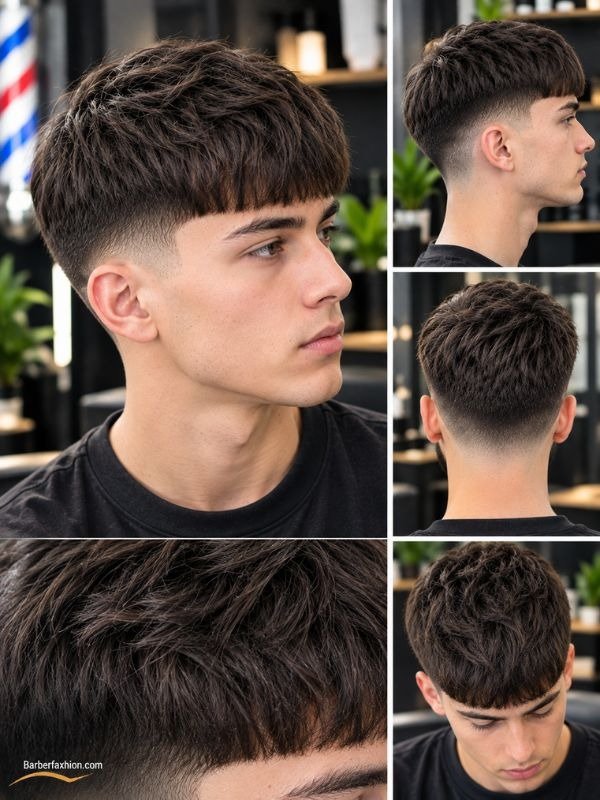
Fine hair can still work with the style, but the cut needs to preserve visual density. Keeping the top reasonably compact can make it easier to maintain a fuller appearance.
Heavy texturizing may work against you if it removes too much hair from an already fine top. A clean taper and controlled fringe can often provide enough structure without excessive styling.
Does a Mid Taper Edgar Suit Your Face Shape?
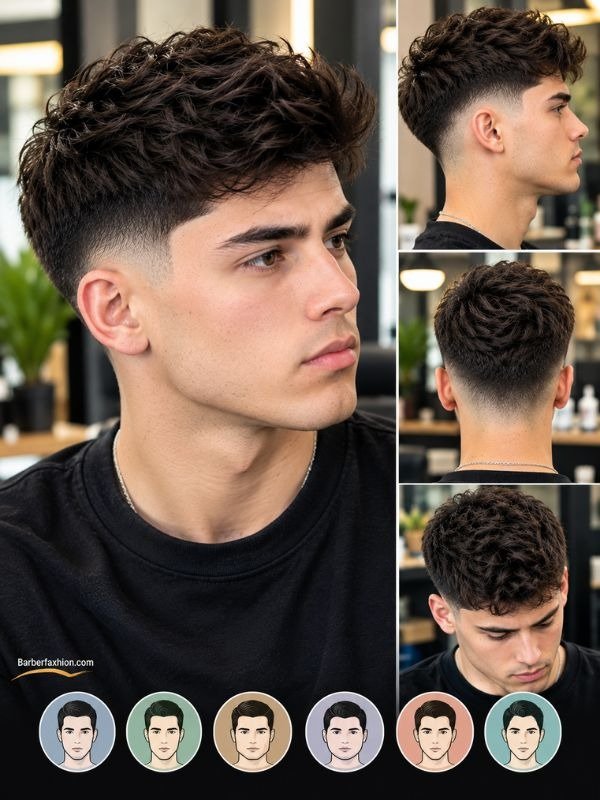
Face shape shouldn’t be treated as a strict rulebook. The more useful approach is to adjust the fringe, top, and taper so the overall proportions feel balanced.
Round Face
A slightly more structured top can add visual definition. Keeping excessive width out of the sides can also help maintain a cleaner silhouette.
Oval Face
Oval proportions give you plenty of flexibility. You can experiment with a sharper fringe, additional texture, or a softer taper depending on your preferred look.
Square Face
A square face already has strong angular features. A defined fringe can emphasize that structure, while a slightly softer taper can keep the haircut from looking overly rigid.
Oblong or Long Face
A very tall top may make the face appear longer visually. A compact top with a controlled fringe can provide a more balanced overall shape.
Heart-Shaped Face
A moderate fringe and controlled sides can work well. Your barber can adjust the width and length of the front according to your forehead and chin proportions.
Edgar Taper Fade vs Other Edgar Styles
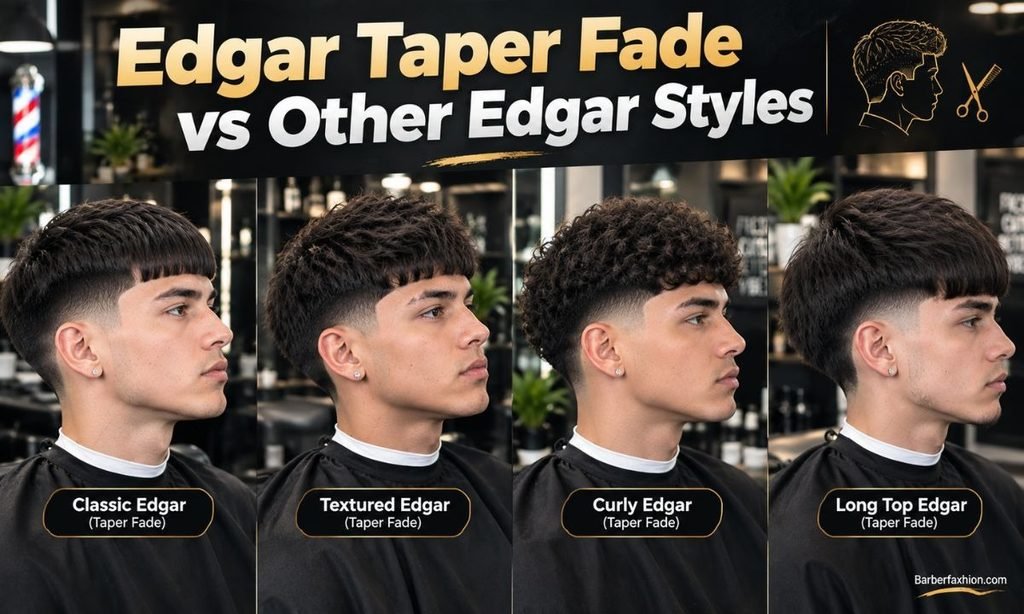
Understanding the terminology makes it much easier to explain what you actually want.
| Style | Main Difference |
| Mid Taper Edgar | Edgar fringe with a mid-positioned taper |
| Edgar Low Taper Fade | Taper sits lower around the sides |
| High Taper Edgar | Taper transition is positioned higher |
| Mid Fade Edgar | More of the side is gradually faded, creating a stronger transition |
| French Crop | Forward fringe with a different overall shape and styling approach |
Mid Taper Edgar vs Edgar Low Taper Fade
The main difference is taper placement. A low taper keeps the transition lower around the temples and neckline, creating a more subtle effect.
A mid taper becomes more noticeable around the sides. Both can have the same Edgar-style fringe, so the choice mainly comes down to how much contrast you want around the sides.
Edgar Low Fade vs Edgar Taper Fade
An Edgar low fade generally involves a more visible faded transition on the sides, while an Edgar taper focuses the shortening around areas such as the temples and neckline.
The terminology can vary between barbers, so a reference photo is useful when requesting either style.
High Taper Edgar vs Mid Taper Edgar
A high taper moves the transition upward, making the sides appear cleaner and creating more contrast with the top.
A mid taper keeps the transition lower, giving you a more balanced middle ground. If you’re unsure, show your barber the exact placement you want rather than relying only on the word “mid.”
Mid Fade vs Edgar Taper
A mid fade generally affects a broader section of the sides and produces a more obvious faded effect. A taper is more concentrated around the temple and neckline areas.
The Edgar element can be combined with either approach. The fringe remains the key feature that gives the haircut its Edgar identity.
Edgar Fade vs Mid Taper Edgar
“Edgar fade” is a broader description that can refer to different fade placements. A Mid Taper Edgar is more specific because it identifies both the Edgar style and the taper position.
If you want a particular level of contrast, explain the placement to your barber and show a reference image.
How to Ask Your Barber for a Mid Taper Fade Edgar
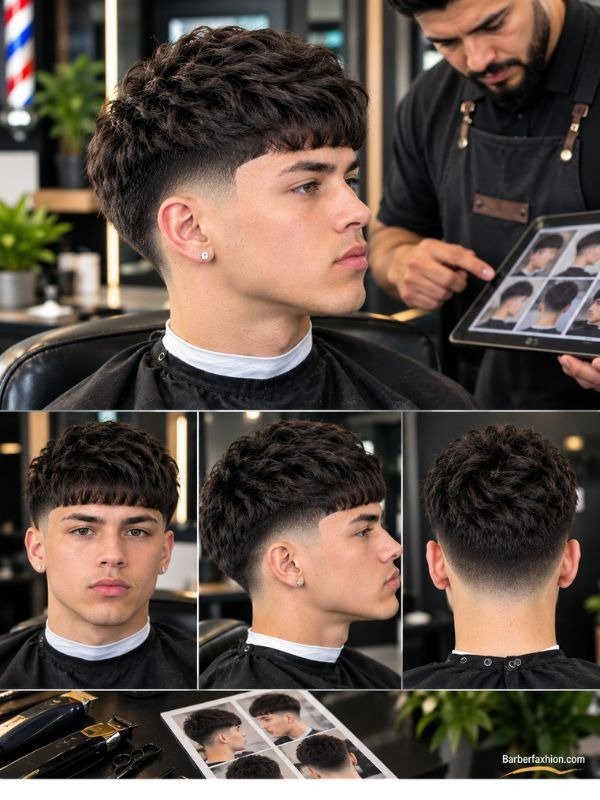
Simply saying “give me a Mid Taper Fade Edgar” may not provide enough information. Several details still need to be decided.
What to Tell Your Barber
Explain these points:
- You want an Edgar-style forward fringe.
- You want the taper around the middle of the sides.
- Tell them how sharp or natural you want the fringe.
- Explain whether you want a line-up.
- Mention your preferred neckline.
- Show how much length you want to keep on top.
- Tell them whether you want texture or a smoother finish.
A useful request could be:
“I want an Edgar with a mid taper around the temples and sides. Keep enough length on top for the fringe, and keep the front defined but not excessively short. I’d like a natural finish.”
Then show your reference photo.
Should You Bring a Reference Photo?
Absolutely. A photo removes much of the guesswork.
Ideally, bring images showing the front, side, and back. The front image helps with fringe shape, while the side and back images show taper placement and neckline details.
How to Describe the Fringe, Taper and Top
Don’t focus only on the name of the haircut. Describe the result you want.
For example, say whether the fringe should be:
- Straight and blunt
- Slightly textured
- Short and compact
- Longer and softer
Also explain whether you want a subtle taper or stronger contrast.
Common Barber Mistakes to Avoid
Some problems happen when the haircut is cut too aggressively rather than because the style itself is unsuitable.
Common issues include:
- Cutting the fringe shorter than intended
- Taking the taper too high
- Removing too much bulk from thick hair
- Over-thinning fine hair
- Making the line-up unnecessarily sharp
- Ignoring natural cowlicks
- Copying a reference photo without adapting it to your hair
Clear communication before the clippers start can prevent most of these problems.
How Is a Mid Taper Edgar Cut?
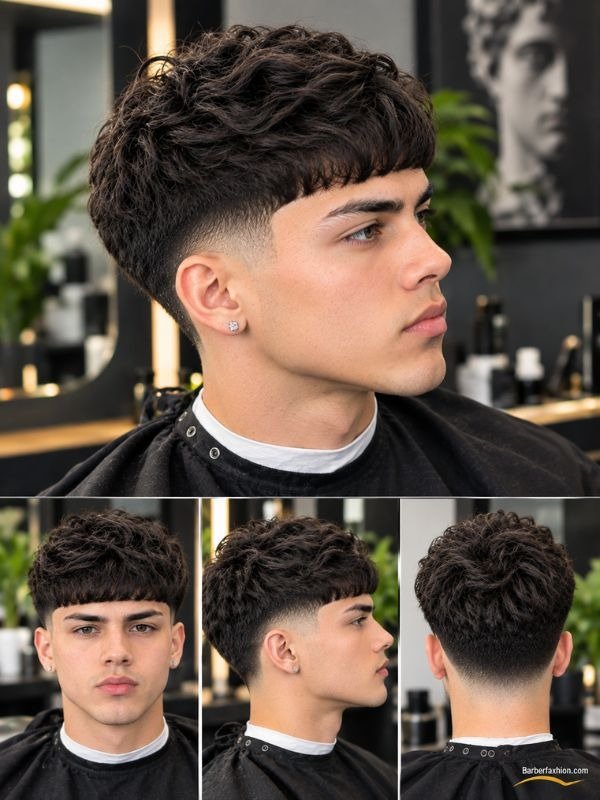
The exact technique varies between barbers, but the process usually focuses on building the taper first and then shaping the top and fringe.
Tapering the Sides and Temples
The barber gradually reduces the hair around the temples and sides. The transition should look blended rather than like a sudden step between lengths.
The taper height is adjusted according to your head shape, existing growth pattern, and desired level of contrast.
Shaping the Top
The top is cut to create the desired Edgar silhouette. Your barber may remove bulk from thick hair or preserve additional length when working with curls or waves.
The goal is to create a shape that still works after you wash and style it at home.
Creating the Edgar Fringe
The fringe is where precision matters most. Your barber establishes the front edge and then checks it from different angles.
Natural hair growth, cowlicks, and texture can all affect how straight the finished fringe appears.
Finishing the Line-Up and Neckline
The final line-up and neckline clean up the haircut. You can choose a sharper finish or keep these areas more natural.
How to Style a Mid Taper Edgar
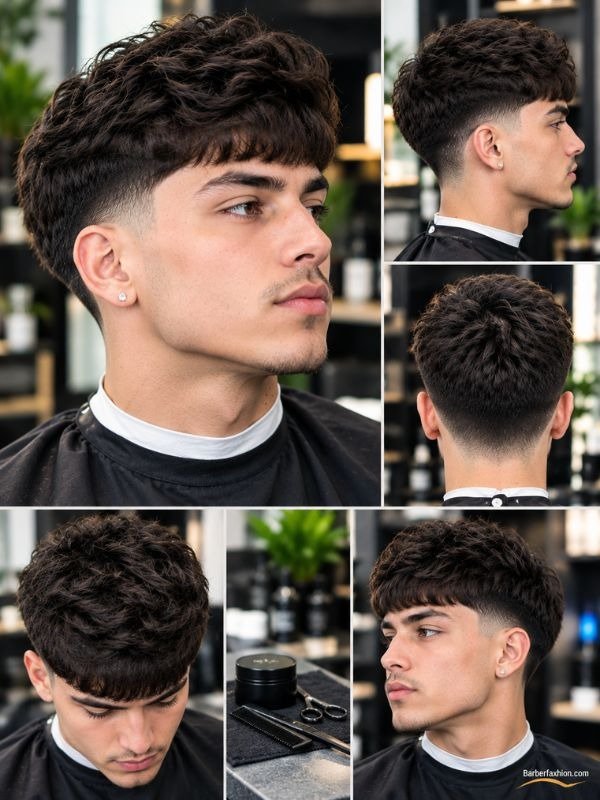
Styling doesn’t need to take long once the haircut has the correct shape.
Styling Straight Hair
Start with slightly damp hair and direct the top forward with your fingers or a brush. A blow dryer can help control the direction.
Once dry, use a small amount of matte paste or clay. Work it through the top and lightly define the fringe.
Styling Wavy or Curly Hair
Let the natural texture do more of the work. Apply a lightweight styling product and shape the front with your fingers.
Avoid repeatedly brushing or flattening curls if you want the texture to remain visible.
Products That Work Well
The right product depends on the finish you want:
- Matte clay: stronger control and a dry finish.
- Matte paste: flexible control with a softer feel.
- Light styling cream: useful for waves and curls.
- Texture powder: can add grip and lift when used sparingly.
You don’t need several products. Start with one that matches your hair and desired finish.
Quick Everyday Styling Routine
- Begin with clean, slightly damp hair.
- Direct the top toward the front.
- Shape the fringe with your fingers.
- Blow-dry if you need additional control.
- Apply a small amount of product.
- Check the front and sides before finishing.
The less product you need, the easier the haircut will be to maintain.
Mid Taper Edgar Maintenance Guide
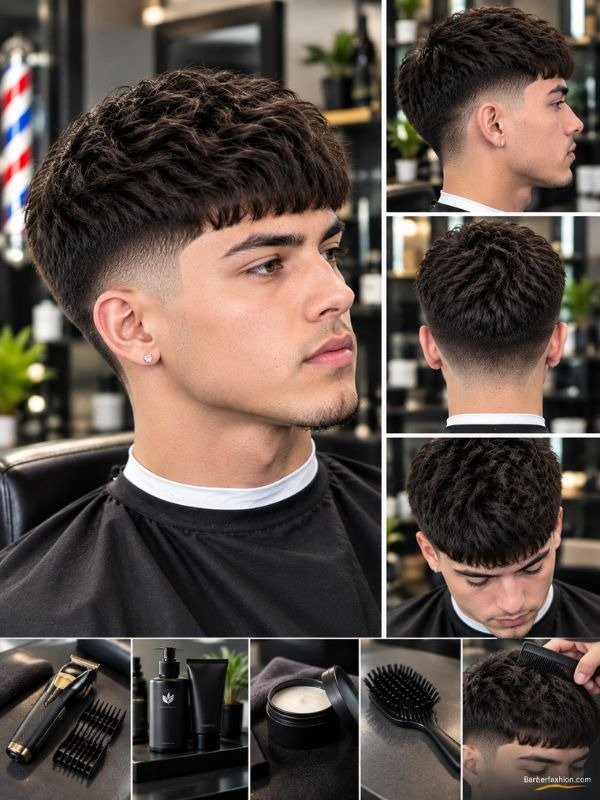
This haircut relies on clean lines and controlled shape, so regrowth can become noticeable fairly quickly.
How Often Should You Get a Taper Cleanup?
If you want the taper to remain crisp, schedule regular cleanups based on how quickly your hair grows. Some people may prefer frequent edge and taper touch-ups, while others are comfortable allowing more growth between appointments.
Your barber can also clean up the taper without completely reshaping the top every time.
When Should You Trim the Fringe?
The fringe may need attention before the rest of the haircut. If it begins covering your eyes, losing its shape, or becoming difficult to style, it’s probably time for a trim.
Don’t keep cutting it yourself to chase the original shape. The front is one of the most noticeable parts of an Edgar.
How to Maintain the Shape at Home
Wash according to your hair type and keep the top conditioned enough to remain manageable. Avoid constantly restyling the fringe with excessive heat or product.
For longer-lasting shape, sleep with clean, dry hair and avoid piling on styling products day after day without washing.
Growing Out a Mid Taper Edgar
If you decide to grow it out, the taper will gradually become less defined while the top and fringe gain length.
A barber can blend the growing sides and reshape the top during the transition. This is usually easier than trying to change the entire haircut at once.
Who Should Get a Mid Taper Edgar?
Best Candidates for the Style
This haircut is worth considering if you like a defined forward fringe, clean sides, and a hairstyle that can range from sharp to relaxed.
It’s particularly flexible because the taper, fringe, and top can all be customized. Straight hair can create a crisp finish, while waves and curls can add natural texture.
When You May Want a Softer Version
A softer variation may be easier to manage if you have a strong cowlick, an uneven natural hairline, very fine hair, or simply prefer a less structured appearance.
You don’t have to copy an extremely sharp Edgar to get the basic look. Your barber can adapt the cut around the way your hair actually grows.
Frequently Asked Questions About the Mid Taper Edgar
Is a Mid Taper Edgar the Same as a Mid Fade Edgar?
No. A Mid Taper Edgar uses a taper focused around areas such as the temples and neckline, while a mid fade generally creates a broader faded transition on the sides. Both can use the same Edgar-style fringe.
Does a Mid Taper Edgar Work With Curly Hair?
Yes. Curly hair can give the style plenty of natural texture. The fringe usually needs to be adapted to curl pattern and shrinkage instead of being forced completely straight.
How Long Does a Mid Taper Edgar Last?
The overall shape depends on your hair growth rate and how sharp you want the taper to remain. The taper and fringe may need separate touch-ups because they can lose definition at different rates.
How Do I Ask My Barber for an Edgar?
Tell your barber you want an Edgar-style forward fringe and specify the taper height, top length, fringe shape, line-up, and neckline. Bringing a front, side, and back reference photo makes the request much clearer.
Can You Get a Mid Taper Edgar With Thin Hair?
Yes, but the haircut should be adapted to preserve visual density. Avoid excessive thinning on the top and choose a fringe length that gives the hair enough coverage and structure.
Conclusion
The Mid Taper Fade Edgar isn’t one fixed haircut. Its final appearance depends on the relationship between the fringe, top length, taper placement, hair texture, density, and personal preference. That’s what makes it easy to customize for different looks.
Before your next barber appointment, focus less on the haircut name and more on the details you want. Bring clear reference photos, explain your preferred fringe and taper height, and let your barber adapt the shape to your natural hair. A well-planned Edgar should look good not only when you leave the shop but also when you style it yourself.