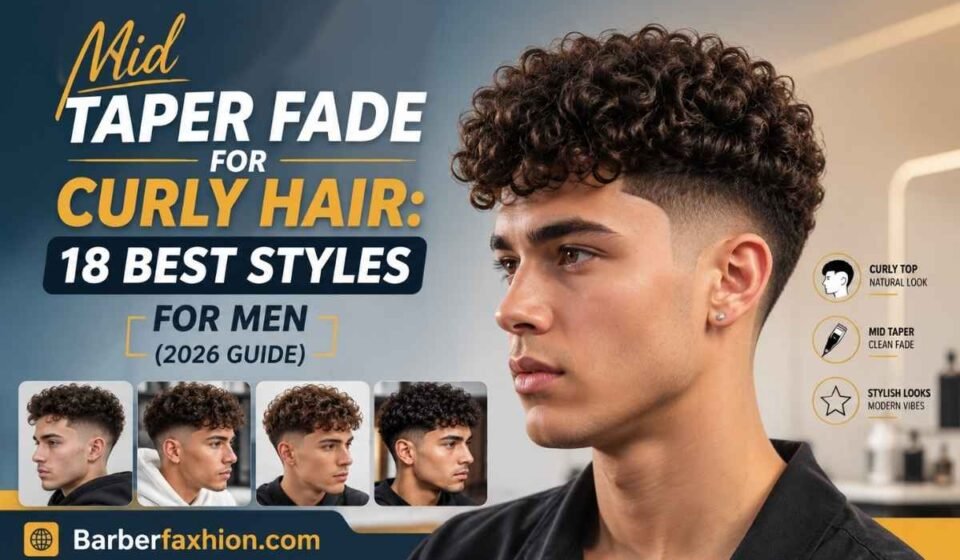

You’ve probably stood in front of the mirror, watched your curls grow outward instead of down, and wondered why your head suddenly looks like a triangle. Maybe you searched “haircuts for curly hair” a dozen times and kept landing on photos that don’t look anything like your texture. That frustration is real, and it’s the number one reason curly-haired guys end up disappointed after a haircut that wasn’t planned around how their hair actually grows.
This guide fixes that. You’ll get 18 mid taper fade styles broken down by curl type and face shape, a curl-pattern chart that actually explains what 2A through 4C means for your cut, a word-for-word script to use in the barber’s chair, a full styling and maintenance routine, and a dedicated section for Black men with afro-textured hair. By the end, you’ll know exactly what to ask for and why it works.
Quick Answer
A mid taper fade for curly hair starts at temple level and gradually blends the sides shorter toward the neckline, while leaving the curls on top full and untouched. It controls the “pyramid” side-bulk that curly hair develops naturally, and it works across nearly every curl pattern — from loose 2A waves to tight 4C coils — as long as your barber adjusts top length and cutting technique for your specific texture.
What Is a Mid Taper Fade for Curly Hair?
A mid taper fade begins roughly halfway between your ear and your crown — the temple area — and tapers the hair progressively shorter as it moves down toward the neckline and around the ear. Nothing gets shaved to the skin unless you specifically ask for that. Instead, the hair thins out in stages, so there’s a smooth gradient between your full curls on top and the shortest point at the bottom of the fade.
For curly hair, that starting point matters more than it does for straight hair. Curls naturally push outward as they grow, adding visible width to the sides of your head. A mid taper removes exactly that bulk without touching the volume up top, so you get a cut that looks intentional instead of overgrown. It’s the middle ground between a low taper’s subtlety and a high taper’s drama, and most barbers will tell you it’s the safest starting point if you’ve never had your curls professionally faded before.
A mid taper fade for curly hair is also one of the few cuts flexible enough to work for a job interview on Monday and a night out on Saturday without any real styling change — which is a big part of why it’s become the most-requested curly fade in barbershops right now.
Mid Taper Fade vs. Mid Fade for Curly Hair — The Real Difference
People use these two terms interchangeably, but they’re not the same haircut. A mid taper fade blends gradually and keeps a little length along the sides even at its shortest point. A mid fade goes further, tapering all the way down to bare skin for a much sharper contrast line.
On curly hair specifically, this distinction changes the whole look. The taper version keeps some texture running into the fade, so the transition from curls to sides feels soft and natural. The full mid fade creates a hard, high-contrast edge that looks striking in photos but grows out faster and needs tighter barber visits to stay clean.
Taper vs. Fade — What’s the Difference, Really?
A taper simply shortens the hair gradually toward your natural hairline; you’ll still have some length even at the shortest point. A fade pushes that gradient all the way down to the skin. Combine both, and you get exactly what a mid taper fade is: tapered through most of the side, with a clean fade finishing it off near the neckline and ear.
Mid Taper Fade vs. Low Taper Fade for Curly Hair
A low taper fade keeps the blend concentrated right at the hairline and neckline, leaving noticeably more length across the sides overall. It’s the most conservative option of the three heights, and it tends to suit guys who want their curls to stay the loudest part of the haircut, with almost no contrast competing for attention.
The trade-off is that low taper fade curly hair looks softer but also does less to control side bulk. If your curls are dense or tightly coiled, a low taper alone often isn’t enough to stop the pyramid shape from creeping back in between cuts. Guys with looser 2A to 3A waves tend to get away with it more easily than guys with 3C to 4C coils.
Mid Taper Fade vs. High Taper Fade for Curly Hair
A high taper fade starts near the crown, well above the temple, and removes a lot more hair before it ever reaches your natural curls. The contrast is sharper and more dramatic, and it reads as a bolder, edgier statement.
High taper fade curly hair can look fantastic on thicker, denser curl patterns that can absorb that much contrast without looking bare on top. But on finer or thinner curls, a high taper sometimes over-exposes the scalp and leaves the top looking disconnected from the sides. If you’re unsure which height suits you, the mid taper is the safer default — it’s forgiving across nearly every density and curl pattern.
| Fade Type | Starting Point | Visual Effect | Curly Hair Suitability |
| Low Taper Fade | Near the ears and neckline | Subtle, conservative | Best for looser 2A–3A waves |
| Mid Taper Fade | Temple level | Balanced contrast | Works for nearly all curl types |
| High Taper Fade | Above the temples | Bold, dramatic | Suits denser 3B–4C curls best |
| Skin/Mid Fade | Any height, down to skin | Maximum contrast | Needs frequent upkeep on any curl type |
| Drop Fade | Curves downward past the temple | Arc-shaped, modern | Flatters most curl patterns |
Why the Mid Taper Fade Works So Well on Curly Hair
Curly hair doesn’t behave the way straight hair does, and it’s not really useful to cut it as if it did. It expands outward before it grows down. It shrinks noticeably once it dries. And it adds visible width to the sides of your head faster than almost any other texture. None of that is a flaw in your hair — it just means the haircut has to account for it.
That’s exactly what a mid taper fade is built to do. Curl-typing resources consistently note that tighter curl patterns can expand well beyond their resting length once unstyled and left to dry naturally on the sides. A mid taper counters that by tapering the sides down in a controlled gradient, so all that natural volume gets directed upward into the top section instead of spreading sideways.
It Solves the “Pyramid Shape” Problem
If you’ve ever let curly hair grow out without managing the sides, you already know the look: hair puffs outward at the sides and narrows toward the crown, creating an inverted-triangle silhouette that some barbers call the mushroom effect. It’s not really about length — it’s about where the bulk sits. A mid taper fade removes that side bulk progressively, heaviest near the bottom and lightest near the temple, so your head stays proportional while your curls on top keep all their natural bounce.
Curl Type Chart: 2A to 4C Explained
One of the biggest problems with generic “curly hair” advice is that it treats every curl pattern as identical. A loose 2A wave and a tight 4C coil behave completely differently in terms of shrinkage, density, and how cleanly a fade line reads against the texture. Understanding roughly where your curls sit on this chart makes it much easier to ask your barber for the right adjustments.
| Curl Type | Pattern | Typical Shrinkage | Mid Taper Adjustment |
| 2A–2B (Wavy) | Loose S-bends, low density | 5–15% | Subtle taper, soft natural blend |
| 2C (Wavy-Curly) | Defined waves with some curl | 10–20% | Classic mid taper, minimal extra length needed |
| 3A (Loose Curls) | Wide, springy spirals | 15–25% | Standard mid taper works as-is |
| 3B (Medium Curls) | Tighter, springy ringlets | 25–30% | Mid taper plus curl cream for definition |
| 3C (Tight Curls) | Dense corkscrew curls | 30–40% | Leave extra top length to offset shrinkage |
| 4A–4B (Tight Coils) | Very tight, high-density coils | 40–60% | Afro taper approach, dry cutting recommended |
| 4C (Tightest Coils) | Maximum density and shrinkage | 50–70%+ | High-contrast textured afro taper works best |
This kind of curl classification traces back to hair-typing frameworks popularized by curl-care educators and stylists like Ouidad, who built entire cutting methods around the idea that curl pattern — not just length — should drive the haircut.
Mid Taper Fade for Wavy Hair (2A–2C Curls)
If your texture sits in the wavy range rather than full curls, the mid taper fade still works beautifully — it just needs a lighter touch. Wavy hair has less shrinkage and less natural volume than tighter curl patterns, so the fade can sit a little closer to the hairline without overwhelming the top. A mid taper wavy hair cut usually pairs well with a slightly longer top (2 to 4 inches), textured with a matte cream rather than a heavy gel, so the natural wave pattern stays visible instead of getting weighed flat.
Guys with 2A to 2C waves also tend to have the most flexibility with styling direction — side parts, loose quiffs, and textured fringes all read clearly on wavy hair in a way that can get lost on denser 4C coils.
Professional and Casual Versatility
The mid taper gives you enough structure to look sharp in a corporate setting while keeping your curl pattern fully intact. A low taper can read as too conservative for some casual looks, and a high taper can feel like too much contrast for a formal office. The mid taper sits in the middle — it moves from a Monday client meeting to a Saturday hangout without you needing to change a single thing about it, which is a big part of why it’s become one of the most requested fades for curly-haired men across age groups.
18 Best Mid Taper Fade Curly Hair Styles for Men
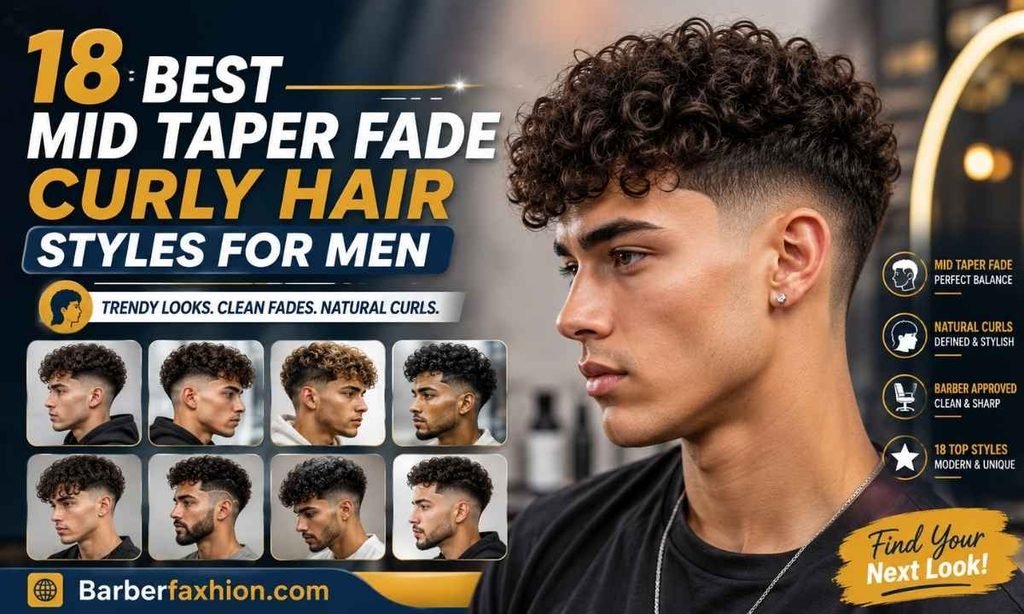
These 18 styles cover the full range of curl types, face shapes, and occasions. Bring a reference photo along with the description when you sit down with your barber — the combination works far better than either one alone.
1. Classic Mid Taper Fade with Natural Curls
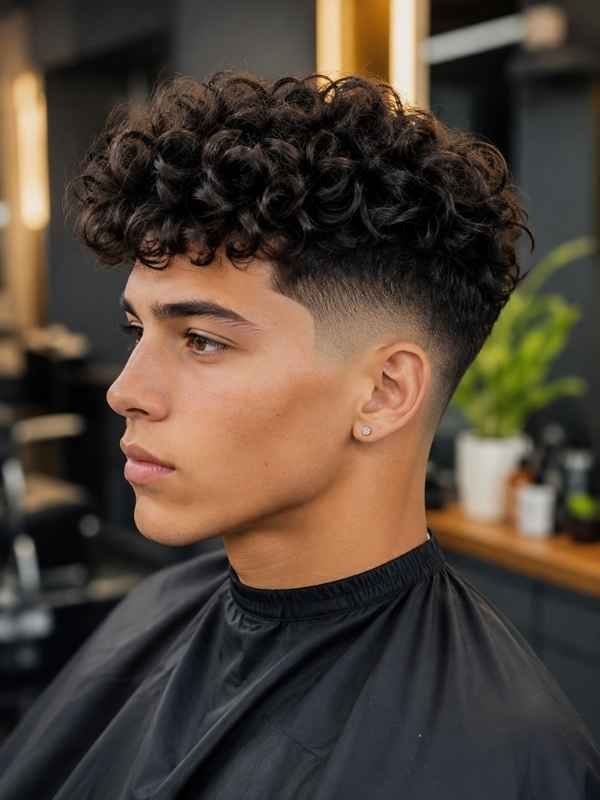
The foundation style. Clean, balanced, and it never really goes out of style. The tapered sides remove bulk gradually while your curls stay full and untouched on top, creating structure without looking over-designed. If this is your first time getting your curls professionally faded, start here.
Best for face shape: Oval, square | Best for curl type: 2A to 3B | Occasion: Daily wear, professional, casual
Styling tip: Apply curl cream to damp hair and diffuse on low heat for definition that lasts all day without frizz.
2. Blowout Mid Taper Fade Curly Hair
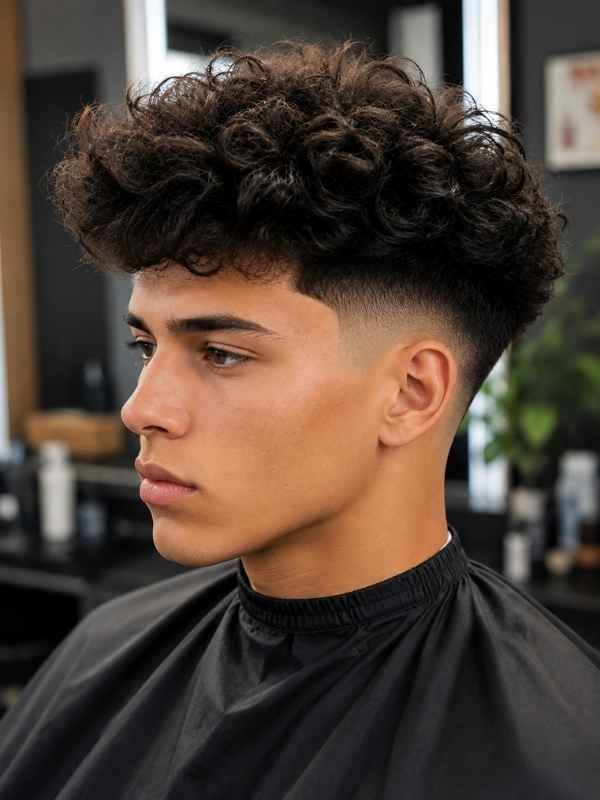
Built for guys who want maximum volume and presence. Your barber dries and directs the curls upward with a diffuser, building height and fullness on top, while the mid taper keeps the sides crisp underneath. This works especially well on 3C to 4B curl patterns where the natural volume is already there to work with.
Best for face shape: Oval, oblong | Best for curl type: 3C to 4B | Occasion: Nightlife, creative settings, bold casual
Styling tip: Diffuse on medium heat lifting from the roots, then finish with a light pomade to define the edges without weighing the curls down.
3. Curly Mohawk with Mid Taper Fade
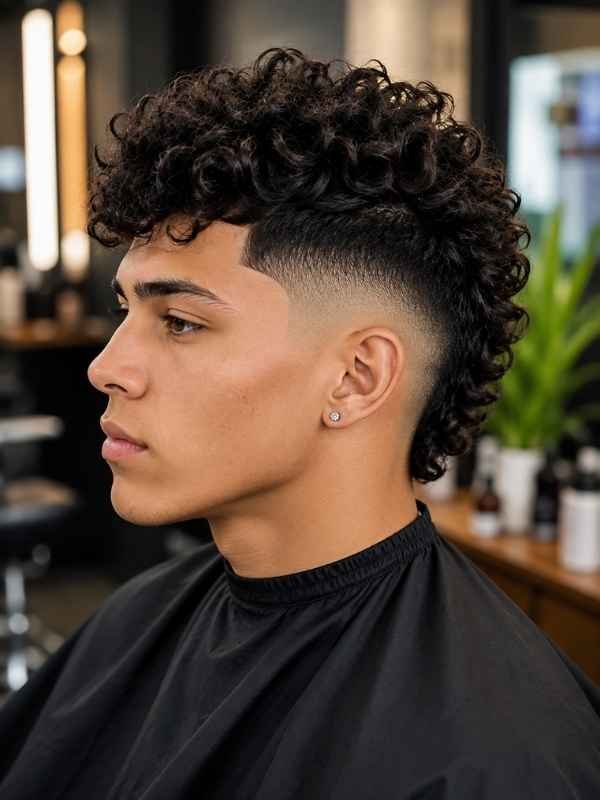
A modern take on a rebellious classic. The mid taper narrows toward a distinct curly strip running down the center, creating strong visual contrast between the clean sides and the textured top. It’s a favorite among younger guys who want their curls to make a statement.
Best for face shape: Oval, oblong, diamond | Best for curl type: 3B to 3C | Occasion: Concerts, weekends, confident casual
Styling tip: Work curl cream through the strip and scrunch upward, then add a light-hold gel if you need the shape to hold all day.
4. Mid Taper Fade with Curly Fringe
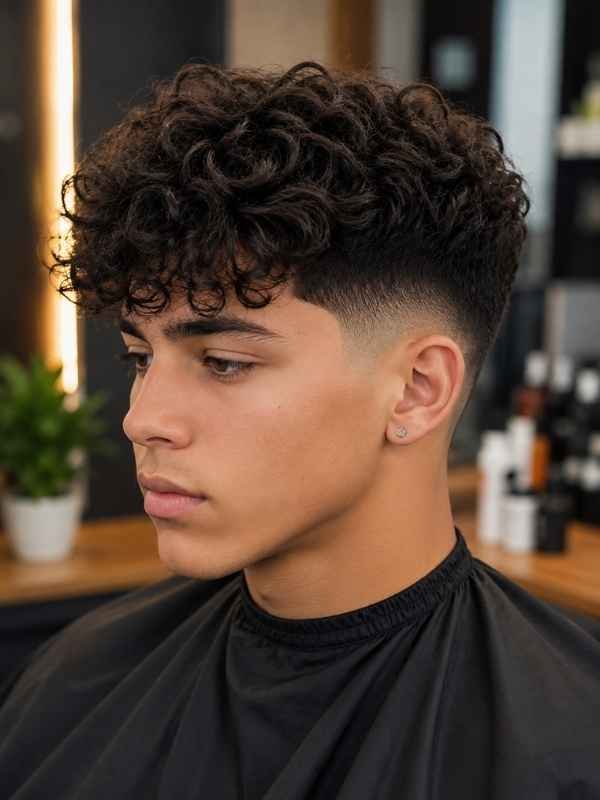
The curly fringe falls forward across the forehead for an easy, effortless feel while the tapered sides stay clean and structured underneath. This works especially well on looser to medium curl patterns, where the fringe moves naturally instead of sitting heavy.
Best for face shape: Round, heart-shaped | Best for curl type: 2A to 3A | Occasion: Everyday wear, casual, creative settings
Styling tip: Use a light curl spray on damp hair and let it air-dry so the fringe falls with natural movement.
5. Curly Quiff with Mid Taper Fade
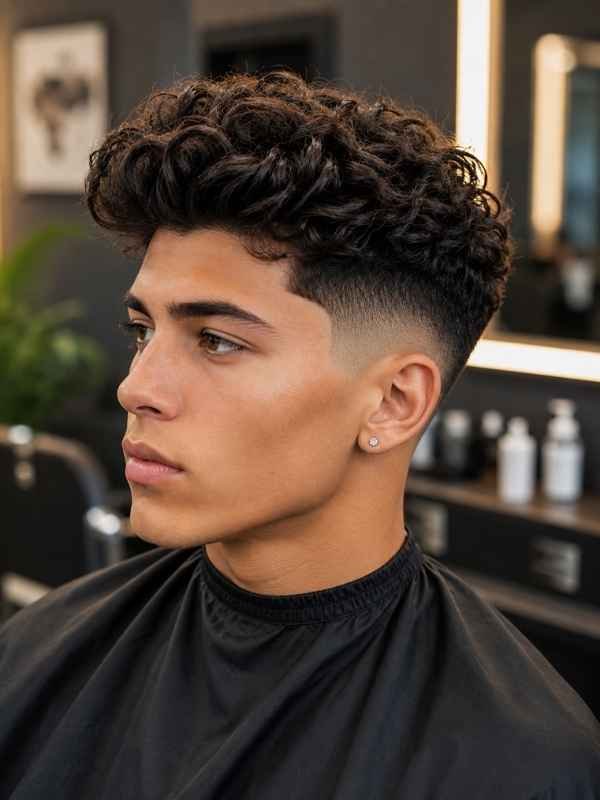
Controlled height and volume at the front give this cut a polished, intentional look. The mid taper supports the quiff by clearing away the side bulk that would otherwise compete with the upward volume — sharp enough for the office, relaxed enough for a night out.
Best for face shape: Oval, square, round | Best for curl type: 3A to 3B | Occasion: Office, dates, semi-formal events
Styling tip: Apply texture clay to damp roots at the front, then blow-dry while lifting with your fingers for height and direction.
6. Textured Afro Mid Taper Fade
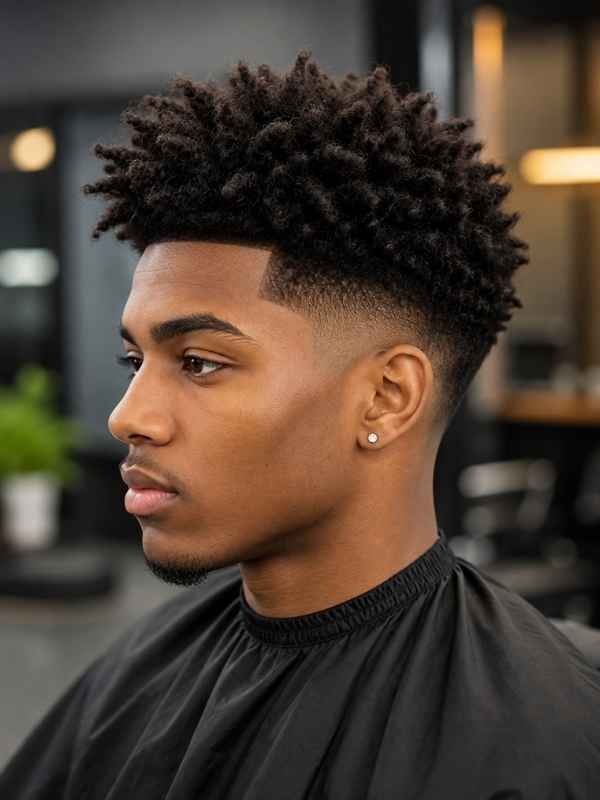
For Black men with natural curls and coils, this style carries meaning beyond looks. The rounded, natural shape on top celebrates the coil pattern, while the faded sides give it a clean, modern frame. Denser coil textures tend to hold this shape especially well between visits.
Best for face shape: Round, oval, diamond | Best for curl type: 4A to 4C | Occasion: Professional, casual, cultural events
Styling tip: Shape the top daily with a soft-bristle brush and use a curl-defining cream to lock in moisture between barber visits.
7. Long Curly Top with Mid Taper Fade
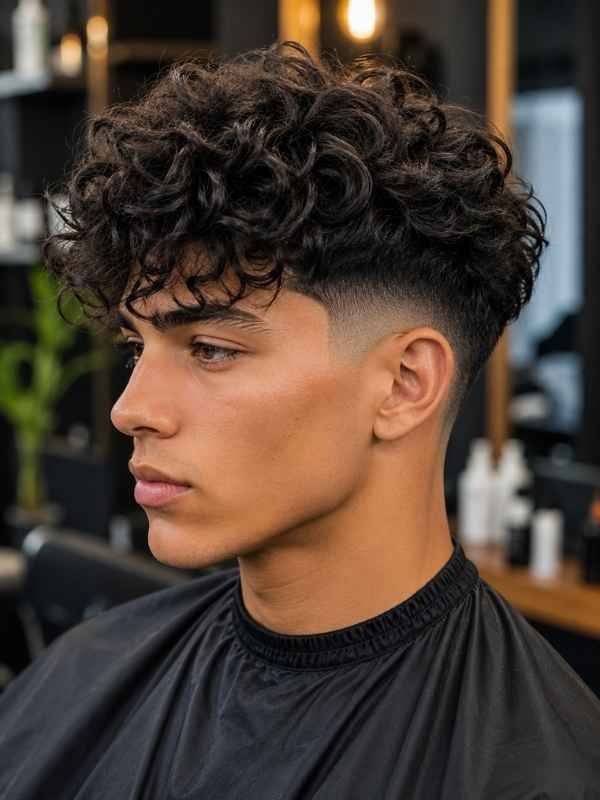
For guys who want to show off length, the top grows out to four inches or more while the tapered sides and back keep everything structured underneath. The contrast between flowing length and a clean fade reads as bold without looking unkempt.
Best for face shape: Oval, square, heart | Best for curl type: 3A to 3C | Occasion: Creative work, social events
Styling tip: Deep condition weekly and always apply a leave-in before curl cream to keep longer curls soft and frizz-free.
8. Short Curly Top with Mid Taper Fade
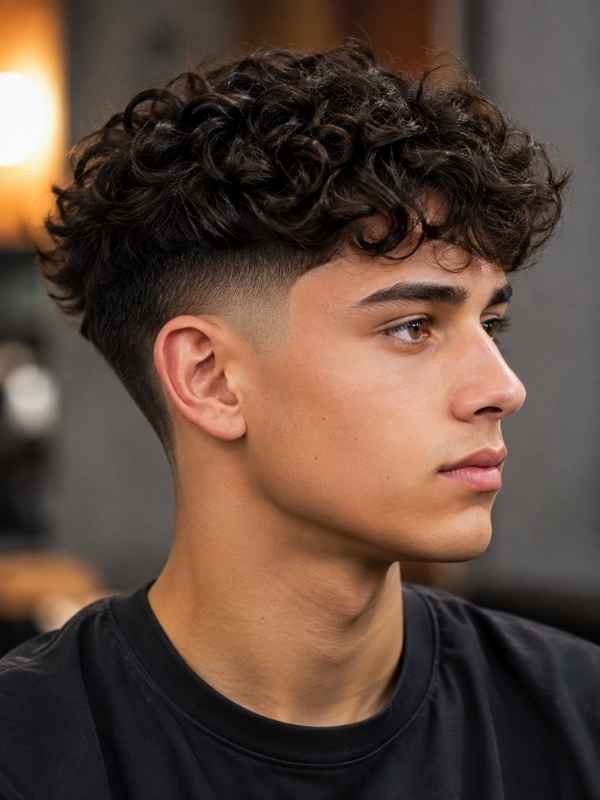
The minimalist’s cut. Short curls paired with clean, tapered sides create a polished, low-maintenance style that works in virtually any professional setting. This mid taper fade curly short hair combination usually takes under five minutes to style each morning.
Best for face shape: Oval, square, oblong | Best for curl type: 3B to 4A | Occasion: Professional, corporate, minimal daily upkeep
Styling tip: Use a small amount of light-hold gel on damp curls, then let them air-dry for a clean, natural finish.
9. Drop Fade with Curly Top
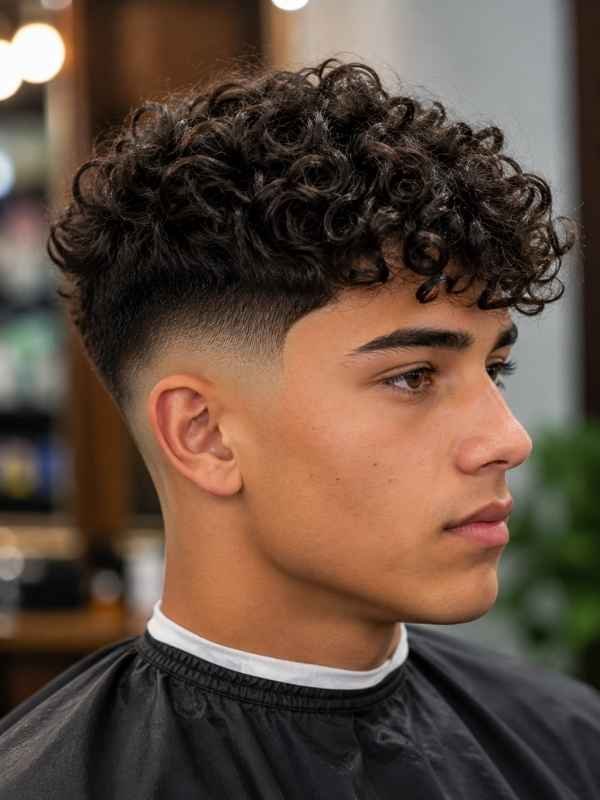
The drop fade curves downward around the ear rather than running in a straight line, dipping lower at the back of the head. Paired with natural curls on top, that curved line adds a distinctive, almost architectural quality that a standard straight fade can’t replicate.
Best for face shape: Oval, round, heart | Best for curl type: 3A to 3C | Occasion: Social events, modern casual
Styling tip: Ask your barber specifically for a mid drop fade that curves around the ear, and bring a reference photo so the shape is clear.
10. Disconnected Mid Taper with Curly Top
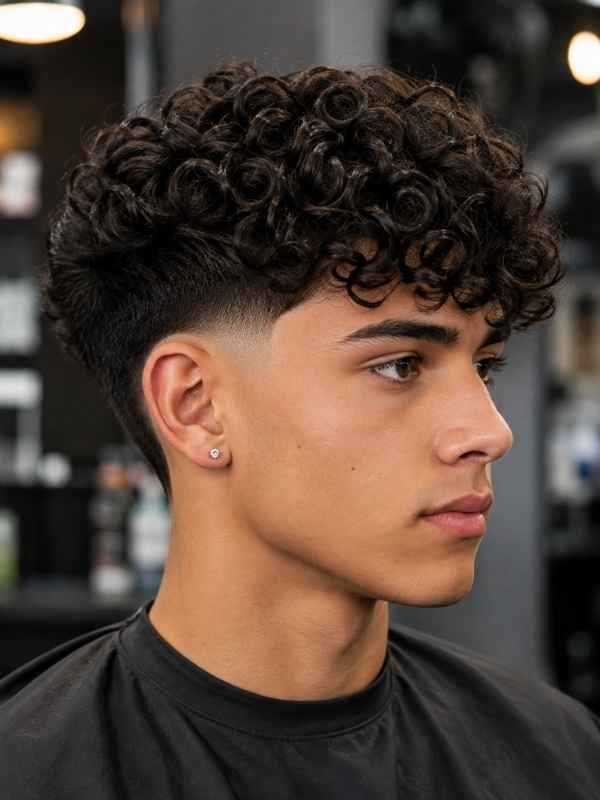
Instead of a gradual blend, this variation creates a deliberate, visible line between the fade and the curls on top. It’s a bolder, more fashion-forward choice, borrowed heavily from editorial and runway grooming trends.
Best for face shape: Oval, oblong | Best for curl type: 3B to 3C | Occasion: Nightlife, creative work, statement looks
Styling tip: Keep appointments close together — around every two weeks — so the hard line stays sharp instead of blurring as it grows out.
11. Side Part Curly Mid Taper Fade
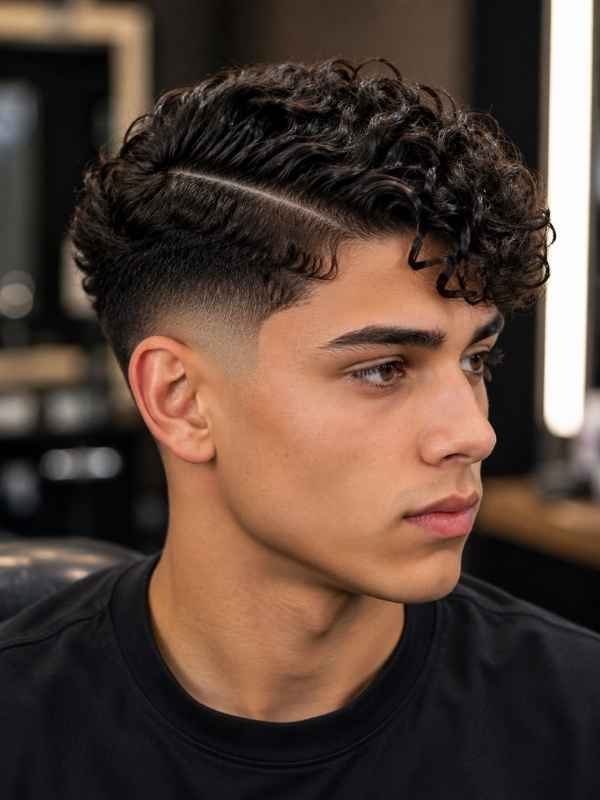
A defined part instantly makes curly hair look more intentional. It organizes the curls into a clean division, and the mid taper frames it with structure on the sides — equally at home in a boardroom or at dinner.
Best for face shape: Oval, square, heart | Best for curl type: 3A to 3B | Occasion: Work, school, smart casual
Styling tip: Create the part on damp hair with a fine-toothed comb and a small amount of pomade, then let it air-dry to set naturally.
12. Curly Mullet with Mid Taper Fade
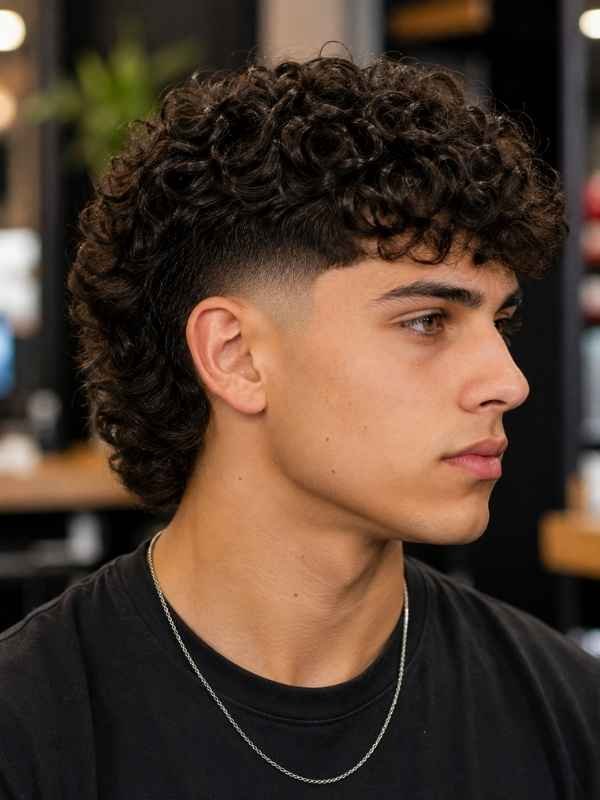
The mullet has made a real comeback, driven largely by social media culture. The mid taper modernizes it by keeping the sides tight and clean while the back grows out with natural curl texture — part retro throwback, part current statement piece.
Best for face shape: Oval, oblong | Best for curl type: 3A to 3C | Occasion: Festivals, creative work, casual weekends
Styling tip: Use curl mousse on the longer back section to define curls without stiffness, and a slightly firmer product on the sides.
13. Textured Fringe Mid Taper Fade
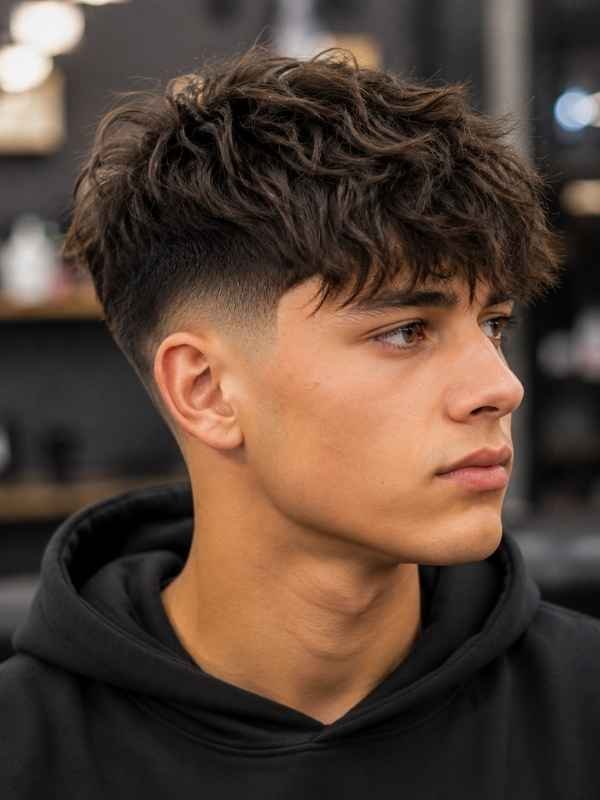
Deliberately choppy, layered fringe with real natural movement pairs against a sharp mid taper for dynamic contrast. This one works best on loose-to-medium curls, where the fringe has enough motion to look effortless rather than forced.
Best for face shape: Round, heart, oval | Best for curl type: 2A to 3B | Occasion: Casual, dating, everyday wear
Styling tip: Apply sea salt spray to damp hair and air-dry so the fringe forms loose, textured waves with a natural, tousled feel.
14. Mid Taper Fade with Beard Integration
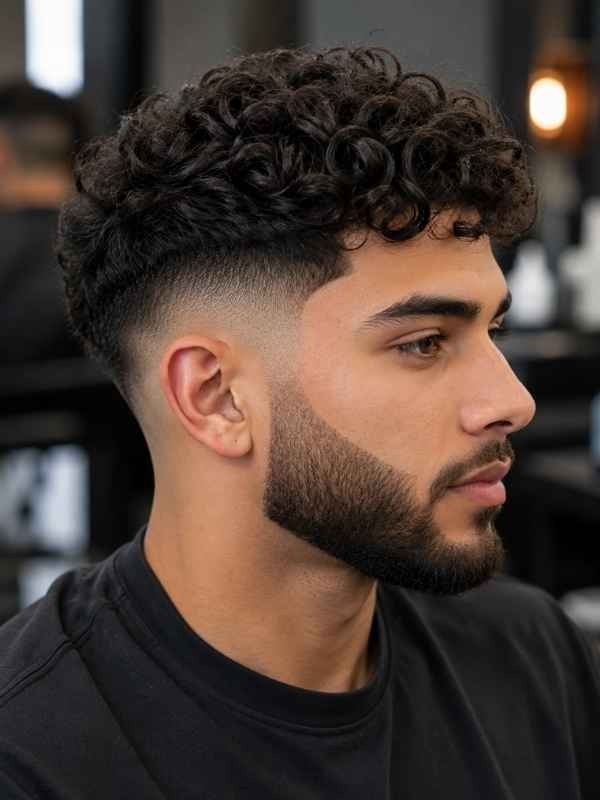
When the mid taper blends seamlessly into a well-shaped beard, it completes the whole facial frame. The fade should connect into the beard line with no visible gap — barbers often call this a full face frame, and it’s one of the more polished grooming combinations available.
Best for face shape: All face shapes | Best for curl type: All curl types | Occasion: Professional, formal, social events
Styling tip: Book beard and hair services together every two to three weeks so both grow out at the same rate and stay connected.
15. Mid Taper Fade with Curly Hair Designs and Patterns
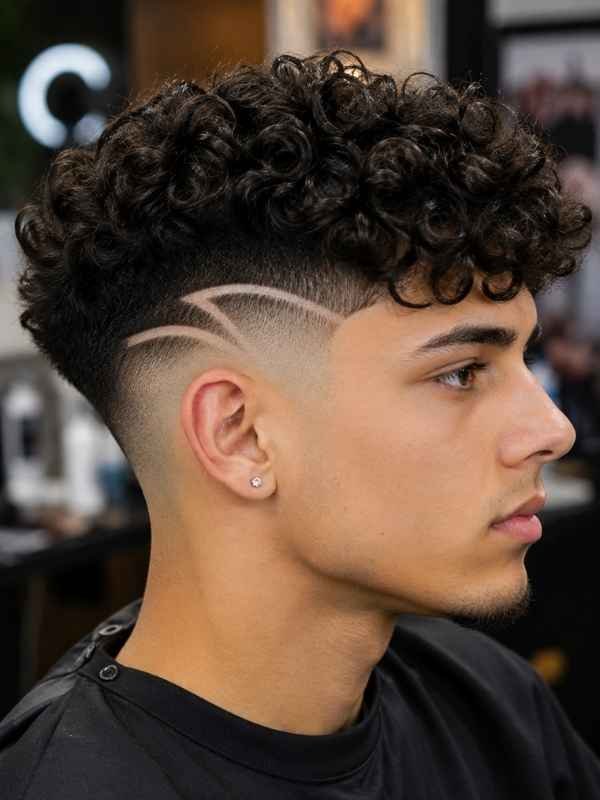
For guys who want maximum individuality, sharp linework or geometric patterns etched into the faded section turn a standard mid taper into something personal. It’s a mix of technical barbering skill and creative expression that pairs especially well against bold curls on top.
Best for face shape: Oval, round, diamond | Best for curl type: 3C to 4C | Occasion: Parties, creative work, personal branding
Styling tip: Expect to visit every 10 to 14 days — designs blur quickly as hair grows back and need regular refreshing to stay sharp.
16. Middle Part Curly Mid Taper Fade
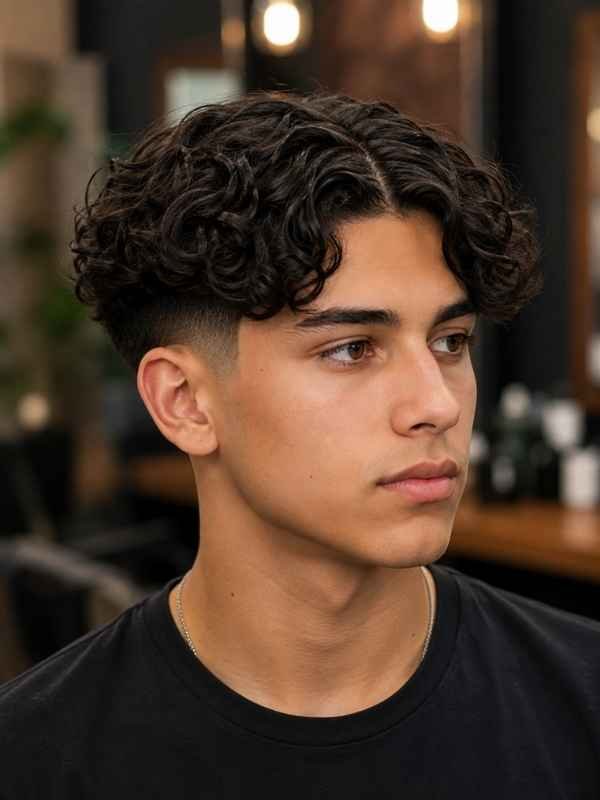
The middle part gives curly hair a clean, symmetrical structure that reads as more polished than a loose, undirected top. The mid taper keeps the sides controlled underneath while the top splits evenly down the center and falls to both sides in soft, defined sections.
Best for face shape: Oval, square, heart | Best for curl type: 2B to 3B | Occasion: School, casual, smart-casual events
Styling tip: Set the part on damp hair using your fingers instead of a comb, so the curls fall naturally without looking overly combed-through.
17. Mid Skin Fade with Curly Top (High-Contrast Variant)
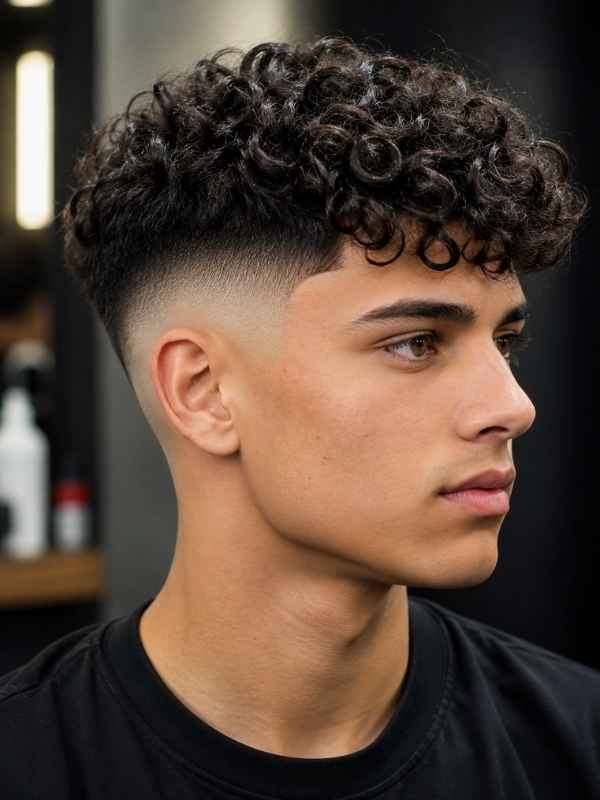
For guys who want more drama than a standard taper offers but still want to keep it starting at mid-height, this version fades all the way down to bare skin at the bottom while the top stays full of natural curl. It’s a sharper, more high-contrast cousin of the classic mid taper.
Best for face shape: Oval, diamond, oblong | Best for curl type: 3B to 4C | Occasion: Nightlife, fashion-forward casual, statement looks
Styling tip: Because skin fades grow out faster and more visibly than tapers, plan on barber visits every 10 to 14 days to keep the contrast sharp.
18. Wash-and-Go Curly Mid Taper (Low-Maintenance Variant)
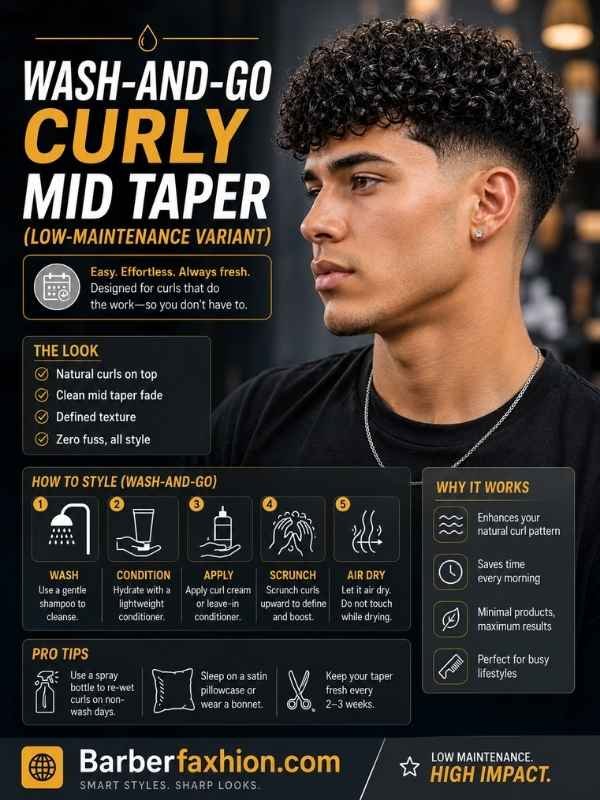
Built specifically for guys who want the fade’s clean structure without a daily styling routine. The sides stay tapered and tidy, while the top is cut and cared for so curls dry naturally into shape with little more than a leave-in conditioner and a quick scrunch.
Best for face shape: Oval, round, square | Best for curl type: 3A to 4C | Occasion: Everyday wear, athletes, minimal-routine lifestyles
Styling tip: Ask your barber to cut with your natural curl pattern in mind so the top clumps predictably without needing gel or cream every single day.
Best Mid Taper Fade for Curly Hair by Face Shape
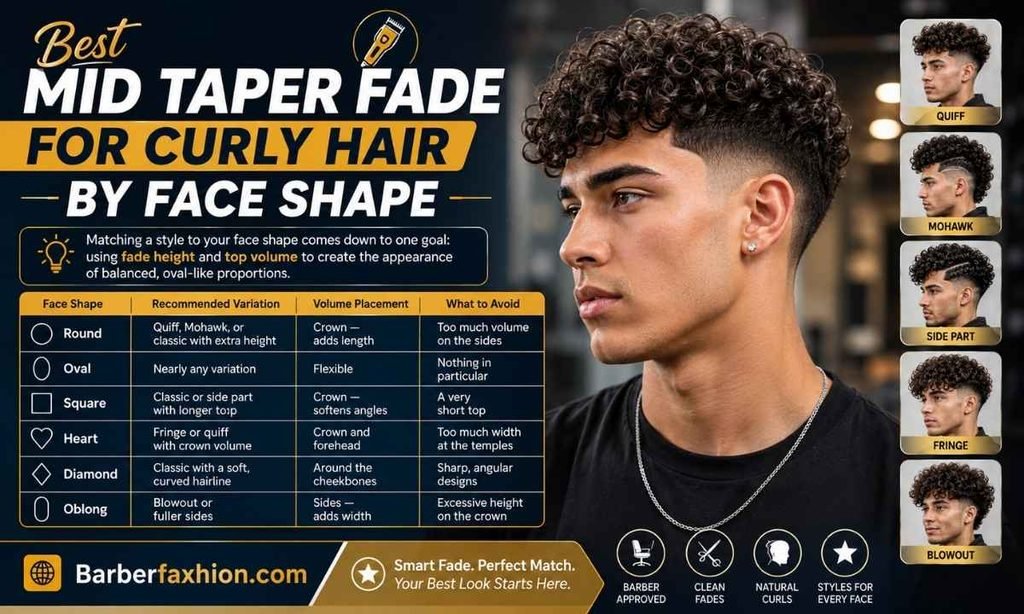
Matching a style to your face shape comes down to one goal: using fade height and top volume to create the appearance of balanced, oval-like proportions.
| Face Shape | Recommended Variation | Volume Placement | What to Avoid |
| Round | Quiff, Mohawk, or classic with extra height | Crown — adds length | Too much volume on the sides |
| Oval | Nearly any variation | Flexible | Nothing in particular |
| Square | Classic or side part with longer top | Crown — softens angles | A very short top |
| Heart | Fringe or quiff with crown volume | Crown and forehead | Too much width at the temples |
| Diamond | Classic with a soft, curved hairline | Around the cheekbones | Sharp, angular designs |
| Oblong | Blowout or fuller sides | Sides — adds width | Excessive height on the crown |
Round face: The goal is length. Styles that build height on top while keeping the sides tight — the curly quiff or Mohawk — visually elongate the face and balance out its natural width.
Oval face: You’ve got the most flexibility here. Nearly every mid taper variation works on an oval face because the proportions are already balanced, so pick based on personal style rather than correction.
Square face: Slightly longer curls on top soften an angular jawline while clean sides emphasize strong bone structure. The side part variation works especially well here.
Heart-shaped face: Extra crown volume balances a wider forehead against a narrower chin — the curly quiff or fringe styles do this well.
Diamond face: Soft, curved hairline designs balance a narrow chin and forehead against wider cheekbones. Skip anything too angular.
Oblong face: Add width, not height. A blowout or fuller-sided variation balances a naturally longer face shape.
Mid Taper Fade for Black Men: What’s Different About 4A–4C Curls
Afro-textured hair doesn’t just look different from looser curl patterns — it behaves differently under clippers, holds its shape differently, and needs a barber who genuinely understands coil density. Treating a 4C coil the same way you’d treat a 3A wave is one of the fastest ways to end up with an uneven, disappointing fade.
Why Coily Hair Holds a Fade Longer
Because 4A to 4C coils have such high density and shrinkage, the regrowth at the fade line is naturally disguised by the tight curl pattern for longer than it would be on straighter or looser hair. That means a well-cut afro taper often still looks presentable well past the two-week mark, even though most barbers still recommend a touch-up every two to three weeks to keep the line crisp.
Best Mid Taper Styles for Afro-Textured Hair
The Textured Afro Mid Taper Fade (Style #6) and the high-contrast Mid Skin Fade with Curly Top (Style #17) are the two most requested variations for 4A to 4C hair, because both let the natural rounded coil shape stay intact on top while the sides do all the structural work. Designs and patterns (Style #15) also read especially well against dense coils, since the contrast between skin and coil is sharpest here.
Dry Cutting and the DevaCut Approach for Coils
Cutting coily hair wet is one of the most common mistakes barbers make with this texture, because coils shrink dramatically once they dry — sometimes 50 to 70 percent shorter than their wet, stretched-out length. A barber who fades or trims 4C hair while it’s wet risks cutting the top far shorter than intended once it dries and springs back up. Dry cutting, or the DevaCut method popularized in curl-specific salons, cuts each coil individually in its natural dry state, which gives a far more accurate result for tightly coiled hair.
How to Talk to Your Barber About a Mid Taper Fade for Curly Hair
Vague instructions are the number one reason guys walk out of the chair disappointed, and curly hair leaves even less room for guesswork than straight hair does. Go in prepared with specific language, a reference photo, and a few pointed questions.
The Word-for-Word Barber Script
Use these lines at your next appointment. Each one removes a specific point of ambiguity from the cut.
Step 1 — Define the fade height: “I want a mid taper fade that starts at temple level, not higher.”
Step 2 — Specify the top length: “Leave three to four inches on top. My curls shrink when they dry, so please account for that.”
Step 3 — Describe the blend: “I want a smooth blend where the fade meets my curls, no visible line or gap.”
Step 4 — State your curl type: “My curls are [tight / medium / loose] with [high / medium / low] shrinkage.”
Step 5 — Specify the neckline: “I’d like a [rounded / tapered / square] neckline, kept clean and precise.”
Step 6 — Beard integration, if applicable: “Can you blend the fade into my beard line so the transition looks seamless?”
Barber trainers commonly point out that pairing a verbal description with a reference photo closes the gap that either one alone tends to leave open — the photo shows the shape, the words explain the technical adjustments your specific hair needs.
Should Curly Hair Be Cut Wet or Dry?
This might be the single most important technical question you can ask before the clippers come out. Curly hair can stretch noticeably longer when wet, since water weight temporarily reduces the curl’s natural spring tension. A barber who fades your hair while it’s fully wet risks setting the fade line higher than intended, because the curls will shrink back once they dry.
Many experienced textured-hair barbers either cut fully dry or use a hybrid approach — shaping the initial fade dry to see the true curl behavior, dampening only for detail work, then checking the final result once it’s dry. If you ask your barber whether they prefer wet or dry cutting and the answer is “only wet,” that’s worth noting before you commit to the appointment.
5 Questions to Ask Before the Clippers Come Out
- Do you regularly cut curly or textured hair?
- Do you prefer cutting curly hair wet or dry, and why?
- Do you use scissors, clippers, or both on the curly top section?
- Have you done a mid taper fade on my specific curl type before?
- Can I see photos of curly-hair clients you’ve cut recently?
A barber who answers all five confidently is generally a safe bet. Hesitation or dismissiveness is a signal to look elsewhere for a textured cut.
How to Style Mid Taper Fade Curly Hair, Step by Step
A great haircut is only half the equation. What you do between barber visits decides whether your curls still look sharp on day 14 or fall apart by day three.
Daily Styling Routine
Step 1 — Cleanse with a sulfate-free shampoo every two to three days, rather than daily, to preserve the natural oils curly hair depends on.
Step 2 — Condition generously from mid-lengths to tips, letting it sit two to three minutes before rinsing.
Step 3 — Apply leave-in conditioner to soaking wet hair as your moisture base layer, coating every section evenly.
Step 4 — Apply curl cream in sections to seal in moisture and define the curl pattern from roots to tips.
Step 5 — Scrunch upward, gently squeezing curls toward the scalp to encourage clumping. Don’t rub or twist — that just creates frizz.
Step 6 — Choose your drying method. Air-dry for a relaxed finish, or diffuse on low heat for faster drying with more volume and lift.
Step 7 — Break the cast once hair is fully dry by gently scrunching out any product stiffness with clean, dry hands.
Step 8 — Refresh between washes with a light curl reviver spray and a gentle scrunch, rather than starting the whole routine over.
Best Products for Mid Taper Fade Curly Hair
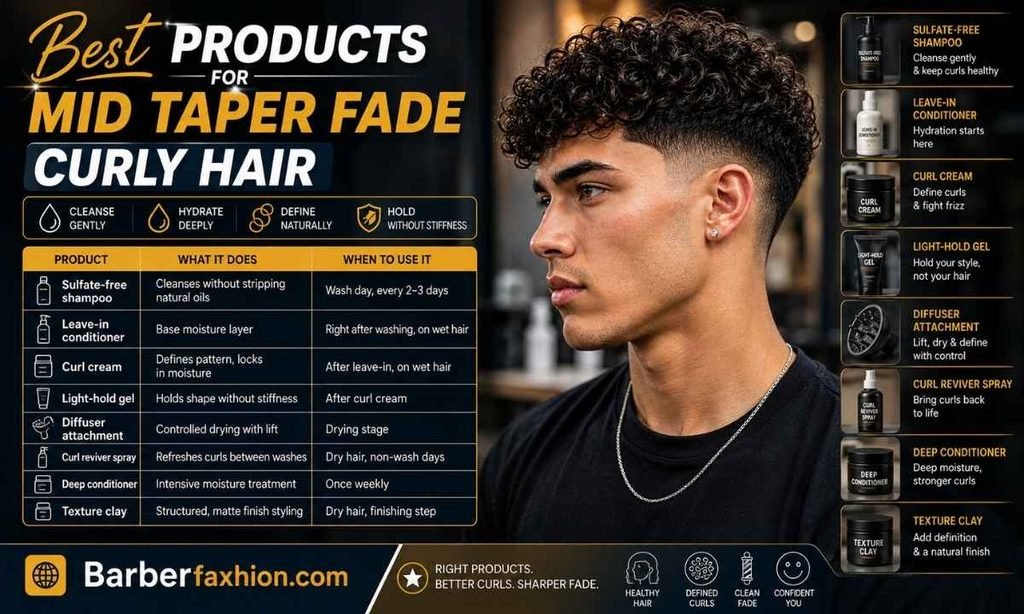
| Product | What It Does | When to Use It |
| Sulfate-free shampoo | Cleanses without stripping natural oils | Wash day, every 2–3 days |
| Leave-in conditioner | Base moisture layer | Right after washing, on wet hair |
| Curl cream | Defines pattern, locks in moisture | After leave-in, on wet hair |
| Light-hold gel | Holds shape without stiffness | After curl cream |
| Diffuser attachment | Controlled drying with lift | Drying stage |
| Curl reviver spray | Refreshes curls between washes | Dry hair, non-wash days |
| Deep conditioner | Intensive moisture treatment | Once weekly |
| Texture clay | Structured, matte finish styling | Dry hair, finishing step |
If you only buy four things, make it a sulfate-free shampoo, a leave-in conditioner, a curl cream, and a diffuser attachment. Everything else is optional depending on the look you’re going for.
Night Care Routine for Curly Hair
Standard cotton pillowcases create friction that pulls curl clumps apart and pulls moisture out overnight, which is why so many guys wake up frizzy no matter how good their hair looked the night before. Switching to a satin or silk pillowcase reduces that friction significantly. If you move around a lot in your sleep, a satin bonnet over the top section works even better. For longer curls, gathering them into a loose “pineapple” ponytail secured with a silk scrunchie keeps them from getting crushed flat overnight — a quick water spritz and scrunch in the morning brings the pattern right back.
Common Mistakes That Ruin a Curly Mid Taper Fade
Even a technically perfect haircut can look wrong within a week if you’re making one of these mistakes at home.
- Skipping moisture between washes. Curly hair dries out fast, and dry curls frizz, lose definition, and look messier than they should.
- Using heavy gels or waxes. These weigh curls down and can make them look stiff or crunchy instead of naturally defined.
- Brushing dry curls. This breaks up the curl clumps and creates frizz — detangle only on wet or conditioner-coated hair.
- Waiting too long between touch-ups. The fade grows out fastest around the neckline and temple, and a blurred fade line makes the whole cut look unkempt.
- Letting your barber cut wet without asking. As covered above, this is one of the most common reasons curly fades end up shorter or higher than intended.
- Sleeping on cotton pillowcases. It’s a small detail with an outsized effect on how frizzy or defined your curls look each morning.
- Not communicating your curl type. Assuming your barber will just “know” how your specific texture behaves is a guaranteed way to get inconsistent results.
How to Maintain Your Mid Taper Fade Curly Hair
One real advantage of curly hair is that your natural texture disguises early regrowth better than straight hair does. A well-cut curly fade often still looks sharp well past the point where a straight-haired fade would show obvious growth.
Grow-Out Timeline: Week by Week
- Week 1–2: The fade line is at its sharpest. Minimal styling effort needed.
- Week 2–3: Regrowth starts softening the line slightly, especially around the neckline — most guys book their next appointment here.
- Week 3–4: The cut still looks presentable but the contrast is noticeably softer; a good window if you’re stretching visits.
- Week 4+: The fade blends into overall length; still wearable, but it’s now closer to a grown-out taper than a fresh fade.
What a Mid Taper Fade Costs for Curly Hair
| Cost Factor | Standard Barber | Curly-Hair Specialist |
| Per-cut price | Moderate | Higher, reflecting specialized technique |
| Time in the chair | Roughly 25–35 minutes | Roughly 35–60 minutes |
| Visit frequency | Every 2–3 weeks | Every 2–3 weeks |
| Monthly product cost | Lower | Higher, due to curl-specific products |
Curly cuts tend to cost more for legitimate reasons — the technique takes longer, requires more skill, and often involves dry cutting rather than the faster wet-cut approach. If cost is a factor, stretching visits to every three weeks and handling basic neckline touch-ups at home can meaningfully cut your monthly spend without sacrificing how the cut looks.
Frequently Asked Questions
Is a mid taper fade good for curly hair?
Yes. It’s one of the most recommended fades for curly hair because it starts at temple level, removing the side bulk that causes the pyramid shape while leaving full curl volume on top. It works across nearly every curl type, from 2A waves to 4C coils, with the right adjustments to top length and cutting technique.
What’s the difference between a mid taper fade and a mid fade for curly hair?
A mid taper fade blends gradually and keeps some length along the sides even at its shortest point. A mid fade blends more aggressively, often down to bare skin, for a bolder, higher-contrast look. The taper version tends to preserve more texture and grow out more gracefully.
How often should I get a mid taper fade with curly hair?
Every two to three weeks is standard for most curl types. Curly texture disguises regrowth better than straight hair, so some guys stretch to four weeks for a softer, more grown-in look without it looking sloppy.
Should curly hair be cut wet or dry for a mid taper fade?
Dry cutting is generally recommended, since curly hair can stretch noticeably when wet and shrink back once it dries — which can leave the fade line sitting higher than intended. Many experienced textured-hair barbers use a hybrid approach: shaping dry, dampening only for detail work, and checking the final result dry.
Is a mid taper fade different for Black men with afro-textured hair?
Yes, in technique more than in concept. For 4A to 4C coils, dry cutting matters even more because of how dramatically coily hair shrinks. Denser coil patterns also tend to hold the fade shape longer between visits than looser curl types, which is one advantage of the texture.
Is a fade haircut haram in Islam?
This is genuinely debated among scholars, and there isn’t one universal answer. The concern traces back to a hadith prohibiting “al-Qaza,” a specific style of shaving parts of the head while leaving other parts long, most commonly interpreted as patchy or partial shaving. Many scholars across different schools of thought hold that a standard fade — where hair is cut progressively shorter rather than shaved in disconnected patches — falls outside that prohibition and is generally permissible, provided the intention behind it isn’t to imitate something impermissible. Other scholars take a more cautious view. Because opinions vary by school of thought and by scholar, it’s worth asking a knowledgeable local imam or trusted Islamic scholar for guidance specific to your situation rather than relying on a single online source.
What is the Gen Z haircut called?
There isn’t one single name — Gen Z hairstyles lean more toward a shared philosophy (natural texture, movement over rigid structure) than one specific cut. That said, for curly-haired guys specifically, the “broccoli haircut” has become the most talked-about viral style, alongside the curtain fringe and textured crop.
Conclusion
A mid taper fade earns its reputation because it works with curly hair instead of fighting it — controlling side bulk while letting your natural texture do all the talking on top. Whether you’re rocking loose 2A waves or dense 4C coils, there’s a variation on this list built around exactly how your hair behaves, not a generic “curly hair” assumption.
Bring a reference photo, use the barber script above, and pick your style based on your face shape and curl type rather than what looks good on someone else’s head. Stay consistent with touch-ups every two to three weeks, keep your curls moisturized between washes, and this cut will hold its shape and its personality for the long run.