
You’re scrolling through photos, trying to figure out if going blonde will actually look good with a fade, or if you’ll walk out looking nothing like the picture you saved. Maybe you already have the cut and you’re just trying to keep the color from turning orange by week two. Either way, this combination has a lot of moving parts, and getting one piece wrong throws the whole look off.
That’s what this guide sorts out. Below you’ll find the best low taper fade blonde hair styles broken down by texture and upkeep, exactly how to describe the cut to a barber, and the maintenance and color-care details that keep both the fade and the blonde looking sharp between visits.
Quick Answer
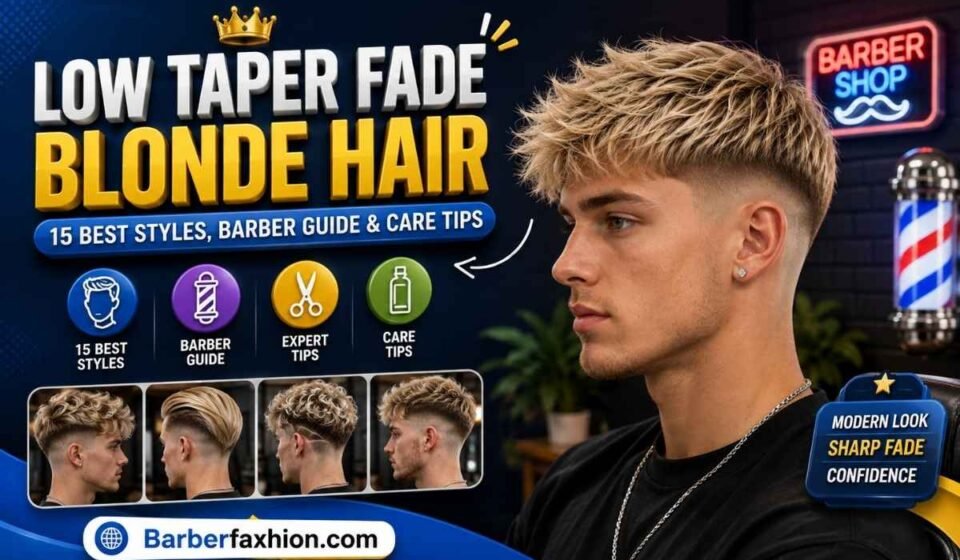
A low taper fade blonde hair style pairs a fade that starts low near the sideburns and neckline with a blonde top that can be natural, highlighted, or fully bleached. The fade barely touches the top length, so most of the visual impact comes from your top style and shade, not the sides. It works on straight, wavy, curly, and coily hair, and the cut and color run on separate maintenance schedules — refresh the fade every 2–3 weeks and the color whenever roots or brassiness start showing.
What Is a Low Taper Fade on Blonde Hair?
A low taper fade shortens hair gradually, starting close to the sideburns and nape instead of higher near the temples. Because the fade stays low, more length and texture survive through the sides and crown — exactly why a low taper fade blonde hair look feels less severe than a mid or high fade version.
Barbers build this shape by working through a sequence of clipper guards, starting shortest at the neckline and moving to longer guards higher up. Between guard changes, most use the taper lever on the clipper — a small switch that shifts the blade position slightly — to smooth out any visible jump between lengths. That small mechanical detail is the difference between a fade that blends and one that looks stepped.
Blonde doesn’t change the mechanics of a low taper fade blonde hair cut. What changes is how visible the work looks once it’s done.
Low Taper Fade vs Low Fade vs Skin Fade
These three terms get used almost interchangeably, and that’s part of why so many people end up with a haircut that doesn’t match what they pictured.
| Term | Starting Height | Area Affected | Typical Finish |
| Low taper | Low, near sideburns/nape | Narrow band | Shadow or soft blend |
| Low fade | Low | Wraps wider around the head | Shadow or skin |
| Skin fade | Can start anywhere | Depends on placement | Bare scalp at the shortest point |
A low taper and a low fade can both finish as a soft shadow or a full skin fade — the difference is really about how much of the head the shortening covers, not how short it gets. Bring a reference photo. Barbers use these words differently depending on where they trained, and a photo removes the guesswork.
Why Does Blonde Hair Change the Look of the Fade?
Here’s the part that surprises a lot of first-timers: the haircut doesn’t change on blonde hair, but how it reads absolutely does. Dark hair against skin creates a hard visual line. Blonde hair, especially anything close to platinum, blends into skin tone far more gently, so the same fade can look softer or almost invisible in certain lighting.
That’s usually a good thing if you want a subtle result, but it also means a skin fade on very light hair can look less crisp than the same cut on dark hair. A shadow finish often reads more intentional on lighter shades. If you’re keeping darker roots against a bleached top, that root band helps, since it adds a visible line of separation above the fade.
Fine or lower-density hair shows even less contrast at the same guard length than thick hair does, so mention your hair’s thickness to your barber before the clippers come out.
Does a Low Taper Fade Blonde Hair Style Suit You?
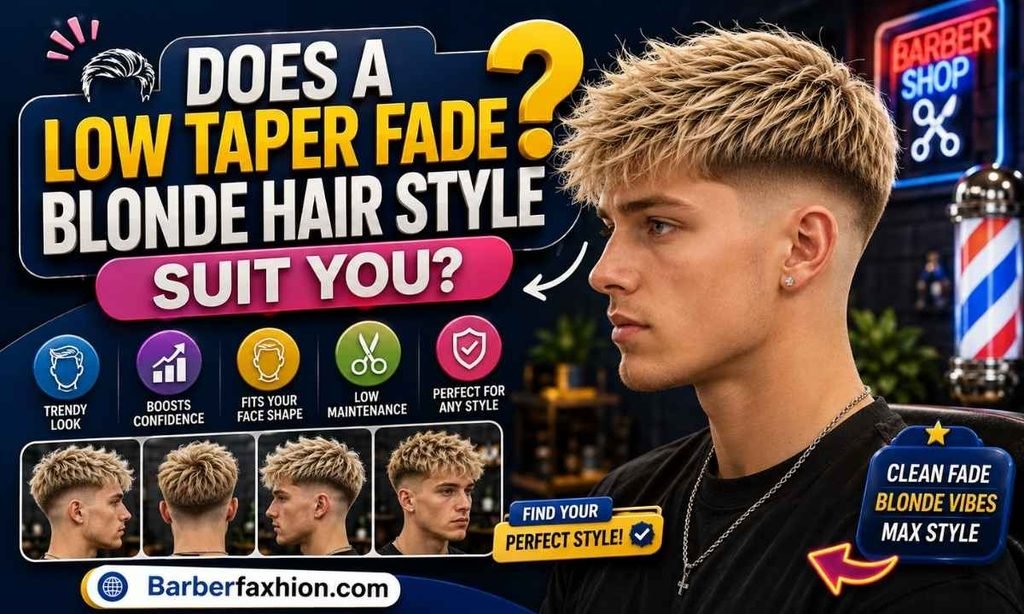
Most people can wear some version of a low taper fade blonde hair cut — the real decision is about top length, texture, and how much upkeep, both cutting and coloring, you’re willing to commit to.
If you’re bleaching for the first time or you work somewhere conservative, a soft shadow taper is the safer starting point. If you’re already comfortable maintaining a fade and a lightened top, you’ve got more room to push contrast.
Which Hair Textures Work Best?
Straight, wavy, curly, and coily hair can all carry a low taper fade blonde hair style — the approach to the top just changes.
Straight hair relies almost entirely on cutting angle and length for shape. A textured fringe or crop tends to hold its line cleanly here.
Wavy hair already has built-in movement, so a slightly longer top gives texture without much daily effort — where a lot of the “effortless” blonde looks come from.
Curly hair needs to be cut with shrinkage in mind. Curls sit noticeably shorter dry than wet, so a good barber assesses length on dry, styled hair rather than cutting it wet.
Coily hair, including Black men’s hair, benefits from extra attention to the edges and moisture, since dryness shows up fastest at a short, faded perimeter. Bleaching adds another layer of dryness on top of that, so leave-in conditioner and a lighter touch with heat matter more here than on any other texture.
Fine hair generally looks better with less bulk on top, since heavy length tends to fall flat. Thicker or coarser hair supports a wider range of top styles and volume without looking overdone.
What About Face Shape, Density, and Hairline?
Face shape, density, and hairline pattern all shape how the cut sits, but none of them rule this style out — they’re proportions to talk through with your barber, not hard restrictions.
Top height and fringe direction can balance a rounder or longer face. Retained bulk on the sides can offset a receding temple. Crown growth patterns often decide how the fade blends at the back more than face shape ever does. A skilled barber adapts guard heights and top length around these details during the consultation, rather than pushing you toward a different haircut.
15 Best Low Taper Fade Blonde Hair Styles
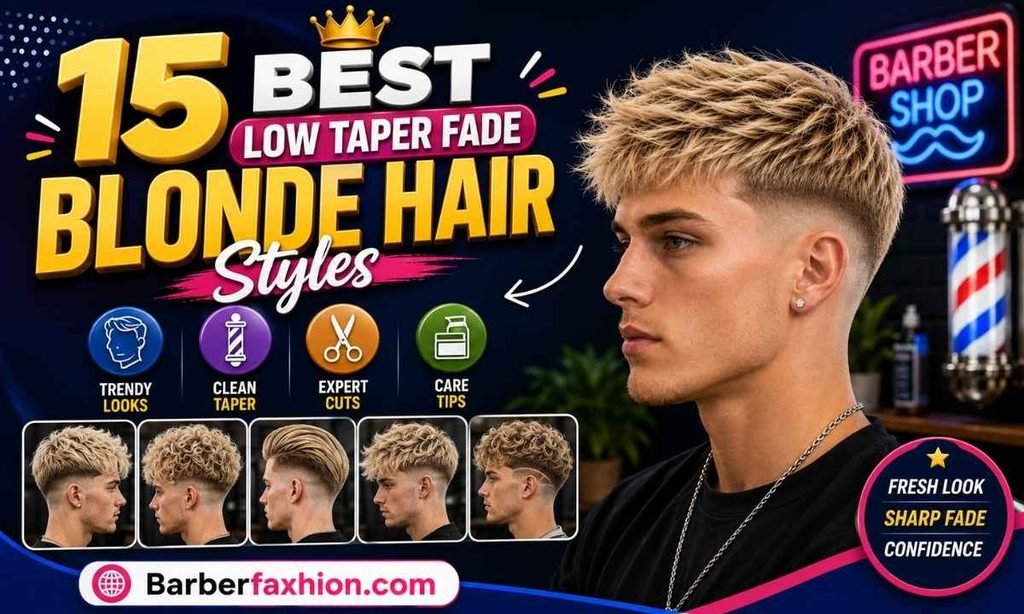
Think of this less as a ranked list and more as a way to match a top shape to your texture, face, and how much time you want to spend styling each morning. Each group below covers two or three closely related low taper fade blonde hair looks.
Textured Fringe & Messy Crop
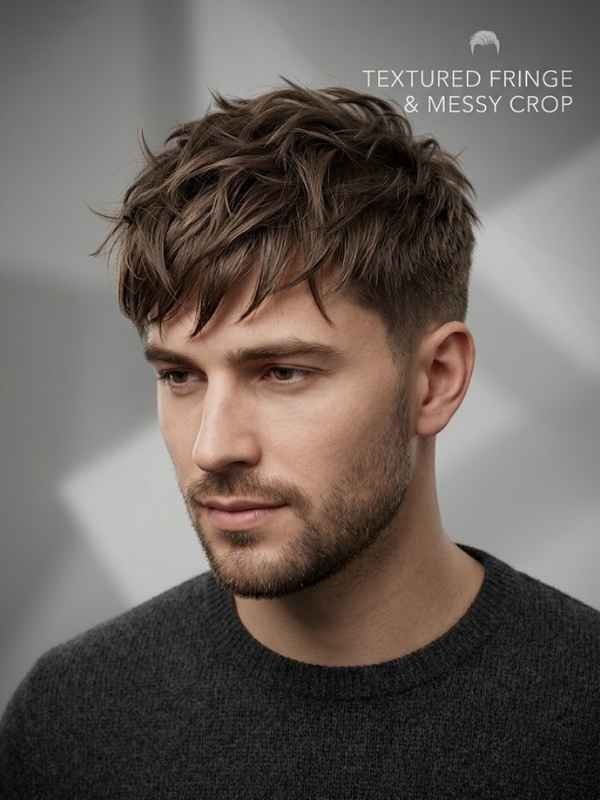
This family works around a forward-styled fringe that adds movement on top while the taper stays quiet underneath.
Dirty-blonde textured fringe keeps a warmer, lower-contrast blonde with choppy, piece-y texture and a matte finish — one of the most-searched low taper fade blonde hair textured fringe looks right now, and for good reason: it’s forgiving on almost any face shape.
Platinum messy fringe pushes the contrast further with a fully lightened top. A lighter texture powder keeps it from looking weighed down the way a heavier wax would.
Fine hair usually needs a shorter fringe in either version, since longer pieces fall flat without volume underneath to prop them up.
Curly, Wavy & Fluffy Top
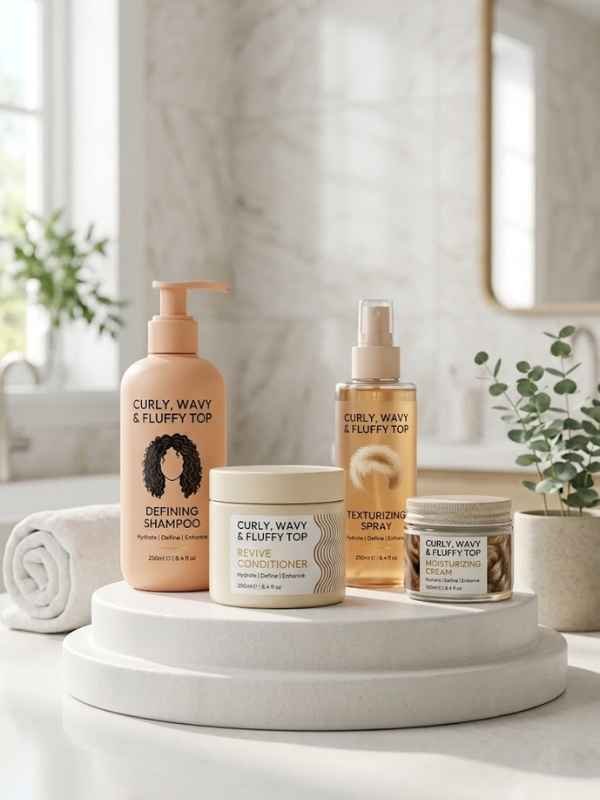
Here the top keeps its natural volume and movement, and the taper frames it instead of competing with it.
Natural blonde curls need the cut shaped around dry, styled curl length rather than stretched wet length. Cutting curls wet is one of the most common reasons people end up with a low taper fade blonde hair top that’s shorter than they wanted.
Blonde-highlighted waves use partial lightening for dimension without committing to a full bleach — a smart middle ground if you’re not ready for platinum.
Fluffy blow-dried top is built with a round brush or diffuser and a lightweight mousse — a common request phrased as low taper fade blonde fluffy hair, and one that photographs especially well because of the volume.
All three need enough length left on top for the texture to show, so don’t let your barber take too much off.
Short Crop, Caesar & Buzz Cut
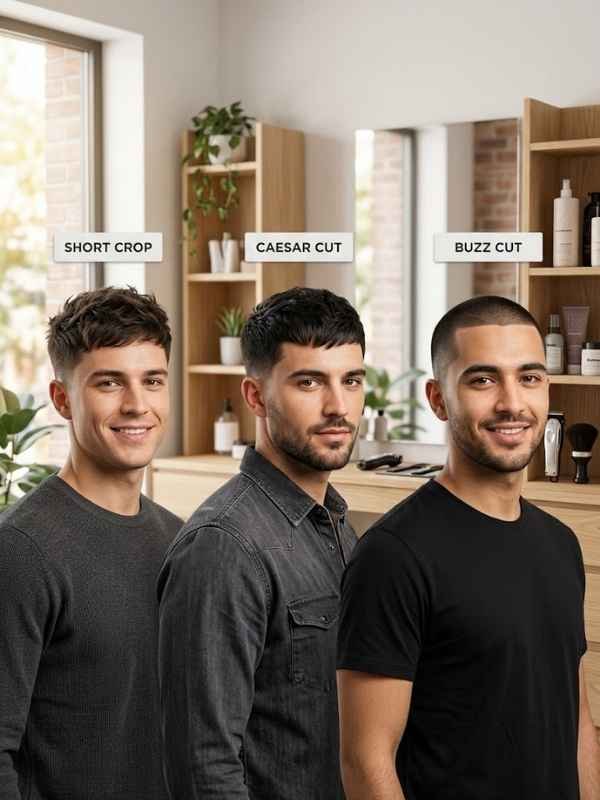
These are the lowest-maintenance options, trading daily styling for a bit more exposed color contrast at the hairline.
Blonde French crop keeps a short, textured fringe with tight sides and needs almost nothing beyond a small amount of product on damp hair.
Blonde Caesar is cut uniformly short with a straight, forward fringe — close to zero daily styling required.
Blonde buzz with low taper is the shortest option, where the fade itself becomes the main visual detail. Because there’s less hair to blend into, even fading and clean root contrast matter more here than in any longer style.
Quiff, Side Part & Slick Back
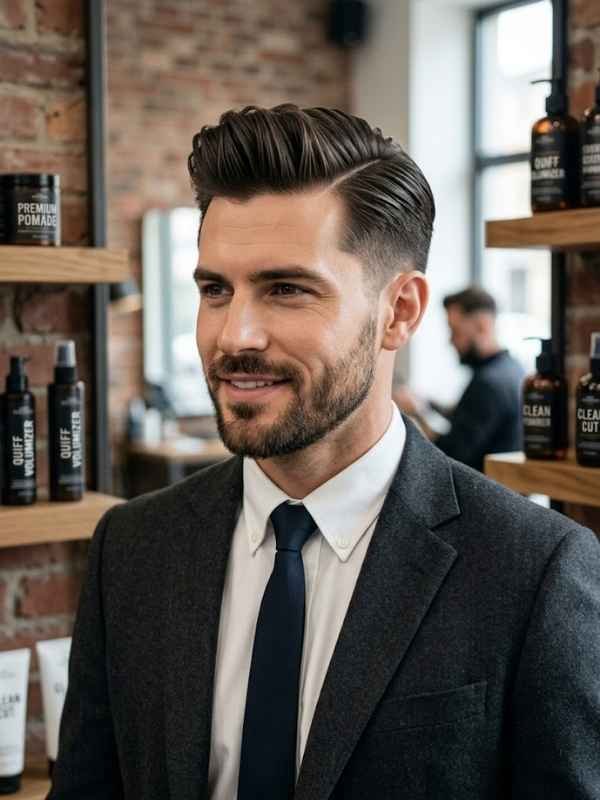
This group suits anyone who wants a cleaner, directional finish over loose texture.
Textured blonde quiff needs enough length on top to lift and push back. Work a matte or medium-hold product through while damp, then blow-dry upward.
Natural side part uses a defined line and a lighter cream or pomade for a controlled, not overly glossy, finish.
Slick back is the most product-heavy and least forgiving option on fine or already-damaged hair, since it relies on more product and often a comb.
All three look best when you dry the hair in the direction you intend to style it, rather than fighting the natural fall.
Blowout, Mullet & Longer Top
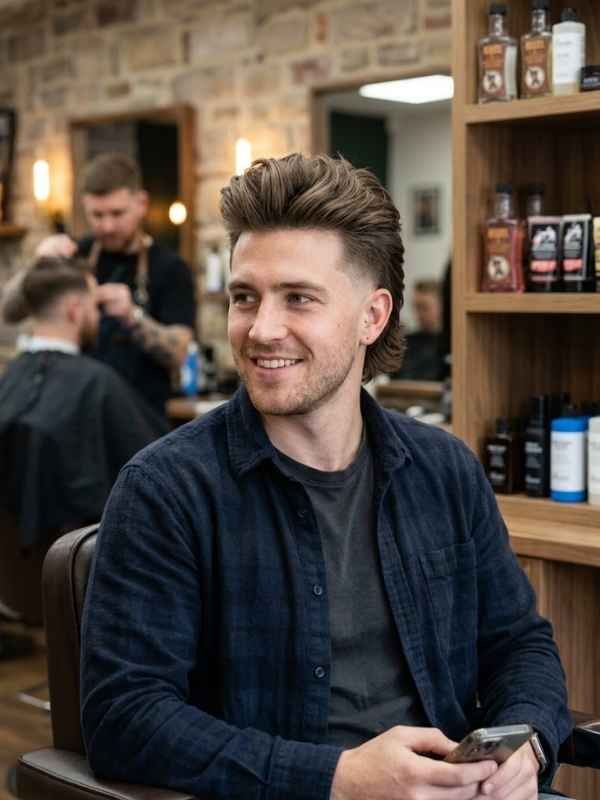
These styles keep the most length and bulk on top, so the taper reads as a supporting detail rather than the focus.
Blonde blowout taper pairs a rounded, voluminous top built with a round brush and dryer against a low, quiet fade at the sides.
Modern blonde mullet keeps noticeably more length at the back and crown than at the sides.
Longer swept top preserves length across the crown and uses the taper mainly to clean up the sides.
These carry more bulk, so they generally need fewer haircuts but a bigger daily commitment to styling.
Platinum Taper With Dark Roots
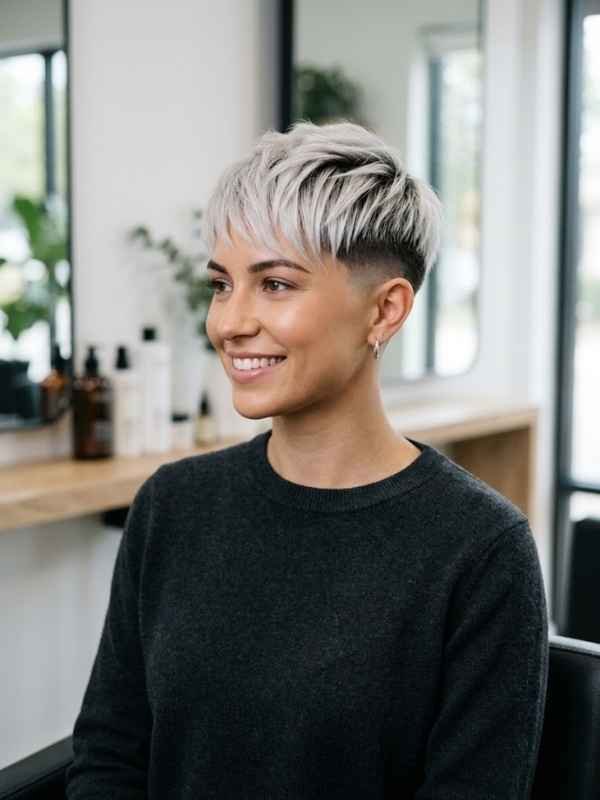
This one deserves its own mention because the color contrast does most of the visual work. Keeping natural dark roots against a fully bleached top creates a built-in line of separation above the fade, which makes even a subtle low taper fade blonde hair cut read more clearly from a distance.
It’s a striking option, but it comes with two trade-offs: root regrowth shows up faster than on an all-over blonde, and the hair needs more careful handling since it’s carrying a heavier bleach load at the roots.
Which Blonde Shade Suits a Low Taper Fade Best?
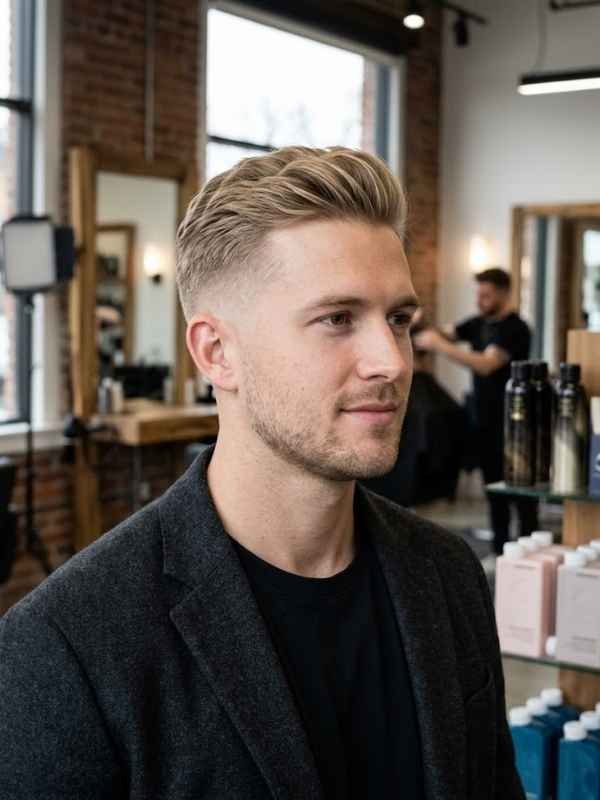
The shade you pick changes the character of a low taper fade blonde hair cut almost as much as the top style does.
Platinum blonde creates the strongest contrast against skin and makes a clean fade look sharper and more intentional.
Golden blonde softens everything and pairs well with natural movement — wavy and curly tops especially.
Dirty blonde keeps more depth since natural roots stay visible, making it the most forgiving choice for a first attempt at lightening.
Ash blonde runs cooler and works best with matte products, since shine flattens its tone.
Strawberry blonde adds warmth and makes fringe-forward styles look particularly distinctive.
No single shade is objectively “best” — proportions matter more than color, and the color should support the shape rather than compensate for a cut that doesn’t fit your face or texture.
How Do You Ask a Barber for a Low Taper Fade Blonde Hair Cut?
Break the request into three pieces: fade placement and finish, top length and shape, and where the color stands. Confirm the barber understood before they pick up the clippers — this single step prevents most mismatches.
A workable sequence:
- Name the style family — textured fringe, blowout, buzz, whatever you’re after.
- Show your reference photos.
- Specify low placement and whether you want a shadow or a skin finish.
- Describe the top length and how much bulk to keep.
- Say whether color is being done today, already done, or handled by a separate colorist.
- Confirm how often you’re realistically willing to come back for maintenance.
- Have the barber repeat the plan back before they start cutting.
What Reference Photos Should You Bring?
Bring front, side, and rear shots from people whose texture, density, and blonde treatment are close to your own. A single front-facing photo leaves the fade height and top shape open to interpretation, and that’s exactly where miscommunication happens.
Matching texture matters more than matching the exact style in the photo — a curly reference won’t translate cleanly onto straight hair.
Check that your references look achievable. Heavily filtered photos, harsh lighting, or AI-generated images can distort color tone, density, and how sharp the fade actually looks. If a photo seems too good to be true, ask your barber directly.
What Exactly Should You Say?
Cover three things: how low the fade starts and whether it ends in a shadow or bare skin, how much length and bulk stay on top plus the direction you want it styled, and whether the blonde is already done, needs a refresh, or is being handled separately.
“I’d like a low taper around the sideburns and neckline, finished as a soft shadow, with length and texture kept on top. The blonde’s already done, so we’re just cutting today.”
Before the clippers start, confirm the neckline shape — squared, rounded, or tapered — and ask if your barber notices anything about your growth pattern or hair condition that might change the plan.
Where Should the Taper Actually Stop?
This is one of the most overlooked details in the whole process — the difference between a true low taper and accidentally walking out with something closer to a mid fade.
A genuine low taper stays concentrated right around the temple and neckline. The upper side should keep enough weight to connect visually with the top. When the transition climbs higher, it starts reading as a mid taper fade instead — not a bad haircut, just a different one than you asked for.
If a low taper is specifically what you want, don’t just say “low fade.” Point to exactly where you want the transition to stop and how much side weight to preserve.
How Do You Style and Maintain It?
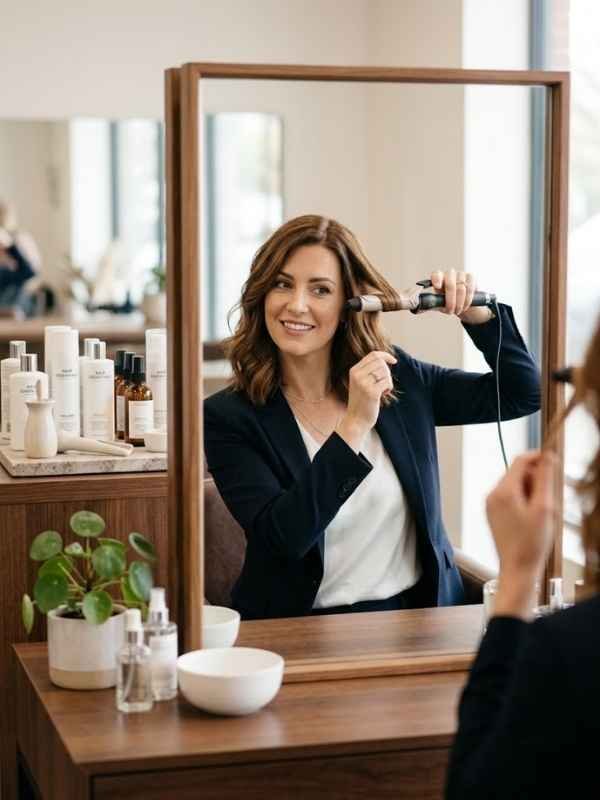
Maintaining a low taper fade blonde hair cut means tracking three things: the shape of the haircut, your daily styling routine, and the condition of the blonde. These don’t run on the same clock, so treating them separately makes the whole thing predictable.
What’s the Fastest Daily Styling Routine?
The quickest routine is a light rinse or water refresh, controlled drying, a small amount of product worked through damp hair, then shaping by hand or comb.
A textured fringe needs a matte product worked in while damp. Curls do better with a lightweight cream on soaking-wet hair, then left to air-dry or diffuse. A polished side part or slick back needs more product and a blow-dry in the direction you’re styling toward.
Since lightened hair is already more porous and prone to dryness, keep heat settings low. The American Academy of Dermatology recommends low or medium heat with a heat-protectant product and limiting how often hot tools touch your hair — advice that matters even more once you’ve bleached.
How Often Should You Refresh the Cut and Color?
There’s no single interval that works for everyone. How often you need a fresh taper depends on how fast your fade grows out and how sharp you want the contrast to stay. Color timing depends on how quickly roots grow in and how much warmth creeps back into the blonde.
These appointments don’t need to happen together, and for most people they won’t — plenty of guys get the taper touched up more often than the full color service. Signs your fade needs attention: a grown-out neckline, or a fade line blurred into one uniform length. Signs your color needs attention: noticeable root regrowth, or blonde that’s looking more warm or yellow than it did after the last service.
Root regrowth on a low taper fade blonde hair look tends to show up faster than expected, especially with platinum or fully bleached tops, since dark roots against light hair create so much contrast. Planning your color touch-up around that visibility, rather than a fixed date, keeps things looking intentional instead of overdue.
How Do You Keep Blonde Hair Bright Without Over-Toning?
Purple shampoo reduces the appearance of unwanted yellow or brassy tones between salon visits. Violet sits opposite yellow on the color wheel, so depositing a small amount of violet pigment during a wash helps neutralize warmth — a mechanism described by manufacturers and stylists, and grounded in color theory rather than a clinically verified result. Follow the product’s directions on leave-in time, since overuse can leave a cool, gray-toned cast that’s just as noticeable as brassiness.
Purple shampoo tones color; it doesn’t repair damaged hair or replace conditioning. Pair it with a regular conditioner and keep heat exposure limited to protect the hair’s overall condition alongside its tone.
What Are the Risks of a Low Taper Fade Blonde Hair Cut?
Haircut dissatisfaction is reversible — a follow-up visit fixes an uneven fade. Bleaching carries different, less reversible risks, mostly fiber damage and skin irritation, so it deserves more caution than booking a fade.
What Should You Know Before Bleaching?
Bleaching can weaken hair structurally, and lightening products can irritate skin or trigger allergic reactions in some people. Following the instructions and getting a professional assessment matters more here than any single styling decision in this guide.
Laboratory analysis of bleached hair fibers has documented damage to the cuticle and cortex, along with protein loss that increases as bleaching gets more aggressive. On the safety side, the FDA recommends a patch test before using any hair dye: apply a small amount to the inside of your elbow or behind your ear, wait two days, and skip the dye if a rash develops. A patch test lowers risk but doesn’t guarantee a smooth application — existing damage, scalp sensitivity, or bleaching over already-processed hair all raise the odds of breakage or uneven color. For a first bleach or any major lightening, have a qualified colorist assess your hair’s condition and history first.
Which Haircut and Color Mistakes Should You Avoid?
Most common issues with a low taper fade blonde hair cut come down to communication, not technique.
| Mistake | Result | Prevention |
| Wrong fade area requested | Too much or too little tapered | Specify low placement and finish clearly |
| Unmatched reference photo | Barber can’t judge feasible length | Bring texture-matched, unedited images |
| Removing too much side bulk | Style looks flat or overly short | State how much bulk to retain |
| Expecting one-session platinum | Uneven tone, unnecessary damage | Plan lightening across multiple sessions if needed |
| Thinning fine blonde hair too aggressively | Sparse-looking result instead of texture | Ask for selective, minimal thinning |
| Ignoring hair condition before bleaching | Breakage, uneven result | Get a professional assessment first |
| Using too much shine product on light hair | Strands look clumped, dimension flattens | Choose matte or lightweight products instead |
What Are the Best Alternatives?
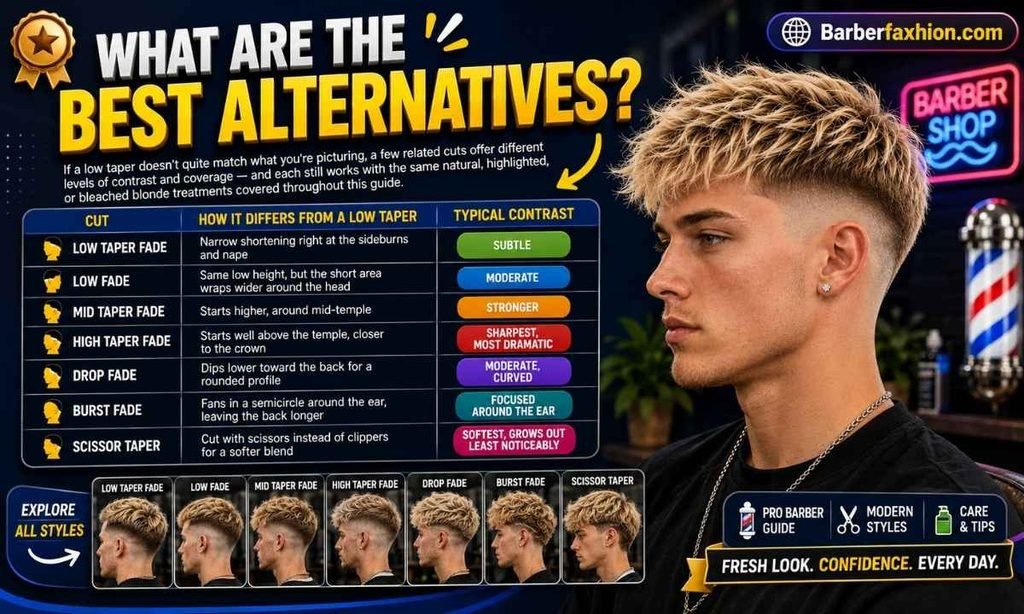
If a low taper doesn’t quite match what you’re picturing, a few related cuts offer different levels of contrast and coverage — and each still works with the same natural, highlighted, or bleached blonde treatments covered throughout this guide.
| Cut | How It Differs From a Low Taper | Typical Contrast |
| Low taper fade | Narrow shortening right at the sideburns and nape | Subtle |
| Low fade | Same low height, but the short area wraps wider around the head | Moderate |
| Mid taper fade | Starts higher, around mid-temple | Stronger |
| High taper fade | Starts well above the temple, closer to the crown | Sharpest, most dramatic |
| Drop fade | Dips lower toward the back for a rounded profile | Moderate, curved |
| Burst fade | Fans in a semicircle around the ear, leaving the back longer | Focused around the ear |
| Scissor taper | Cut with scissors instead of clippers for a softer blend | Softest, grows out least noticeably |
Barbers apply these terms differently depending on where they trained, so pairing the name with a photo when you book is the safer move.
Frequently Asked Questions
Does a low taper fade look good on naturally blonde hair?
Yes. Natural blonde usually creates a softer, lower-contrast fade than dark hair, which suits a subtle shadow finish well. Finer or lighter blonde may need a shorter guard length for the fade to read clearly.
Can you get a low taper fade with bleached or platinum hair?
Yes, but hair condition matters more than on unprocessed hair. A colorist should check for existing damage and root regrowth before a major lightening session, and the haircut and color service are often booked separately.
Is a low taper fade the same as a low fade?
Not quite. A low taper typically affects a narrower area right around the sideburns and nape, while a low fade extends further around the head at the same height. Terminology varies by barber, so a reference photo communicates the result more reliably.
Does the style work with straight, curly, or coily hair?
Yes, all four major textures can carry a low taper fade blonde hair cut, though top styling and maintenance differ. Curly and coily hair need length planned around dry shrinkage, while straight and wavy hair rely more on cutting angle for shape.
What products work best for blonde low taper fades?
No single product fits every version. Matte clay or texture powder suits fringe and crop styles, lightweight cream suits curls, pomade suits side parts and slick backs, and purple shampoo used occasionally helps manage brassiness.
Is a low taper fade better than a low fade?
Neither is objectively better — they’re just different in coverage. A low taper affects a narrower band around the sideburns and nape, while a low fade extends wider around the head at the same starting height. Which one suits you depends on how much contrast and side weight you want to keep.
Is a taper fade the same as a mullet?
No. A taper fade describes how the sides shorten toward the neckline. A mullet describes a shape where the back is left noticeably longer than the sides and front. You can combine the two — a taper fade with mullet-length hair at the back is one of the styles covered above — but they’re not interchangeable terms.
Is a low fade an attractive haircut?
It’s widely considered flattering and versatile because it keeps more length and texture through the top while cleaning up the sides. Whether it looks good on you depends more on how well it’s matched to your face shape and texture than on fade height alone.
Conclusion
Choosing a low taper fade blonde hair style comes down to a short sequence of decisions: pick a top shape that fits your texture and how much daily styling you’re willing to do, decide between a subtle shadow taper and a sharper skin finish, and settle whether the blonde stays natural, gets partial highlights, or goes fully lightened.
Save reference photos from the front, side, and back that actually match your hair type, and walk in with a clear description of the fade placement and top length. If bleaching is part of the plan, treat it as its own decision — patch test first, follow the instructions, and let a colorist assess your hair before anything dramatic happens. The cut and the color run on separate schedules, so refresh each one based on how it actually looks, not a fixed date on the calendar.