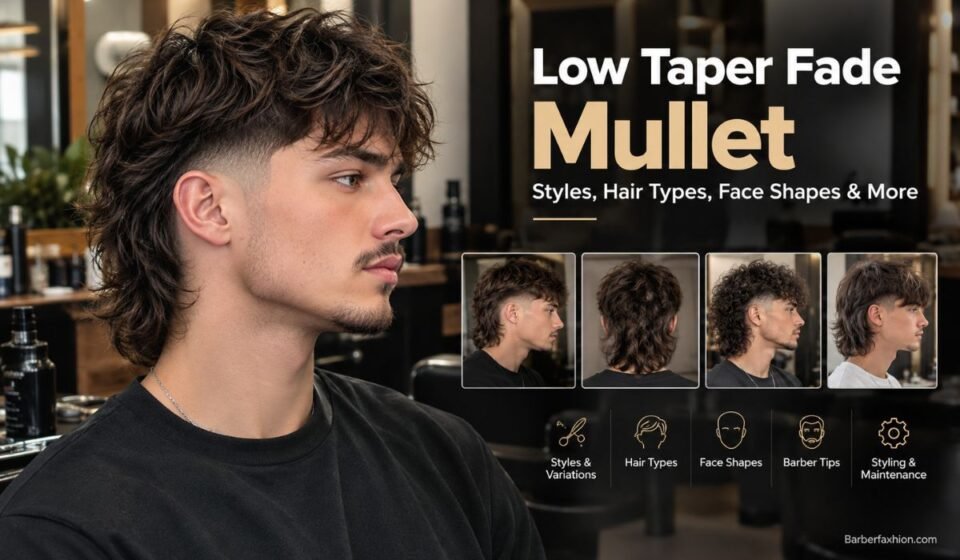

A mullet can look seriously stylish, but getting the balance right isn’t always easy. You want enough length in the back to create that unmistakable shape without ending up with sides that look too bulky or a fade that takes over the whole haircut.
That’s where a low taper fade mullet comes in. It keeps the sides and neckline clean while leaving plenty of length and personality through the back. The best part is that you can adjust the length, texture, taper, and styling to match your hair type, face shape, and personal style.
Quick Answer: A low taper fade mullet combines a subtle taper around the sideburns and neckline with longer hair at the back. It’s a versatile modern haircut that can work with straight, wavy, curly, thick, or fine hair when the length and texture are customized properly.
What Is a Low Taper Fade Mullet?
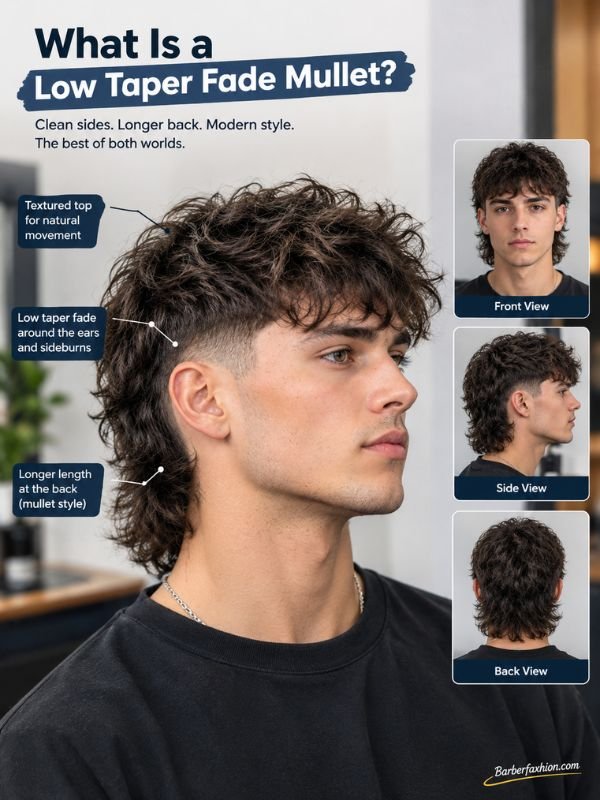
A low taper fade mullet combines two defining elements: a low taper around the sides and neckline and noticeably longer hair toward the back.
Unlike a traditional fade that can move higher up the sides, a low taper stays closer to the ears, sideburns, and lower neckline. This keeps the transition subtle while allowing the longer back to remain the main feature of the haircut.
The top can be short, medium, or fairly long. It can also be layered, textured, messy, brushed forward, or styled naturally depending on your hair.
What Defines the Haircut?
The haircut generally has three visual zones:
- Top: Usually textured or layered for movement.
- Sides: Gradually tapered close to the ears and sideburns.
- Back: Left longer to create the mullet shape.
The exact proportions are flexible. A short back creates a more understated appearance, while a longer back gives the haircut a stronger retro or alternative feel.
Texture is also important. A completely blunt top can make the haircut look heavy, while point cutting or strategic layering can create separation and movement.
Low Taper vs. Fade: What’s the Difference?
The terms taper and fade are often used interchangeably, but they aren’t exactly the same.
A taper gradually reduces hair around specific areas, usually the sideburns and neckline. A fade generally creates a more noticeable transition from longer hair into very short or nearly skin-level hair.
When you ask for a low taper, you’re asking your barber to keep that transition low and controlled. That makes it particularly useful for a mullet because the longer hair remains visually connected to the sides and back.
If you want a very clean, high-contrast appearance, a more aggressive fade may be better. If you want something subtle and easier to grow out, a low taper is usually the safer choice.
Why Choose a Low Taper Fade Mullet?
The appeal of this haircut comes from its balance. You get the personality of a mullet without necessarily committing to an extremely dramatic version.
The taper cleans up the areas around your ears and neckline, while the longer back gives you room to experiment with texture and length.
The Best Things About the Cut
A low taper fade mullet can be customized in several ways.
You can keep the back relatively short for a cleaner everyday haircut. You can add layers for movement, texture the fringe, or let the back grow longer for a more noticeable mullet.
It can also work with natural hair texture. Straight hair can benefit from added texture, wavy hair can use its natural movement, and curly hair can turn the longer back into a major feature.
Another advantage is that the taper itself doesn’t dominate the haircut. The attention stays on the overall shape rather than only on the fade.
What to Consider Before Getting One
Before booking the haircut, think about how much length you’re willing to keep.
A mullet needs enough hair at the back to create a clear difference from the sides. If your hair is currently very short, you may need to grow it before getting the final shape you want.
You should also consider styling time. Some versions can be left naturally messy, while heavily textured or layered versions may need a few minutes of styling each morning.
Finally, consider your daily environment. A subtle version can look relatively clean and understated, while a long or heavily textured version makes a stronger style statement.
Low Taper Fade Mullet for Men: What to Know Before You Get One
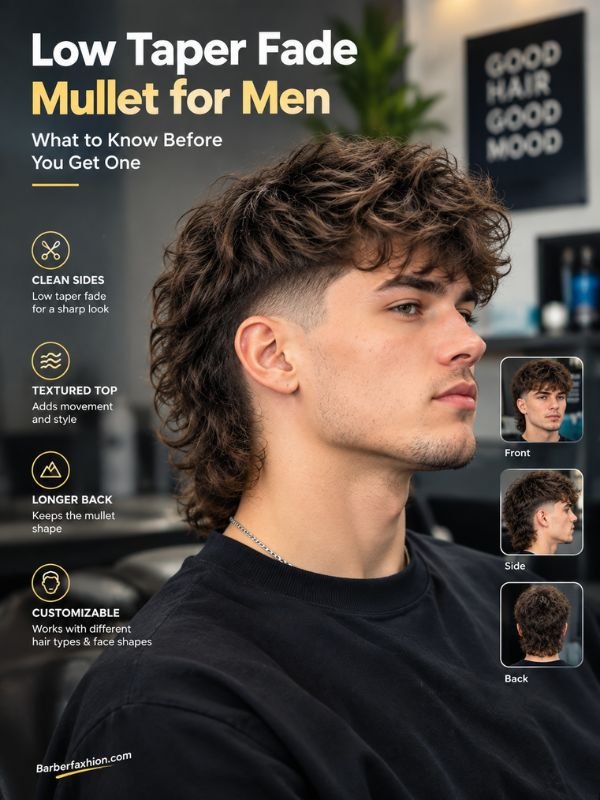
There isn’t one perfect version of this haircut for every man. Your ideal shape depends on your hair’s natural behavior, your preferred length, and how noticeable you want the mullet to be.
The goal isn’t to copy someone else’s haircut exactly. It’s to use the same basic concept and adapt it to your own features.
Who Can Wear This Haircut?
Men with straight, wavy, curly, thick, or fine hair can all explore the style.
The important factor is how the barber creates the shape. Straight hair may need additional texture to avoid looking flat. Thick hair may need controlled bulk removal. Curly hair needs room for shrinkage and natural curl movement.
Your styling routine matters too. If you don’t want to spend much time on your hair, ask for a version that works with your natural texture instead of requiring daily heat styling.
Choosing a Subtle or Bolder Finish
If you’re getting a mullet for the first time, consider starting with a shorter back and a low, subtle taper.
Want something more noticeable? Keep more length in the back and add stronger layers or texture.
The same basic haircut can therefore look clean and understated on one person and bold and edgy on another.
Best Low Taper Fade Mullet Styles & Variations
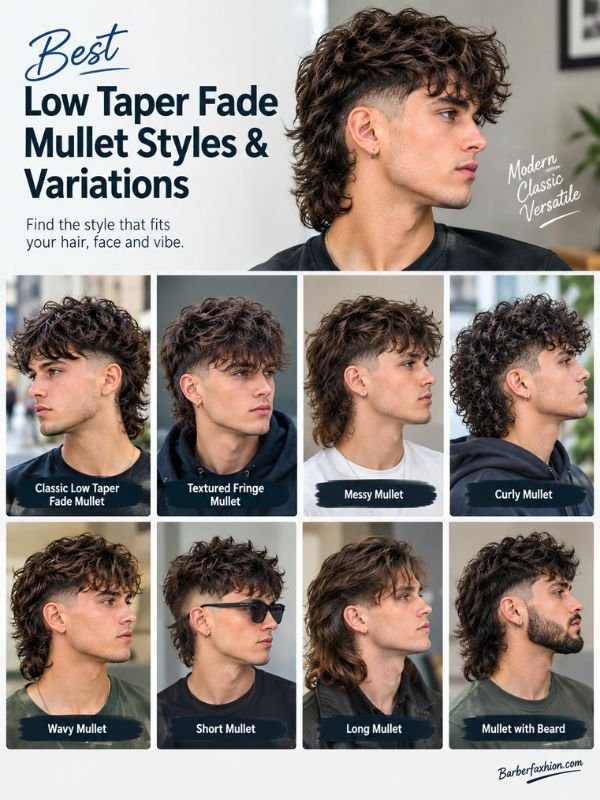
Once you’ve decided on the basic shape, you can customize the haircut in several directions. These variations aren’t completely separate haircuts; they’re different ways of adjusting the same core design.
Classic Low Taper Fade Mullet
The classic version keeps the top relatively controlled, the sides tapered low, and the back noticeably longer.
It’s a good option if you want the recognizable mullet shape without too many extra styling details. The barber can add light layering to keep the back from looking like one heavy block of hair.
Textured Fringe With a Low Taper Mullet
A textured fringe brings the front of the haircut forward while the longer back creates the mullet silhouette.
This works especially well if you like a modern, slightly messy appearance. Ask your barber to add texture rather than making the fringe completely blunt.
The fringe can sit just above the eyebrows, around eyebrow level, or slightly higher depending on your preference and face shape.
Messy Low Taper Mullet
This version is designed around movement rather than precision.
The top and back are layered and textured so the hair doesn’t need to look perfectly arranged. A small amount of matte styling product can bring out separation without making the hair stiff.
It’s particularly useful for wavy hair because the natural movement can become part of the style.
Curly Low Taper Fade Mullet
Curly hair can make the longer back look full and distinctive.
The main challenge is maintaining the curl pattern while creating a clean taper. Your barber should understand how your curls behave when dry because curly hair can appear significantly shorter once it contracts.
A curl-friendly styling cream can help define the longer sections without making them look overly rigid.
Low Taper Fade Mullet With a Beard
Adding a beard creates another visual connection between the haircut and facial hair.
The taper around the sideburn can be blended carefully into the beard instead of creating an abrupt transition. The result can look especially balanced when the beard and haircut have similar levels of neatness.
If your beard is fuller, tell your barber whether you want a seamless connection or a clearly defined separation.
Low Taper Fade Mullet for Boys: A Cleaner Take
For boys, a shorter and cleaner version can make the haircut easier to manage.
Keep the back moderately long rather than extremely extended, and avoid excessive styling requirements. A low taper around the ears and neckline can keep the haircut neat while retaining the mullet’s recognizable shape.
The final length should also suit school rules and the child’s willingness to maintain it.
Short vs. Long Low Taper Fade Mullet: Which Length Is Better?
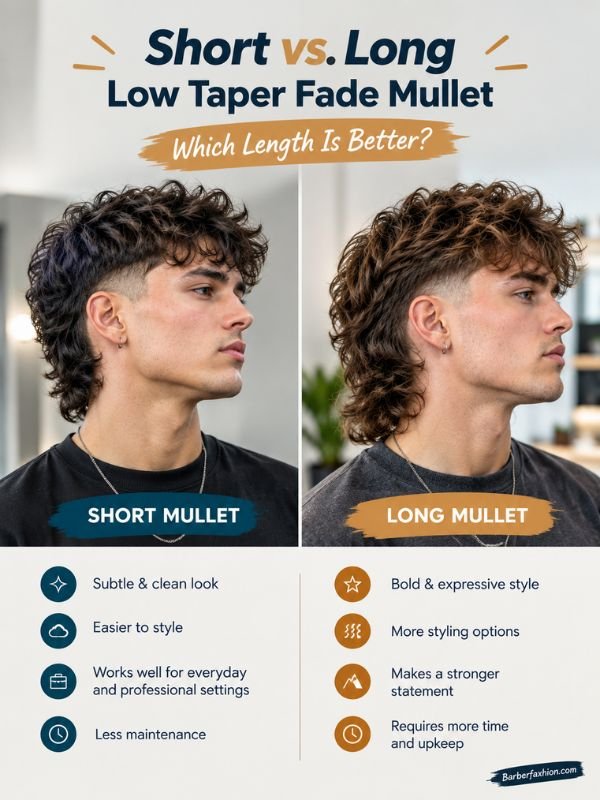
The length of the back dramatically changes the character of the haircut.
A short mullet can look subtle and relatively conventional. A longer one makes the haircut much more noticeable.
| Length | Overall Look | Best For | Styling |
| Short | Clean and subtle | First-time wearers | Easy |
| Medium | Balanced and versatile | Everyday styles | Moderate |
| Long | Bold and noticeable | Statement looks | More involved |
When to Choose a Short Mullet
A short version is ideal if you’re unsure about committing to a dramatic mullet.
The back still has enough extra length to create separation from the sides, but the difference isn’t extreme. This can also make the haircut easier to manage in professional or conservative environments.
If you’re transitioning from a conventional taper, this is one of the easiest versions to try.
When to Choose a Longer Mullet
Choose more length if you want the back to become the main feature.
Longer hair allows for more layers, movement, curls, waves, and styling options. However, it also requires more patience during the grow-out process.
If you’re aiming for significant length, don’t ask your barber to repeatedly trim the back just to keep everything looking short and tidy. Explain the final length you’re working toward.
Low Taper Fade Mullet by Hair Type
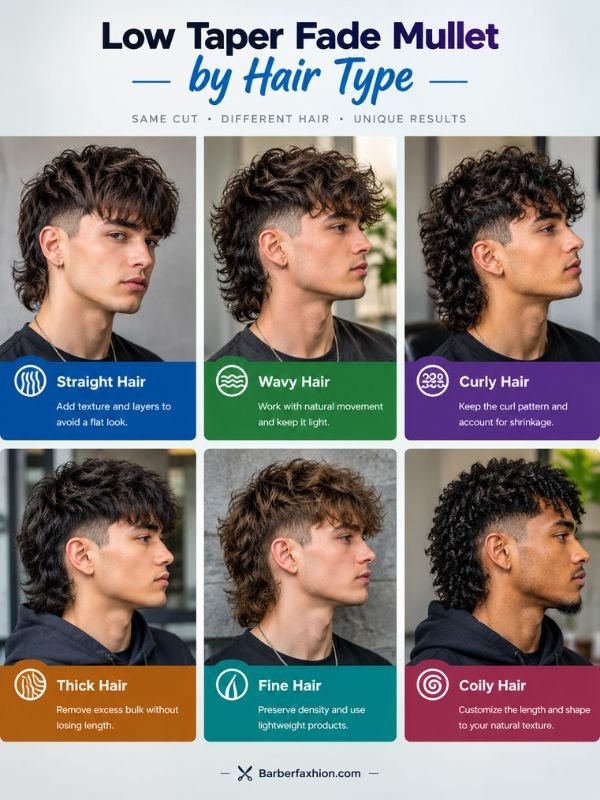
Your hair type can change how the haircut sits and how much styling it needs.
Straight Hair: How to Build the Right Mullet Shape
Straight hair gives you a clean outline, but it can sometimes look flat without enough texture.
Ask your barber for strategic layers and point-cutting through the top and back. Avoid removing too much density if your hair is fine because excessive thinning can make the haircut appear sparse.
For styling, a lightweight texture spray or small amount of matte paste can create separation.
Wavy Hair: Working With Natural Movement
Wavy hair is naturally suited to a relaxed mullet because its movement adds character without requiring heavy styling.
Instead of fighting the wave pattern, ask your barber to shape around it. The back can be layered to encourage movement while the taper keeps the sides controlled.
Use a lightweight styling cream or texture product if needed. Scrunching the hair while damp can help preserve its natural shape.
Curly Hair: Working With Natural Texture
Curly hair needs a slightly different approach.
Your barber should consider how much the curls shrink when dry and avoid cutting the back based only on its wet length. The taper can remain clean around the ears and neckline while the top and back retain enough volume for the curls to form naturally.
Avoid aggressive thinning unless your barber has a specific reason for doing it. Removing too much hair can disrupt the shape of the curls.
Thick Hair: Controlling Bulk Without Losing Length
Thick hair gives the haircut plenty of volume, but too much weight can make the sides and back look bulky.
The solution isn’t necessarily to remove as much hair as possible. Instead, your barber can strategically reduce weight and create layers while preserving the overall length.
A textured top with a controlled back often works better than a heavily thinned-out finish.
Fine Hair: Creating the Appearance of More Texture
Fine hair can still work with a mullet, but preserving density is important.
Avoid excessive thinning because it can make already-fine hair look even less substantial. Light layers and texture can create movement without removing too much bulk.
Matte products are often useful because they can add definition without making fine hair look greasy or weighed down.
Which Face Shapes Suit a Low Taper Fade Mullet?
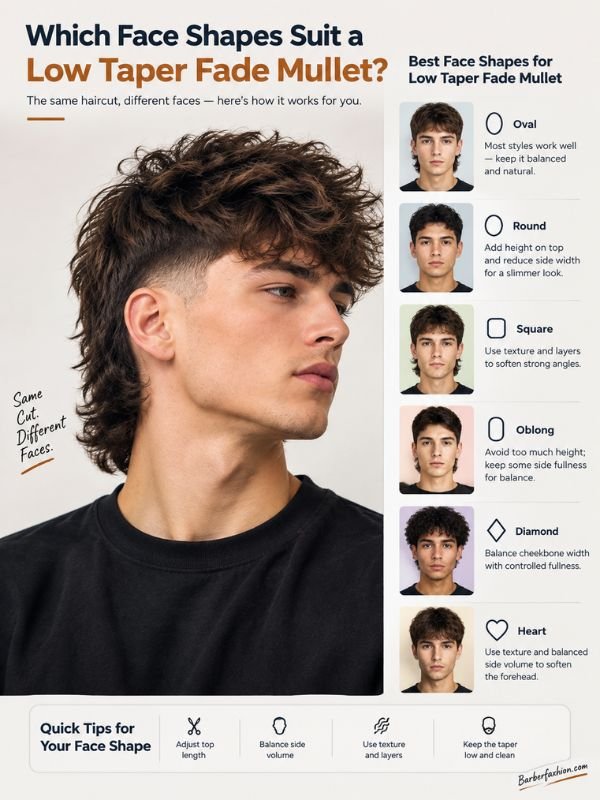
Face shape can help determine how you balance the top, sides, fringe, and back.
| Face Shape | Helpful Adjustment |
| Oval | Most lengths and textures work |
| Round | Add controlled height and reduce excess side width |
| Square | Texture can soften strong angles |
| Oblong | Avoid excessive height and keep some side balance |
| Diamond | Balance cheekbone width with controlled fullness |
| Heart | Use texture and balanced side volume |
Oval Face
Oval faces generally give you plenty of flexibility.
You can experiment with short, medium, or longer versions. Textured, messy, curly, or cleaner finishes can all work as long as the overall proportions feel balanced.
Round Face
For a round face, controlled height on top can help create a longer visual line.
Avoid making the sides excessively wide. Keeping the taper clean while adding some texture or height to the top can create a more balanced appearance.
Square Face
A square face has naturally strong angles, so texture can add a softer visual element.
A layered top and textured back can prevent the haircut from looking too rigid. You can still keep the taper sharp around the ears and neckline.
Oblong or Long Face
If your face is already long, avoid creating unnecessary height on top.
A little side fullness can help balance the overall proportions. A medium-length mullet can work particularly well if you don’t want the haircut to exaggerate vertical length.
Diamond Face
Diamond-shaped faces are widest around the cheekbones, so the haircut can be used to create balance around the forehead and jawline.
Avoid extreme volume in only one area. A controlled taper with textured, moderate fullness can produce a more even silhouette.
Heart-Shaped Face
For a heart-shaped face, balanced texture can help connect the forehead, cheekbones, and jaw visually.
A softer fringe and moderate side fullness can work better than an extremely tight, high-contrast taper.
Low vs. Mid vs. High Taper Mullet
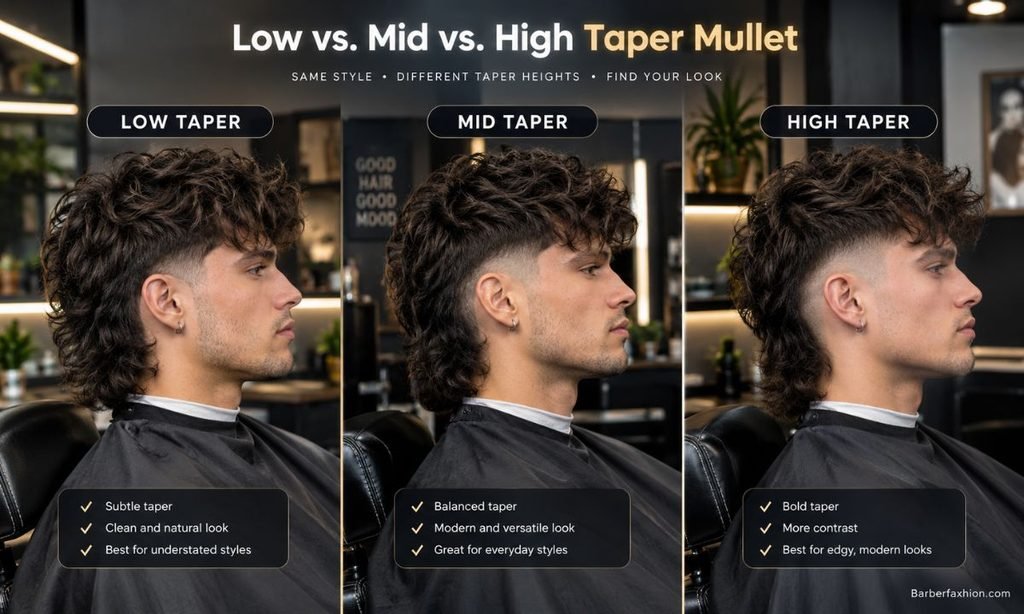
Taper height changes the overall appearance of the haircut.
| Taper | Look | Contrast | Best For |
| Low | Subtle | Low | Clean, understated styles |
| Mid | Defined | Medium | Modern balanced styles |
| High | Bold | Strong | Edgier looks |
When a Low Taper Is the Better Choice
Choose a low taper if you want the mullet itself to remain the main focus.
It works well when you want a clean neckline and sideburn area without removing too much hair from the sides.
It’s also a good starting point if you’ve never worn a mullet before.
Mid Taper Mullet: A More Defined Alternative
A mid taper sits higher and creates a more obvious transition between the sides and longer sections.
It can make the haircut feel sharper and more structured. If you like visible contrast but don’t want the strongest possible fade, this can be a useful middle ground.
When to Consider a High Taper
A high taper creates a much stronger contrast.
It can make the haircut look more aggressive and contemporary, but it also changes the balance of the mullet significantly. If you specifically want a subtle style, don’t let the taper creep too high.
How the Low Taper Mullet Fits the Modern Mullet Trend
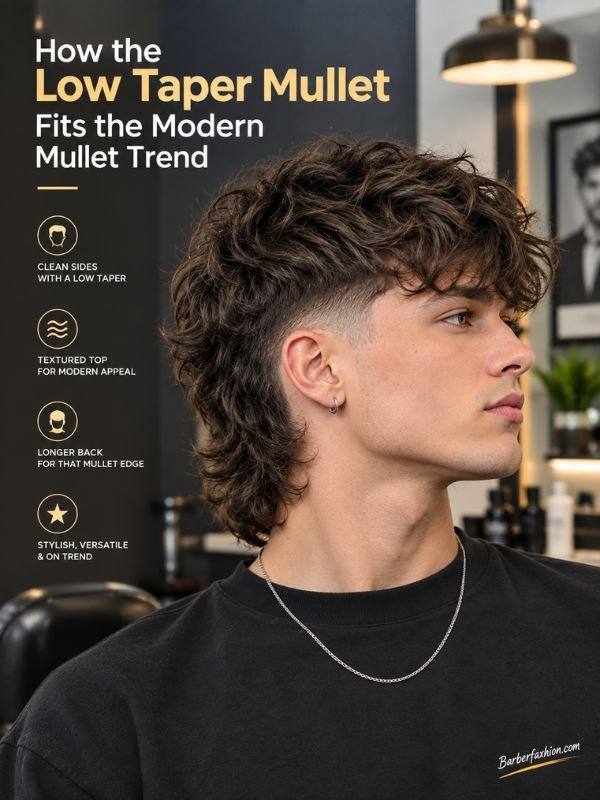
Modern mullets aren’t limited to one specific shape.
Today’s versions often combine the traditional longer back with textured tops, tapers, fades, fringes, curls, waves, or layered finishes. The result can be much more wearable than the exaggerated mullets associated with older styles.
What Makes a Mullet Look Modern?
The details matter.
A clean taper, intentional layering, natural texture, and a well-shaped neckline can make the haircut feel current. The goal is usually controlled contrast rather than simply leaving the back long.
Your barber should also consider how the top connects to the back. A disconnected-looking haircut can feel accidental, while deliberate layers create a more cohesive silhouette.
Low Taper Mullet vs. Wolf Cut for Men
A wolf cut and a mullet can look similar because both use layers and longer sections.
The main difference is usually in the shape and styling. A wolf cut tends to emphasize heavier layering and a more shaggy, voluminous appearance. A mullet generally has a clearer distinction between the shorter sides and longer back.
If you want cleaner sides and a more obvious neckline taper, the mullet is usually the more defined option.
How to Ask Your Barber for a Low Taper Fade Mullet
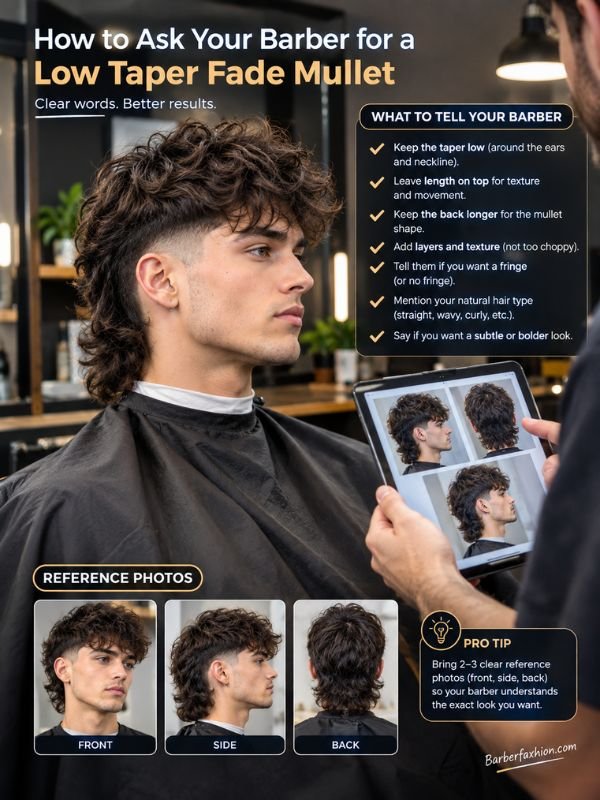
A good haircut starts with clear communication.
Don’t simply say, “Give me a mullet,” and expect the exact result you’ve imagined. Explain the taper height, top length, back length, texture, and overall level of boldness.
What to Tell Your Barber
Tell your barber:
- You want a low taper, not a high fade.
- Keep the taper close to the ears and lower neckline.
- Explain how much length you want on the back.
- Tell them whether you want the top textured, layered, or relatively clean.
- Specify whether you want a fringe.
- Mention your natural hair texture.
- Explain whether you want a subtle or noticeable mullet.
If you’re growing the back, say so before the haircut starts.
A Simple Barber Script
You can say:
“I want a low taper around the ears and neckline, but I want to keep the back longer for a mullet. Keep the top textured and layered, and don’t take the taper too high. I’d like the back to blend naturally with the top while keeping enough length to show the mullet shape.”
Then show your reference photos and explain what you like about them.
Why Reference Photos Matter
A photo can communicate details that words can’t.
Bring at least one front, side, and back reference if possible. Ideally, choose photos showing hair with a texture and density similar to yours.
Don’t just show the barber a photo and say, “I want this.” Point out what you actually want:
- The taper height
- Fringe length
- Back length
- Texture
- Neckline
- Overall shape
That makes the consultation much more productive.
How to Style a Low Taper Fade Mullet at Home
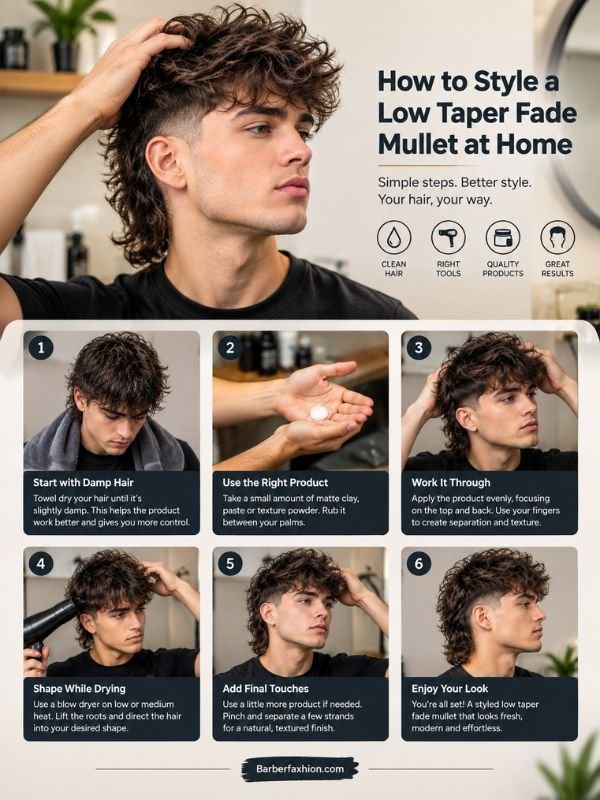
You don’t need a complicated routine to style the haircut.
The right method depends on your natural texture and the finish you want.
For a Messy, Textured Finish
Start with slightly damp hair.
Apply a lightweight texture spray or another product suited to your hair type. Use your fingers to work the product through the top and back.
If you’re blow-drying, use your fingers instead of brushing everything flat. Lift sections of the top and direct the longer back into its natural shape.
Once the hair is dry, use a small amount of matte clay or paste to separate a few sections. Don’t coat the entire haircut in product.
For a Cleaner Finish
For a cleaner appearance, begin with damp hair and use a small amount of styling cream or matte product.
Direct the top into your preferred shape, then lightly define the fringe. Keep the back controlled rather than forcing every strand into place.
The taper should already provide the clean outline, so you don’t need excessive product around the sides.
Styling Tips by Hair Type
Straight hair: Use texture spray or matte paste to create separation.
Wavy hair: Let the natural wave pattern lead the shape and avoid heavy products.
Curly hair: Use curl-friendly cream and avoid brushing the curls once they’re dry.
Thick hair: Use lightweight products first and add stronger hold only where necessary.
Fine hair: Choose lightweight products so you don’t flatten the hair.
Best Products for a Low Taper Fade Mullet
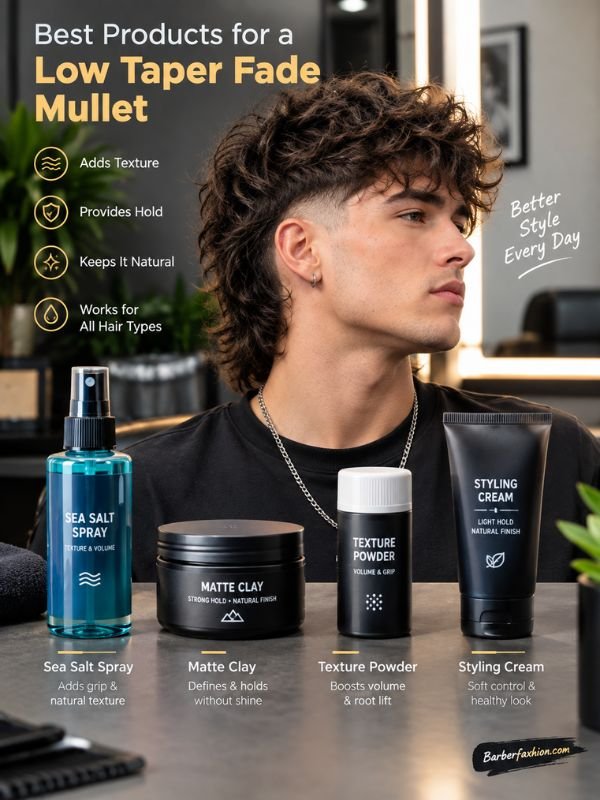
The best product depends more on your hair type and desired finish than on the haircut itself.
Sea Salt Spray
Sea salt spray can add texture and encourage natural movement.
It’s especially useful for straight or slightly wavy hair when you want a relaxed finish.
Matte Clay or Paste
Matte clay or paste provides separation and control without creating a shiny finish.
Use a small amount first. You can always add more, but too much product can make textured hair look heavy.
Texture Powder
Texture powder can provide volume and grip, especially for short-to-medium hair.
It’s useful when you want the top to look fuller and separated without a wet finish.
Styling or Curl Cream
Styling cream works well when you want softer control.
For curly hair, a curl cream can help define the natural pattern while keeping the longer sections manageable.
Trimming, Maintenance & Upkeep
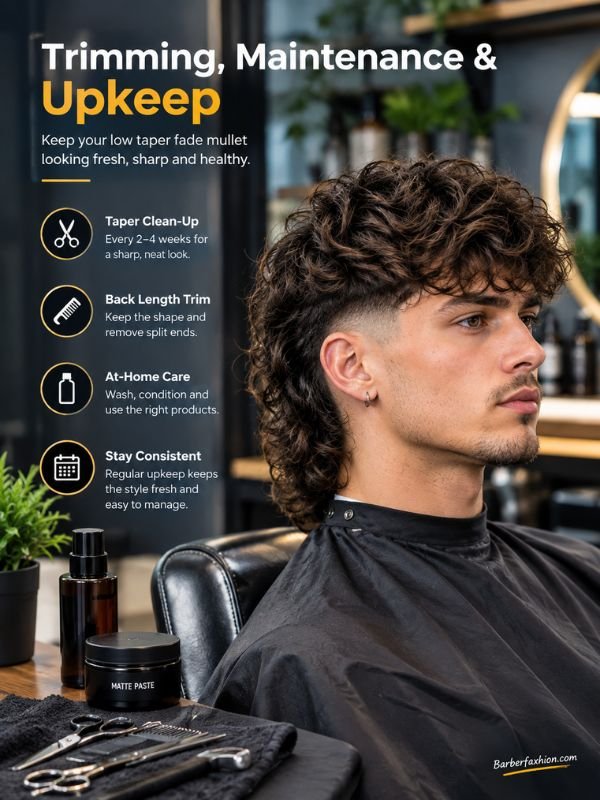
A mullet has two different maintenance needs: the shorter tapered areas and the longer back.
The taper can lose its clean appearance faster, while the back may need less frequent trimming if you’re trying to grow it.
How Often Should You Clean Up the Taper?
If you want the sides and neckline to stay sharp, schedule regular clean-ups rather than waiting until the entire haircut becomes overgrown.
The exact timing depends on how quickly your hair grows and how precise you want the taper to look.
A softer, grown-out taper can also be intentional if you prefer a more relaxed appearance.
When Should You Trim the Longer Back?
If you’re maintaining a specific length, have the back reshaped when the ends become uneven or the silhouette starts losing its form.
If you’re actively growing the back, tell your barber before they cut it. They can clean the ends and shape the surrounding areas without taking away unnecessary length.
How to Maintain the Shape Between Cuts
Wash and condition your hair according to its texture and needs.
Avoid constantly brushing or heat-styling the longer sections if your natural texture already gives you the shape you want.
At home, focus on keeping the taper clean and the longer sections healthy rather than trying to recreate a freshly barbered haircut every day.
Common Mistakes to Avoid
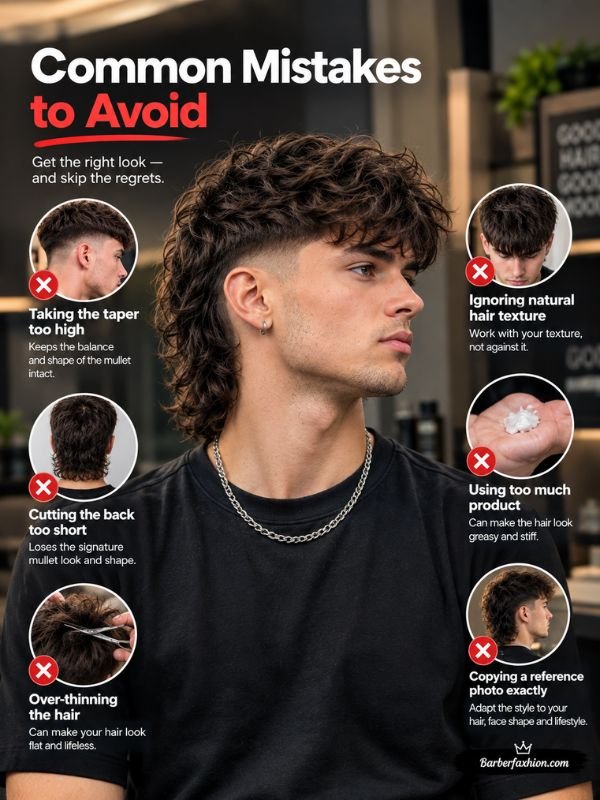
Even a good haircut can go wrong when the proportions aren’t communicated clearly.
Taking the Taper Too High
This is one of the biggest mistakes if you specifically want a subtle low taper.
A taper that moves too high can remove the visual weight that makes the mullet work.
Cutting the Back Too Short
If the back is cut too short, you may lose the defining feature of the haircut.
Tell your barber exactly whether you’re maintaining or growing the length.
Over-Thinning the Hair
Thinning isn’t automatically better.
Too much thinning can remove the density needed to create a strong shape, particularly with fine or curly hair.
Ignoring Natural Hair Texture
A haircut designed for straight hair may not behave the same way on curls or waves.
Your barber should work with your natural texture instead of forcing your hair into a completely different pattern.
Using Too Much Product
Texture doesn’t mean piling product onto the hair.
Start with a small amount and add more only if necessary. Heavy product can make the top look greasy and destroy the natural movement you’re trying to create.
Low Taper Fade Mullet vs. Other Popular Haircuts
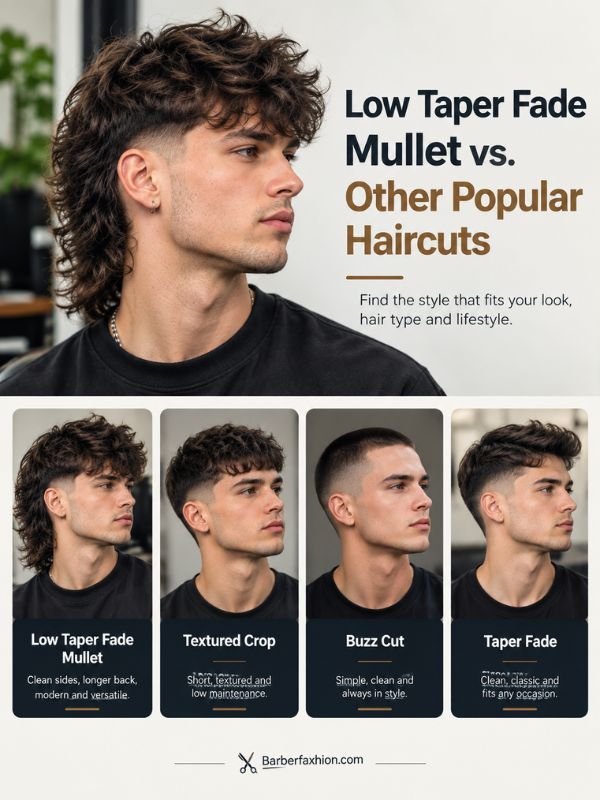
Understanding the alternatives can make your decision easier.
Low Taper Mullet vs. Traditional Mullet
A traditional mullet can have a more obvious contrast between the short sides and longer back.
The low taper version gives you a cleaner transition around the ears and neckline while maintaining the longer-back concept.
Low Taper Mullet vs. Burst Fade Mullet
A burst fade curves around the ear and usually creates a stronger fade effect.
A low taper is more restrained and keeps more surrounding hair intact. Choose the low taper if you want a cleaner but less aggressive transition.
Low Taper Mullet vs. Textured Mullet
A textured mullet focuses heavily on layers and separation, while a low taper mullet specifically defines the sides and neckline with a low taper.
You can combine the two, though. A textured top and back with a low taper can create a modern, movement-focused haircut.
FAQs
Is a low taper fade mullet good for every hair type?
It can be adapted to most hair types, including straight, wavy, curly, thick, and fine hair. The key is adjusting the layering, length, and styling method to match the hair’s natural behavior.
What face shape is best for a low taper fade mullet?
Oval faces generally offer the most flexibility, but the haircut can be customized for round, square, oblong, diamond, and heart-shaped faces. The important part is adjusting the top, sides, fringe, and back to balance your proportions.
How long does your hair need to be for a mullet?
There’s no single required length, but you need enough hair at the back to create a visible difference from the shorter sides. If you want a long mullet, you’ll need to grow the back considerably before shaping it.
How often should you maintain a low taper fade mullet?
The taper may need regular clean-ups if you want it to remain sharp, while the longer back can be trimmed less often. Your preferred length and how quickly your hair grows will determine the ideal schedule.
Is a low taper fade mullet easy to style?
It can be. A natural, messy version may need only a small amount of product, while heavily textured or longer versions require more styling. Choosing a shape that works with your natural hair texture can make the routine much easier.
Conclusion
A low taper fade mullet gives you a useful middle ground between a clean haircut and a more expressive style. The low taper keeps the ears, sideburns, and neckline controlled, while the longer back creates the signature mullet shape.
The best version isn’t necessarily the longest or most dramatic one. Think about your hair type, face shape, preferred length, daily routine, and how bold you want the result to be. Then give your barber clear instructions about the taper height, top, fringe, back length, and texture.
Most importantly, don’t try to force your hair to behave like someone else’s. A well-customized low taper fade mullet should work with your natural texture and proportions. When those details are right, the haircut becomes easier to style, easier to maintain, and much more likely to look intentional.