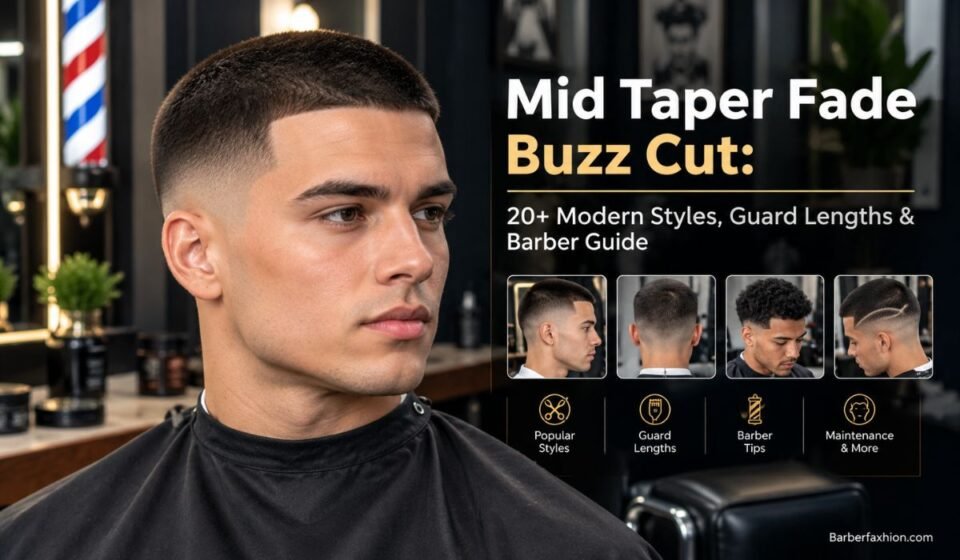

A buzz cut can be one of the easiest haircuts to get, but getting the right buzz cut is a different story. Go too short and your scalp may become more noticeable. Keep too much length and you may lose that clean, sharp buzzed look. The taper matters too, especially if you want your haircut to look modern rather than like one uniform clipper cut.
A mid taper fade buzz cut gives you a short, low-maintenance top while gradually cleaning up the sides around the temples and ears. In this guide, you’ll learn how the cut works, which guard length to choose, the best variations for different hair types, and exactly what to tell your barber.
Quick Answer: A mid taper fade buzz cut combines a short, evenly clipped top with a taper that starts around the middle of the sides and gradually gets shorter toward the temples, ears, and neckline. You can customize the top with different guard lengths, while the taper can have a skin, shadow, or guarded finish.
What Is a Mid Taper Fade Buzz Cut?
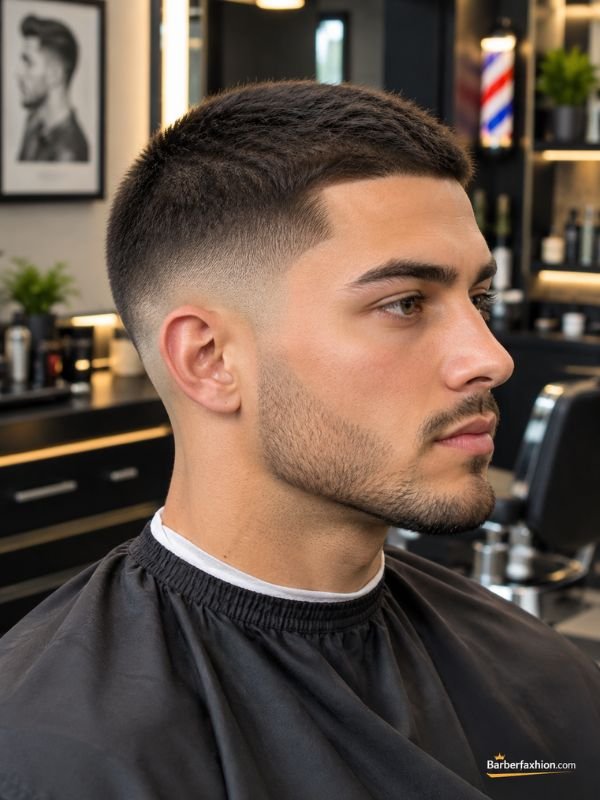
A mid taper fade buzz cut has two main parts: the buzzed top and the mid taper. The top is cut short with clippers, usually using a consistent guard length. The taper then creates a gradual transition around the sideburns, temples, and neckline.
The word “mid” refers to the position of the taper. Instead of keeping the blend very low near the bottom of the sideburn or pushing it high toward the upper sides, the transition sits somewhere in the middle. This gives the haircut a balanced amount of contrast.
Mid Taper Fade Buzz Cut for Men
The style works because it keeps the haircut simple without making every part of the head look identical. The short top gives you the classic buzz-cut appearance, while the tapered edges add shape.
You don’t need much styling either. After washing and drying your hair, the haircut is already close to its finished look. That’s one reason this combination works well for men who prefer practical hairstyles.
How the Mid Taper Changes the Buzz Cut
A one-length buzz cut can look very uniform because the same length covers most of the head. A taper breaks up that uniform shape.
The transition around the temples and neckline creates cleaner edges without necessarily making the entire side of the head extremely short. You can also choose how dramatic that transition feels by selecting a skin, shadow, or guarded finish.
Mid Taper vs High Taper Buzz Cut
The biggest difference is where the taper begins.
A mid taper starts around the middle of the side area, while a high taper begins higher toward the temples. A high taper can create more visible contrast between the short sides and the top.
If you want a balanced appearance, a mid taper is a straightforward option. If you prefer a stronger, more noticeable transition, a high taper may give you that effect.
Mid Taper Buzz Cut vs Other Short Haircuts
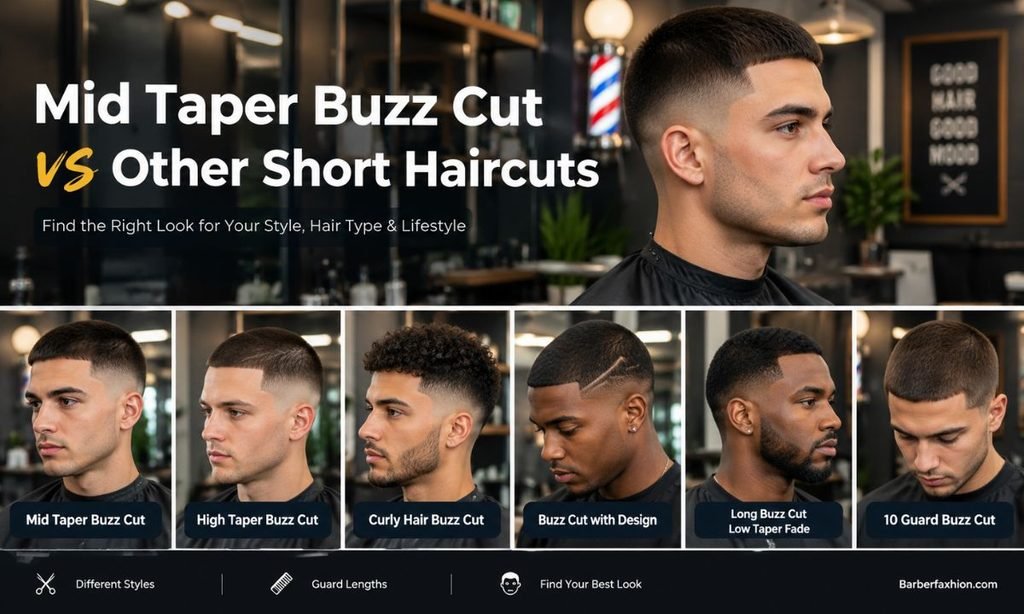
Not every short clipper haircut creates the same shape. Understanding the differences can help you explain your preference to your barber.
| Haircut | Top | Taper/Fade placement | Styling | Overall effect |
| Mid taper buzz | Very short | Middle | Minimal | Balanced and clean |
| Low taper buzz | Very short | Lower | Minimal | Softer transition |
| High taper buzz | Very short | Higher | Minimal | Stronger contrast |
| One-length buzz | Same length | None | Minimal | Uniform and simple |
| Crew cut | Longer | Optional | Light | More shape and versatility |
| Textured crop | Short/medium | Usually faded | Moderate | More texture and movement |
Mid Taper vs Low Taper Buzz Cut
A low taper keeps the transition closer to the ears, sideburns, and bottom of the neckline. It usually creates a more subtle change between the sides and the longer areas.
A mid taper becomes visible higher on the sides. This makes the haircut feel more structured while still keeping the buzz-cut foundation.
Mid Taper vs High Taper Buzz Cut
A high taper moves the transition farther upward. Because more of the side is shortened, the contrast can become more obvious.
With a buzz cut, this difference is easy to see because the top is already short. If you don’t want the taper climbing too high, tell your barber clearly that you want a mid taper rather than a high one.
Tapered Buzz Cut vs One-Length Buzz Cut
A one-length buzz uses roughly the same guard over most of the head. It’s about as simple as a haircut gets.
A tapered version keeps the short top but gradually reduces the length around selected areas. That small detail can make the haircut look more finished without adding much maintenance.
Buzz Cut vs Crew Cut
A traditional buzz cut keeps the top very short and relatively even. A crew cut leaves more length on top and often creates more visual height.
If you want something you can style with your fingers, a crew cut gives you more options. If your priority is simplicity, a buzz cut requires considerably less effort.
Which Guard Length Should You Choose?
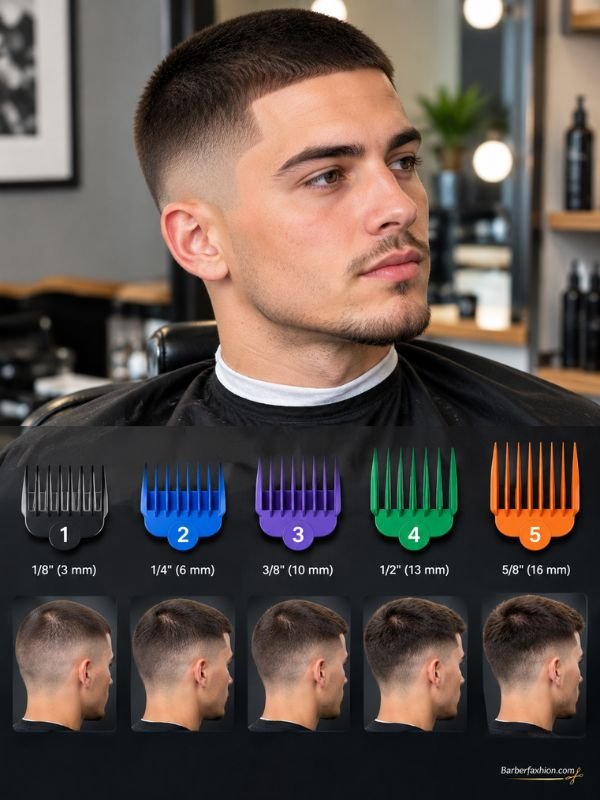
The guard determines how much hair remains on the top. Don’t choose a guard only because a picture looks good on someone else. Hair density, texture, head shape, and scalp visibility can change the result.
Here’s a simple starting point:
| Guard | Approximate length | Look | Coverage |
| #1 | 3 mm | Very short | Low |
| #2 | 6 mm | Classic buzz | Moderate |
| #3 | 10 mm | Fuller buzz | Higher |
| #4 | 13 mm | Longer buzz | High |
| #8 | Around 25 mm | Long clipper cut | Much fuller |
| #10 | Around 32 mm | Very long clipper cut | Fuller |
Exact lengths can vary between clipper systems, so confirm the actual length with your barber.
#1 Mid Taper Buzz Cut
A #1 is a seriously short option. It leaves only a few millimeters of hair, so your scalp and natural head shape can become much more visible.
This works if you genuinely want an ultra-short haircut and don’t mind having very little coverage. If you’re unsure, moving up to a #2 can give you a little more protection and softness.
#2 Mid Taper Buzz Cut
The #2 is a classic starting point for a short buzz. It gives you enough length to maintain some coverage while still looking unmistakably clipped.
For many people, this is a useful middle ground. Pairing a #2 top with a clean mid taper creates a neat shape without making the entire haircut look skin-short.
#3 Mid Taper Buzz Cut
A #3 leaves noticeably more hair than a #1 or #2. That extra length can make the top look softer and fuller.
It’s worth considering if you like the buzz-cut shape but don’t want your scalp to be as visible. It also gives the barber slightly more room to account for different hair densities.
#4 and Longer: When It Becomes a Longer Buzz
A #4 still falls within the general buzz-cut family, although the result begins to look fuller. It can be a good choice when you want the convenience of a clipper cut without going extremely short.
Once you move much longer, the haircut starts approaching longer clipper styles rather than the traditional ultra-short buzz look.
20+ Mid Taper Fade Buzz Cut Variations
The basic haircut can be customized in surprisingly many ways. The differences may be subtle, but they change the final appearance.
1. Classic #2 Buzz With Mid Taper
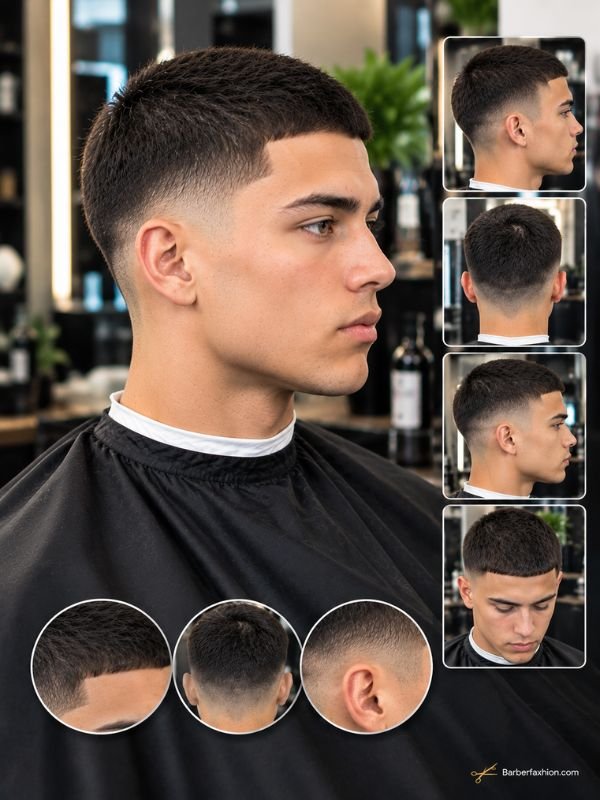
A #2 top with a medium-positioned taper is an easy everyday combination. The top stays short while the sides receive a gradual cleanup.
2. Ultra-Short #1 Buzz
Choose a #1 if you want the haircut to feel extremely minimal. Keep the taper relatively clean and simple so the very short top remains the main feature.
3. Soft #3 Buzz With Mid Taper
A #3 creates a fuller appearance than the shorter options. It’s useful when you want a buzz without making the scalp the focus.
4. Skin-Close Mid Taper Buzz
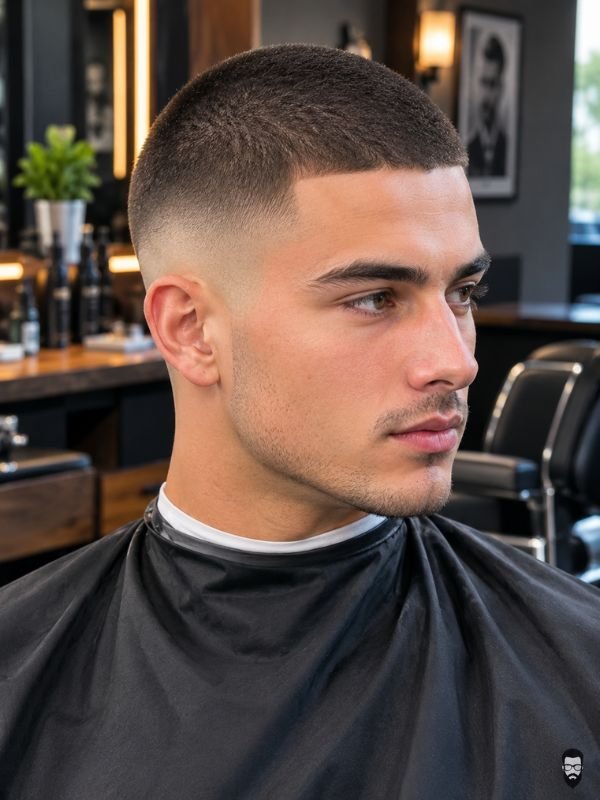
The lower portion of the taper can be taken very close to the skin. This produces stronger contrast around the edges while the top remains buzzed.
5. Shadow Taper Buzz
A shadow finish leaves a small amount of visible hair at the shortest part of the transition. The result is less stark than taking the bottom completely to the skin.
6. Natural Hairline Buzz
Instead of creating a very sharp edge, your barber can follow your natural hairline. This tends to produce a softer and less artificial-looking finish.
7. Sharp Line-Up Buzz
A line-up creates defined edges across the forehead and temples. It’s a good choice when you specifically want the hairline to look crisp.
8. Buzz Cut With Beard
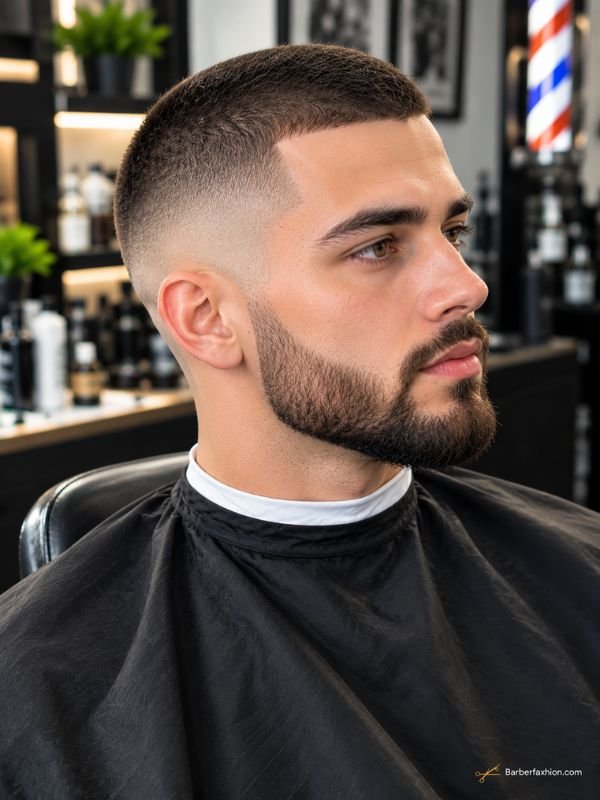
A beard can be blended into the sideburn area so the haircut flows naturally into your facial hair. Ask your barber whether you want a subtle connection or a more noticeable beard blend.
9. Buzz Cut for Straight Hair
Straight hair makes the clipper length easy to see because it usually lies close to the head. A clean taper can add definition around the sides.
10. Buzz Cut for Wavy Hair
Wavy hair can give a slightly softer appearance as it grows. Keeping the top a little longer can preserve some of that natural texture.
11. Buzz Cut for Curly Hair
Curly hair can look different at the same guard length because the strands don’t always lie flat. Your barber can adjust the length according to density and curl pattern.
12. Buzz Cut for Coily Hair
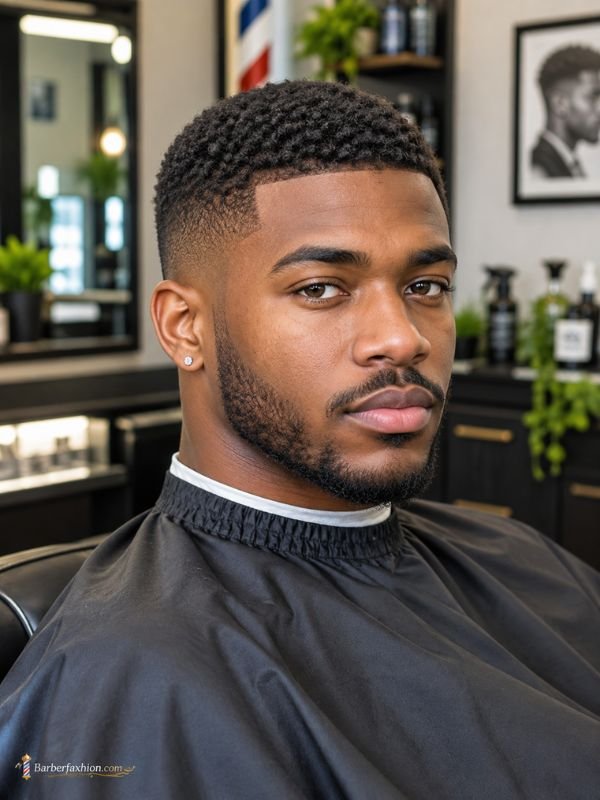
Coily hair can create a dense, textured appearance even at short lengths. A carefully shaped taper can clean the perimeter while leaving the top naturally textured.
13. Thick Hair Mid Taper Buzz
Thick hair responds well to short clipper lengths because the top can retain a dense appearance. Your barber may need to make sure the sides transition smoothly rather than leaving a heavy shelf.
14. Fine Hair Mid Taper Buzz
Fine hair generally shows more scalp at shorter lengths. A #2 or #3 may provide more visual coverage than an extremely short #1.
15. Mid Taper Buzz for a Receding Hairline
A short haircut doesn’t hide a receding hairline in the same way a longer style might. However, keeping the top and hairline clean can create a deliberate, consistent appearance.
Don’t ask for an aggressive line-up simply to change the shape of your natural hairline. Discuss what will look natural with your barber first.
16. Short Buzz With Defined Temples
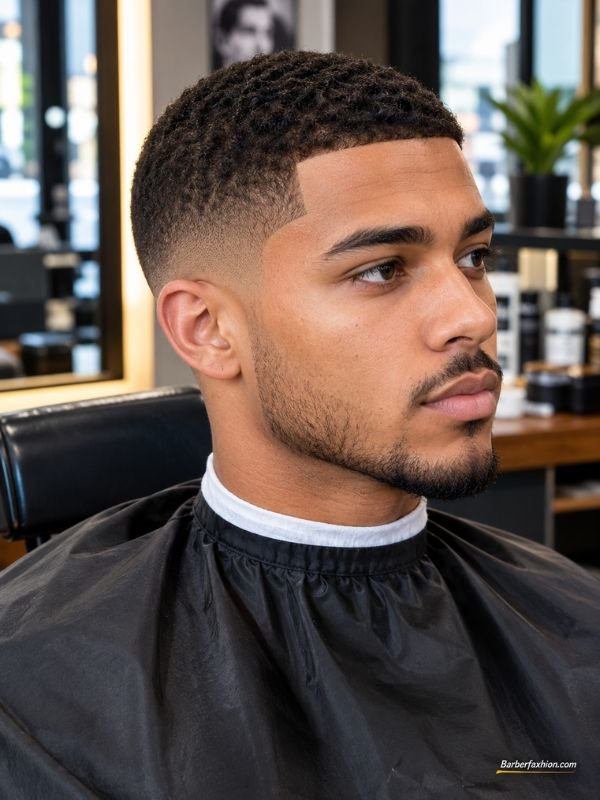
A clean temple area can make a short buzz look sharper. The taper should still blend naturally rather than creating an abrupt corner.
17. Longer Buzz With Mid Taper
Keep more length on top while allowing the sides and edges to taper. This creates a softer version of the traditional buzz.
18. Clean Neckline Mid Taper Buzz
A defined neckline gives the back of the haircut a neat finish. Your barber can choose a squared, rounded, or natural neckline based on your preference and growth pattern.
19. Natural Neckline Buzz
A natural neckline avoids an overly sharp border. This can be useful if you prefer a haircut that grows out without a very obvious line.
20. Minimal-Maintenance Mid Taper Buzz
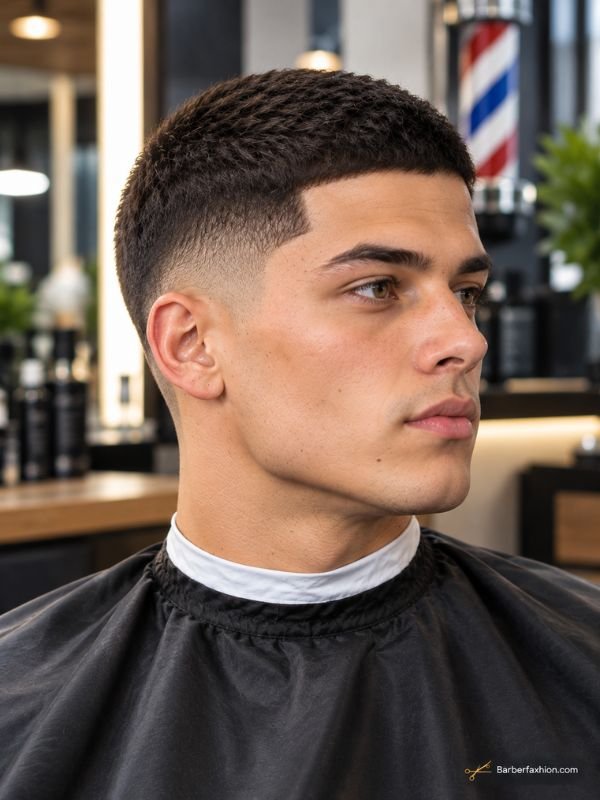
Keep the top at a practical guard length and avoid elaborate designs or extreme edge work. The simpler the finish, the easier it is to maintain between appointments.
21. Mid Taper Buzz With Connected Beard
A connected beard can be blended into the sideburn and temple area. This creates one continuous transition from the haircut into the beard.
22. Mid Taper Buzz With Subtle Edge-Up
A subtle edge-up adds definition without changing the natural hairline dramatically. It’s a good middle ground between completely natural edges and a highly sculpted line.
Mid Taper Fade Buzz Cut for Different Hair Types
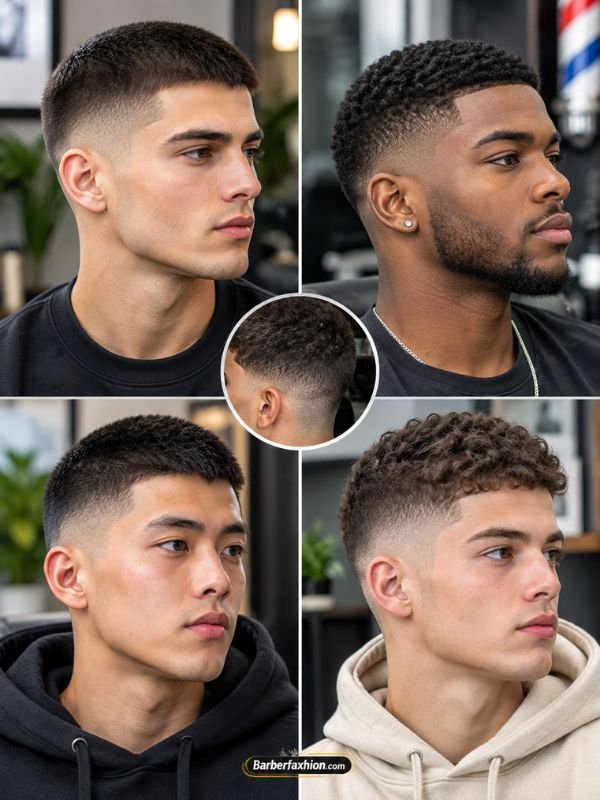
Your hair texture affects how the same guard length looks. Two people can get the same number on the clippers and walk away with noticeably different results.
Mid Taper Fade Buzz Cut With Straight Hair
Straight hair tends to sit close to the scalp, making the chosen length fairly predictable. A shorter guard produces a cleaner, flatter appearance, while a longer guard gives the top more visible density.
If your hair is straight and fine, don’t automatically choose the shortest guard. A little extra length can provide more coverage.
Mid Taper Fade Buzz Cut With Curly Hair
Curly hair can appear shorter than its actual stretched length. It may also create more texture on top even after a clipper cut.
If your curls are dense, discuss your desired finished appearance instead of simply naming a guard. Your barber can consider how your curls respond to the clippers.
Mid Taper Fade Buzz Cut for Thick and Fine Hair
Thick hair can support shorter lengths while still looking dense. Fine hair may show more scalp, particularly at the #1 or #2 length.
Neither texture automatically rules out the haircut. The important part is selecting a length that gives you the amount of coverage you’re comfortable with.
Mid Taper Fade Buzz Cut for Black Men
A short tapered buzz can work particularly well with tightly curled or coily textures because the natural texture remains visible even at short lengths.
For a mid taper fade buzz cut, Black men can also customize the perimeter with waves, a line-up, a beard blend, or a natural edge. The key is deciding whether you want the taper to remain subtle or create stronger contrast.
Mid Taper Buzz Cut With Waves
If you already have waves, keeping enough length on top is important because extremely short guards can remove much of the visible wave pattern.
A #2 or longer may preserve more texture than a very close buzz, depending on your hair.
Mid Taper Buzz Cut With Coily or Textured Hair
A short coily top can look dense and textured. You can pair it with a clean taper and natural edges or add a more defined line-up.
Talk to your barber about how much of your natural texture you want to keep visible before deciding on the guard.
Mid Taper Buzz Cut With Beard
The beard gives you another area to customize. A connected blend can make the haircut feel more cohesive, while a separated beard creates clearer contrast.
Keep the beard length in proportion to the top. An extremely short top with a much longer beard creates a noticeably different balance from a short beard and #2 buzz.
Buzz Cut Guard Lengths: From #1 to #10
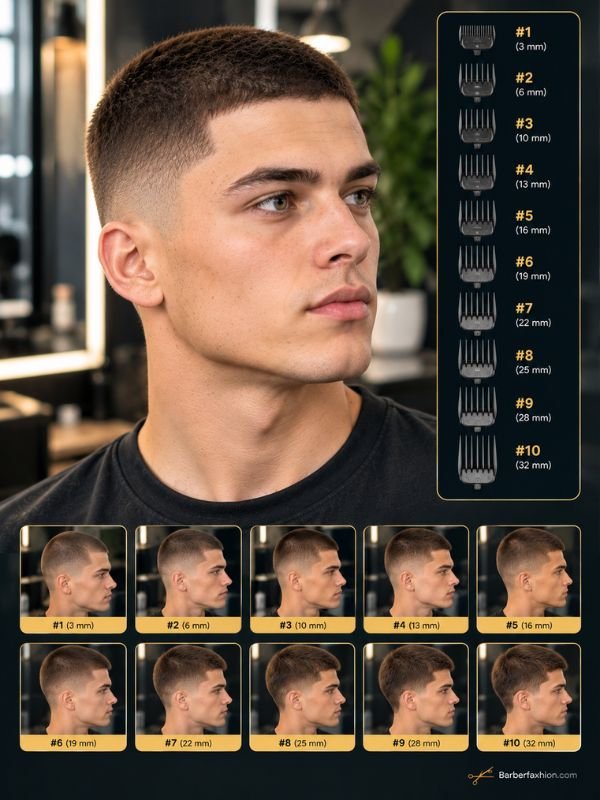
Going from a #1 to a #10 is not a small change. The difference becomes especially noticeable in scalp coverage and how much texture remains visible.
#1 to #4 Buzz Cut Guard Lengths
For a traditional short buzz, #1 through #4 are the most practical range to discuss with your barber.
- #1: very close and scalp-forward
- #2: short but slightly more forgiving
- #3: fuller and softer
- #4: longer with more coverage
If you’re getting your first buzz, look at reference photos taken from the front, side, and back. A single front-facing photo doesn’t show how much the haircut exposes around the crown and sides.
What Does an 8 Guard Buzz Cut Look Like?
An #8 guard leaves substantially more length than a #1–#4. The result can look more like a longer clipper cut than the classic military-style buzz most people imagine.
You can still combine a long top with a taper around the sides, but tell your barber that you want to retain significant length.
What Does a 10 Guard Buzz Cut Look Like?
A #10 is even longer. It provides much more coverage and leaves enough hair to show more natural texture and direction.
If you’re searching for a mid taper fade buzz cut 10 guard, remember that the guard controls the top length. The taper is a separate part of the haircut.
Is a #10 Guard Still Considered a Buzz Cut?
That depends partly on how the haircut is shaped and the terminology your barber uses. A #10 is much longer than the classic close buzz, so some barbers may describe it as a longer clipper cut rather than a traditional buzz.
The important thing is to communicate the actual length you want instead of relying only on the haircut name.
Long Buzz Cut and Low Taper: How Is It Different?
A long buzz with a low taper is related to this style but creates a different silhouette.
Long Buzz Cut With Low Taper Fade
The top remains relatively long while the taper stays low around the edges. This gives you more coverage and a softer transition.
It’s worth considering if you like the convenience of a clipper-cut top but don’t want a very short mid taper.
Long Buzz vs Mid Taper Buzz
The main difference comes down to top length and taper placement. A long buzz can retain significantly more hair, while a mid taper buzz normally creates a more visible transition higher on the sides.
If your priority is coverage, compare longer guard options before committing to a very short buzz.
Does a Mid Taper Fade Buzz Cut Suit You?
The haircut can be adapted to many hair textures and face shapes, but the guard length and taper placement matter.
Choosing the Cut for Your Face Shape
For a round face, keeping a little more length on top can maintain some vertical shape.
For a longer face, an extremely short top can create a very exposed appearance, so consider whether you want additional length.
Square faces already have strong angular proportions, and a short cut can emphasize those features.
Oval faces generally give you more flexibility with guard lengths and taper placement.
These aren’t strict rules. Your head shape, hairline, density, and personal preference matter just as much.
Choosing the Right Length for Your Hair Type
Thick hair can usually maintain a dense appearance at shorter lengths. Fine hair may benefit from a longer guard if you want more coverage.
Curly and coily textures can also appear different from straight hair at the same clipper setting. Ask your barber to show you the approximate length before committing.
Mid Taper Buzz Cut for a Receding Hairline
A buzz cut won’t make a receding hairline disappear. Because the hair is short, the existing hairline can actually become more obvious.
The benefit is consistency: rather than trying to disguise the hairline with longer pieces, the entire haircut follows a short, intentional shape.
How Scalp Visibility Changes With Shorter Guards
The shorter you go, the more visible your scalp may become. This is particularly noticeable with very close guards and certain hair densities.
If you aren’t comfortable with scalp visibility, start longer. You can always go shorter later, but you can’t immediately add the removed length back.
Mid Taper Fade Buzz Cut vs High Taper Fade Buzz Cut
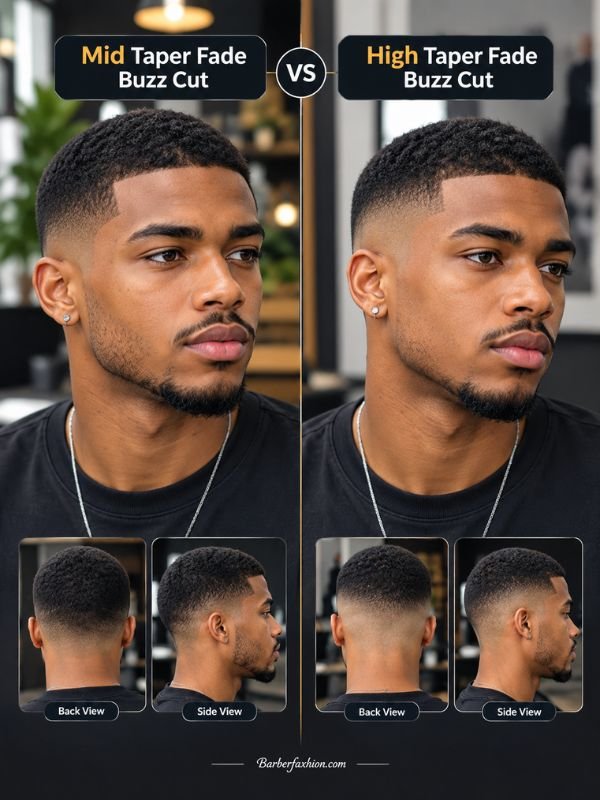
Both styles use a taper, but the placement changes the overall shape.
Where the Taper Sits
A mid taper sits around the middle portion of the sides. A high taper moves higher toward the temples.
The higher the taper travels, the more side hair gets removed.
Difference in Contrast and Overall Shape
A mid taper generally creates a balanced transition between the short top and the lower sides.
A high taper can make the sides look more exposed and the top appear more prominent. Your choice should depend on how much contrast you actually want.
Which Guard Length Works With Each Taper?
You can pair different top guards with either taper position. A #1, #2, #3, or longer top doesn’t automatically determine whether the taper is mid or high.
Think of the haircut as two separate decisions:
Top length + taper placement = overall haircut.
How to Ask Your Barber for a Mid Taper Fade Buzz Cut
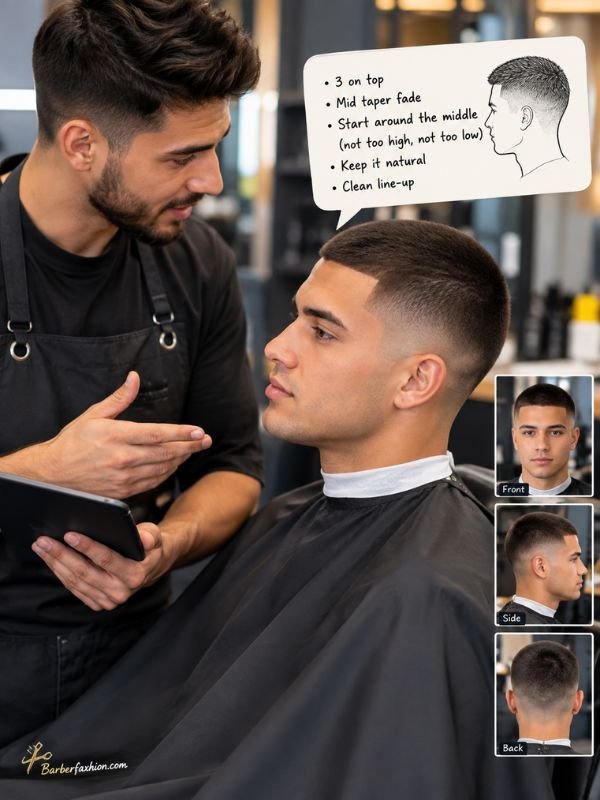
The easiest way to avoid disappointment is to be specific.
Tell Your Barber the Top Guard Length
Don’t simply say, “Give me a buzz.” Say whether you want a #1, #2, #3, #4, or a longer clipper length.
If you’re unsure, show your barber a photo and ask what guard would produce a similar result with your hair density.
Specify the Mid Taper Placement
Tell the barber you want the taper to sit at a mid position rather than low or high.
Pointing to the area you mean can also help because terminology isn’t always used identically between barbers.
Choose Skin, Shadow, or Guarded Finish
Decide how close you want the bottom of the taper:
- Skin: strongest contrast
- Shadow: softer transition
- Guarded: more visible hair at the shortest point
Show a Reference Photo
A good reference photo should show the front, side, and back if possible. Don’t rely on a single heavily edited image.
Also tell your barber what you don’t want. For example, “Keep the taper mid and don’t take it high” is much clearer than simply saying “make it clean.”
Ready-to-Use Barber Request
For a classic version, you can say:
“Keep the top around a #2 buzz. I want a mid taper around the temples and sideburns, blended gradually into the sides and neckline. Keep the taper clean but don’t take it too high. Keep my natural hairline unless you think a subtle edge-up would suit it.”
For a softer version:
“Leave the top around a #3. Give me a mid taper with a shadow finish rather than taking everything down to skin. Keep the edges natural and clean.”
How to Maintain a Mid Taper Fade Buzz Cut
A buzz cut is low maintenance, but the taper still needs attention if you want it to stay crisp.
How Often Should You Get a Touch-Up?
Very short tapers show regrowth relatively quickly. How often you need a refresh depends on how quickly your hair grows and how sharp you want the edges to remain.
The top doesn’t necessarily need to be recut every time the taper does. Your barber can simply clean up the sides and neckline when the top still has the length you want.
What to Do Between Barber Visits
Wash your hair regularly and keep your scalp clean. If you spend a lot of time outdoors, remember that a very short haircut provides less protection from direct sunlight.
Avoid constantly shaving or trimming the taper yourself unless you’re confident with clippers. It’s easy to remove too much and disturb the blend.
Scalp Care and Sun Protection
When the hair is extremely short, more scalp is exposed. Use sensible sun protection when you’re outdoors for extended periods.
If your scalp becomes dry, irritated, or uncomfortable after a very close cut, give it time to settle and avoid repeatedly cutting it shorter until the irritation improves.
How to Avoid Ruining the Taper at Home
Don’t try to recreate the entire fade with random guard changes. A taper is a gradual transition, and small mistakes can become obvious on very short hair.
If the taper has grown out, getting it cleaned professionally is usually simpler than repeatedly trimming the area yourself.
Things to Know Before Getting a Very Short Buzz
A very short buzz is convenient, but it’s not completely risk-free from a style perspective.
Scalp Imperfections Can Become More Noticeable
Very short hair exposes more of the scalp and head shape. Existing bumps, scars, pigmentation, or uneven areas may therefore become easier to see.
If you’re unsure, start with a #3 or #4 rather than immediately choosing the shortest possible guard.
Very Short Guards Give Less Styling Flexibility
A #1 or #2 doesn’t leave much hair to style. You won’t have the ability to sweep it, create volume, or change the shape with products.
If you like changing your hairstyle regularly, a longer buzz or crew cut may give you more flexibility.
Skin Finishes Can Show Regrowth Quickly
The closer the taper is cut, the more noticeable new growth can become. A shadow or guarded finish may look softer for longer because some hair remains at the shortest point.
What Should You Get Instead?
A buzz cut isn’t the only low-maintenance option.
| Alternative | Consider it if you want | Main difference |
| Low taper buzz | Softer sides | Taper stays lower |
| High taper buzz | More side contrast | Taper sits higher |
| One-length buzz | Maximum simplicity | No taper |
| Crew cut | More top shape | Longer top |
| Textured crop | More styling options | More length and texture |
Choose a Low Taper Buzz Cut for a Softer Look
A low taper keeps most of the sides intact and focuses the blend around the lower perimeter. It’s useful when you want a subtle transition.
Choose a One-Length Buzz Cut for Maximum Simplicity
If you don’t care about tapering, a one-length buzz is extremely straightforward. One primary length covers most of the head, making the haircut easy to understand and maintain.
Choose a Mid Fade Buzz for More Contrast
A mid fade buzz can create a stronger transition than a traditional taper, particularly when the lower sides are taken very short.
If you want a noticeably faded appearance rather than a subtle taper, discuss this distinction with your barber.
Choose a Crew Cut or Crop for More Top Length
If you want to style your hair occasionally, consider leaving more length on top. A crew cut or textured crop gives you more room to change the shape.
FAQs About Mid Taper Fade Buzz Cuts
What guard should I use for a mid taper fade buzz cut?
A #2 or #3 is a practical starting point for a traditional short buzz, but the right length depends on your preferred coverage, hair density, and scalp visibility. If you’re uncertain, ask your barber to compare the lengths before cutting.
Can you get a mid taper buzz cut with an 8 guard?
Yes. An #8 leaves much more length than the classic #1–#4 buzz range, so the result will look like a longer clipper cut. The taper can still be placed at the middle of the sides.
Can you get a mid taper buzz cut with a 10 guard?
Yes, although a #10 is considerably longer and may no longer resemble the traditional close buzz. Tell your barber the exact length you want rather than relying only on the haircut name.
Is a high taper better than a mid taper for a buzz cut?
Neither placement is automatically right for everyone. A high taper removes more hair from the upper sides, while a mid taper keeps the transition lower and more central. Choose based on how much contrast and side exposure you prefer.
Can Black men get a mid taper fade buzz cut?
Yes. The style can be adapted to straight, wavy, curly, coily, and tightly textured hair. Waves, line-ups, natural edges, and beard blends can also be incorporated depending on the desired finish.
Conclusion
A mid taper fade buzz cut is less complicated than it looks. The key is understanding that the top length and taper placement are two separate decisions. Choose your guard based on how much coverage you want, then decide whether the taper should finish at skin, shadow, or a longer guard.
Before sitting in the barber’s chair, bring a clear reference photo and explain the top length, taper height, hairline, neckline, and desired finish. Whether you choose a close #1, classic #2, fuller #3, or longer guard, a little communication can make the difference between simply getting a buzz cut and getting the exact version you had in mind.