
Straight hair can make a haircut look incredibly clean, but it can also expose every detail of a cut. If the sides are too bulky, the top falls flat, or the transition is too high, the whole style can lose its shape quickly. That’s why choosing the right taper height and top style matters.
A mid taper fade for straight hair gives you a balanced starting point. It keeps the taper noticeable around the temples and neckline without taking the sides as high as a high fade. From textured fringes and quiffs to slick backs, crew cuts, mullets, and longer tops, there are plenty of ways to personalize the look.
Quick answer: A mid taper fade works well with straight hair because the clean transition around the temples and neckline creates definition while leaving plenty of freedom on top. The best version depends on your hair length, density, face shape, styling routine, and how much maintenance you’re willing to do.
What Is a Mid Taper Fade for Straight Hair and Why Does It Look So Sharp?
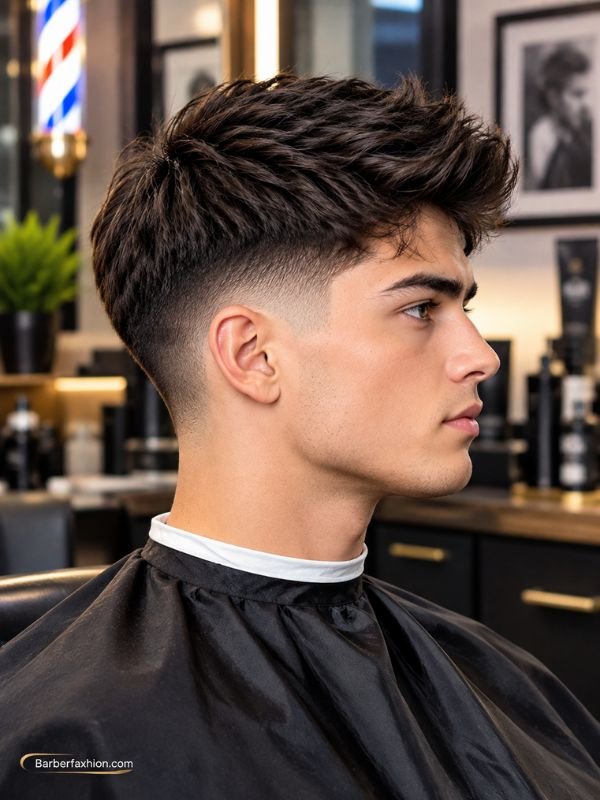
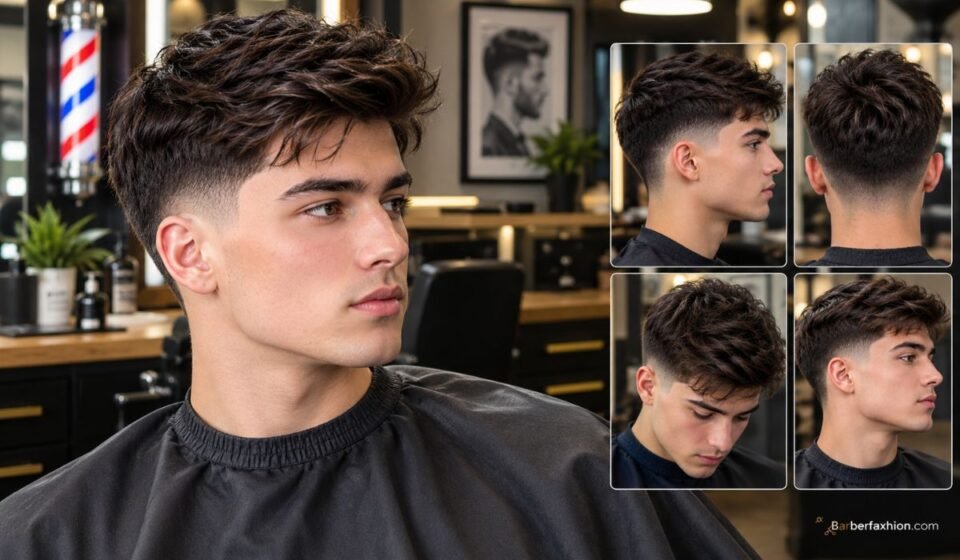
A mid taper fade gradually shortens the hair around the temples and neckline, with the transition positioned around the middle area of the sides rather than extremely low or high. The top is usually left longer so you can choose a separate style, such as a fringe, quiff, side part, slick back, or textured finish.
The word “taper” refers to the gradual reduction in length. A fade uses a similar blending idea but can create a more noticeable transition from longer hair into very short or skin-level areas. Barbers may use different clipper guards and blending techniques depending on the desired finish.
What Is a Mid Taper Fade for Straight Hair?
With straight hair, the taper is especially easy to see because the strands naturally lie in a consistent direction. This can make the outline around the temples and neckline look crisp when the cut is blended properly.
The top doesn’t have to be short. You can pair the taper with almost any length that works with your natural texture. Short hair can create a neat, low-maintenance appearance, while medium or longer hair gives you more styling choices.
One important point is that straight hair isn’t automatically easy to style. Fine straight hair may need help with volume, while thick straight hair can become heavy around the sides and crown. Your barber should consider the density and movement of your hair before deciding how much weight to remove.
How a Mid Taper Fade Differs From a Regular Taper
A regular taper can keep the transition relatively subtle around the edges. A mid taper generally brings that transition higher on the sides, creating more visible separation between the top and the shorter areas.
That doesn’t mean every mid taper looks aggressive. The final appearance depends on how high the taper is taken, how short the shortest section becomes, and how much length remains above it.
For straight hair, these details are important because the hair can reveal uneven blending more easily than hair with strong natural curls or waves.
Where Does a Mid Taper Fade Start?
There isn’t one universal measurement that every barber uses. In general, a mid taper sits higher than a low taper and lower than a high taper.
Instead of relying only on a clipper number, show your barber a reference photo and explain whether you want a subtle, balanced, or more noticeable transition. This is often more useful than asking for a specific guard without explaining the overall look you want.
Why Straight Hair Works So Well With a Mid Taper Fade
Straight hair gives you a clean canvas for experimenting with different top styles. Because the strands usually follow a relatively predictable direction, the shape of the haircut can remain easy to see.
That doesn’t mean every straight-haired person should get the same taper. Hair thickness, growth pattern, length, and styling habits all affect the result.
Clean Fade Definition on Straight Hair
A well-blended taper can look particularly neat when paired with straight hair. The contrast between the longer top and shorter sides is easy to notice, especially when the hair is styled away from the face.
This makes classic options such as side parts, comb-overs, crew cuts, and slick backs suitable for people who prefer a controlled appearance.
Creating Volume and Texture on Straight Hair
The main challenge for many straight-haired men is keeping the top from looking too flat. A haircut can provide the foundation, but styling technique also matters.
Blow-drying the roots upward, using a lightweight pre-styler, or adding a small amount of matte clay can create separation without making the hair look greasy.
Texture can also be created through the haircut itself. A barber can use techniques that reduce excess weight and encourage movement without removing too much length.
What to Watch for With Flat or Heavy Straight Hair
Fine straight hair can lose volume quickly when too much heavy product is applied. Thick straight hair has almost the opposite problem: it may hold its shape well but become bulky if the sides and top aren’t balanced.
Tell your barber how your hair behaves after washing and throughout the day. If it naturally falls forward, for example, a style that depends on strong backward movement may require more daily styling.
Mid Taper vs Low Taper vs High Taper for Straight Hair
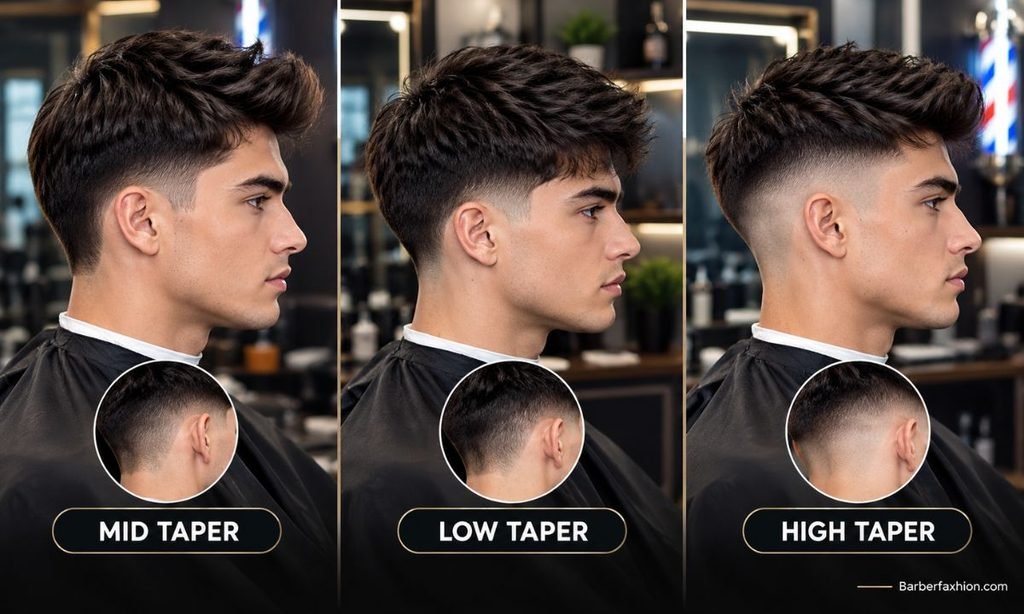
The main difference between these taper heights is where the transition occurs. Your choice affects how much of the side profile is visually exposed and how strong the contrast feels.
| Taper | Transition | Overall appearance | Maintenance |
| Low taper | Near the lower edges | Subtle | Relatively low |
| Mid taper | Around the middle of the sides | Balanced | Moderate |
| High taper | Higher on the sides | More noticeable | Often higher |
Low Taper Fade for Straight Hair
A low taper keeps more hair around the sides while cleaning up the area near the ears and neckline. It can be a good option if you want a conservative haircut or don’t want a major change to the side profile.
Straight hair can make a low taper look particularly understated because the longer side hair remains visible. It also works well with classic top styles and longer hairstyles.
If you’re unsure about going higher with the taper, a low taper can provide a useful starting point.
Mid Taper Fade for Straight Hair
A mid taper creates a middle-ground appearance. It gives the sides more definition than a low taper while leaving more hair around the upper side area than a high taper.
This balance makes it easy to combine with many different top styles. You can keep the top short and neat or leave enough length for a fringe, quiff, curtains, slick back, or textured style.
High Taper Fade for Straight Hair
A high taper moves the shorter transition farther upward. This can create stronger contrast between the top and sides.
It can suit people who want a more noticeable haircut, but the top length and face shape become especially important. Taking the taper too high can also make the haircut look very different from the reference photo you originally had in mind.
Mid Fade vs Mid Taper Fade
A mid fade and a mid taper aren’t necessarily the same haircut. A mid fade generally describes a fade that extends more broadly along the sides, while a taper focuses the shortening around areas such as the temples and neckline.
Because terminology can vary between barbers, don’t rely on the name alone. Bring a photo and explain exactly where you want the shorter area and how much length you want to preserve.
Which Taper Height Should You Choose?
Think about three things: how much contrast you want, how much side hair you want to keep, and how often you’re willing to maintain the cut.
If you want a noticeable but balanced change, a mid taper can make sense. If you prefer a more conservative appearance, a low taper may be more suitable. If you want stronger contrast, a high taper may fit your preference.
There isn’t one universally correct taper height. Your hair, face, style, and personal preference should guide the decision.
25+ Best Mid Taper Fade Styles for Straight Hair in 2026
The following styles show how much variety you can get from the same basic taper concept. The right choice depends on your top length, hair density, styling ability, and the appearance you want.
1. Classic Mid-Taper Fade Straight Hair
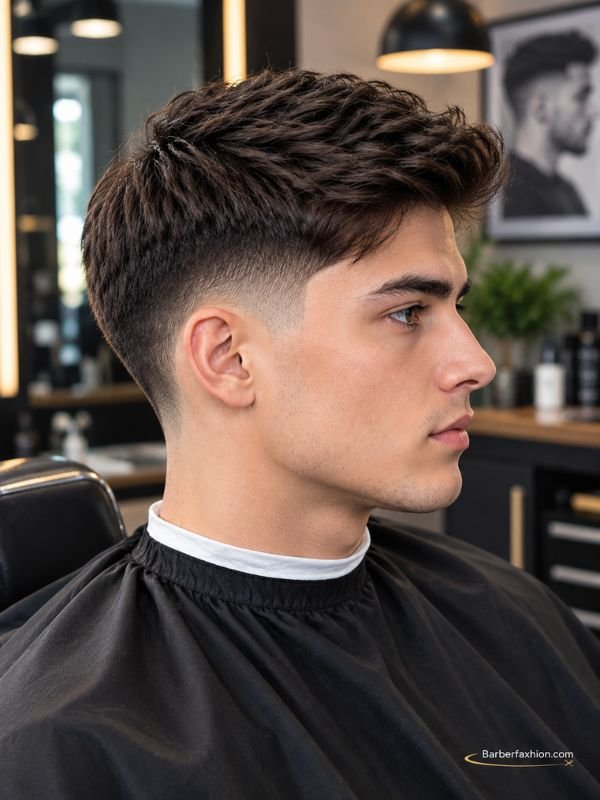
The classic version keeps the top relatively natural while the sides and neckline receive a clean, balanced taper. It works well for men who want something polished without committing to an elaborate hairstyle.
You can wear the top naturally, brush it slightly to the side, or add a small amount of matte product. This is also a practical choice if you want a haircut that works in both casual and professional settings.
2. Textured Fringe Mid-Taper Fade Straight Hair
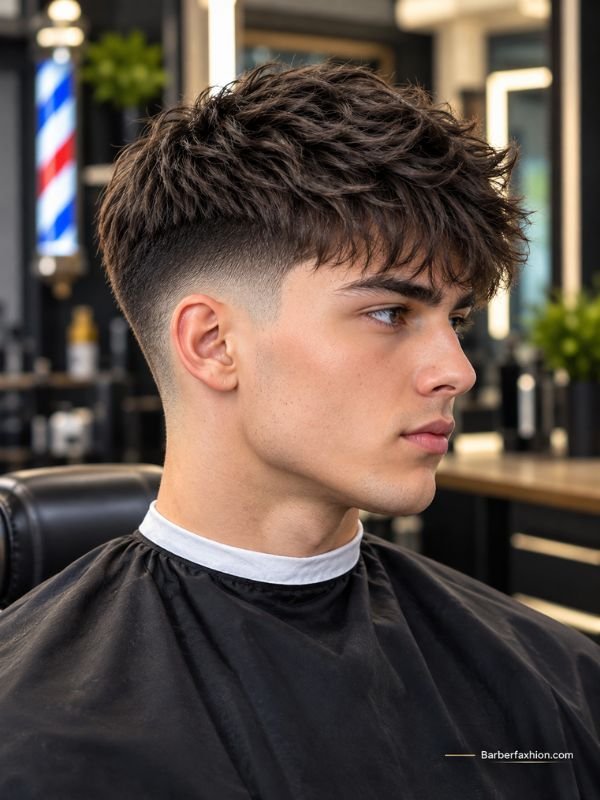
A textured fringe leaves forward-moving hair across the forehead while adding separation through the top. Straight hair can sometimes look too uniform, so subtle texture prevents the fringe from appearing like one solid block.
Ask your barber to preserve enough length for the fringe while removing unnecessary weight. A lightweight matte product can help separate individual sections.
3. Messy Fringe Mid-Taper Fade Straight Hair
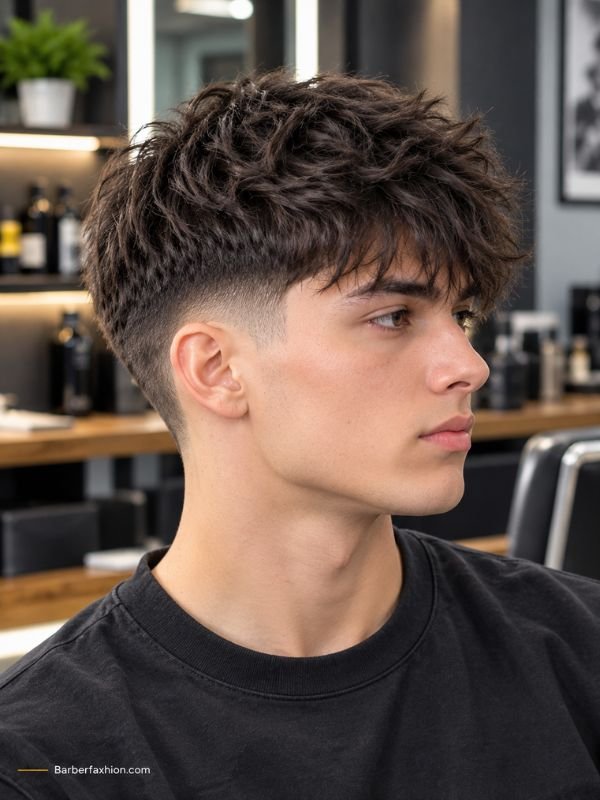
The messy fringe is less structured than a classic fringe. Instead of making every strand fall perfectly, the top is styled with loose separation and an intentionally relaxed finish.
This option is useful if you don’t want your haircut to look overly formal. The taper keeps the sides clean while the messy top provides contrast.
4. Mid-Blowout Taper Fade Straight Hair
A blowout style pushes the hair upward and outward to create a fuller silhouette. Straight hair can achieve this look with the right blow-drying technique and a suitable lightweight styling product.
The key is creating volume at the roots rather than simply piling product onto the ends. Too much product can make straight hair heavy and flatten the blowout.
5. Curtain Bangs Mid Taper Fade Straight Hair
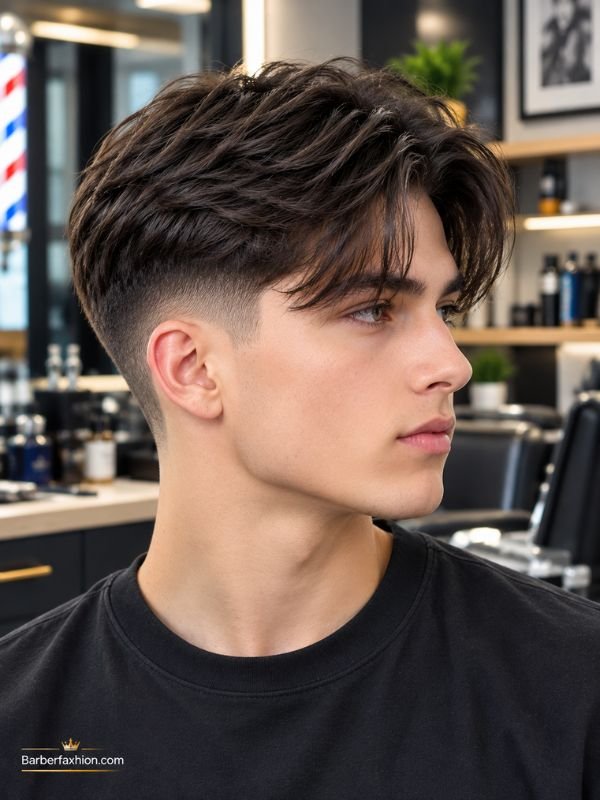
Curtain bangs divide the front section around the middle, creating two flowing sections around the forehead. Straight hair is naturally suited to this direction because it can follow the center part without requiring strong curling.
Keep enough length in the front for the curtains to fall naturally. The taper then provides a cleaner contrast around the sides.
6. Slick Back Mid Taper Fade Straight Hair
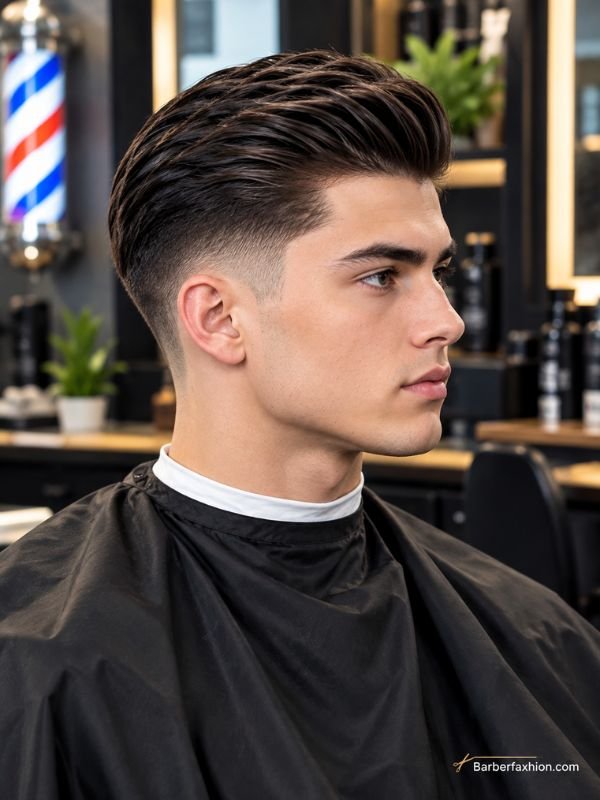
A slick back keeps the top moving toward the back of the head. It creates a more controlled appearance and works particularly well when the hair has enough length to stay in place.
Use a comb for a clean finish or your fingers for a softer version. Avoid using excessive product if your hair is fine because a heavy finish can make the top appear thinner.
7. Comb-Over Mid-Taper Fade Straight Hair
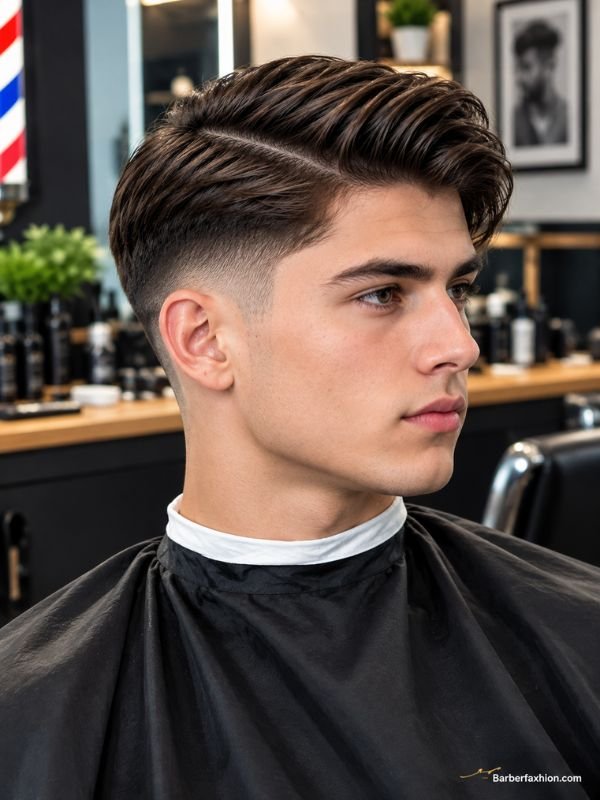
A comb-over redirects the top toward one side. It can be subtle or clearly defined depending on the part and styling.
For a natural appearance, avoid forcing a perfectly straight part if your hair naturally separates elsewhere. Work with your growth pattern rather than constantly fighting it.
8. Hard Part Mid Taper Fade Straight Hair
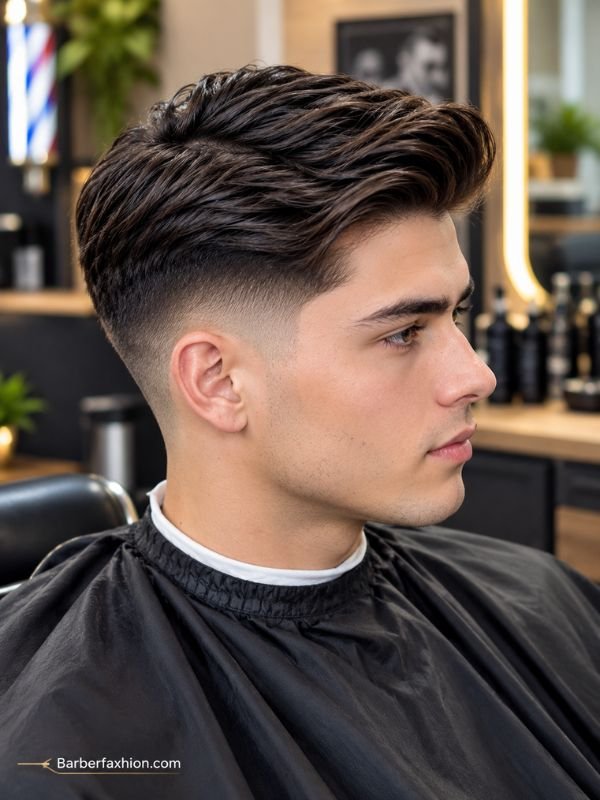
A hard part creates a clearly defined separation between sections of hair. Combined with a mid taper, it produces a more structured haircut.
This style requires more precision than a basic side part. Because the part is intentionally prominent, you’ll generally need to maintain it regularly to keep the overall design sharp.
9. French Crop Mid Taper Fade Straight Hair
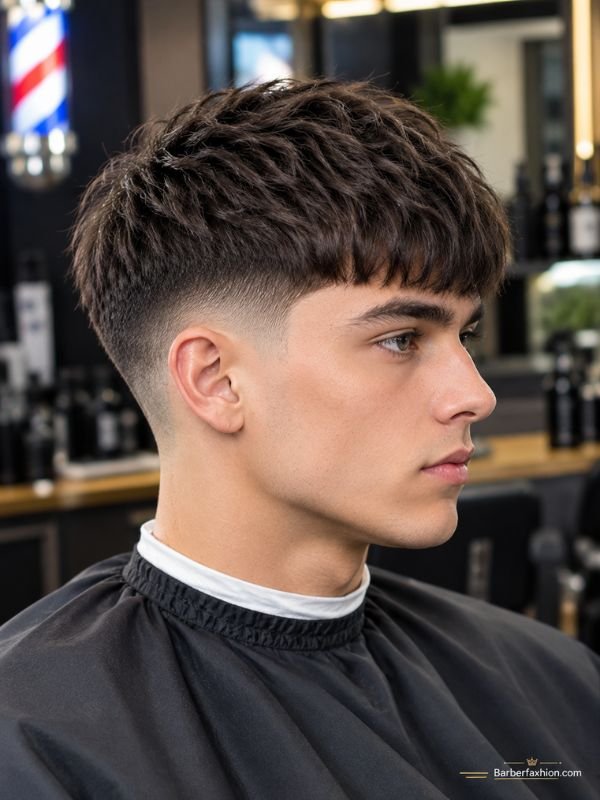
The French crop keeps the top relatively short and usually directs the fringe forward. It’s practical for men who don’t want to spend a long time styling their hair each morning.
Straight hair can give the crop a clean, uniform appearance. Adding a small amount of matte texture can prevent the top from looking too flat.
10. Pompadour Mid Taper Fade Straight Hair
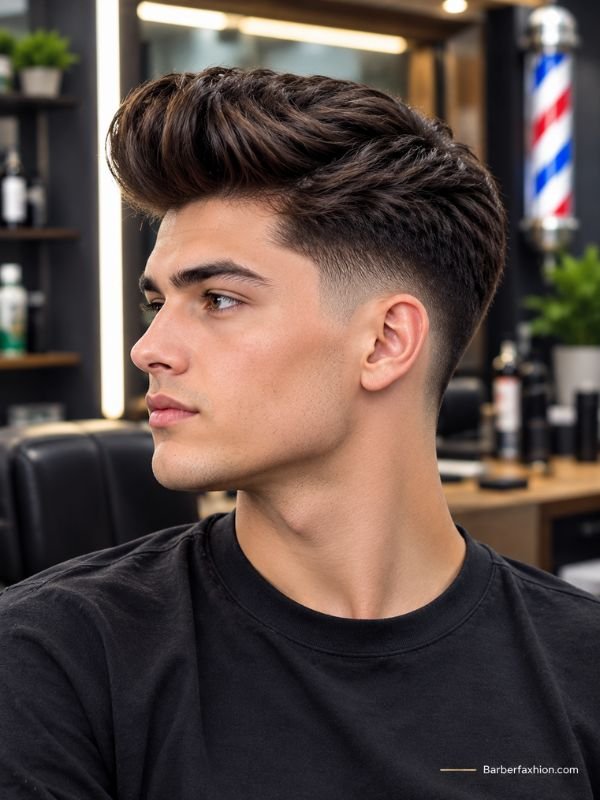
A pompadour creates height and volume at the front before the hair moves backward. Straight hair can provide a smooth base for this style, but the top needs enough length to build the shape.
Blow-dry the front upward and backward before applying styling product. Start with a small amount and add more only if necessary.
11. Mid Taper Fade for Asian Straight Hair
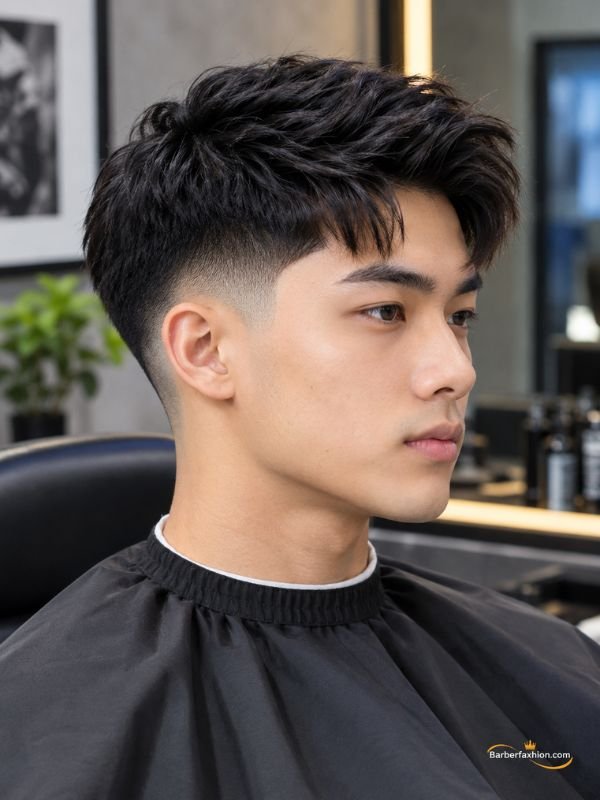
Asian straight hair can range from fine to very thick, so the haircut should be adjusted according to density rather than ethnicity alone.
For thick, straight hair, removing excess weight can help the top sit more naturally. For finer hair, preserving density can help maintain the appearance of fullness.
12. Mid Taper Fade for Thin Straight Hair
Thin or fine straight hair needs careful handling. Taking too much weight away from the top can make the hair appear even less dense.
Short textured styles, controlled fringes, and moderate volume can work well. Lightweight products are generally easier to manage than heavy waxes or oily pomades.
13. Mid Taper Fade for Thick Straight Hair
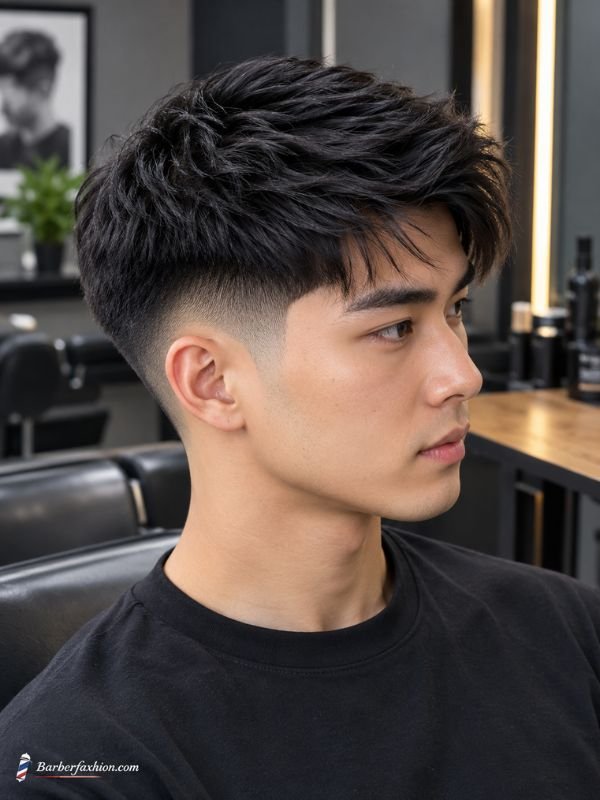
Thick straight hair gives you plenty of styling possibilities, but excessive bulk can make the haircut look wide or heavy.
Your barber can remove some internal weight while keeping enough length to preserve the shape you want. The goal isn’t simply to make thick hair shorter; it’s to control how it sits.
14. Disconnected Mid Taper Fade Straight Hair
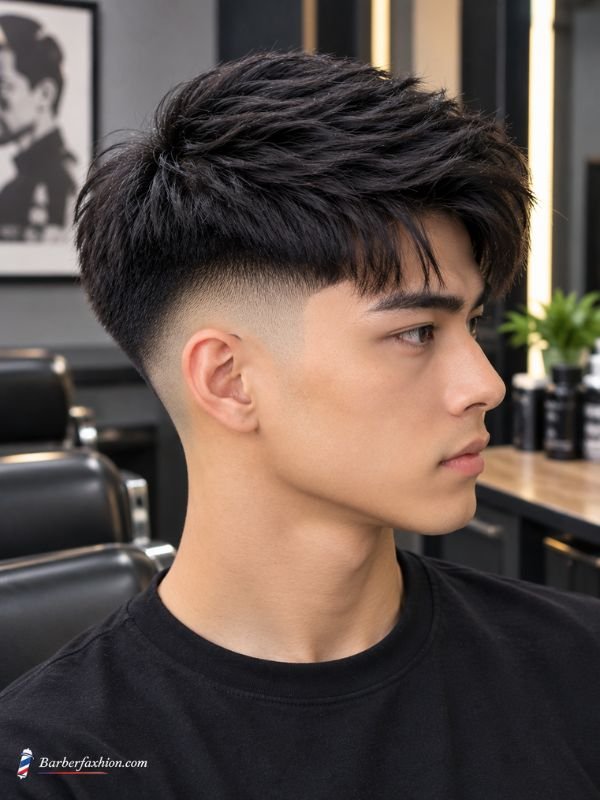
A disconnected variation creates a stronger visual separation between the longer top and shorter sides. It’s more noticeable than a traditional blended style.
This can work if you enjoy a sharper, more deliberate appearance. However, the stronger contrast means the haircut can become obvious as it grows out.
15. Edgar Cut Mid Taper Fade Straight Hair
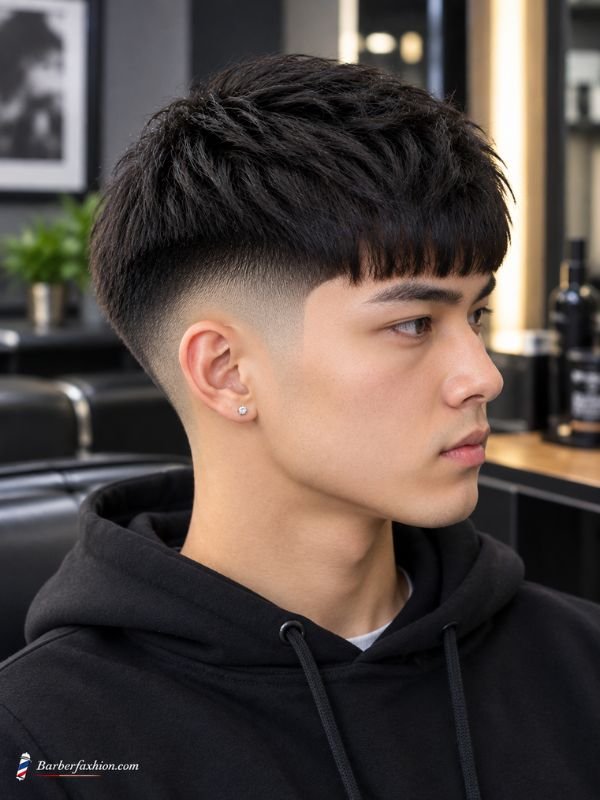
The Edgar combines a relatively short, defined front with a tapered or faded side profile. Straight hair can make the horizontal fringe look especially crisp.
The front needs regular shaping to maintain its defined appearance. It’s a good option for someone who likes a structured haircut rather than a soft, flowing finish.
16. Crew Cut Mid-Taper Fade Straight Hair
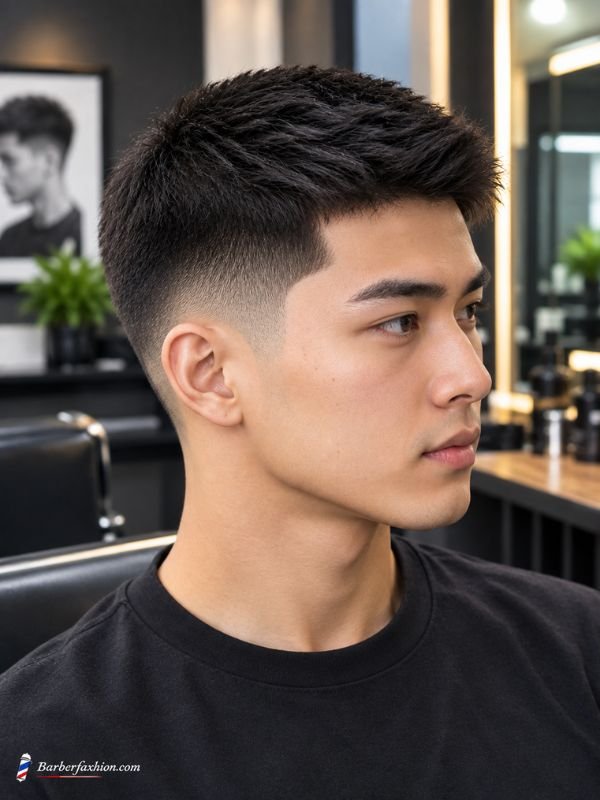
A crew cut keeps the top short and practical while the taper cleans up the sides. It’s one of the easier options for men who don’t want a lengthy morning routine.
A small amount of matte product can add definition, but many versions can be worn with minimal styling.
17. Quiff Mid Taper Fade Straight Hair
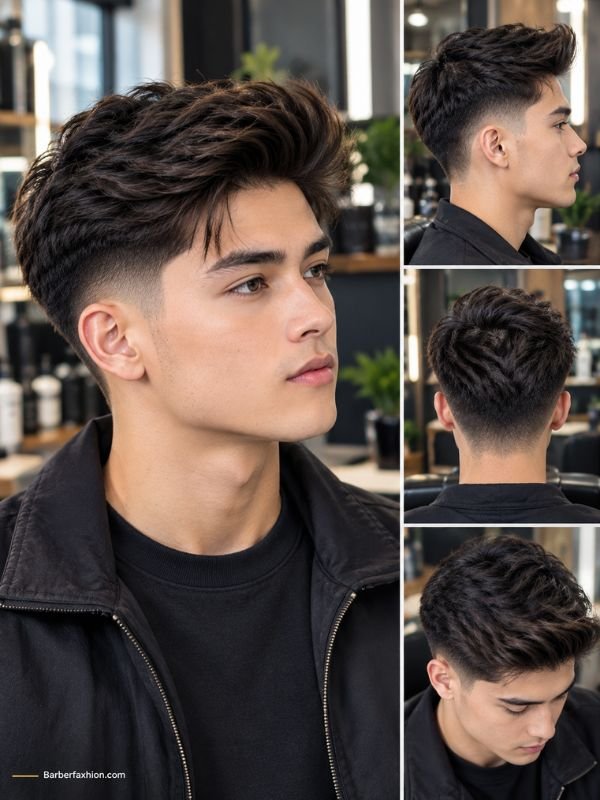
A quiff creates height at the front while keeping the sides controlled. Straight hair can make the quiff look clean, but you’ll need to build the volume from the roots.
Blow-drying upward before styling usually produces a better result than trying to force volume with product alone.
18. Ivy League Mid Taper Fade Straight Hair
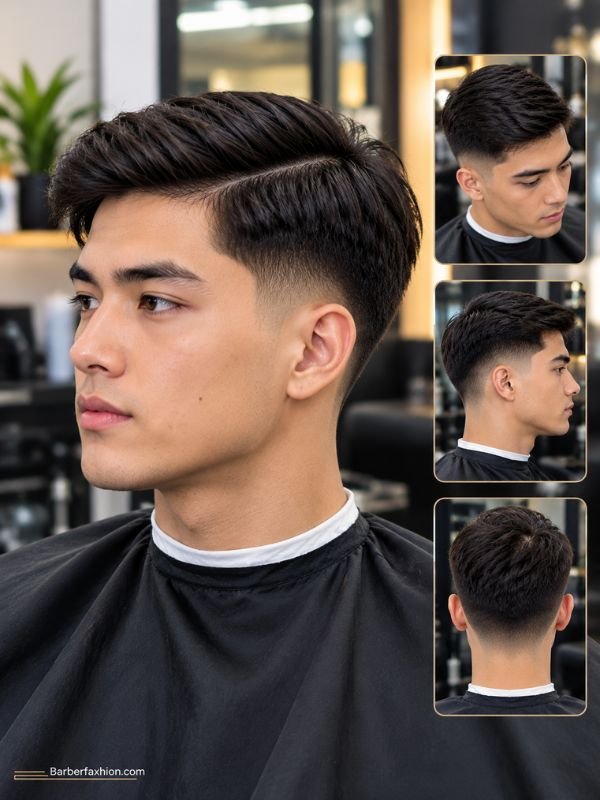
The Ivy League combines a relatively short, neat top with enough length for a side-swept finish. It sits between a very short cut and a more traditional longer hairstyle.
It’s useful for someone who wants versatility without dealing with a long styling routine.
19. Side Part Mid Taper Fade Straight Hair
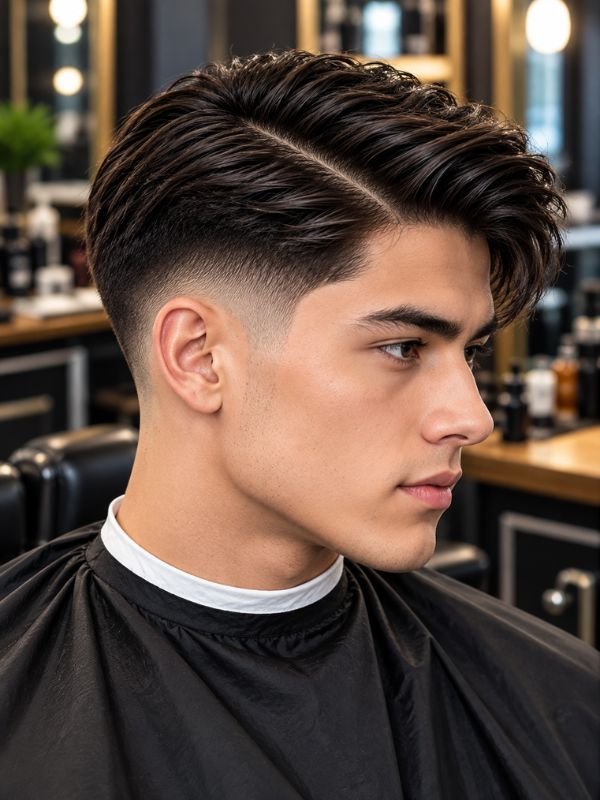
A side part gives straight hair a clear direction and can be adjusted from casual to formal. The taper keeps the sides neat while the top retains enough length for movement.
Use a comb for a polished appearance or your fingers for a less structured finish.
20. Faux Hawk Mid Taper Fade Straight Hair
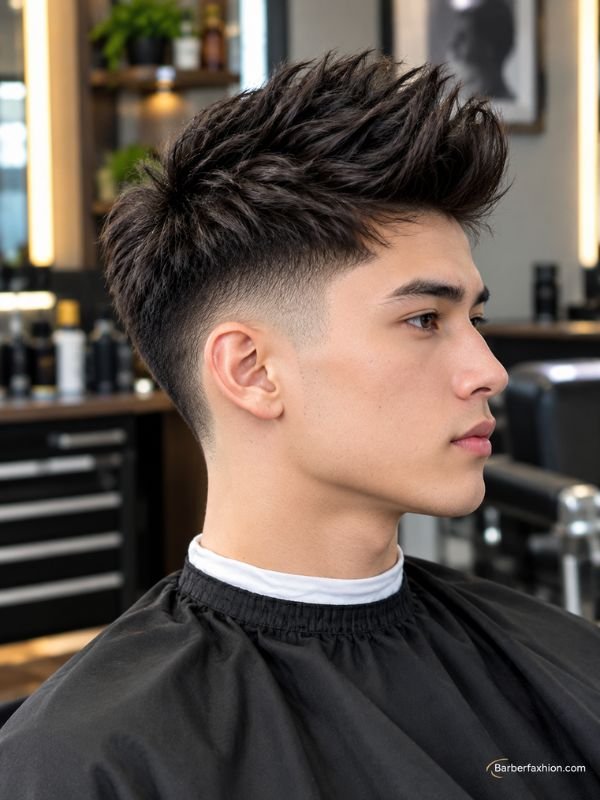
The faux hawk pushes the central section upward while keeping the sides shorter. Unlike a traditional mohawk, the transition is generally more wearable for everyday situations.
Straight hair may need a stronger styling product or blow-drying technique to hold the center section in place.
21. Spiky Top Mid Taper Fade Straight Hair
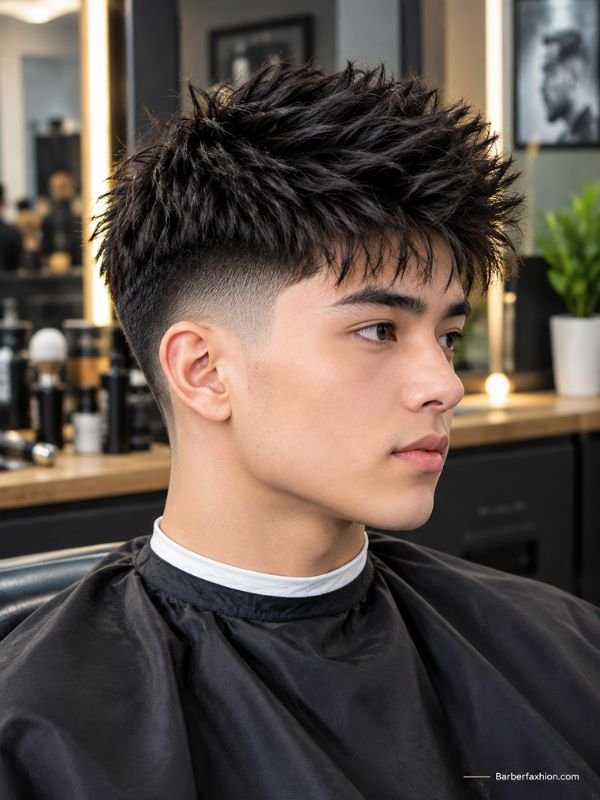
Spikes add vertical texture to a short or medium-length top. Straight hair can hold this shape well when the cut provides enough separation between sections.
Avoid coating the entire head with product. Work a small amount through the tips and build the shape gradually.
22. Caesar Cut Mid Taper Fade Straight Hair
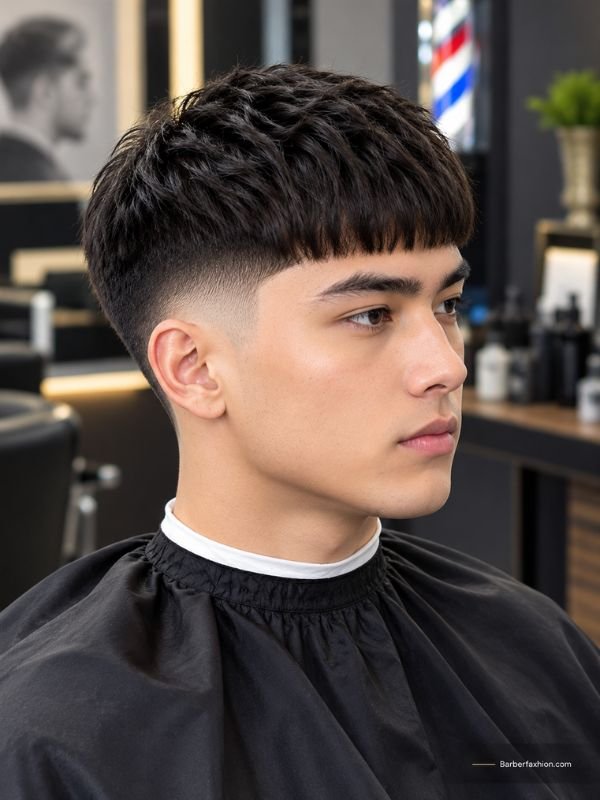
A Caesar keeps the top short with a forward-directed fringe. It’s low maintenance and works particularly well when you prefer a compact silhouette.
The taper adds a cleaner outline around the sides and neckline without requiring much daily styling.
23. Mid Taper Fade With Beard for Straight Hair
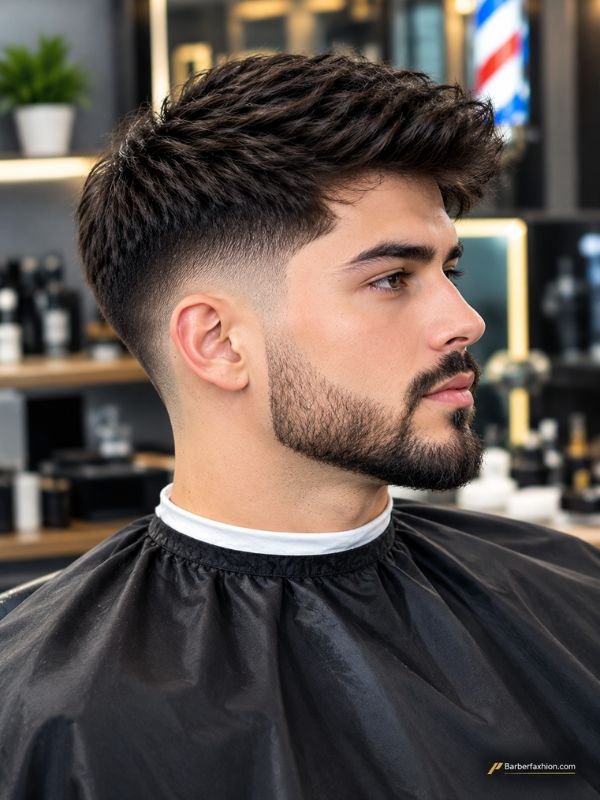
Combining the haircut with a beard creates a stronger connection between the hairstyle and facial hair. The beard doesn’t need to be extremely long.
A clean transition between the sideburn area and beard can make the overall look feel more intentional. Tell your barber whether you want the beard blended into the haircut or kept visually separate.
24. Long Top Mid Taper Fade Straight Hair
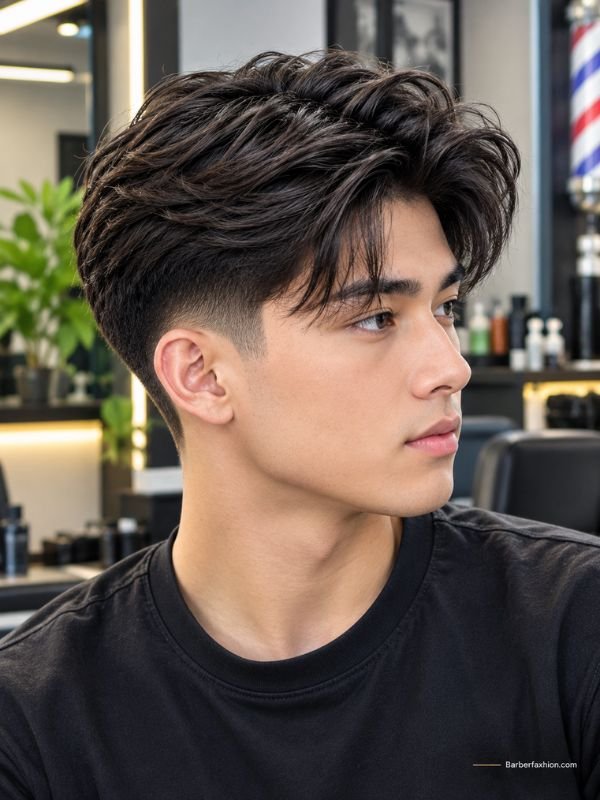
Keeping extra length on top gives you maximum flexibility. You can change between a side part, slick back, fringe, curtains, quiff, or relaxed natural style without changing the taper.
The trade-off is styling time. Longer straight hair usually requires more attention to shape and volume than a short top.
25. Modern Mullet Mid Taper Fade Straight Hair
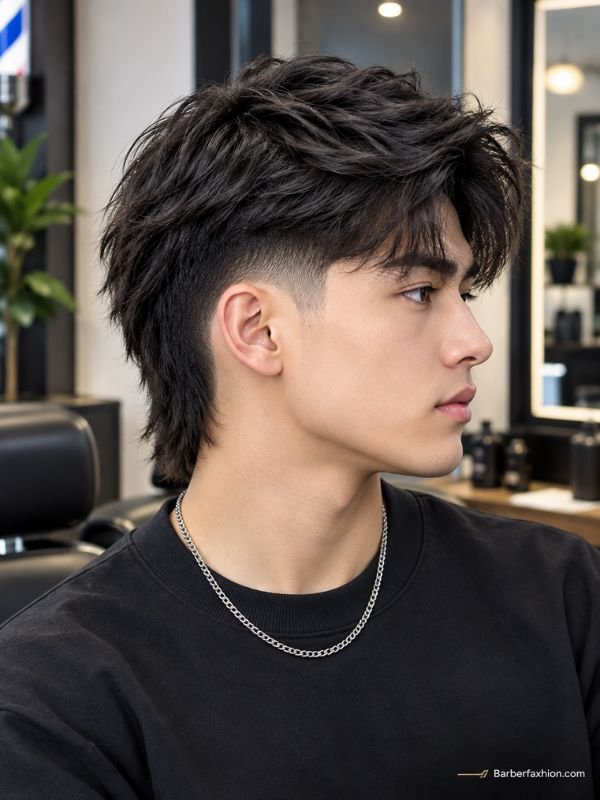
A modern mullet keeps extra length toward the back while cleaning up the sides. Combining it with a mid taper creates a noticeable contrast between the side profile and longer rear section.
Straight hair gives the back a clean, defined shape. Ask your barber how much length should remain at the back because even a small difference can change the overall silhouette.
How to Choose the Right Mid Taper Fade for Your Straight Hair
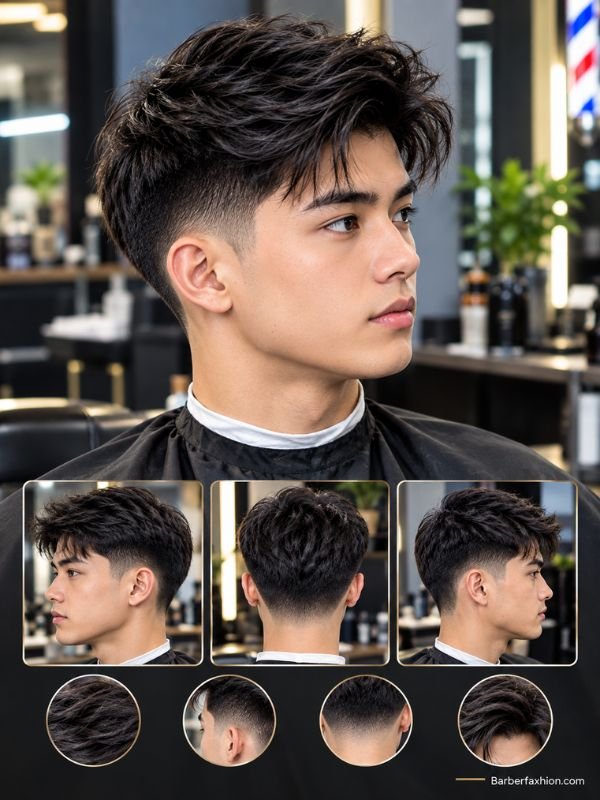
With 25 different variations, choosing one can be harder than getting the haircut itself. Start with your current hair length and density rather than choosing a style solely because it looks good in a photo.
Choosing Based on Hair Length
Short hair works naturally with crew cuts, Caesar cuts, French crops, and shorter textured styles.
Medium-length hair gives you more flexibility for quiffs, side parts, fringes, Ivy League styles, and comb-overs.
Longer hair opens the door to curtains, slick backs, pompadours, long tops, and modern mullets.
Don’t ask your barber for a long-top style if your current hair isn’t long enough to create the shape. You may need to grow it first.
Choosing Based on Hair Density
Fine hair benefits from styles that preserve the appearance of fullness. Excessive thinning or heavy products can work against you.
Thick hair gives you more room to experiment, but it may need weight management to prevent the sides or top from becoming bulky.
Your barber should assess density while your hair is dry and consider how it behaves naturally.
Choosing Based on Your Styling Routine
If you have only a few minutes in the morning, choose a style such as a crew cut, Caesar, French crop, or classic short top.
If you enjoy styling your hair, a quiff, pompadour, slick back, curtains, or textured fringe can give you more room to experiment.
The best haircut is one you can realistically maintain.
Choosing Between a Clean, Textured, or Relaxed Finish
A clean finish usually involves defined lines, controlled direction, and less visible separation.
A textured finish uses movement and individual sections to make the top look less uniform.
A relaxed finish allows the hair to follow its natural direction with minimal product.
Think about how you normally dress and how much effort you’re comfortable putting into your hair. Your haircut should fit your routine rather than fight it.
How to Style Mid Taper Fade Straight Hair
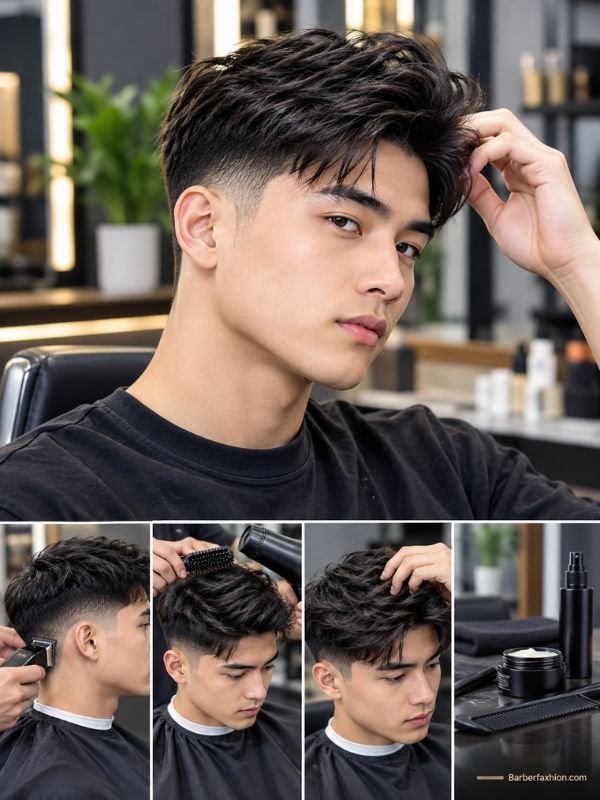
Straight hair often needs more help with volume and texture than naturally wavy hair. The good news is that you don’t need a complicated routine.
Daily Styling Routine for Mid-Taper Fade Straight Hair
Start with clean, slightly damp hair. Apply a small amount of lightweight styling product if you need control or volume.
Use your fingers or a comb to establish the basic direction. If you’re creating a quiff, slick back, or side part, set the shape before the hair completely dries.
Finish with a small amount of matte clay, cream, or another suitable product. Add gradually rather than applying a large amount at once.
Blow-Drying Technique for More Volume
The roots determine much of the hairstyle’s volume. Point the airflow toward the direction you want the hair to stand while lifting the roots with your fingers or a brush.
For a quiff, direct the front upward and slightly backward. For a side part, move the hair diagonally away from the part.
Don’t keep blasting one area with very hot air. Work through the hair gradually and finish once the desired shape is established.
How to Add Texture to Naturally Straight Hair
Texture can come from a sea-salt-style pre-styler, lightweight texture product, matte clay, or the haircut itself.
Work product between your palms before applying it. Start at the back and sides of the top, then move toward the front.
Pinch small sections between your fingers if you want separation. Avoid repeatedly running a comb through the hair after creating texture because that can flatten the finish.
Styling Straight Hair for Different Occasions
For everyday wear, keep the finish relaxed and use minimal product.
For college or work, a side part, textured crop, Ivy League, or controlled quiff can look polished without feeling overly formal.
For formal events, a slick back, pompadour, or neatly styled side part gives you more structure.
You don’t necessarily need a different haircut for each occasion. A versatile top can simply be styled differently.
Best Products for Mid Taper Fade on Straight Hair
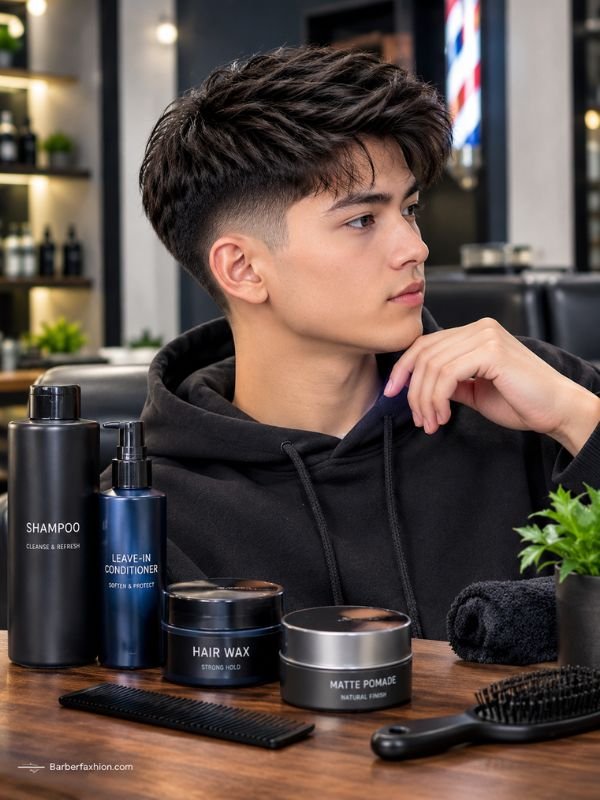
Product choice should depend on your hair density and the finish you want. Straight hair can become weighed down quickly, so more product isn’t automatically better.
Best Matte Clays for Straight Hair
Matte clay can provide texture, separation, and moderate control without making the hair look extremely shiny.
It’s useful for textured fringes, messy styles, quiffs, and short structured cuts.
Start with a small amount. If you need more control, add another small layer rather than covering the hair in one application.
Best Styling Creams for Straight Hair
Styling creams usually provide lighter control and can be useful for natural-looking hairstyles.
They’re suitable when you want the hair to remain flexible instead of becoming stiff. This makes them useful for side parts, relaxed slick backs, and longer tops.
Best Texture and Volume Products for Straight Hair
Volume-focused products can help fine or flat hair appear fuller. The key is applying them mainly where volume is needed.
For example, if your front falls flat, concentrate the pre-styler around the roots instead of saturating the entire head.
How Much Product Should You Use?
Start small.
A pea-sized amount can be enough for shorter hair, while longer or thicker hair may need slightly more. Rub the product between your palms first so it spreads evenly.
If your hair becomes greasy, heavy, or flat, you’ve probably used too much or chosen a product that is too heavy for your hair.
Which Face Shape Suits a Mid Taper Fade for Straight Hair Best?
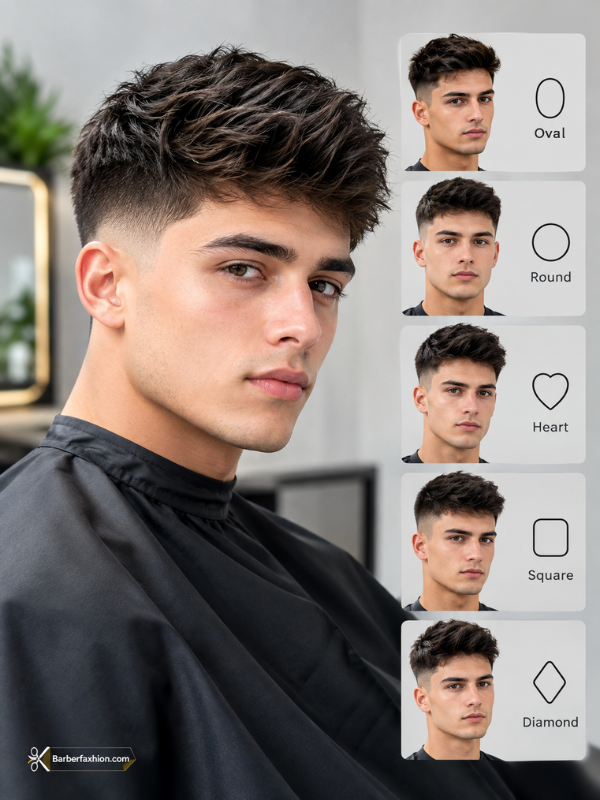
A taper can be adjusted to work with different face shapes. The top style often matters just as much as the taper itself because volume and length can change the visual proportions of the face.
Oval Face Shape
Oval faces generally give you plenty of flexibility. You can experiment with short, medium, textured, swept-back, and longer top styles.
Pay attention to overall proportion rather than trying to hide specific areas.
Round Face Shape
If your face is rounder, adding controlled height on top can create a longer visual profile.
Quiffs, textured tops, and some slick-back variations can provide that extra vertical emphasis. Avoid creating excessive width around the sides.
Heart Face Shape
Heart-shaped faces are typically wider around the forehead and narrower toward the chin. A balanced top and controlled side profile can help maintain proportion.
Medium-length textured styles, side parts, and softer fringes can work well depending on your natural features.
Square Face Shape
Square faces have a strong jawline and broader overall structure. You can choose either structured or textured styles depending on the appearance you prefer.
Crew cuts, side parts, quiffs, and classic tops can all be adapted to a square face.
Diamond Face Shape
Diamond-shaped faces tend to have more width around the cheekbones. A hairstyle that adds controlled volume without creating excessive side width can help balance the overall appearance.
Textured tops, side-swept styles, and moderate fringes are options worth discussing with your barber.
Oblong and Other Face Shapes
Longer face shapes may benefit from styles that avoid adding excessive height. A textured fringe or moderate side volume can help balance the proportions.
If your face shape doesn’t fit neatly into one category, don’t worry. Hair length, density, forehead height, jaw structure, and personal preference all matter.
Mid Taper Fade for Thin vs Thick Straight Hair
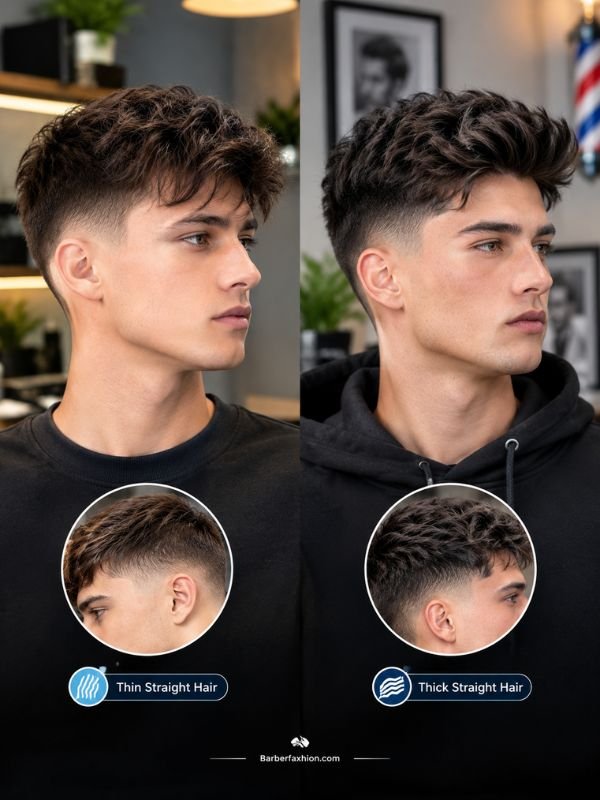
Hair density can completely change how the same haircut looks. Two people can ask for the same taper and receive very different results because their hair behaves differently.
Thin Straight Hair: What to Do Differently
If your hair is fine, focus on preserving visual density. Avoid unnecessarily aggressive thinning throughout the top.
Textured crops, short quiffs, controlled fringes, and side parts can work well because they don’t require huge amounts of volume.
Lightweight products are usually easier to manage. Heavy wax or oil-based products can make fine hair separate and expose more scalp.
Thick Straight Hair: What to Do Differently
Thick hair often needs controlled weight removal. If too much bulk remains around the sides, the taper may look disconnected from the top.
Ask your barber whether the top needs internal weight removed. The objective is to make the hair easier to control while preserving enough density for the style.
How to Create the Appearance of More Volume
For fine straight hair, volume starts at the roots. Apply a lightweight product and blow-dry the roots in the desired direction.
A textured haircut can also create the appearance of greater fullness because individual sections don’t lie together as one flat mass.
Avoid overloading the hair with product. A small amount that creates separation can look fuller than a large amount that makes every strand stick together.
How to Reduce Excessive Bulk
Thick straight hair can benefit from strategic weight removal. However, aggressive thinning isn’t always the answer.
Your barber should determine where the bulk is coming from. Sometimes the problem is the sides, while in other cases the top or crown carries too much weight.
How to Ask Your Barber for a Mid Taper Fade on Straight Hair
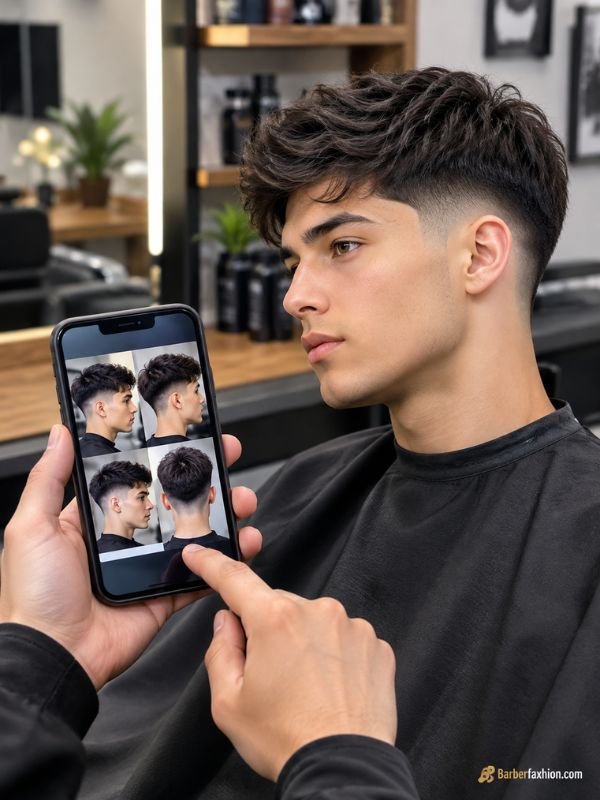
The easiest way to get a haircut you actually like is to communicate the desired shape clearly.
What to Tell Your Barber
Start with the haircut name, then explain the important details.
For example:
“I want a mid taper around the temples and neckline. Keep the transition balanced rather than taking it too high, and leave enough length on top for a textured quiff.”
This gives the barber more information than simply saying “mid taper.”
How to Describe the Taper Height
Tell your barber whether you want the taper subtle, balanced, or more pronounced.
If you’re nervous about going too high, say so. You can also point to the area where you’d like the transition to sit.
How to Explain the Top Length and Style
The taper doesn’t determine your top hairstyle. Be specific about whether you want a fringe, quiff, side part, slick back, curtains, crop, or another style.
Tell the barber whether you want to keep your current length or remove a significant amount.
Why Bringing Reference Photos Helps
A photo can show details that are difficult to explain verbally, especially the exact height of the taper and the shape of the top.
Bring a front view if possible, along with a side or back view. If your hair type is similar to the model’s, the reference becomes even more useful.
Mid Taper Fade Maintenance Schedule and Growth Timeline
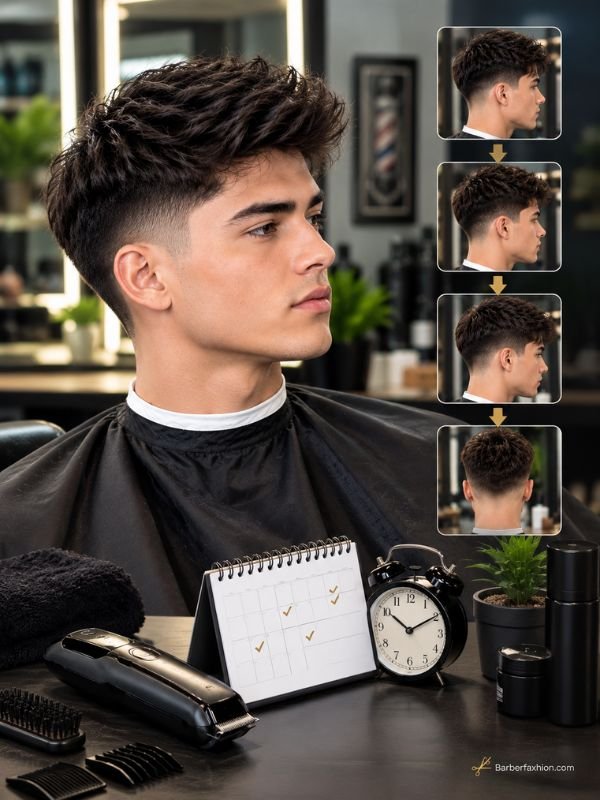
Even a great haircut changes as the hair grows. The cleanest part of a taper is usually the first stage after the cut.
Professional Touch-Up Schedule
Many people choose to refresh a taper every couple of weeks, but there isn’t one mandatory schedule.
If you like a very sharp appearance, you may want more frequent visits. If you’re comfortable with a softer, grown-out look, you can wait longer.
Your hair growth rate and the length of the taper both affect how quickly the haircut loses its original shape.
Week-by-Week Growth Timeline
During the first week, the taper generally retains its freshly cut definition.
By the second week, the shortest areas begin becoming less sharp. The overall shape can still look clean if the haircut was blended well.
As more time passes, the transition becomes softer and the sides begin blending visually into the longer hair.
The exact timeline varies from person to person, so use the appearance of your haircut rather than a calendar alone to decide when to return.
Between-Visit Home Maintenance
Keep the hair clean and avoid repeatedly cutting the taper yourself unless you know exactly what you’re doing.
You can maintain basic styling at home, but attempting to recreate a professional blend with clippers can easily create uneven patches.
Keep the neckline and surrounding areas tidy only if you’re confident with the tools. Otherwise, let your barber handle the shape.
When to Get the Fade Redone
Get a refresh when the sides become too bulky for your preferred appearance, the neckline loses definition, or the taper no longer blends naturally with the top.
If you’re growing the hair longer, you may intentionally allow more time between appointments.
Common Mistakes to Avoid With a Mid Taper Fade on Straight Hair
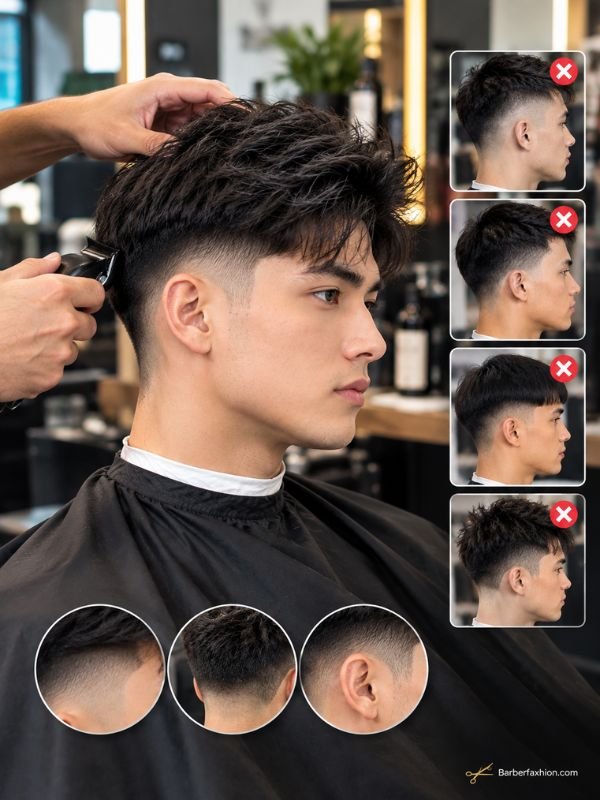
One common mistake is asking for a taper without explaining how high you want it. Different barbers can interpret the same term differently.
Another mistake is taking too much length off the top. If you want a quiff, curtains, slick back, or long-top style, make sure enough length remains to create it.
Using too much product is another problem. Straight hair can become flat when overloaded with heavy styling products.
Don’t ignore your natural growth pattern either. If your hair naturally falls forward, a style that requires it to stay backward may need more styling than you expect.
Finally, don’t choose a haircut solely because it looks good on someone else. Consider the model’s hair density, face shape, length, and styling routine before deciding.
How Much Does a Mid Taper Fade for Straight Hair Cost?
The price depends heavily on location, barbershop level, included services, and the amount of work required.
| Service Factor | What Can Affect the Price |
| Basic mid taper | Standard barber service |
| Styling included | May increase the service |
| Beard blend | Additional work |
| Design or line-up | Additional detail |
| Premium barbershop | Location and barber experience |
A simple taper with a short top generally requires less work than a detailed style involving a hard part, beard blend, design, or extensive styling.
Before booking, check what the listed haircut price actually includes. A low advertised price may cover only the basic cut, while styling or beard work may cost extra.
Frequently Asked Questions
Is a mid taper fade good for straight hair?
Yes. Straight hair can work with a mid taper because the clean transition is easy to see and the longer top can be styled in many directions. The best version depends on your hair density, length, face shape, and preferred finish.
How often should I get a mid taper fade touched up?
It depends on how quickly your hair grows and how sharp you want the taper to remain. Some people prefer frequent touch-ups for a crisp appearance, while others allow the haircut to grow out longer.
What products work best for a mid taper fade on straight hair?
The best product depends on your hair type and desired finish. Matte clay can provide texture and control, while styling cream may be better for a lighter, natural finish. Fine straight hair usually benefits from avoiding excessively heavy products.
What’s the difference between a mid taper and a low taper for straight hair?
A low taper keeps the shorter transition closer to the lower edges of the haircut, while a mid taper moves the transition higher on the sides. A mid taper therefore creates a more noticeable change while still leaving considerable length around the upper sides.
What face shapes suit a mid taper fade best?
The haircut can be adapted to many face shapes. The top style is especially important because height, fringe direction, and side volume can change the overall proportions of the face.
Can I get a mid taper fade on thin straight hair?
Yes. With thin or fine hair, the barber should avoid removing unnecessary density from the top. Short textured styles, controlled fringes, and lightweight products can help maintain the appearance of fullness.
How do I style a mid taper fade for volume on straight hair?
Start with damp hair and focus on lifting the roots while blow-drying. Once the hair is dry, use a small amount of lightweight matte product to add separation and hold without weighing the top down.
What exactly should I say to my barber?
Tell your barber you want a mid taper and explain how high you want the transition. Then describe the desired top length and style, such as a textured fringe, quiff, side part, or slick back, and show reference photos whenever possible.
Will a mid taper fade look good as it grows out?
It can, but the appearance becomes softer as the hair grows. A well-blended taper usually transitions more naturally during growth, while someone who wants a very sharp outline may prefer more frequent touch-ups.
What’s the difference between a taper and a fade for straight hair?
A taper generally focuses the shortening around specific areas such as the temples and neckline. A fade can extend more broadly through the sides and create a stronger transition. Barber terminology can vary, so a reference photo is useful.
Conclusion
A mid taper gives straight hair a clean foundation without forcing you into one specific top style. You can pair it with a textured fringe, French crop, quiff, side part, slick back, crew cut, curtains, long top, or even a modern mullet. The important part is matching the haircut to your hair density, length, face shape, and daily routine.
Before your next barber appointment, decide how much length you want to keep, how noticeable you want the taper to be, and how much time you’re willing to spend styling it. Bring a few clear reference photos and explain the result you want rather than relying on the haircut name alone. That small amount of preparation can make it much easier to get a straight-hair taper that actually works for you.