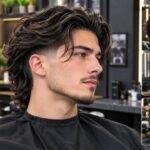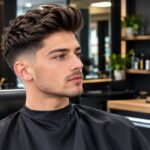


Growing your hair out can feel great until the sides and neckline start looking messy. You want to keep the length, movement, and personality of your hair without looking like you simply stopped getting haircuts.
That’s where a long hair taper fade comes in. It cleans up the temples, sideburns, and neckline while allowing you to keep plenty of length on top and, depending on the style, through the back. Below, you’ll find 35+ style ideas plus practical advice on taper height, hair types, face shapes, styling, maintenance, and exactly what to tell your barber.
Quick Answer: A long hair taper fade keeps the hair on top long while gradually shortening the hair around the temples, sideburns, and neckline. A low taper gives the most subtle finish, a mid taper creates more definition, and a high taper produces stronger contrast.
What Is a Long Hair Taper Fade?
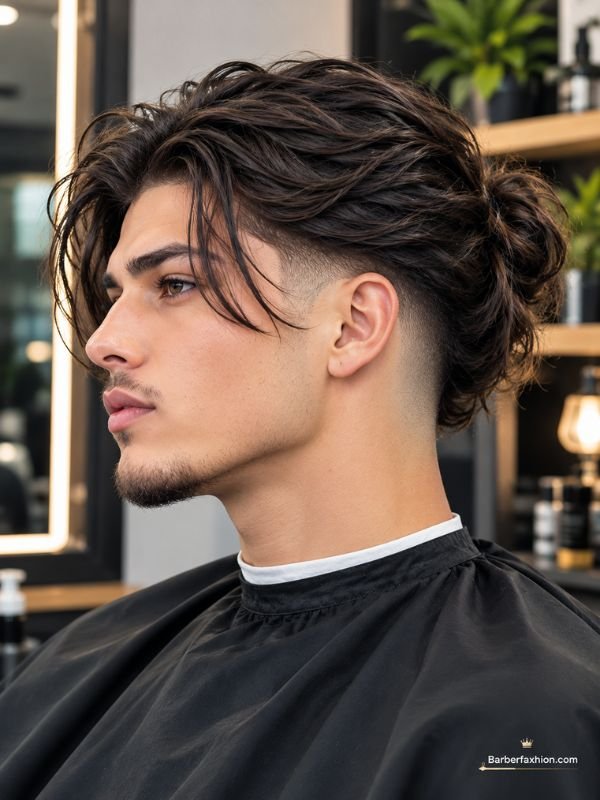
A long hair taper fade combines longer hair on top with gradually shorter hair around selected areas of the sides and back. Unlike a traditional full fade that can take the sides very short across a larger area, a taper generally focuses on the temple, sideburn, and neckline areas.
That difference matters when you’re trying to grow or preserve long hair. You can clean up the edges without sacrificing the main shape you’ve spent months building.
Long Hair vs. Tapered Sides
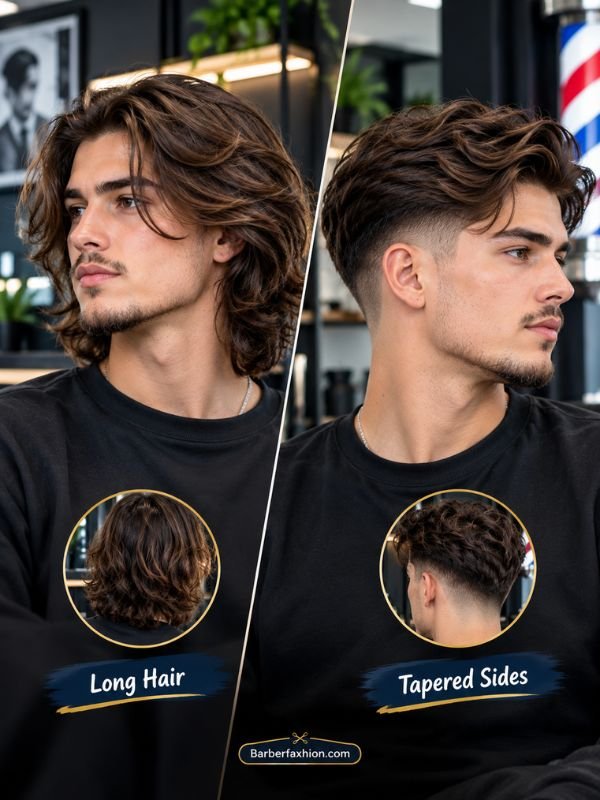
“Long hair” describes the overall length and styling of your hair. The taper describes what happens around the edges.
You might have hair that reaches your ears, jaw, shoulders, or beyond while still getting a relatively subtle taper around the temples and neckline. The two ideas aren’t opposites.
The key is telling your barber exactly where you want the taper and how much length you want preserved. If you simply ask for a fade, your barber may remove more side weight than you expected.
Taper Fade vs. Regular Fade
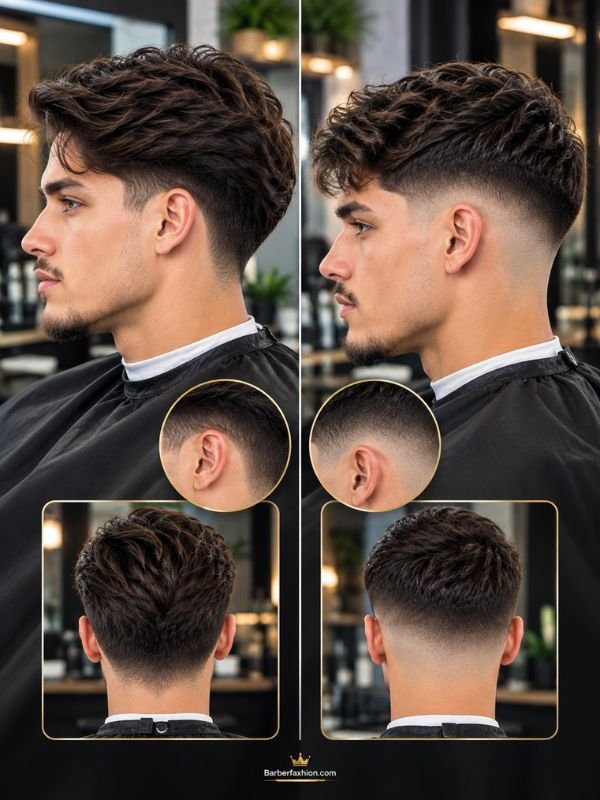
A taper usually concentrates the transition around the edges of the haircut. A traditional fade can extend farther upward through the sides and back, creating a more obvious change from longer hair to very short hair.
With long hair, a taper often works well when you want the longer silhouette to remain the star of the haircut.
Taper Fade vs. Undercut
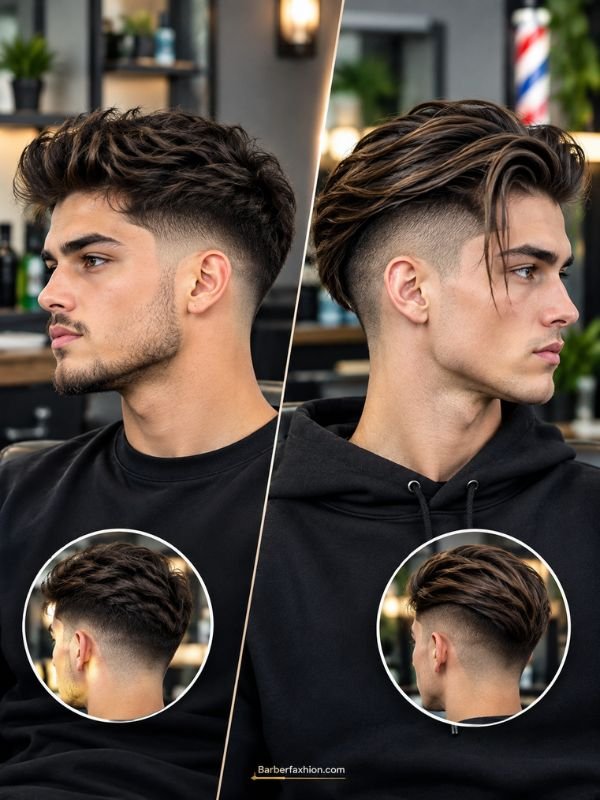
An undercut creates a much stronger separation between the long hair and the shorter sides. The transition can look deliberately disconnected.
A taper creates a softer relationship between the longer hair and the shorter perimeter. If you want your long hair to still look natural when worn down, a taper is often easier to blend into the overall shape.
How Long Should the Hair on Top Be?
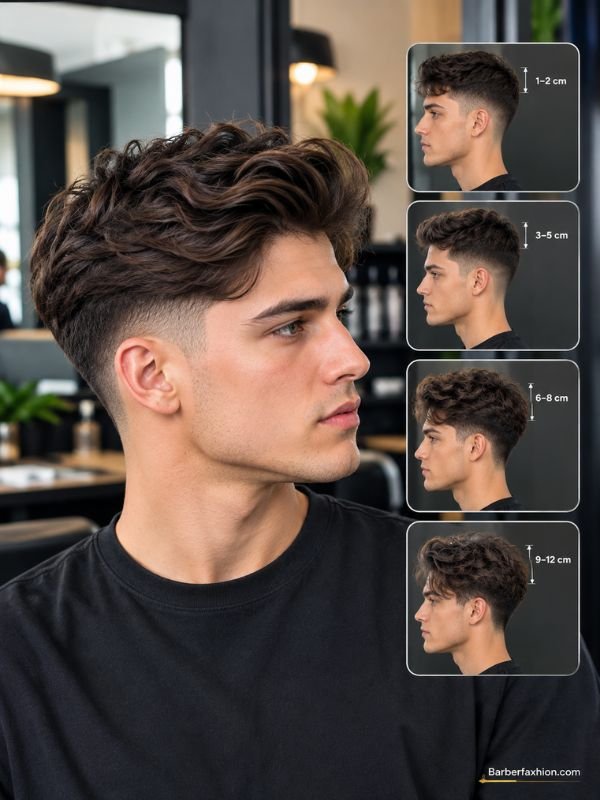
There’s no single required length. Medium-long hair can work, as can shoulder-length or very long hair.
The important question is what you want to do with it. A middle part needs enough length to fall naturally, a slick-back needs enough length to move backward, while a bun or ponytail requires enough length to tie securely.
Your barber should know whether you’re trying to maintain your current length or actively grow it.
Why Choose a Taper Fade With Long Hair?
The appeal is simple: you get the freedom of longer hair with a cleaner perimeter.
A good taper doesn’t have to turn your haircut into a short, high-contrast style. It can simply make the areas around your ears and neck look intentional while your longer hair keeps its movement.
Keeps the Length on Top While Cleaning Up the Sides
If you’ve spent months growing your hair, the last thing you want is to leave the barber wondering where all the length went.
A carefully placed taper can clean up the edges without dramatically changing the top. This is especially useful for men who like their hair long but don’t want an unstructured appearance.
Creates a Sharp Look Without Removing All the Length
Long hair can sometimes make the sides appear bulky. A taper reduces some of that visual heaviness around the perimeter.
The result can feel sharper without looking like you’ve switched to a short haircut.
Works With Different Long Hairstyles
One of the biggest advantages is versatility. You can pair the taper with a middle part, slick back, textured layers, fringe, mullet, wolf cut, curls, waves, braids, twists, locs, or a simple natural flow.
The taper becomes the clean foundation while the longer hair determines the personality of the look.
Low, Mid, or High Taper With Long Hair?
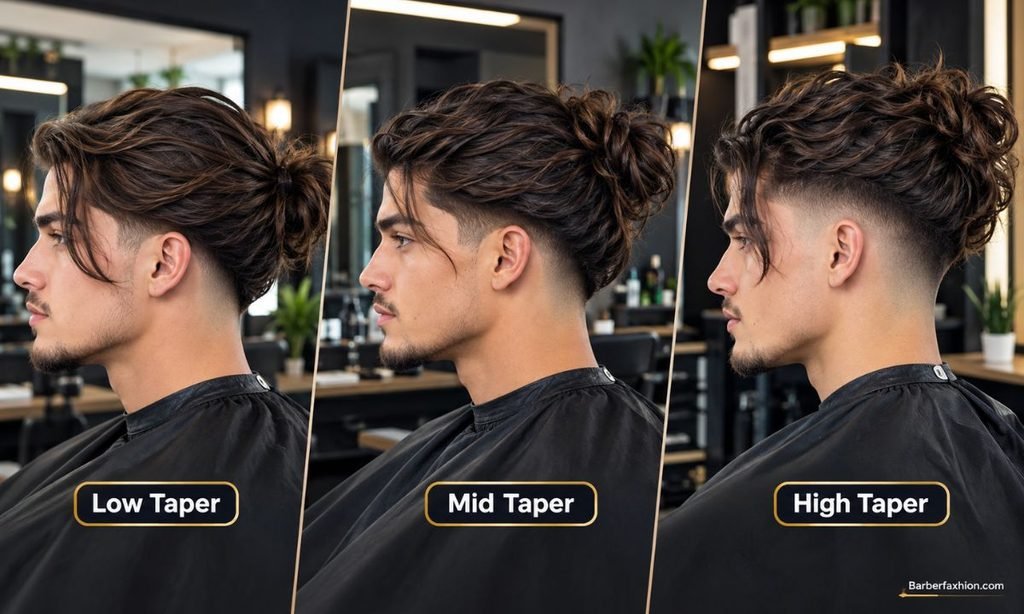
The height of your taper changes the overall appearance more than many people realize.
A low taper leaves more of the natural side shape intact. A mid taper creates a more noticeable transition. A high taper puts the short-to-long transition higher and creates stronger contrast.
| Taper | Overall appearance | Good choice if you want |
| Low taper | Subtle and natural | Maximum length and a softer finish |
| Mid taper | Balanced and defined | A noticeable but versatile shape |
| High taper | Bold and high-contrast | A sharper, more dramatic look |
Low Taper Fade With Long Hair
A low taper is usually the easiest starting point if your priority is keeping the long-hair appearance.
The taper stays closer to the lower temple, sideburn, and neckline areas. Because less of the sides are altered, the longer hair can retain more of its natural weight.
It’s particularly useful for men growing their hair out or anyone who doesn’t want an aggressive change.
Mid Taper Fade With Long Hair
A mid taper sits higher and creates a clearer visual transition. It gives long hair more structure without necessarily removing the dramatic length from the top.
This option works nicely with textured styles, middle parts, curly hair, and layered looks where you want the perimeter to feel cleaner.
High Taper Fade With Long Hair
A high taper creates the strongest contrast of the three.
It can look striking with thick hair, textured styles, mullets, and certain curly or coily looks. However, it also requires more careful communication because taking the taper too high can significantly change the shape of your long hair.
If preserving side weight is important to you, tell your barber before the clippers come out.
How the Taper Changes the Sides and Overall Shape
Think of the taper as the frame around your longer hairstyle.
A low taper keeps that frame subtle. A mid taper makes it more visible. A high taper draws more attention to the contrast.
Your choice should depend on how much definition you want, not simply on which height is currently popular.
35+ Best Long Hair Taper Fade Styles
The following styles aren’t just slightly different names for the same haircut. Each one changes the way the long hair is parted, textured, layered, tied, or shaped.
1. Classic Long Hair Low Taper
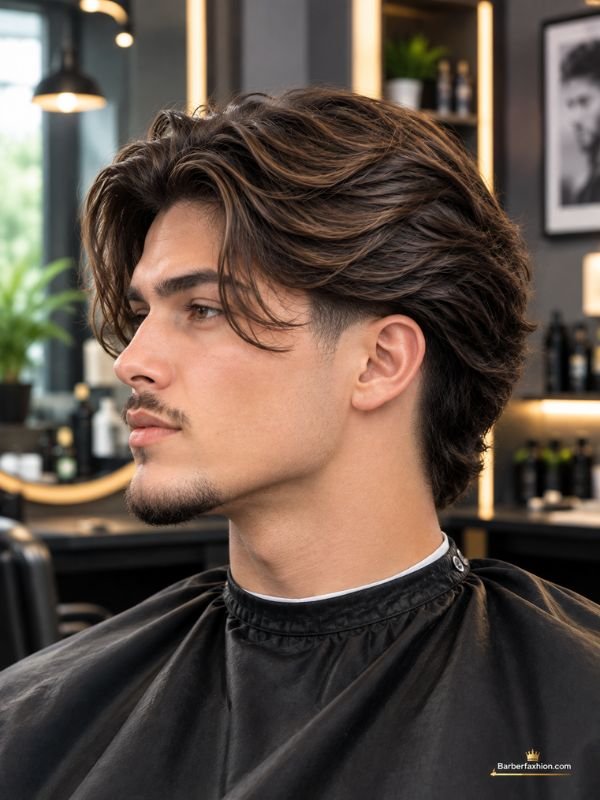
This is the straightforward option for someone who wants long hair without a complicated design.
Keep the top and back long while cleaning the temples, sideburns, and neckline with a subtle taper. It works particularly well for straight and wavy hair.
2. Long Hair Mid Taper
A mid taper adds more structure while allowing the longer hair to remain prominent.
It works well when you want a modern haircut that looks intentional from the front and sides without turning the entire haircut into a skin fade.
3. Long Hair High Taper
This variation is more noticeable and works especially well with thick, textured, or highly styled hair.
The stronger contrast makes the long section stand out. Because the taper sits higher, however, it needs precise placement.
4. Long Hair Taper With Middle Part
A middle part gives long hair a relaxed, symmetrical appearance.
The taper keeps the sides around the temples and ears cleaner while the longer sections fall naturally on either side of the face. Straight and wavy hair often make the part easy to maintain.
5. Long Hair Taper With Side Part
A side part gives the haircut a more structured direction.
You can wear the longer section naturally for a relaxed appearance or use a small amount of styling product for a cleaner finish. It’s a useful choice when you want long hair that can still look polished.
6. Long Hair Taper Slick Back
Slicking long hair backward creates a strong, confident silhouette.
A low or mid taper can keep the perimeter clean without distracting from the swept-back top. Use a lightweight product if you want movement rather than a hard, glossy finish.
7. Long Hair Taper With Natural Flow
This style lets your hair fall in its natural direction.
Instead of forcing every strand into place, you maintain length and movement while the taper cleans up the edges. It’s ideal for men who prefer a relaxed haircut that doesn’t require a complicated morning routine.
8. Long Hair Taper With Textured Top
Texture adds separation and movement to longer hair.
The barber can use layering and controlled weight removal rather than simply thinning everything out. This is particularly useful for thick hair that tends to look heavy.
9. Long Hair Taper With Fringe
A long fringe changes the balance of the haircut by bringing more hair toward the forehead.
You can wear the fringe forward, slightly parted, or pushed to one side. The taper keeps the sides from competing with the front.
10. Long Layered Hair With Taper
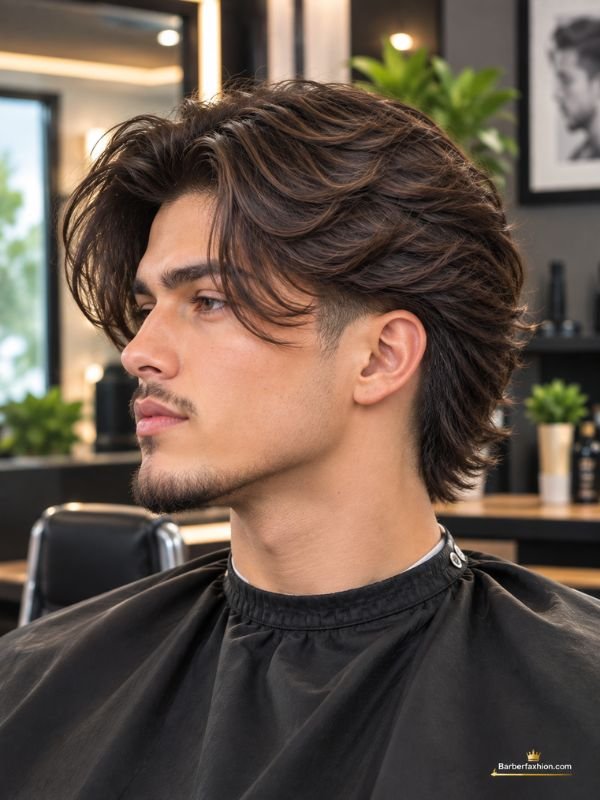
Layers prevent long hair from becoming one heavy block.
The taper gives the perimeter a cleaner finish while layers add movement through the longer sections. This combination is especially useful for thick or wavy hair.
11. Long Hair Taper Mullet
A long mullet already depends on contrast between the front, sides, and back.
Adding a taper around the sides can make that contrast cleaner without removing the length that gives the mullet its identity. A low taper produces a softer result, while a higher taper feels more aggressive.
12. Long Wolf Cut With Taper
A wolf cut combines shaggy layers, volume, and a deliberately undone finish.
The taper adds a cleaner edge around the temples and neckline. This works best when the longer layers remain visible rather than being overly polished.
13. Long Shag With Taper
A long shag relies on layers and movement.
The taper gives the haircut a cleaner perimeter while allowing the shaggy texture to remain on top and through the back. It’s a good option for naturally wavy or textured hair.
14. Long Hair Taper With Man Bun
If your hair is long enough to tie, a man bun can work naturally with a taper.
The shorter perimeter makes the tied-up style look cleaner. Keep enough length around the back if you want the bun to remain substantial.
15. Long Hair Taper With Ponytail
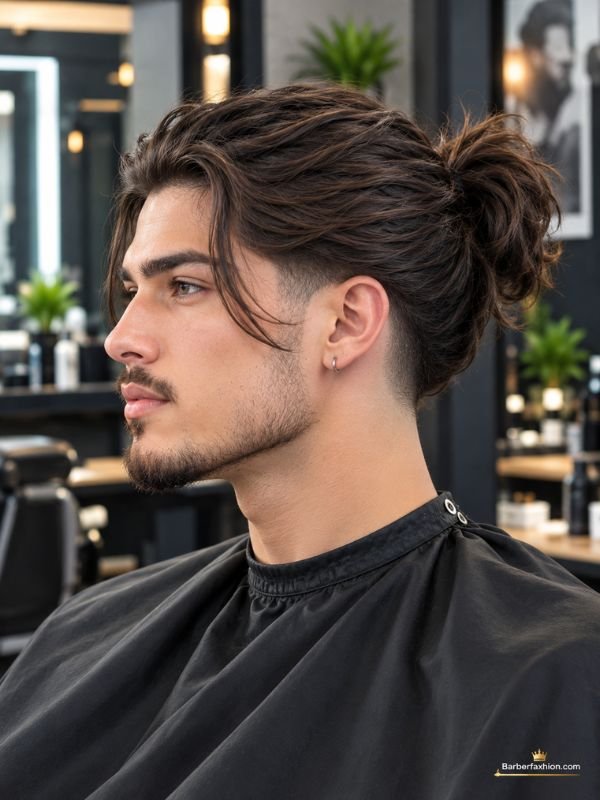
A ponytail gives you a practical way to control long hair.
The taper keeps the temples and neckline tidy while the longer hair remains available for tying. This can be particularly useful for men who switch between wearing their hair loose and tied.
16. Long Hair Taper With Messy Layers
Messy layers create an intentionally relaxed look.
The trick is controlled messiness. The hair should have movement without appearing damaged or completely unmaintained.
17. Long Hair Taper With Curtain Bangs
Curtain bangs split around the forehead and frame the face.
They work especially well with medium-long or longer hair. A subtle taper keeps the sides cleaner while the front remains soft and flowing.
18. Long Hair Taper With Long Fringe
A longer fringe can create a dramatic front profile.
You can wear it forward, swept sideways, or blended into layers. This option can be adjusted to suit different hair textures and face proportions.
19. Long Hair Taper With Blowout
A blowout gives long hair more volume and direction.
The taper provides contrast around the edges while the top and back carry the visual volume. A round brush and blow dryer can help shape the hair without requiring an excessive amount of product.
20. Long Hair Taper Pompadour
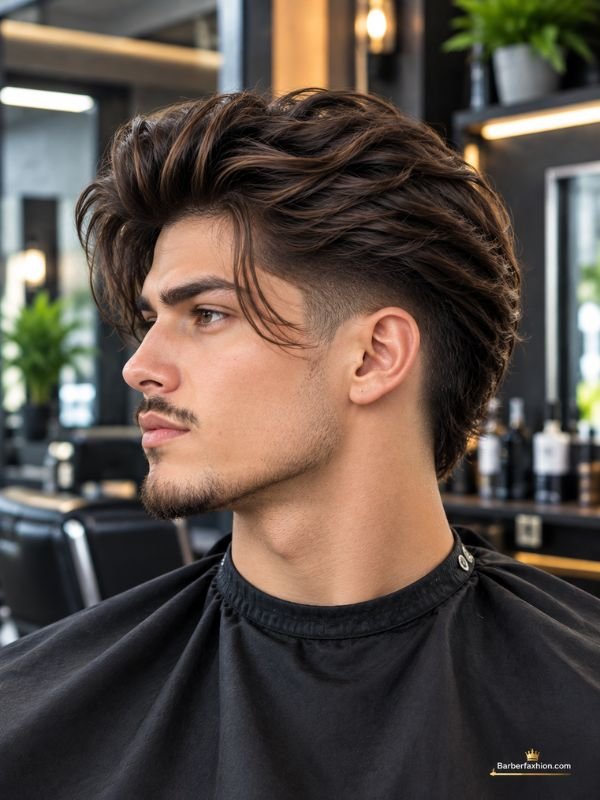
A long pompadour uses volume at the front and controlled direction through the top.
It’s more styling-intensive than a natural flow but can create a polished result. A mid taper can provide definition without completely overpowering the large top shape.
21. Long Straight Hair With Taper
Straight hair makes the length particularly obvious because it falls cleanly.
A taper removes some of the bulk around the edges while the longer sections remain sleek. Layers can help if your straight hair becomes flat or heavy.
22. Long Wavy Hair With Taper
Waves give long hair natural movement.
Avoid removing too much weight if your waves rely on that weight to form properly. A subtle taper can frame the waves without making the hairstyle look overly sharp.
23. Long Curly Hair With Taper
Curly hair can look excellent with a taper because the shorter perimeter creates contrast against the curls.
The important part is respecting the curl pattern. Your barber should understand how much the hair contracts when dry and avoid cutting the long section too aggressively.
24. Long Coily Hair With Taper
Coily and Afro-textured hair can be shaped into many long styles while a taper provides definition around the edges.
The longer section can remain natural or be styled into twists, braids, locs, curls, or other protective and creative looks.
25. Thick Long Hair With Taper
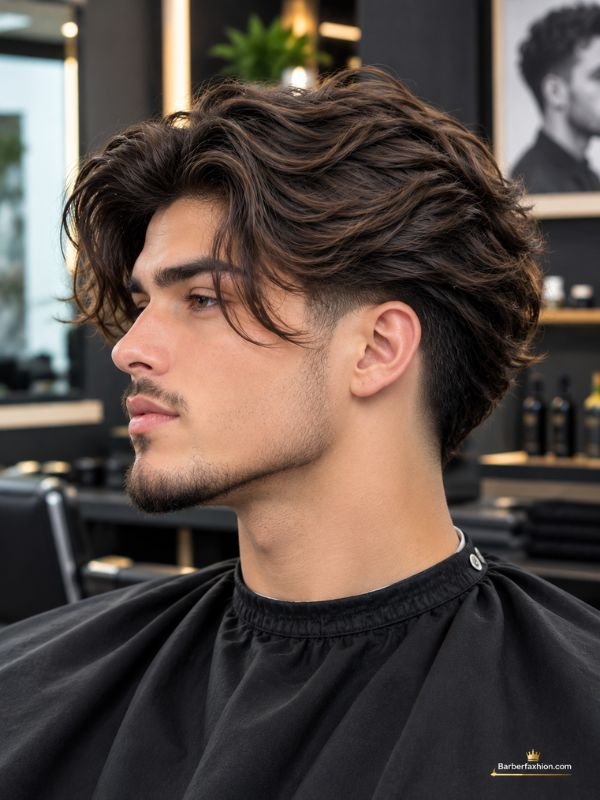
Thick hair has plenty of visual presence, but it can also become bulky around the sides.
A taper can control that perimeter. Ask your barber to remove only the amount of weight needed to create the desired shape.
26. Fine Long Hair With Taper
Fine hair benefits from careful cutting because excessive thinning can make it appear even less dense.
Keeping the longer sections relatively full while cleaning the edges can create a stronger-looking silhouette.
27. Long Hair Taper With Beard
A beard can make the haircut feel more complete by extending the visual line from the hair into the jaw.
The sideburn transition matters. Your barber can blend the taper into the facial hair or keep the connection more defined depending on your preferred appearance.
28. Long Hair Taper With Stubble
Stubble keeps the face relatively clean while adding some definition.
This combination works particularly well if you want the long hairstyle to remain the main feature instead of having the beard dominate the look.
29. Long Hair Taper With Braids
Long hair gives you plenty of room for different braid patterns.
The taper can clean up the perimeter and create a defined border around the braided sections. Make sure your barber knows how much hair needs to remain available for your chosen braid style.
30. Long Hair Taper With Twists
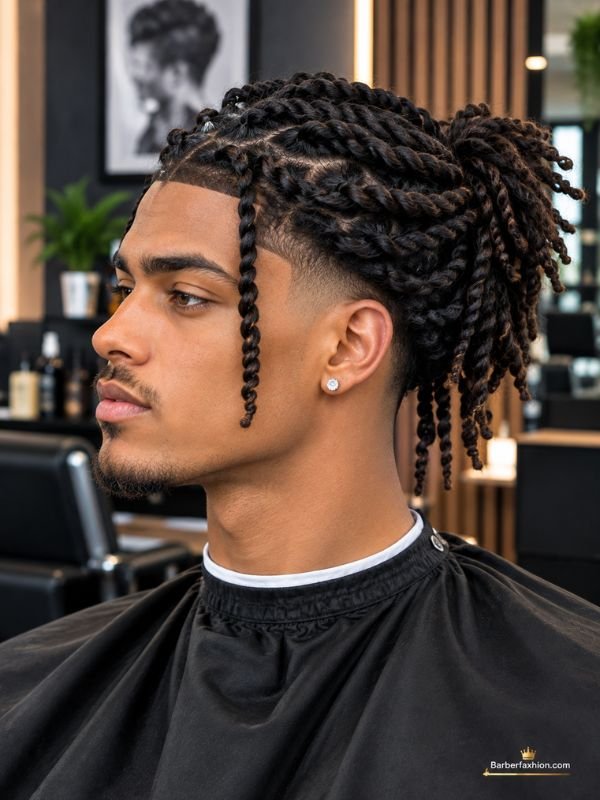
Twists add texture and visual detail to longer hair.
A tapered perimeter can make the twists look more deliberate while keeping the sides and neckline neat. This can be adapted to different lengths and textures.
31. Long Hair Taper With Locs
Long locs can be paired with a tapered perimeter for a clean contrast.
The main consideration is preserving the shape and length of the locs while maintaining the desired edge around the temples and neckline.
32. Long Hair Taper With Natural Texture
You don’t always need a defined part or elaborate styling.
Let your natural texture determine the shape while the taper provides a cleaner perimeter. This is one of the lowest-effort approaches for men who don’t want to spend much time styling.
33. Long Hair Taper With Pushed-Back Hair
Instead of a glossy slick back, push the hair backward while retaining natural texture.
This creates a relaxed version of the classic swept-back style. A lightweight cream can provide control without making the hair stiff.
34. Long Hair Taper With Defined Sideburns
Sideburns can dramatically affect how the haircut connects with your face.
A clean taper around this area gives the haircut a more intentional finish. This works particularly well with facial hair when the transition is carefully blended.
35. Long Hair Taper With a Clean Neckline
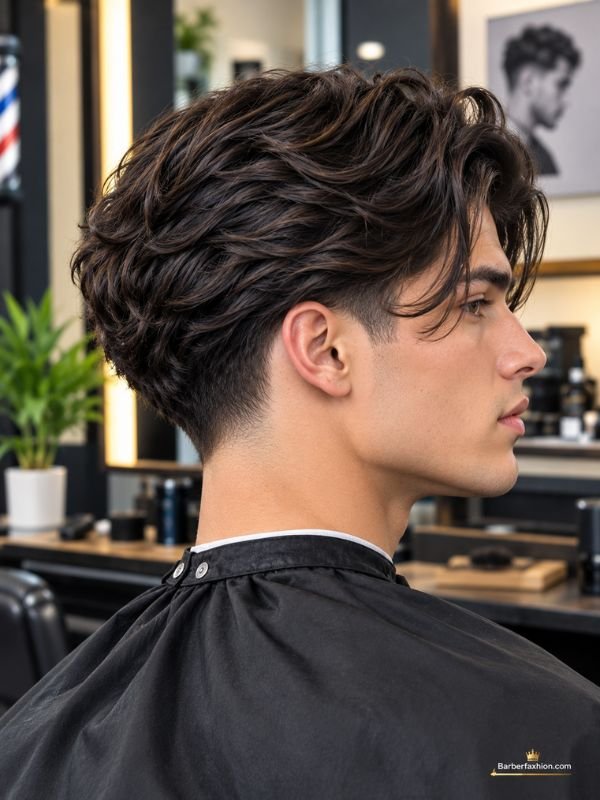
A clean neckline can make a surprisingly big difference.
The rest of the hair can remain long and natural while the lower edge is carefully shaped. Ask your barber whether a natural or sharper neckline better suits your overall haircut.
36. Long Hair Taper With Modern Layers
Modern layering creates movement without requiring an extremely short haircut.
The taper handles the perimeter while the layers shape the longer sections. This is particularly effective for medium-thick and thick hair.
Long Hair Taper Fade for Different Hair Types
Your hair type can change how the same haircut looks. Two men can request the same taper and end up with completely different results because their hair texture, density, and growth patterns aren’t the same.
Long Hair Taper Fade for Straight Hair
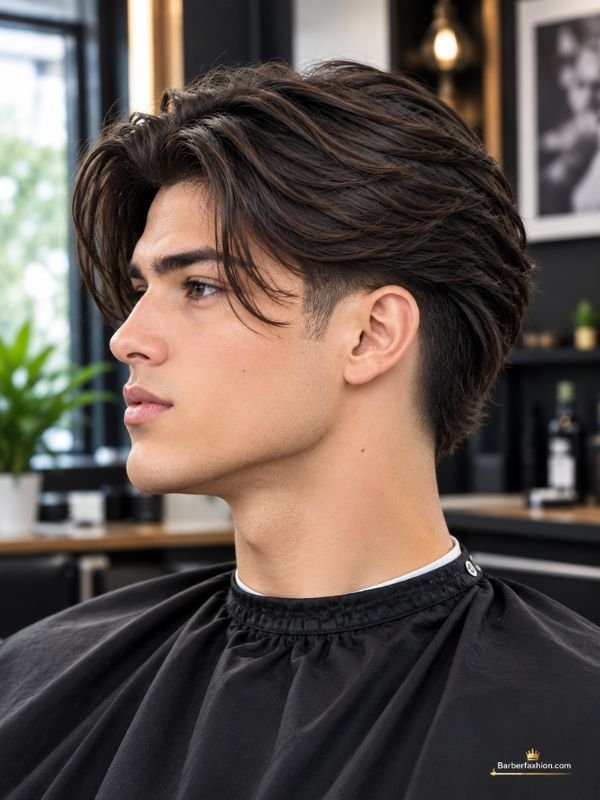
Straight hair tends to show the exact length and shape of the haircut.
That makes it great for middle parts, slick backs, long fringes, layers, and side parts. If your hair is very straight and fine, avoid excessive thinning because you may lose some of the fullness that gives the style shape.
Long Hair Taper Fade for Curly Hair
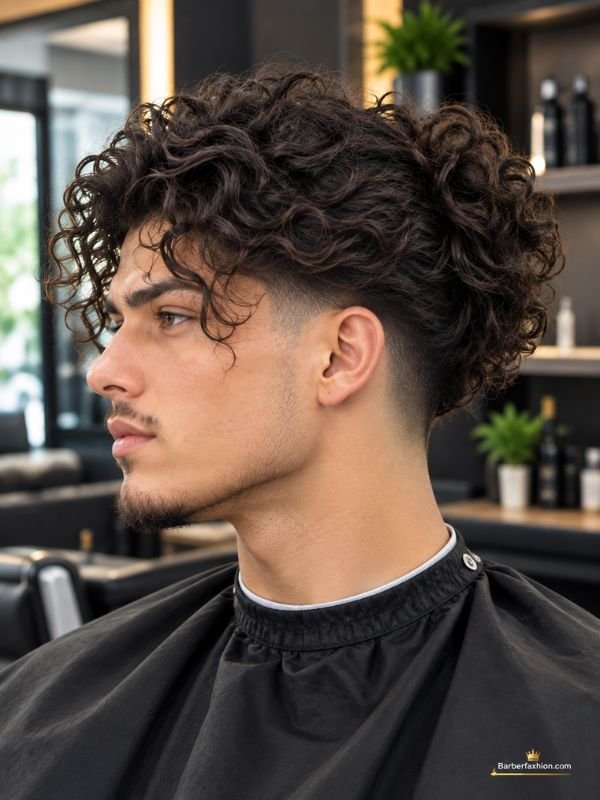
Curly hair adds volume and personality naturally.
The biggest consideration is shrinkage. Curly hair can appear considerably shorter once it dries and contracts, so your barber should account for the curl pattern rather than judging the desired length only while the hair is wet.
Long Hair Taper Fade for Wavy Hair
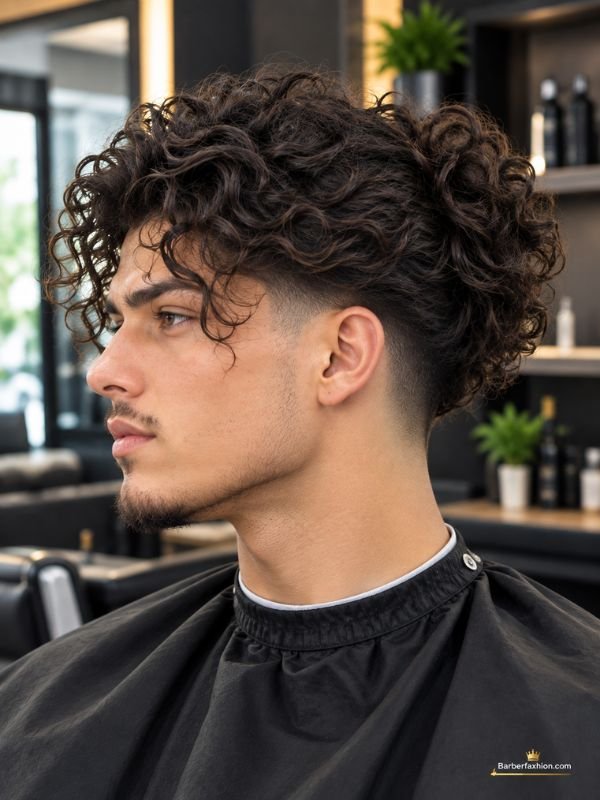
Wavy hair is naturally suited to flowy and textured long styles.
A taper can make the haircut cleaner without taking away the movement. Avoid over-cutting the sides if your waves need some weight to sit correctly.
Long Hair Taper Fade for Coily and Afro-Textured Hair
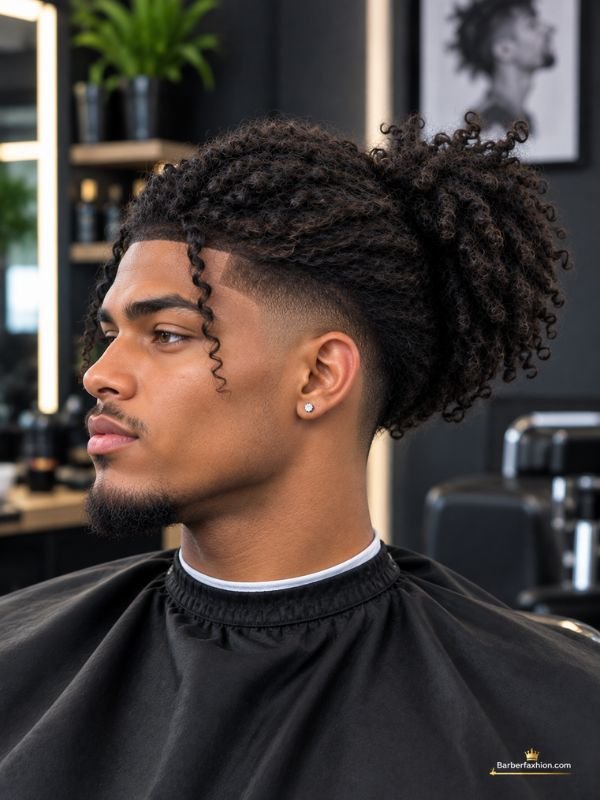
Coily hair can support strong shapes and a wide range of longer styles.
The taper can frame natural curls, twists, locs, braids, or other styling choices. The right approach depends on the density, curl pattern, desired length, and how you normally wear the hair.
Long Hair Taper Fade for Thick Hair
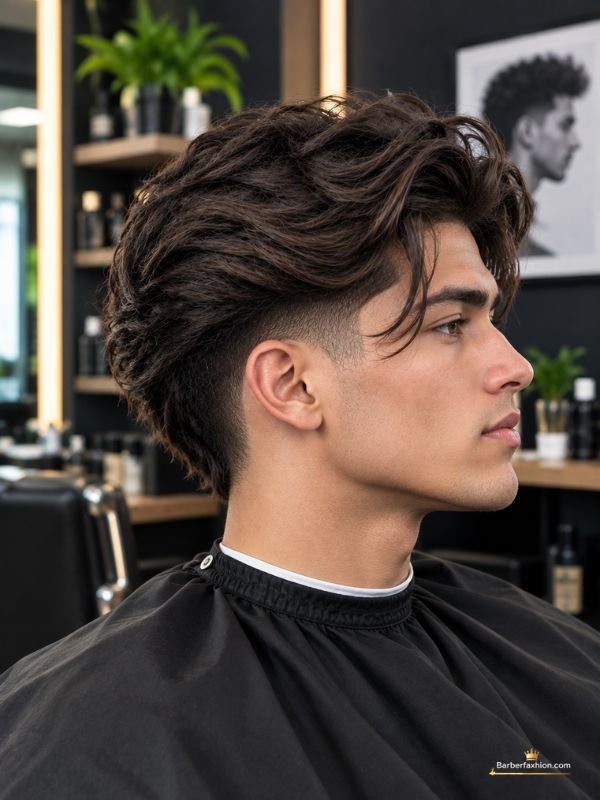
Thick hair often has enough density to support layers and dramatic shapes.
The challenge is controlling excess bulk. Your barber may use strategic layering or weight removal, but the goal should be to shape the hair rather than make the long sections unnecessarily thin.
Long Hair Taper Fade for Fine or Thin Hair
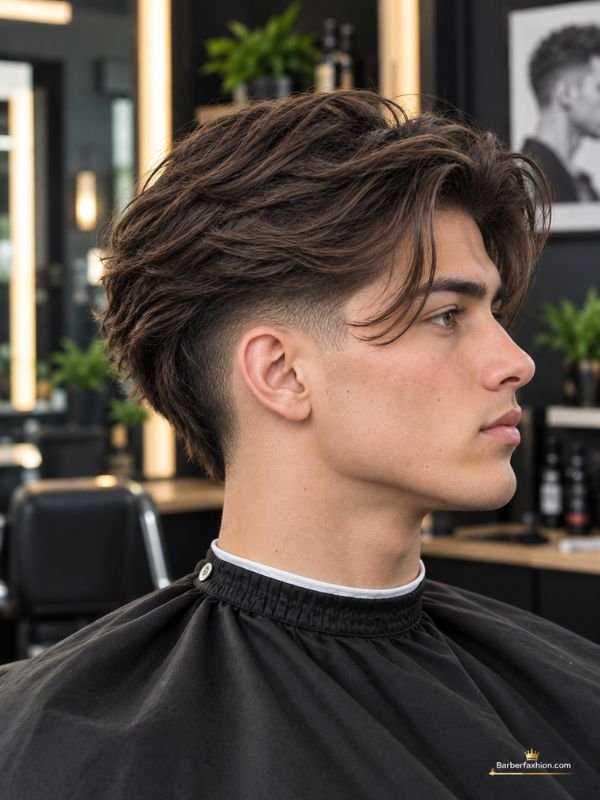
Fine hair needs a lighter touch.
Keeping too much length can sometimes make fine hair look flat, while removing too much can make it appear sparse. A well-placed taper combined with subtle layers can give the overall style cleaner proportions.
Best Long Hair Taper Fade for Different Face Shapes
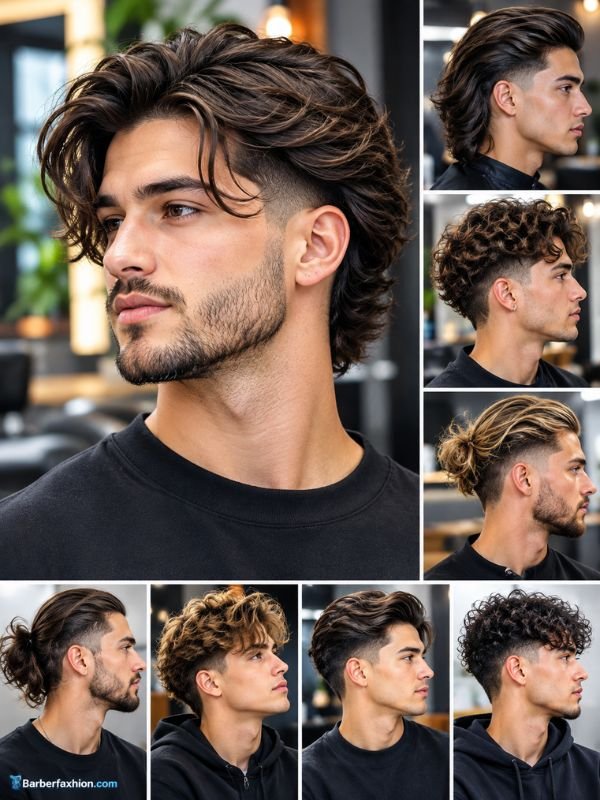
Face shape is useful when choosing a hairstyle, but it shouldn’t be treated like a strict rulebook. Hair texture, density, hairline, forehead width, and your preferred styling direction also matter.
Oval Face
An oval face generally gives you plenty of styling flexibility.
You can experiment with middle parts, slick backs, fringes, layers, and different taper heights. Focus more on the proportions of the hairstyle than trying to correct the face shape.
Round Face
If your face is round, you may prefer styles that add some height or vertical direction.
A textured top, side part, or swept-back style can create a more elongated visual effect. Avoid adding excessive width directly around the cheeks.
Square Face
Square faces already have strong jaw and forehead proportions.
A taper can emphasize that structure, while longer textured hair can soften the overall appearance. Both subtle and stronger taper placements can work depending on the look you want.
Oblong Face
Oblong faces are longer from forehead to chin.
Long hair can work well, but adding excessive height on top may make the face appear longer. Softer layers, natural flow, or some controlled side volume can help maintain balanced proportions.
Diamond Face
Diamond-shaped faces often have more width around the cheekbones and a narrower forehead and jaw.
Long layers, side-swept styles, and textured hair can help create balance. The taper should complement the longer shape instead of making the sides unnecessarily narrow.
Heart-Shaped Face
A heart-shaped face often has a wider forehead and a narrower chin.
Longer fringe or layered styles can help distribute visual weight. A softer taper may work well when you want to keep some width around the sides.
How Long Should Your Hair Be for a Taper Fade?
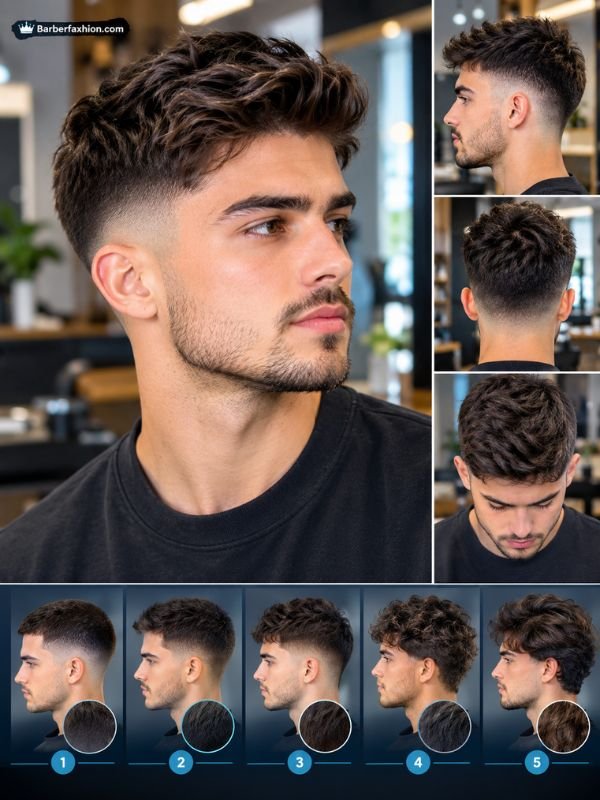
There’s no universal measurement that determines whether your hair is “long enough.” The style you want matters more.
Medium-Long Hair
Medium-long hair is enough for styles such as textured flow, side parts, layered tops, and some fringes.
You don’t necessarily need shoulder-length hair to create a long-hair taper combination.
Shoulder-Length Hair
Shoulder-length hair opens up more options, including ponytails, buns, longer layers, dramatic middle parts, and flowing styles.
At this length, preserving the overall silhouette becomes especially important. Tell your barber if you’re trying to grow beyond your current length.
Very Long Hair
Very long hair can still work with a taper.
The main decision is how much of the perimeter you want cleaned up. A low taper generally allows the long-hair effect to remain dominant, while a higher taper creates more contrast.
Growing Long Hair for a Taper
If you’re growing your hair specifically for this style, don’t feel like you need to avoid the barber completely.
Regularly cleaning the neckline and temples can make the growing-out stage look much more intentional. Just make it clear that your goal is length retention, not a major reduction.
How to Choose the Right Long Hair Taper Fade
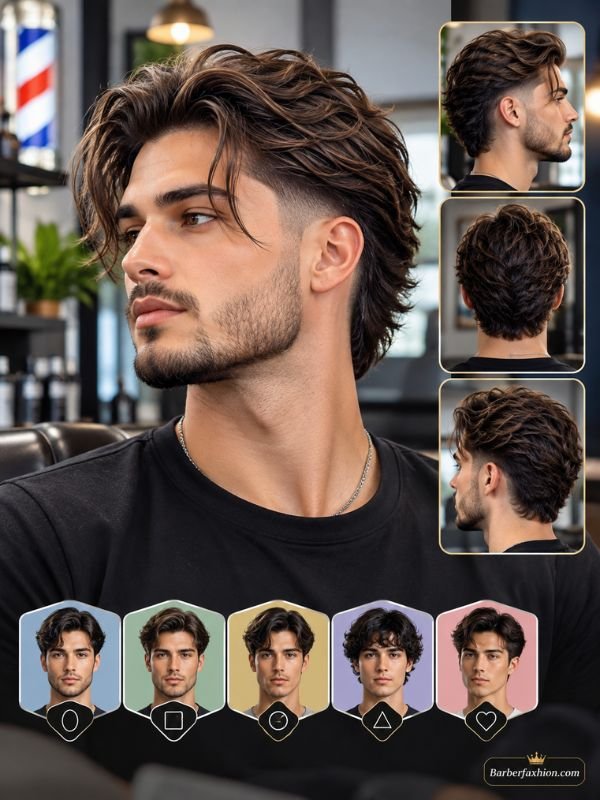
Choosing the haircut becomes easier when you stop thinking only about what looks good in a picture and start thinking about what will work on your own head.
Choose Your Taper Height
Start with contrast.
If you want a subtle change, choose low. If you want a balanced, visible transition, consider mid. If you want the taper to become a major part of the haircut, high may be appropriate.
Decide How Much Length to Keep on Top
Don’t just say “keep it long.”
Tell your barber whether you want the current length preserved, whether you’re growing it longer, or whether you want a specific amount removed from damaged ends.
Consider Your Hair Texture and Density
Straight, wavy, curly, and coily hair behave differently.
Density matters too. Thick hair may need controlled weight removal, while fine hair may need more length retained to preserve fullness.
Match the Style to Your Face Shape
Use face shape as a guide rather than a restriction.
Ask whether you want more height, width, movement, or softness. Those visual goals are more useful than simply choosing a haircut because someone with the same face shape wears it.
Think About Your Daily Styling Routine
A dramatic haircut isn’t very practical if you hate spending time styling your hair.
If you want something easy, choose natural flow or simple texture. If you enjoy styling, middle parts, slick backs, blowouts, and layered looks give you more options.
What to Tell Your Barber
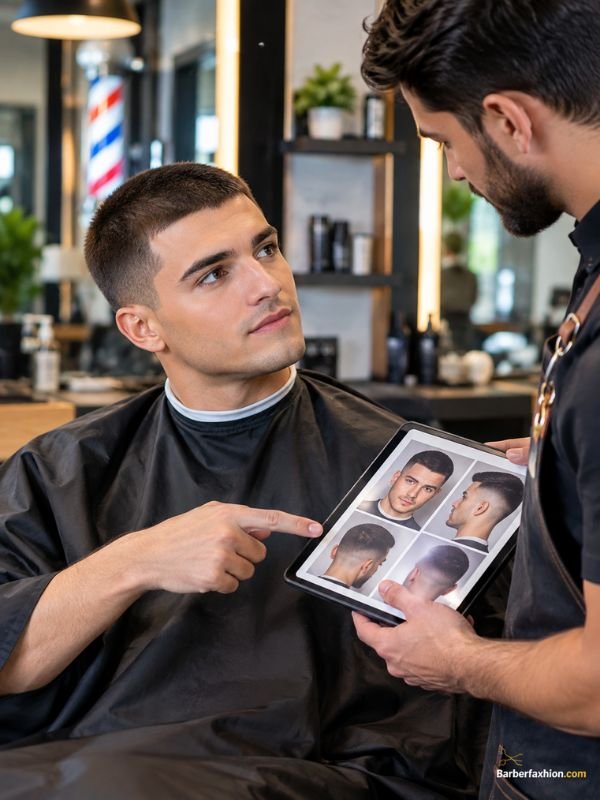
A haircut name alone isn’t always enough. The more specific you are about the taper height and preserved length, the easier it is for your barber to understand what you want.
How to Ask for a Low Taper With Long Hair
You can say:
“I want to keep my long hair on top and through the back. Please keep the taper low around the temples, sideburns, and neckline. I don’t want the taper taken high.”
If you’re growing your hair, add:
“I’m trying to keep my length, so only remove what you need for the shape.”
How to Ask for a Mid Taper With Long Hair
Try:
“Keep the long length on top, but give me a mid taper around the sides and neckline. I want a visible transition without turning the sides into a full high fade.”
Then show a reference photo.
How to Ask for a High Taper With Long Hair
Be especially clear about the height:
“I want a high taper with the long section kept intact. Please show me where you’re planning to place the taper before taking it higher.”
This prevents an unwanted change to the silhouette.
Tell Your Barber to Preserve the Length
This is one of the most important instructions if you’re growing your hair.
Don’t assume your barber knows that “long hair” means “don’t cut the top.” Explain exactly which areas you want preserved.
Bring Reference Photos From Multiple Angles
Bring at least two or three useful photos.
A front view shows the fringe or part. A side view shows the taper placement. A rear view helps your barber understand the neckline and back shape.
One photo rarely tells the whole story.
Common Long Hair Taper Fade Mistakes to Avoid
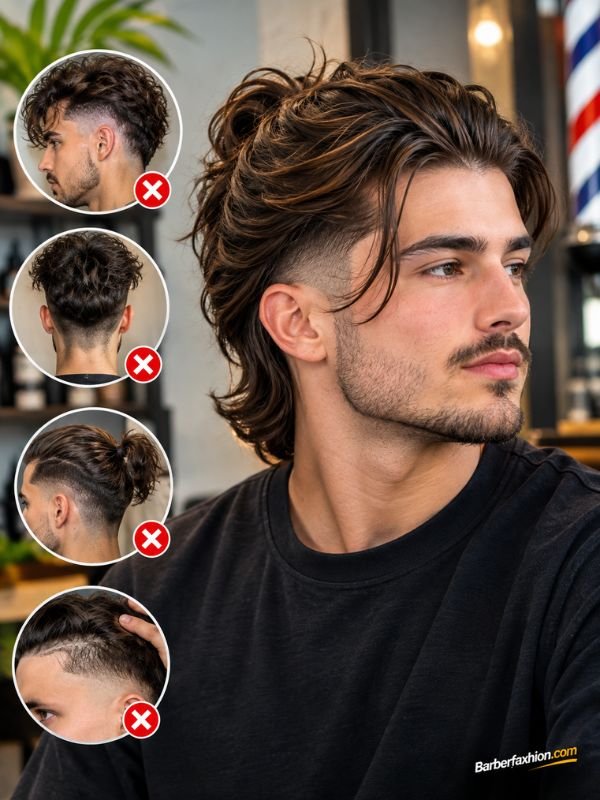
Taking the Taper Too High
This is probably the biggest mistake when your priority is preserving length.
A taper that climbs higher than intended can change the entire shape of the haircut. Decide on the height before the cutting starts.
Cutting Too Much Length From the Sides
Long hair can include important weight around the sides.
Removing too much can make the hairstyle look dramatically different when worn down. If you want a tied-back style later, this becomes even more important.
Taking Too Much Weight From the Long Hair
Thinning shears aren’t automatically the solution for thick hair.
Removing too much weight can make long hair lose its natural shape. Ask your barber to shape the hair according to your texture rather than simply making it thinner.
Forgetting to Specify the Neckline
The neckline affects how the haircut looks from behind.
You can choose a natural finish, a cleaner defined shape, or another approach depending on the style. If you care about the back view, discuss it.
Over-Thinning Thick Hair
Thick hair can be tempting to aggressively thin.
But excessive thinning may create uneven texture, especially as the hair grows. Strategic layering is often more useful than removing bulk everywhere.
Choosing a Style That Doesn’t Match Your Hair Texture
A picture isn’t a guarantee.
If a style relies on naturally wavy hair and yours is very straight, you’ll need styling to recreate the effect. Similarly, curly hair may need a different approach to achieve the same silhouette.
How to Style Long Hair With a Taper Fade
The taper itself usually doesn’t require much styling. The longer hair is where most of your daily work happens.
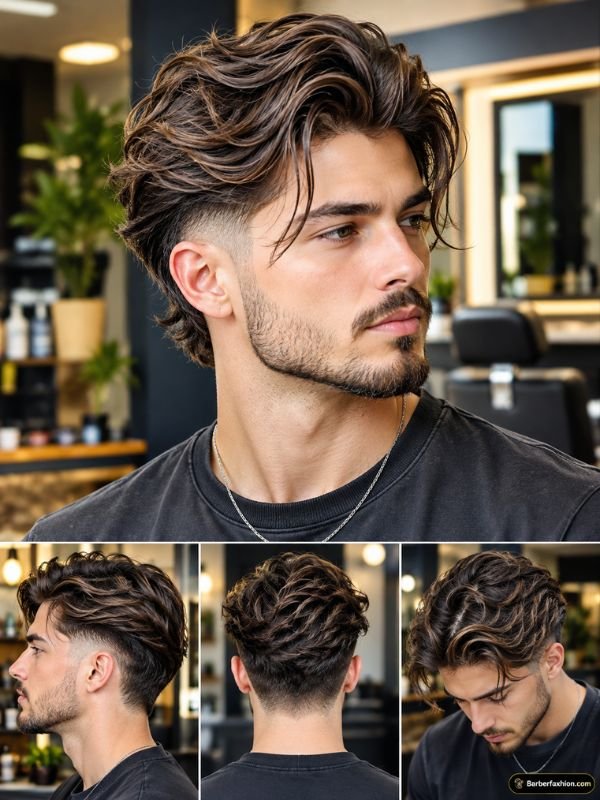
Styling Straight Long Hair
Start with clean, towel-dried hair and apply a lightweight styling product.
Use a blow dryer if you want direction or volume. For a middle part, guide each side away from the center. For a slick back, direct the hair backward while drying.
Styling Wavy Long Hair
Wavy hair usually benefits from products that enhance movement without making it stiff.
Apply a small amount of styling cream or another lightweight product to damp hair. Scrunch gently and allow it to dry naturally or use a diffuser.
Styling Curly Long Hair
Don’t brush dry curls aggressively if you want to preserve their pattern.
Apply curl-friendly product to damp hair, shape the curls with your fingers, and let them dry. A diffuser can speed up the process while helping maintain definition.
Creating a Middle Part
Find your natural part first.
Separate the hair evenly and use a comb only where you need control. If your hair doesn’t naturally stay parted, a blow dryer can train the direction over time.
Creating a Slick-Back Look
Use a small amount of styling product and work it through damp hair.
Comb or brush the hair backward while drying. Don’t overload the roots with heavy product unless you specifically want a firm, glossy finish.
Creating a Messy, Textured Finish
For a relaxed look, use a lightweight texture product.
Work it through the mid-lengths and ends rather than coating the entire head. Then use your fingers to separate sections and create natural movement.
Best Hair Products for Long Hair Taper Fades
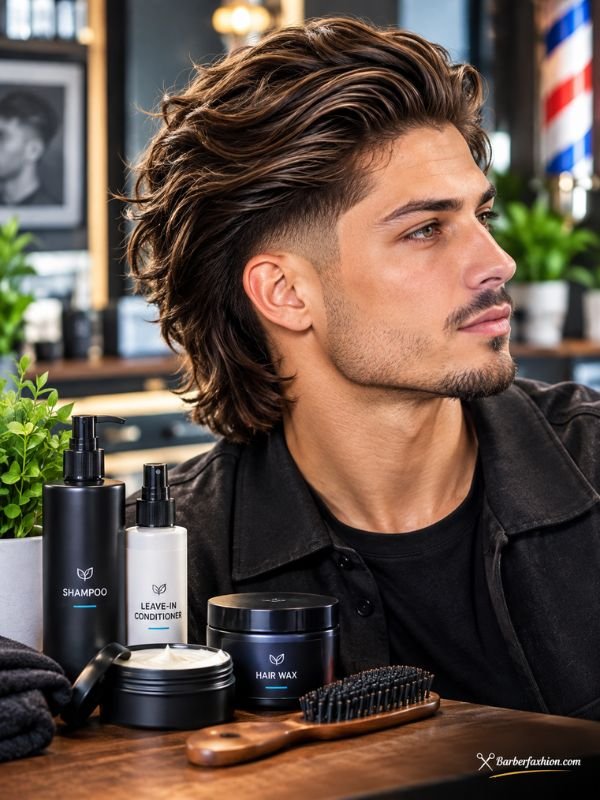
The right product depends more on your hair type and desired finish than on the taper itself.
| Product | Best for | Finish |
| Sea salt spray | Straight or wavy hair | Texture and movement |
| Styling cream | Medium to long hair | Soft control |
| Matte clay | Thick hair | Stronger, matte control |
| Paste | Textured styles | Flexible definition |
| Pomade | Slick styles | Smooth or shiny |
| Leave-in conditioner | Dry or textured hair | Moisture and softness |
| Curl cream | Curly hair | Curl definition |
Sea Salt Spray and Texture Products
These can add movement to straight or wavy hair.
Use a modest amount because too much can leave hair feeling dry or stiff.
Styling Creams and Leave-In Products
Creams are useful when you want the hair to remain touchable.
They’re especially practical for longer hair that needs some control without looking heavily styled.
Matte Clay and Paste
Clay and paste provide more hold.
They’re useful for textured tops, pushed-back styles, and hairstyles where you want individual sections to stay in place.
Pomade and Gel
Pomade works well for slicker hairstyles.
Gel offers stronger hold but can feel heavier, especially on long hair. Use it when you specifically want firm control.
Curl Products for Textured Hair
Curly and coily hair often benefits from products designed to support moisture and definition.
Choose products according to your hair’s needs rather than assuming stronger hold is always better.
Long Hair Taper Fade With a Beard
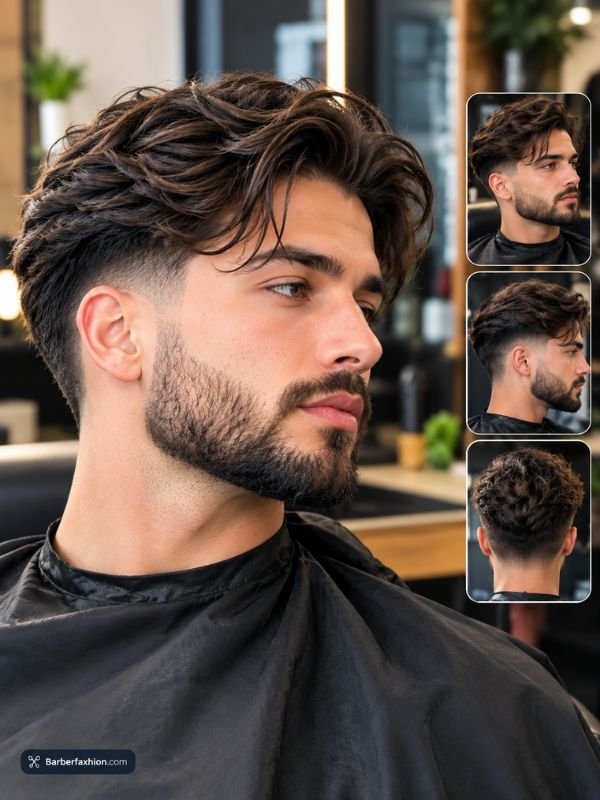
Hair and facial hair can work together as one visual shape.
The goal isn’t necessarily to have the same amount of sharpness everywhere. Instead, consider how the taper, sideburns, beard, and jawline connect.
With Light Stubble
Stubble keeps the combination relatively understated.
It adds some definition around the jaw without competing with longer hair.
With a Short Beard
A short beard creates a clearer connection between the hairstyle and facial structure.
A clean sideburn transition can make the entire haircut look more deliberate.
With a Full Beard
Long hair and a full beard create a substantial overall silhouette.
A lower taper can keep the look natural, while a more defined taper can create additional contrast.
Connecting the Sideburns to the Beard
Talk to your barber about the transition.
You can have a blended connection, a sharper edge, or a more natural finish. Your choice should match how you normally maintain your facial hair.
How to Maintain a Long Hair Taper Fade
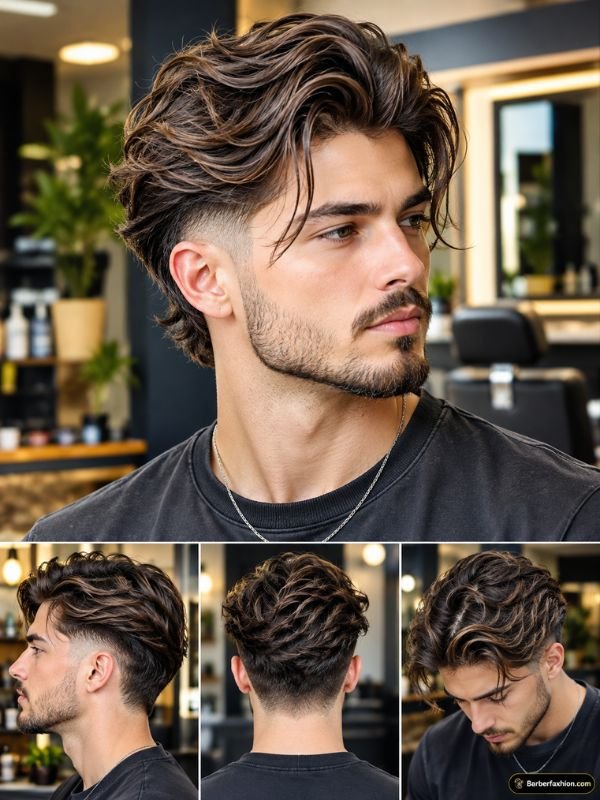
Long hair doesn’t mean you can completely forget about maintenance.
The taper grows out faster visually because it relies on short, precise areas. The longer hair has a different maintenance schedule.
How Often Should You Refresh the Taper?
Many men choose to clean up the taper every few weeks, but the exact timing depends on how quickly your hair grows and how sharp you want the edges.
You don’t necessarily need a complete haircut every time. A perimeter cleanup can refresh the appearance while preserving the long sections.
How to Maintain the Long Hair
Wash according to your hair type and scalp needs rather than following an arbitrary schedule.
Conditioning is especially useful for longer hair because the ends can become dry. Detangle gently and avoid unnecessary pulling.
Managing Split Ends and Dryness
Long hair is more exposed to friction, heat, and environmental damage.
Trim damaged ends when needed, use heat protection before hot styling tools, and avoid excessive heat when you can.
Growing Out the Taper
If you decide you no longer want the taper, you don’t have to chop your long hair.
Let the shorter sections grow while keeping the rest of the hairstyle shaped. Your barber can gradually adjust the perimeter during the transition.
Long Hair Taper Fade vs. Other Popular Cuts
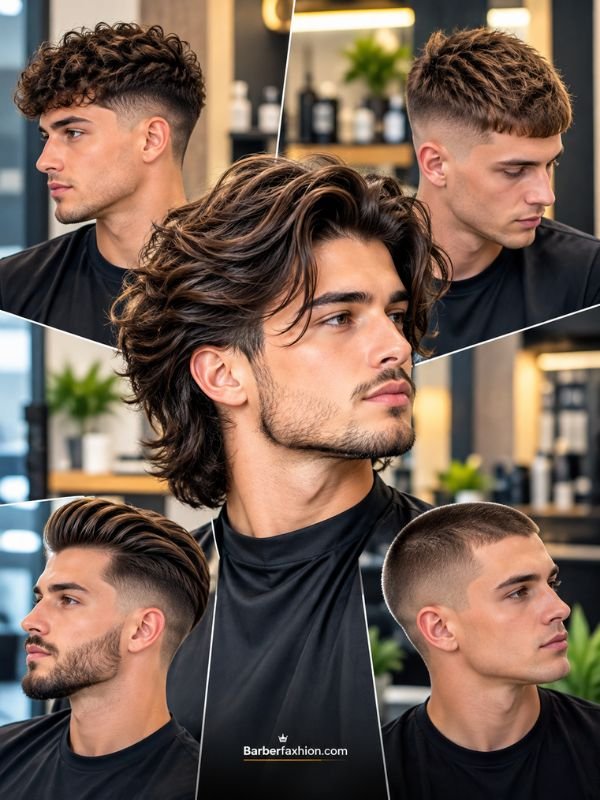
Long Hair Taper Fade vs. Low Fade
A low fade generally creates a more noticeable transition across the side area, while a taper can keep more of the natural side structure intact.
If your priority is preserving a long-hair silhouette, understand exactly how high and how broadly the short section will be taken.
Long Hair Taper Fade vs. Mid Fade
A mid fade generally extends farther through the sides than a subtle taper.
A mid taper can provide some of that definition while leaving more of the longer hair intact. The exact result depends on how your barber places and blends it.
Long Hair Taper Fade vs. Undercut
An undercut creates stronger separation.
If you want the long hair to contrast dramatically against very short sides, an undercut may provide that effect. If you want a gradual perimeter transition, a taper is the more natural direction.
Long Hair Taper Fade vs. a Regular Taper
These terms can overlap in everyday barber conversations.
The important thing isn’t getting stuck on terminology. Tell your barber where you want the short area, how much length you want preserved, and how strong you want the transition to appear.
Frequently Asked Questions About Long Hair Taper Fade
Is a taper fade good for long hair?
Yes. A taper can clean up the temples, sideburns, and neckline while allowing the main length to remain intact. The result can work with straight, wavy, curly, coily, and thick hair.
Can you get a low taper with long hair on top?
Yes. A low taper is particularly useful when you want to keep substantial length on top and maintain a softer overall shape. Tell your barber not to take the taper higher than you want.
Does a long hair taper fade work with curly hair?
Yes. Curly hair can create strong contrast against a clean tapered perimeter. Your barber should account for curl shrinkage and preserve the shape of your natural curl pattern.
Does a taper fade work with straight long hair?
Absolutely. Straight hair works well with middle parts, side parts, slick backs, long fringes, layers, and natural-flow styles. A taper can prevent the sides from looking overly bulky while keeping the longer hair sleek.
How often should you maintain a long hair taper fade?
The taper may need cleaning up every few weeks if you want it to stay sharp, while the long hair can follow a slower maintenance schedule. You can often refresh the perimeter without significantly cutting the main length.
Conclusion
A long hair taper fade gives you a useful middle ground between completely untouched long hair and a heavily faded haircut. You can keep the length, movement, curls, waves, layers, or tied-back style you like while giving the temples, sideburns, and neckline a cleaner finish.
The most important choice is how much contrast you want. A low taper keeps things subtle, a mid taper adds definition, and a high taper makes the transition much more noticeable. Before your appointment, show your barber reference photos, explain exactly how much length you want to keep, and specify where you want the taper to sit. That small conversation can make the difference between getting the haircut you pictured and getting something completely different.