
You know the moment. You’re scrolling through haircut photos at 11 p.m., trying to find something that looks less “safe office fade” and more “this guy actually put thought into his hair” — without going full rockstar mullet from 1987. That’s usually how people end up here.
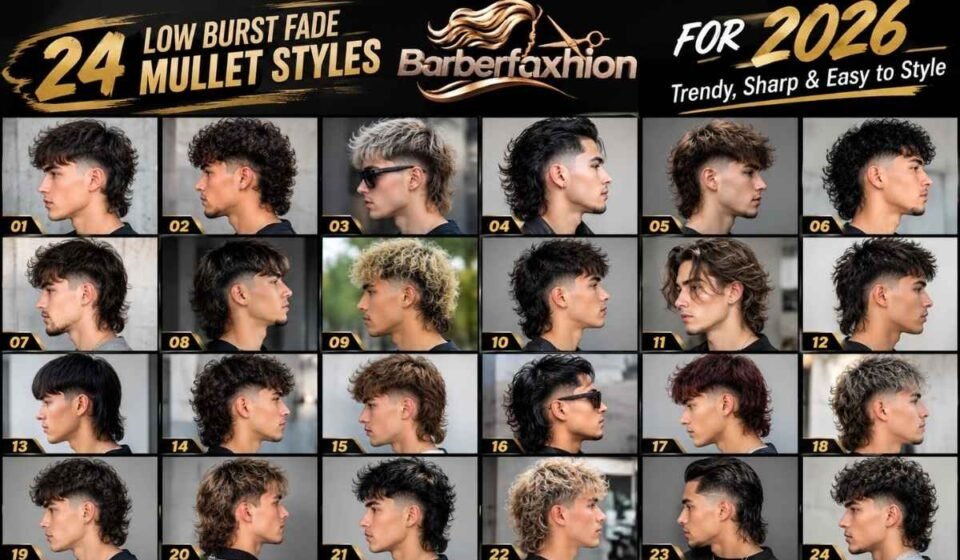
Good news: the low burst fade mullet was basically built for that exact problem. It keeps the sides clean and controlled while letting the back do something interesting, and it’s forgiving enough that you won’t regret it three weeks in. Below you’ll find 24 ways to wear it, how to pick the right one for your face and hair type, and exactly what to say to your barber so you don’t leave the chair disappointed.
Quick Answer: A low burst fade mullet pairs a fade that curves around the ear (starting low, near the top of the ear rather than higher on the head) with a mullet’s signature longer length at the back. It’s one of the most versatile mullet variations because the low fade keeps the sides soft and professional-looking, while the back length can be styled short, medium, or long depending on your hair type and how bold you want to go. Most versions need a trim every 4–5 weeks.
What Is a Low Burst Fade Mullet?
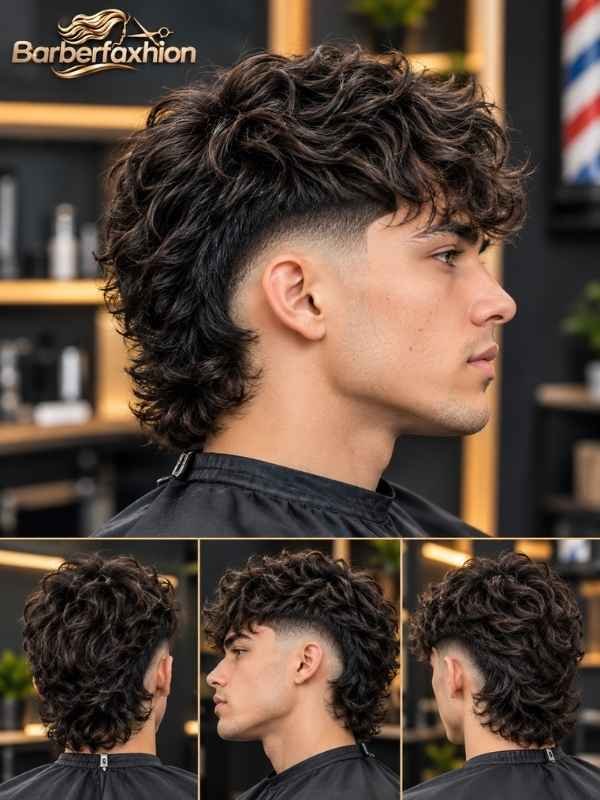
A low burst fade mullet combines three separate haircut ideas into one cut.
First, there’s the burst fade itself — instead of running in a straight line up the side of the head like a standard fade, it curves around the ear in a rounded “burst” shape. Second is the low placement, meaning the fade starts near the top of the ear rather than higher up at the temple or crown. That keeps more hair around the sides, which softens the overall look. Third is the mullet element: extra length is left at the back, creating the length contrast that gives a mullet its personality.
Put those three together and you get a haircut that’s noticeably more interesting than a plain fade, but far less dramatic than the mullets people picture from decades past. The low fade specifically is what keeps this version wearable in an office, a classroom, or anywhere a full skin fade mullet might feel like too much.
Low Burst Fade Mullet vs. Mid vs. High Fade
The “low,” “mid,” and “high” labels all describe the same curved burst shape — the only thing that changes is where the fade actually starts on the head. That one detail changes how dramatic the haircut reads and how often you’ll need to see your barber.
| Feature | Low Burst Fade Mullet | Mid Burst Fade Mullet | High Burst Fade Mullet |
| Fade starting point | Around the top of the ear | Mid-way up the side, above the temple | High on the side, near the crown |
| Visual contrast | Soft, gradual | Balanced, noticeable | Sharp and bold |
| Best for | First-timers, office settings | Everyday versatility | Statement looks, nightlife or creative jobs |
| Trim frequency | Every 4–5 weeks | Every 3–4 weeks | Every 2–3 weeks |
| Grows out gracefully? | Yes, most forgiving | Moderately | Least forgiving |
If you’re not sure which one to ask for, start low. It’s the easiest to live with, and a barber can always take it higher on your next visit. If you already know you want more contrast between the sides and the back, tell your barber you want it raised to a mid burst fade mullet instead.
Low Burst Fade Mullet vs. Low Taper Fade
These two get mixed up constantly, and the confusion isn’t your fault — barbers use the terms loosely too. The difference actually comes down to shape, not height.
A low taper fade tapers down in a straight, gradual line along the side of the head. A low burst fade mullet does something different: the fade curves around the ear instead of running straight, and it’s paired with length left at the back for the mullet shape. A taper fade alone doesn’t include any mullet-style length — it’s just a subtle way to blend the sides.
If you want the softest, most understated fade with no extra length at the back, ask for a low taper fade. If you want that same soft blend but with personality and length at the back, that’s your low burst fade mullet.
Why the Low Burst Fade Mullet Is Trending in 2026
Men are moving away from hairstyles that demand a full styling routine every morning. This cut fits that shift because it looks intentional even on a lazy day.
It also photographs well. The soft burst fade doesn’t compete with the length at the back, so the whole haircut reads as balanced instead of busy. And because no two versions have to look identical, your barber can adjust the crown length, neckline, and texture to make it genuinely yours instead of a copy-paste template off Pinterest.
Who Should Choose a Low Burst Fade Mullet?
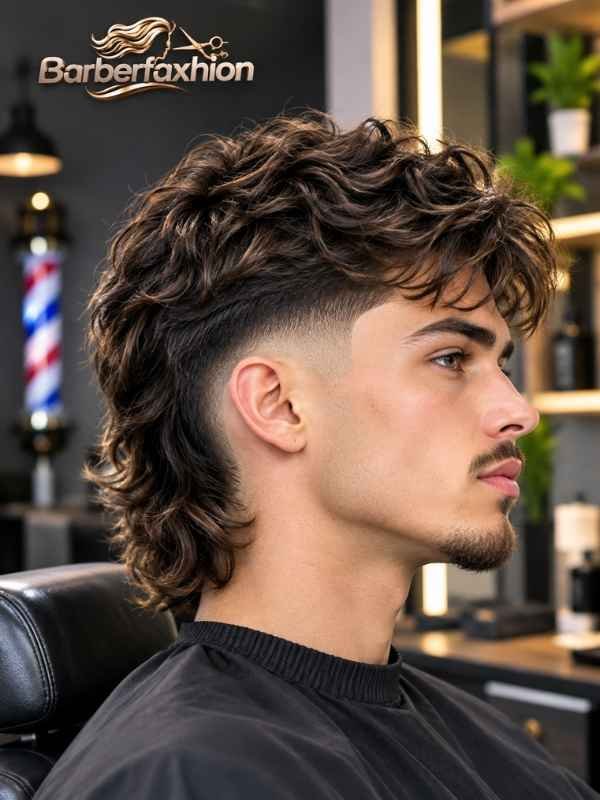
This cut is worth trying if you:
- Want something more distinctive than a standard fade
- Have straight, wavy, or curly hair (it adapts to all three)
- Like the idea of a haircut with built-in movement
- Don’t mind a barber visit every 4–5 weeks
- Want personality without going to extremes
It’s probably not for you if you dislike any length at the back or you need something that requires zero explanation to a new barber every time.
1. Classic Low Burst Fade Mullet
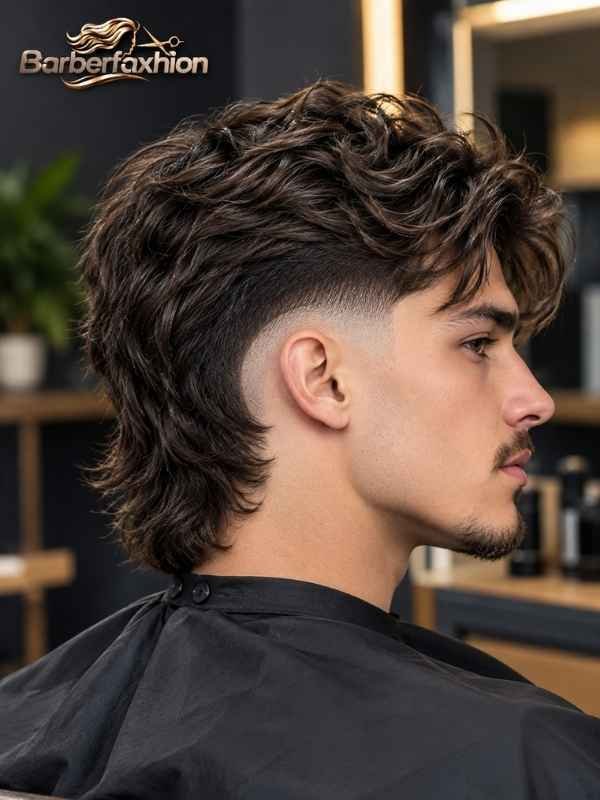
This is the baseline version — a soft fade around the ears with just enough length at the back to create the mullet silhouette, and a textured top that keeps things current rather than dated. It doesn’t lean on dramatic contrast to make an impression; it works through proportion instead.
It’s also one of the easier cuts to live with as it grows out, since the soft fade blends naturally instead of leaving an obvious hard line.
Best For: First-timers trying a mullet. Face Shapes: Oval, Square, Diamond. Hair Types: Straight, Wavy, Thick. Maintenance: Every 4–5 weeks. Styling Products: Matte clay or texture paste. Barber Tip: Ask for the burst kept low to maintain a softer profile. Common Mistake: Leaving the back too long without adding texture.
Pros
- Timeless, wearable look
- Easy to style day to day
- Great starter version
- Works across most face shapes
Cons
- Less dramatic than trend-driven variations
2. Modern Low Burst Fade Mullet
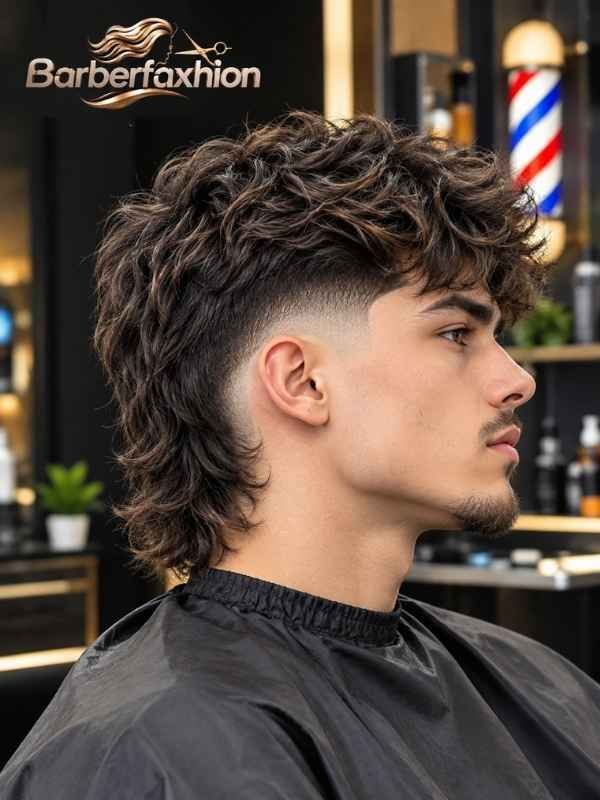
This version leans into more texture on top while keeping the sides clean and low, giving it a lighter, sharper feel than a retro-style mullet. Layering ties the textured top into the longer back so the transition looks deliberate rather than disconnected.
It’s a popular pick with younger guys because it balances confidence with practicality — it works with streetwear just as easily as it works with a casual button-down.
Best For: A fashionable everyday cut. Face Shapes: Oval, Round, Square. Hair Types: Straight, Wavy. Maintenance: Every 4 weeks. Styling Products: Texture powder and matte paste. Barber Tip: Ask for layered texture instead of heavy thinning. Common Mistake: Using shiny product that flattens the natural texture.
Pros
- Contemporary, fresh feel
- Lightweight to style
- Strong texture on top
- Fashion-forward without going overboard
Cons
- Needs a few minutes of daily styling
3. Textured Low Burst Fade Mullet
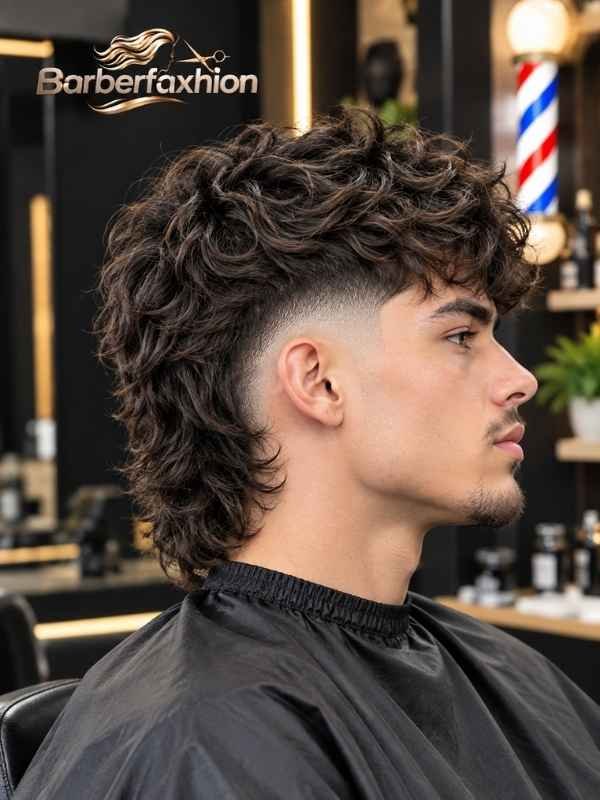
Texture is what separates a decent haircut from one with real movement. This version leans on layering rather than heavy product to create separation across the top, so the hair naturally lifts and moves throughout the day instead of sitting flat.
It’s especially effective on thicker hair, since strategic layering removes bulk without sacrificing volume.
Best For: Guys who like natural movement over a polished finish. Face Shapes: Oval, Square, Diamond. Hair Types: Thick, Straight, Wavy. Maintenance: Every 4–5 weeks. Styling Products: Matte clay, sea salt spray, or texture powder. Barber Tip: Ask for point-cut texturing instead of aggressive thinning. Common Mistake: Overloading product until the texture disappears.
Pros
- Great natural movement
- Simple everyday styling
- Modern, masculine finish
- Makes thick hair easier to control
Cons
- Looks best with regular trims
4. Curly Low Burst Fade Mullet
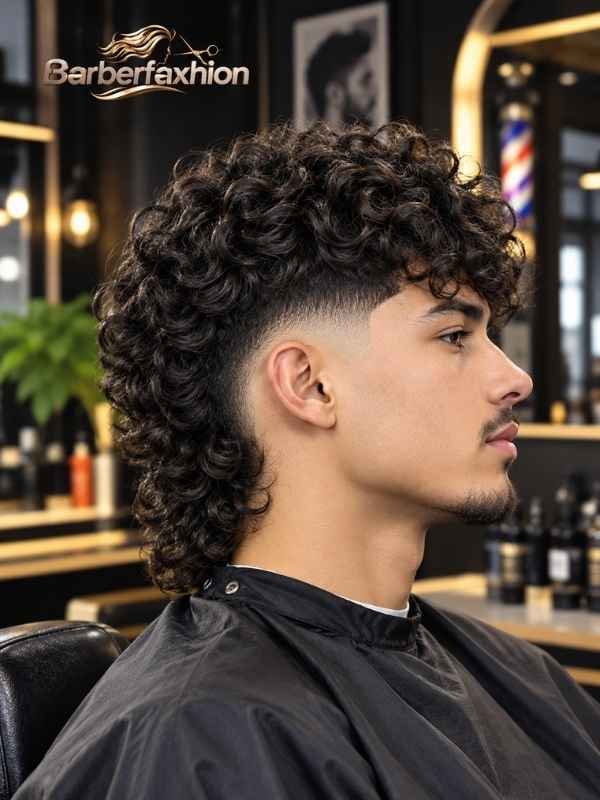
Natural curls give this variation texture that no product can fully replicate. Rather than fighting the curl pattern, this cut works with it — the low burst fade keeps the shape controlled at the sides while the curls on top and at the back stay the main event.
Because curly hair expands as it dries, a barber who knows curls will cut with that shrinkage in mind, removing bulk in the right places without cutting away the curl definition.
Best For: Naturally curly or coily hair. Face Shapes: Oval, Square, Heart. Hair Types: Curly, Coily. Maintenance: Every 5–6 weeks. Styling Products: Curl cream or leave-in conditioner. Barber Tip: Ask your barber to cut with the curl’s natural spring, not stretched straight. Common Mistake: Cutting the top too short, which flattens curl shape.
Pros
- Excellent natural texture
- Minimal daily styling
- Strong volume
- Genuinely low-maintenance once cut right
Cons
- Needs regular hydration to control frizz
5. Wavy Low Burst Fade Mullet
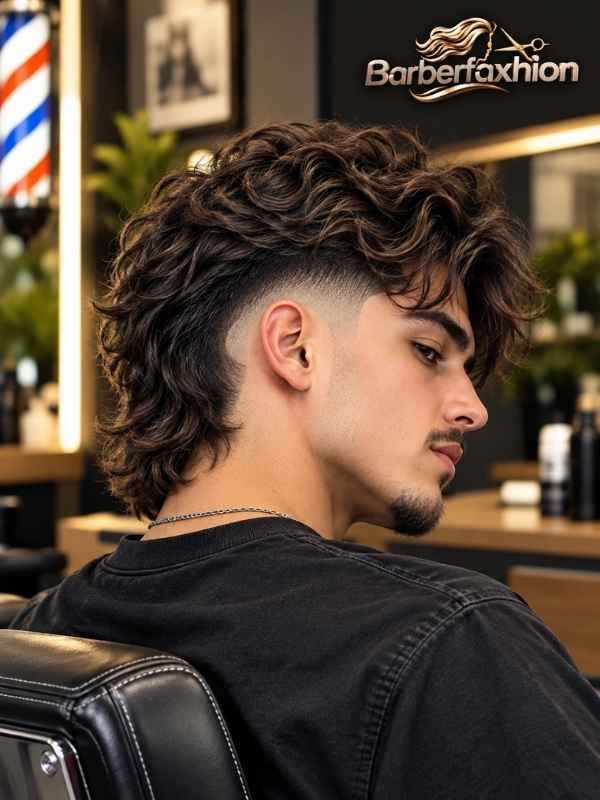
Waves bring one of the most relaxed, effortless versions of this cut. The natural bend in the hair creates movement across the top, and the length at the back develops a soft, flowing look that actually improves as the day goes on.
Unlike styles that need constant touch-ups, waves do most of the work on their own — the low fade just keeps the sides tidy without stripping away too much weight.
Best For: Naturally wavy hair. Face Shapes: Oval, Diamond, Heart. Hair Types: Wavy. Maintenance: Every 5 weeks. Styling Products: Sea salt spray or matte styling cream. Barber Tip: Let hair air dry occasionally for the best wave definition. Common Mistake: Brushing dry waves until they turn frizzy.
Pros
- Easy, low-effort styling
- Natural-looking texture
- Lightweight finish
- Relaxed without looking messy
Cons
- Humidity can affect wave definition
6. Straight Hair Low Burst Fade Mullet
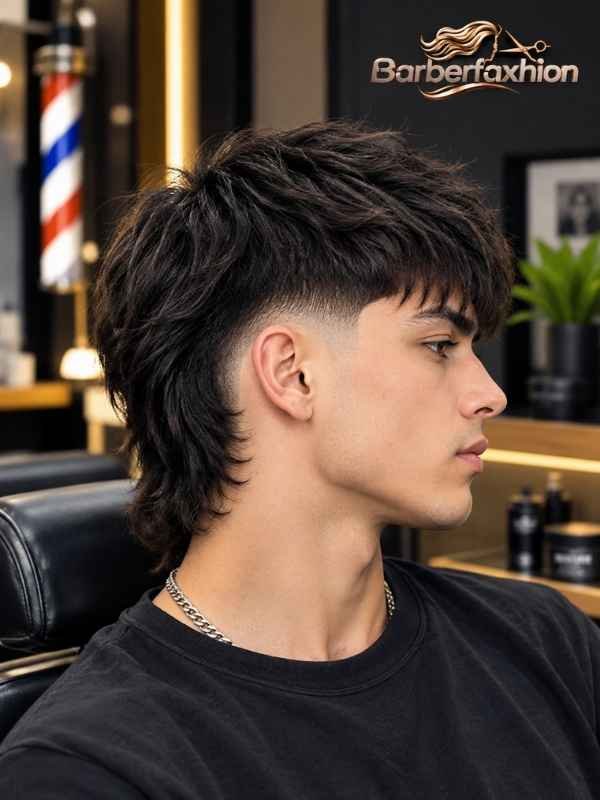
Straight hair shows off the clean lines of this cut better than any other texture. Because straight hair naturally lies flat, layering across the top becomes essential — without it, the haircut can look lifeless instead of intentional.
A small amount of matte clay or texture powder is usually all you need to keep it looking current rather than stiff.
Best For: Naturally straight hair. Face Shapes: Oval, Square, Diamond. Hair Types: Straight. Maintenance: Every 4–5 weeks. Styling Products: Texture powder or matte clay. Barber Tip: Ask for layered texture across the crown to avoid flatness. Common Mistake: Using heavy pomade that kills volume.
Pros
- Sharp, clean silhouette
- Easy maintenance
- Professional finish
- Simple to style
Cons
- Needs texture to avoid looking flat
7. Messy Low Burst Fade Mullet
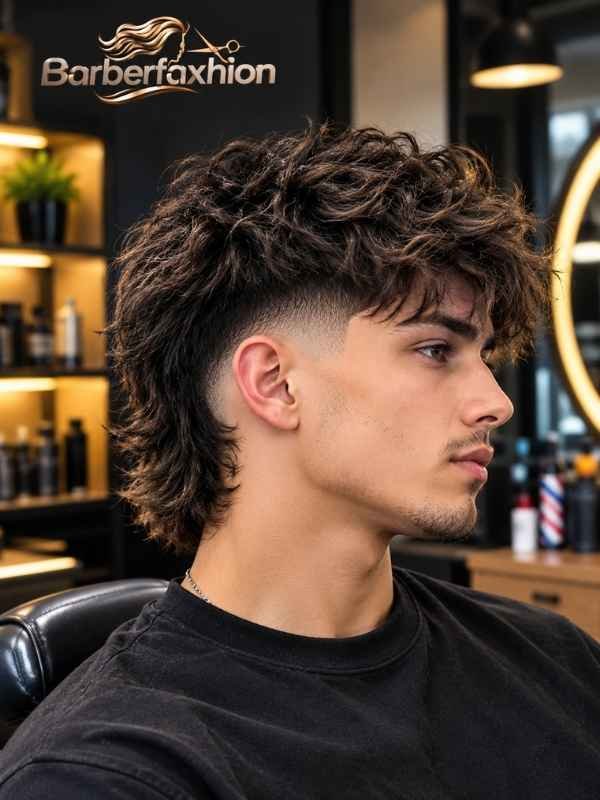
This one’s for guys who want personality without a polished, “just left the barbershop” look. Instead of chasing a perfect finish, this version leans into controlled movement that actually improves as the hair settles through the day.
It works particularly well on medium-to-thick hair, where the added texture creates depth instead of looking unkempt. A little matte paste worked through with your fingers is usually all it takes.
Best For: Relaxed, everyday styling. Face Shapes: Oval, Round, Diamond. Hair Types: Straight, Wavy, Thick. Maintenance: Every 5 weeks. Styling Products: Matte paste or texture powder. Barber Tip: Style with fingers instead of a comb. Common Mistake: Overusing product, which stiffens the hair.
Pros
- Relaxed, lived-in look
- Fast to style
- Strong natural texture
- Feels current without trying too hard
Cons
- Needs occasional reshaping to stay defined
8. Short Low Burst Fade Mullet
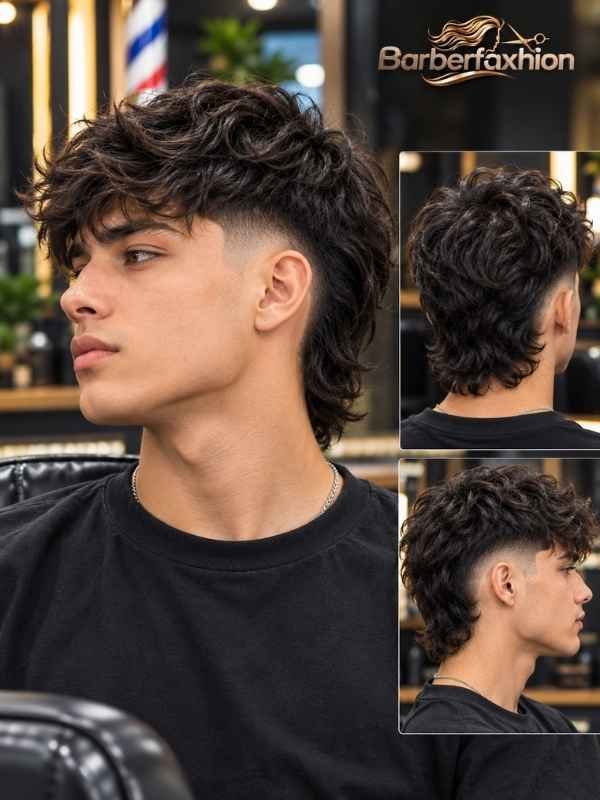
Not ready to commit to serious length? This is the entry point. It keeps the mullet’s signature shape while trimming down how much length sits at the back, which makes it easier to wear in more conservative settings.
It’s also one of the simplest to maintain, since the shorter proportions mean less can go visibly wrong between trims.
Best For: First-time mullet wearers who want something subtle. Face Shapes: Oval, Square, Round. Hair Types: Straight, Wavy, Thick. Maintenance: Every 4 weeks. Styling Products: Matte clay. Barber Tip: Keep the back slightly longer than the crown to preserve the mullet shape. Common Mistake: Cutting the back so short the mullet effect disappears.
Pros
- Beginner-friendly
- Easy to maintain
- Clean, controlled look
- Works in most environments
Cons
- Less dramatic than longer versions
9. Medium-Length Low Burst Fade Mullet
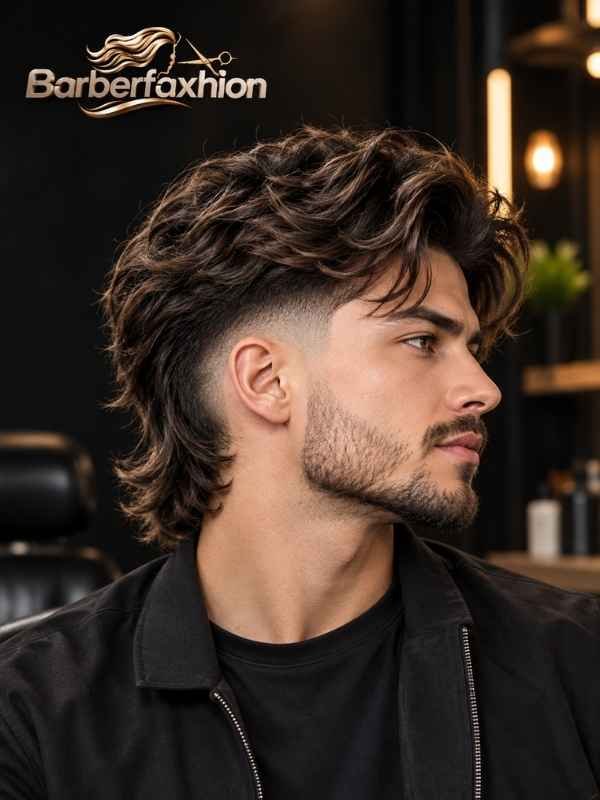
This is the middle ground — enough length at the back to create real flow, without the upkeep that comes with going long. If a short mullet feels too tame and a long one feels like too much commitment, this is usually the answer.
The added length gives your barber room to add textured layers through the crown and back, so the haircut keeps developing movement as it grows.
Best For: A balanced, versatile mullet. Face Shapes: Oval, Square, Diamond. Hair Types: Straight, Wavy, Thick. Maintenance: Every 5 weeks. Styling Products: Matte paste or sea salt spray. Barber Tip: Ask for the back layered rather than cut to one length. Common Mistake: Letting the crown get too heavy.
Pros
- Well-balanced proportions
- Easy upkeep
- Versatile for work and weekends
- Modern without being extreme
Cons
- Needs occasional layering to keep movement
10. Long Low Burst Fade Mullet
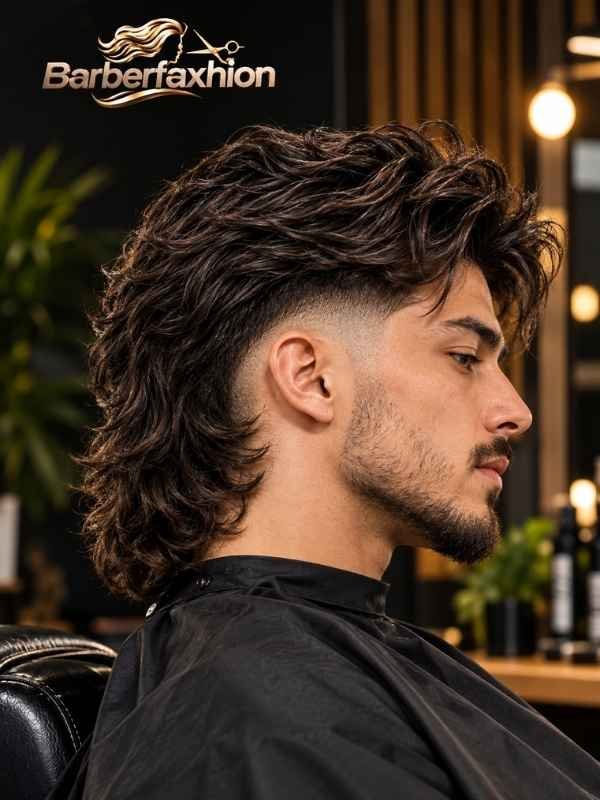
This is the version for guys who don’t mind making a statement. The extra length at the back creates real flow and drama, while the low burst fade keeps it from tipping into “unkempt” territory.
You can wear it naturally textured, slightly slicked, or loosely brushed back — the fade does the quiet work of keeping the whole thing structured while the length gets to be the star.
Best For: Bold hairstyle fans. Face Shapes: Oval, Diamond, Heart. Hair Types: Straight, Wavy. Maintenance: Every 5–6 weeks. Styling Products: Leave-in cream and matte styling paste. Barber Tip: Trim split ends regularly to keep the length looking healthy. Common Mistake: Growing out the back while neglecting the fade.
Pros
- Strong visual impact
- Excellent movement
- Highly customizable
- A modern take on the classic mullet
Cons
- More patience required during the growing-out phase
11. Low Burst Fade Mullet with Fringe
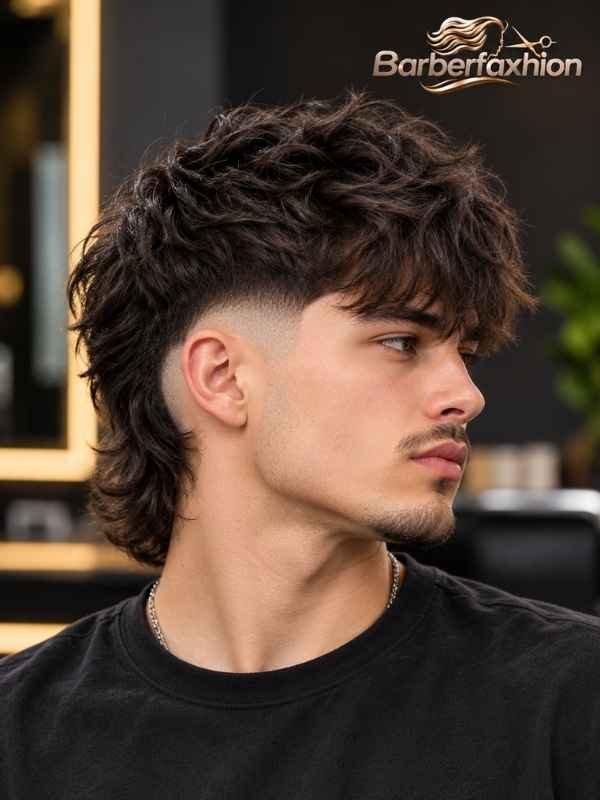
Add a fringe and the whole personality of the cut shifts. Instead of showing off the forehead, textured strands fall forward, creating a softer, more youthful look. This pairing has grown in popularity thanks to Korean-inspired styling crossing into western barbershops.
The fringe frames the eyes while the mullet handles the movement at the back, giving you a haircut that feels current without pushing too far.
Best For: A fashionable, modern look. Face Shapes: Heart, Oval, Long. Hair Types: Straight, Wavy. Maintenance: Every 4 weeks. Styling Products: Texture powder and matte clay. Barber Tip: Keep the fringe lightweight so it doesn’t look heavy. Common Mistake: Cutting the fringe too blunt.
Pros
- Youthful, framed look
- Trend-forward styling
- Adds personality to the face
- Easy to adjust length over time
Cons
- Fringe needs more frequent trims
12. Low Burst Fade Mullet with Beard
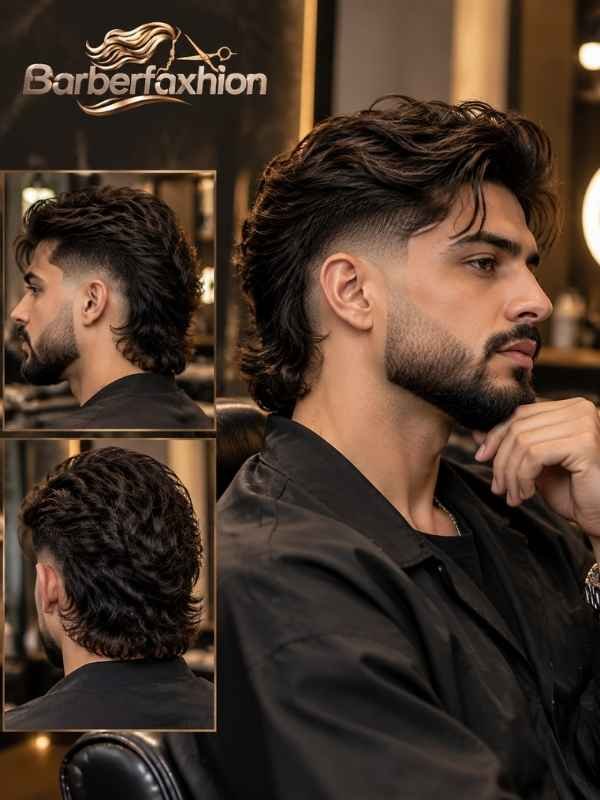
A well-groomed beard turns this cut into something noticeably more masculine. The best barbers blend the fade straight into the facial hair instead of treating the two as separate jobs, which creates one continuous line from ear to jaw.
This pairing is particularly flattering on longer or narrower face shapes, since the beard adds width and strengthens the jawline while the haircut supplies the movement up top.
Best For: Men with full or medium beards. Face Shapes: Oval, Rectangle, Diamond. Hair Types: Straight, Wavy, Thick. Maintenance: Hair every 4 weeks, beard every 2–3 weeks. Styling Products: Beard oil and matte clay. Barber Tip: Ask for the sideburns to blend naturally into the beard. Common Mistake: Letting the beard grow much longer than the haircut.
Pros
- Strong, masculine profile
- Balanced overall appearance
- Great contrast with thick hair
- Reads as intentional, not accidental
Cons
- Requires keeping up with beard grooming too
13. Asian Low Burst Fade Mullet
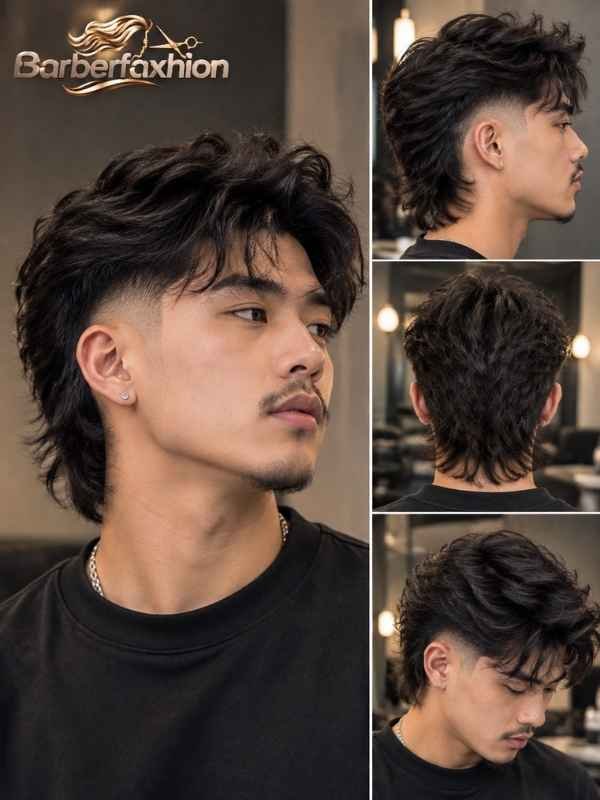
Korean and Japanese men’s hairstyle trends have pushed this variation into the mainstream. Naturally straight, dense hair creates a clean silhouette here, and textured layering keeps it from feeling stiff or too heavy.
This one relies on precise barbering and soft movement rather than aggressive styling. The burst fade removes bulk around the ears while leaving enough weight on top for effortless volume.
Best For: Straight, thick hair. Face Shapes: Oval, Diamond, Heart. Hair Types: Straight, Thick. Maintenance: Every 4–5 weeks. Styling Products: Texture powder and matte styling paste. Barber Tip: Ask for layered texture instead of heavy thinning. Common Mistake: Leaving too much bulk around the sides.
Pros
- Contemporary silhouette
- Natural volume
- Easy to style
- Clean, controlled finish
Cons
- Best results depend on a barber experienced with thick, straight hair
14. Thick Hair Low Burst Fade Mullet
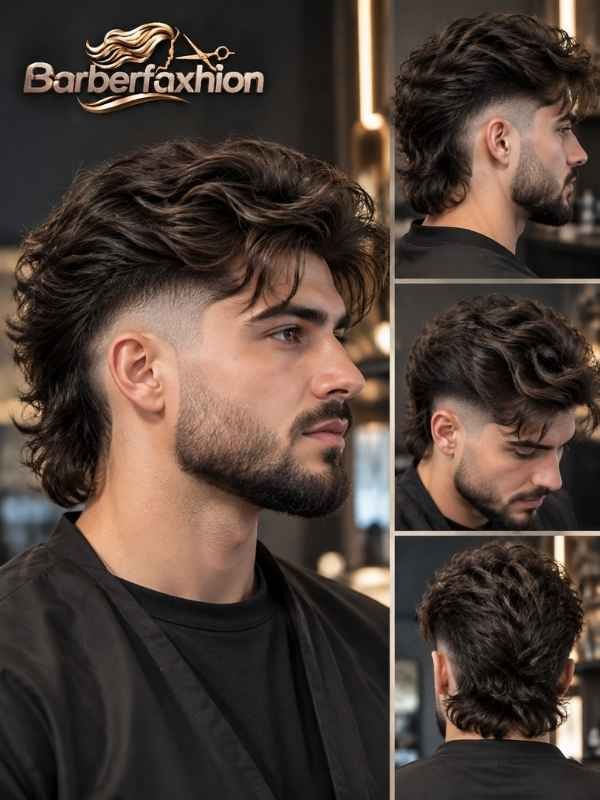
Thick hair tends to puff outward instead of laying flat, which is exactly what this version solves. Strategic layering removes weight where it isn’t needed while preserving the fullness that makes thick hair look healthy in the first place.
The low burst fade does a lot of the balancing here — it keeps the area around the ears clean while letting the textured top and back stay the focal point. Because thick hair holds shape naturally, this version often needs less daily styling than people assume.
Best For: Naturally thick or coarse hair. Face Shapes: Oval, Square, Diamond. Hair Types: Thick, Dense, Coarse. Maintenance: Every 4–5 weeks. Styling Products: Matte clay or texture paste. Barber Tip: Ask for internal weight removed through layering, not heavy thinning. Common Mistake: Leaving the crown too bulky.
Pros
- Easy to manage day to day
- Excellent natural volume
- Modern, textured finish
- Fuller look without feeling heavy
Cons
- Needs regular shaping to control growth
15. Fine Hair Low Burst Fade Mullet
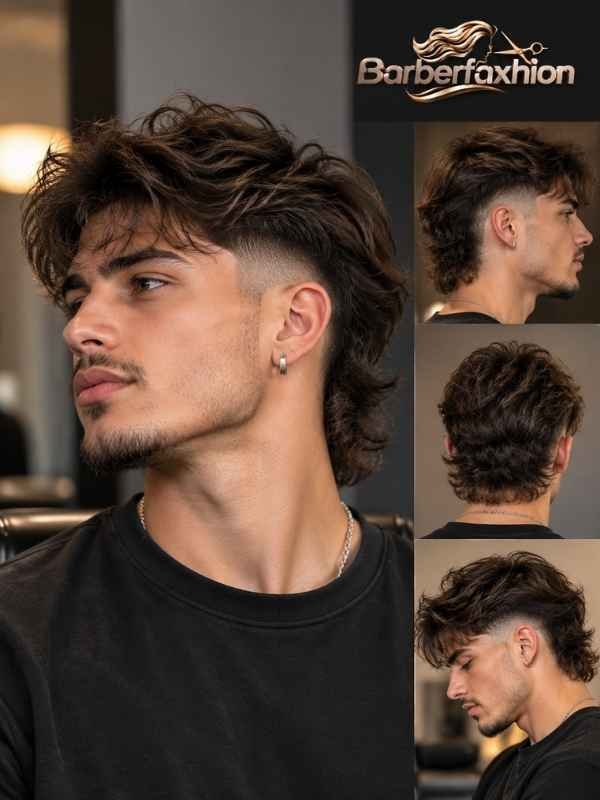
Fine hair doesn’t disqualify you from this cut — it just changes the approach. This version focuses on smart layering and lightweight products to create the illusion of fuller, thicker hair instead of relying on length alone.
The burst fade draws attention away from thinner sides, while the textured top adds volume around the crown. Keeping the overall length a bit shorter helps prevent fine hair from falling flat by the end of the day.
Best For: Fine or thinning hair. Face Shapes: Oval, Round, Heart. Hair Types: Fine, Straight. Maintenance: Every 4 weeks. Styling Products: Texture powder and volumizing mousse. Barber Tip: Build volume at the roots instead of relying on heavy product. Common Mistake: Growing the back too long before the top has enough fullness.
Pros
- Makes hair look thicker
- Lightweight styling
- Youthful, fresh appearance
- Easy upkeep
Cons
- Needs volumizing products for the best result
16. Tapered Low Burst Fade Mullet
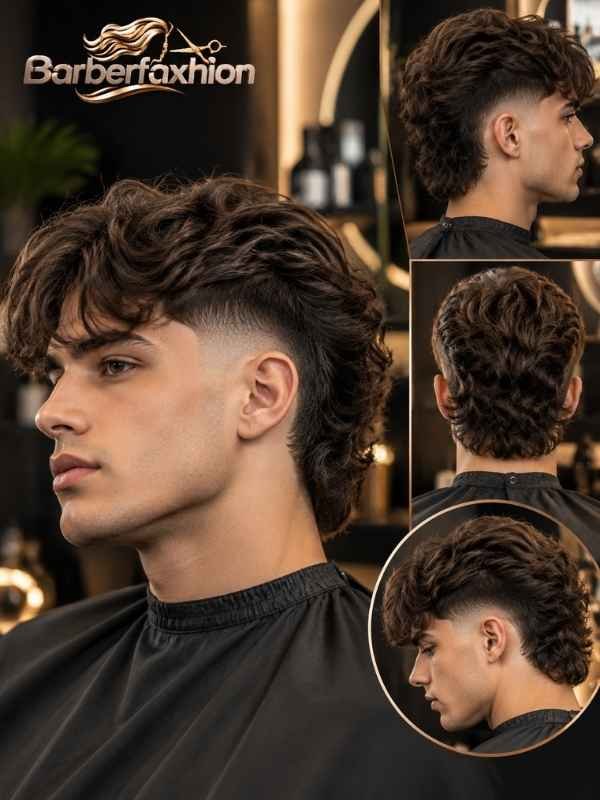
This is the more conservative cousin of the burst fade mullet. Instead of fading down to the skin, a gradual taper shortens the hair around the ears and neckline, creating a softer transition that works in almost any setting.
It’s a strong pick for guys who like modern barbering but want to skip the high contrast of a skin fade. Because the taper is less severe, it also holds up longer between visits.
Best For: A subtler take on the mullet. Face Shapes: Oval, Square, Round. Hair Types: Straight, Thick, Wavy. Maintenance: Every 4–5 weeks. Styling Products: Matte styling cream. Barber Tip: Ask for a natural taper instead of a sharp disconnect. Common Mistake: Taking the taper too high.
Pros
- Office-friendly
- Smooth, forgiving grow-out
- Simple to maintain
- Clean, understated finish
Cons
- Less dramatic than skin-fade versions
17. Razor Textured Low Burst Fade Mullet
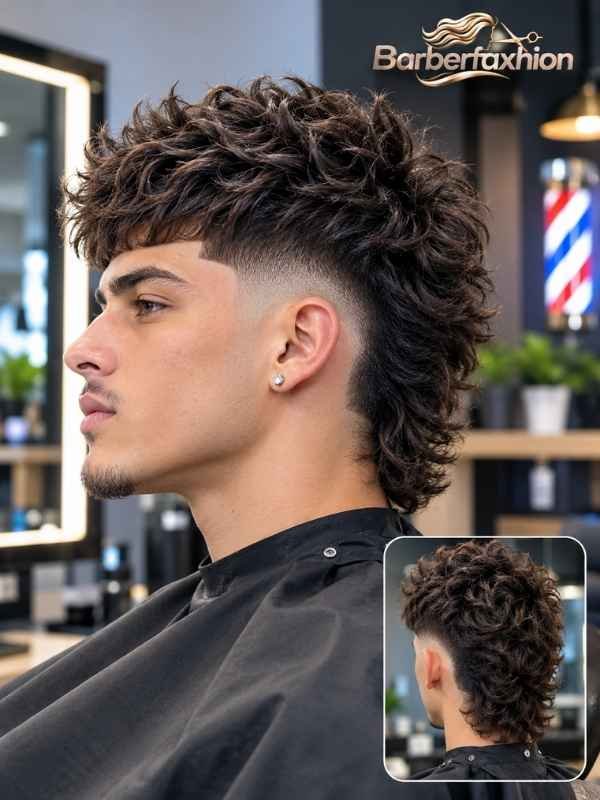
Razor cutting instead of scissors gives this version lighter, softer ends that separate naturally, creating movement without leaning on heavy product. The result is a lived-in finish that’s especially popular with younger guys.
Every layer moves a little independently here, so the cut looks dynamic whether you’re indoors or out. Combined with a low burst fade, it strikes a nice balance between sharp barbering and relaxed styling.
Best For: Maximum texture. Face Shapes: Oval, Diamond, Heart. Hair Types: Straight, Wavy. Maintenance: Every 4 weeks. Styling Products: Sea salt spray and matte paste. Barber Tip: Razor texturing works best on healthy, undamaged hair. Common Mistake: Over-texturizing hair that’s already fine.
Pros
- Excellent natural movement
- Modern, dynamic look
- Lightweight finish
- Easy day-to-day styling
Cons
- Dry hair may need extra conditioning
18. Modern Business Low Burst Fade Mullet
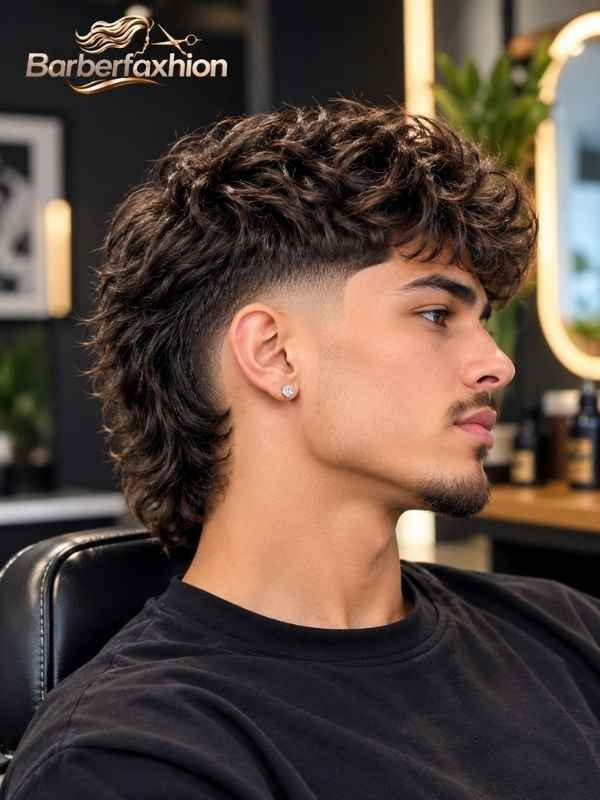
A mullet doesn’t have to be loud. This version dials back the dramatic elements while keeping the personality intact — the back stays controlled, the fade stays low, and the top gets a neat texture that fits comfortably into professional settings.
It’s a growing favorite among men who want a stylish haircut without sacrificing workplace polish. Sharp enough for the office, relaxed enough for the weekend.
Best For: Professionals who still want personality. Face Shapes: Oval, Square, Heart. Hair Types: Straight, Wavy. Maintenance: Every 4–5 weeks. Styling Products: Matte styling cream. Barber Tip: Keep the back shorter than more fashion-forward mullet versions. Common Mistake: Letting it grow too long for a professional setting.
Pros
- Workplace appropriate
- Timeless, smart look
- Easy to style
- Polished without feeling boring
Cons
- Less noticeable than longer, bolder mullets
19. Low Burst Fade Mullet with Design
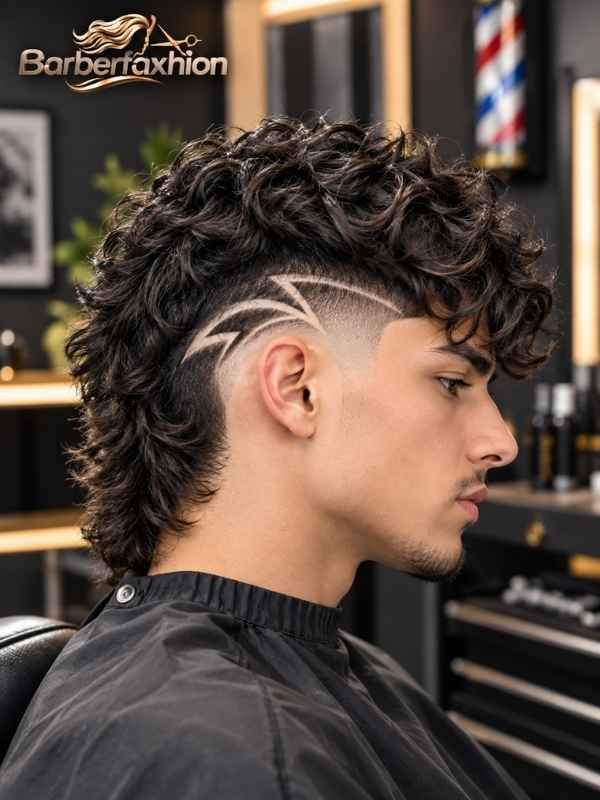
For guys who like a signature touch, adding a shaved line or subtle pattern around the burst fade makes this cut unmistakably yours. Simple designs work best here — anything overly detailed tends to be harder to maintain and can distract from the haircut itself.
This one’s especially popular with younger men who like using their hair as a form of self-expression.
Best For: Personalized style. Face Shapes: All face shapes. Hair Types: Straight, Thick, Wavy. Maintenance: Every 2–3 weeks. Styling Products: Matte clay. Barber Tip: Choose a subtle design that grows out gracefully. Common Mistake: Picking an overly detailed pattern that needs constant upkeep.
Pros
- Unique, personal look
- Great conversation starter
- Modern barbering detail
- Fully customizable
Cons
- Designs fade quickly and need frequent touch-ups
20. Contemporary Low Burst Fade Mullet
This is the “build it around you” version. Instead of following one fixed formula, it adapts to your face shape, hair texture, and daily routine, giving you a cut tailored specifically to how you actually live.
A skilled barber adjusts the fade height, crown texture, neckline, and back length to get the most flattering result rather than copying a look off someone else’s head. That flexibility is exactly why it keeps showing up across social media and barbershops alike.
Best For: A fully customized modern cut. Face Shapes: All face shapes. Hair Types: Straight, Wavy, Curly, Thick, Fine. Maintenance: Every 4–5 weeks. Styling Products: Matte clay, texture powder, or styling cream. Barber Tip: Build the cut around your natural growth pattern, not a trend. Common Mistake: Copying a reference photo without considering your own hair type.
Pros
- Highly versatile
- Personalized to you
- Easy to adapt over time
- Modern and stylish
Cons
- Best results depend on an experienced barber
21. Low Burst Fade Mullet with Undercut
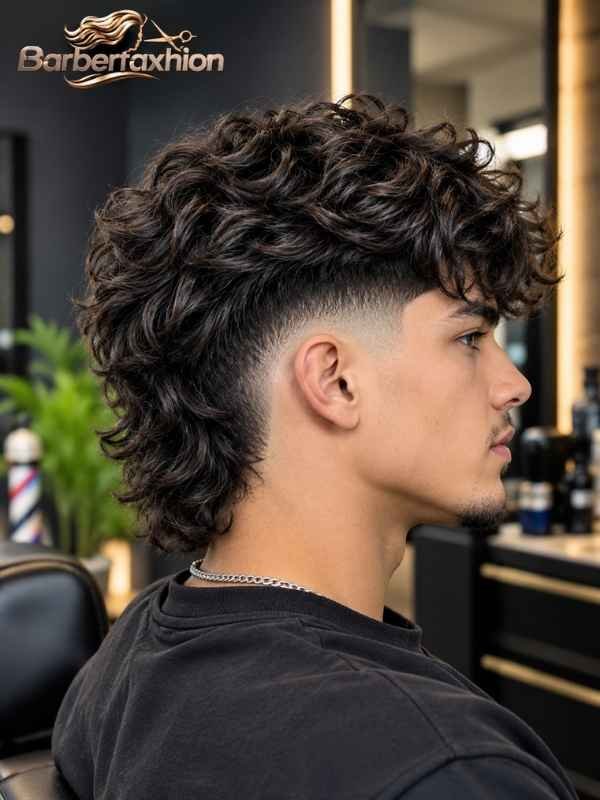
This one pushes contrast further than most versions on this list. Instead of a gradual fade, the sides are cut down close to an undercut, while the back retains noticeable mullet length — the low burst still softens the transition zone so it doesn’t look like two mismatched haircuts stitched together.
It’s a strong choice if you want more visual impact without going all the way to a skin fade.
Best For: Guys who want extra contrast without a full skin fade. Face Shapes: Oval, Square, Diamond. Hair Types: Straight, Thick, Wavy. Maintenance: Every 3–4 weeks. Styling Products: Matte paste or pomade. Barber Tip: Ask for the low burst blend kept soft where it meets the undercut so the transition looks intentional. Common Mistake: Letting the undercut grow out unevenly before the mullet length catches up.
Pros
- Bolder contrast than standard versions
- Still wearable in most settings
- Distinct, modern silhouette
- Pairs well with thick hair
Cons
- Needs more frequent trims to stay sharp
22. Low Burst Fade Mullet for Black Men
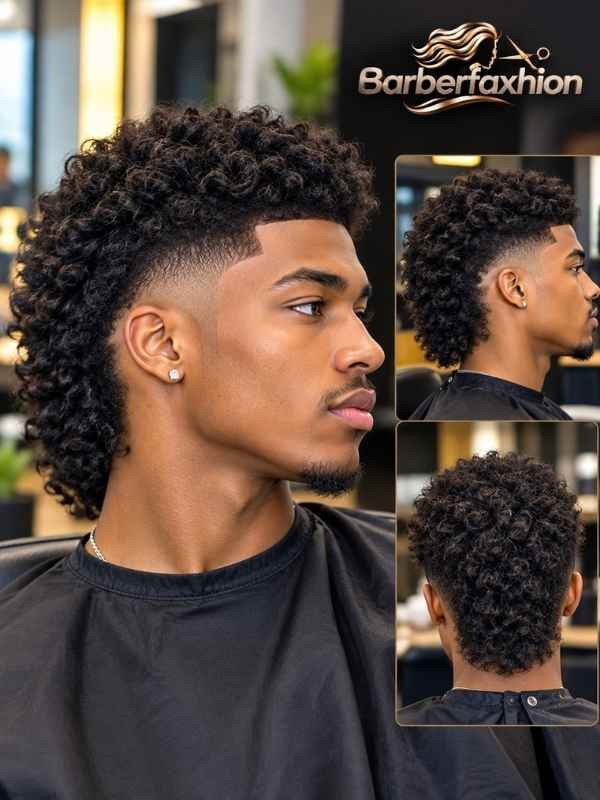
On coily and tightly curled hair, the low burst fade mullet works a little differently — the fade line gives clean definition at the edges while the top and back keep their natural volume and shape. Instead of fighting the curl pattern, a barber experienced with textured hair will cut with it, so the length at the back holds its shape rather than shrinking flat.
Hydration matters more here than in almost any other version, since coily hair loses moisture faster and needs consistent care to keep curl definition looking sharp between visits.
Best For: Coily and tightly curled hair textures. Face Shapes: Oval, Square, Heart. Hair Types: Coily, Curly. Maintenance: Every 4–5 weeks. Styling Products: Curl cream, leave-in conditioner, and light oil. Barber Tip: Ask for the fade line defined with care around natural growth patterns, since coily hair can hide the shape until it’s dry. Common Mistake: Skipping regular moisture, which leaves curls looking dull and undefined.
Pros
- Strong natural volume
- Clean, defined edges
- Great texture with minimal product
- Distinct, confident silhouette
Cons
- Requires consistent hydration to stay sharp
23. Burst Fade Mullet with French Crop
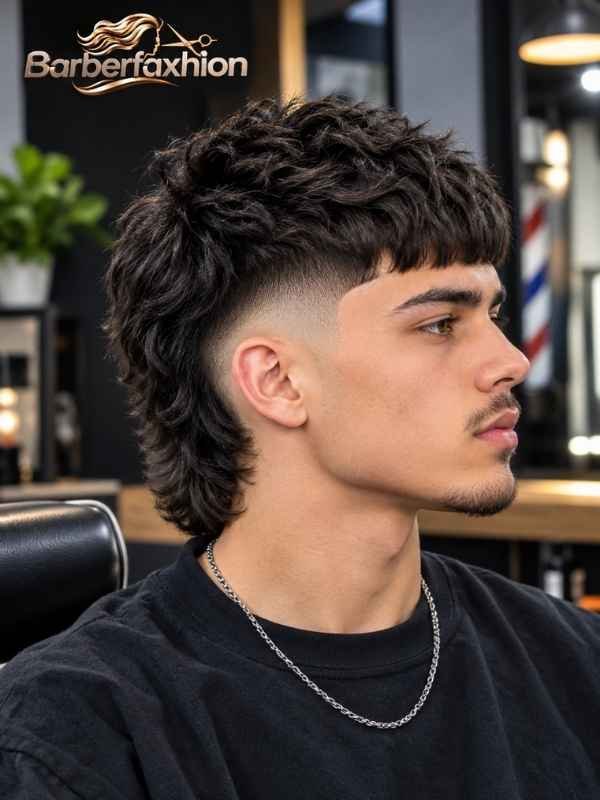
The French crop’s signature blunt fringe adds a completely different energy to this cut. Short, textured hair on top with a straight-across fringe pairs with the low burst fade at the sides, while length is kept at the back for the mullet element — giving you a cut that reads as tidy from the front and unexpected from behind.
It’s a strong option if you want a hairstyle that photographs differently depending on the angle.
Best For: A two-sided look — neat up front, bold in back. Face Shapes: Oval, Square, Round. Hair Types: Straight, Thick. Maintenance: Every 4 weeks. Styling Products: Matte clay or texture paste. Barber Tip: Ask for the fringe kept blunt and the back length layered separately, not cut to match. Common Mistake: Letting the fringe grow out unevenly with the rest of the cut.
Pros
- Distinctive front-to-back contrast
- Low daily styling effort
- Works well with thicker hair
- Stands out without a design or shaved line
Cons
- Fringe needs frequent trims to stay sharp
24. Low Burst Fade Mullet with V-Cut
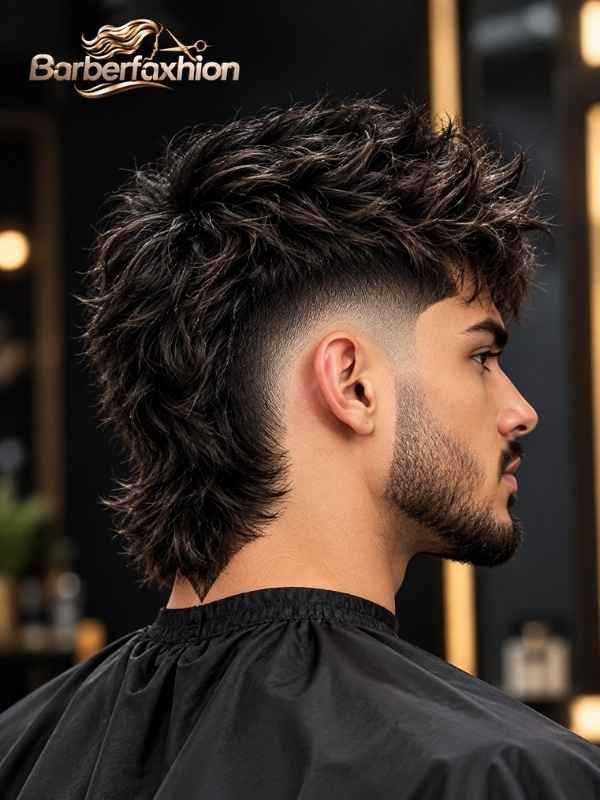
Instead of a straight neckline, this version shapes the bottom of the back section into a soft “V” point. It’s a small detail, but it changes how the length reads — more deliberate, less like hair that simply grew out.
The V-cut pairs especially well with straight or slightly wavy hair, where the point stays visible and defined rather than getting lost in texture.
Best For: A refined finishing touch on longer back sections. Face Shapes: Oval, Diamond, Heart. Hair Types: Straight, Wavy. Maintenance: Every 5 weeks. Styling Products: Leave-in cream or light matte paste. Barber Tip: Ask your barber to point-cut the V by hand rather than a straight blunt cut for a more natural taper. Common Mistake: Cutting the V too sharp, which can look unnatural as it grows out.
Pros
- Adds a refined, custom detail
- Works well on medium-to-long mullets
- Visually distinct from a standard neckline
- Easy to maintain alongside regular trims
Cons
- Needs precise cutting to look intentional rather than accidental
Read This : Classic Taper Haircuts: 60+ Styles, Face Shapes, Hair Types & More
How to Choose the Right Low Burst Fade Mullet for Your Face Shape
Choosing the right version isn’t about copying whatever’s trending on your feed — it’s about matching the cut to your actual face shape and hair texture. Even the best barber can’t make every variation work for every face, which is why this step matters before you sit down in the chair.
Oval Face
Oval faces are the most balanced shape, which means nearly every version on this list works well. If you like experimenting, this is the most flexible face shape to work with.
Recommended Styles: Classic Low Burst Fade Mullet, Contemporary Low Burst Fade Mullet, Modern Low Burst Fade Mullet, Low Burst Fade Mullet with Fringe.
Round Face
Round faces benefit from styles that add height and reduce width around the cheeks. A slightly textured top paired with cleaner sides helps elongate the face visually. Avoid bulky sides, which can widen the appearance further.
Recommended Styles: Textured Low Burst Fade Mullet, Modern Low Burst Fade Mullet, Razor Textured Low Burst Fade Mullet.
Square Face
Strong jawlines suit structured cuts naturally. This haircut highlights masculine features without overwhelming them, and adding texture on top softens the overall look while keeping the sharp edges intact.
Recommended Styles: Classic Low Burst Fade Mullet, Thick Hair Low Burst Fade Mullet, Modern Business Low Burst Fade Mullet.
Heart Face
If you have a wider forehead and a narrower chin, look for styles that balance the lower half of the face. A textured fringe with moderate back length usually produces the best symmetry.
Recommended Styles: Low Burst Fade Mullet with Fringe, Medium-Length Low Burst Fade Mullet, Wavy Low Burst Fade Mullet.
Diamond Face
Diamond faces usually have prominent cheekbones and a narrower forehead. Extra texture around the crown helps soften the angles and bring better overall balance.
Recommended Styles: Long Low Burst Fade Mullet, Contemporary Low Burst Fade Mullet, Curly Low Burst Fade Mullet.
Which Low Burst Fade Mullet Works Best for Your Hair Type?
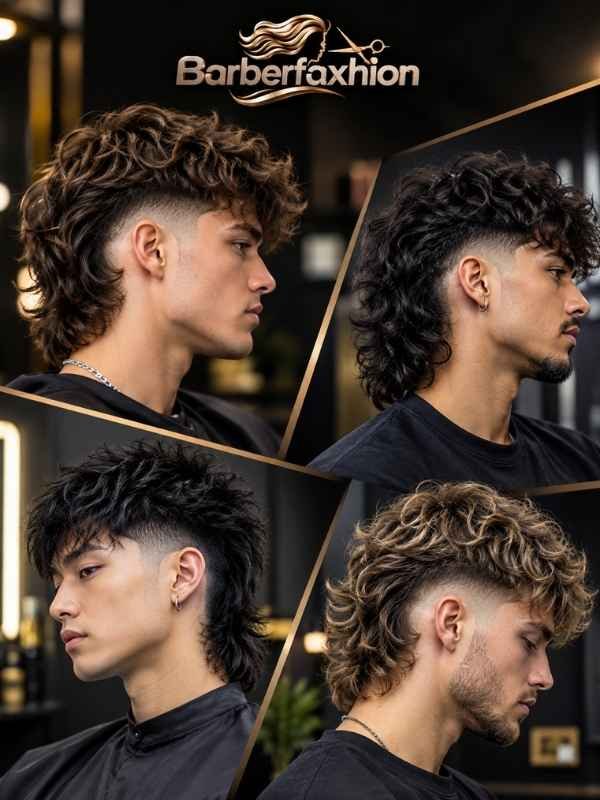
Your natural texture determines how easily this cut styles and how long it holds its shape between visits.
Straight Hair
Straight hair creates sharp, visible lines. Ask for textured layers so the top doesn’t fall flat.
Thick Hair
Dense hair produces excellent volume on its own. Internal layering removes excess bulk while keeping the fullness that makes thick hair look healthy.
Fine Hair
Fine hair does best with lightweight texture and volumizing products. Avoid growing the back out too aggressively, since length alone can make fine hair look thinner.
Wavy Hair
Natural waves bring movement with almost no effort. A sea salt spray usually enhances the texture without stiffening it.
Curly Hair
Curly hair adds outstanding natural volume. Hydration is non-negotiable here — it’s what keeps curl definition looking healthy instead of dry and frizzy.
What Your Barber Needs to Know about Low Burst Fade Mullets
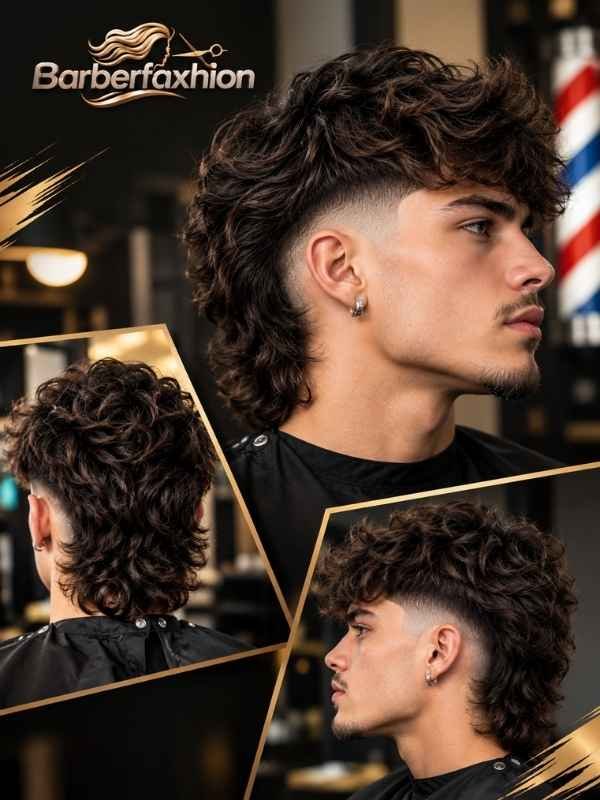
Every barber has a slightly different idea of what “low burst fade mullet” means. That’s the single biggest reason men leave the chair disappointed — not bad barbering, just a miscommunication that could’ve been avoided.
Here’s a script you can use word for word:
“I’d like a low burst fade mullet — keep the fade low, starting around the top of my ear, and curve it back instead of running it straight up the side. Leave [length] at the back for the mullet, and keep the top textured rather than one solid length.”
Beyond that opening line, also tell your barber to:
- Keep the burst fade low around the ears
- Maintain natural texture on top
- Leave enough length at the back for real movement
- Blend the crown smoothly into the mullet section
- Avoid taking the fade too high
- Customize the cut to your face shape and hair type
A reference photo helps too — just remember it should guide the cut, not be copied exactly onto a head with different hair texture or growth patterns than the photo.
How a Low Burst Fade Mullet Is Cut: Step-by-Step
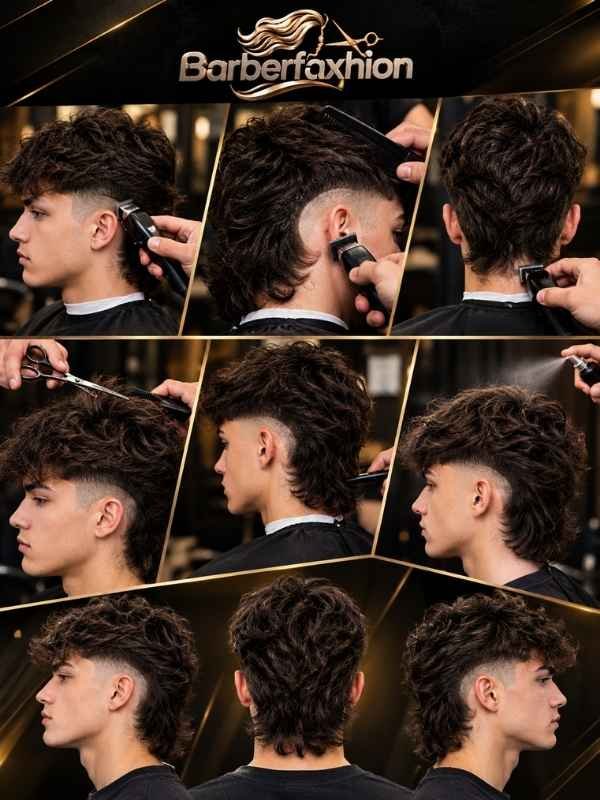
Knowing roughly how the cut comes together makes it easier to spot a rushed job versus a well-executed one.
- Prep and analyze growth patterns. Hair is washed and combed in its natural direction so the barber can see cowlicks and growth patterns before cutting — this matters more here than with a standard fade because the curved burst has to follow the shape of your head.
- Set the fade guideline. The barber establishes the low, curved fade line starting around the ear rather than a straight taper line up the side.
- Blend with multiple guards. Several clipper guard lengths are used in sequence, shortest at the bottom working up, to eliminate any visible line between sections.
- Cut and texture the top. The crown and top are shaped to the chosen style — scissor-over-comb for texture, or clippers-over-comb for a more even length.
- Shape and length the back. The mullet section at the back is cut to the agreed length and layered so it moves naturally instead of hanging in one flat piece.
- Clean the edges. The neckline and hairline get defined with a razor or trimmer, and a beard is blended in the same pass if you have one.
Best Styling Products for a Low Burst Fade Mullet
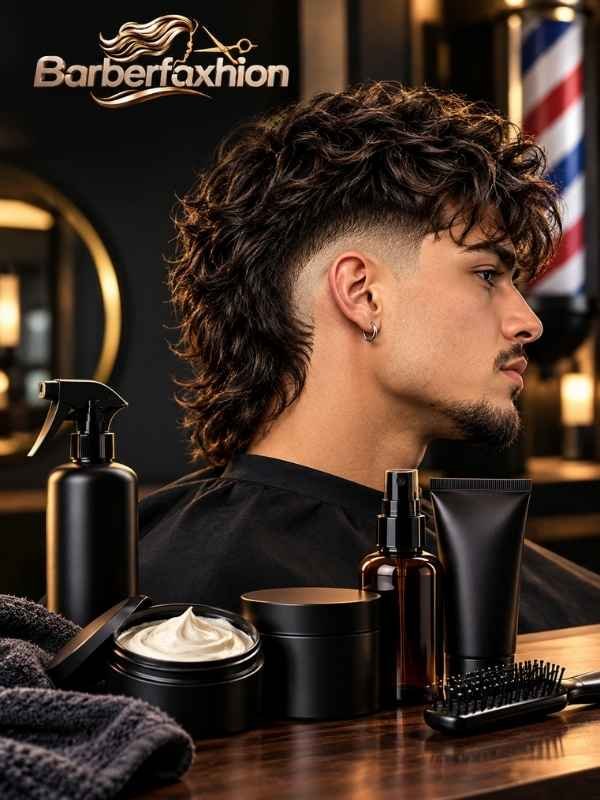
The right product usually matters more than how much of it you use.
Matte Clay
Strong hold with a natural, non-shiny finish. Ideal for textured and messy variations.
Texture Powder
Adds lightweight volume and separation without leaving hair greasy.
Sea Salt Spray
A go-to for wavy hair and relaxed, natural movement.
Matte Styling Paste
Gives flexible hold while keeping the finish soft rather than stiff.
Curl Cream
Keeps curls hydrated, defined, and free from excess frizz.
Leave-In Conditioner
Best for longer mullets that need extra moisture to stay manageable.
Weekly Maintenance Routine
A simple weekly rhythm keeps this haircut looking sharp far longer than winging it does.
Daily
- Style with minimal product
- Avoid touching your hair constantly through the day
- Wash only when actually needed
Two to Three Times Per Week
- Shampoo according to your hair type
- Condition thoroughly
- Add texture-enhancing product after towel drying
Every Week
- Trim the neckline if it’s getting shaggy
- Moisturize curly or longer sections
- Clean built-up product from the scalp
Every Four to Five Weeks
- See your barber
- Refresh the burst fade
- Remove split ends
- Restore texture through the top
Growing Out Your Low Burst Fade Mullet
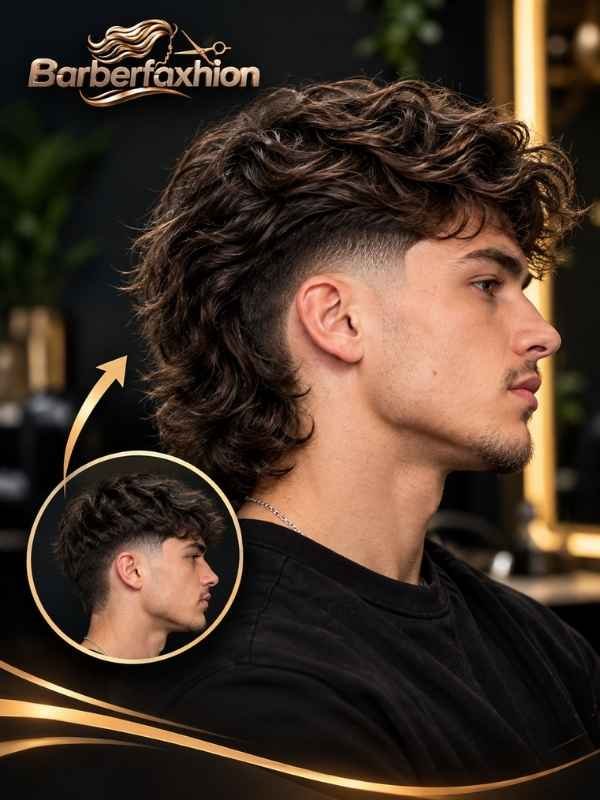
Because a mullet is built around length contrast, growing it out is part of the plan rather than a mistake to avoid. The trick is keeping the fade maintained even while the back keeps growing — that’s what stops the cut from looking like it’s simply overdue for a trim.
Most guys ask their barber to keep refreshing the fade every 4–5 weeks while leaving the back section untouched or only lightly trimmed for split ends. This keeps the sides looking deliberate while the back builds toward whatever length you’re aiming for. If the top starts feeling heavy before the back catches up, ask for internal layering rather than an overall length cut — it removes bulk without shortening the length you’re trying to grow.
Talk to your barber about your target length upfront. A cut planned around a six-month growing goal looks different at each stage than one that’s just being trimmed reactively.
Common Mistakes to Avoid
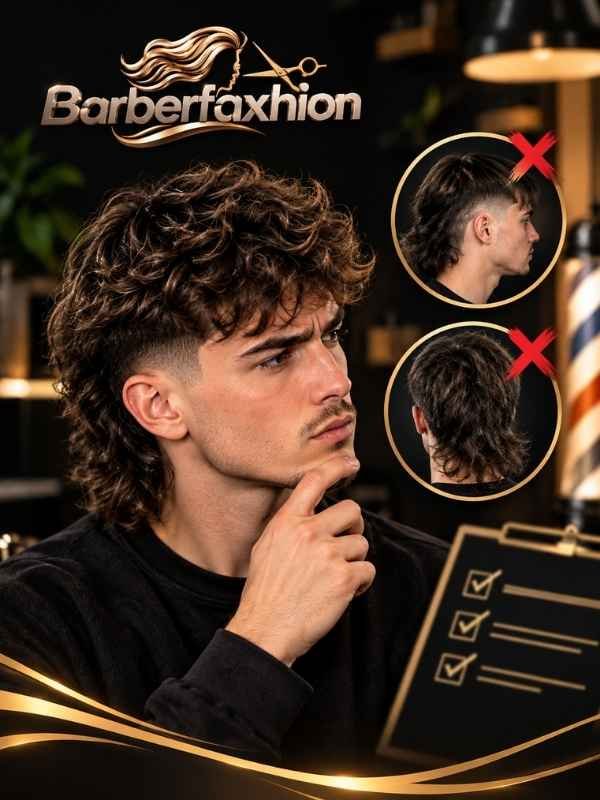
Even a great cut can look disappointing if it’s maintained the wrong way.
- Choosing a variation that doesn’t suit your face shape
- Growing the back out while neglecting the crown
- Using too much styling product
- Skipping regular barber appointments
- Brushing textured hair flat
- Using shiny pomades that hide natural texture
- Letting curly or coily sections dry out
- Copying a photo without accounting for your own hair type
- Letting the fade grow out unevenly while chasing back length
Frequently Asked Questions
Is a low burst fade mullet suitable for professional workplaces?
Yes. More conservative versions like the Modern Business Low Burst Fade Mullet or Classic Low Burst Fade Mullet work well in most professional settings.
How often should I get a trim?
Every four to five weeks keeps the fade sharp and the mullet shape holding up properly.
Does this haircut work with curly or coily hair?
Yes. Curly and coily hair adds volume and texture naturally, making it one of the better hair types for this cut when it’s cut with the curl pattern in mind.
Is the low burst fade mullet difficult to style?
No. Most versions only need a few minutes with a matte product or texture spray.
What’s the difference between a low burst fade mullet and a regular taper mullet?
The fade shape is different. A taper mullet fades in a straight line down the side, while a low burst fade mullet curves the fade around the ear before blending into the mullet length at the back.
Final Thoughts
The low burst fade mullet has grown into something well beyond a passing trend. Today’s versions combine precise barbering, natural texture, and personalized styling to fit a wide range of face shapes, hair textures, and everyday routines — whether you want something office-appropriate or a bolder statement at the back.
The goal isn’t picking the boldest version you can find. It’s choosing the one that fits your hair, suits your face shape, and matches how much time you’re actually willing to spend on it each morning. Bring a reference photo, be specific with your barber about fade placement and back length, and keep up with regular trims — that combination is what keeps this haircut looking sharp long after you leave the chair.