
Getting a low taper can sound simple until you sit in the barber’s chair and realize there are dozens of ways to finish it. A soft, natural taper can look completely different from a sharp lineup with an Edgar-style top, even when both start with the same basic fade.
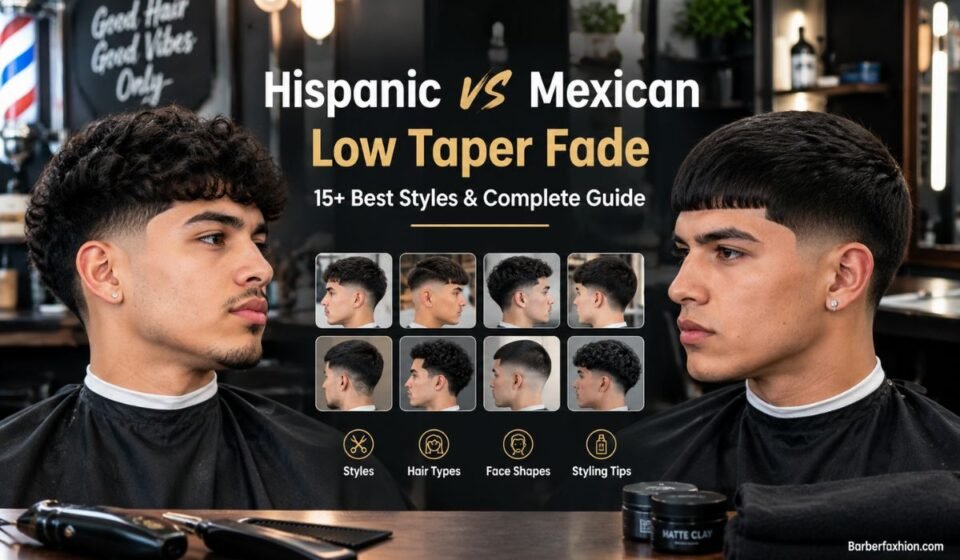
If you’re comparing a Hispanic vs Mexican low taper fade, the difference isn’t really about two completely separate haircut techniques. It’s more about the overall finish, top hairstyle, hairline, texture, and how defined you want the cut to look. This guide breaks down the difference and shows you 15+ styles you can actually take to your barber.
Quick answer: A Hispanic low taper often refers to a softer, natural-looking taper with blended edges, while a Mexican low taper is commonly associated with a sharper lineup, stronger definition, and styles such as the Edgar. However, these aren’t strict technical or ethnic haircut categories. Your hair texture, face shape, hairline, and personal preference matter more than the label.
What Is a Low Taper Fade?
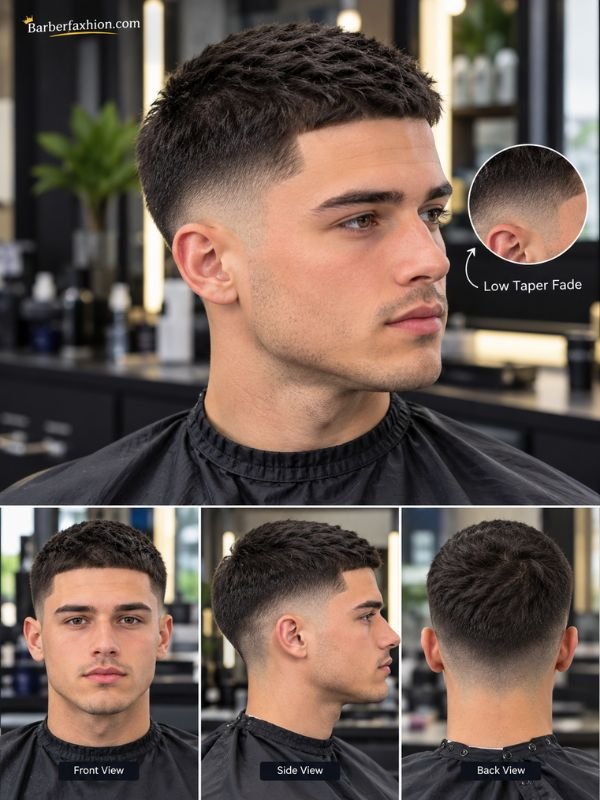
A low taper gradually reduces the hair around the temples and neckline while keeping most of the sides and back relatively full. Unlike a high fade, the transition stays low and doesn’t climb far up the head.
That’s why the haircut is so versatile. You can leave the top short, textured, curly, wavy, or several inches long. The taper simply cleans up the edges while allowing your main hairstyle to remain the focus.
A low taper also gives you more control over how dramatic the haircut looks. Leaving some weight around the sides creates a softer appearance, while taking the blend tighter and adding a crisp lineup produces more contrast.
For many Hispanic and Mexican-inspired men’s hairstyles, this balance works especially well because the top can carry plenty of personality without making the sides look overly bare.
Hispanic vs Mexican Low Taper Fade: What’s the Difference?
When people search for Hispanic vs Mexican low taper fade, they’re usually trying to compare two popular aesthetics rather than two officially different barbering techniques.
“Hispanic” describes a broad cultural and linguistic identity, while Mexican refers specifically to people or styles associated with Mexico. Neither term automatically determines how someone’s hair should be cut.
In haircut discussions, however, the terms are often used to describe different styling tendencies. A Hispanic-inspired look may lean toward a natural taper and textured finish, while a Mexican-inspired look is often associated with sharper edges, stronger contrast, an Edgar, or a more defined top.
Hispanic Low Taper Fade
A Hispanic low taper fade usually emphasizes a clean but natural finish. The taper stays low around the temples and neckline, while the top is allowed to keep its texture, movement, or volume.
The hairline doesn’t necessarily need an extremely sharp edge. A slightly softer finish can make the haircut look more relaxed and easier to wear every day.
This approach works particularly well with textured crops, curls, waves, messy tops, fringe, and medium-length hairstyles.
Mexican Taper Fade
A Mexican taper fade often has a more defined appearance. Sharp temple work, a clean lineup, strong top texture, and styles such as the Edgar are common combinations.
That doesn’t mean every Mexican man’s haircut looks this way. It’s simply a popular styling direction seen in modern Mexican and Latino men’s grooming.
If you like a haircut that looks freshly detailed after leaving the barbershop, this sharper approach may be more appealing.
Hispanic vs Mexican Low Taper Fade Comparison
| Feature | Hispanic-Inspired Look | Mexican-Inspired Look |
| Taper | Low and blended | Low and defined |
| Hairline | Natural to clean | Often sharper |
| Top | Textured, curly, wavy or natural | Often structured or heavily textured |
| Contrast | Moderate | Moderate to high |
| Edgar | Optional | Very common combination |
| Beard | Natural or blended | Often paired with defined facial hair |
| Maintenance | Generally easier | May need more frequent edge-ups |
| Overall vibe | Relaxed and versatile | Sharp and statement-making |
The most important takeaway is that hispanic vs mexican low taper fade shouldn’t be treated as a strict rulebook. You can mix elements from both aesthetics and create a haircut that fits you better.
15+ Best Hispanic and Mexican Low Taper Fade Styles
If you’re looking for inspiration, these styles cover different lengths, textures, and levels of definition. The taper can stay similar while the top completely changes the personality of the haircut.
1. Classic Hispanic Low Taper Fade
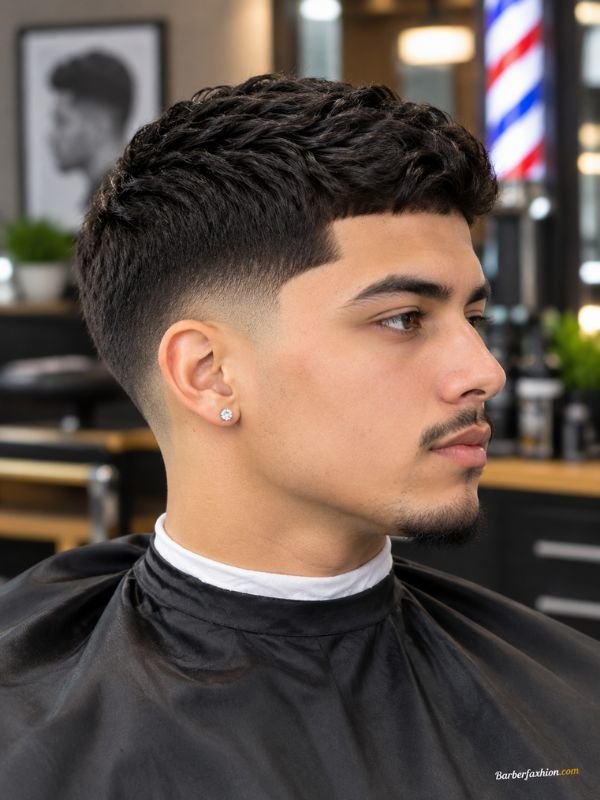
The classic version keeps the taper subtle around the temples and neckline. The top remains natural with enough length to create texture and movement.
It’s a great everyday option if you want something clean without looking like you spend an hour styling your hair.
2. Sharp Mexican Low Taper Fade With Lineup
This version adds a crisp front hairline to a low taper. The edges are clearly defined, giving the haircut a freshly detailed appearance.
It’s especially effective with thick straight hair because the strong hairline contrasts nicely with the tapered sides.
3. Low Taper Fade Edgar
The Edgar is one of the most recognizable combinations with a Mexican-inspired taper. It typically features a short, textured top and a distinctive straight or slightly curved fringe.
Keep the front crisp if you want a bold appearance. For a softer result, ask your barber to reduce the harshness of the fringe and keep the taper natural.
4. Textured Top With Low Taper
A textured top adds separation and movement while the taper keeps the sides tidy. This is an excellent middle ground if you don’t want either an extremely conservative or highly dramatic haircut.
A matte styling product usually works better than a glossy pomade because it keeps the texture visible.
5. Curly Top With Low Taper
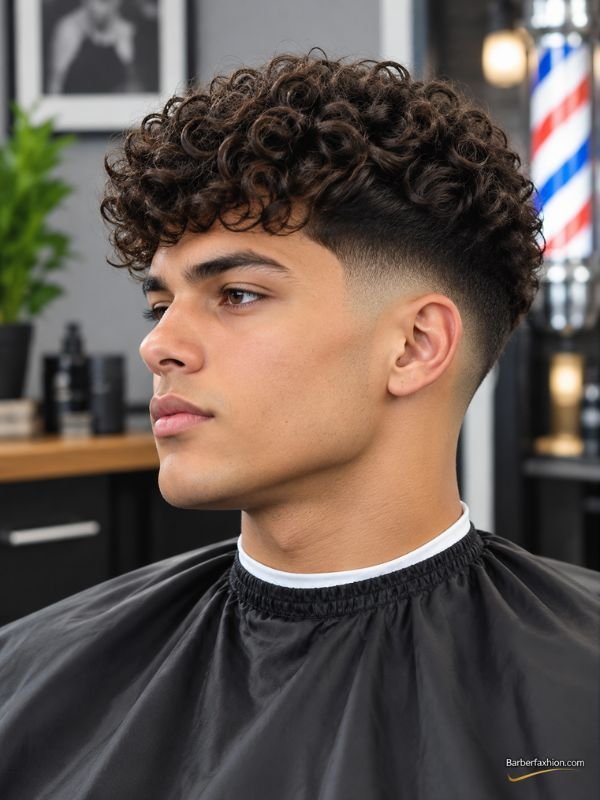
Curly hair can look excellent with a low taper because the curls remain prominent on top while the sides and neckline look cleaner.
Ask your barber to preserve enough length for your curls to form properly. Cutting curly hair too short can remove the shape that makes the hairstyle interesting.
6. Wavy Low Taper Fade
Wavy hair gives a low taper a naturally textured appearance. Leave enough length on top for the waves to move instead of forcing them into a rigid shape.
A light cream or curl-enhancing product can help control frizz while keeping the waves relaxed.
7. Low Taper With Fringe
A fringe changes the proportions of the haircut by bringing attention toward the forehead. You can wear it short and structured or longer and messier.
This style works especially well when the taper stays subtle. The contrast between the natural fringe and clean sides creates an effortless look.
8. Low Taper With Long Top
If you aren’t ready to sacrifice your length, keep the top significantly longer and use the taper only around the edges.
You can style the top forward, backward, sideways, or leave it loose. It’s one of the easiest ways to transition from longer hair into a cleaner haircut.
9. Slick Back Low Taper
A slick back gives the low taper a more polished appearance. Keep the sides low and controlled while directing the top toward the back.
This combination works best when your hair has enough length and density to stay swept backward without constantly falling forward.
10. Low Taper Fade With Beard
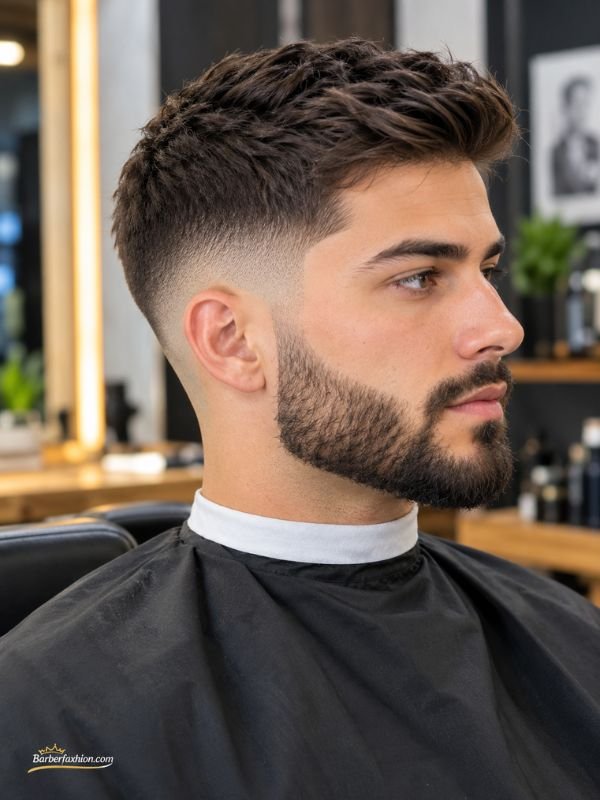
Connecting the taper naturally into a beard can make the entire haircut look more intentional. The key is avoiding an awkward jump between the sideburn and facial hair.
Ask your barber to blend the transition rather than simply creating a hard separation.
11. Low Taper With Hard Part
A hard part introduces a defined line through the top or side of the hairstyle. It creates more structure than a traditional natural part.
Because the part itself is attention-grabbing, keep the rest of the haircut balanced. Too many sharp details can make the overall style look unnecessarily busy.
12. Low Taper Buzz Cut
A buzz cut with a low taper is one of the easiest options to maintain. The short top keeps the haircut practical while the taper adds shape around the edges.
It’s especially useful if you want a clean appearance without dealing with daily styling.
13. Low Taper Middle Part
A middle part gives the haircut a modern, slightly retro personality. The top stays longer while the low taper removes unnecessary bulk around the temples and neckline.
This option works particularly well with straight or wavy hair that naturally separates down the middle.
14. Low Taper Mullet
A low taper mullet keeps the sides controlled while allowing extra length toward the back. The result can range from subtle to heavily textured.
For a more modern version, combine the taper with a messy top and a controlled neckline rather than creating an extreme contrast.
15. Low Taper With Messy Textured Hair
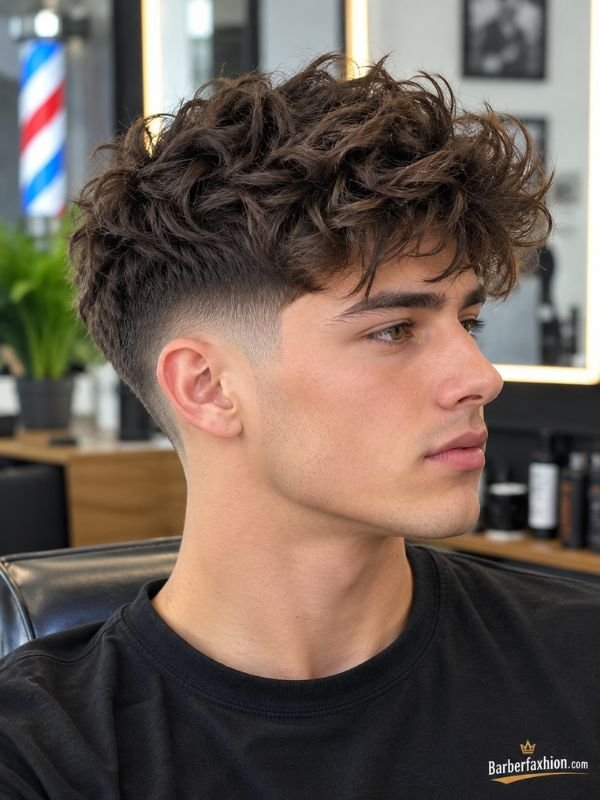
Messy texture makes the haircut feel casual and youthful. The taper provides enough structure to stop the hairstyle from looking unkempt.
Use your fingers instead of a comb when styling if you want a more natural finish.
16. Low Taper With Thick Straight Hair
Thick straight hair provides plenty of options. You can create an Edgar, textured crop, fringe, slick back, or simply leave the top naturally full.
The main challenge is managing bulk. Your barber may need to remove some weight from the top or sides without making the taper climb too high.
17. Low Taper With Design or Detailed Lineup
If you want something more noticeable, add a subtle design near the temple or a carefully shaped lineup.
Don’t overdo the details. One clean design can look intentional, while several competing lines can distract from the actual haircut.
Which Low Taper Fade Fits Your Hair Type?
Your hair texture should influence the haircut more than the label attached to it. The best version is the one that works with how your hair naturally grows.
Straight Hair
Straight hair makes sharp lines and structured tops easy to see. An Edgar, textured crop, middle part, slick back, or classic taper can all work.
If your hair is very fine, avoid removing too much density from the top. Keeping some fullness can make the hairstyle appear thicker.
Wavy Hair
Wavy hair naturally creates movement, so you don’t need an overly complicated haircut. A low taper with a textured or medium-length top can highlight your natural pattern.
Ask your barber to avoid cutting away too much length if your waves need extra weight to form properly.
Curly Hair
A low taper fade curly hair combination gives you clean edges without removing the curls that define the style.
Keep the top long enough for your curl pattern to remain visible. You can also ask for a cleaner temple and neckline while leaving the curls untouched on top.
Thick and Coarse Hair
Thick or coarse hair can hold structured styles extremely well. The challenge is controlling excess bulk.
A low taper can remove visual heaviness around the edges while keeping the top substantial. Textured crops, Edgar styles, curls, and messy tops are all strong options.
Fine or Thin Hair
Fine hair usually benefits from a softer taper and a top that creates the illusion of density. Heavy thinning can make the hair look even flatter.
A textured crop, short fringe, or slightly messy top can add visual fullness without requiring a complicated styling routine.
Which Style Works Best for Your Face Shape?
Your face shape doesn’t dictate one haircut, but it can help you decide how much height, width, or fringe you want.
Round Face
A little height on top can visually lengthen a round face. Avoid creating excessive width around the sides.
A low taper is useful here because it cleans the lower sides without immediately removing all the natural structure around the head.
Oval Face
Oval faces are highly flexible. You can experiment with textured crops, fringe, slick backs, middle parts, curls, or an Edgar.
The main goal is choosing a top style you genuinely like rather than trying to correct proportions that already work well.
Square Face
Square faces already have strong angles, so a defined lineup can emphasize that structure. A sharp Mexican-style taper can create a particularly bold result.
If you prefer something less intense, soften the hairline and leave more natural texture on top.
Oblong or Long Face
Longer faces can benefit from hairstyles that don’t add excessive height. A textured fringe or medium-length top can help balance the overall shape.
Keep the taper low and avoid making the top extremely tall.
Heart and Diamond Face
For heart and diamond shapes, consider how the top and sides balance the narrower areas of the face. Texture and moderate volume can work better than an extremely tight haircut.
A barber can adjust the amount of side weight according to your specific hairline and facial proportions.
Low Taper vs Low Fade vs Mid Taper vs Skin Fade
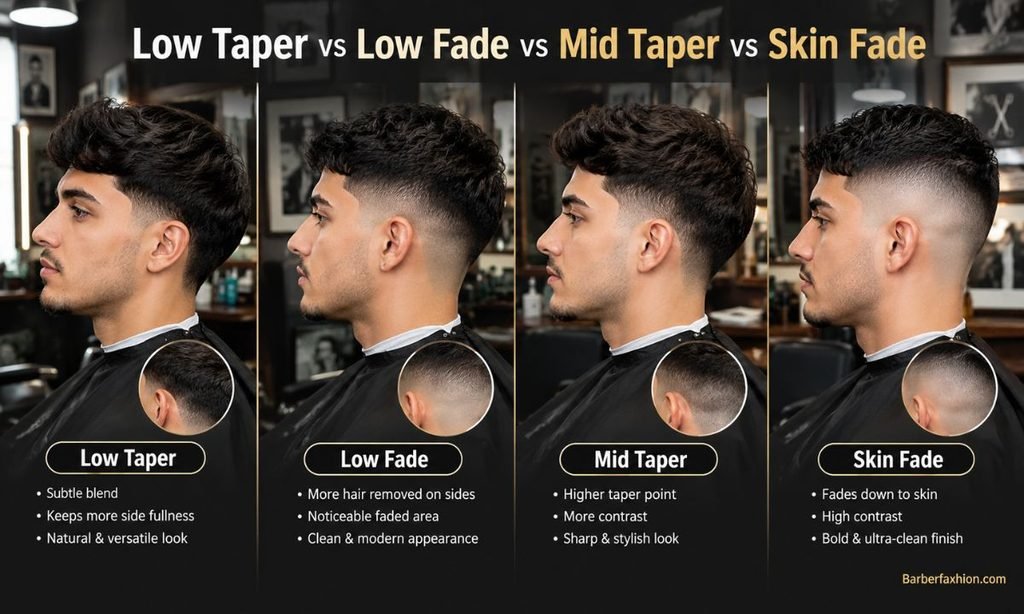
These names sound similar, but the placement and finish can change the result significantly.
Low Taper Fade vs Low Fade
A low taper usually focuses on the temples and neckline, leaving more hair around the sides. A low fade generally removes more hair from the sides and creates a broader faded area.
Choose the taper if you want to preserve more fullness. Choose the low fade if you want a cleaner and more noticeable transition.
Low Taper vs Burst Fade
A burst fade curves around the ear and creates a rounded faded area. It’s frequently paired with mohawks, mullets, textured tops, and other statement hairstyles.
A low taper is more understated. If you want the sides to remain relatively full, the taper is usually the safer choice.
Low Taper vs Mid Taper Fade
A mid taper starts higher around the sides and temples, creating more visible contrast.
A low taper leaves more of the natural side shape intact. A mid taper is better if you want a stronger transition without going all the way to a high taper.
Low Taper vs Skin Fade
A skin fade takes the shortest section down to the skin before gradually increasing in length. It creates a much stronger contrast than a traditional low taper.
If you’re after a softer, more versatile appearance, stick with the low taper. If you want maximum contrast and a very clean finish, the skin fade is more dramatic.
High Taper Fade
A high taper removes more hair higher around the temples and neckline. It creates a more noticeable change in shape.
It’s worth considering if you like the taper concept but want something more prominent than a traditional low taper.
How to Choose Between a Hispanic and Mexican Low Taper
The easiest way to choose is to stop thinking about the labels and focus on the finish you want.
Choose a Softer, More Natural Finish If…
Go for a softer Hispanic-inspired approach if you:
- Prefer natural-looking edges
- Want more side fullness
- Like textured or messy hairstyles
- Don’t want frequent lineups
- Prefer a versatile everyday haircut
- Want your natural texture to stand out
This approach is especially useful if you want a haircut that still looks decent as it grows out.
Choose a Sharper, More Defined Finish If…
A sharper Mexican-inspired approach may suit you if you:
- Love crisp hairlines
- Want a more noticeable barber finish
- Like Edgar or structured styles
- Have thick hair
- Enjoy defined facial hair
- Don’t mind regular touch-ups
The finished result tends to look especially fresh immediately after a professional lineup.
Consider Your Top Hairstyle and Hairline
Your top hairstyle should be part of the decision. An Edgar and a curly top don’t need exactly the same taper treatment.
Your natural hairline matters too. If your front hairline is uneven, your barber may recommend a slightly softer finish rather than forcing an artificial straight line.
The best hispanic vs mexican low taper fade choice is therefore the one that matches your natural features and the amount of maintenance you’re willing to do.
What to Tell Your Barber
A reference photo is helpful, but don’t rely on the photo alone. Tell your barber exactly what you want changed.
What to Ask for a Natural Low Taper
You can say:
“I want a low taper around the temples and neckline. Keep the sides fairly full and blend it softly. I want the hairline natural rather than extremely sharp.”
Then explain how much length you want on top.
What to Ask for a Sharp Low Taper
For a more defined version, say:
“Give me a low taper around the temples and neckline with a clean, sharp lineup. Keep the top textured and make the edges defined without taking the taper too high.”
If you want an Edgar, mention it specifically and show a reference photo.
Details You Should Mention Before the Cut
Tell your barber:
- How much length you want on top
- Whether you want a natural or sharp hairline
- How low you want the taper
- Whether you want the beard connected
- Whether you want a part or fringe
- How much bulk you want removed
- Whether you want a design
- How you normally style your hair
Don’t just say “give me a Mexican taper” and expect the same result from every barber. Those labels can mean different things to different people.
How to Style and Maintain a Low Taper Fade
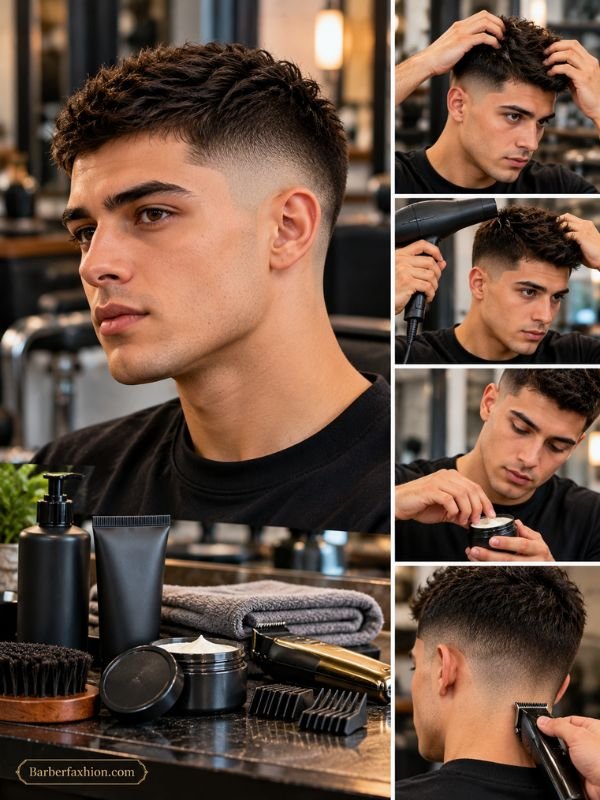
A good haircut still needs basic maintenance. Fortunately, most low tapers don’t require an elaborate routine.
Best Styling Products
Choose the product according to your hair:
- Matte clay: textured and messy styles
- Styling cream: curls and waves
- Light pomade: slick backs and controlled styles
- Texture powder: added volume for fine hair
- Curl cream: defined curly tops
- Light styling paste: flexible everyday looks
Start with a small amount. Adding more product is easy, but removing too much is annoying.
How Often Should You Get a Touch-Up?
Most people can refresh a low taper based on how quickly their hair grows and how clean they want the edges to remain.
A natural taper can often be allowed to grow out longer without looking dramatically different. A sharp lineup usually needs attention sooner because the clean edge becomes less defined as it grows.
If keeping the haircut extremely crisp matters to you, ask your barber about a shorter maintenance schedule.
How to Keep the Hairline and Taper Clean
Wash your hair according to your hair type rather than over-washing it. Use a suitable conditioner if your hair becomes dry, especially if you have curls or coarse texture.
Between barber visits, avoid trying to recreate the taper yourself unless you know exactly what you’re doing. One uneven clipper pass can turn a clean low taper into a repair job.
How Much Does a Hispanic or Mexican Low Taper Fade Cost?
There isn’t one universal price for this haircut. The cost depends on your barber, location, shop, haircut complexity, and whether you add services such as a beard trim, design, or detailed lineup.
A basic low taper will usually cost less than a cut that includes extensive beard work and intricate designs.
The important point is to ask for the complete service price before the haircut if you’re adding multiple details. A reference photo can also help your barber understand exactly what you’re requesting.
FAQs
Is a Hispanic low taper different from a Mexican low taper?
Not technically in a strict barbering sense. Both can use the same low taper foundation, while the finished look may differ through the lineup, top hairstyle, texture, and level of definition.
What is a Mexican low taper fade called?
There isn’t one official technical haircut name. “Mexican low taper” is commonly used online to describe a low taper combined with popular Mexican and Latino men’s styles, often including sharp lineups or an Edgar.
Is a low taper or low fade better?
Neither is automatically better. A low taper keeps more side fullness and usually looks softer, while a low fade creates a more visible faded area.
How long does a low taper fade last?
It depends on your hair growth and how sharp you want the haircut to remain. A natural taper can grow out gracefully, while a crisp lineup generally needs more frequent maintenance.
Can I get a low taper fade with curly or thick hair?
Absolutely. Curly and thick hair can work very well with a low taper. The main consideration is preserving enough top length and texture while controlling excess bulk around the edges.
Conclusion
The hispanic vs mexican low taper fade comparison is really about styling choices rather than two completely different haircuts. A softer taper can give you a natural, relaxed finish, while sharper edges, an Edgar, or stronger texture can create a more defined Mexican-inspired look.
Your hair type, face shape, hairline, top length, and maintenance preference should ultimately make the decision. Bring your barber a clear reference photo, explain whether you want natural or sharp edges, and specify how much length you want to keep. That’s the easiest way to turn a general haircut idea into a result that actually suits you.
Meta Title: Hispanic vs Mexican Low Taper Fade: 15+ Best Styles
Meta Description: Compare Hispanic vs Mexican low taper fade styles, see 15+ modern looks, and learn which cut suits your hair type, face shape, style, and maintenance needs.