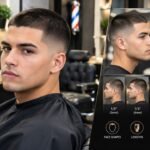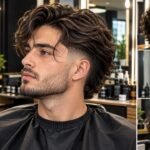
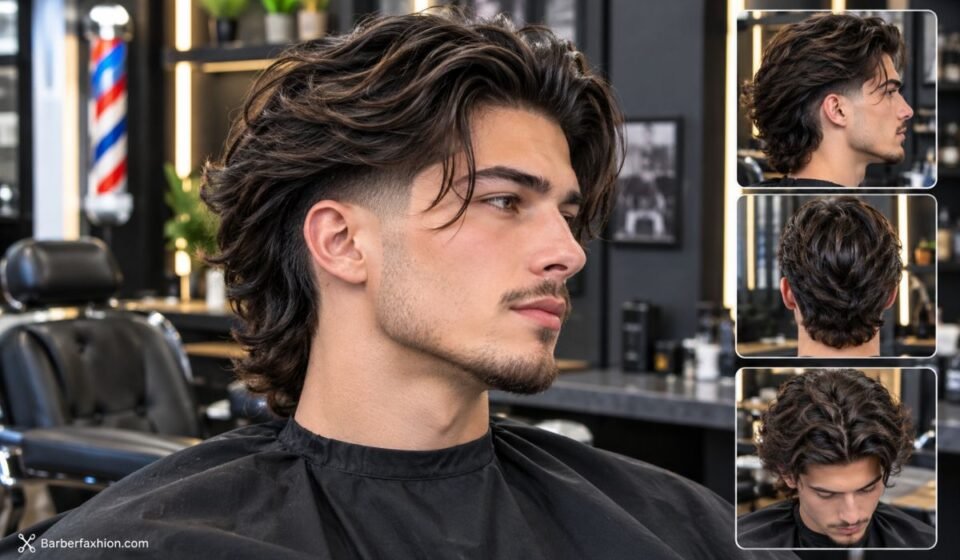

Long hair looks great when it has movement, texture, and personality, but the sides and neckline can sometimes start looking untidy as your hair grows. If you want to keep your length without letting the whole haircut feel unstructured, a low taper fade can be a smart middle ground.
A low taper fade long hair style keeps the main length and character of your hair while cleaning up the areas around the ears, sideburns, and neckline. In this guide, you’ll find 35 style ideas, advice for different face shapes and hair types, barber tips, styling routines, maintenance advice, and comparisons with mid and high tapers.
Quick Answer: A low taper fade with long hair keeps the hair longer through the top while gradually shortening the hair around the lower sideburns, ears, and neckline. It works with straight, wavy, curly, coily, and Afro-textured hair, making it possible to keep a long hairstyle while giving the perimeter a cleaner shape.
What Is a Low Taper Fade with Long Hair?
A low taper fade with long hair combines two different ideas: preserving length and cleaning up the perimeter. The top and often the back remain noticeably longer, while the hair around the sideburns and neckline gradually becomes shorter.
The word “low” refers to where the taper begins. Instead of climbing high toward the temples, the transition stays close to the lower portion of the head. The exact placement can vary slightly depending on your hairline, head shape, and your barber’s technique, so showing a reference photo is often more useful than relying on the haircut name alone.
A long-hair taper can therefore look very different from person to person. One man might wear loose waves past his shoulders, while another might keep a few inches on top and style it into a slick back. The taper is the foundation; the top determines much of the final personality.
How Is a Low Taper Fade Different from a Regular Taper?
The terms “taper” and “fade” are often used interchangeably in everyday barber conversations, but they aren’t always describing exactly the same thing.
A taper generally refers to hair gradually becoming shorter around specific areas such as the sideburns and neckline. A fade describes a blended transition from longer hair toward very short hair, potentially down to the skin depending on the requested finish.
With a low taper fade long hair cut, the important point is that the transition stays low and the long hair remains the main feature. You aren’t asking your barber to remove a large amount of the side panel just because you want cleaner edges.
A traditional taper can also be less dramatic than a skin fade. If you’re unsure what your barber means by “low taper fade,” ask where the transition will begin and how short the lowest section will be.
Where Exactly Does a Low Taper Fade Start?
A low taper normally begins around the lower sideburn and ear area before continuing toward the neckline. The transition should stay relatively low rather than moving high into the temple area.
The exact starting point isn’t identical on every head. A barber needs to consider your natural sideburn, hairline, density, and growth pattern before deciding where the blend should sit.
For long hair, keeping the taper low is especially important if your goal is to preserve a fuller appearance through the sides. A transition that climbs too high can change the overall shape more than you expected.
How Much Hair Length Do You Need for a Low Taper Fade?
There isn’t one universal minimum length that makes a haircut “long hair.” What matters is whether there is enough length for the style you want.
For example, a center part, flow, slick back, or man bun obviously needs different amounts of hair. A barber can also shape longer hair without dramatically reducing its overall length.
If you specifically want a low taper with long hair on top, tell your barber that preserving your top length is a priority. This prevents the conversation from becoming focused only on the taper itself.
Why Is the Low Taper Fade Long Hair So Popular in 2026?
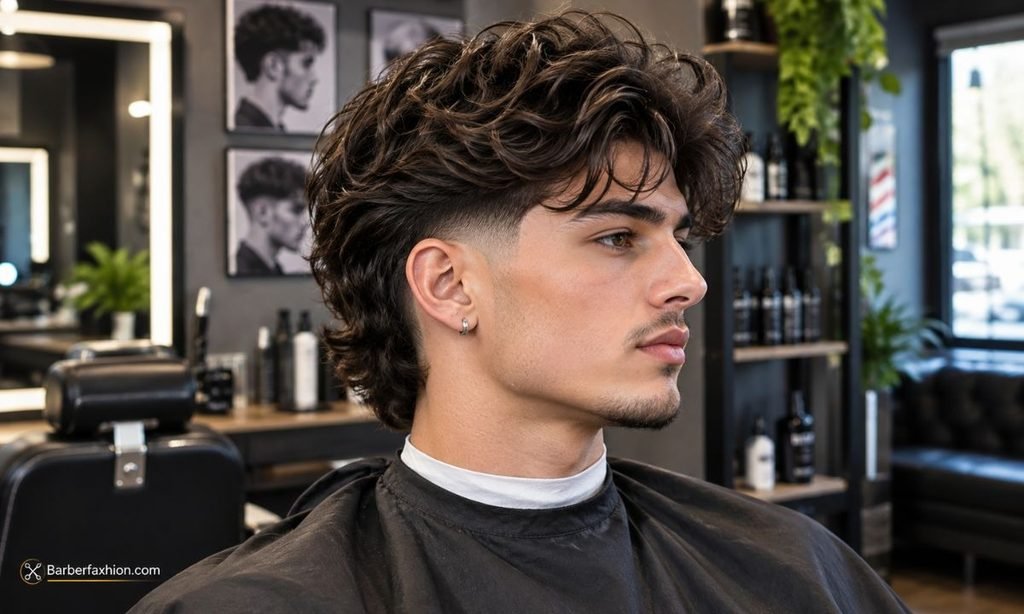
The appeal is simple: you don’t have to choose between long hair and a clean outline.
Long hair gives you options such as curtains, flow, slick backs, waves, curls, braids, ponytails, buns, mullets, and textured layers. The taper adds structure around the areas that can look messy first.
Current 2026 hairstyle coverage continues to emphasize natural texture, long top lengths, slick-back finishes, curly variations, and combinations with modern cuts such as wolf cuts and two-block styles.
Another reason the style works is flexibility. You can wear the same basic cut casually with natural texture or make it more polished for work, dinner, or a formal event.
Quick Style Selector
| If you want… | Consider… |
| A simple everyday look | Classic long hair with a low taper |
| A polished finish | Slicked-back long hair |
| Natural movement | Long flow or beach waves |
| A face-framing style | Curtains or center part |
| A bold look | Mullet or wolf cut |
| A tied-back option | Man bun or ponytail |
| Maximum natural texture | Curly, coily, or Afro-textured variation |
| A professional look | Side part or controlled slick back |
| A softer modern style | Fluffy or textured long top |
35 Best Low Taper Fade Long Hair Styles for Men
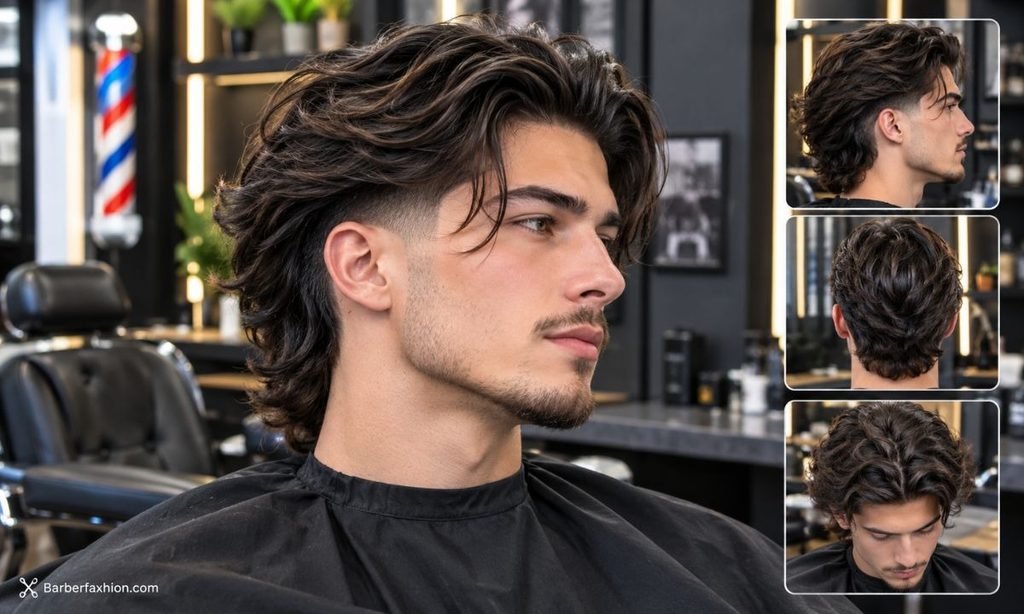
The best haircut isn’t necessarily the one with the most dramatic fade. With long hair, the goal is usually to create a clean perimeter while allowing the top to keep its natural movement.
The 35 styles below cover classic, tied-up, parted, textured, retro, and trend-driven options. Think of them as variations of the same basic idea rather than 35 completely different haircuts.
Classic Long Hair Styles
1. Long Hair with Low Taper Fade (The Classic)
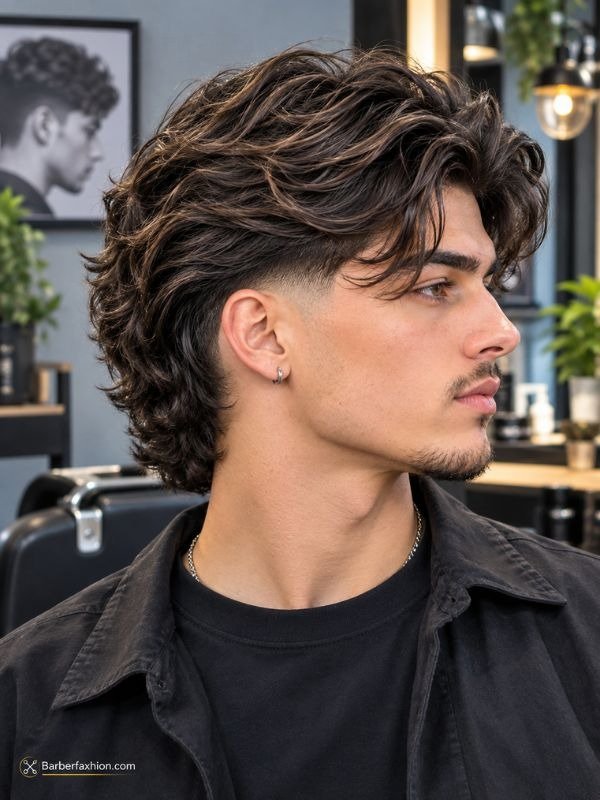
This is the simplest version of the look. Keep the top and back long, then clean up the sideburns and lower neckline with a subtle taper.
The beauty of this version is that your existing hair does most of the work. You don’t need an elaborate part, dramatic layers, or heavy styling product.
Best for: Men who want long hair with a cleaner outline.
Ask your barber: “Keep my length and give me a low taper around the sideburns and neckline.”
Styling tip: Use a lightweight cream if your hair needs control, or leave it natural if the texture already falls well.
2. Low Taper Fade with Long Slicked Back Hair
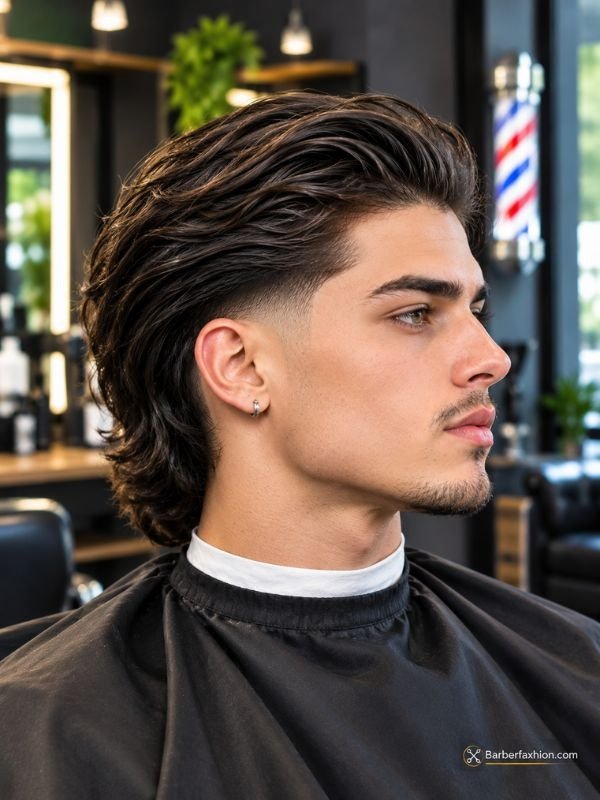
A slick back gives long hair a more deliberate and polished appearance. The hair is directed away from the face while the low taper keeps the lower perimeter neat.
This works especially well when your hair is naturally straight or thick enough to hold its shape. Wavy hair can also look excellent when the texture is allowed to remain visible.
Best for: Formal occasions, dates, dinners, and polished everyday styling.
Styling tip: Start with damp hair, comb it backward, and use a lightweight styling cream or pomade rather than applying a large amount at once.
3. Low Taper Fade with Long Wavy Hair
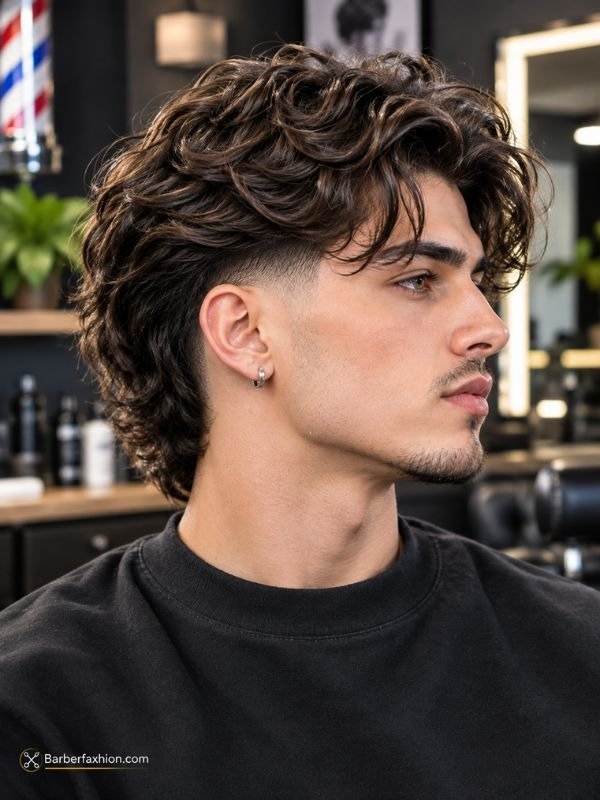
Long waves bring natural movement to the haircut. The taper simply prevents the lower edges from looking overly bulky while allowing the waves to remain the main feature.
Don’t over-thin naturally wavy hair. Removing too much weight can make the pattern behave differently and may create unwanted frizz.
Best for: Medium-to-thick wavy hair.
Styling tip: Apply a small amount of mousse or sea salt spray to damp hair and let the waves form naturally.
4. Low Taper Fade with Long Straight Hair
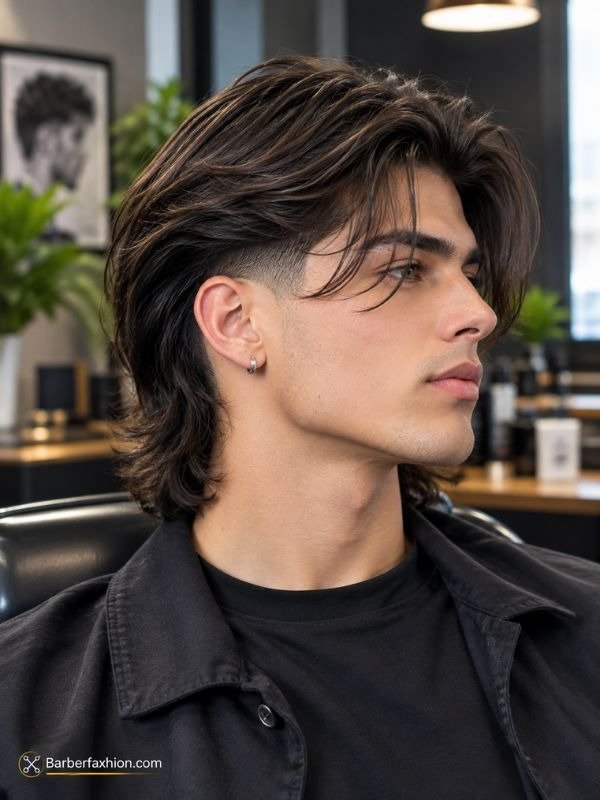
Straight hair creates a clean visual contrast between the long top and tapered perimeter. You can wear it loose, center-parted, side-swept, or brushed backward.
If your straight hair is fine, avoid heavy products that flatten the roots. A lightweight volumizing product can create more movement without making the hair greasy.
Best for: Straight hair with medium or high density.
Styling tip: Blow-dry the roots upward before directing the lengths into your preferred shape.
5. Low Taper Fade with Long Curly Hair
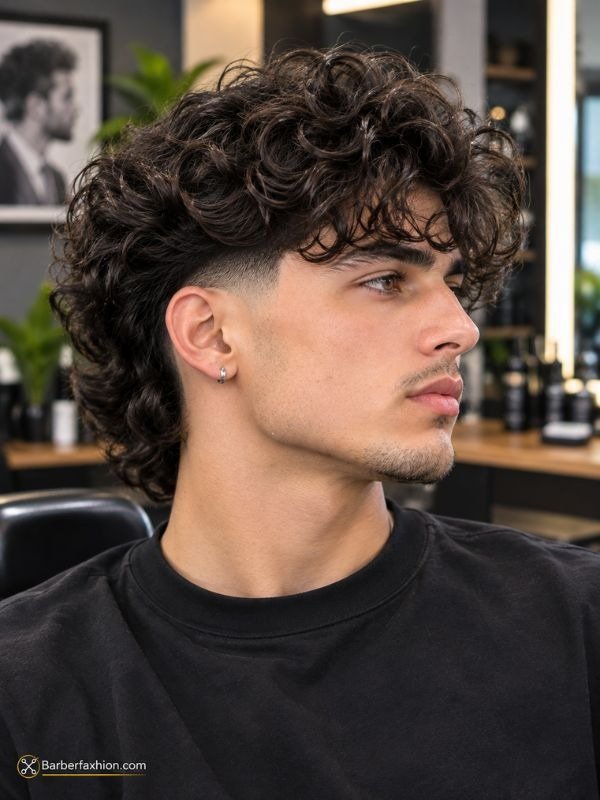
Curly hair turns the top into the main visual feature. The low taper cleans up the edges while the curls stay full and expressive.
The biggest mistake is treating curly hair like straight hair. Avoid aggressively brushing dry curls because it can disrupt the curl pattern and increase frizz.
Best for: Loose curls through tighter curl patterns.
Styling tip: Apply leave-in conditioner or curl cream to damp hair, scrunch gently, and let the curls dry without excessive manipulation.
Tied & Pinned Up Styles
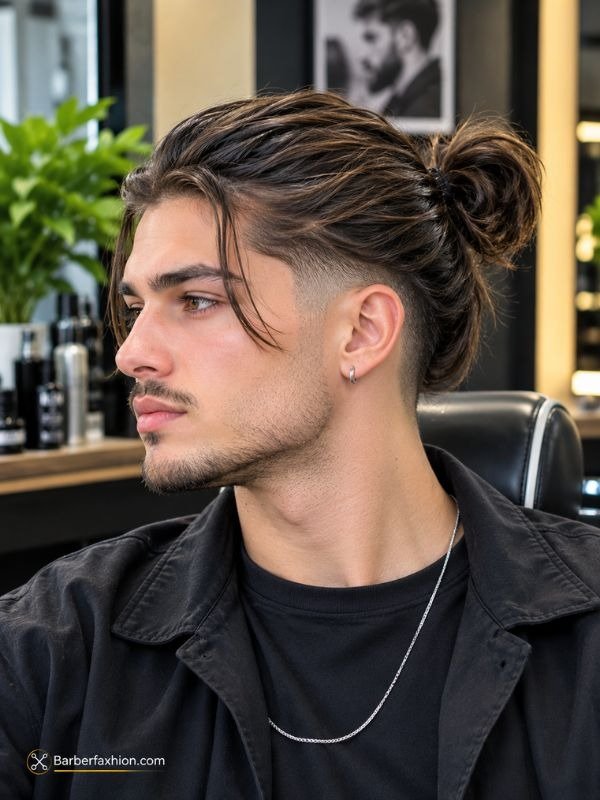
6. Low Taper Fade with Man Bun
A man bun works particularly well when your hair is long enough to gather comfortably without constant pulling.
The taper makes the exposed areas around the ears and neckline look cleaner when the hair is tied back. You can wear the bun high, low, loose, or slightly undone.
Best for: Long, medium-to-thick hair.
Styling tip: Don’t tie the bun excessively tight every day. A looser style can feel more comfortable and preserve a relaxed appearance.
7. Low Taper Fade with Half-Up Long Hair
The half-up style gives you the convenience of pulling some hair away from the face without completely hiding the length.
The front section is tied back while the remaining hair falls naturally. This works particularly well with wavy or slightly textured hair.
Best for: Men who want a relaxed, creative appearance.
Styling tip: Don’t make the tie perfectly tight. A little looseness gives the style more natural volume.
8. Low Taper Fade with Slick Back Bun
This is a cleaner variation of the man bun. The front and sides of the longer hair are combed backward before being gathered into a bun.
The result feels more controlled and can work for occasions where loose hair would look too casual.
Best for: Straight or manageable wavy hair.
Styling tip: Use a small amount of styling cream to smooth flyaways without making the hair look wet.
Parted & Framed Styles
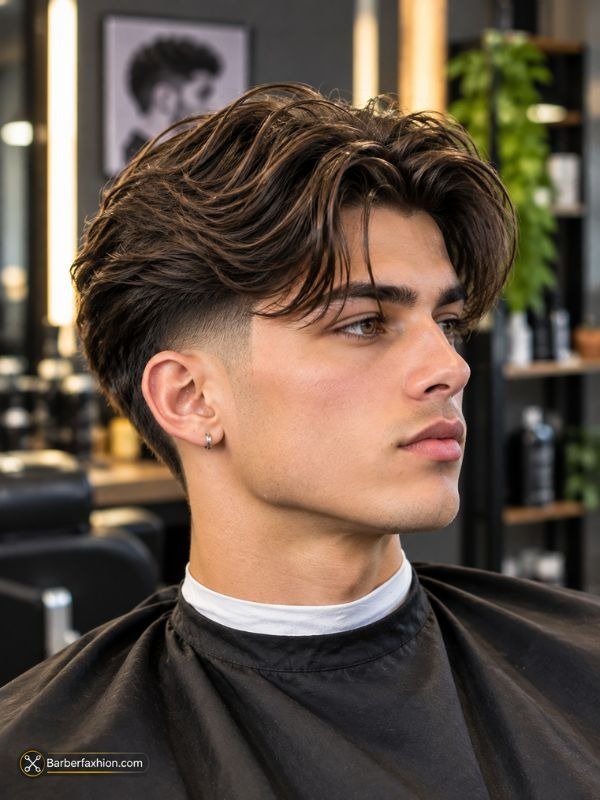
9. Low Taper Fade with Curtain Hair
Curtain hair brings the focus toward the eyes and cheekbones. The center or slightly off-center part creates two flowing sections around the face.
A low taper works well here because it keeps the lower sides neat without interfering with the curtain shape.
Best for: Straight and wavy hair.
Styling tip: Blow-dry the front away from the center part, then let the ends fall naturally.
10. Low Taper Fade with Center-Parted Long Hair
A center part creates symmetry while allowing the long hair to frame both sides of the face.
If your hair naturally separates down the middle, this can be surprisingly low-maintenance. If it doesn’t, use a comb and blow dryer to train the part gradually.
Best for: Straight, wavy, and loosely curly hair.
Styling tip: Keep some natural volume at the roots rather than pressing the hair flat against the scalp.
11. Low Taper Fade with Side Part
A side part gives long hair a more traditional and controlled appearance. It can also be adjusted depending on how formal you want the final result to look.
Keep the part soft for a modern style or make it more defined for a sharper finish.
Best for: Straight and wavy hair.
Styling tip: A lightweight pomade can provide control while maintaining movement.
12. Low Taper Fade with Long Fringe
A long fringe brings the hair forward instead of away from the face. You can wear it straight, textured, curtain-style, or slightly swept to one side.
The taper keeps the lower perimeter clean while the fringe remains the focal point.
Best for: Straight, wavy, and textured hair.
Styling tip: Use a small amount of texturizing cream to separate the fringe without making it stiff.
Volume & Statement Styles
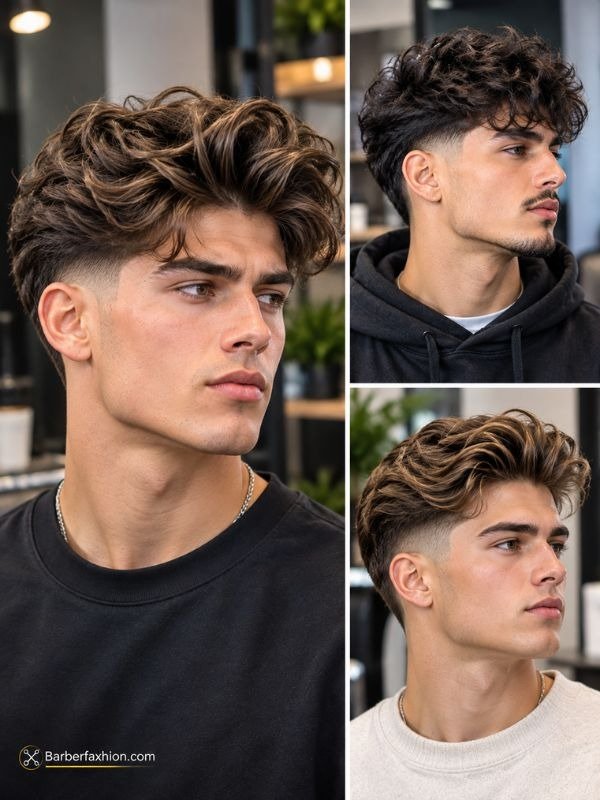
13. Low Taper Fade with Long Pompadour
A long pompadour needs volume through the front and crown. The taper provides contrast without competing with the height.
This is more styling-intensive than a natural flow, but the result can look exceptionally polished.
Best for: Thick straight or wavy hair.
Styling tip: Blow-dry the front upward and backward before applying a firm but flexible styling product.
14. Low Taper Fade with Quiff
A long quiff gives you height at the front while keeping the rest of the hair relatively relaxed.
Unlike a pompadour, the quiff doesn’t always need an extremely smooth finish. A textured version can look more contemporary.
Best for: Straight and wavy hair with enough density.
Styling tip: Lift the roots with a blow dryer before shaping the front with your fingers.
15. Low Taper Fade with Messy Long Hair
Messy long hair is ideal if you don’t want your haircut to look overly styled.
The taper adds enough structure to keep the overall appearance intentional. The long top can remain loose with natural separation and movement.
Best for: Wavy, thick, and naturally textured hair.
Styling tip: Use a lightweight texture cream rather than a high-shine product.
16. Low Taper Fade with Blowout Long Hair
A blowout creates volume and movement away from the scalp. With long hair, the result can be dramatic without requiring a high taper.
The low taper keeps the perimeter controlled while the blowout gives the top a fuller silhouette.
Best for: Thick straight or wavy hair.
Styling tip: Always use heat protection before extended blow-drying.
Retro & Bold Styles
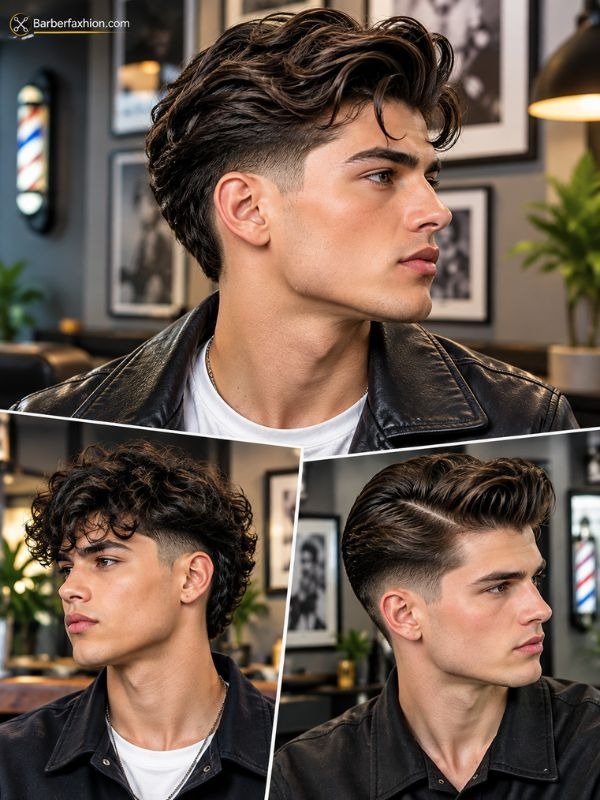
17. Low Taper Fade with Mullet
A mullet keeps the front and sides relatively controlled while preserving extra length toward the back. Combining it with a low taper makes the transition around the ears and neckline cleaner.
This is a good option if you want something noticeably bolder than a classic flow.
Best for: Straight, wavy, curly, and textured hair.
Styling tip: Ask your barber to preserve the back length instead of treating it like a conventional short haircut.
18. Low Taper Fade with Curtain Mullet
This version combines a center-parted front with a longer back. The curtain creates a softer frame around the face, while the mullet keeps the silhouette distinctive.
It suits people who like alternative or retro-inspired styles without wanting an extremely aggressive taper.
Best for: Wavy and straight hair.
Styling tip: Add texture through the lengths rather than making the front completely flat.
19. Low Taper Fade with Comb Over
A comb-over doesn’t have to mean a short traditional business haircut. With long hair, it can become a relaxed, flowing style.
The longer section is swept across the head while the taper cleans up the lower edges.
Best for: Straight and wavy hair.
Styling tip: Use a flexible product so the hair can move rather than becoming helmet-like.
20. Low Taper Fade with Long Wolf Cut
The wolf cut combines layers, volume, and a deliberately undone appearance. Pairing it with a low taper creates more definition around the ears and neckline.
Because the wolf cut depends heavily on layers, make sure your barber understands that you want to preserve the overall length.
Best for: Thick, wavy, curly, and textured hair.
Styling tip: Let your natural texture do most of the work and avoid flattening the layers.
Textured & Cultural Styles
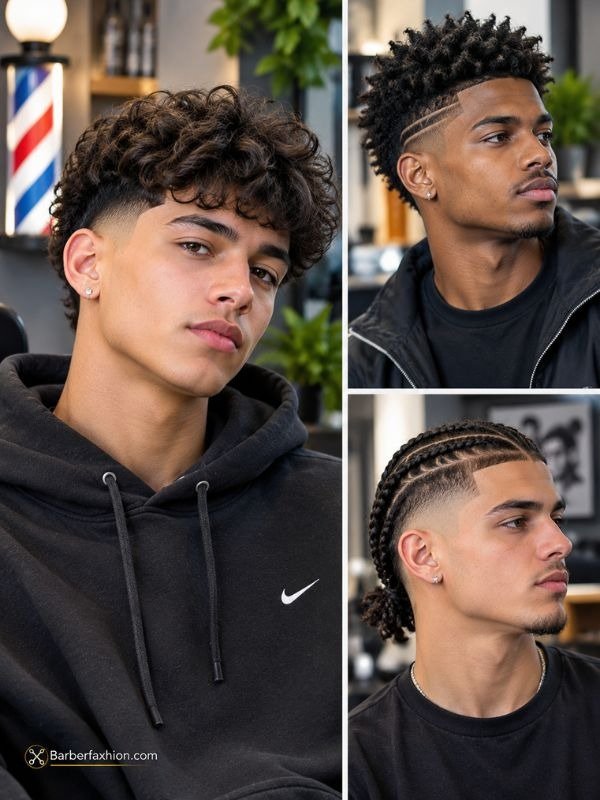
21. Low Taper Fade with Braided Top
Braids can turn long hair into a highly structured style. The taper provides a clean perimeter while the braided top becomes the main feature.
The exact braid pattern can range from simple sections to more intricate designs.
Best for: Longer textured or coily hair.
Styling tip: Keep the scalp comfortable. Braids should not be installed so tightly that they cause persistent pain or excessive tension.
22. Low Taper Fade with Twist-Out Top
A twist-out creates defined texture and volume after the twists are released. The low taper keeps the edges cleaner while the top retains its natural pattern.
This is a strong option if you want texture without completely tying the hair back.
Best for: Curly and coily hair.
Styling tip: Use a moisturizing styling product and avoid repeatedly disturbing the pattern after it has formed.
23. Low Taper Fade with Long Afro-Textured Hair
A low taper can complement long Afro-textured hair without taking away its density or natural character.
The key is balance. The taper should clean the perimeter while the top retains enough length and volume to maintain the intended shape.
Best for: Dense curly and coily textures.
Styling tip: Work with the natural curl pattern rather than forcing the hair into a texture it doesn’t naturally have.
2026 Trending Styles
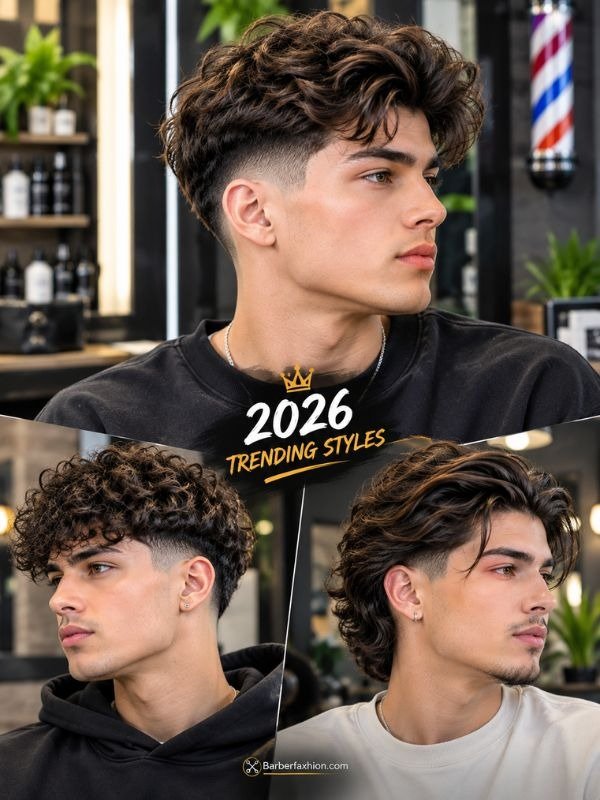
24. Low Taper Fade with Two-Block Cut
The two-block shape separates the shorter lower section from the longer upper section. Combining it with a low taper creates a softer variation that retains plenty of length.
This can be especially effective on straight or slightly wavy hair.
Best for: Straight and wavy hair.
Styling tip: Keep the top airy rather than excessively slicked down.
25. Low Taper Fade with Fluffy Long Top
A fluffy top focuses on volume and softness rather than sharp definition.
The taper gives the bottom edge structure while the top remains full and slightly relaxed.
Best for: Thick straight or wavy hair.
Styling tip: Blow-dry the roots upward and use a lightweight volumizing product.
26. Low Taper Fade with Textured Long Top
Texture adds separation to long hair without requiring an extreme haircut.
Ask your barber to create movement without removing excessive weight. Over-thinning can make some long hair types appear uneven.
Best for: Straight, wavy, and thick hair.
Styling tip: Finish with a small amount of matte texture paste.
27. Low Taper Fade with Ponytail
A ponytail is practical when your hair has enough length to gather comfortably.
The taper becomes more visible when the hair is tied back because the ears and neckline are exposed.
Best for: Long straight, wavy, curly, and coily hair.
Styling tip: A low ponytail creates a relaxed look, while a higher ponytail feels more energetic.
28. Low Taper Fade with Beach Waves
Beach waves give long hair a relaxed, textured appearance. The low taper keeps the edges from becoming visually heavy.
You don’t need naturally beachy hair to create the effect, although natural waves usually make styling easier.
Best for: Wavy and straight hair.
Styling tip: Use a light texture spray and scrunch the hair while damp.
29. Low Taper Fade with Long Side-Swept Hair
Side-swept hair gives you an easy way to change the direction of your long hair without committing to a hard part.
It can look relaxed when worn naturally or polished when combined with controlled styling.
Best for: Straight and wavy hair.
Styling tip: Direct the hair while blow-drying, then use a light cream to hold the shape.
30. Low Taper Fade with Long Shag Cut
A shag relies on layers and movement. The low taper gives the lower perimeter a cleaner finish while the shag layers remain visible.
This is a strong choice if you want long hair that feels intentionally undone.
Best for: Wavy and thick textured hair.
Styling tip: Scrunch a small amount of styling cream into the layers.
31. Low Taper Fade for Coily Long Hair
Coily hair can look especially striking with a low taper because the dense texture on top contrasts with the cleaner perimeter.
The taper should follow the natural shape of the head instead of removing too much volume.
Best for: Coily and tightly curled hair.
Styling tip: Moisture and gentle handling are more important than excessive hold.
32. Low Taper Fade with Flow Hairstyle
The flow lets longer hair fall naturally backward and around the sides. It doesn’t need to look perfectly controlled.
A low taper gives the flow a cleaner base while allowing the long top and back to remain the star.
Best for: Medium-to-long straight and wavy hair.
Styling tip: Use a lightweight leave-in product and let the hair fall according to its natural direction.
33. Low Taper Fade with Long Faux Hawk
A long faux hawk gives the center section more height and direction while the sides remain relatively controlled.
The low taper makes this version less extreme than a traditional high-fade faux hawk.
Best for: Thick, wavy, curly, or textured hair.
Styling tip: Apply product through the center section and shape it upward with your fingers.
34. Low Taper Fade with Sleek Long Top
This is one of the cleaner options in the list. The long top is deliberately smooth and controlled while the taper keeps the perimeter sharp.
It works particularly well for formal settings.
Best for: Straight and manageable wavy hair.
Styling tip: Use a heat protectant and a lightweight smoothing product before styling.
35. Low Taper Fade with Long Natural Texture
Sometimes the best style is the one that doesn’t fight your natural hair.
Let your curls, waves, or natural density determine the shape while the taper simply cleans the lower perimeter.
Best for: Almost any texture when the natural pattern is part of the desired look.
Styling tip: Choose products based on your actual texture instead of copying another person’s routine.
Which Low Taper Fade Long Hair Style Suits Your Face Shape?
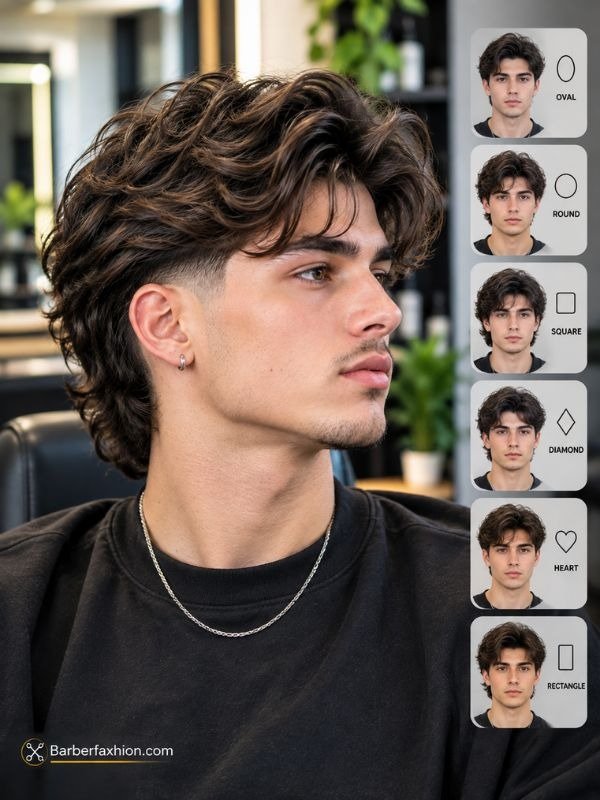
Face shape can help you narrow down options, but it shouldn’t be treated like a strict rulebook. Hair density, texture, forehead height, jawline, personal style, and how much time you’re willing to spend styling all matter too.
What Hairstyle Works Best for Oval Face Shape?
An oval face gives you plenty of flexibility because the proportions are relatively balanced.
Curtains, slick backs, side parts, flow hairstyles, textured tops, and long natural styles can all work. If your face is already visually balanced, focus more on your hair texture and the amount of volume you prefer.
What Hairstyle Works Best for Square Face Shape?
A square face has a stronger jaw and more angular proportions. Long layers, natural texture, and softer movement can complement those angles.
A messy flow, waves, curtains, or a textured long top can soften the overall appearance without hiding the jawline.
What Hairstyle Works Best for Round Face Shape?
For a round face, many people prefer styles that add some vertical movement rather than creating excessive width around the cheeks.
A long quiff, textured top, side-swept style, or controlled slick back can create that effect. Avoid assuming that one haircut is automatically best; your natural density and styling habits matter.
What Hairstyle Works Best for Heart Face Shape?
A heart-shaped face tends to be broader around the upper face and narrower toward the chin.
Long curtains, textured fringe, natural waves, and side-swept styles can help create visual balance. Avoid adding extreme height at the front if you already have significant forehead emphasis.
What Hairstyle Works Best for Diamond Face Shape?
Diamond-shaped faces often have noticeable cheekbone width with a narrower forehead and jaw.
Long textured hair, curtains, side-swept styles, and natural waves can work well because they add movement around the upper and lower portions of the face.
What Hairstyle Works Best for Long or Oblong Face Shape?
For longer face shapes, excessive height isn’t always necessary. Styles that add width or horizontal movement can create a more balanced appearance.
Curtains, long waves, side parts, textured fringes, and fuller natural styles are worth considering.
How Does the Low Taper Fade Work for Different Hair Types?
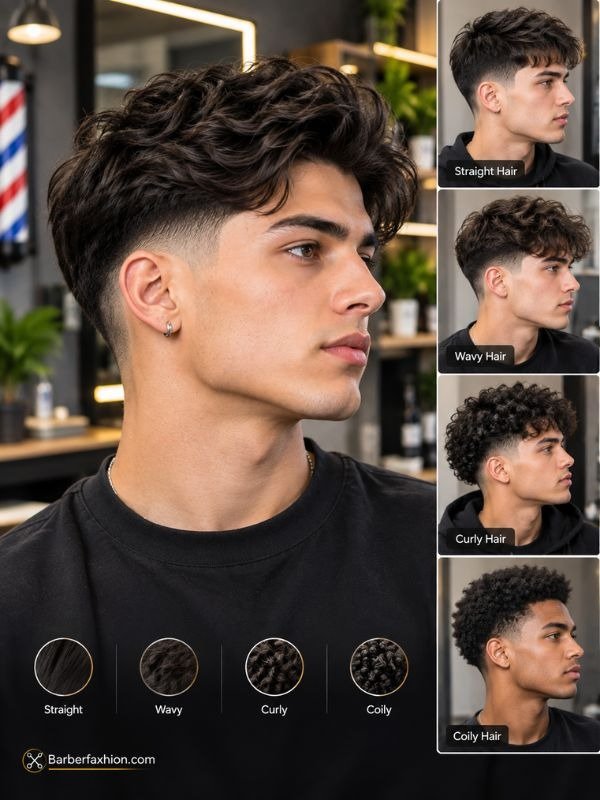
One of the biggest mistakes when choosing a haircut is copying a photo without considering the hair that actually grows from your own scalp.
A low taper fade long hair style can work across textures, but the cutting and styling approach should change with the hair type. Current hairstyle guides also emphasize adapting the taper to straight, wavy, curly, coily, thick, and fine hair rather than using one universal formula.
Low Taper Fade Long Hair for Straight Hair
Straight hair makes the taper transition easy to see because the strands generally fall in a consistent direction.
You can take advantage of that with slick backs, curtains, side parts, flow styles, or a sleek long top. If your hair is fine, prioritize volume at the roots instead of loading it with heavy pomade.
Low Taper Fade Long Hair for Wavy Hair
Wavy hair naturally provides movement, so you don’t need to create every detail with a styling tool.
Keep enough weight through the longer sections so the waves don’t become overly fluffy. A lightweight mousse, texture spray, or cream can enhance the pattern.
Low Taper Fade Long Hair for Curly Hair
Curly hair needs a different approach. Your barber should understand how much the hair contracts when dry and how the curl pattern affects the final shape.
Keep the taper controlled and allow enough length for the curls to form properly. Moisture is usually more important than strong hold.
Low Taper Fade Long Hair for Coily or Afro-Textured Hair
Coily and Afro-textured hair can create significant volume and shape, making the taper an effective way to clean the lower perimeter without sacrificing the main texture.
Communication matters here. Explain whether you want your natural volume preserved, shaped, stretched, braided, twisted, or worn loose.
Low Taper Fade Long Hair for Black Men
For Black men with longer natural, curly, coily, braided, or twisted hair, the taper can provide definition around the ears and neckline while preserving the texture through the top.
A good result depends on working with the hair’s natural density and growth pattern. Styles such as long twists, braids, natural texture, a ponytail, or a tied-back style can all be combined with a low taper.
The key is not the label “Black men’s haircut” by itself. It’s matching the taper to the actual texture, density, length, and desired style.
Low Taper Fade Long Hair for Fine or Thin Hair
Fine hair can look flat when too much weight is removed. Your barber may need to preserve strategic fullness rather than aggressively texturizing everything.
A side part, soft flow, slick back, or lightly textured top can work well. Lightweight products are usually easier to manage than heavy waxes or oils.
Low Taper Fade Long Hair for Thick Hair
Thick hair gives you plenty of styling options, but too much bulk can make the shape feel heavy.
The solution isn’t always to remove lots of length. Strategic layering or controlled texturing can reduce unwanted weight while preserving the overall long-hair look.
What Should You Tell Your Barber for a Long-Hair Low-Taper Fade?
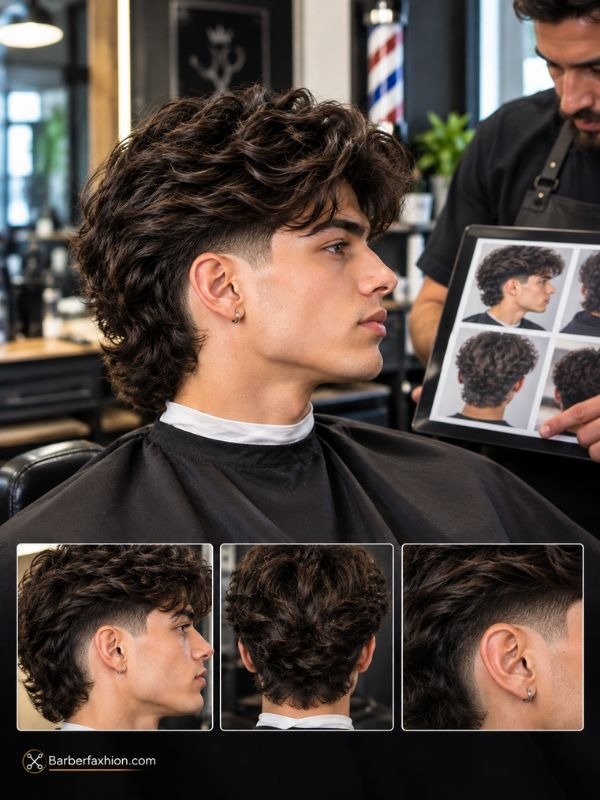
The phrase “give me a low taper fade” isn’t always enough. Different barbers may interpret the requested height, shortest point, neckline, and top length differently.
A useful barber conversation should explain what you want to keep as well as what you want shortened.
What Is the Exact Script to Ask for This Cut?
You can say:
“I want a low taper around the sideburns, ears, and neckline. Please keep the taper low and don’t take the transition too high. I want to preserve my long length on top and keep the natural shape and texture. I’ll show you a reference photo for the finish I want.”
Then add details such as:
- How much length you want to keep
- Whether you want the neckline natural or cleaned up
- Whether you want a soft or sharper finish
- Whether you want texture removed or preserved
- How you normally style your hair
Current barber-focused resources also recommend using reference images and communicating the desired outcome rather than relying entirely on haircut terminology.
Which Clipper Guard Sizes Are Used for a Low Taper Fade?
There isn’t one universal guard number for every low taper.
The barber may use different guards and lever positions while blending the area gradually. The exact sequence depends on the starting length, hair density, desired finish, and whether you want a very short or softer perimeter.
Instead of saying only “use a number one,” describe the result you want. If you’re worried about going too short, tell your barber to start conservatively.
What Reference Photos Should You Bring to the Barber?
Bring at least two or three useful photos rather than one heavily edited image.
Ideally, include:
- A front view
- A side view
- A back view
The side and back views are particularly useful because they show the taper placement and how much length remains around the lower sides.
Also remember that a reference photo shows a target, not a guarantee. Your hairline, density, texture, head shape, and current length may produce a different result.
When Is the Best Time to Book a Barber Appointment?
Book when your existing taper has grown enough that the sideburns and neckline are losing their shape, but don’t wait until the perimeter is completely overgrown if maintaining a clean appearance matters to you.
If you’re growing the top, tell your barber that the goal is preserving length, not simply getting a complete haircut.
How Much Length Should Your Barber Leave on Top?
This depends entirely on your intended style.
For example:
- Curtains: enough length to part and frame the face
- Flow: enough length to fall naturally backward or sideways
- Slick back: enough length to reach backward without constantly falling forward
- Man bun: enough length to gather securely
- Mullet: extra length through the back
- Wolf cut: enough length for visible layers and movement
Show your barber the final style you want rather than asking for a vague number.
How to Pair a Low Taper Fade Long Hair and a Beard
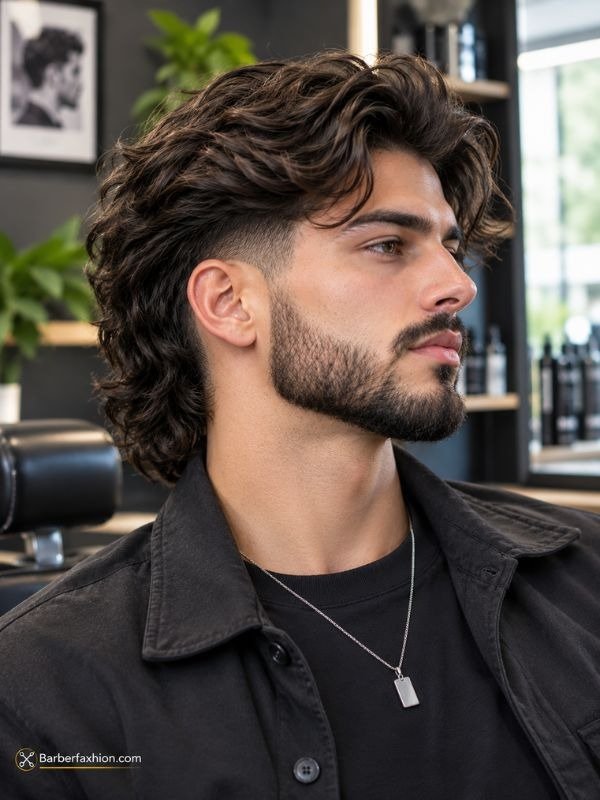
Hair and facial hair should feel connected rather than competing for attention.
A clean low taper can transition nicely into short stubble, a short boxed beard, a fuller beard, or a more natural facial-hair shape. The choice depends on your beard density and how much contrast you want.
Which Beard Style Complements a Low Taper Fade with Long Hair?
A short beard or stubble works well when you want the long hair to remain the main focus.
A fuller beard creates a stronger overall silhouette and can work particularly well with thick long hair, curls, braids, or a man bun.
If you prefer a cleaner appearance, keep the beard edges controlled while leaving the hair itself more natural.
How to Balance Long Hair and Facial Hair
Think about visual weight.
If your hair is very full and textured, an extremely large beard can make the entire look feel heavy. On the other hand, a very short beard can create a cleaner contrast with long hair.
There is no universal best combination. Your face shape, beard growth, hairstyle, and personal preference should guide the balance.
How to Style Low Taper Fade Long Hair: Step-by-Step
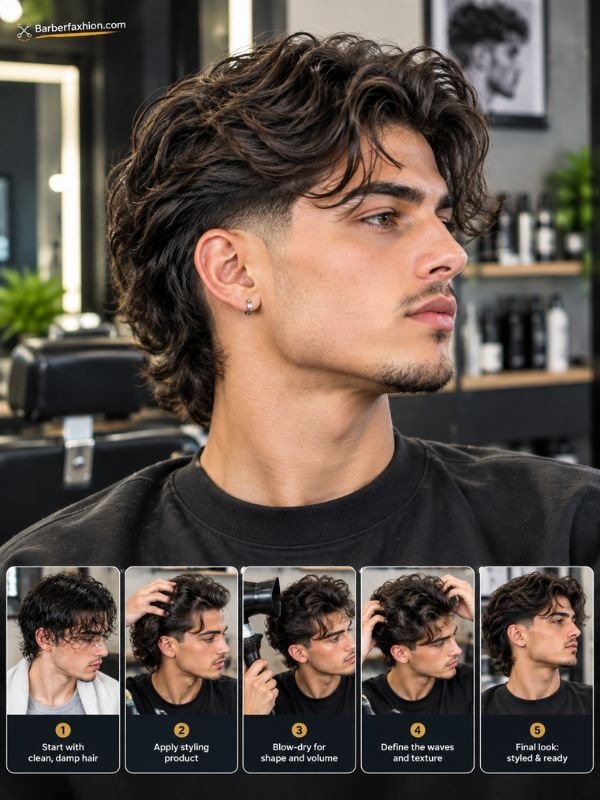
Styling long hair starts with knowing what your hair naturally wants to do.
Don’t copy a straight-hair routine if you have tight curls, and don’t use a heavy curl routine if your hair is naturally fine and straight.
How to Style Long Straight Hair with a Low Taper Fade
- Start with clean, towel-dried hair.
- Apply a small amount of lightweight styling cream.
- Create your preferred part.
- Blow-dry the roots in the direction you want.
- Shape the lengths with a brush or your fingers.
- Finish with a small amount of flexible product.
For a slick back, direct the hair backward while drying. For curtains, split the front first and blow-dry each side away from the center.
How to Style Long Wavy Hair with a Low Taper Fade
- Start with damp hair.
- Apply mousse or lightweight curl-enhancing cream.
- Scrunch the lengths gently.
- Let the hair air-dry or use a diffuser.
- Avoid brushing once the waves have formed.
- Finish with a tiny amount of cream if needed.
The goal is definition without turning the waves stiff or crunchy.
How to Style Long Curly Hair with a Low Taper Fade
- Apply leave-in conditioner to damp hair.
- Add curl cream or another suitable styling product.
- Work through the curls gently.
- Scrunch upward.
- Air-dry or diffuse on low heat.
- Separate only when completely dry if necessary.
Avoid repeatedly touching curls while they’re drying. Excess manipulation can increase frizz.
How to Style Long Hair for a Slick-Back Look
Start with damp hair and distribute a lightweight styling product evenly.
Use a comb or brush to direct the hair backward while blow-drying. Once the shape is established, add a small amount of pomade or cream for control.
You don’t need a soaking-wet appearance to achieve a slick back. A clean, controlled finish often looks more modern.
How to Style Long Hair for a Natural, Messy Finish
Use a small amount of texture cream or lightweight paste.
Scrunch or twist random sections with your fingers, then allow the hair to dry naturally or finish it with low heat. The goal is controlled imperfection rather than complete disorder.
Best Products for Low Taper Fade Long Hair
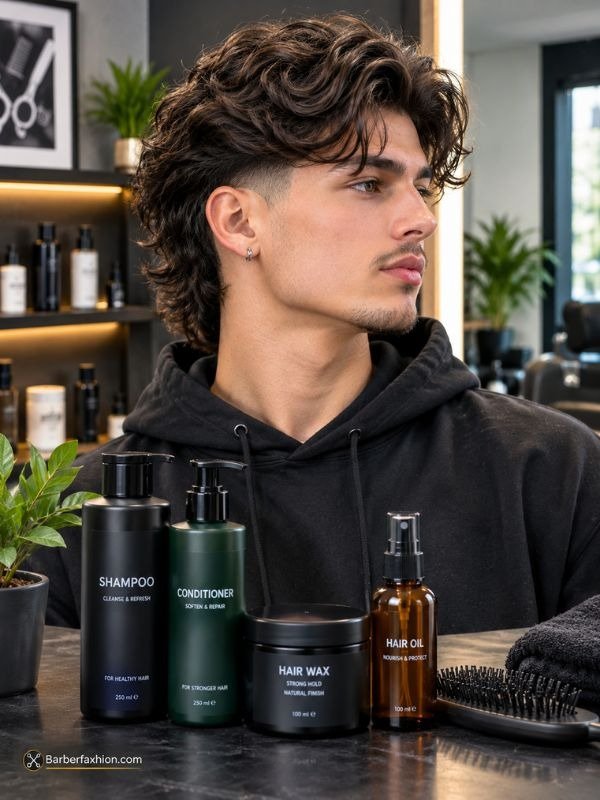
The right product depends more on your hair type and desired finish than on the haircut itself.
| Product | Best use |
| Lightweight styling cream | Natural control |
| Sea salt/texturizing spray | Waves and volume |
| Mousse | Lightweight body |
| Matte clay | Texture and stronger control |
| Pomade | Slick backs and polished styles |
| Leave-in conditioner | Dry, curly, or coily hair |
| Curl cream | Defining curls |
| Heat protectant | Blow-drying and heat styling |
Don’t automatically use the strongest product available. Long hair can become heavy and greasy when overloaded with styling products.
How to Maintain a Low Taper Fade with Long Hair
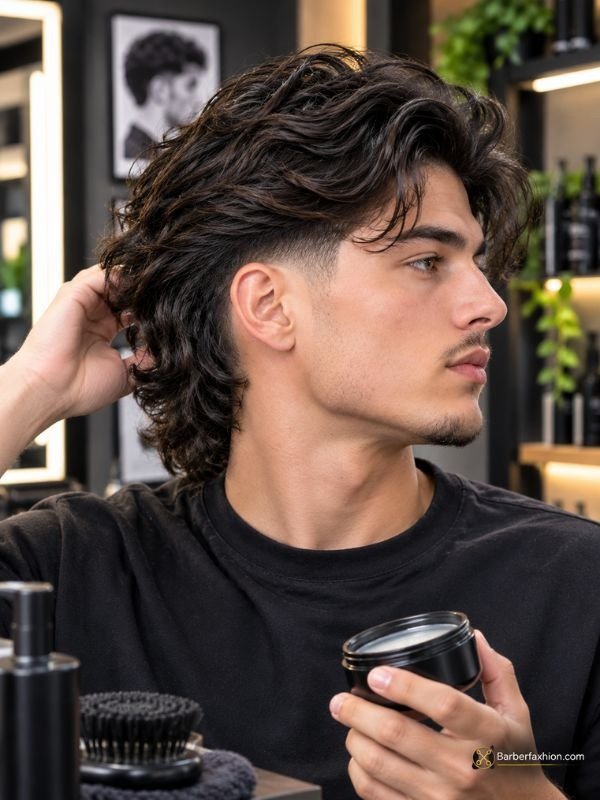
A long hairstyle still needs maintenance even when you’re trying to grow it.
The trick is separating length maintenance from taper maintenance. You can clean up the perimeter without taking significant length from the top.
How Often Should You Get a Low Taper Fade with Long Hair?
Many people refresh the taper every few weeks, but the ideal timing depends on how quickly your hair grows and how precise you want the edges to look.
If you want a consistently sharp perimeter, you’ll probably need more frequent cleanup than someone who prefers a softer, grown-out appearance.
Your longer hair may not need a full haircut every time the taper needs refreshing.
At-Home Maintenance Tips Between Barber Visits
- Wash according to your hair type and scalp needs.
- Condition longer lengths regularly.
- Avoid excessive heat.
- Use heat protectant when blow-drying.
- Detangle gently.
- Don’t overload the hair with styling product.
- Protect curls and waves from unnecessary brushing.
- Keep the neckline and sideburns tidy if you know how to do so safely.
How to Maintain Long Hair Without Losing Length
Tell your barber that preserving length is a priority.
Regularly trimming damaged ends can help the hair look healthier, but that doesn’t mean removing large amounts every visit. Ask your barber to distinguish between removing damaged ends and changing the overall length.
Common Mistakes to Avoid with a Low Taper Fade Long Hair
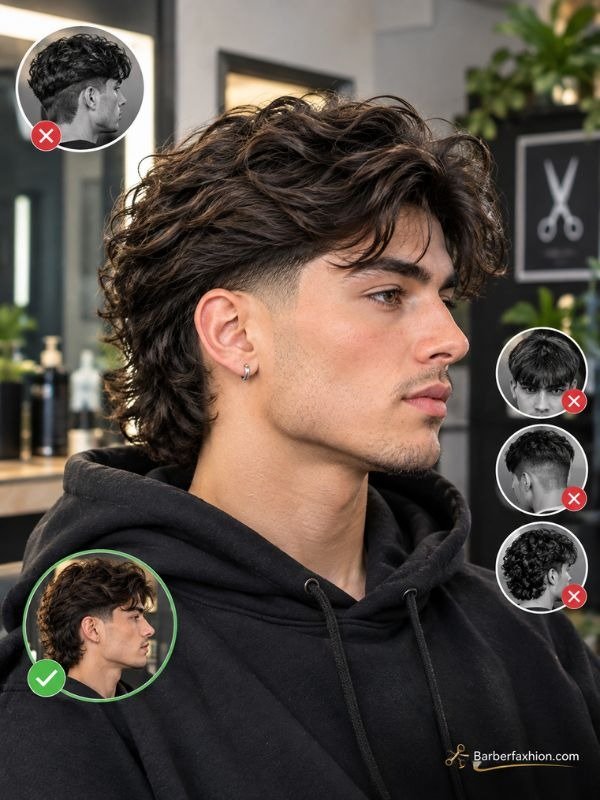
The most common mistakes usually happen during communication rather than styling.
What Are the Most Common Mistakes Men Make with This Haircut?
1. Asking for a low taper without showing a photo
The same haircut name can be interpreted differently. A reference photo reduces confusion.
2. Letting the taper climb too high
If you want long, fuller sides, make the desired taper height clear before the cutting begins.
3. Taking too much length from the top
Say explicitly that you want to preserve your long hair.
4. Ignoring your natural texture
A style that works beautifully on straight hair may need a different approach on curls or coils.
5. Over-thinning thick hair
Removing too much weight can change the shape more than expected.
6. Using too much product
Long hair doesn’t automatically need heavy hold. Start with a small amount and add more only if necessary.
7. Copying a haircut without considering lifestyle
A style that takes 20 minutes every morning may not suit someone who wants a five-minute routine.
8. Waiting too long between taper cleanups
The top can remain long while the lower perimeter receives occasional maintenance.
Is the Low-Taper Fade with Long Hair Suitable for Professional Settings?
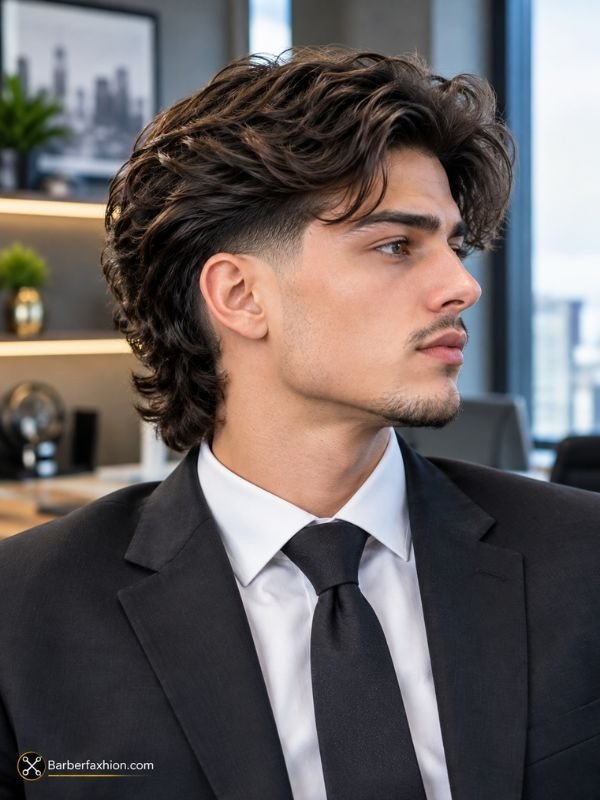
It can be, depending on the workplace, industry, styling, and how dramatic the overall haircut is.
A conservative low taper with a controlled side part, flow, or slick back generally gives a more restrained appearance than a highly disconnected or heavily textured version.
The useful thing about a low taper is that you can style the same underlying haircut differently for different environments.
How to Style Low Taper Fade Long Hair for Different Occasions
| Occasion | Styling direction |
| Office | Controlled side part or neat slick back |
| College | Curtains, textured flow, or natural waves |
| Date night | Slick back, defined waves, or polished texture |
| Formal event | Sleek side part or controlled slick back |
| Casual day | Natural flow or messy texture |
| Gym | Ponytail, bun, or half-up style |
For a conservative workplace, the key isn’t necessarily removing all your long hair. Keeping it clean, controlled, and intentional can make a bigger difference.
The Low Taper Fade Long Hair in 2026: History, Culture & Modern Influence
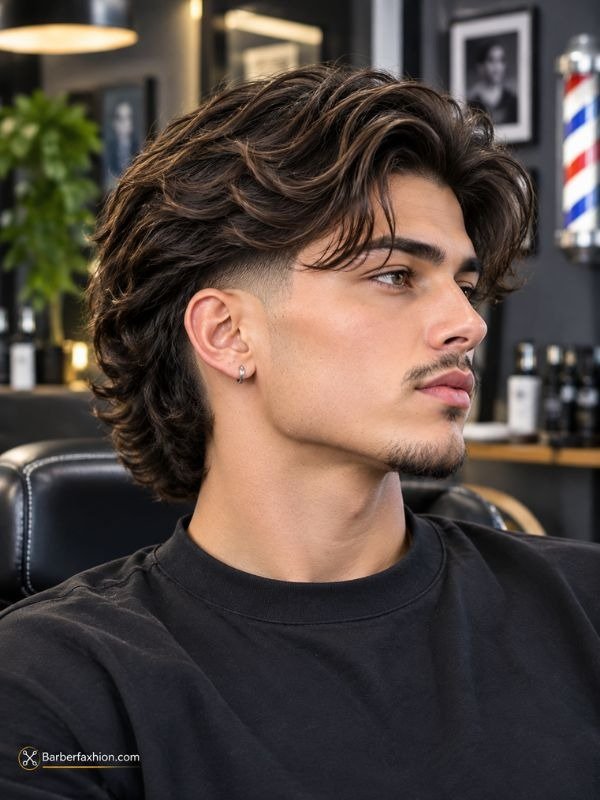
Tapering and fading have developed through decades of barbering and grooming culture, with modern versions drawing from many different haircut traditions.
Fades also have important roots in Black barbershop culture, where barbering techniques and textured-hair styling helped shape many contemporary men’s haircut trends. Modern social media and global grooming culture have since blended those techniques with styles from different regions and communities.
In 2026, long-hair taper combinations continue to intersect with trends such as natural texture, Korean-inspired two-block shapes, wolf cuts, mullets, curls, and loose flowing styles. Current hairstyle coverage reflects that broader mix rather than a single dominant look.
Because hairstyle history can involve overlapping influences and disputed origin stories, it’s better to describe the evolution carefully rather than claiming that one person, community, or decade invented the modern haircut.
Low Taper Fade vs. Mid Taper Fade with Long Hair: Which Is Better?
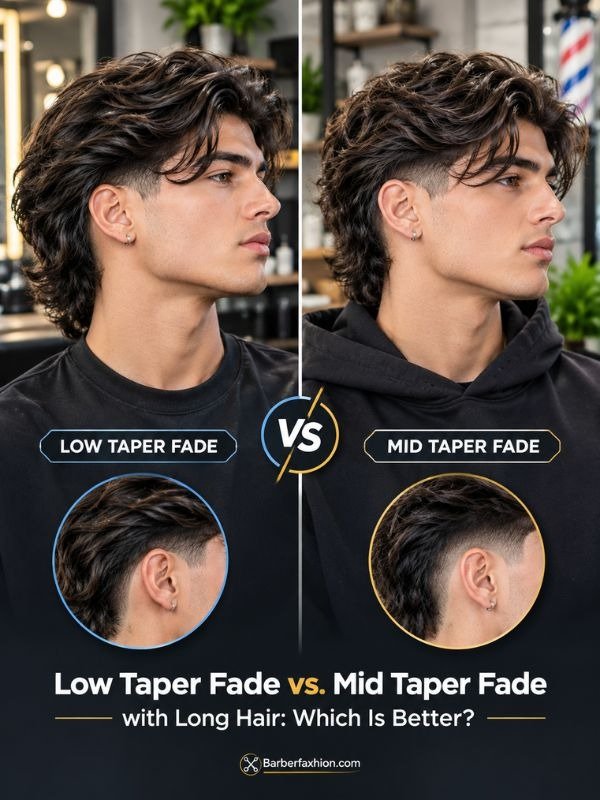
There isn’t one universally better taper. The useful question is which placement matches the shape and amount of contrast you want.
Read More : Mid Taper Fade: 22 Unique Haircut Styles for Men in 2026
Low Taper Fade vs. Mid Taper Fade with Long Hair
A low taper keeps the transition closer to the lower sideburn and neckline area. A mid taper moves the transition higher and therefore creates more visible contrast around the sides.
If your priority is keeping the side profile relatively full, a low taper may fit that goal more closely. If you want a stronger transition while still preserving substantial top length, a mid taper may be worth considering.
| Feature | Low Taper | Mid Taper |
| Transition | Lower | Higher |
| Side contrast | Subtle | More noticeable |
| Long top | Preserved | Preserved |
| Overall feel | Conservative to modern | More defined |
| Grow-out | Usually less visually dramatic | More noticeable |
| Best for | Lower-profile styling | Stronger contrast |
Low Taper Fade vs. High Taper Fade with Long Hair
A high taper moves the shortened area farther upward. That changes the silhouette more dramatically and can expose more of the side profile.
If you’re specifically trying to preserve the feeling of long hair around the sides, a low taper generally leaves more of that surrounding area untouched.
A high taper can make sense if you want the long top to stand out against a much cleaner side structure.
Low Taper Fade vs. Low Fade Haircut
A low fade typically involves a more substantial faded area, while a low taper concentrates the shortening around specific perimeter areas.
Terminology can vary between barbers, so don’t assume the names mean exactly the same thing everywhere. Explain the visual result you want, especially how high you want the transition and how much side length you want to preserve.
Expert Barber Tips for the Perfect Low Taper Fade Long Hair
A great result depends on more than choosing a popular haircut name.
What Do Professional Barbers Recommend for This Style?
Keep the taper low if you want the long hair to remain the main feature.
The lower perimeter should support the hairstyle rather than overpower it.
Bring multiple reference photos.
A front photo shows the top shape. Side and back photos communicate taper height much better.
Tell the barber how you style your hair.
If you always wear a man bun, say so. If you wear your hair loose, mention that too. The barber can then shape the hair around your actual routine.
Explain what you don’t want.
“Don’t take the taper too high” can be just as useful as saying what you want.
Consider your hair when it’s dry.
Curly, coily, and wavy hair can change significantly after drying. The final shape needs to account for natural shrinkage and movement.
Preserve length deliberately.
If you’re growing your hair, make that clear before the barber starts cutting.
Don’t chase someone else’s exact result.
A reference photo is useful for communicating shape and finish. Your hairline, density, texture, and growth pattern will determine how closely the final cut resembles it.
Frequently Asked Questions
Can you have a low taper fade with long curly hair?
Yes. A low taper can clean up the ears, sideburns, and neckline while leaving the curls long through the top and back. The main consideration is preserving enough length for the natural curl pattern to form properly.
What guard size is used for a low taper fade?
There isn’t one universal guard size. Barbers can use multiple guards and lever positions while gradually blending the area, depending on how short and subtle you want the perimeter.
Is a low taper fade suitable for a professional work environment?
It can be. A conservative taper combined with a controlled side part, slick back, or neat flow can look more restrained than a highly dramatic variation.
How often should I get a low taper fade with long hair?
Many people refresh the taper every few weeks, but the ideal schedule depends on your growth rate and how sharp you want the edges. You can maintain the taper without cutting significant length from the top.
What products should I use for long hair with a low taper fade?
Choose products based on your texture and desired finish. Lightweight cream works for natural control, mousse or texture spray can enhance waves, curl cream works for curls, and pomade can help with polished slick-back styles.
What is the best low taper fade style for a round face?
Styles that create some vertical movement or reduce excessive width around the cheeks can be useful starting points. A textured top, side-swept style, quiff, or controlled slick back may be worth discussing with your barber.
What is a mullet with a low taper fade?
It combines a longer back and mullet-inspired shape with a low taper around the lower sides and neckline. The result keeps the distinctive length of a mullet while giving the perimeter a cleaner transition.
Can You Get a Low Taper Fade with Long Hair on Top?
Yes. That’s one of the main reasons people choose this haircut. The taper can remain low around the perimeter while the top stays long enough for curtains, flow, slick backs, curls, a bun, a ponytail, or other long-hair styles.
Conclusion
A low taper fade long hair haircut gives you a useful balance: the freedom of longer hair with a cleaner, more controlled perimeter. You can keep your natural curls, waves, straight texture, braids, flow, mullet, bun, or other preferred style while using the taper to sharpen the lower edges.
The best version isn’t simply the trendiest photo online. It should match your hair texture, density, face shape, lifestyle, styling routine, and desired amount of contrast. When you visit your barber, bring clear reference photos and explain exactly how much length you want to preserve. That small conversation can make a much bigger difference than the haircut name alone.