
You’ve probably shown your barber a photo, said “something like this, but low,” and then wondered why the cut you walked out with didn’t quite match the picture. That mix-up usually comes down to confusing a taper with a fade, and assuming “low” means the same thing for both.
It doesn’t. This guide breaks down exactly what separates a low taper from a low fade, which one suits your face shape and hair type, and the specific words to use so your barber gives you the cut you’re picturing.
Quick Answer
A low taper blends softly into the hair and rarely shows skin, giving you a subtle, low-maintenance look that grows out gracefully. A low fade drops sharply to short or bare skin near the ears and neckline, creating a sharper, more defined finish that needs more frequent touch-ups. Both start low on the head — the real difference in the low taper vs low fade debate is contrast, not location.
The Main Difference Between a Low Taper and a Low Fade
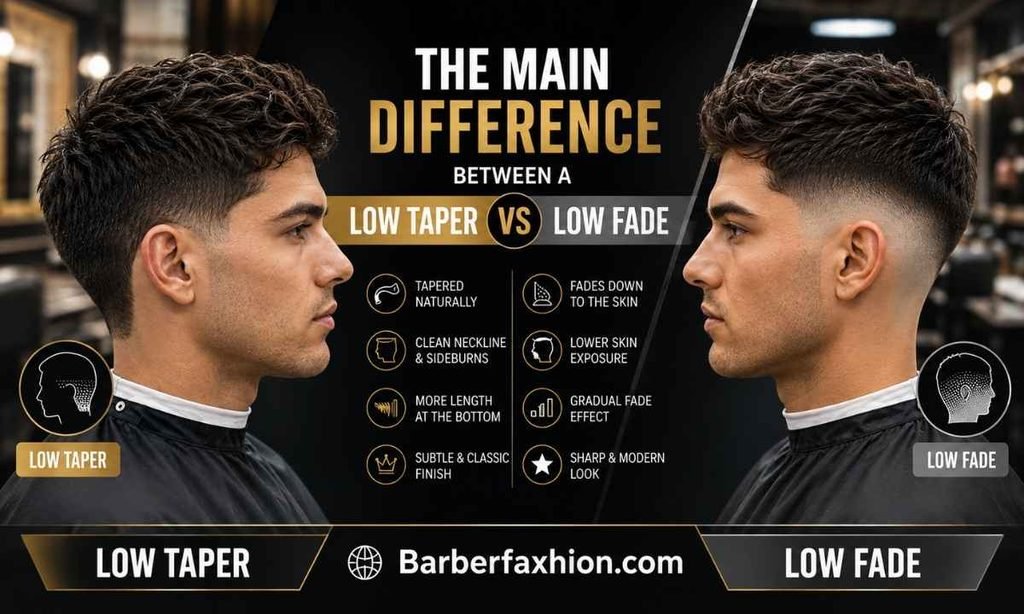
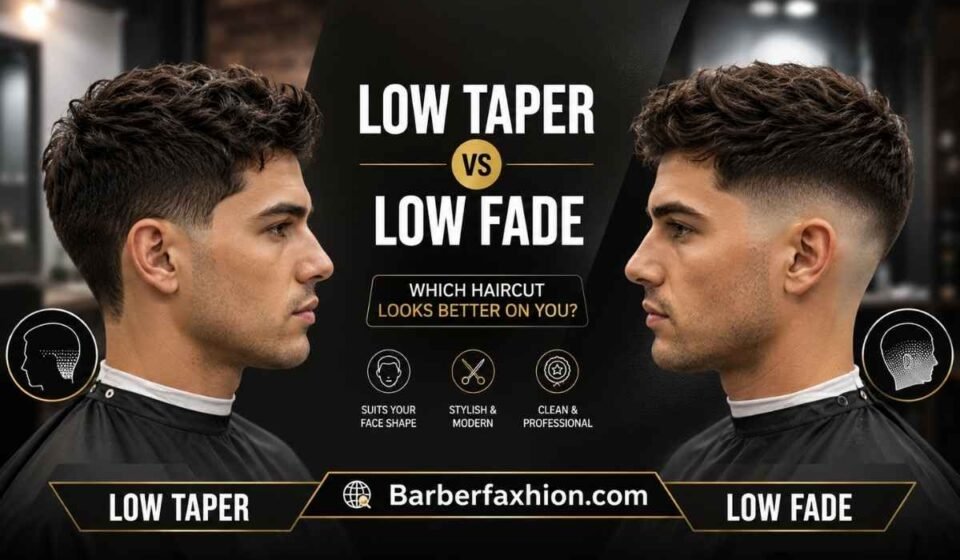
Here’s the part that trips most guys up: “low” tells you where the cut starts, not how dramatic it looks. Both a low taper and a low fade begin around the same spot — just above the ears and along the neckline. After that point, they take completely different paths.
A low taper shortens your hair gradually as it moves down toward the sideburns and nape. It almost never reaches bare skin. The sides keep some length throughout, so the whole cut reads as neat rather than styled. Most people who look at it just think your hair looks tidy — they won’t necessarily clock that you got a specific “cut.”
A low fade goes further. It takes the hair from longer on top down to very short, or straight to skin, in that same low zone. You can see exactly where the drop happens, and that visible line is the entire point of a fade. It’s meant to look fresh, deliberate, and a little sharper than a taper ever will.
So when people search low taper vs low fade, they’re really asking about contrast levels, not about height on the head. A taper blends. A fade defines. Everything else in this guide flows from that one distinction.
What Is a Low Taper?
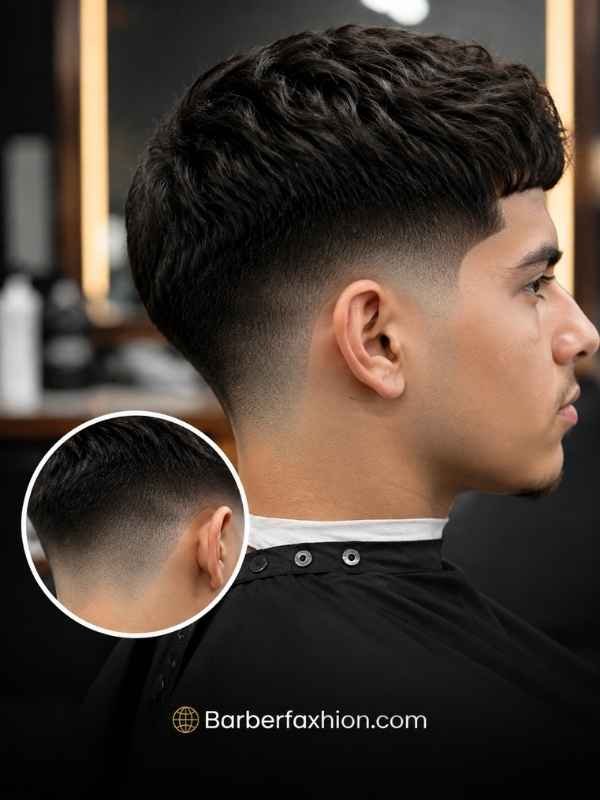
A low taper is one of the most forgiving cuts you can ask for. It reduces the length around your sideburns and neckline in a smooth gradient rather than a hard line, and it leaves little to no scalp showing. The result looks clean without drawing attention to itself.
That makes it a safe bet almost anywhere — the office, a wedding, a job interview, a regular Tuesday. It also grows out well. Because there’s no sharp line to lose, the cut just gets slightly longer over time instead of turning ragged, so you’re not stuck booking a barber every two weeks just to keep it presentable.
If you want something polished that doesn’t lean on heavy contrast to look good, a low taper is hard to beat. It’s also the more forgiving starting point if you’ve got fine or thinning hair, since there’s no bare skin to make the sides look sparse.
What Is a Low Fade?
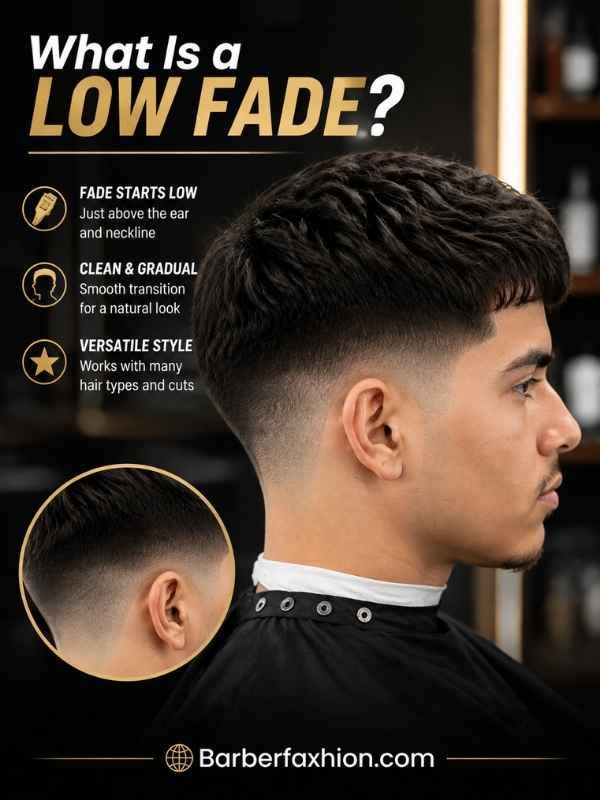
A low fade starts in that same low zone, near the ears and neckline, but it blends from longer hair on top down to very short or skin-level hair at the base. That drop happens in a tight band close to the bottom of the head, which is what gives a fade its signature sharp look.
The payoff is a cleaner, more defined finish than a taper offers, with a clear split between the top and the sides. It pairs especially well with styles that carry weight or texture on top — a textured crop, curls, a quiff, or a deliberately messy style, where crisp sides make the shape on top stand out more.
The trade-off is upkeep. Because the contrast is so visible, even a week or two of regrowth softens those clean lines fast. If you’re fine with more frequent barber visits, a low fade gives you close to the sharpest result a barber can deliver.
Low Fade vs. Skin Fade — Not Always the Same Thing
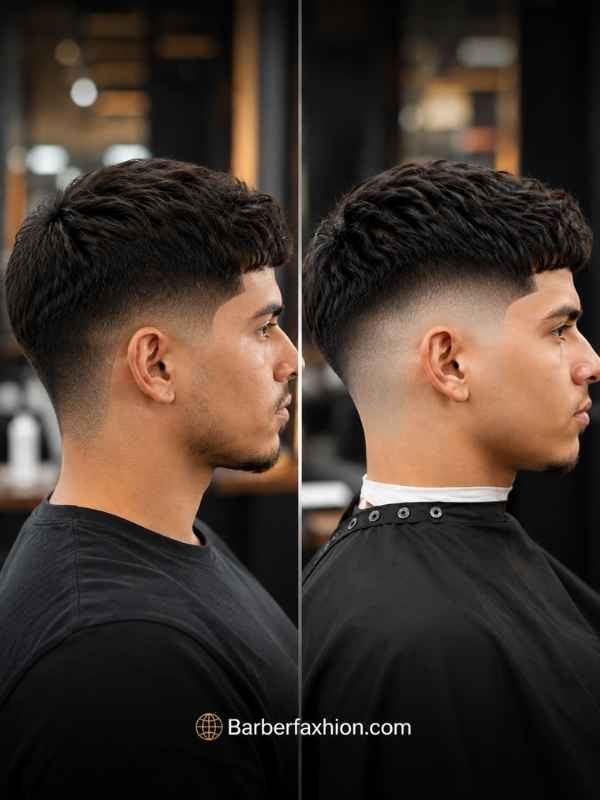
People often use “low fade” and “skin fade” interchangeably, but they’re not identical. A low fade just tells you where the fade starts — low on the head, near the ears. It can end at a close clipper length or go all the way to bare skin, depending on what you ask for.
A skin fade specifically means the hair fades down to the actual scalp. A shadow fade stops just short of that, leaving a faint shadow of hair instead of bare skin. So you can absolutely get a low fade that never touches skin — it just needs to be worded that way when you’re in the chair. More on that later.
Low Taper vs Low Fade at a Glance
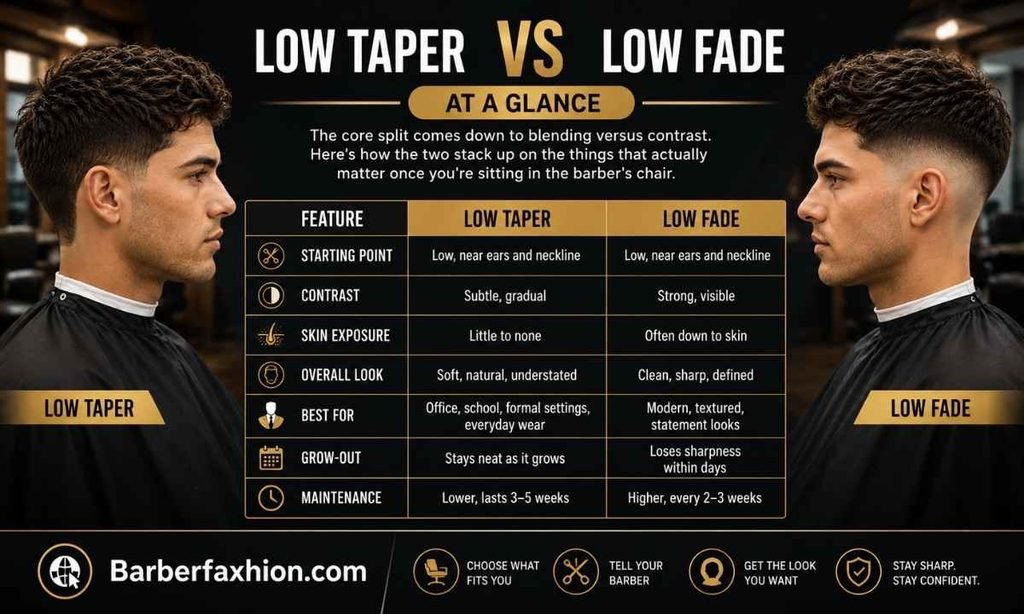
The core split comes down to blending versus contrast. Here’s how the two stack up on the things that actually matter once you’re sitting in the barber’s chair.
| Feature | Low Taper | Low Fade |
| Starting point | Low, near ears and neckline | Low, near ears and neckline |
| Contrast | Subtle, gradual | Strong, visible |
| Skin exposure | Little to none | Often down to skin |
| Overall look | Soft, natural, understated | Clean, sharp, defined |
| Best for | Office, school, formal settings, everyday wear | Modern, textured, statement looks |
| Grow-out | Stays neat as it grows | Loses sharpness within days |
| Maintenance | Lower, lasts 3–5 weeks | Higher, every 2–3 weeks |
A quick real-world example: if you’ve got a standing client meeting every Monday and can’t always make it to the barber, a taper holds its shape longer between visits. If you’re already booking a fresh cut every couple of weeks anyway, a fade will reward you for the effort.
Which One Looks More Natural, and Where Each Works Best
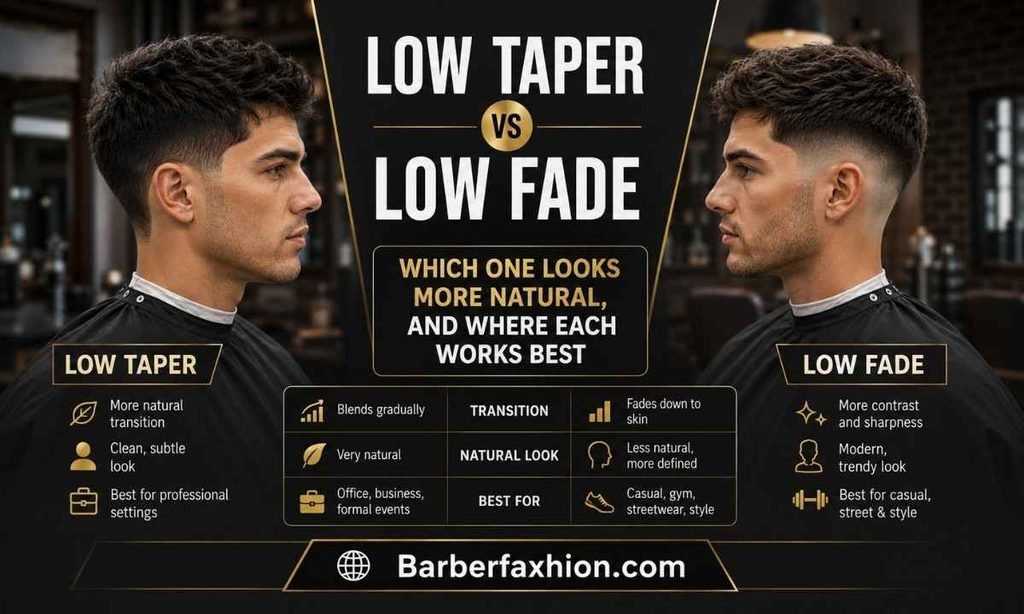
If natural is the goal, the taper wins nearly every time. It follows the way hair actually grows, softening toward the sideburns instead of cutting a visible line into the side of your head. A fade does the opposite on purpose — the sharper it is, the more obvious the outline, and that’s exactly why people ask for one.
Setting matters here too. In conservative workplaces, a taper is the safer call. It reads as polished without looking like you tried too hard, which tends to sit better with formal grooming expectations. School environments are similar — a taper looks appropriate whether you’re heading to class or a graduation ceremony.
For casual and social settings, a fade earns its place. Paired with a textured top, those sharp sides give you a current, finished look that a taper can’t quite replicate. For formal events like weddings or job interviews, though, a fresh taper is tough to beat — it looks intentional without screaming for attention. Short version: taper when you want to blend in, fade when you want to stand out.
Choosing Based on Your Face Shape
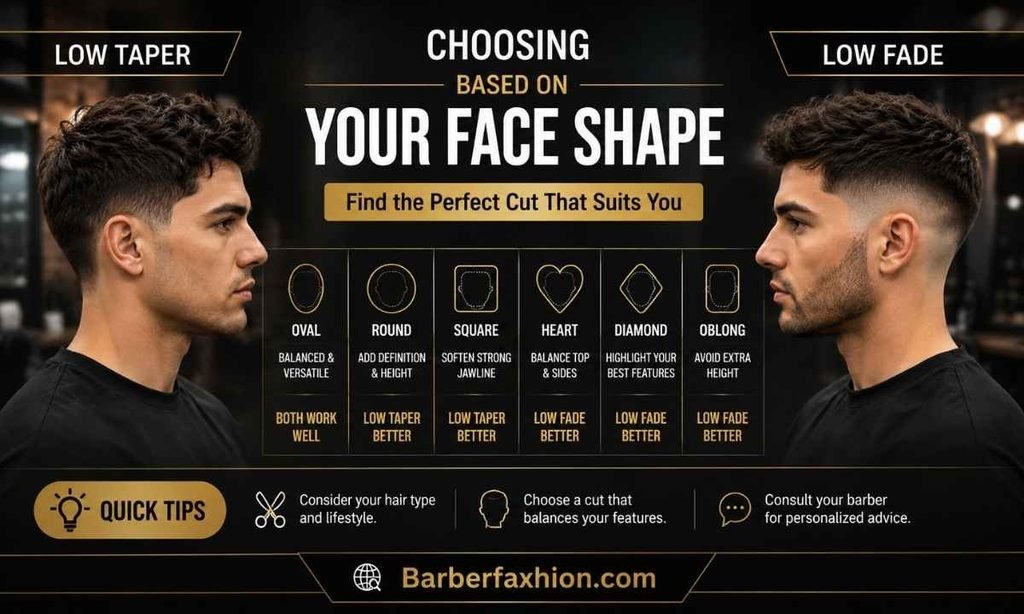
Face shape is worth thinking about, but treat it as a guide rather than a rule. Your barber’s skill, your hair density, and what you keep on top all matter just as much.
- Round — A fade can add welcome definition here, since the contrast at the sides makes the face read a little longer and more angular. Be cautious with a low taper on a round face, though — the extra fullness it leaves on the sides can widen the jawline further rather than balance it. If you go taper, add some height on top to counter it.
- Oval — The most flexible shape out there. Both cuts suit it fine, so pick based on looks and lifestyle rather than face-shape rules.
- Square — A taper tends to flatter square faces, since the soft blend doesn’t pile extra sharpness onto an already strong jaw. A fade can still work, especially paired with a softer, textured top to balance things out.
- Long or oblong — A taper is usually the kinder option here. Subtle sides avoid stretching the silhouette further, and a shorter, fuller top helps shorten the overall look.
- Heart-shaped — Wider at the forehead, narrower at the chin, so either cut can work. A taper keeps things balanced, while a fade with volume on top can end up emphasizing forehead width — worth talking through with your barber first.
Whatever your face shape, the reliable move is the same: bring a photo and name your concern out loud. A good barber will adjust the height and blend to suit your specific face rather than following a generic rule.
Choosing Based on Your Hair Type
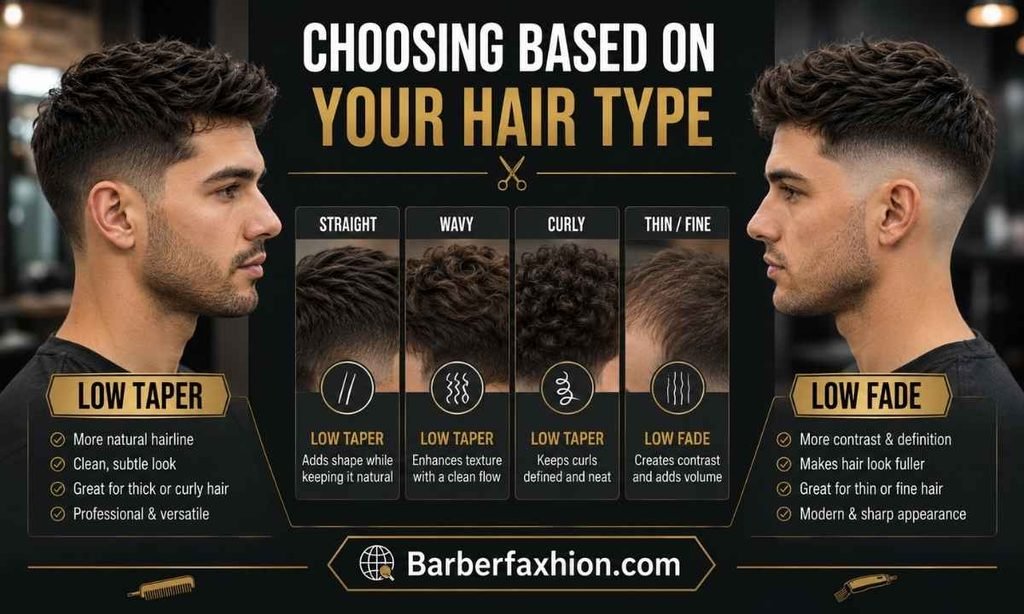
Both cuts work on most hair types, but texture and density change how each one lands once it’s done.
- Straight hair — Shows structure clearly, so both cuts look clean. A fade shows off its lines especially well here, while a taper gives a smooth, even finish that reads more relaxed.
- Wavy hair — Suits either cut. Natural movement makes a taper look effortless, and a fade under a textured wavy top delivers the strong contrast a lot of guys are chasing.
- Curly hair — Often leans toward the fade, because a clean faded base frames the curls and sharpens the whole shape. This pairing has been one of the more requested combos in barbershops lately, and it’s easy to see why — the contrast really lets the curl pattern do the talking.
- Coily or textured hair — Responds especially well to a fade, which carves a crisp outline and brings out the natural texture on top. A taper still works fine, but the blend can be harder to see given the density.
- Thick hair — Holds either shape without trouble, and a fade tends to look bold here because the contrast reads so clearly against dense hair.
- Fine or thin hair — Usually does better with a taper. A heavy fade can leave the sides looking sparse or patchy, while a softer taper keeps the appearance of fullness intact.
Short version: a taper looks natural across the widest range of hair types, and a fade adds the sharpest definition — especially on curly, coily, and thick hair.
Maintenance — How Long Each One Actually Lasts
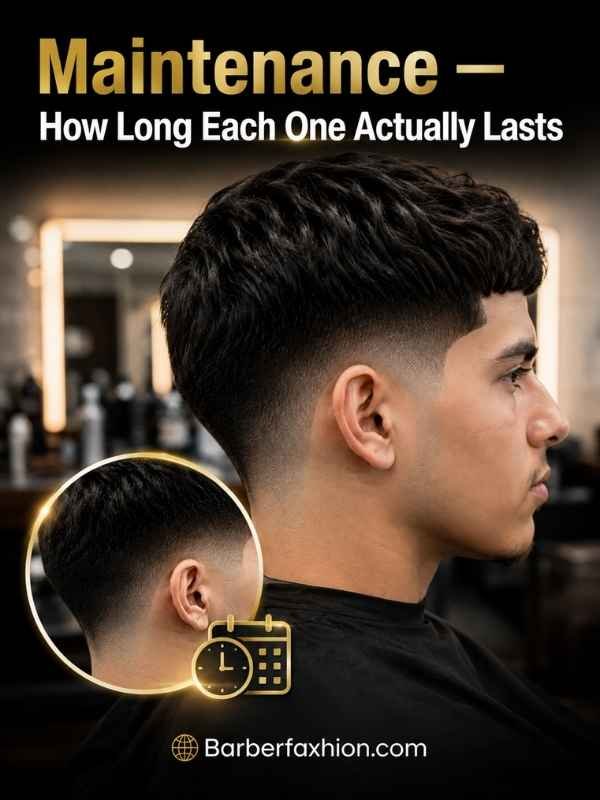
This is the most practical question to answer before you commit to either cut: how often are you realistically getting back in the chair?
A low taper is forgiving. Because the blend is soft to begin with, it grows out looking a bit longer rather than messy, and most guys can stretch three to five weeks between visits before it starts looking overgrown. There’s no sharp line to lose, so there’s nothing dramatic to notice as it fades back out.
A low fade asks for more attention. The same sharpness that makes it look so good is the first thing to disappear as new hair fills in around the fade zone. Regrowth typically becomes noticeable within 10 to 14 days, and by the two-to-three-week mark, most guys are ready to head back for a touch-up to keep the outline crisp.
It’s even more demanding if you go with a full skin fade taken all the way down to bare scalp. Skin fades look sharp fresh out of the chair, but new growth shows up within days, and the shape softens faster than almost any other cut. A shadow fade — which stops just short of bare skin — holds a little longer, but it still needs more attention than a straightforward taper. If your schedule is packed or barber visits are irregular, the taper is the more practical pick long-term.
How Low Compares to Mid and High Tapers and Fades
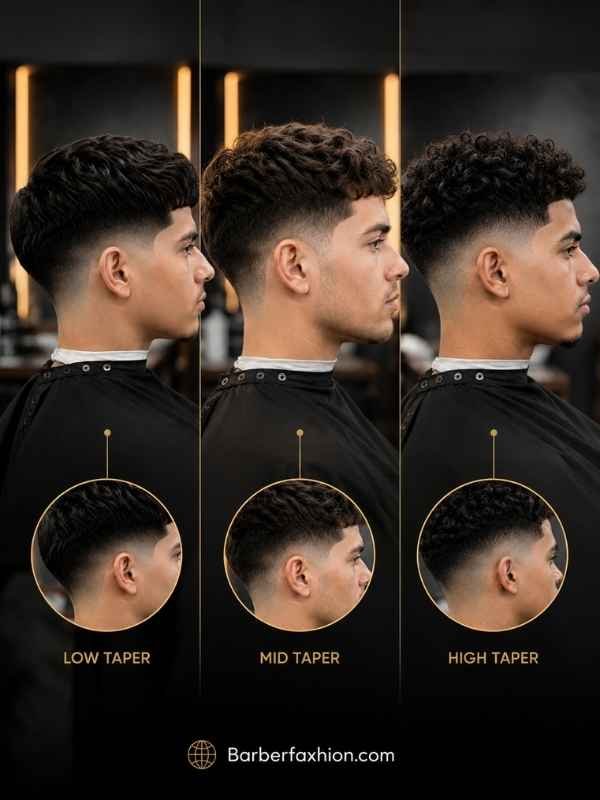
Once you understand low, the mid and high versions are easy to place — it’s really just a matter of where the transition starts on your head.
A mid taper fade begins around the temple, roughly level with the top of your ear. It splits the difference between a low taper’s subtlety and a fade’s contrast, exposing a bit more skin while still keeping things wearable in most settings. A lot of guys land here when a low taper feels too safe but a full fade feels like too much commitment.
If that middle ground sounds like your pick, check out our full guide on mid taper haircuts for styles and inspiration.
A high taper fade starts near the crown or the upper part of the side, well above the ear. This creates the most dramatic contrast of the three and pairs best with bold, structured tops like a pompadour or a slicked-back style. It’s the least conservative option and needs the most frequent upkeep.
The broader haircut taper vs fade question — not just the low versions — comes down to the same core idea covered earlier: a taper never fully reaches skin, while a fade does. Height (low, mid, or high) is a separate decision from that taper-versus-fade choice, and you can mix and match — a high fade, for instance, still counts as a fade because it reaches skin, it just starts its blend much higher up.
As for high vs low taper, the difference is purely about how much contrast shows and how conservative the cut reads. A high taper is bolder and shows more length variation across the side of the head. A low taper stays closer to the “nobody will really notice you got a haircut” end of the spectrum. If you’re deciding between a mid taper vs low taper, ask yourself the same question as always: how much skin or contrast are you comfortable showing between visits?
Pairing With Popular Styles on Top
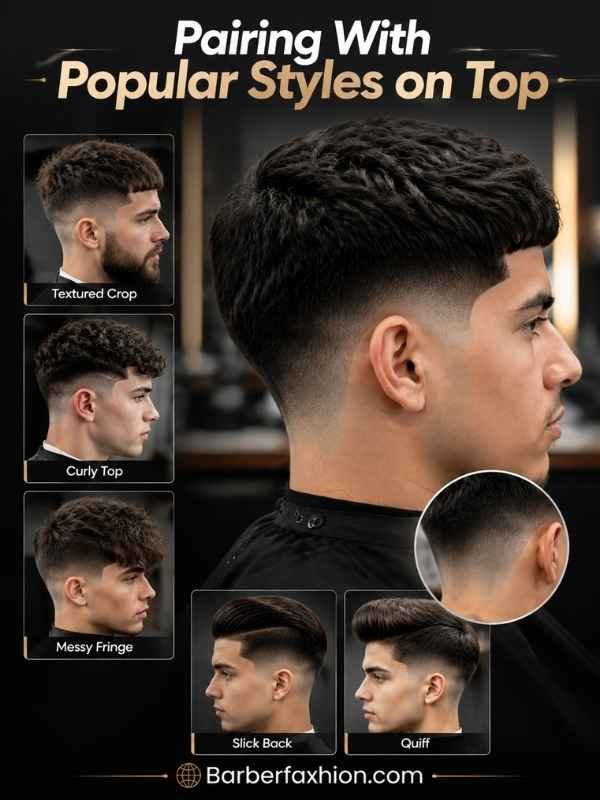
The sides only tell half the story. What you keep — or don’t keep — on top changes how either cut reads.
A textured crop works well with both, though a fade gives it a sharper, more modern frame. A buzz cut looks clean and uniform with a taper, or you can add a fade at the base for stronger definition. Curly tops usually pair best with a fade, since the defined sides set off the volume in a way a softer taper sometimes can’t match. A fringe stays classic and uncluttered with a taper, though it also works with a textured, side-swept fringe over a fade.
A quiff carries natural contrast, so a fade supports the volume nicely — a taper gives you a softer, more vintage take on the same shape. A comb-over suits a taper’s traditional feel, while a fade pushes the same style into more contemporary territory. A messy, tousled top is where a fade really stands out — sharp sides against loose texture on top create that deliberate, put-together contrast.
How to Ask Your Barber (Without Getting the Wrong Cut)
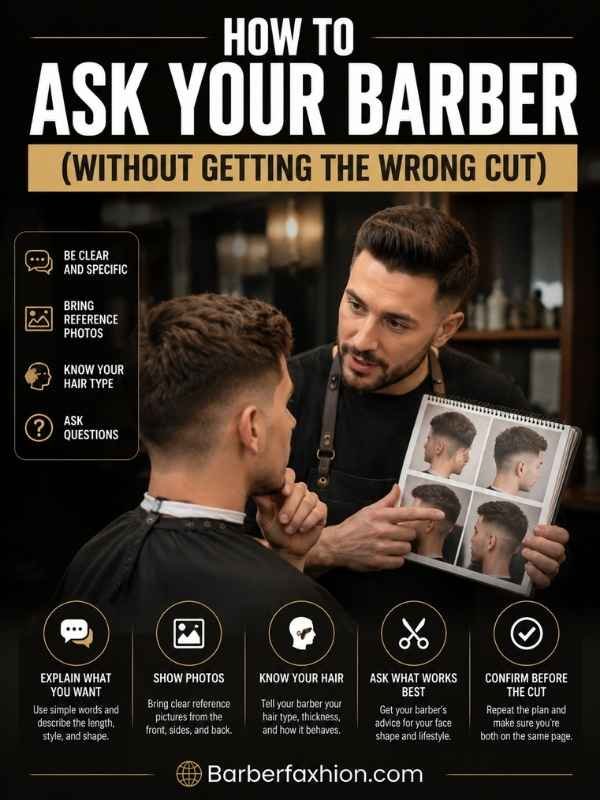
Walking in already knowing what you want is half the job. A few specific words make all the difference between getting the cut you pictured and getting something close but not quite right.
- Name the technique first. Tell your barber whether you want a taper or a fade — these describe different techniques, and the distinction genuinely matters to how they’ll cut it.
- Say how low. Both can start at different heights, so for the low version, ask for the blend to stay down near the ears and neckline rather than climbing higher up the sides.
- Pin down the finish. Do you want it down to skin, a close shadow, or a soft blend with no scalp showing at all? That one detail changes the entire outcome.
- Talk neckline and sideburns. Some guys want the back tapered naturally into the neck; others want a squared or rounded outline. Say which one you’re after.
- Mention what’s happening on top. Whether you’re growing it out, keeping length, or restyling completely, the top and sides need to work together as one cut.
A few lines that actually work in the chair:
“Low taper around the sideburns and neckline — just a soft, natural blend.”
“Low fade starting just above the ears, taken down to a shadow, not full skin.”
“Tapered into the neck at the back, nothing too sharp.”
Bring a photo too. Even experienced barbers appreciate one, since it removes the guesswork entirely.
Common Mistakes Men Make When Asking
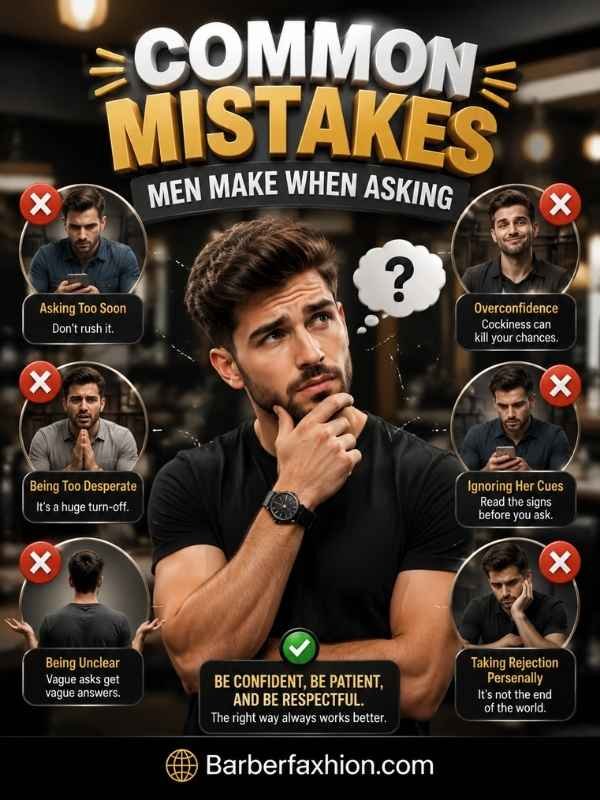
A few small wording slip-ups cause most of the “this isn’t what I asked for” moments in the chair.
- Saying “fade” when you mean “taper.” These get used interchangeably in everyday conversation, but they’re different techniques with different results — mixing them up is the single most common cause of a mismatched haircut.
- Not specifying a guard number or finish. “Short on the sides” means something different to every barber. Naming a guard length or saying “down to skin” or “leave some length” removes the ambiguity.
- Skipping the photo. Even a rough verbal description leaves room for interpretation. A photo, even a low-quality one, closes that gap fast.
- Forgetting to mention the top. A great fade paired with the wrong top length can throw off the whole look — always talk about both halves of the cut together.
First Time Getting a Short Haircut? Start Here
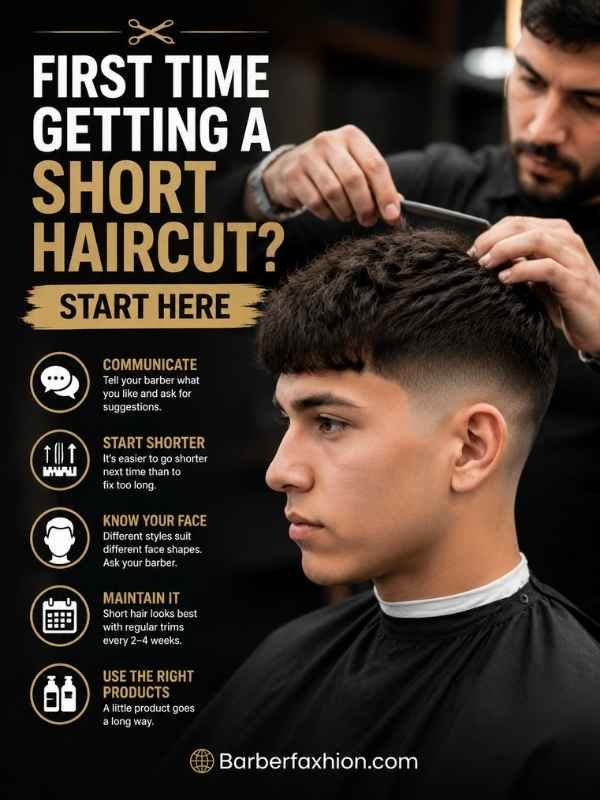
If you’ve never had either cut before, start with a low taper. It’s the more forgiving option while you figure out what you actually like, and there’s a lot less risk of walking out feeling like your hair is “too much” too soon.
A low taper also gives you room to go shorter later if you decide you want more contrast — most barbers can turn a taper into a fade fairly easily on your next visit, but going the other way around means waiting for hair to grow back in. Starting conservative and adjusting from there tends to work out better than overcorrecting on your first attempt.
Once you’ve lived with a taper for a cut or two and you know you want sharper lines, that’s the natural point to ask your barber about moving toward a fade.
So, Which Should You Choose?
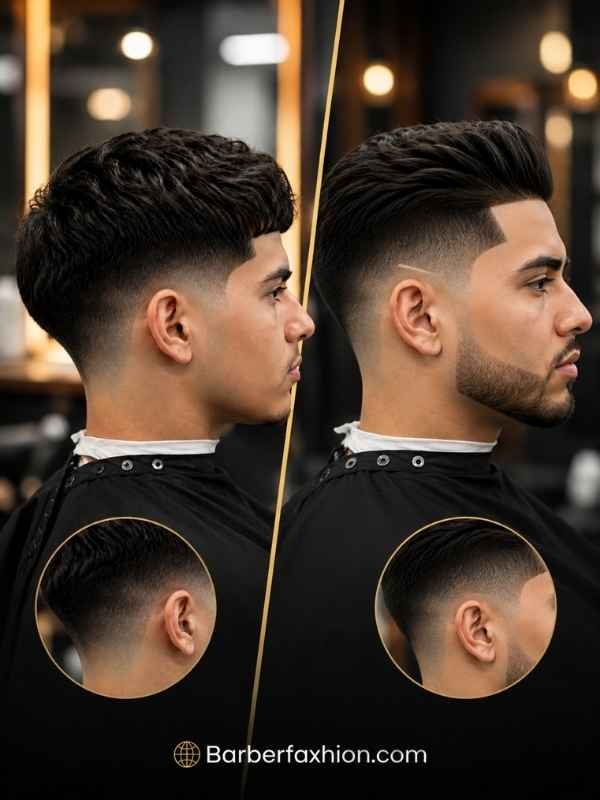
Both are genuinely good cuts. The right one comes down to you, your routine, and how much contrast you actually want to see in the mirror.
Lean low taper if:
- You want a subtle, natural finish
- Your workplace or school expects conservative grooming
- You’d rather not visit the barber every two to three weeks
- You have fine or thin hair and want to avoid exposing scalp
- You’re new to short haircuts and want a versatile starting point
Lean low fade if:
- You want a sharper, more defined look
- You like modern, high-contrast styles
- You wear textured, curly, or high-volume hair on top
- You’re happy keeping up with regular touch-up visits
- You want a clear, visible split between your top and sides
Your routine, your workplace, your face shape, and your hair type all feed into this decision. There’s no universal winner in the low taper vs low fade debate — a taper isn’t objectively better than a fade, and a fade isn’t objectively better than a taper. They’re built for different results. If you’re genuinely stuck, describe your lifestyle to your barber, show them a photo, and let their experience guide the final call.
Conclusion
The whole low taper vs low fade decision really comes down to one question: do you want a soft, natural blend, or a sharp, defined edge? A taper suits guys who want something understated and low-maintenance that travels well across every setting. A fade suits guys who want a bolder, more current look and don’t mind the extra upkeep that comes with it.
Know your routine, factor in your hair type and face shape, and say exactly what you want when you sit down. Either way, both cuts hold up — the only real mistake is walking in without knowing which one you’re actually asking for.
Frequently Asked Questions
Is a low taper better than a low fade?
Neither is objectively better. A low taper wins if you want a subtle look with less maintenance, while a low fade wins if you want sharper contrast and a more modern finish. It genuinely comes down to your routine, your hair type, and how often you can realistically get to the barber.
Does a low fade show more skin than a low taper?
Usually, yes. A low fade often brings the hair down to very short or skin-level near the ears and neckline, so more scalp shows at the base. A low taper normally stops short of bare skin, giving a softer, more covered finish throughout.
Which one lasts longer between barber visits?
The taper. Its gradual blend grows out looking natural rather than messy, so it can hold up for three to five weeks or more. A fade, especially a skin fade, loses its sharp definition faster, and most guys need a touch-up every two to three weeks.
Is a low fade a taper?
Not exactly, though the two are related. A fade is technically a more extreme version of blending that reaches skin or near-skin, while a taper never fully exposes the scalp. Some barbers use “low taper fade” to describe a fade with taper-like softness, which is where the terms tend to blur together.
Are fades haram in Islam?
This is a genuinely debated topic among Islamic scholars, and opinions differ. Some scholars view certain fade styles as resembling practices discouraged in hadith concerning shaving parts of the head while leaving other parts long (known as qaza’), while others consider a uniform, evenly blended fade acceptable since it doesn’t create the specific patchy pattern the guidance addresses. If this matters to you, it’s worth asking a trusted local scholar for guidance specific to the style you’re considering.
What should I say if I’m not sure which one I want?
Be upfront about that with your barber. Show a photo of a look you like and describe how much contrast you want — soft and subtle, or clean and sharp. A good barber will ask the right follow-up questions and suggest what suits your face shape, hair type, and routine, and you can always ask them to start conservative and go shorter if needed.